TL;DR
Cappelletti in brodo are small, hand-shaped filled pastas from Romagna, in Emilia-Romagna, served hot in chicken, capon, or mixed-meat broth. Many families make them at Christmas, and a Sunday batch is a useful, convivial rehearsal: you can practice the folding, tailor the cheese filling to a family version, and freeze extras for the holiday.
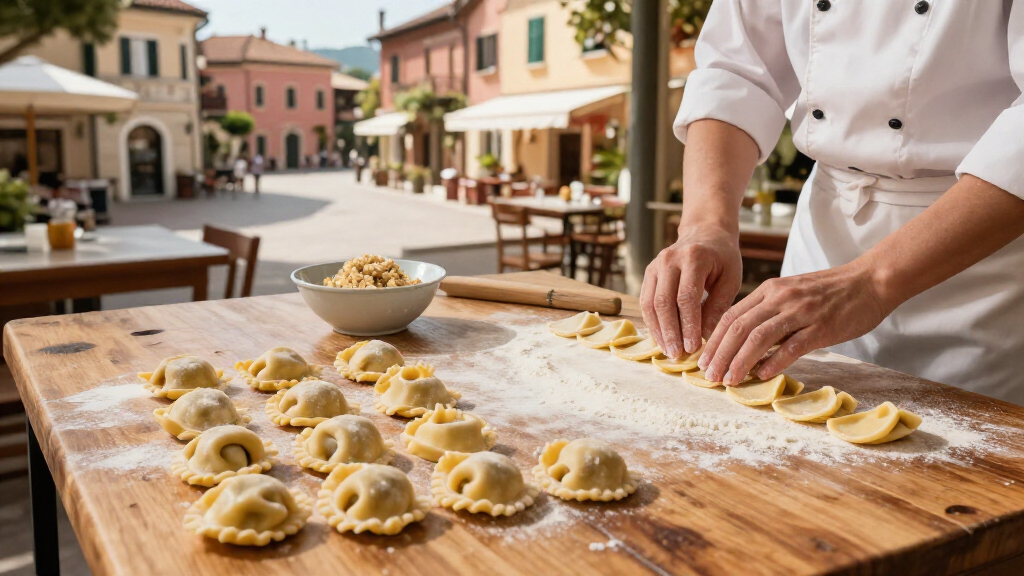
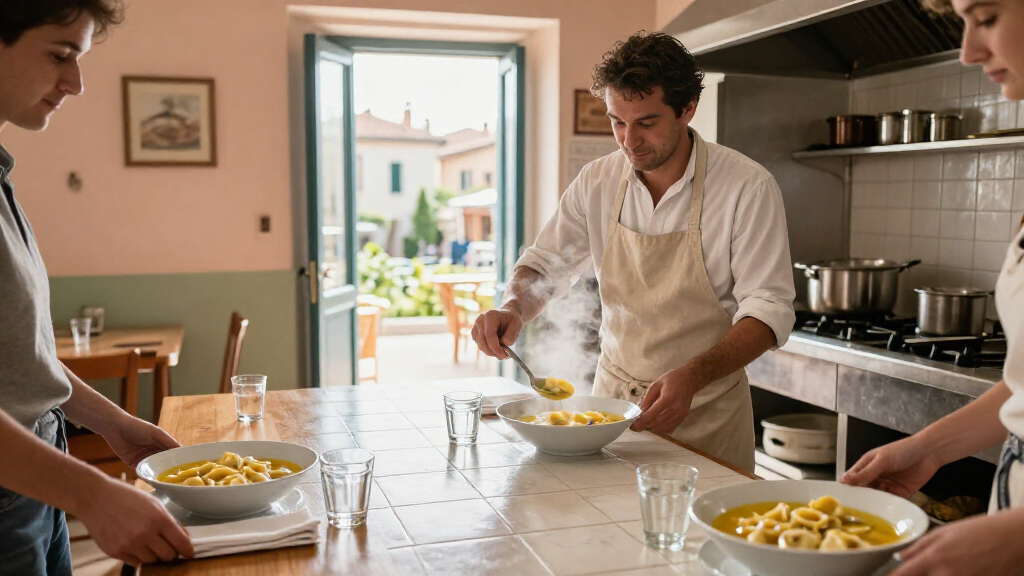
In Romagna, Christmas can announce itself in the quiet work of a Sunday afternoon: flour on the table, a bowl of cheese filling, and a tray filling with tiny pasta hats. Cappelletti in brodo—small filled pasta served in broth—turn that work into lunch, and the first spoonful tastes like a holiday that has not quite arrived.

Get kitchen staples and gadgets delivered free with Prime
- Fast, free delivery on millions of items
- Prime Video, Amazon Music and more included
- Member-only deals all year
This guide explains what makes Romagnolo cappelletti distinctive, why families make them before Christmas, and how you can bring the tradition into your kitchen. You’ll get practical advice on filling, shaping, broth, portions, and make-ahead storage, with room for the local variations that make this dish feel like someone’s family recipe instead of a fixed formula.
You do not need a holiday crowd to begin. Invite a couple of people over, put on a pot of broth, and treat the Sunday batch as both meal and rehearsal. The pasta is small; the pleasure is in taking your time.
Cappelletti in brodo are Romagna-associated filled pasta served in broth, often at Christmas and other winter gatherings.
The name cappelletto means “little hat”; each piece is folded by hand from a filled pasta square.
Soft cheese, Parmigiano Reggiano, and egg are common filling ingredients, but recipes vary by household and locality.
Keep cheese-and-egg filling chilled during assembly, and freeze shaped pasta in a single layer before transferring it to a sealed container.
A Sunday batch lets you practice the folding, share the work, and save extra cappelletti for a holiday meal.
Sunday Cappelletti in Brodo A Christmas warm-up
A Sunday batch turns handmade pasta into a shared meal and a practical rehearsal for Christmas. The small filled pastas are served hot in broth and shaped to each family’s tradition.
What makes the dish
The little hat shape, cheese filling, and savory broth come together in every bowl.
Folded by hand
Pasta squares are filled, folded into triangles, then curled around a finger. Cappelletto means “little hat.”
A family version
Soft cheese, Parmigiano Reggiano, and egg are common; some recipes add nutmeg or meat.
A balanced bowl
Each part matters: the filling should hold its shape, and the broth seasons the pasta as it cooks.
- Ricotta or raviggiolo may anchor the filling.
- Keep the cheese-and-egg filling chilled while shaping.
- Chicken, capon, or mixed-meat broth is common.
- Serve hot, often with grated Parmigiano.
Make Sunday the rehearsal
Share the work, find a comfortable rhythm, and enjoy the meal before the holiday.
Mix your family’s ingredients and keep the filling cool and firm.
Roll the pasta thin, cut even squares, and cover unused dough so it stays pliable.
Use a small dab, seal the edges, fold into a triangle, and curl the corners around a finger.
Save extras for Christmas
A Sunday batch lets you practice now and prepare ahead for a holiday meal.
- Freeze shaped cappelletti in a single layer until firm.
- Transfer them to a sealed container.
- Cook from frozen in gently simmering broth.
What makes cappelletti in brodo taste like Romagna?
Cappelletti in brodo are small filled pastas associated with Romagna, in Emilia-Romagna, served hot in a savory broth. Their defining feature is often a soft cheese filling seasoned with Parmigiano Reggiano and egg; the broth, commonly made with chicken, capon, or mixed meat, finishes the dish in the bowl. [1]
The name cappelletto means “little hat,” a good description of the folded pasta. You cut thin sheets into squares, add a small dab of filling, fold each square into a triangle, then bring the corners around a finger. A finished piece looks like a little cap curled around its filling. The shape is practical, too: it holds the filling while cooking and gives you a tidy bite with broth.
Imagine serving a bowl on a cold Sunday in Forlì or Ravenna. The broth is golden and fragrant, the pasta tender but still holding its shape, and a snowfall of grated cheese melts into the surface. The ingredients are modest, but the result depends on balance: a filling with enough savory cheese, pasta rolled thin enough to feel delicate, and broth with enough character to stand beside it. Those parts work together because none is meant to dominate. A very rich filling needs a lighter hand with finishing cheese; a restrained filling gives the broth more room to register. The broth is also the cooking medium, so it seasons the pasta as it softens and becomes part of every bite.
Recipes vary from one household and town to another. Ricotta or raviggiolo, a fresh soft cheese from the region, may anchor the filling; Parmigiano Reggiano, egg, and sometimes nutmeg round it out. Some families add meat. Treat any one version as a family’s way of making cappelletti, not the single official formula for all of Romagna. [1] That variation has practical consequences: wetter cheese may need draining, while a firmer filling is easier to portion and less likely to escape through a seam. Rather than chasing a universal ratio, aim for a filling that tastes balanced and holds its shape, then adjust the pasta and broth around it.
Products Worth Considering

Levoit Eleva 300X Air Purifier with Sealed HEPA Filtration

Bose SoundLink Max Portable Bluetooth Speaker, IP67 Waterproof and Dustproof, Up to 20 Hours of Battery Life, Black

Ring Alarm 14-Piece Kit
As an affiliate, we earn on qualifying purchases.
Why a Sunday batch feels like Christmas practice
Sunday cappelletti in broth work as a Christmas warm-up because they let you rehearse the fiddly parts while sharing a meal along the way. Families often prepare cappelletti together during the season and serve them at Christmas lunch; a Sunday gathering gives everyone a chance to make the filling, roll pasta, and find a comfortable folding rhythm before the holiday crowd arrives. [1]
Think of it like a kitchen rehearsal where the scenery is edible. One person rolls the dough, another cuts neat squares, and someone else fills and folds. After a while, hands learn the movement: fold, press, curl. If your first row looks uneven, that is part of the afternoon. By the time the broth simmers, the table has a tray of pasta and a story about who folded the odd-shaped one. Sharing the tasks also makes the pace easier to manage: rolling continuously can dry the dough, while filling continuously can become tiring. Rotating jobs gives each person a natural pause and keeps the work moving.
The scale explains why company helps. Each cappelletto is small, so a celebratory meal may call for hundreds. Making them alone can turn a warm family custom into a long production; with two or three helpers, the same work becomes a conversation around the table. Set out a lightly floured tray, keep a damp cloth over unused dough, and take turns so no one is stuck at one station for hours. The small size is part of the dish’s appeal, but it is also the source of the labor: each piece needs a seal and a fold. A Sunday batch lets you decide how much handwork feels enjoyable before you commit to a holiday quantity.
A Sunday meal also gives you a chance to adjust the recipe to your own kitchen. If the filling seems too soft to hold, chill it briefly; if the pasta dries while you work, cover it. You get to enjoy the dish now and save a batch for later. That is the warm-up: practical preparation with the comfort of Christmas already in the bowl. You also learn what to change next time—perhaps smaller squares for a more delicate bite, or a firmer filling that is easier to shape—so the holiday batch can feel calmer without losing the shared work that makes it meaningful.
How to fold cappelletti without rushing
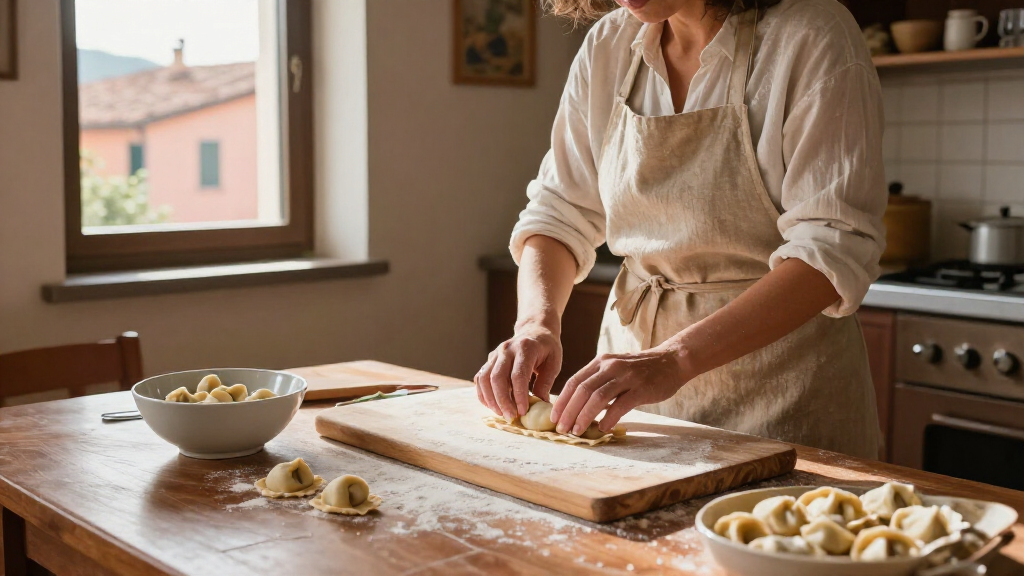
To shape cappelletti, roll pasta thin, cut it into small squares, place a modest amount of chilled filling in the center, fold each square into a triangle, and curl the corners around a fingertip. A small, consistent dab is easier to seal than an overfilled square, and a gentle press along the edges helps keep the filling inside as the pasta cooks. The goal is a seam that stays closed without making the pasta thick: excess dough at the edges can turn chewy before the center cooks through.
- Prepare the filling. Combine soft cheese such as ricotta or raviggiolo with grated Parmigiano Reggiano and egg; season according to your family version, perhaps with a little nutmeg. Keep it chilled while you work. A cool, firm filling is easier to portion accurately, and consistent portions make the pieces cook at a similar pace.
- Roll and cut. Roll the pasta into a thin sheet and cut it into even squares. Keep the sheets you are not shaping under a clean, slightly damp cloth so their edges stay pliable. Even squares help the corners meet neatly; if the edges dry, they may resist sealing and need more pressure, which can tear the dough.
- Fill and fold. Add a small dab at the center of each square, fold it corner to corner into a triangle, and press the edges closed without trapping air. Air pockets expand during cooking and can stress the seam, so press gently from the filling toward the edge to push air out.
- Make the hat. Wrap the triangle around a finger and bring its two corners together. Set each cappelletti apart on a lightly floured tray. The fingertip gives the pasta a rounded space around the filling; joining the corners too tightly can flatten it, while leaving them loose makes the shape more likely to open.
- Cook gently. Add the pasta to hot broth and simmer gently until the pasta is cooked through. Serve hot with extra grated Parmigiano. A gentle simmer protects the seams and keeps the broth from turning cloudy with broken pieces; cook a few first if you need to judge timing for your pasta thickness.
Your first few may look more like little pillows than hats. That is fine. What matters is a closed seam and a shape sturdy enough to reach the bowl intact. If you are cooking with children or a friend who has never made pasta, give them a small patch of dough and let them practice with a dab of filling before you start the main batch. Practice pieces reveal whether the dough is drying or the filling is too generous, and you can correct those conditions before shaping a full tray.
The filling contains dairy and egg, common allergens. Keep it chilled while assembling, wash hands and tools after handling raw egg, and do not leave filled pasta sitting warm for an extended period. These small habits protect the food without interrupting the relaxed pace of a Sunday kitchen.
Choose a filling that suits your family’s table
Romagnolo cappelletti filling often starts with soft cheese, Parmigiano Reggiano, and egg, but the exact balance belongs to the cook and locality. Ricotta gives you a familiar, mild base; raviggiolo offers another fresh, soft-cheese option. A little nutmeg can add warmth, while some family recipes include meat. There is no need to pretend one version speaks for every Romagnolo kitchen. [1]
For a first batch, keep the filling simple enough to judge. Picture a spoonful that holds together on the plate and tastes savory rather than bland or salty. If you use ricotta that seems wet, let it drain briefly in the refrigerator before mixing; excess moisture can make the filling harder to handle and the pasta more likely to split. Add grated cheese gradually and taste before you fill the pasta. This gradual approach matters because Parmigiano contributes both seasoning and structure: adding too much can make the mixture overly salty and firm, while too little may leave a mild cheese tasting flat once it is wrapped in pasta and diluted by broth.
A useful comparison is what each filling choice does for the meal: a mild cheese mixture lets the broth stand out, while a more assertive or meat-based filling brings extra richness to the bite. The right choice depends on whether your broth is delicate or full-bodied, and on what your family expects from its Christmas bowl. Keep notes if you are adapting a recipe; “a pinch of nutmeg” means something different to every hand. Think of filling and broth as a pair: if both are rich, the bowl can feel heavy, while a lighter filling can make a robust broth seem more balanced. A small cooked sample lets you judge that balance before you shape the whole batch.
Parmigiano Reggiano is a protected designation of origin (DOP) cheese made in a defined area of northern Italy under production rules. Its nutty, savory flavor fits naturally here, but it does not erase regional variation. If you are serving someone with a dairy or egg allergy, this traditional filling is not suitable as written; explain the ingredients clearly rather than relying on the dish’s name to tell the whole story.
Build a clear broth that lets every cappelletti shine
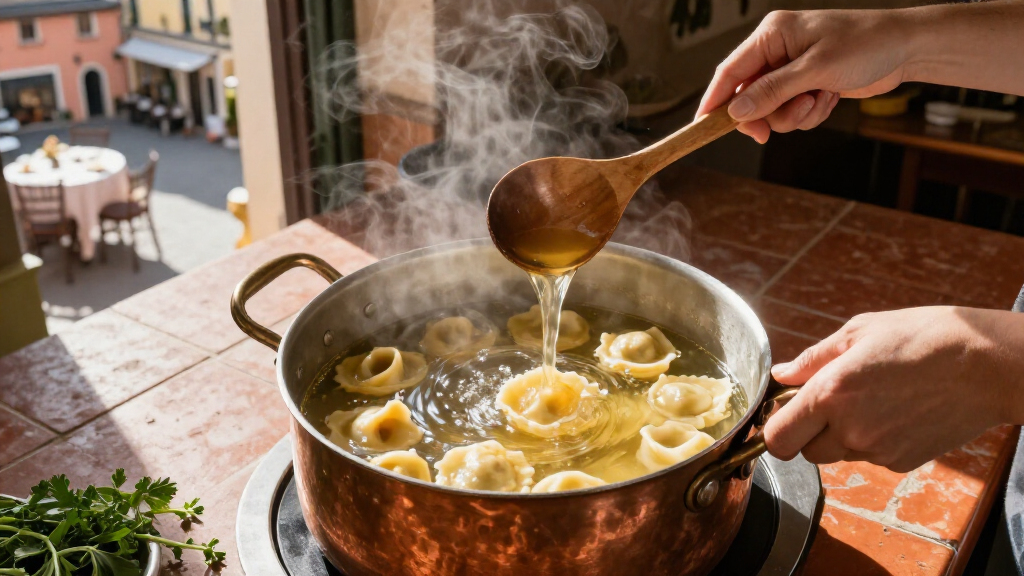
Chicken, capon, or mixed-meat broth is a traditional partner for cappelletti in brodo, and it needs enough flavor to stand on its own. The pasta cooks in the broth, so every spoonful carries both the filling and the liquid. A clear, savory broth gives the bowl warmth without burying the cheese beneath a heavy, muddy taste. [1] Clarity is not only appearance: a broth free of excess fat and sediment lets the pasta’s shape and filling remain distinct, while a well-seasoned one gives the mild cheese something savory to meet.
Start with broth that tastes good before the pasta goes in. If you have made a pot ahead, chill it promptly in shallow containers and refrigerate it; reheat it until steaming before cooking the pasta. Keep uncooked cheese-and-egg filling cold during assembly, and freeze any pasta you will not cook soon. Food safety matters most when several people are working at a busy table and trays sit out between batches.
For a Sunday lunch, set the pot at a gentle simmer rather than a hard boil. A rough boil can toss delicate pasta against itself and make seams more likely to open. Add a small batch first if you are unsure of the timing; when the pasta is cooked through and tender, serve promptly in warm bowls. Finish with grated Parmigiano Reggiano at the table. This small-batch approach also protects the broth’s temperature and seasoning: a crowded pot cools down quickly, and the pasta can release starch that clouds the liquid.
Suppose you have a rich mixed-meat broth and a filling seasoned generously with cheese. Keep the finishing cheese light so the bowl stays balanced. With a milder chicken broth, a little extra Parmigiano can add depth. Broth is not just a cooking liquid to discard: it is part of the dish’s flavor and a reason to bring a ladle straight from pot to table. Its role also shapes how much seasoning you add at the end; taste the broth after the pasta cooks, since the filling and pasta contribute flavor as they simmer.
Make a batch ahead so Christmas lunch feels easier
You can make cappelletti ahead by arranging the uncooked pasta in a single layer, freezing it until firm, then transferring it to a sealed container. Cook the cappelletti directly from frozen in gently simmering broth. This lets you spread the handwork across two days and keep the holiday meal focused on cooking and serving rather than last-minute folding. [1] Freezing them separately first matters because fresh pasta is tacky: if pieces touch while soft, they can freeze into a clump that is difficult to separate without breaking the seams.
For example, you might make the filling and dough on Saturday, shape a few trays with relatives on Sunday, cook one portion for lunch, and freeze the rest. Once the pasta has frozen firm on the tray, move it into a labeled container so it takes up less space and you can find it later. Keep the container closed to limit freezer odors and use the batch while it is in good condition. This schedule also gives the dough time to rest and the filling time to chill, which makes shaping less hurried and more consistent.
Portions depend on the size of your cappelletti and whether the soup is a starter or the main course. Small pasta served as the main dish calls for a more generous bowl than a first course before roast meat and vegetables. If guests are coming, cook a test portion from your first batch and count how many pieces fill a bowl you would actually serve. That gives you a better estimate than relying on a universal number. It also tests the frozen pasta: if it needs longer than expected, you can allow for that on the holiday rather than keeping guests waiting.
Store-bought pasta or broth can help when your schedule is tight. Handmade pasta and homemade broth give you the traditional character, but a practical shortcut still gets a warm bowl to the table. If you choose ready-made ingredients, check labels for dairy, egg, and other allergens, and follow storage instructions. The point of making ahead is to give yourself breathing room, not another holiday chore. You can choose where the handwork matters most to you—perhaps shaping the pasta together while buying broth—because convenience changes the amount of preparation, not the pleasure of sharing the bowl.
Know how cappelletti differ from tortellini
Cappelletti and tortellini are related filled pastas, but their names, shapes, fillings, and regional associations differ. Cappelletti are especially associated with Romagna, while tortellini are strongly associated with Bologna and Modena, in neighboring parts of Emilia-Romagna. Families and localities have their own variations, so a quick visual rule will not explain every plate. [1]
The names can make the map feel simple: one pasta for Romagna, another for Bologna and Modena. The real kitchen is messier in a good way. Shapes shift, fillings vary, and the same broad style can have different names depending on where you are. If you visit during winter, ask what the restaurant calls its filled pasta and where that version comes from; the answer can tell you more than a generic menu description. The regional names are useful starting points, not strict borders: they connect a dish to a place and its customs, while leaving room for neighboring towns and households to shape it differently.
| Detail | Cappelletti | Tortellini |
|---|---|---|
| Strong regional association | Romagna | Bologna and Modena |
| Shape cue | Often described as a little hat | Recognized as a ring-shaped filled pasta |
| Filling | Often soft cheese, Parmigiano, and egg; recipes vary | Varies by local tradition and household |
| Serving idea | Frequently served in broth | Often served in broth, depending on tradition |
If you are cooking cappelletti at home, use the name for the Romagna-associated dish you are making, then describe your filling honestly as your family’s version. That small detail respects the region’s variety and helps guests understand what is in their bowl. For a trip, it gives you a useful question to ask over lunch: “Is this your local cappelletti, and what goes into it?” The distinction matters most as a way to notice local practice: asking about the name and filling can lead to a more specific answer than treating every ring or folded pasta as interchangeable.
Frequently Asked Questions
Are cappelletti and tortellini the same pasta?
They are related filled pastas, but their names and regional associations differ. Cappelletti are especially associated with Romagna; tortellini are strongly associated with Bologna and Modena. Shapes and recipes vary from place to place.
What is traditionally inside Romagnolo cappelletti?
A common filling uses soft cheese such as ricotta or raviggiolo with Parmigiano Reggiano and egg, sometimes seasoned with nutmeg. Some versions include meat, and family recipes differ. Check the ingredients when serving anyone with allergies.
What broth should I serve with cappelletti?
Chicken, capon, or mixed-meat broth is common. Choose a clear, well-seasoned broth that tastes good on its own, since the pasta cooks in it and the broth stays in the bowl.
Can I freeze homemade cappelletti?
Yes. Arrange uncooked cappelletti in a single layer and freeze until firm, then transfer them to a sealed container. Cook them from frozen in gently simmering broth, and keep the cheese-and-egg filling chilled while you assemble the batch.
Can I use store-bought pasta or broth?
Yes. Store-bought options can make a Sunday meal easier, while handmade pasta and homemade broth offer the traditional kitchen experience. Read labels for allergens such as dairy and egg, and follow the package’s storage instructions.
How many cappelletti should I serve per person?
It depends on their size and whether you are serving the soup as a starter or main course. Cook a test portion and count how many pieces fill the kind of bowl you plan to serve; that gives you a useful estimate for your own batch.
Do people eat cappelletti only at Christmas?
No. Cappelletti are strongly associated with Christmas in many families, but they also suit Sunday meals and other cold-weather celebrations. A Sunday lunch is a natural way to practice the recipe and share the work before the holiday.
Conclusion
Make a Sunday batch of cappelletti in brodo before Christmas: choose a family-style cheese filling, invite a helper, and freeze what you do not cook. You will get a warm meal now and a little less work when the holiday table fills up.
By evening, the flour is wiped from the table and a few cappelletti may still be waiting in the freezer. The next cold day, they can return to the pot, little hats rising in golden broth.