TL;DR

Get kitchen staples and gadgets delivered free with Prime
- Fast, free delivery on millions of items
- Prime Video, Amazon Music and more included
- Member-only deals all year
Italian-style Sunday roast chicken pairs a well-dried, olive-oil-rubbed bird with lemon, garlic, rosemary, and sage, while potatoes roast beneath it and catch the savory drippings. Roast at 425°F, turn the potatoes, and use a thermometer to check that the breast and inner thigh reach 165°F; rest the chicken for 15 minutes before carving.
A roasting pan can turn a few potatoes into the best part of Sunday dinner. As chicken fat and juices drip onto their cut edges, they sizzle, turn golden, and smell of rosemary and garlic. Add lemon, and the rich, savory aroma gets a bright lift.
This Italian-style Sunday roast chicken is not one fixed regional recipe. It draws on familiar ingredients used across Mediterranean home cooking: olive oil, lemon, garlic, rosemary, and sage. You’ll learn how to choose a bird, season it for crisp skin, roast potatoes that brown instead of steam, and check doneness safely. The result is a simple roast chicken dinner you can shape around the season, the people at your table, and whatever greens you found at the market.
Think of the roasting pan as a little kitchen orchestra: the chicken brings the deep notes, the potatoes catch them, and lemon keeps the whole meal lively. A green salad or sautéed greens are all you need beside it.
Choose a 3½–4½-pound (1.5–2 kg) chicken for a practical family roast, and pat the skin dry before seasoning.
Use olive oil, garlic, lemon, rosemary, and sage for a flexible Italian-style flavor profile.
Cut potatoes evenly and spread them out so they roast rather than steam; turn them once or twice.
Check the thickest breast and inner thigh for 165°F (74°C), then rest the chicken for about 15 minutes.
Refrigerate cooked leftovers within two hours and use them within three to four days.
Sunday Table · Mediterranean Home Cooking
Sunday Roast Chicken,
Italian Style
Golden chicken, lemon, garlic, and sturdy herbs roast above potatoes that catch every savory drop. Familiar Mediterranean ingredients make this a flexible home-style dinner, shaped by the season and what is fresh.
Bright, woodsy, savory—built from a few good ingredients
No single regional formula: the Italian style comes from familiar ingredients and the balance between richness and brightness.
Small choices make crisp skin and golden potatoes
Plan for airflow, even cooking, and a thermometer check. Time estimates help with planning; temperature tells you when it is done.
Dry the skin
Choose a 3½–4½ lb (1.5–2 kg) chicken. Pat dry; for extra crispness, salt and refrigerate uncovered for several hours or overnight.
Give potatoes space
Cut even chunks and spread in one layer. Crowding traps steam; turn once or twice so the edges brown evenly in the drippings.
Check, then rest
Check breast and inner thigh away from bone. When both reach 165°F (74°C), rest the chicken for about 15 minutes.
A dependable four-step Sunday roast
Use a fan oven at 200°C (400°F). Start checking early; bird size, oven, and pan all affect cooking time.
Season the chicken
Heat oven to 220°C (425°F). Pat dry; season inside and out with salt and pepper. Rub with olive oil, garlic, and herbs; add lemon and herb sprigs to the cavity.
Set up the potatoes
Toss even chunks with oil, salt, pepper, and rosemary. Spread in one layer; set the chicken on top or on a rack above.
Turn and brown
Turn potatoes once or twice. If the skin browns too fast, lower the heat or loosely shield the breast with foil while the potatoes finish.
Check and carve
Verify 165°F (74°C) in breast and inner thigh. Rest 15 minutes, toss potatoes with pan juices, then carve and serve with roasted lemon.
Use the thermometer as your reliable guide
Cooking time varies with the bird, oven, and pan. A rough planning estimate is about 20 minutes per 500 g (1 lb), plus a little extra.
Measure two places
Both locations
Check the thickest part of the breast and the inner thigh, without touching bone. Rest the bird before carving so the juices settle.
Keep raw chicken safely
Keep the bird and its juices away from ready-to-eat foods. Wash hands, utensils, and work surfaces after handling raw chicken. Refrigerate cooked leftovers within two hours and use within three to four days.
From simple prep to a generous Sunday plate
Each part has a job: fragrance, browning, savory depth, and a bright finish.
Why lemon, herbs, and pan potatoes make a Sunday roast feel Italian
Italian-style Sunday roast chicken is a simple roast built around Mediterranean ingredients and the chicken’s own pan juices. Lemon brings fragrance and a clean, tangy edge; rosemary and sage add a woodsy aroma; potatoes cook beneath or beside the bird and take on its savory drippings. The style comes from familiar flavors rather than from one fixed regional formula.
That flexibility suits Italian home cooking. A cook in Tuscany might lean on rosemary, while another kitchen might reach for sage, thyme, or oregano. These are choices you can make with what is fresh and fragrant, not a rigid checklist. If you visit a market in autumn, look for firm potatoes and a bunch of sturdy herbs; in warmer months, finish the plate with a crisp salad instead of a heavy side.
The key is balance. A whole lemon or a few wedges can roast in the cavity or pan, releasing perfume as the chicken cooks. Too much lemon juice poured over the potatoes early can leave their surfaces wet, though, and wet potatoes brown poorly. Roast them with olive oil and seasoning first, then squeeze more lemon over the carved chicken at the table if you want extra brightness.
Imagine serving this after a chilly walk: browned skin, soft garlic-scented meat, and potatoes with crisp corners. The meal feels generous without needing a complicated regional claim or a long ingredient list. It comes from familiar, well-chosen ingredients rather than from a single official recipe.

roasting pan for chicken and potatoes
As an affiliate, we earn on qualifying purchases.
As an affiliate, we earn on qualifying purchases.
Choose a 3½–4½-pound chicken and dry the skin ahead
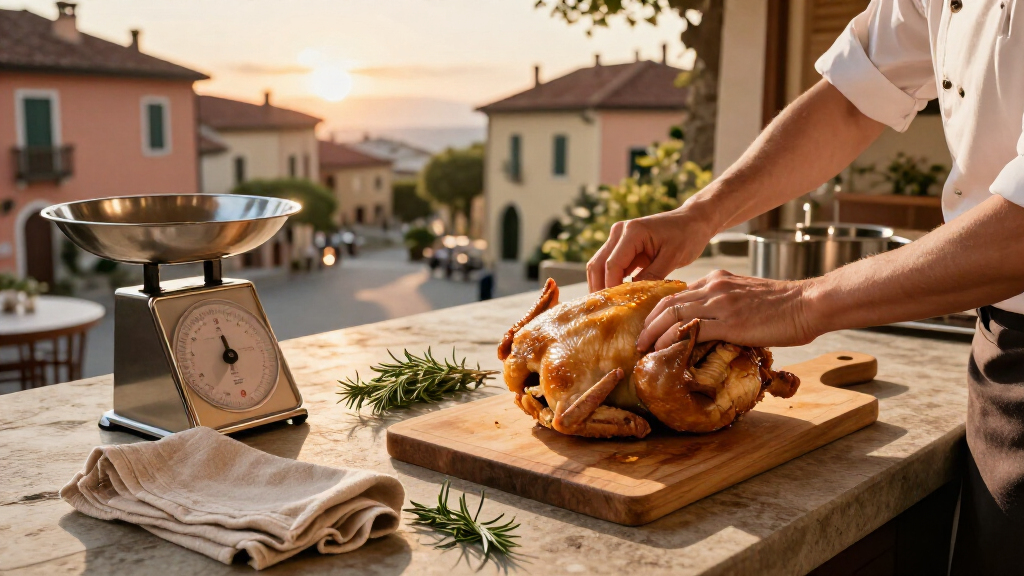
For a family Sunday roast, choose a whole chicken weighing about 3½–4½ pounds (1.5–2 kg), then dry the skin thoroughly before seasoning. A dry surface browns more readily than a damp one, so this small bit of preparation helps you get crisp, burnished skin instead of pale, soft patches. Larger birds need more cooking time, which is another reason a medium-sized bird works well for a first try.
Pat the chicken dry with paper towels, including the area around the legs and wings. If you have time, salt it and leave it uncovered in the refrigerator for several hours or overnight. This gives moisture a chance to leave the skin’s surface. Keep the bird on a tray on a low shelf, away from ready-to-eat foods, and clean your hands and work area after handling it.
Season the cavity and skin with salt and black pepper. Rub the outside with olive oil, chopped rosemary or sage, and a little garlic. Put lemon halves and a few herb sprigs inside the cavity for aroma. You do not have to truss the legs; it can help the chicken cook more evenly, but a straightforward roast works without twine.
For example, if you plan to eat at 1 p.m., season the bird the night before, keep it chilled, then take it out while the oven heats and you prepare the potatoes. Don’t leave raw chicken sitting at room temperature for an extended stretch. The goal is organized prep and dry skin, with the bird kept safely refrigerated until roasting.
Set up the pan so the potatoes turn crisp and golden
Pan potatoes brown best when they have space around each piece. Cut waxy or all-purpose potatoes into chunks of similar size so they cook at roughly the same pace; floury varieties tend to soften and fluff more. Toss the pieces with olive oil, salt, black pepper, and rosemary, then spread them into a single layer in the roasting pan.
Set the chicken on top of the potatoes or on a rack above them. Either arrangement lets drippings season the vegetables, though a rack gives hot air a clearer path around the bird. If your pan is small, use a second tray for some of the potatoes rather than piling them up. A crowded pan holds steam, and steam keeps the edges from crisping.
Roast at 425°F (220°C), or 400°F (200°C) in a fan oven. Turn the potatoes once or twice so several sides get a chance to brown. As the chicken renders fat, spoon or toss a little of the pan juice over the potatoes, but avoid drowning them. Think of the drippings as seasoning, not a bath.
Here’s a common kitchen scenario: the chicken looks beautifully bronzed at 45 minutes, but the potatoes still look pale. Check whether they’re crowded or sitting in too much liquid. Spread them out, carefully turn them, and give them more oven time. If the chicken skin is already dark, lower the oven temperature or loosely shield the breast with foil while the potatoes finish.

Follow these steps for a dependable roast from oven to table
To make a dependable roast, heat the oven, season the chicken, arrange the potatoes, cook until the meat reaches a safe temperature, and then let the bird rest. A rough time estimate can help you plan, but a thermometer is the reliable guide because bird size, oven behavior, and pan shape all affect the cooking time. For a 3½–4½-pound chicken, start checking before you expect it to be ready.
- Heat the oven to 425°F (220°C), or 400°F (200°C) with a fan.
- Prepare the chicken: pat it dry, season generously inside and out with salt and pepper, and rub with olive oil, garlic, and chopped herbs. Add lemon halves and herb sprigs to the cavity.
- Prepare the potatoes: cut them into even chunks and toss with olive oil, salt, pepper, and rosemary. Spread them in a single layer in the roasting pan.
- Roast and turn: place the chicken over the potatoes or on a rack above them. Turn the potatoes once or twice. Lower the heat or shield the breast loosely with foil if the skin browns too fast.
- Check and rest: measure the breast and inner thigh, avoiding bone. Once both reach 165°F (74°C), transfer the chicken to a board and rest it for about 15 minutes.
For a Saturday-night dinner, you can season the chicken the night before and cut the potatoes shortly before roasting. When the bird rests, toss the potatoes in the pan juices and finish carving. The pause gives the juices time to settle, and it gives you a moment to dress a salad or put sautéed greens on the table.
Cooking time varies. A rough planning estimate is about 20 minutes per pound, plus a little extra, but start checking early and follow the temperature reading. If one part is not yet at 165°F, return the bird to the oven and check again rather than guessing from skin color.
Use lemon and herbs without drying out the meat
Rosemary and sage keep their character during a long roast, while lemon lends aroma without needing to cover every ingredient in juice. Thyme and oregano also work if that is what you have. Parsley is more delicate, so save it for a fresh garnish near serving time. If you use dried herbs, use less than you would of fresh herbs and mix them into the olive oil so they stick to the skin.
Keep the lemon balanced. Roast halves in the cavity or wedges in the pan for a mellow, warm citrus smell. Add a fresh squeeze at the table if you want sharper tang. Pouring lots of juice onto the potatoes too early can make them damp, just when you want dry, browned edges.
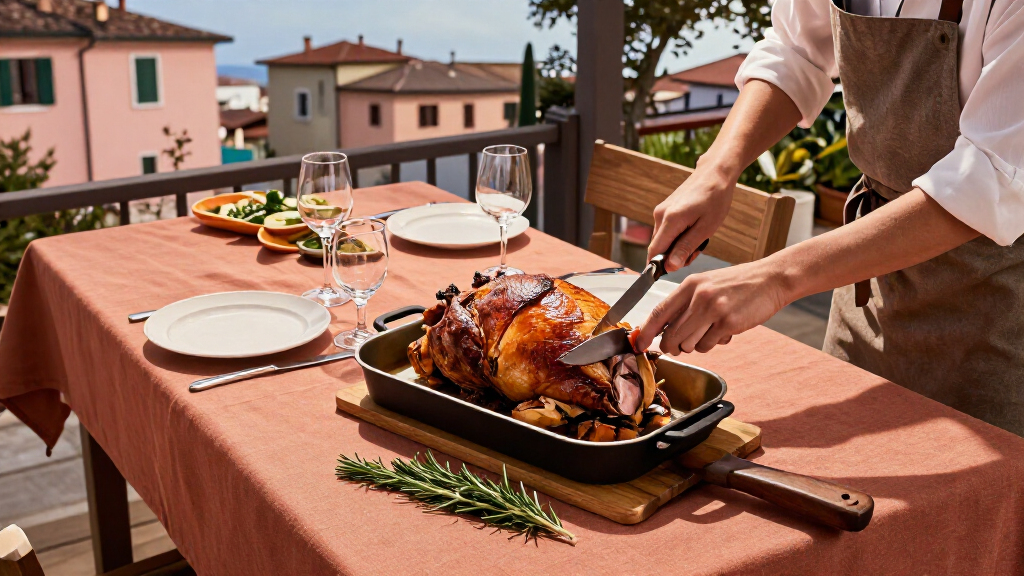
The thermometer matters as much as the seasoning. Measure the thickest part of the breast and the inner thigh without touching bone; both should reach 165°F (74°C). Check more than one thick spot if the bird has cooked unevenly. Once it reaches the safe temperature, rest it for about 15 minutes before carving so the juices settle instead of running across the cutting board.
Suppose the breast reaches temperature before the thigh: shield the breast loosely with foil and continue cooking until the thigh is safe. If the skin looks too dark before the meat is ready, lower the oven heat. A rich brown surface is lovely, but it does not tell you the center is cooked through.
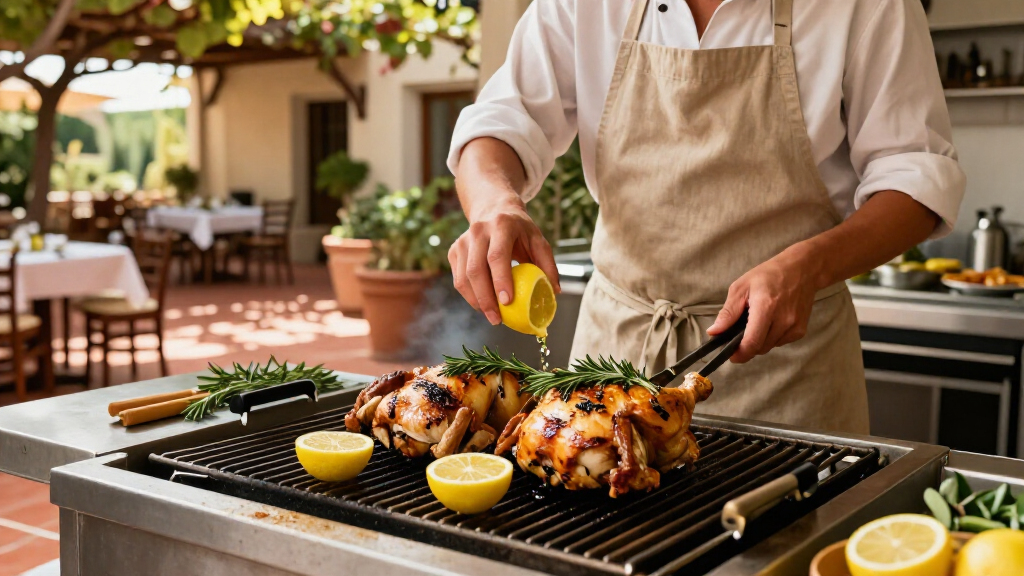
Serve the roast with seasonal greens and use every leftover
A roast chicken dinner needs one fresh, simple side to balance its rich juices. In spring, serve crisp leaves dressed with olive oil and vinegar; in cooler weather, sautéed greens or fennel can bring a tender, lightly sweet note. Roasted carrots, onions, fennel, or squash can share the pan, but choose pieces with similar cooking times or add quicker-cooking vegetables later.
A Sunday roast chicken sits comfortably beside Italian home-cooking traditions because it turns everyday ingredients into a meal worth gathering for. When planning a trip through Tuscany or another region, notice how local markets shift with the season; bring that same market-minded habit home. Choose what looks good, then keep the chicken’s lemon-and-herb backbone steady.
Handle leftovers promptly. Keep raw chicken and its juices away from ready-to-eat foods, wash hands and utensils after contact, and refrigerate cooked leftovers within two hours. Store them covered in the refrigerator and use them within three to four days. If your kitchen is warm, don’t leave the carved meat on the table for a long linger after dinner.
The next day, cold slices make a fine sandwich with bitter greens, or you can fold shredded chicken into a simple pasta or soup. Keep the potatoes in a separate container if you want to reheat them in a hot oven or skillet so their edges regain some color. A roast that feeds Sunday lunch can quietly set up Monday dinner, too.
Frequently Asked Questions
Can I season the chicken the night before?
Yes. Pat it dry, salt it, and refrigerate it uncovered on a tray for several hours or overnight. Keep it chilled and separate from ready-to-eat foods until you are ready to roast it.
Why are my roast potatoes soft instead of crisp?
The pan may be crowded, too wet, or not hot enough. Spread the potato chunks into a single layer, turn them during roasting, and add only enough pan juice to coat them lightly.
Do I have to truss a whole chicken?
No. Trussing can help the bird cook more evenly, but you can roast it without twine. Focus on checking the breast and inner thigh with a thermometer.
Can I use dried herbs instead of fresh?
Yes. Use less dried rosemary, sage, thyme, or oregano than you would fresh, since dried herbs are more concentrated. Stir them into the olive oil rub so they cling to the chicken.
How can I keep the chicken breast from drying out?
Check the temperature before the bird overcooks, measure more than one thick spot if needed, and rest the chicken for about 15 minutes after it reaches 165°F (74°C). If the breast browns too quickly while the thigh cooks, shield it loosely with foil.
How long can I keep leftover roast chicken?
Refrigerate cooked chicken within two hours, store it covered, and use it within three to four days. Shred leftovers for soup or pasta, or slice them cold for sandwiches.
Conclusion
For a reliable Italian-style Sunday roast, start with dry skin, generous seasoning, and potatoes spread in a single layer. Let lemon and sturdy herbs perfume the chicken, then trust your thermometer and rest the bird before carving. Add a green salad or seasonal vegetables, and you have a dinner built around ingredients that do their work quietly.
Bring the pan to the table while the potatoes still crackle at the edges. That first forkful—savory juices, rosemary, and a bright squeeze of lemon—is the sort of Sunday meal you’ll want to make again.

Columbus Day / Indigenous Peoples' Day Picks
long weekend sales
As an affiliate, we earn on qualifying purchases.