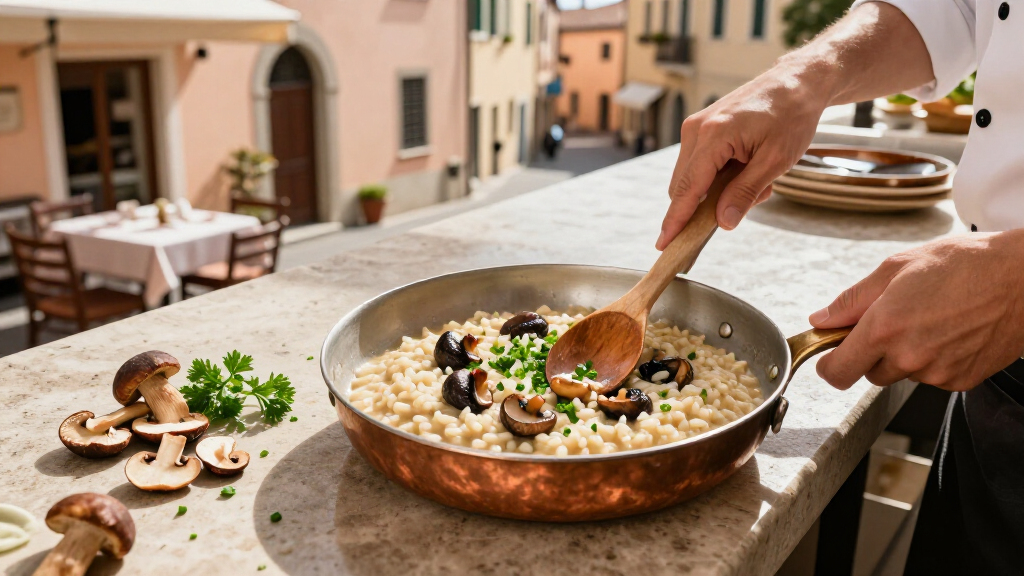

TL;DR

Get kitchen staples and gadgets delivered free — and shop member deals
- Fast, free delivery on millions of items
- Access to Prime Big Deal Days deals on October 6–7
- Prime Video, Amazon Music and more included
Risotto ai funghi is a northern Italian rice dish made creamy by gradually cooking short-grain rice with hot stock, then finishing it off the heat with butter and Parmigiano Reggiano. Brown affordable fresh mushrooms for concentrated flavor, add a small amount of dried porcini if you have it, and serve the risotto while it still flows softly across the plate.
Use Arborio for an accessible, forgiving risotto; Carnaroli holds a firmer bite, and Vialone Nano is a quick-cooking Veneto favorite.
Brown fresh mushrooms in batches so they caramelize instead of steam; save a few pieces to garnish the finished dish.
Add dried porcini soaking liquid to hot stock only after straining it through a fine filter.
Finish off the heat with butter and Parmigiano Reggiano for creaminess without adding cream, then loosen with hot stock if needed.
Serve risotto while it flows gently on the plate, and refrigerate leftovers promptly before reheating them until steaming hot throughout.
A northern Italian classic · The flavor-first guide
Risotto ai Funghi: Deep Mushroom Flavor Without Truffle Prices
Good browning, hot stock, and short-grain rice do most of the work. Layer affordable fresh mushrooms with optional porcini, then finish off the heat for a glossy, creamy bowl—no cream required.
“Porcini soaking liquid adds depth—strain it well before it meets the stock.”
Fine filter first · grit never belongs in the bowlStarch makes the sauce creamy
Fresh mushrooms bring savory depth
A little goes a long way
Softly flowing across the plate
Choose risotto rice, brown mushrooms in batches, filter porcini liquid, add stock gradually, and finish with butter and Parmigiano Reggiano.
Choose ingredients that earn their place
Build the dish around texture and flavor. Porcini are a useful boost, not an entry fee; use fresh mushrooms you can find.
| Ingredient | What it brings | Good choice when… |
|---|---|---|
| Arborio | Accessible, creamy rice that is forgiving | You are making risotto for the first time |
| Carnaroli | Firmer grains with a creamy finish | You want more room before the rice overcooks |
| Vialone Nano | Quick-cooking grains with a flowing result | You want a familiar Veneto variety |
| Cremini or button | Affordable volume and familiar flavor | You are shopping at a regular grocery store |
| Dried porcini | Concentrated, woodsy flavor in a small amount | You want depth without buying truffles |
Layer mushroom flavor, affordably
Separate cooking lets moisture escape before the mushrooms brown. Fold most through the rice and save a few pieces for the finish.
Give mushrooms room
Use a hot, roomy pan and cook in batches. Let released liquid evaporate; keep going until edges are browned, not pale and steamy.
Add porcini if you have them
Rehydrate, chop, and stir them in near the end. Strain their soaking liquid through a fine filter before adding it to the hot stock.
Let mushrooms lead
Shallot, garlic, thyme, parsley, or white wine can complement the flavor. A little lemon zest can brighten the finish.
Cook in stages; stir steadily
Keep the simmer gentle and add hot stock in portions. Stir often enough to encourage starch release and prevent sticking.
Heat the stock
Keep vegetable or chicken stock hot. Mix in filtered porcini liquid if using.
Cook the shallot
Use butter or olive oil; soften gently without deep browning.
Coat the rice
Stir for a minute or two, until grains feel hot. Do not rinse first.
Add stock in portions
Just cover the rice; add more as liquid mostly absorbs. Simmer calmly.
Taste and enrich
Fold in mushrooms, then butter and grated cheese off the heat.
The spoon should leave a path that slowly fills in. Add hot stock if the mixture thickens before the grains are tender.
Stock and Parmigiano Reggiano can both be salty. Taste before adding more salt.
The finish: glossy, not stodgy
Mantecatura is the final mixing of butter and cheese into the rice. The starch, butter, and Parmigiano Reggiano make a smooth sauce without cream.
It should spread gently when you tap the plate—not sit in a stiff mound.
Take the pan off the heat while the grains still have a slight firm bite. Vigorously fold in cold butter and finely grated Parmigiano Reggiano.
If it looks too thick, stir in a small splash of hot stock. Serve at once, while the risotto still flows softly across the plate.
Keep the bowl at its best
Risotto is best just after cooking, while loose and creamy. A few simple adjustments help you recover the right texture.
Keep cooking gently
Add another portion of hot stock and simmer until the center has just a slight bite. Taste as you go; timing varies by rice and pan.
Loosen with hot stock
Stir in a small splash at a time until the grains move freely and the spoon’s trail slowly closes.
Partially cook ahead
For guests, stop the rice partway, spread it out to cool, then finish with hot stock shortly before serving.
Choose rice and mushrooms that give you the most flavor for your money
Risotto ai funghi gets its creamy texture from short-grain rice and its savory depth from browned mushrooms. Arborio is easy to find and forgiving; Carnaroli tends to hold a firmer bite, while Vialone Nano cooks relatively quickly and is common in Veneto. For a budget-friendly pan, pair fresh cremini or button mushrooms with a small handful of dried porcini.
| Ingredient | What it brings | Good choice when |
|---|---|---|
| Arborio | Accessible, creamy rice that is forgiving for home cooks | You are making risotto for the first time |
| Carnaroli | Firm grains and a creamy finish | You want a little more room before the rice overcooks |
| Vialone Nano | Quick-cooking grains with a soft, flowing result | You want to try a Veneto-style rice variety |
| Fresh cremini or button | Affordable volume and a familiar mushroom flavor | You are shopping at a regular grocery store |
| Dried porcini | Concentrated, woodsy flavor in a small amount | You want more depth without buying truffles |
In Veneto, where Vialone Nano is a familiar choice, rice traditions sit close to the northern Italian landscape. You can bring a little of that sensibility home by choosing a proper risotto rice rather than long-grain rice. Long grains don’t release starch in the same way, so the result won’t have the same creamy texture.
Use the fresh mushrooms you can get: brown them in a hot pan, then add a modest amount of rehydrated porcini if you have some. Porcini are a flavor boost, not an entry fee. A bowl of well-browned cremini risotto still earns its place at the table.

As an affiliate, we earn on qualifying purchases.
Brown mushrooms first to build deep flavor without truffles
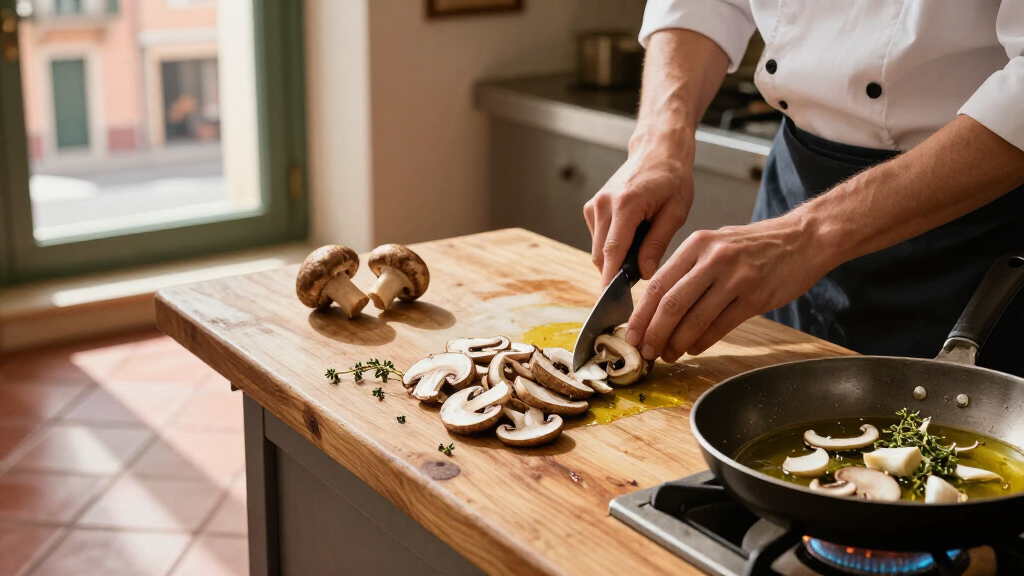
To build deep mushroom flavor, cook the mushrooms separately in a hot pan so their moisture can escape and their surfaces can brown. Then fold most of them into the risotto near the end and save a few pieces for the top. That simple split gives you savory flavor throughout the rice and distinct, tender mushrooms in each spoonful.
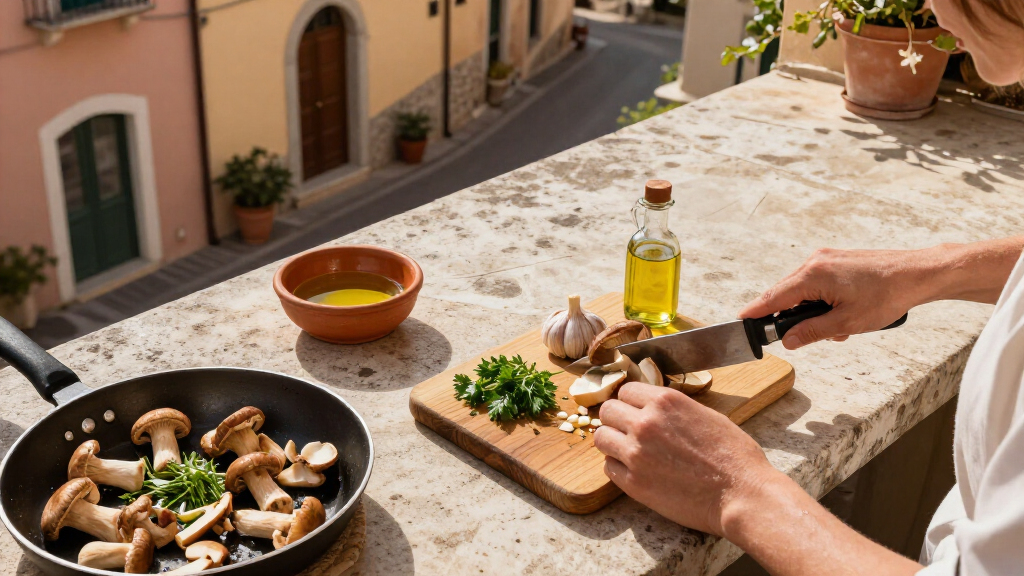
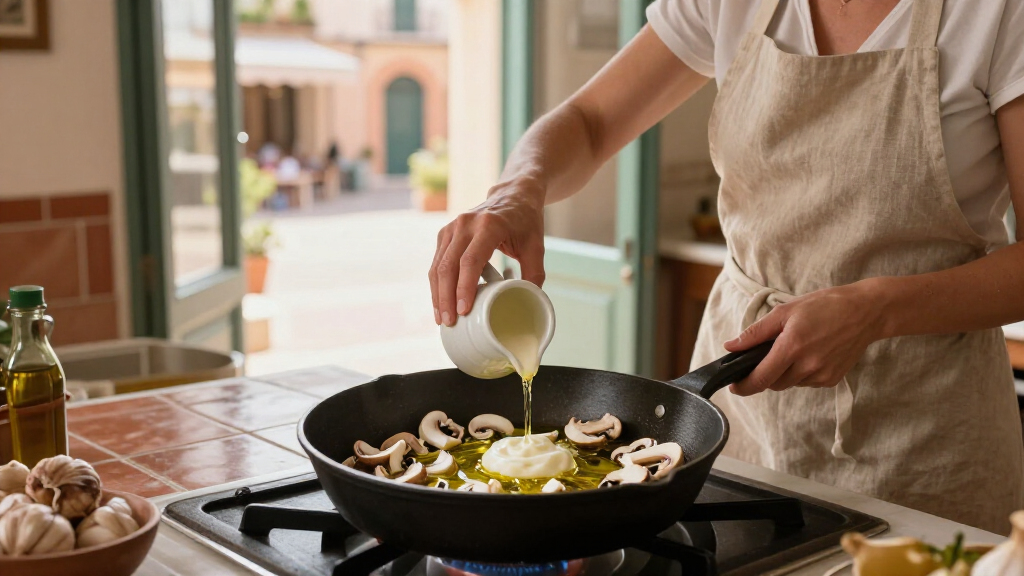
Start with mushrooms in a roomy pan and avoid crowding them. At first, they release water and turn pale and glossy; keep cooking until that liquid evaporates and the edges begin to take on color. If you pile too many into a small pan, they steam instead, and you lose the roasted, concentrated flavor that makes an inexpensive mushroom mix taste richer.
For instance, if you buy a 10-ounce package of cremini, brown the sliced mushrooms in batches. Set aside a small handful for garnish, then stir the rest into the risotto close to serving time. If you also have dried porcini, soak them in hot water, chop them, and use their strained liquid to enrich the stock. Pour it through a fine filter first; grit can spoil an otherwise silky bowl.
Fresh mushrooms bring texture and browned edges, while porcini bring intensity. Together, they create a satisfying risotto ai funghi without truffle prices. You can also add a few oyster mushrooms or shiitake for variety, but let the mushrooms lead: garlic, thyme, parsley, and a little shallot can help, while too many strong additions can crowd their flavor.
Cook rice in stages for a loose, creamy risotto
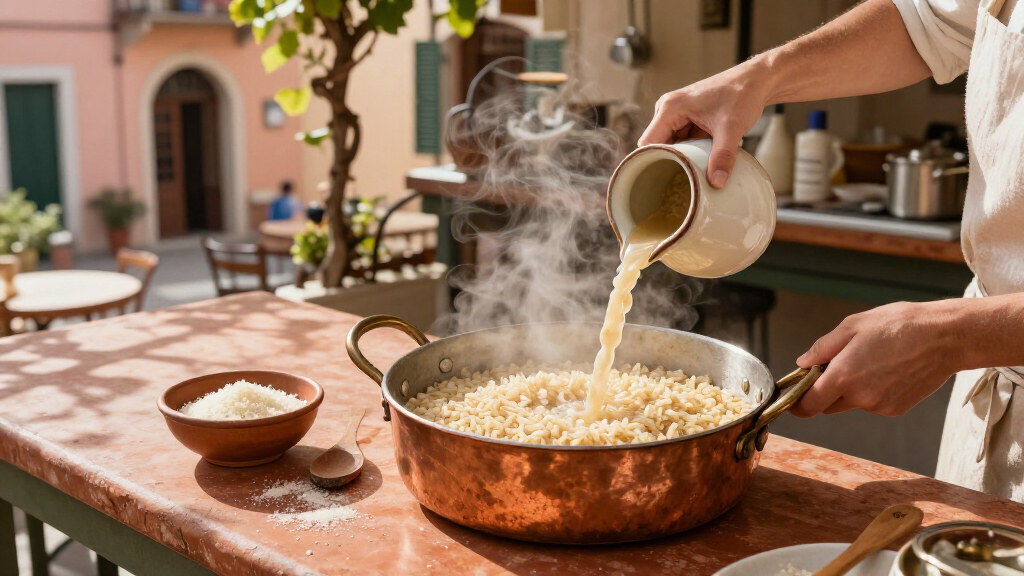
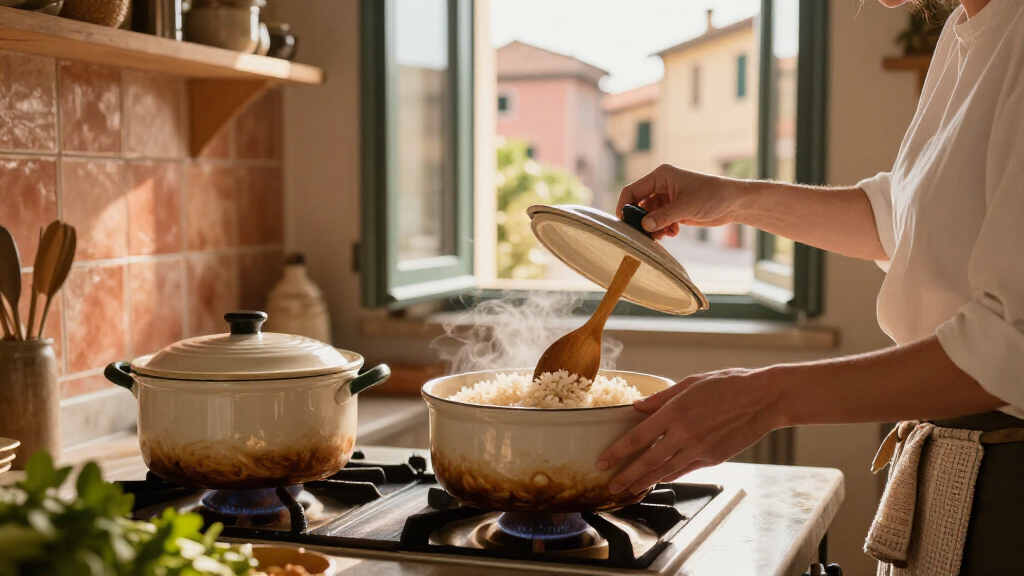
For creamy risotto, toast short-grain rice briefly in a little fat, then feed it hot stock in portions as the rice simmers. Stir frequently, not nonstop. Taste the rice as it cooks, and stop when each grain is tender outside with a slight firm bite at the center.
- Warm the stock. Keep vegetable or chicken stock hot in a separate pot so each addition doesn’t cool the rice. If you used dried porcini, add the carefully strained soaking liquid to the stock.
- Soften your aromatics. Cook a little minced shallot in butter or olive oil until soft, not deeply browned. You want a gentle base that leaves room for the mushrooms.
- Toast the rice. Add the rice and stir for a minute or two, until the grains feel hot and look lightly translucent at the edges. Don’t rinse risotto rice first; surface starch helps create its signature texture.
- Add wine if you like. A modest splash of dry white wine adds brightness. Let it mostly evaporate before you start adding stock. Skip it if you prefer, then brighten the finished dish with a little lemon zest.
- Add hot stock in portions. Pour in enough to just cover the rice and stir as it simmers gently. When the liquid has mostly absorbed, add another portion. The pan should bubble calmly, not boil hard or run dry.
- Check, then finish. Taste before the package’s longest cooking estimate. Stir in the browned mushrooms, remove the pan from the heat, and fold in butter and finely grated Parmigiano Reggiano.
The exact amount of stock and cooking time vary with the pan, rice, and heat. A wide pan can evaporate liquid faster than a narrow saucepan, so judge the rice and its texture rather than following a timer alone. If the mixture thickens before the grains are tender, add more hot stock. The spoon should leave a path that slowly fills in.
Finish with Parmigiano Reggiano and a soft, flowing texture
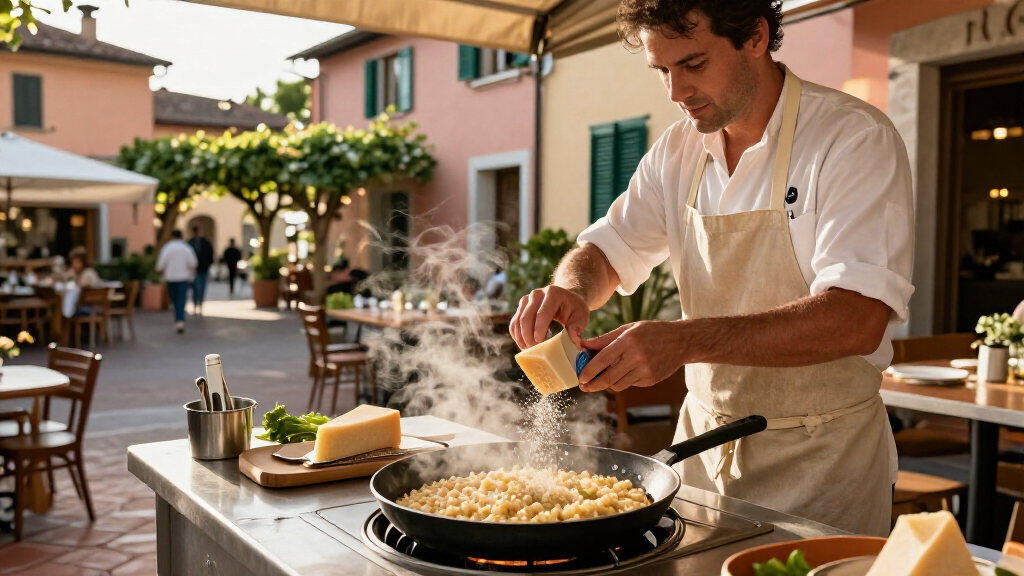
Mantecatura (the final mixing of fat and cheese into risotto) gives the dish its glossy, creamy finish. Take the pan off the heat while the grains still have a slight bite, then vigorously fold in cold butter and finely grated Parmigiano Reggiano. You don’t need cream: the rice starch, butter, and cheese create a smooth sauce that clings to the grains.
Use cheese with a light hand at first. Parmigiano Reggiano is a protected Italian cheese, but it also brings salt, so taste before you season further—especially if your stock is already salty. If the risotto looks stiff, stir in a small splash of hot stock. On the plate, it should spread gently when you tap the underside, not sit like a mound of rice pudding.
This flowing texture is part of the pleasure. Imagine carrying a warm plate to the table: the rice settles into a loose pool, with bronze mushroom edges and a little parsley scattered across the top. Save a few of your best browned mushrooms for that final spoonful of texture, and grate cheese over the bowl just before serving.
For a brighter finish, add a touch of lemon zest or a few drops of lemon juice. It can balance the richness without masking the mushrooms. Wine is optional; if you serve it alongside dinner, keep the meal for adults and drink responsibly.
Keep mushroom flavor clear with a few well-chosen additions
The best additions support the mushrooms instead of competing with them. A little shallot, parsley, thyme, dry white wine, or lemon can round out the dish, but piling on strong flavors can turn a mushroom risotto into a jumble. Treat the seasoning like a frame around the mushrooms, not another painting on top.
For example, if your mushrooms are mild button mushrooms, a small amount of dried porcini can add depth, and a splash of white wine can lift the finished flavor. If you’re cooking fresh, aromatic porcini in season, keep the rest spare: butter, stock, rice, and a little cheese may be all you need. That flexibility is part of the dish’s home-cooking tradition; risotto ai funghi describes a family of preparations, not one fixed formula.
- Use garlic sparingly. One small clove can be pleasant; too much can dominate milder mushrooms.
- Choose one or two herbs. Parsley keeps the finish fresh, while thyme adds a woodsy note.
- Skip truffle oil. Its strong aroma can overwhelm the browned mushrooms, and you don’t need it for a deep, savory bowl.
- Brighten, then taste. A little lemon can cut through richness, but add it gradually so the rice still tastes like mushrooms.
Think of dinner after a rainy walk through a northern Italian market: a bowl of rice, mushrooms, and stock should feel warm and grounded. It doesn’t need a long list of extras to seem special. A few carefully chosen ingredients let the scent of browned mushrooms do the inviting.
Prepare ahead without serving stiff or overcooked rice
Risotto tastes best just after cooking, while the rice still flows and its grains hold a little bite. If you’re hosting, you can cook the rice partway ahead, spread it out to cool promptly, then finish it with hot stock and the final ingredients shortly before dinner. That way you can greet guests without leaving a pot to turn soft on the stove.
For a dinner with friends, cook the rice until it is noticeably underdone, then spread it in a shallow layer so it cools quickly. Finish the cooking later in a pan with hot stock, fold in your browned mushrooms, and make the final butter-and-cheese step just before serving. Keep the mushrooms separately until then if you want them to retain more texture.
Handle cooked rice with care. Don’t leave it sitting at room temperature for a long stretch; refrigerate leftovers promptly in a shallow, covered container. Reheat a portion gently with a splash of water or stock, stirring until steaming hot throughout. The texture will be softer than on the first night, but it can still make a comforting lunch.
Leftover risotto also has a second life. Shape chilled rice into small rounds and pan-fry them until crisp on the outside and hot through, or use it as the base for arancini (fried rice balls). A bowl that has thickened in the refrigerator won’t flow like fresh risotto, but a browned crust makes that change feel like a feature.
Fix crunchy rice, stodgy texture, and weak mushroom flavor
Crunchy risotto usually needs more time and hot stock, while stodgy risotto often needs more careful liquid control or a shorter finish. Taste the grains and watch how the rice moves in the pan; the package timing is a guide, not a verdict. For weak mushroom flavor, start with better browning before adding more ingredients.
If you taste a firm, chalky center, add a little hot stock and let the rice simmer gently until it softens. Don’t pour in a large amount all at once: the surface can turn soupy while the center stays hard. If the rice is already tender but the mixture feels thick, stir in stock a tablespoon or two at a time until it loosens.
For a mushy result, the rice may have cooked too long, absorbed too much liquid, or been stirred so vigorously that the grains broke down. Stop cooking as soon as the rice has a slight bite, then finish off the heat. If the flavor seems flat, check the mushrooms: pale, wet slices won’t bring the concentrated taste of mushrooms that have browned properly.
Suppose your first pan tastes creamy but bland. Next time, brown the mushrooms in batches and season them lightly as they cook; add dried porcini and their strained liquid if available. Remember that stock and Parmigiano Reggiano both contribute salt. Taste after finishing, then add salt only if the dish needs it.

Make a satisfying dairy-free version with the same mushroom-first approach
You can make dairy-free risotto ai funghi by using vegetable stock and olive oil or vegan butter, then finishing with a plant-based hard-cheese alternative or nutritional yeast if you like. The traditional butter-and-cheese finish changes, but the core method stays the same: brown mushrooms, simmer short-grain rice with hot stock, and serve it loose.
Start with a flavorful vegetable stock; it will carry more of the finished dish’s seasoning when you leave out cheese. Dried porcini and their carefully strained soaking liquid can provide a strong savory note, while browned cremini add satisfying texture. If you use nutritional yeast, add a small amount at a time and taste as you go because its flavor can build quickly.
For a simple weeknight example, cook shallot in olive oil, toast Arborio rice, and add hot vegetable stock in portions. Fold in browned mushrooms once the rice is nearly tender, then finish with another spoonful of olive oil and a little chopped parsley. Taste for salt and brighten with lemon if the dish feels heavy.
Check labels on prepared stock and plant-based cheese alternatives if you are cooking for someone with food allergies. This recipe commonly contains dairy when made with butter and Parmigiano Reggiano; stock and packaged alternatives may contain other allergens. Ask guests about allergies before serving, and keep ingredient labels available.
Frequently Asked Questions
Can I make risotto ai funghi without porcini?
Yes. Brown cremini, button, or portobello mushrooms well and use their flavor throughout the dish. Dried porcini add concentrated depth, but they’re optional.
Do I need to stir risotto constantly?
No. Stir often enough to encourage starch release and keep the rice from sticking, while letting it simmer gently between stirs. Constant stirring is tiring and not required.
Should I rinse rice before making risotto?
Usually not. Rinsing washes away surface starch that helps create risotto’s creamy texture. Use short-grain rice such as Arborio, Carnaroli, or Vialone Nano.
Can I make risotto ai funghi without wine?
Yes. Leave out the wine and cook the rice with hot stock. A little lemon juice or zest near the end can add brightness if you miss the wine’s acidity.
How can I tell when risotto is done?
Taste the rice: it should be tender around the outside with a slight firm bite in the center. The risotto should flow gently across the plate; if it stands in a stiff mound, stir in a little hot stock.
Can I reheat leftover mushroom risotto?
Yes. Refrigerate it promptly in a shallow, covered container, then reheat gently with a splash of water or stock until steaming hot throughout. The grains will be softer, but you can also shape cold leftovers into rice cakes and pan-fry them.
What allergens does mushroom risotto contain?
A standard version commonly contains dairy from butter and Parmigiano Reggiano. Check labels on stock, wine, and packaged plant-based substitutes, and ask guests about allergies before you serve the dish.
Conclusion
For deep mushroom flavor without truffle prices, focus on three things: short-grain rice, mushrooms browned until their edges turn bronze, and enough hot stock to keep each grain cooking evenly. Add a little dried porcini if you have it, but don’t wait for a specialty ingredient to make a good dinner. Taste as you go, finish the rice off the heat, and bring it to the table while it still settles into a soft pool. Let the first spoonful smell like a damp autumn wood after rain.Halloween Picks
halloween
As an affiliate, we earn on qualifying purchases.



![A Visual Guide To Europe’s Most Popular Olive Oil Varieties, From Koroneiki To Picual [MAP]](https://madtasting.com/wp-content/uploads/2026/10/a-visual-guide-to-europe-s-most-popular-olive-oil-varieties-from-koroneiki-to-pi-featured-260x140.jpg)