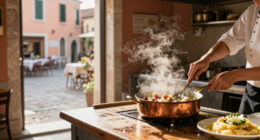
TL;DR
Sant’Ambrogio falls on December 7, when Milan honors Saint Ambrose and the Oh Bej! Oh Bej! market traditionally brings crafts, sweets, chestnuts, and winter crowds near Castello Sforzesco and Parco Sempione. Check the City of Milan’s current schedule before traveling, then end the day with risotto alla milanese, the saffron-colored dish also called risotto giallo.
On December 7, Milan’s Christmas season begins with a feast day that smells of roasted chestnuts and sounds like market chatter spilling across the streets. The occasion honors Saint Ambrose, the city’s fourth-century bishop and patron saint, and brings the Oh Bej! Oh Bej! market into the winter calendar.

Get kitchen staples and gadgets delivered free with Prime
- Fast, free delivery on millions of items
- Prime Video, Amazon Music and more included
- Member-only deals all year
You can make the day more than a shopping stop. Browse the seasonal stalls near Castello Sforzesco, notice how a civic feast and religious tradition share the same streets, then sit down to risotto alla milanese—Milanese saffron risotto, often called risotto giallo, or “yellow risotto.”
This guide explains what the market name means, what you may find there, how to plan around changing schedules and crowds, and what to know about Milan’s golden rice dish. Treat the cathedral story attached to saffron risotto as folklore, and let the day’s real pleasures be simpler: warm chestnuts in your hands, winter air on your face, and saffron-scented rice at dinner.
Sant’Ambrogio is celebrated on December 7 and honors Milan’s patron saint, Saint Ambrose.
The Oh Bej! Oh Bej! market has traditionally been near Castello Sforzesco and Parco Sempione, but verify the current year’s schedule and layout.
The market name is commonly linked to the Milanese phrase meaning roughly “Oh, how lovely!”; its popular 1510 origin story is one account among varying histori…
Risotto giallo is Milanese saffron risotto, often served alone or with ossobuco; the cathedral stained-glass origin story is folklore.
Use public transport where practical, plan for winter crowds, and leave breathing room between market browsing and dinner.
A Milanese feast day from market to table
On December 7, Sant’Ambrogio brings together a civic and religious feast, a lively street market, and golden saffron risotto.
A feast woven into city life
The day honors Milan’s patron saint and traditionally marks the start of the Christmas season.
- Oh Bej! Oh Bej! street market
- Seasonal shopping and public festivities
- Church observances
- La Scala season opening traditionally coincides
Browse the seasonal stalls
The market has generally gathered near Castello Sforzesco and Parco Sempione in recent decades.
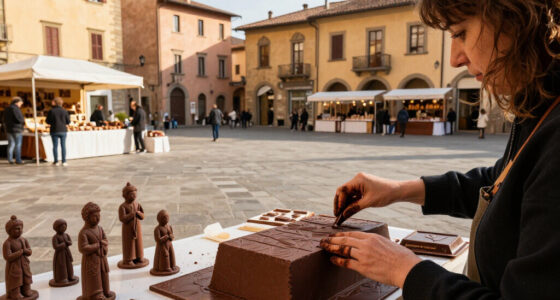
Crafts and decorations
Look for seasonal gifts and handmade finds among the changing stalls.
Antiques and books
Browse older objects and books at this traditional street market.
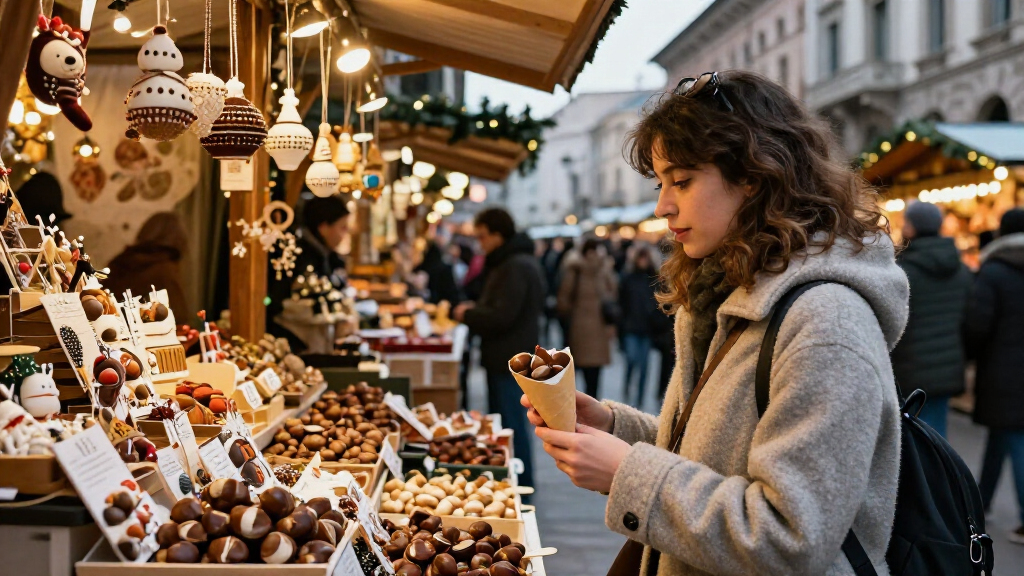
Sweets and chestnuts
Warm roasted chestnuts and other seasonal foods are common finds.
Plan for a flexible visit
Confirm dates, hours, access, and location through City of Milan announcements.
Use public transport where practical and check for service changes.
Expect crowds, especially on December 7 and weekends; make space for a quieter break.
Finish with risotto giallo
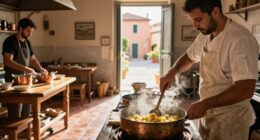
Risotto alla milanese is rice slowly cooked with broth, then finished with butter, grated cheese, and saffron.
| At the table | What to know |
|---|---|
| Risotto giallo | Milanese saffron risotto, named for its golden color |
| With ossobuco | Often served with braised veal shank |
| Cathedral story | A popular folklore, not a settled origin |
Make December 7 a full Milanese feast day
Sant’Ambrogio in Milan is the December 7 feast of Saint Ambrose, the city’s patron saint, and it also signals the start of the local Christmas season. For a visitor, that means a day shaped by more than shopping: religious observances, seasonal street life, and the traditional opening of La Scala’s opera season all meet around the same date.
Saint Ambrose served as bishop of Milan in the fourth century, and his place in the city’s identity still gives the holiday its civic weight. You do not need to attend a service or an opera to feel that history. Walk through central Milan on December 7 and you will see how a feast day can belong both to church calendars and to ordinary city routines.
Think of the day as a three-part outing. In the late morning, head toward the market; in the afternoon, leave room for a warm drink or a quieter walk through Parco Sempione; in the evening, book dinner around a plate of risotto giallo. For example, if the market is shoulder-to-shoulder by lunchtime, a park break gives you room to breathe before dinner.
The date stays fixed, but event details do not. The market’s exact schedule and layout can change, so check current City of Milan announcements before you build a tight itinerary. That small step can save you a cold detour across town.
Products Worth Considering

Ring Alarm 14-Piece Kit

Dyson Purifier Hot+Cool HP2 De-NOx

eufy E25 Robot Vacuum and Mop with HydroJet Roller Mop
As an affiliate, we earn on qualifying purchases.
Know what you’ll find at the Oh Bej! Oh Bej! market
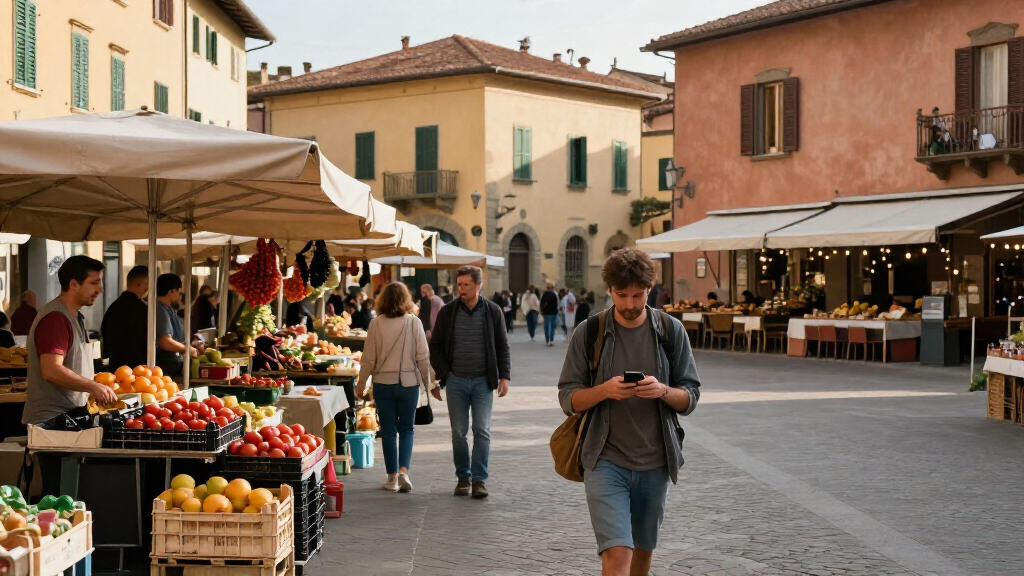
The Oh Bej! Oh Bej! market is a traditional open-air seasonal street market associated with Sant’Ambrogio, usually held in recent decades near Castello Sforzesco and Parco Sempione. Its stalls commonly offer crafts, decorations, antiques, books, sweets, roasted chestnuts, and other winter foods, though the vendors and layout vary by year.
The name is commonly explained through the Milanese expression Oh belli! Oh belli!—roughly, “Oh, how lovely!” A popular origin story connects the market with gifts that papal envoy Giannetto Castiglione distributed to Milanese children in 1510. Accounts of the market’s beginnings vary, however, so enjoy the story as a familiar tradition rather than a settled account of every detail.
Unlike a carefully staged holiday village, this is a street market with a long history and a lively, sometimes crowded feel. You might pause over handmade decorations, then follow the smell of chestnuts to a food stall. If you are searching for a small keepsake, browse slowly: the best find may be a book or a simple craft rather than a polished souvenir.
Keep your expectations flexible. A stall you remember from a past visit may not return, and the walkways can fill quickly on December 7 or a weekend. Treat the market as a seasonal snapshot of Milan, not a fixed collection of shops.
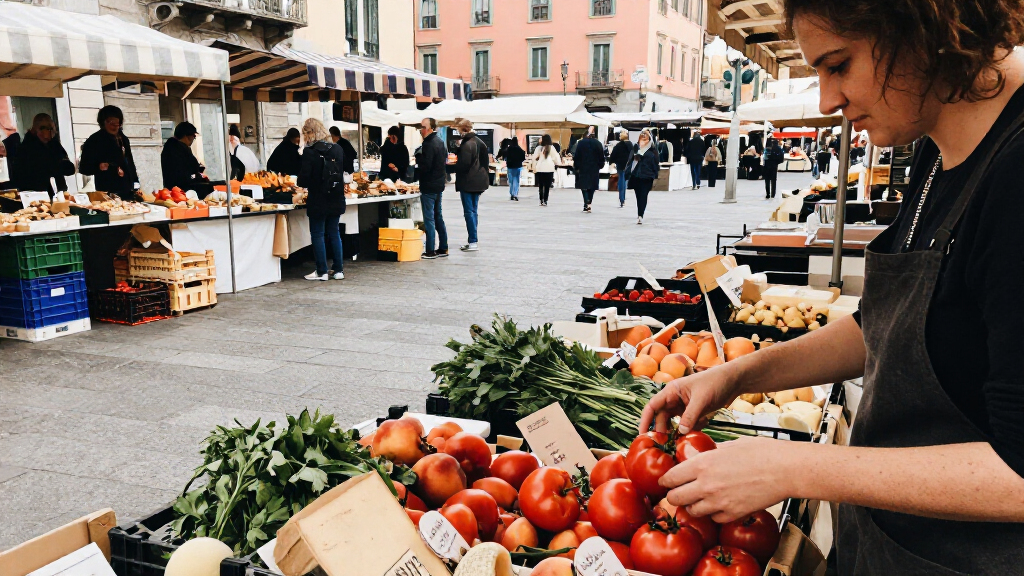
- Common finds: crafts, decorations, vintage goods, books, sweets, chestnuts, and seasonal foods.
- Good approach: bring a short shopping list, but leave time to browse.
- Practical note: the open-air market is generally free to visit; you pay for purchases.
Plan your market visit around crowds and changing details
To visit the Oh Bej! Oh Bej! market smoothly, check the current schedule and location first, travel by public transport where practical, and allow extra time for crowds. The market traditionally gathers near Castello Sforzesco and Parco Sempione, but dates, hours, street access, and stall locations can change from year to year.
Use this short sequence when you plan:
- Confirm this year’s details through current City of Milan announcements before setting out.
- Check transit updates on the day, since event-related service changes or crowded stops can affect your route.
- Choose a flexible arrival window and avoid stacking timed reservations immediately before or after your market visit.
- Dress for a Milan winter with warm layers and shoes suited to standing or walking on city streets.
- Set a meeting point if you are visiting with family or friends, especially if you expect to split up among stalls.
For example, a family arriving with a stroller may prefer an earlier or quieter period and a loose plan that includes a break away from the densest lanes. Anyone meeting friends can choose a clear landmark outside the busiest part of the market instead of trying to find one another beside a crowded stall.
The market is generally free to enter, which makes it easy to stop by without committing to a full day. Still, free access does not mean open walkways: expect congestion around popular food and gift stands, especially on December 7 and weekends. A little schedule flexibility turns that crowd into atmosphere rather than a race against the clock.
Order risotto giallo for the taste of Milan
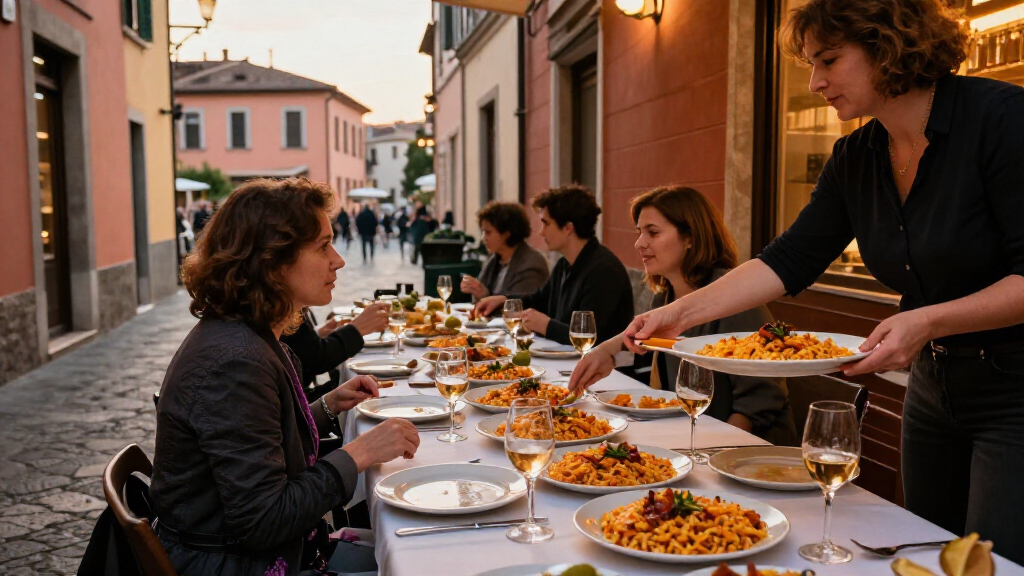
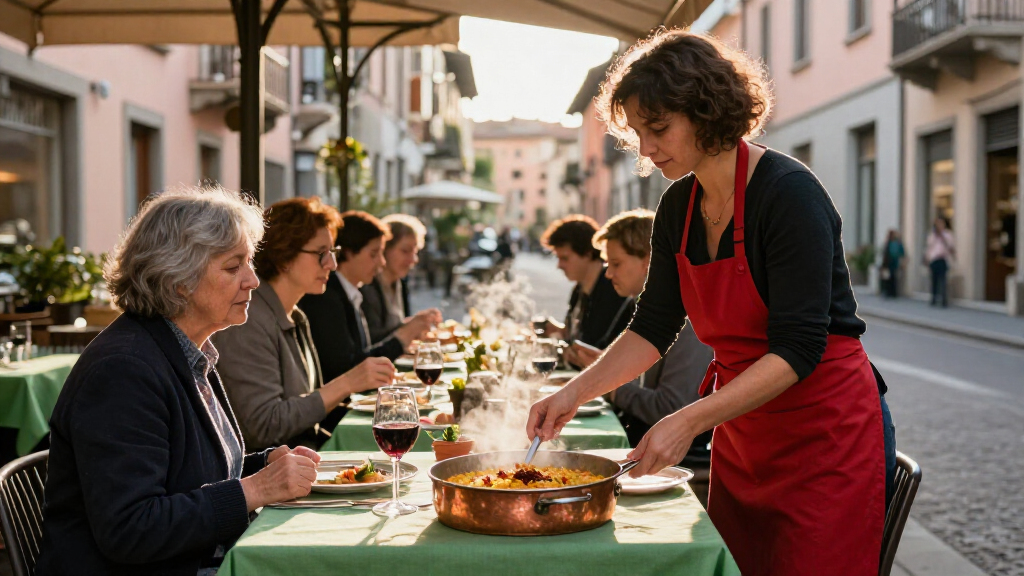
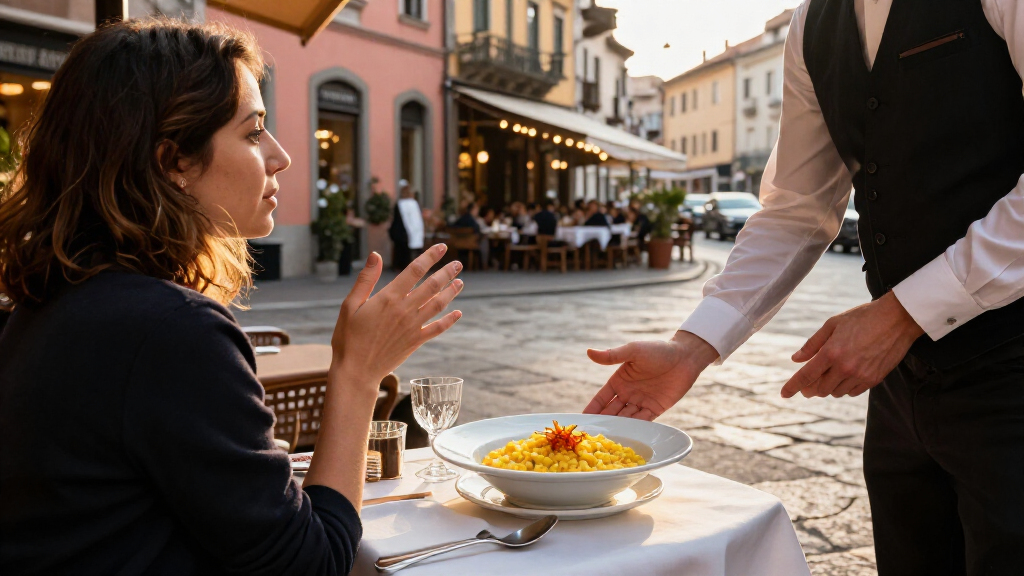
Risotto giallo is Milanese saffron risotto, known for its warm golden color and creamy texture. A seasonal dinner after the market might center on risotto alla milanese, made by slowly cooking rice with broth and finishing it with butter, grated cheese, and saffron; it is often served by itself or alongside ossobuco, braised veal shank.
That pairing gives you a satisfying choice. Risotto on its own lets the saffron’s earthy, floral aroma lead, while ossobuco adds tender meat and a rich braising sauce. After hours of walking in cold air, the combination can feel especially restorative: soft rice, bright gold against a dark plate, and slow-cooked veal if you want a heartier meal.
The dish’s history comes with stories, including a familiar legend that links saffron to workers making stained glass for Milan Cathedral. The cathedral connection is folklore, not a firmly established account of the recipe’s origin. Recipes and techniques have changed over time, too, so a restaurant’s version may differ in how it handles the rice, broth, or finishing butter.
If you cook at home, set aside time to stir and add broth gradually rather than expecting a quick weeknight bowl. Use a reliable recipe and keep any cooked rice refrigerated promptly; as a general food-safety rule, refrigerate leftovers within two hours and reheat until steaming hot. Restaurant diners with dairy allergies should ask about butter and cheese, and those with meat restrictions should check whether the broth is meat-based.
See how market traditions and dinner fit together
The Sant’Ambrogio outing works because the market and the meal offer different views of Milan: one is public, busy, and seasonal; the other is a slower encounter with a dish closely associated with the city. Pairing them gives your December visit a rhythm rather than turning it into a checklist of attractions.
Here is a useful comparison when you shape the day:
| Part of the day | What it offers | How to enjoy it |
|---|---|---|
| Oh Bej! Oh Bej! market | Street stalls, crafts, sweets, chestnuts, and winter crowds | Browse without a strict shopping agenda and confirm the current location |
| Parco Sempione break | A calmer pause near the traditional market area | Use it to rest between browsing and dinner |
| Risotto alla milanese | A saffron-rich Milanese specialty, sometimes paired with ossobuco | Choose the lighter standalone dish or the more substantial meat pairing |
| La Scala season opening | A longstanding cultural association with December 7 | Check current performance information if you hope to attend |
Picture a couple arriving late in the morning: they browse a few stalls, share roasted chestnuts, then step away from the busiest lanes for a walk. At dinner, they order one risotto and one ossobuco pairing to share. The day feels rooted in Milan because each stop connects to a local custom, not because every hour is packed.
There is a tradeoff: the festive date brings energy, but also crowds and competition for tables. Reserve dinner if you have a particular restaurant in mind, while keeping lunch and market timing loose. A flexible schedule is often more pleasant than chasing a perfect itinerary through a busy city.
Read the feast as a living part of Milan’s identity
Sant’Ambrogio matters because it joins religious memory, civic identity, and everyday celebration in one winter date. The feast honors a bishop from Milan’s fourth-century history, while the market, seasonal food, and La Scala tradition show how that history continues to shape public life.
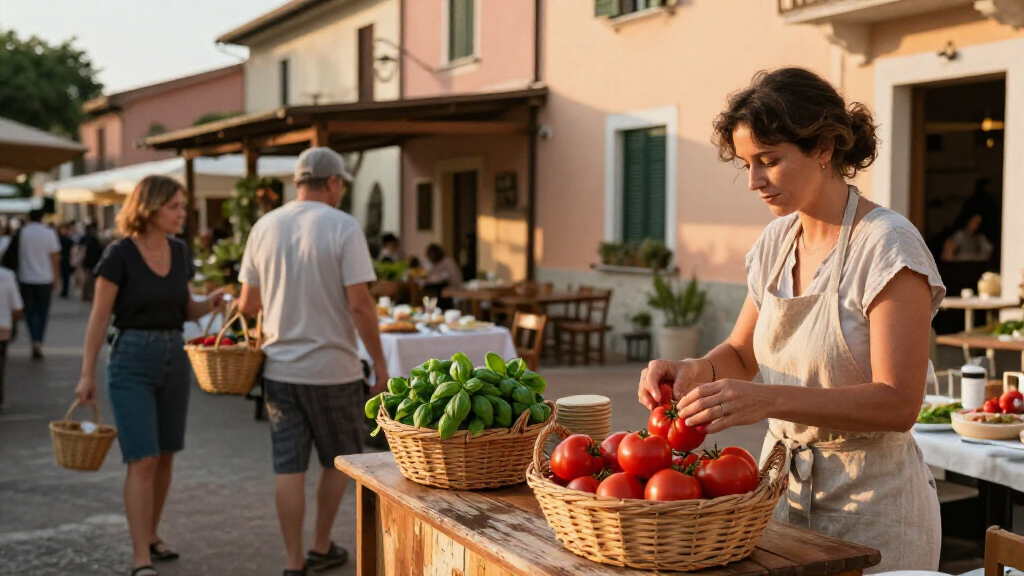
For visitors, the value is not in treating the city as a museum. It is in noticing small details: Milanese words in market chatter, local families carrying paper bags, the difference between a temporary stall and a formal Christmas market. The Oh Bej! Oh Bej! market is one piece of a broader December ritual, not the whole story of the city.
That is why a plate of risotto alla milanese belongs in the itinerary. The dish turns regional identity into something you can taste: rice made creamy with broth, butter, and grated cheese, then scented and colored by saffron. If you order it beside ossobuco, you experience a classic combination; if you choose it alone, you still get the golden centerpiece.
Keep the context accurate as you tell someone about the day. December 7 is the feast of Saint Ambrose and is traditionally linked to La Scala’s season opening, but a particular year’s event program needs checking. The cathedral-glass story is a legend, and the market’s precise schedule varies. Those distinctions do not make the tradition less compelling; they help you appreciate what is known and what belongs to local storytelling.
The best Sant’Ambrogio plan leaves room for the unexpected: the stall you did not expect to love, the chestnuts you eat while walking, and the golden risotto that makes you slow down.
Frequently Asked Questions
When does the Oh Bej! Oh Bej! market take place?
The market is associated with Sant’Ambrogio on December 7, but its precise dates and hours can vary each year. Check the City of Milan’s current announcements before you travel.
Where is the Oh Bej! Oh Bej! market held?
In recent decades, the market has generally been held near Castello Sforzesco and Parco Sempione. The exact layout and location can change, so confirm the current arrangement before setting out.
What does “Oh Bej! Oh Bej!” mean?
The name is commonly explained through the Milanese expression Oh belli! Oh belli!, meaning roughly “Oh, how lovely!” A popular story links the market to gifts for children in 1510, though accounts of its beginnings vary.
What is risotto giallo?
Risotto giallo means yellow risotto: Milanese saffron risotto with a golden color, traditionally finished with butter and grated cheese. It is often served alone or alongside ossobuco, braised veal shank.
Is the saffron story about Milan Cathedral true?
The story connecting saffron risotto to stained-glass makers at Milan Cathedral is a popular legend, not a firmly established historical account. The dish is strongly associated with Milan, but its history is more complex than one origin story.
Is the market free, and what should I bring?
The open-air market is generally free to visit; purchases cost extra. Wear warm layers and comfortable walking shoes, allow extra time for crowds, and check transit information on the day.
Conclusion
Plan your Sant’Ambrogio visit around the December 7 feast, but check the market’s current details before you go. Then give the day a little breathing room: browse near Castello Sforzesco, warm your hands with chestnuts, and make time for risotto giallo at dinner.
Milan’s winter tradition is easiest to remember in a few vivid colors: market lights against the cold, chestnut shells underfoot, and saffron turning a bowl of rice gold.