
TL;DR
A Christmas biscotti box pairs three Italian cookie styles: crunchy Tuscan cantucci, soft Sienese ricciarelli, and crisp or chewy amaretti. Choose a sturdy tin, keep soft and crisp cookies separated, label almond and other allergens clearly, and include coffee or tea pairing ideas; follow each bakery’s storage and freshness guidance.
One cookie snaps when you break it, another yields like a little almond pillow. That contrast is what makes a Christmas biscotti box feel generous: it offers three distinct Italian sweets instead of three versions of the same bite.

Get kitchen staples and gadgets delivered free with Prime
- Fast, free delivery on millions of items
- Prime Video, Amazon Music and more included
- Member-only deals all year
This guide helps you choose cantucci, ricciarelli, and amaretti with their regional roots in mind, arrange them so their textures hold up, and serve them with a drink that suits each one. You’ll also find practical notes on allergens, storage, and gift packing, so the box travels from your kitchen or bakery to the holiday table in good shape.
Think of the assortment as a small edible trip from Tuscany to Siena and beyond. The names and recipes vary among families and bakeries, but a little care lets you give a box that feels both personal and grounded in Italian tradition.
Use cantucci for crunch, Sienese ricciarelli for a soft almond chew, and choose crisp or soft amaretti to complete the texture mix.
Separate crisp and soft styles in food-safe packets, then pack them snugly in a rigid tin to reduce breakage and texture changes.
Check labels for almonds, apricot kernels, wheat, cross-contact, and any alcohol before gifting or serving.
Pair cantucci with coffee, tea, or adult-only Vin Santo; offer a nonalcoholic drink as an easy alternative.
Follow the bakery’s date and storage guidance, since shelf life depends on the recipe, moisture, packaging, and freshness.
Build a Christmas Biscotti Box Three cookies, three textures
Pair Tuscan cantucci, Sienese ricciarelli, and crisp or soft amaretti for a gift that offers a different bite for every moment.
Give each cookie a role
A balanced assortment brings together a firm crunch, a tender chew, and a concentrated almond aroma.
Cantucci
Dry, twice-baked biscuits with a satisfying snap. Serve with coffee, tea, or Vin Santo.
Ricciarelli
Soft, dense almond cookies with a powdered top. Enjoy them on their own.
Amaretti
Choose crisp for another dipping cookie or soft and chewy for a second tender bite.
Choose a regional story
Recipes vary by family and bakery, so ask what style and regional tradition each maker follows.
- Center the box on Tuscan cantucci or Sienese ricciarelli.
- Add a contrasting cookie and describe its place on a short card.
- Bring all three styles together for variety across textures.
- Tell the recipient which cookies are crisp, soft, and best for dipping.
Pack to protect texture
Keep crisp and soft cookies apart so they arrive with their textures and appearance intact.
Use food-safe packets or separate sections for crisp cantucci and soft cookies.
Wrap ricciarelli or set them in a paper cup to protect their powdered tops.
Fill gaps with food-safe cushioning so cookies cannot rattle or get crushed.
Check labels and serving options
Clear information helps the recipient enjoy the gift with confidence.
- Check for almonds, apricot kernels, wheat, cross-contact, and any alcohol.
- Offer coffee or tea as nonalcoholic pairings; Vin Santo is an adult-only option.
- Follow each bakery’s storage and freshness guidance; there is no single shelf life for every recipe.
Give each cookie a different job in the box
A Christmas biscotti box works best when each cookie contributes a different texture: cantucci bring a firm crunch, ricciarelli bring a soft chew, and amaretti add a concentrated almond note. This contrast gives the assortment a rhythm: a recipient can choose a crisp bite for dipping, a tender one to eat on its own, or a more intensely almond-flavored cookie. Start with one of each, then add more of the style you know your recipient loves. The tradeoff is that a box built around variety needs more careful packing than a single-cookie gift.
Cantucci, also called cantuccini, are oblong Tuscan biscuits traditionally made with almonds and baked twice. Their dry snap makes them natural partners for dipping in coffee, tea, or Vin Santo, a Tuscan dessert wine. Ricciarelli are dense, tender almond cookies associated with Siena, often made with ground almonds, sugar, and egg whites, with a cracked top under powdered sugar. Since they are soft, they are best enjoyed without dipping, which could make their delicate texture feel heavy or cause them to crumble.
Amaretti vary more than their name might suggest: some are crisp, while others are soft and chewy. Their recipes often use almonds or apricot kernels, sugar, and egg whites. A crisp style reinforces the cantucci’s crunch and makes dipping an option; a soft style adds another tender bite beside the ricciarelli. Choosing between them is a balance: matching textures can make the box feel cohesive, while mixing them gives the recipient a wider range of ways to enjoy it.
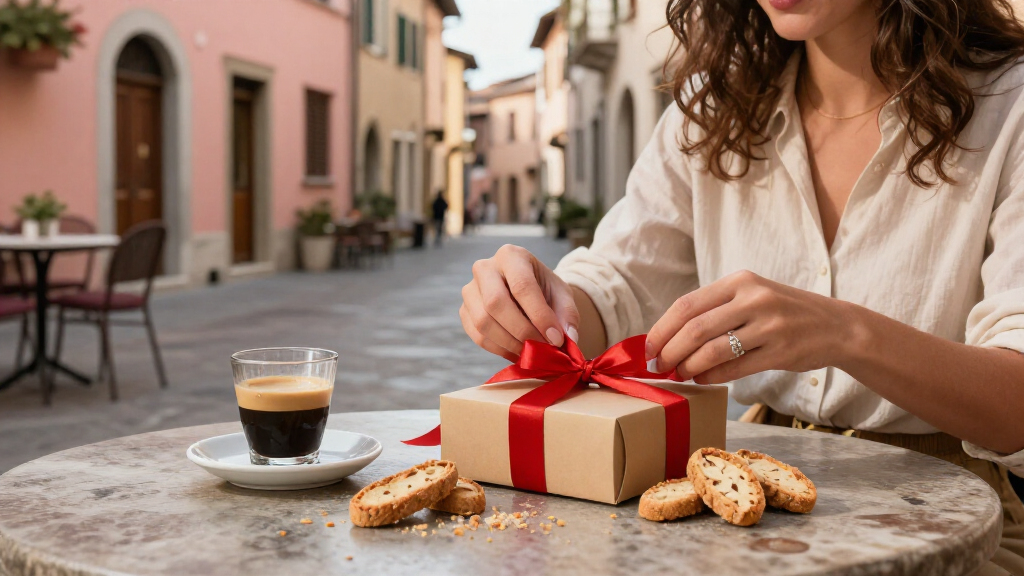
Imagine your aunt opening the tin after Christmas dinner. She can nibble a powdered ricciarello with espresso, then save a cantuccio to dip into tea the next morning. The trio offers three classic Italian sweets with distinct textures and flavors, and together they make the gift feel carefully chosen. That variety matters because the cookies suit different moments, so the gift can be enjoyed over more than one sitting.
Products Worth Considering

TCL 85-Inch QM64L QD-Mini LED 4K Smart Fire TV

Samsung 55-Inch M80H Series 4K Mini LED Smart TV (2026 Model)

Dyson Cyclone V10 Origin Cordless Vacuum
As an affiliate, we earn on qualifying purchases.
Choose a Tuscan, Sienese, or mixed regional assortment
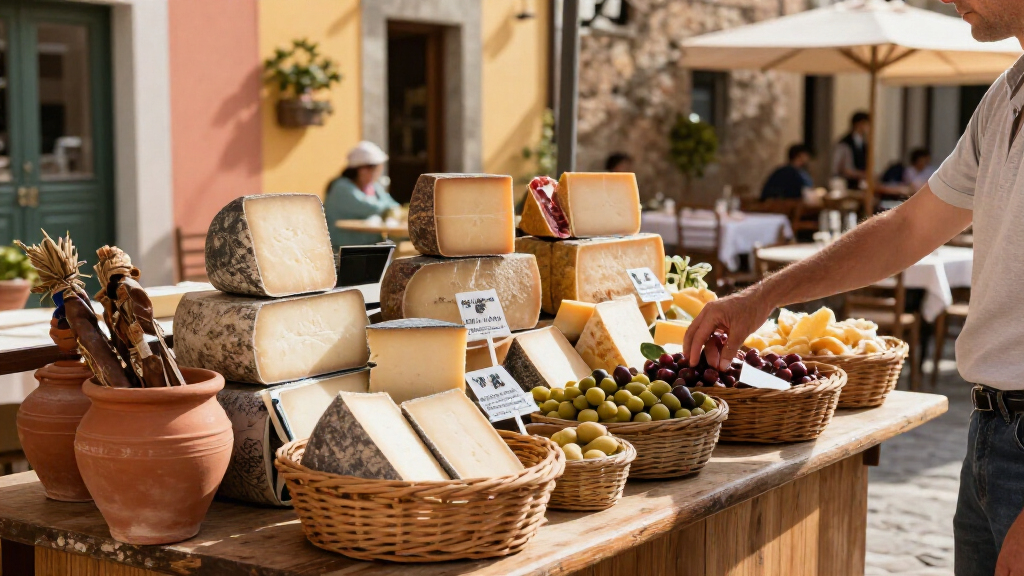
Choose a single-region box when you want to tell a focused story, or a mixed box when you want contrasting traditions and textures in one gift. Cantucci point toward Tuscany, especially their familiar pairing with Vin Santo; ricciarelli point toward Siena. Amaretti belong to a broader family of almond cookies with recipes that shift by bakery and place, so ask the baker what style they make. A focused box can make the regional connection easier to explain, while a mixed one gives a recipient more variety; neither choice guarantees a more authentic experience unless you know how the baker describes the recipes.
A Tuscan-leaning box could center on almond cantucci, with a smaller packet of soft amaretti for contrast. For a Siena-inspired gift, let ricciarelli lead and add cantucci as the crisp companion. If your recipient likes variety, combine all three and put a short card beside them: “Tuscan almond biscuit,” “Sienese soft almond cookie,” and “amaretti, crisp style.” That turns a label into a miniature food itinerary and helps the recipient understand why each cookie has a different place in the assortment.
Italian cookie traditions don’t reduce to one definitive recipe. A bakery may shape its cantucci differently from a family kitchen, and amaretti texture depends on the style being made. If you’re buying from an Italian bakery, ask about the town or regional tradition behind the cookies instead of assuming every recipe follows one fixed formula. That question can also uncover practical differences, such as whether an amaretti is crisp or chewy, which will help you choose a balanced mix.
For example, if you’re planning a holiday trip through Tuscany and Siena, buy cantucci in one stop and ricciarelli in another, then assemble the box at home. The itinerary becomes part of the present. Buying from separate makers can create a more personal regional story, but it also means checking each package’s ingredients, dates, and storage guidance individually. Look for a clear ingredient label and a protected package for the journey, especially if you’ll carry the cookies in luggage or mail them.
Pack the cookies so crisp stays crisp and soft stays soft
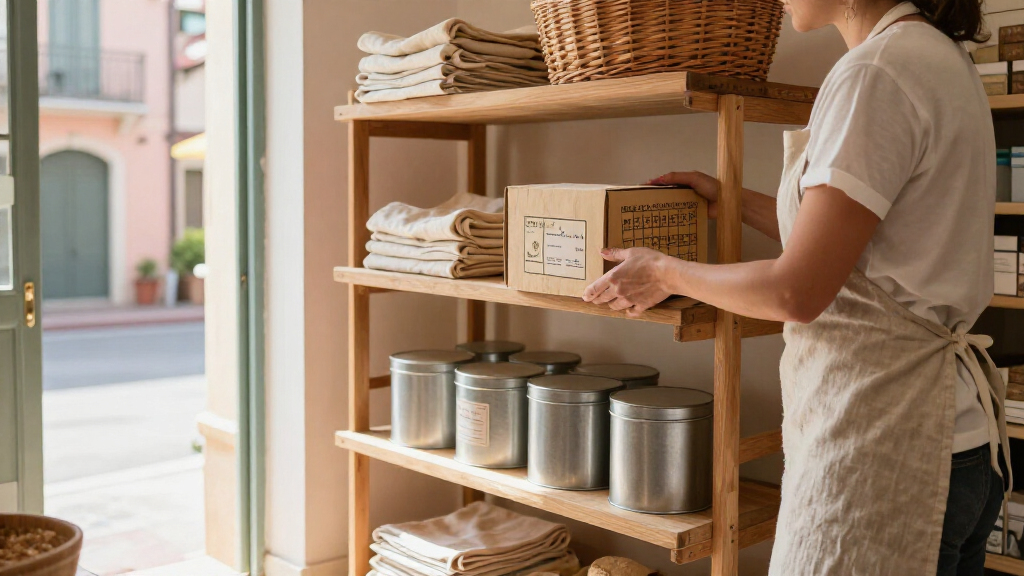
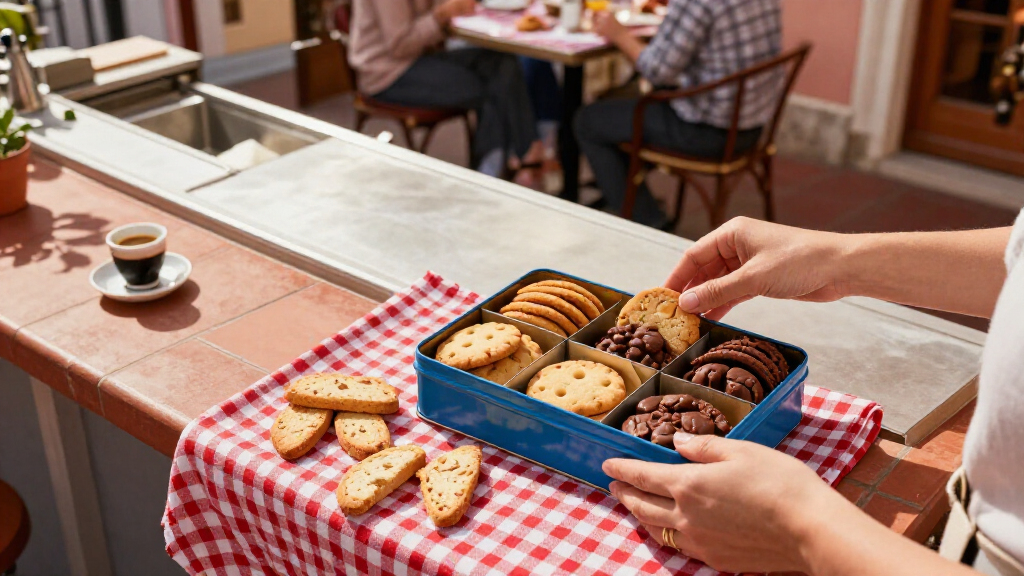
Pack crisp cookies separately from soft cookies to help preserve their different textures. Cantucci are dry and crunchy, while ricciarelli and soft amaretti hold more moisture; if they sit together in one unprotected compartment, the crisp biscuits can lose their snap. The cookies can also rub against each other, damaging powdered surfaces or breaking brittle edges. Use food-safe paper sleeves, small sealed bags, or separate sections inside a sturdy tin. Individual packets add a little unpacking, but they protect both texture and appearance during travel.
Build the box in layers. Put a cushion of crumpled food-safe paper or a fitted insert at the bottom, then place the heavier cantucci along the edges where they’re less likely to slide. Set ricciarelli in a small paper cup or wrap them in parchment so their powdered tops stay neat. Keep soft amaretti in their own packet. This arrangement reduces pressure on the most delicate cookies while giving firmer biscuits a stable place to sit. The goal resembles packing a suitcase: shoes go in a separate compartment from a delicate sweater, even though everything travels in the same case.
Choose a tin or rigid box that leaves little room for cookies to rattle. If you’re shipping, fill gaps with clean, food-safe packing material and test the closed box with a gentle shake. A loud clatter means the cookies can collide and break. Too much tight packing has its own cost: pressure can crush ricciarelli or crack cantucci, so use cushioning to fill space rather than forcing cookies together. For a local handoff, a reusable tin tied with ribbon is attractive and useful after the sweets are gone.
A neighbor bringing the box to a family gathering may carry it in a car for an hour. Separate packets and snug packing help the cantucci arrive intact and keep the ricciarelli from rubbing powdered sugar onto everything. Add a note with serving suggestions and storage instructions so the recipient knows how to enjoy each texture at its best. Those details make the packing useful after the trip, too, because the recipient can keep the cookie types separated once the tin is opened.
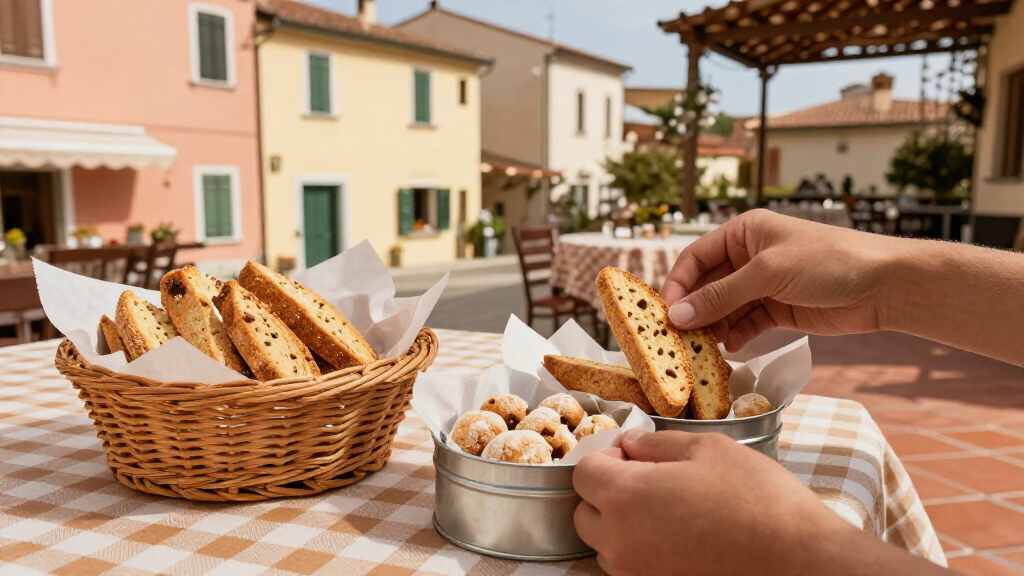
Follow five steps to build a balanced gift
- Ask about the recipient. Check for nut allergies, gluten needs, and whether they drink alcohol before choosing the cookies or writing a pairing note.
- Pick the texture balance. Start with cantucci for crunch, ricciarelli for softness, and an amaretti style that fills the gap you want: crisp or chewy.
- Read the labels. Almonds are central to these cookies, and some amaretti use apricot kernels. Recipes and bakery practices vary, so don’t guess about ingredients or cross-contact.
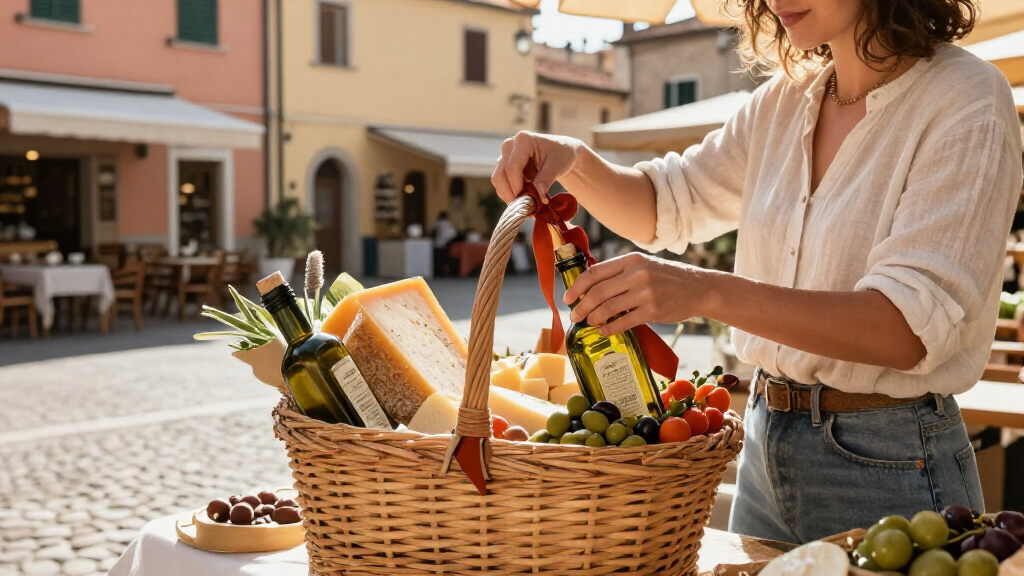
- Pack in separate portions. Keep soft and crisp types apart in food-safe wrapping, then cushion them in a rigid tin or box.
- Add a useful card. Name each cookie, suggest coffee or tea, and include the maker’s storage and date guidance.
These steps turn a pretty assortment into a gift someone can use with confidence. A balanced box depends on both the person receiving it and the cookies’ practical limits: texture variety can make the gift more interesting, but ingredient and cross-contact questions determine whether someone can safely enjoy it. The label check matters especially when a host plans to serve the box at a crowded holiday table, where guests may not know what each cookie contains.
Gluten-free needs deserve the same care. Ricciarelli and some amaretti may be made without wheat flour, but recipes differ and cross-contact can happen in a bakery. Only describe a cookie as gluten-free when the maker’s label or direct information supports that claim. This distinction matters because a recipe without wheat flour does not by itself establish how the cookie was made or handled.
For a practical example, say you’re bringing the tin to a friend who avoids gluten and has a child with a nut allergy. The traditional almond character of this assortment makes it unsuitable for that child unless the family and maker confirm safety. A clear conversation is kinder than a vague “probably fine” note, and it prevents the recipient from having to investigate while guests wait. If the bakery cannot confirm the relevant ingredients and handling, choose a different gift for that household rather than asking the family to take a chance.
Pair each cookie with a drink that suits its texture
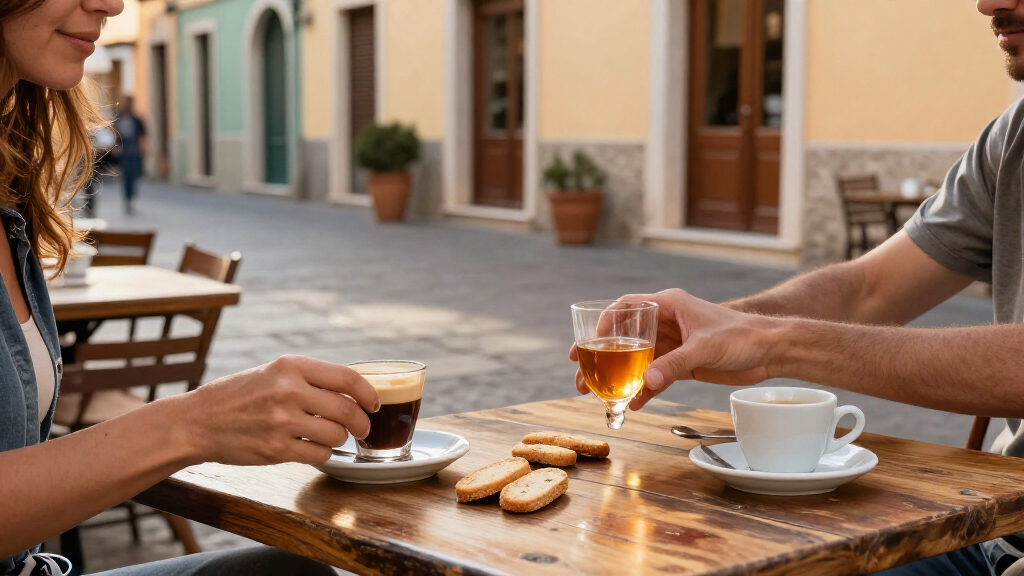
Cantucci pair naturally with a warm drink or a brief dip because their dry, crunchy texture softens at the edges. In Tuscany, Vin Santo is a traditional match; coffee, espresso, and tea work well too. The dip is part of the pleasure, but a short dip helps preserve some crunch while softening the surface; leaving the biscuit submerged too long can make it collapse. Ricciarelli are soft and almond-rich, so a small espresso or unsweetened tea can balance their sweetness without overwhelming their delicate texture.
Amaretti depend on their style. A crisp one can be served much like cantucci, while a soft amaretti sits comfortably beside coffee after dinner. Put the drinks on a small card rather than dictating a single “correct” pairing: “Try the cantucci with espresso or tea; save the Vin Santo for an adult tasting.” That gives your recipient options and respects different preferences. It also lets the recipient choose whether to emphasize contrast, such as a crisp biscuit with tea, or keep the whole moment gentle with a soft cookie and coffee.
Vin Santo contains alcohol, so keep it for adults who choose to drink and serve it responsibly. If you’re hosting, offer coffee or tea alongside it; no one should need an alcoholic pairing to enjoy the cookies. Almond aroma in amaretti also doesn’t mean the recipe contains amaretto liqueur. Check the ingredient list if alcohol content matters to your guest. Clear pairing notes help prevent a traditional serving suggestion from being mistaken for a requirement.
Picture a quiet afternoon on December 26: the tree lights are still on, the kettle clicks off, and a cantuccio softens after a quick dip in tea. That simple moment is part of the gift. A note that suggests a warm drink makes the assortment easier to enjoy, whether the recipient pours a Tuscan dessert wine or chooses a mug of black tea. The best suggestion is one that fits the recipient’s habits and leaves the cookies themselves at the center.
Store the box by texture and follow the bakery’s dates
Store the cookies in a cool, dry place and follow the maker’s storage directions and date label. Airtight containers often help biscotti retain quality, but there is no single shelf-life promise for every recipe. Dry cantucci may keep their quality longer than soft ricciarelli, while moisture, packaging, and freshness when purchased all affect how the cookies hold up. The difference matters when deciding when to buy: a box with soft cookies may need a shorter lead time, even if the sturdier cantucci could be purchased earlier.
If you open the assortment, return crisp cantucci to an airtight container and keep soft cookies in their own packaging when possible. Avoid leaving the tin beside a steaming kettle or on a sunny windowsill; warmth and humidity can dull the crunch. If the bakery supplies a specific storage method, use that guidance instead of relying on a general rule. Separating the cookies also limits moisture moving between styles, so one soft cookie is less likely to affect the rest of the box.
For a gift bought several days before Christmas, check the dates before wrapping and ask the bakery which cookies have the shortest best-quality window. Choose individually wrapped portions if the recipient may open the box slowly over a week. That can make it easier to keep the remaining cookies protected, though packaging doesn’t replace the maker’s instructions. Buying closer to the holiday may preserve freshness, while buying earlier can make gift planning easier; the bakery’s dates and storage advice help you weigh those priorities.
Consider a box delivered on December 20 and opened after Christmas dinner. The recipient should be able to find the date and storage advice without unwrapping every packet. Put that information on the outer card, and separate the ricciarelli so their softer bite doesn’t compromise the cantucci. A little planning keeps the last cookie more enjoyable by making it clear how to store the remaining portions after the first opening.
Frequently Asked Questions
What is the difference between cantucci, ricciarelli, and amaretti?
Cantucci are dry and crunchy, ricciarelli are soft and chewy, and amaretti may be crisp or soft depending on the style. Cantucci are associated with Tuscany, while ricciarelli are associated with Siena. All three often feature almond flavors, but recipes vary by bakery and family.
How do you eat cantucci?
Eat them plain or dip them briefly in coffee, tea, or Vin Santo to soften their firm crunch. Vin Santo is an alcoholic Tuscan dessert wine, so reserve it for adults who choose to drink. Coffee and tea make easy nonalcoholic pairings.
Are ricciarelli and amaretti gluten-free?
Some recipes are made without wheat flour, but that does not guarantee every cookie or bakery product is gluten-free. Ingredients and cross-contact practices vary. Check the package or ask the bakery before serving them to someone who needs to avoid gluten.
Do all three cookies contain nuts?
Almonds are central to this assortment, and some amaretti recipes use apricot kernels. Read the ingredient and allergen labels carefully, especially when gifting to someone with a nut allergy. Don’t rely on the cookie name alone to determine what it contains.
Do amaretti contain alcohol?
Almond-like flavor does not necessarily mean a cookie contains amaretto liqueur. Some recipes or flavored products may include alcohol, so check the ingredient label if that matters to your recipient. When in doubt, ask the bakery.
How should I store a Christmas biscotti box?
Follow the maker’s directions and keep the cookies in a cool, dry place. Separate crisp cantucci from soft ricciarelli or amaretti when possible, and use airtight packaging for opened portions. Check the dates supplied by the bakery because freshness depends on recipe and packaging.
Conclusion
Build your box around contrast and clarity: a crisp Tuscan cantuccio, a tender Sienese ricciarello, and an amaretti style your recipient will enjoy. Keep the textures in separate packets, check the ingredient labels, and include one warm-drink pairing suggestion.
Then let the tin do its quiet work: a little taste of Tuscany and Siena, ready to open when the holiday table has settled and the coffee is hot.