
TL;DR
A pasta drying rack helps separate fresh strands and makes short-term handling easier, but you can cook many fresh pasta shapes without drying them first. For a holiday menu, prioritize tools that solve a recurring problem: a scale for consistent dough, a bench scraper for fast prep, a thermometer for checking doneness, and small bowls or labels for keeping ingredients and make-ahead dishes organized.
Holiday dinner can get crowded before anyone sits down. A sheet of fresh tagliatelle rests on the counter, onions need chopping, the oven is full, and you’re searching for the timer under a stack of recipe cards. A few small tools can make that scene feel calmer, especially when each one gives you back a little workspace or removes a guess.

Get kitchen staples and gadgets delivered free with Prime
- Fast, free delivery on millions of items
- Prime Video, Amazon Music and more included
- Member-only deals all year
A pasta drying rack is useful, but it isn’t mandatory. Fresh pasta can often go straight into the pot, while a bench scraper, kitchen scale, thermometer, and small prep bowls can each solve a different holiday bottleneck. This guide helps you choose what fits your menu, kitchen, and storage space, with practical substitutes for occasional jobs.
The guiding idea is simple: buy for a recurring problem, not a viral “must-have” list. If you’re making Emilia-Romagna-style tagliatelle for a family meal, for instance, you may want room to separate strands; if you’re serving a baked pasta you prepared ahead, labels and a reliable oven temperature may matter more.
You can cook many fresh pasta shapes right away; a rack mainly helps separate strands and makes short-term handling easier.
Pasta drying time varies with shape, thickness, humidity, and airflow, so follow a tested recipe rather than a universal time.
Check a rack’s capacity, stability, folding or disassembly, and cleaning before you buy.
A bench scraper, scale, thermometer, sheet pan, timer, and small bowls each solve practical holiday bottlenecks.
Choose tools for recurring tasks, and use safe household substitutes when a job is occasional.
Small tools, calmer cooking Choose what earns its space
A few practical tools can ease crowded holiday prep. Start with the recurring bottleneck in your kitchen, not a viral must-have list.
Fresh pasta: rack optional
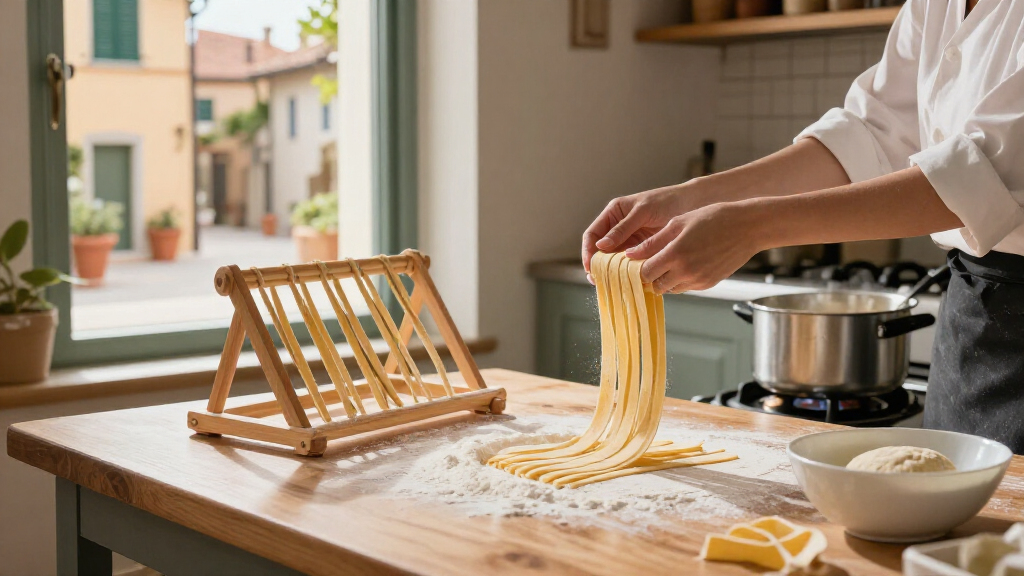
A rack separates long strands for easier short-term handling, but many fresh pasta shapes can go straight into the pot.
- Keep tagliatelle strands apart
- Choose steady feet and enough capacity
- Check folding, disassembly, and cleaning
- Cook many shapes right away
- For a small batch, use a floured tray
- Never rely on drying for safe long-term storage
Drying depends on the conditions
Shape, thickness, humidity, and airflow all affect drying time. Follow a tested recipe’s guidance rather than a universal timer.
Dust lightly with flour and spread pasta so strands do not touch.
Use a clean food-only rack or a floured tray for immediate cooking.
For pasta kept beyond the cooking window, use the recipe’s food-safety and storage instructions.
Tools for common bottlenecks
Give each tool a job; choose compact options when drawer and counter space are limited.
Bench scraper
Moves dough and chopped ingredients, then clears the worktop. A sturdy spatula can handle some transfers.
Kitchen scale
Weighs flour for repeatable dough. Cup measuring is a workable substitute for occasional batches.
Instant-read thermometer
Checks doneness without relying on timing alone. Store it in a drawer with other small utensils.
Small bowls and labels
Keep measured ingredients and make-ahead dishes organized; reuse clean bowls and simple labels you already have.
A practical holiday kit
Mix and match tools around your menu and storage space.
A pasta drying rack helps separate strands, but you can cook fresh pasta right away
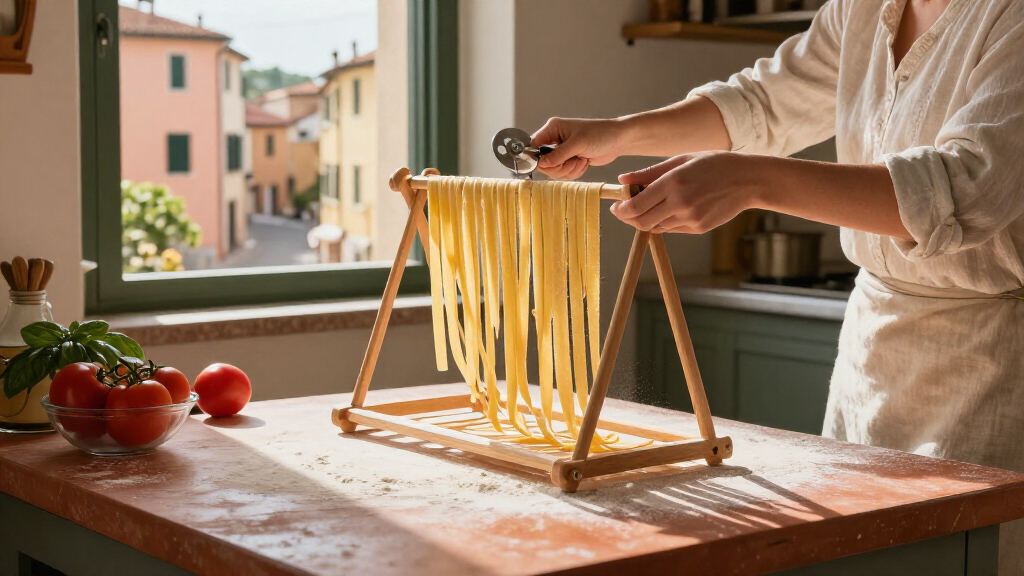
A pasta drying rack holds fresh strands apart while they dry, making them easier to handle and less likely to clump before cooking. It’s handy for long shapes such as tagliatelle, but many fresh pasta shapes can go straight from the work surface into boiling water. Drying is optional for many recipes, not a required rite of passage.
Imagine rolling pasta for an Emilia-Romagna-inspired Sunday meal. You cut ribbons, dust them lightly with flour, and lay them over clean rack rods so they do not touch. While you prepare the sauce, the airflow helps the strands firm up enough to move. If the pasta is going into the pot soon, you can instead arrange it loosely on a floured tray and cook it according to your recipe.
Drying time depends on shape, thickness, humidity, and airflow. Thin ribbons on a dry day behave differently from thick strands in a damp kitchen, so use recipe-specific guidance instead of trusting a universal timer. A rack supports air circulation; it does not tell you when pasta is safe for long-term storage.
For a small batch, clean rods or a food-only drying rack may do the job if they are stable, clean, and made from suitable materials. Avoid a surface that has held laundry or cleaning products. When comparing pasta racks, focus on capacity, stability, fold-down storage, and washable rods. A decorative shape matters less than a rack that will not tip when you drape on another handful.
Fresh pasta also doesn’t automatically become shelf-stable because it feels dry. Fully dried homemade pasta needs careful handling and storage; follow a tested recipe’s food-safety instructions. When you plan to keep pasta beyond the immediate cooking window, use the recipe’s specified storage method rather than guessing at room-temperature safety.
Products Worth Considering

Dyson Ball Animal 2 Upright Corded Vacuum Cleaner, Fuchsia

Hisense 43-Inch E6 Cinema Series Hi-QLED 4K UHD Smart Fire TV (43E6QF)

Philips Hue Smart Light Starter Kit with Bridge and 4 White and Color A19 Bulbs
As an affiliate, we earn on qualifying purchases.
Use a short buying checklist before choosing a pasta rack
The best pasta drying rack for your holiday cooking is one that fits the batch you actually make, stays steady on your counter, and cleans up without fuss. Measure the spot where it will stand and the cupboard where it will live before you buy. A compact folding design can make more sense than a tall freestanding rack in a small apartment kitchen.
For example, if you usually make pasta for four, a modest rack may be enough; if you roll several batches for a large holiday gathering, a small rack can force you to work in too many rounds. Think about the menu as well: short shapes like orecchiette do not hang from rods like tagliatelle does. The rack’s capacity matters only if its design suits your pasta.
Check the dimensions, materials, care instructions, and current availability for any model you consider. Look for rods that are easy to wipe or remove, feet that grip the counter, and a folding mechanism you can manage without pinching fingers. Recent kitchen-tool trends favor compact, foldable, and multipurpose designs, but a trend does not guarantee that a particular rack is better for you.
Before ordering, compare three options: a freestanding rack for larger batches, a folding rack for tight storage, or a clean household substitute for occasional use. For instance, a clean wooden dowel supported securely over two stable objects might handle one small batch, while a proper rack makes more sense if fresh pasta returns to your holiday menu every year. Never balance rods precariously over a hot stove or sink.
Use this quick checklist while shopping:
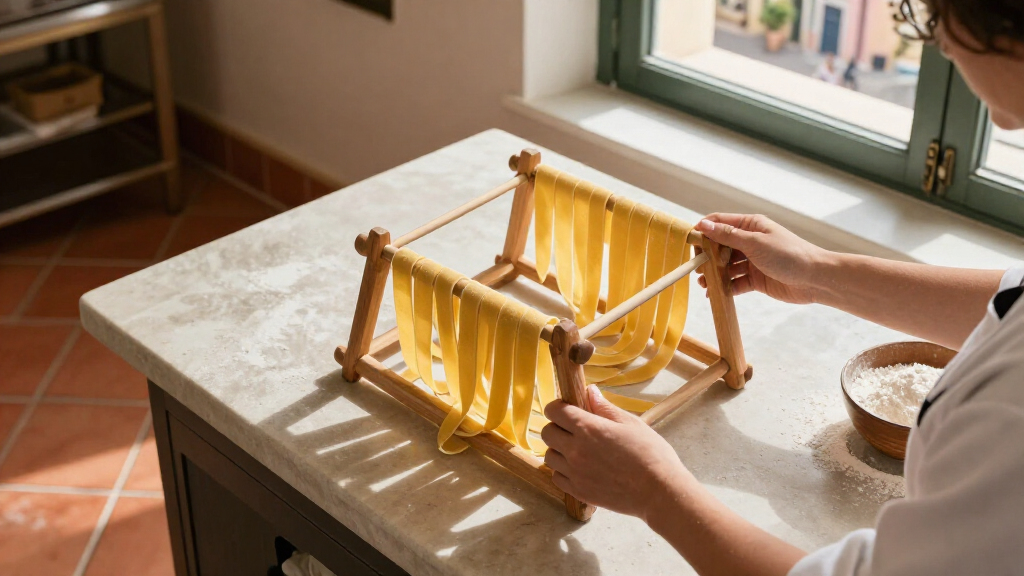
- Capacity: Will it hold your usual batch without crowded strands?
- Stability: Does it stand firmly on the counter?
- Storage: Does it fold or disassemble to fit your cupboard?
- Cleaning: Can you reach every rod and joint?
- Fit: Does it suit the pasta shapes you plan to make?
A bench scraper and scale make fresh pasta easier to manage
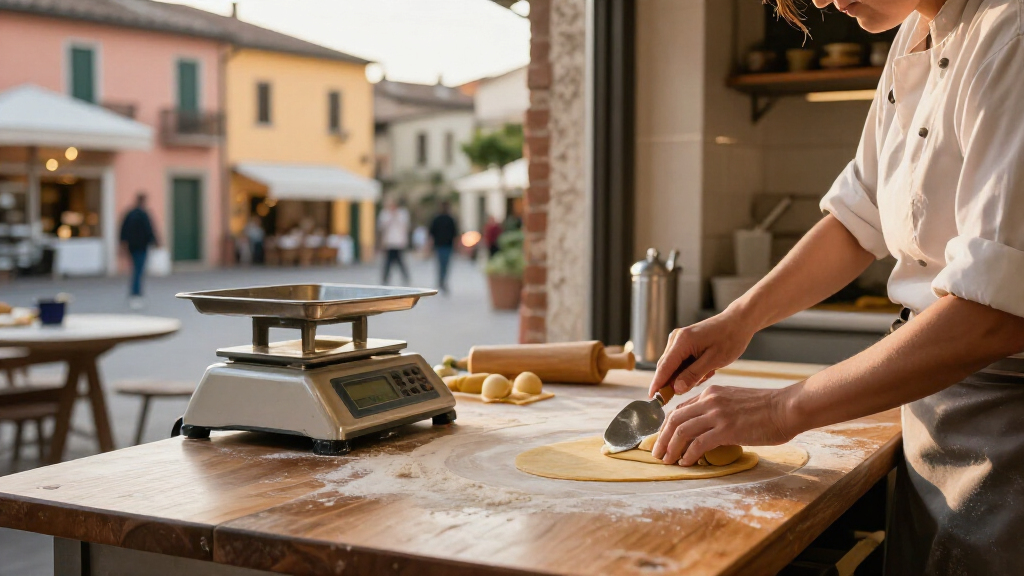
A bench scraper and kitchen scale solve two common pasta-making problems: messy transfers and inconsistent dough. The scraper lifts sticky dough, gathers chopped ingredients, and clears flour from a work surface. The scale measures flour by weight, so your dough starts closer to the recipe’s intended proportions than it would with a loosely filled cup.
Picture a counter dusted with flour after rolling dough. Instead of pushing the scraps around with your hands, slide a bench scraper under the dough and move it to a tray. Then use the scraper’s flat edge to gather chopped parsley or clean the surface before the next task. A stiff spatula or a broad knife can substitute for some transfers, but a knife may be less comfortable for scraping a worktop.
For a recipe that calls for 300 grams of flour, a scale gives you the same target each time. Measuring by volume can vary depending on how tightly flour settles into the cup. That difference can leave dough crumbly or sticky, especially when you are making multiple batches for guests and want the second round to feel like the first.
Both tools take little counter space. Many scrapers are flat and slide into a drawer; a scale usually stores upright or beside baking pans. If you only make pasta once, a clean knife or sturdy spatula and careful cup measuring can work. If you regularly bake, make dough, or prepare large holiday meals, these tools earn their space by making several jobs easier.
Keep the scraper clean between raw ingredients and ready-to-eat foods. Wash it after handling raw egg dough, and wash your hands and work surface before moving on to salad, bread, or cooked dishes. Fresh pasta dough often contains egg, so treat it with the same care you would use for other raw egg preparations.
A thermometer and oven thermometer take the guesswork out of timing
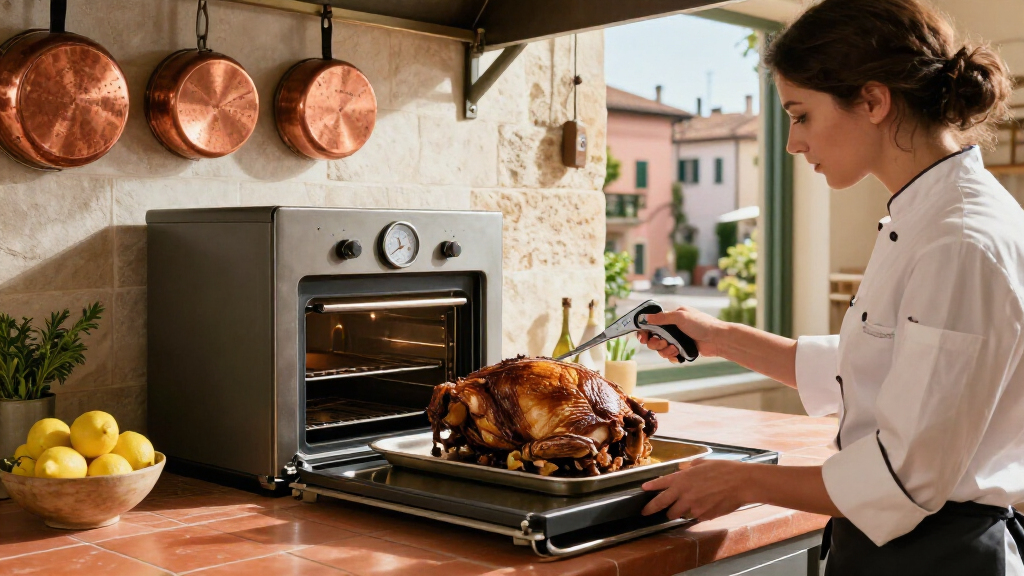
An instant-read thermometer checks the center temperature of food, while an oven thermometer shows whether your oven matches its dial. Together, they reduce guesswork when holiday dishes compete for attention. A thermometer cannot replace a tested recipe or safe food-handling practices, but it can tell you more than a timer alone.
Suppose a roast is in the oven while you finish pasta sauce and set out antipasti. Instead of cutting into the meat repeatedly and letting juices escape, check its temperature at the thickest part with a clean instant-read thermometer. Follow a reliable recipe and official food-safety guidance for the required temperature and resting time for that particular meat. Different cuts and preparations have different targets.
An oven thermometer can explain why cookies brown too quickly or a baked pasta dish needs longer than the recipe predicts. Set it where you can read it through the door, then compare its reading with the oven setting after the oven has heated. If your oven runs hot, you can adjust the setting or timing instead of blaming the recipe.
These tools are small enough for a drawer, and a digital thermometer is easy to wipe clean between checks. A clock and careful visual cues can help with familiar recipes, but they cannot reveal a hidden temperature difference. Wash or sanitize the probe between foods, and avoid leaving a standard instant-read thermometer in an oven unless its instructions say it is designed for that use.
Think of the pair as a way to make repeat meals more dependable. If your holiday menu centers on baked dishes, the oven thermometer may earn its keep first. If you serve meat, a quick-read probe can be the more useful purchase. Either way, choose one based on the task you repeat, not on the number of buttons or display features.
Sheet pans, cooling racks, and small bowls keep the counter moving
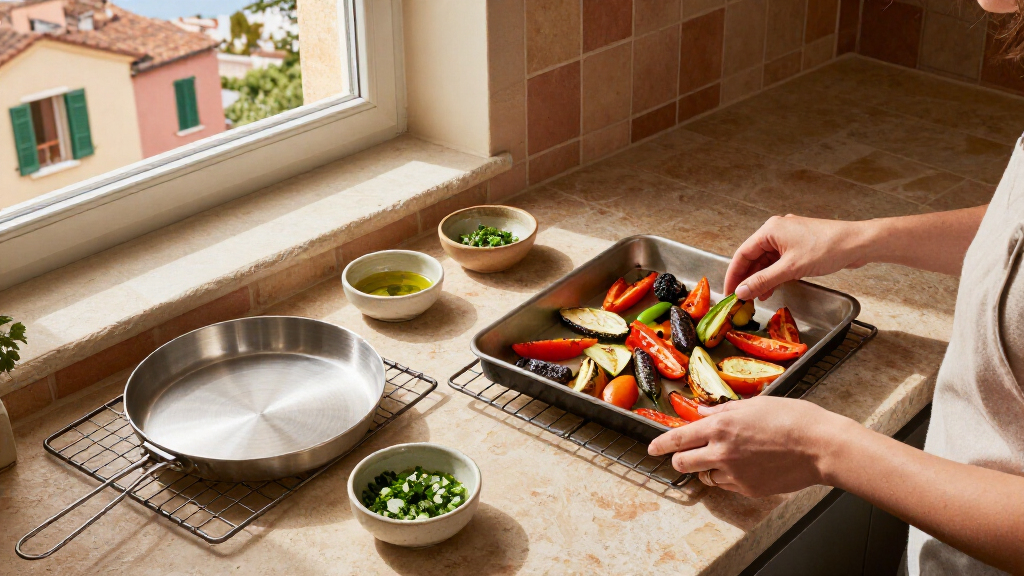
Sheet pans, cooling racks, and small prep bowls create temporary stations for food that would otherwise crowd your counter. A rimmed sheet pan holds chopped vegetables, shaped dough, or a dish waiting for its oven turn. A cooling rack lets air move beneath baked goods. Small bowls keep measured ingredients visible and ready.
Consider a holiday afternoon when you are roasting vegetables for a contorno (side dish) while assembling another course. Keep the chopped vegetables on a rimmed pan, the measured oil and salt in small bowls, and the finished tray on a heat-safe surface. You can move the whole pan without scooping ingredients out of a crowded pile. A large plate can stand in for a prep bowl, but it is easier to spill when the counter fills up.
Cooling racks are useful for cookies, pastries, and fried foods because air can circulate underneath. If you already own a rack that fits securely inside a sheet pan, it can serve more than one purpose. Check that it is oven-safe before using it in the oven; not every cooling rack can take that heat.
Small bowls take more space when used all at once, so choose a handful rather than turning every ingredient into its own dish. For instance, group ingredients that go into the pot together, and reuse bowls after washing when timing allows. This kind of keeping ingredients organized can make holiday cooking calmer by creating clear counter zones: prep, cooking, and ready-to-serve.
Label make-ahead dishes with the name, date, and reheating instructions. Refrigerate perishable food promptly and follow safe storage guidance for the dish. A strip of removable tape and a marker can do the same job as a specialty label, provided the writing stays legible and the label does not go into the oven or microwave.
Tongs, a timer, and a sharp knife cover more jobs than most gadgets
Tongs, a timer, and a sharp knife help with everyday tasks that get harder when you are juggling several dishes. Tongs turn vegetables or lift pasta without forcing you to reach into a hot pan. A timer protects the step you cannot watch. A sharp knife makes steady prep more controlled than a dull blade that slips or crushes soft ingredients.
For instance, while a pot of fresh pasta cooks, set a timer for the recipe’s first check and use tongs to lift a strand for tasting. Fresh pasta can cook quickly, and thickness changes the timing, so tasting is more reliable than assuming every batch needs the same number of minutes. Keep the tongs away from raw meat if you plan to use them on ready-to-eat food, or wash them thoroughly between tasks.
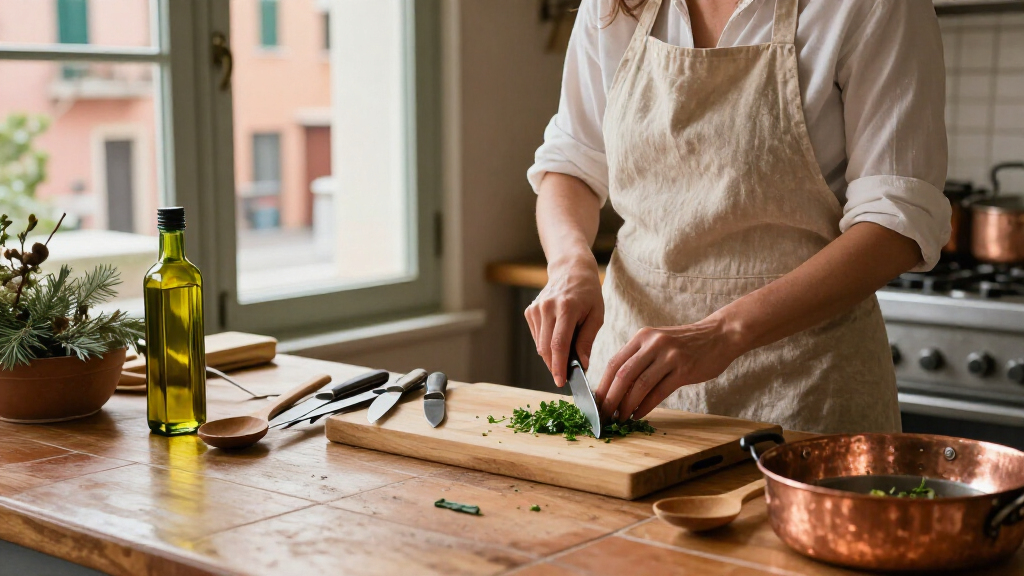
A sharp knife can turn a crowded prep session into a cleaner sequence. Chop onions and herbs before heating the pan, then gather the pieces with a bench scraper. If you are preparing a large tray of vegetables, cut them to similar sizes so they cook at a more even pace. Keep the blade sharp and use a stable cutting board; a damp towel underneath can help stop the board from sliding.
These tools have a small storage footprint and often do several jobs. A fork may turn a few pieces in a pan, and a phone can serve as a timer, but forks are awkward for larger batches and phones can disappear under floury hands. For tools that contact food, follow care instructions and wash them promptly after raw ingredients.
When a long holiday menu needs to make holiday cooking feel manageable, start with the tools that support repeated tasks. Tongs, a timer, and a sharp knife often see use across several courses. A novelty gadget for a single garnish may be fun, but it will not help much if the onions still need chopping and the oven schedule is unclear.
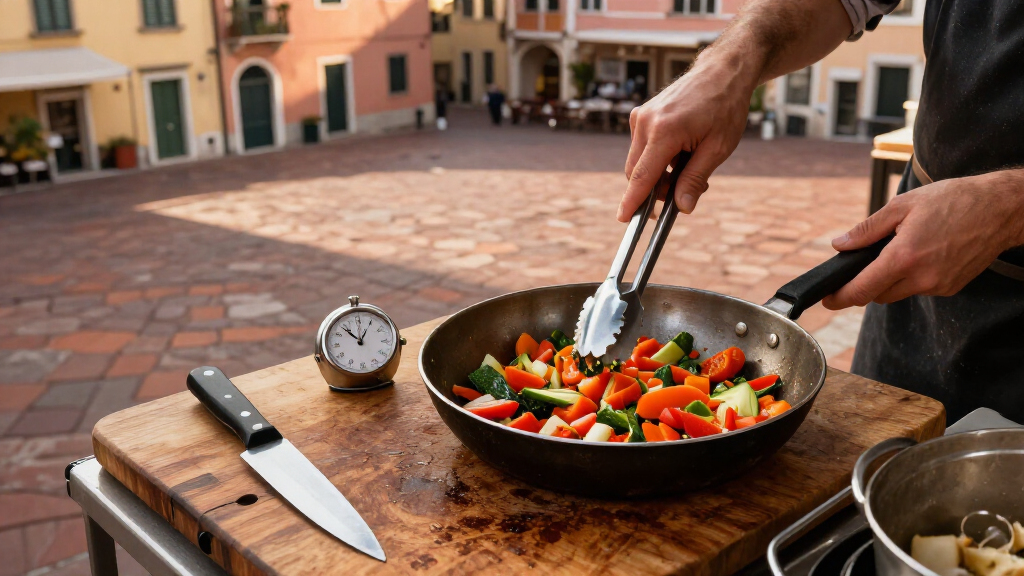
Build a small tool kit around your kitchen and holiday menu
A useful small-tool kit starts with the bottleneck you face most often, then adds only tools that solve a different problem. If your kitchen has limited storage, choose compact pieces you can use across recipes. If you cook for a large family, prioritize enough workspace and reliable timing so dishes do not pile up at the last minute.
Imagine two cooks preparing a winter meal. One makes fresh tagliatelle every December and has counter space for a folding rack, scale, and bench scraper. The other serves baked pasta from a family recipe and has a small galley kitchen; a sheet pan, oven thermometer, timer, and a few reusable prep bowls may help more than a pasta rack they will use once.
Use this order to choose purchases:
- Name the recurring snag. Is dough hard to portion, are strands clumping, or are dishes missing their oven windows?
- Try a safe substitute. Use a tray for a small pasta batch, cups for occasional dough, or a phone timer if it stays accessible.
- Buy for repeat use. Choose the tool that solves the same problem across several meals, not just one holiday recipe.
- Check the footprint. Measure the drawer, shelf, or counter where the tool will live.
- Review care and safety. Confirm cleaning instructions, materials, and any oven or food-contact limits.
This approach leaves room for regional cooking without turning your kitchen into a gadget cupboard. A weekend in Bologna might send you home wanting to try tagliatelle al ragù; a scale and a scraper may be the first tools that help you make the dough with confidence. A rack can follow if you find yourself preparing long pasta often enough to need it.
Recent designs often fold, stack, or combine functions, and many scales and thermometers now have digital displays. Those features can save space or simplify reading, but they do not automatically improve the result. Check real dimensions, materials, care directions, and current availability before choosing a specific item.
Frequently Asked Questions
Do I need a rack to dry fresh pasta?
No. A rack is useful for separating long strands and making them easier to handle, but many fresh pasta shapes can be cooked without drying first. For a small batch, a clean, lightly floured tray may work well.
Can I cook fresh pasta without drying it first?
Yes, many recipes allow fresh pasta to go straight into boiling water. Follow the recipe’s timing and check for doneness early, since fresh pasta often cooks faster than dried commercial pasta.
How long should homemade pasta dry?
There is no single drying time that works for every batch. Pasta shape, thickness, humidity, and airflow all affect the result, so follow a tested recipe’s guidance and do not assume a briefly dried batch is safe for long-term room-temperature storage.
Can I dry pasta on a broom handle or coat hanger?
Use a household substitute only if it is clean, stable, and suitable for food contact. A clean rod dedicated to food may hold a small batch, but a used coat hanger or broom handle can carry dirt or residue; never suspend pasta over a hot surface where it might fall.
How should I store homemade pasta?
Follow the storage instructions in a tested recipe, since fresh and fully dried pasta need different handling. Do not assume homemade pasta is shelf-stable just because it feels dry; refrigerate or freeze it when the recipe directs, and label it with the date.
Which tools save the most time in a small holiday kitchen?
A bench scraper, timer, sharp knife, and a few small prep bowls can reduce clutter and missed steps without taking much storage space. Add a scale, thermometer, sheet pan, or pasta rack if it solves a task you repeat often.
Conclusion
Buy the tool that removes the most repeated friction from your holiday cooking. If you make long fresh pasta every year, a stable, easy-to-clean rack can give those strands room to rest; if not, a floured tray and a few small prep bowls may be all you need. A scale, scraper, thermometer, and timer can help the rest of the meal land on time.
Start with your menu, measure the space you have, and choose for the work you actually do. Then let the kitchen fill with the sound of a pot at a lively boil and the scent of ragù warming nearby.