TL;DR
Sagrantino di Montefalco is a deeply colored Umbrian red made entirely from the local Sagrantino grape under the Montefalco Sagrantino DOCG. Its firm tannins can feel drying in a young bottle, but a serving temperature of 16–18°C (61–64°F), a hearty meal, or extra bottle age can make it far more welcoming. Check the label for Secco, the dry style, or Passito, the sweet dried-grape style.
Sagrantino di Montefalco can leave your mouth feeling as though a black-tea bag has been steeping there—then a bite of slow-cooked beef makes the wine suddenly click. That firm, drying grip is the grape’s signature, and it’s also the reason some first glasses feel like hard work.

Get kitchen staples and gadgets delivered free with Prime
- Fast, free delivery on millions of items
- Prime Video, Amazon Music and more included
- Member-only deals all year
This is Umbria’s big red: dark, concentrated, and shaped by a local grape grown around Montefalco, in central Italy. The name on the bottle can point you toward two very different wines: dry Secco or sweet Passito. Both belong to the Montefalco Sagrantino DOCG, the Italian designation for a protected, quality-controlled appellation.
You don’t need a cellar or a sommelier to enjoy it. Learn what tannin feels like, serve the wine a little cool, and put something savory on the table. By the end, you’ll know what to look for on the label, how to make a young bottle easier to drink, and what to cook when you bring one home.
Look for Montefalco Sagrantino DOCG to identify the appellation’s 100% Sagrantino red.
Choose Secco for a dry red with dinner and Passito for a sweet dried-grape wine.
Serve Secco slightly cool, around 16–18°C (61–64°F), and taste before decanting.
Pair firm young Sagrantino with substantial savory food such as braised meat, sausage, aged cheese, or Umbrian lentils.
Ask the producer or wine shop about a bottle’s readiness; aging potential varies by producer, vintage, and storage.
Sagrantino di Montefalco Umbria’s big red, made welcoming
This deeply colored Umbrian red is known for concentrated dark fruit and firm, drying tannins. Food, a little chill, and the right label cues make it easier to enjoy.
Read the label
Montefalco Sagrantino DOCG identifies the appellation; the style word tells you what to expect.
- Dry red for a substantial main course
- Try it with braised meat, sausage, or aged cheese
- Sweet wine made from dried grapes
- Better suited to dessert or a small after-dinner pour
What tannin feels like
Think of strong black tea: a grippy, drying texture that can dominate a young wine on its own.
Dark fruit, firm grip
Black cherry, blackberry, or plum can sit beneath the wine’s pronounced tannins.
More savory notes
Bottle age and producer style can bring dried herbs, spice, earth, or savory character.
Help a young bottle open up
Keep Secco slightly cool, then let the food and the wine meet in the glass.
Aim for 16–18°C (61–64°F), cool rather than cold.
Try a pour before deciding whether a young, firm wine needs decanting.
Savory food with fat and protein can make tannins feel gentler.
Choose food with enough flavor
A substantial dish gives Sagrantino’s dark fruit and structure something to meet.
What Sagrantino tastes like when it meets dinner
Sagrantino di Montefalco is a deeply colored red with concentrated dark fruit and pronounced tannin, the drying sensation that firms your gums and tongue. A young glass can suggest black cherry, blackberry, or plum beneath that grip; age and producer style may bring dried herbs, spice, earth, or savory notes. Food can make the fruit feel rounder and the tannin less demanding.
Tannin isn’t the same as acidity or alcohol. Think of it as the fine, grippy texture in strong black tea or the skin of a walnut. In Sagrantino, that structure gives the wine a sturdy frame, but it can dominate if you sip it alone on an empty stomach. Try a bite of braised beef, then take another sip. The wine often feels less severe because the dish’s fat and protein soften the impression of tannin.
There’s no single flavor script. A recent release may taste more tightly wound, while an older bottle may show earthier or more savory character. For a first taste at a restaurant, order a glass alongside ragù—a slow-cooked meat sauce—or grilled sausage rather than judging it before the food arrives.
The wine has a sense of place, too. Montefalco sits in Umbria, inland from the Adriatic, and local cooking offers natural companions: lentils, pork, game, and long-simmered sauces. Let the plate introduce the wine. You may find its strength reads less like a dare and more like a sturdy chair built for a long meal.
Products Worth Considering

Philips Hue Bridge Pro Smart Lighting Hub

Levoit Vital 200S-P Smart Air Purifier for Large Rooms (up to 1875 ft²)

Ring Wired Doorbell Plus (2nd Gen) & Chime Plus Bundle – Nickel Silver
As an affiliate, we earn on qualifying purchases.
How to read the label and choose the right style
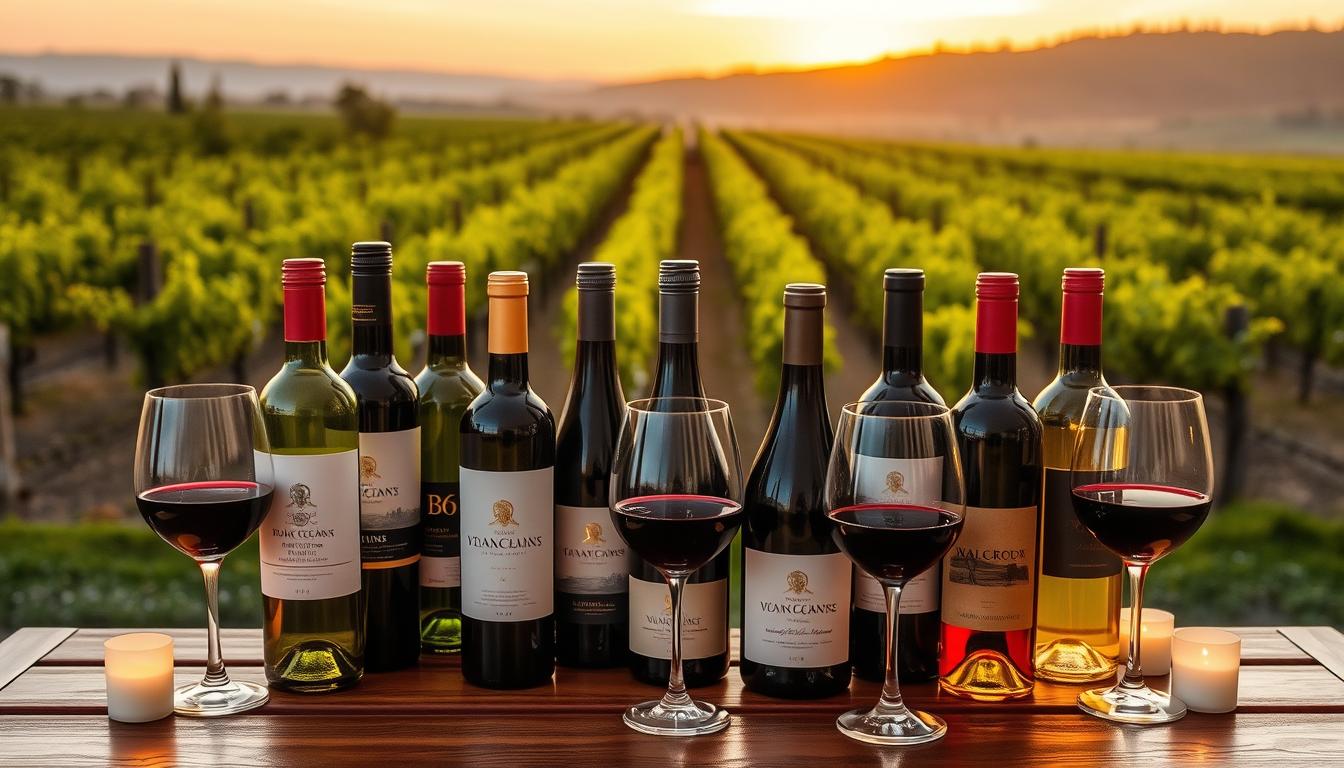
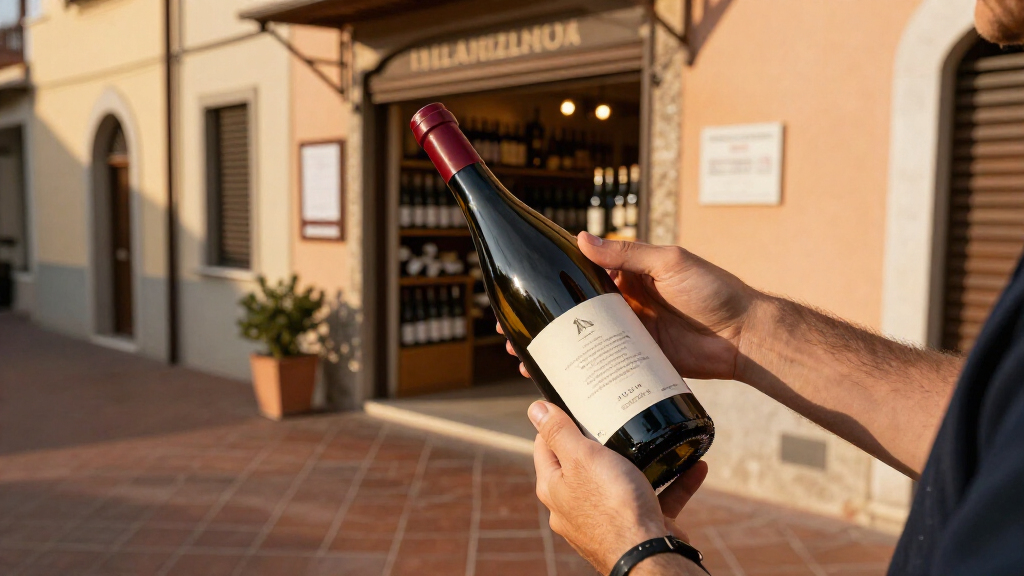
Sagrantino di Montefalco on the label identifies a specific Umbrian appellation: Montefalco Sagrantino DOCG. Its red wine is made from 100% Sagrantino, a local grape. Look for the style word, too: Secco means dry, while Passito signals a sweet wine made from grapes dried after harvest. The two styles share a place and grape but call for different moments at the table.
For a main course, choose Secco. Its dark fruit and tannic structure suit a meal with enough flavor and substance to meet them. Passito takes the grapes in another direction: drying concentrates their sugars and flavors, resulting in a sweet wine that makes more sense at dessert or as a small after-dinner pour. If you’re standing in a wine shop, that one word can keep you from accidentally choosing a sweet bottle for a roast dinner.
Don’t confuse Montefalco Sagrantino with Montefalco Rosso. That is a separate appellation and may be a blend; the DOCG Sagrantino red is the all-Sagrantino wine. Other bottles may use the grape in blends under different appellations, so read the whole label rather than relying on the word “Montefalco” alone.
The appellation also requires extended maturation before release, including time in oak and bottle. Exact rules can change, so check current regulations or the producer’s notes if precise aging periods matter to your purchase. At a shop, ask whether the bottle is Secco or Passito, what vintage it is, and whether the producer recommends opening it now or keeping it longer. Three quick questions can make an unfamiliar label much easier to navigate—navigate here just means find your way through the options.
Make Sagrantino friendlier with the right food
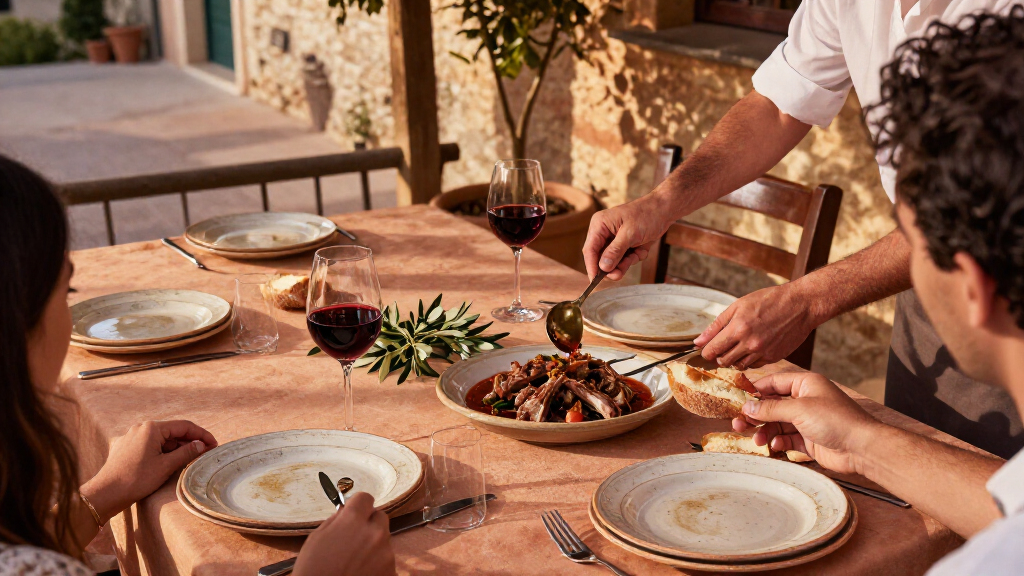
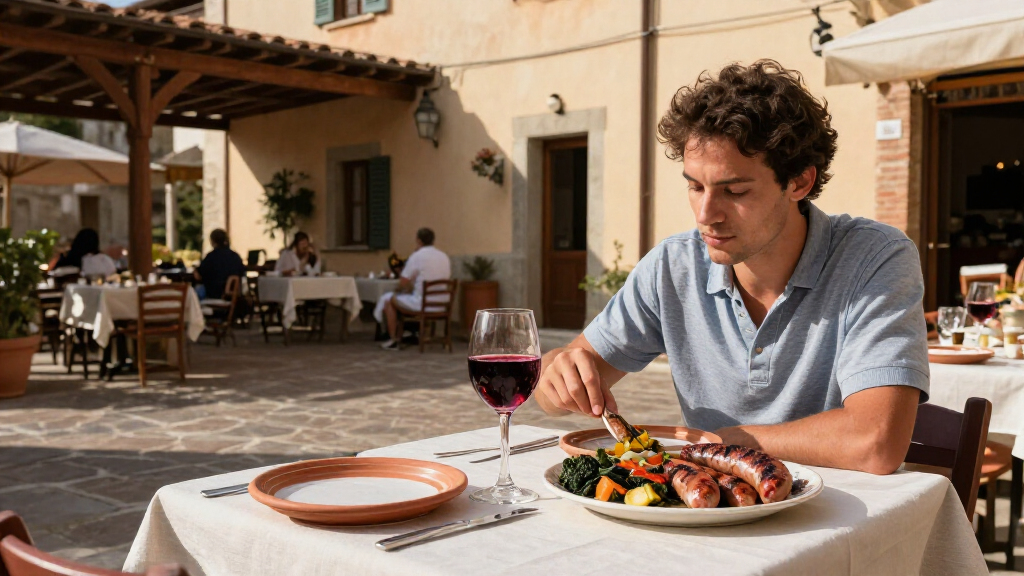
Pair Sagrantino with savory food that brings fat, protein, and plenty of flavor: grilled or braised red meat, game, sausages, aged hard cheese, or a hearty lentil dish. These aren’t decorative pairings. A fatty bite can make the wine’s drying tannins feel gentler, while a richly flavored sauce gives its dark fruit something to answer.
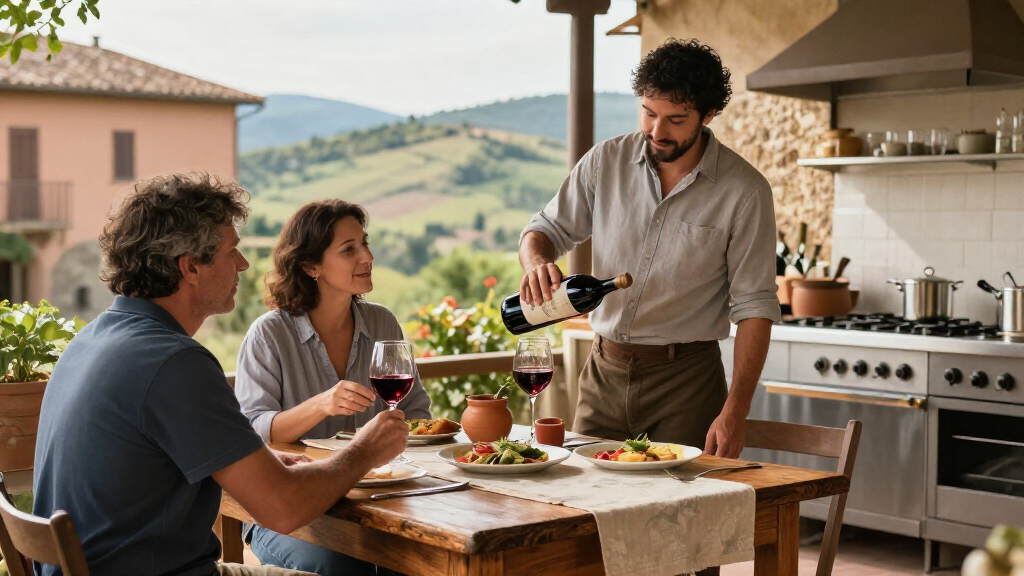
For a practical Umbrian supper, simmer a meat ragù until it clings to pasta, then serve a modest pour of Secco alongside it. Or set out grilled sausages and aged hard cheese for a simpler table. If you prefer a meatless meal, try Umbrian lentils cooked until tender with olive oil, aromatic vegetables, and herbs. The wine is bold enough to meet a dish with earthy, savory depth.
Watch out for very delicate flavors. A plain piece of white fish or a lightly dressed salad can disappear beside a powerful young Sagrantino. That doesn’t make the wine unsuitable for every lighter dish; it means the balance may feel lopsided. If the menu is delicate, choose a gentler red, or keep the Sagrantino for cheese after dinner.
Secco and Passito also want different endings to a meal. The dry wine can stay with the main course and aged cheese; the sweet Passito belongs with dessert or a small final pour. Start with the dish you plan to serve, then choose the style. When the pot of ragù is already bubbling, Secco is the obvious match. When you’re setting out dessert after dinner, Passito may be the more fitting bottle.
Serve a young bottle without losing its freshness
Serve Sagrantino at 16–18°C (61–64°F) and taste before deciding whether to decant. A little chill can keep the alcohol from feeling too warm and let the dark fruit show through. A young, tightly wound bottle may open with time in a decanter, but an older one can lose its delicate aromas if you treat it too roughly or leave it exposed for too long.
- Check the bottle. Note the vintage and whether it’s Secco or Passito; a sweet Passito doesn’t call for the same dinner pairing as the dry red.
- Cool it gently. If the bottle is warm, give it a short spell in the refrigerator, then pour a taste. You’re aiming for cool, not cold.
- Taste before decanting. If the young Secco feels closed or especially firm, pour it into a decanter and revisit it after 20 to 30 minutes. Taste along the way; the wine gets a vote.
- Adjust for age. If you open an older bottle, pour carefully and watch for sediment. Handle it gently and taste soon after opening rather than assuming it needs a long air bath.
A simple example: you bring a young Secco home for Saturday’s braised beef. Chill it slightly while the dish finishes, pour a small taste, then give it about half an hour in a decanter if it feels tight. By the time you sit down, the wine has had time to meet the air, and you can judge it beside the food rather than waiting for an abstract “perfect” moment.
Storage matters more than guesswork about how many years a bottle will last. Keep it away from heat and strong temperature swings, and follow the producer’s guidance. Well-made examples can age, but producer, vintage, and storage shape how a particular bottle develops.
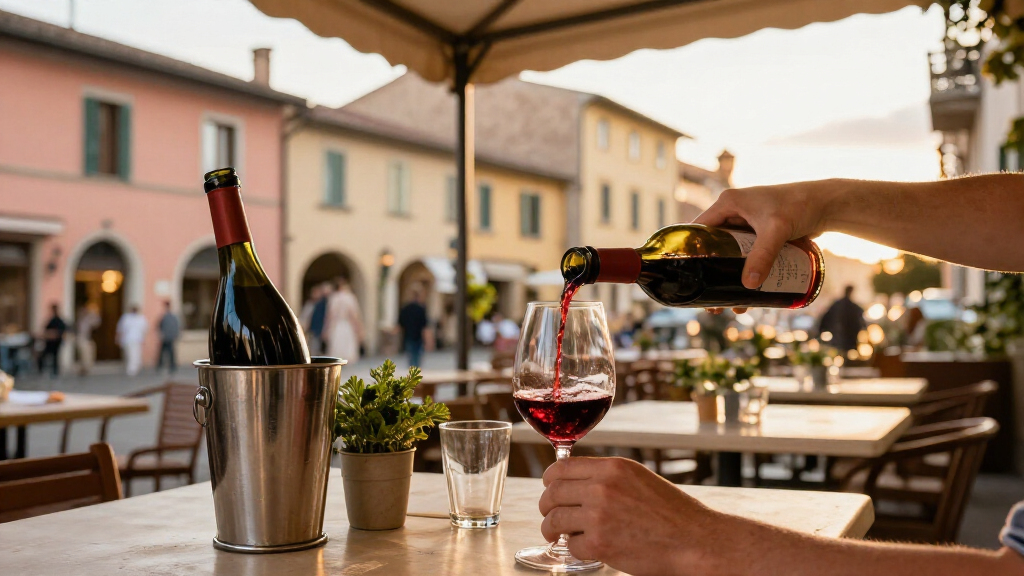
Choose your first bottle with these simple checks
Your first Sagrantino doesn’t have to be a test of endurance. Choose the style, vintage, and serving plan around the meal you actually want to eat. A mature bottle may feel softer than a young release; food can help a firm young one feel more approachable. If you’re sensitive to drying reds, start with a small pour beside a full meal instead of opening it as an aperitif.
At a wine shop, say what you’re cooking and ask for a Montefalco Sagrantino DOCG Secco that suits drinking now. If the shop has several vintages, ask how the producer describes their readiness and whether the bottle will benefit from air. Those are more useful questions than asking for “the best” bottle without a budget or dinner plan. Vintage and producer differences matter, so one bottle shouldn’t stand in for the whole appellation.
A comparison with other tannic red wines can help only as a loose starting point. Sagrantino shares its firm, mouth-drying character with some other structured reds, but its combination of dense fruit and assertive tannin has its own signature. Don’t choose it because you expect an exact substitute for another grape. Choose it because you want a wine with presence beside an Umbrian-style dinner.
For a first evening, keep the stakes low: one bottle, one hearty dish, and a few glasses for friends who enjoy trying something new. If the tannins still feel too pronounced, serve cheese or sausage with the next pour. The goal isn’t to prove you can like the wine on its own. It’s to find the meal, temperature, and moment that let its character feel welcoming.
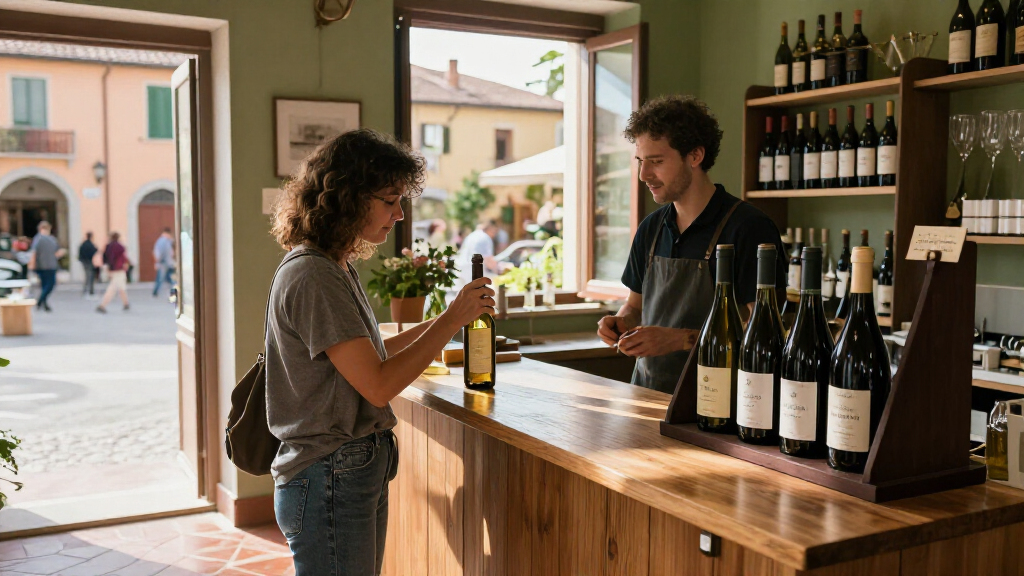
Plan a Montefalco visit around the wine and the table
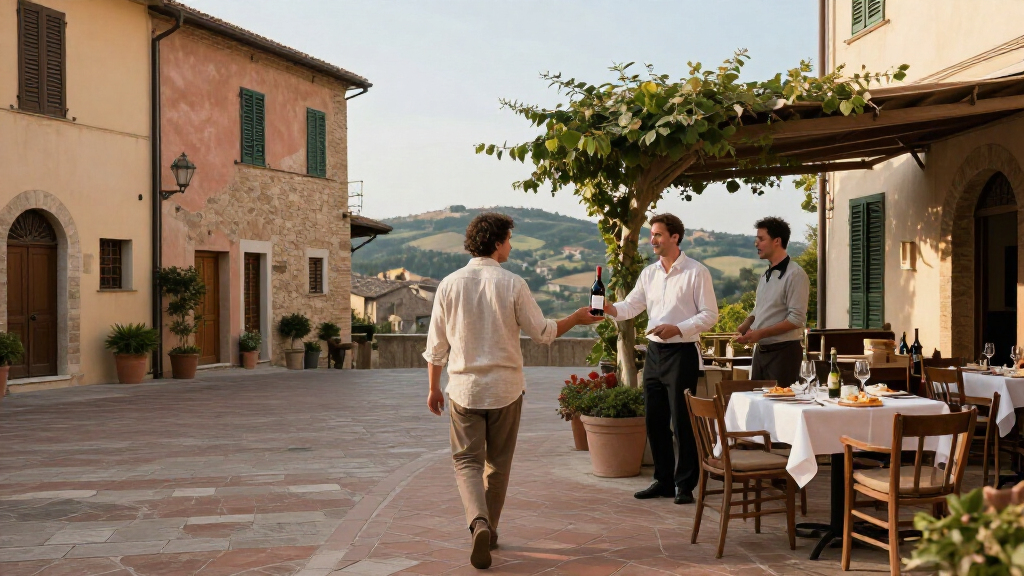
Montefalco gives you a way to experience Sagrantino in its home region: taste the local wine, then notice how it sits beside Umbrian food. The village and nearby vineyards lie in central Italy, where a winery visit can turn the name on a label into a landscape and a meal. If you’re planning a trip, set aside time for both the tasting and a proper lunch or dinner.
Contact wineries ahead of time to ask about visits, tasting availability, and whether they pour Secco and Passito. Schedules and offerings vary by producer and season, so don’t assume you can simply arrive and taste. If you’re traveling with someone who prefers sweet wines, asking about Passito gives you a useful point of comparison with the dry red. A tasting makes the difference between the two styles tangible: one is built for savory courses, the other comes from dried grapes and suits a sweeter finish.
At the table, look for dishes that make sense with the wine’s structure: grilled meat, game, sausage, aged cheese, or lentils. Order a glass with lunch before you decide whether you want to bring a bottle home. You’ll learn more from one plate and one measured pour than from trying to memorize tasting notes in a shop aisle.
Wine also carries alcohol, so plan the visit with a designated driver, a taxi, or another safe way to get around; keep tastings moderate and drink responsibly. If you’re tasting several wines, use small pours and enjoy food and water along the way. The best souvenir may be a new bottle, but the memory that stays with you could be the contrast between its firm tannins and a slow-cooked meal in Umbria.
Frequently Asked Questions
Is Sagrantino di Montefalco sweet or dry?
It comes in both styles under the Montefalco Sagrantino DOCG. Secco is dry; Passito is sweet and made from grapes dried after harvest. Check the style word on the label before choosing a bottle for dinner.
What should I eat with Sagrantino?
Try braised or grilled red meat, game, sausage, aged hard cheese, or a hearty lentil dish. Their savory flavors and substantial texture meet the wine’s tannins better than a delicate salad or mild fish. A slow-cooked ragù is an easy place to start.
Does Sagrantino need to age before you drink it?
No single rule fits every bottle. Young examples can taste firm, while time in the bottle, food, or a short spell in a decanter may make a particular wine more approachable. Ask about the producer and vintage rather than assuming every bottle needs years in storage.
How should you serve Sagrantino?
Serve it slightly cool, around 16–18°C (61–64°F). Taste it first: a young wine that feels tightly wound may benefit from 20 to 30 minutes in a decanter, while an older bottle deserves gentler handling. Pair the dry style with a savory meal.
Is Montefalco Sagrantino the same as Montefalco Rosso?
No. Montefalco Sagrantino DOCG identifies a red made from 100% Sagrantino, while Montefalco Rosso is a separate appellation and may be a blend. Read the full appellation name on the label if you’re looking specifically for the Sagrantino DOCG wine.
Conclusion
Start with Secco, serve it slightly cool, and give it a savory dish to meet. Sagrantino’s tannins can be assertive, but they’re part of what makes the wine distinctive; the right food gives that structure a place at the table. For a first bottle, ask a wine shop for a Montefalco Sagrantino DOCG that’s ready to drink, then taste it with dinner.
Let the black fruit, firm grip, and slow-cooked sauce share the evening. That’s a much better introduction to Umbria’s big red than a lonely glass on an empty table.