
TL;DR

Get kitchen staples and gadgets delivered free with Prime
- Fast, free delivery on millions of items
- Prime Video, Amazon Music and more included
- Member-only deals all year
Cotechino is a rich Italian pork sausage traditionally served with lentils around New Year, but fresh and precooked versions need different preparation. Check the label, simmer fresh sausage gently, and use a practice run to record its timing, texture, and saltiness before the holiday meal.
Check the package to tell whether your cotechino is fresh or precooked; their cooking times are not interchangeable.
Cook fresh cotechino at a gentle simmer and follow its label, since many fresh sausages need roughly two to three hours.
Record the sausage’s weight, timing, texture, and saltiness during a practice run so you can plan New Year’s dinner confidently.
Serve cotechino with simply seasoned lentils, and taste before adding extra salt.
Refrigerate leftovers promptly and follow package storage guidance; freezing can affect texture.
Cotechino Practice Run Before New Year
Learn how your sausage cooks before the holiday meal. Check the label, simmer gently, and note what works.
Start with the package
Fresh sausage needs thorough cooking; precooked sausage usually needs reheating.
- Cook thoroughly
- Follow the label’s timing
- Reheat as directed
- Allow much less time
Keep the sausage tender
Use the package’s method and cooking window for the sausage you bought.
Follow label guidance on wrapping or lightly pricking the casing.
Avoid a hard boil, which can split the casing.
Check that it is heated through and tender enough to slice cleanly.
Make the trial useful
A short record helps you plan the holiday meal around your actual sausage.
- Write down the product, weight, and whether it was fresh or precooked.
- Record preparation method, cooking time, texture, and saltiness.
- Use what you learn to plan the start time and balance the menu.
Balance its richness
Taste the sausage with its sides before adding extra salt.
Lentils
Their earthy flavor and simple seasoning complement rich, savory cotechino.
Bitter greens
A suitable side when the plate needs more freshness.
Mashed potatoes
A softer accompaniment for a substantial meal.
Know whether your cotechino needs cooking or just reheating
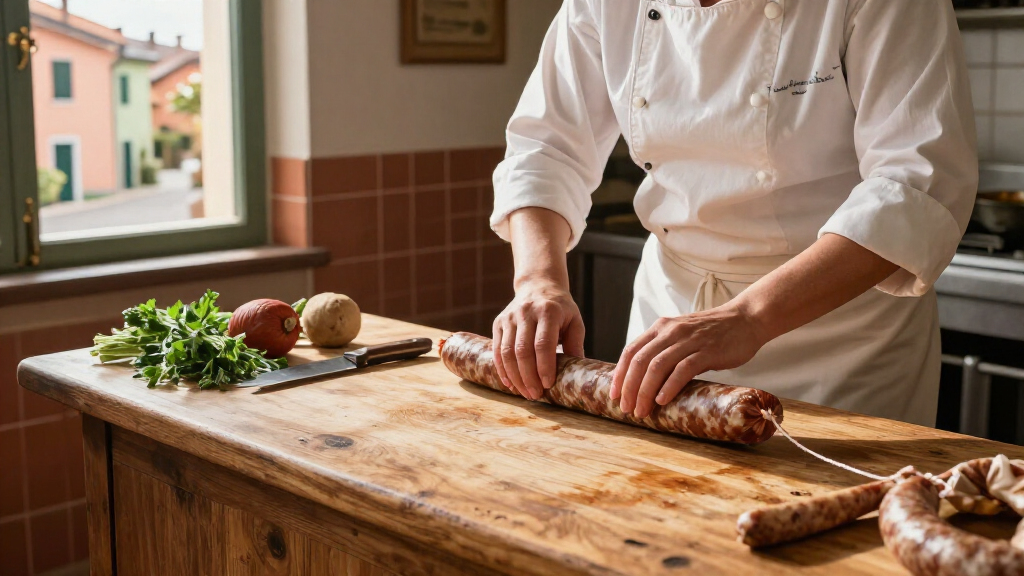
Cotechino is a seasoned Italian pork sausage, and the key first step is checking whether your package contains a fresh, uncooked sausage or a precooked one. Fresh cotechino needs thorough cooking; precooked cotechino usually needs reheating. Their cooking times are different, so read the label before you fill a pot. That distinction matters when you plan dinner. A fresh sausage may need roughly two to three hours, depending on its size and the maker’s directions. A precooked, vacuum-packed sausage can take much less time. Imagine setting a New Year’s meal for 7 p.m.: mistaking one kind for the other could leave you juggling an unexpectedly long simmer or overheating a sausage that only needed warming. Italian shops may offer both versions, and modern vacuum packing makes the convenient option easy to find. Convenience doesn’t tell you what’s inside, though; the packaging does. Follow its directions for cooking method, timing, and whether to remove the wrapper. If the label is missing or unclear, don’t guess based on another brand’s instructions. Think of the label as the cooking plan and your practice run as a rehearsal. Write down the product name, weight, and whether it was fresh or precooked. That small record will help you repeat the method when holiday guests are around.Products Worth Considering

Philips Hue Festavia Outdoor Globe String Lights, 8 Bulbs, 22 ft

Philips Hue White and Color Ambiance Smart Retrofit Recessed LED Downlights, 5/6-Inch, 4-Pack

Dyson Airsmooth Styling Brush
As an affiliate, we earn on qualifying purchases.
Keep fresh cotechino tender with a gentle simmer
Fresh cotechino cooks best at a gentle simmer, following the package directions, rather than at a hard boil. The water should move softly, with occasional small bubbles, not churn as if you were boiling pasta. Gentle heat helps the sausage cook through while reducing the chance that its casing will split. For your practice run, set aside enough time for the package’s full cooking window. Fresh versions often take around two to three hours, though size and manufacturer instructions affect the timing. Some cooks make a few small pricks in the casing or wrap the sausage in parchment or foil to help limit splitting. Those methods vary, so use them only when they fit the package guidance; don’t puncture it extensively, since juices can escape.- Read the package directions and note whether your sausage is fresh or precooked.
- Prepare it as the label directs, including any recommended pricking or wrapping.
- Keep fresh cotechino at a gentle simmer for the stated time, checking that the pot does not boil vigorously.
- Let it rest as directed, then slice and check that the center is heated through and tender.
- Record the timing, texture, and any changes you’d make next time.
Use one practice run to tune the holiday meal
A cotechino practice run helps you learn how your particular sausage behaves before New Year demands it. Brand, weight, freshness, and instructions can change the timing and final texture. Treat the first cook as useful information, not a pass-or-fail test. Keep a short note beside the stove: product and weight, fresh or precooked, preparation method, cooking time, and how the sausage tasted. Was it tender enough to slice neatly? Did the casing hold? Did the seasoning seem salty or balanced? Those observations tell you whether to adjust the rest of the menu, allow more time, or buy the same product again. Suppose you cook a 1-pound fresh sausage and find it needs the full time printed on the label plus a little resting time before serving. You now know to start early on New Year’s Day rather than trying to squeeze cooking into the last hour. If it tastes especially rich or salty, you can keep the lentils simply seasoned and avoid salting every component heavily. A practice cook also gives you a chance to test the slicing. Use a sharp knife and cut after the sausage has rested as directed; very hot, soft slices may break apart. If the test reveals a timing surprise, you can build that into your holiday schedule. A calm meal often begins with one ordinary dinner in December.Pair cotechino with lentils that balance its richness
Lentils are the classic partner for cotechino because their earthy flavor and simple seasoning balance the sausage’s fatty, savory character. In the Italian New Year tradition, their coin-like shape symbolizes prosperity. Together, the lentils and pork make a substantial meal with clear contrasts: tender, rich sausage beside small, earthy legumes. You can cook lentils with onion, carrot, celery, and herbs, then taste before adding much salt. That last step matters if your cotechino is already strongly seasoned. During your practice run, serve a few slices over a modest spoonful of lentils and taste them together. If the combination feels too rich, a simple side of bitter greens can add freshness; mashed potatoes offer a softer, comforting option. Consider the table in Emilia-Romagna, where cotechino has a strong holiday connection, and plan a home meal around what you can actually prepare well. A pot of lentils can simmer while you manage the sausage, but avoid assuming both need identical timing. If you’re cooking for two, a smaller lentil portion and a few slices may make a better supper than a full holiday spread. The practice meal reveals proportion as much as flavor. You might discover that a little sausage goes a long way, so the New Year menu needs more lentils and greens than pork. That keeps every bite satisfying without making the plate feel heavy.Serve slices confidently, and plan leftovers safely
Cooked cotechino should be tender enough to slice cleanly, and leftovers need prompt refrigeration and gentle reheating. For safety, follow the product’s storage instructions and standard food-safety guidance rather than leaving cooked sausage at room temperature for an extended period. When you reheat it, warm it until hot throughout. During a practice run, note whether the sausage slices best after a short rest. Arrange the slices on a warm platter beside lentils, and keep the portions modest; cotechino is rich. If you’re serving it as part of a larger New Year meal, the test dinner helps you estimate how many people one sausage will feed. There’s no need to discover at the table that everyone wants seconds and you have none left. Cool leftovers promptly and refrigerate them in a covered container, following the label’s storage times. Many cooked sausages can be frozen, though freezing may change the texture. Wrap portions well, label them with the date, and thaw safely before reheating. If you made lentils too, store them separately so you can warm each component without overcooking the sausage. A practical example: after dinner, divide the remaining slices into a small container for the next day instead of leaving the platter out while you clean. The next lunch can become a simple lentil bowl with reheated cotechino. Your trial cook then teaches you not only how to serve the holiday dish, but how to use every portion sensibly.Choose cotechino or zampone for the tradition you want
Cotechino and zampone are both traditional Italian pork preparations, but they differ in how the filling is encased. Cotechino uses a sausage casing; zampone stuffs the seasoned filling into a boned pig’s trotter. Both can appear on festive tables, so the right choice depends on the preparation you want and what you can find.| Feature | Cotechino | Zampone |
|---|---|---|
| Outer casing | Sausage casing | Boned pig’s trotter |
| Filling | Seasoned pork sausage mixture | Similar seasoned filling |
| Holiday connection | Often served around New Year | Also a traditional festive dish |
| Cooking plan | Check whether fresh or precooked | Follow its own package directions |