AIThis post was created with the assistance of artificial intelligence (AI).
TL;DR
Use the Sunday before Christmas to choose a manageable menu, shop for pantry staples, and prepare dishes such as sauce, soup, meatballs, braises, and sturdy desserts. Cool food promptly in shallow containers, label it, and refrigerate or freeze it according to the recipe and food-safety guidance; save salads, fried foods, and delicate seafood for close to serving. On the holiday, reheat cooked food to 165°F and follow a realistic oven schedule.
At 4 p.m. on Christmas Day, a crowded oven can turn even a beloved lasagna into a scheduling puzzle. The Sunday before Christmas gives you a calmer place to handle the long-cooking work, from a pot of tomato sauce to a tray of meatballs, while keeping the holiday meal rooted in the dishes your family loves.
Before you orderOffer from Amazon
Get kitchen staples and gadgets delivered free with Prime
This is a practical schedule for preparing an Italian American holiday meal ahead, not a single traditional menu. Italian Christmas customs vary by region and household: you might be planning Christmas Eve seafood, Christmas Day baked pasta, or both. You’ll learn what usually works ahead, how to store and reheat it safely, and how to leave space for the food that needs a last-minute touch.
At a glance
Sunday Before Christmas: Italian Holiday Meal Plan
Key insight
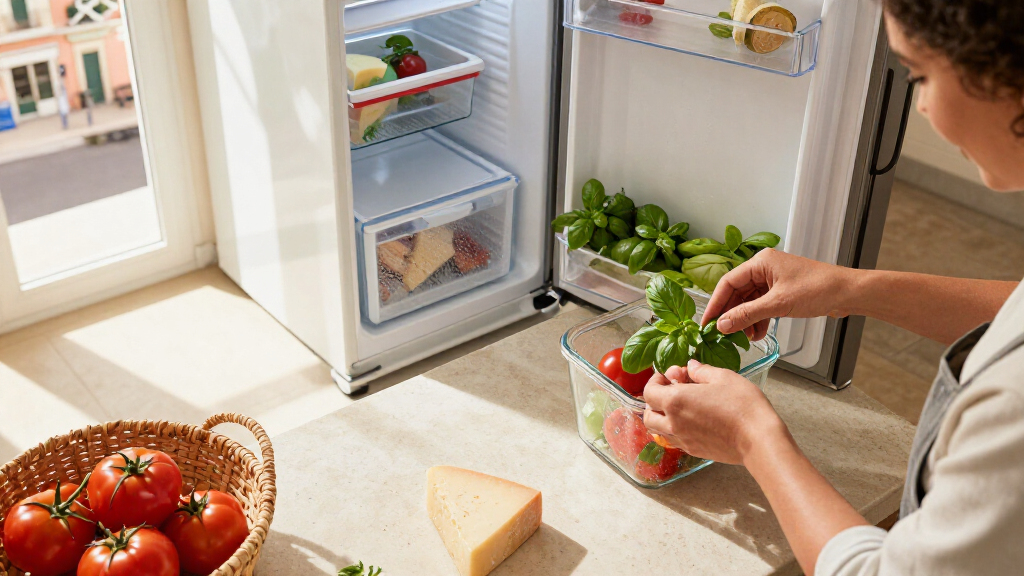
A large casserole does not cool as quickly as a small portion: divide leftovers into shallow containers and refrigerate them promptly rather than leaving a full pan on the counter to cool.
Key takeaways
1
Choose a few family favorites before writing the Sunday prep schedule; adapt the menu to Christmas Eve, Christmas Day, guest count, and dietary needs.
2
Cook long-simmering dishes and prepare sturdy desserts on Sunday, but check each recipe’s safe storage window and freeze promptly when needed.
3
Cool perishable food in shallow portions, label containers with the dish and date, and keep the refrigerator at or below 40°F (4°C).
4
Reheat leftovers to 165°F (74°C), keep cold dishes chilled, and return perishables to refrigeration within two hours—or one hour above 90°F (32°C).
5
List oven temperatures, cooking times, and resting periods before the holiday, and save delicate seafood, fried foods, and salad finishing for close to serving.
Step by step
1
Use Sunday for sauces, braises, and sturdy desserts
The Sunday before Christmas is best used for dishes that need long cooking or can be safely stored according to their recipe: tomato sauce,…
2
Give Christmas Day an oven schedule that can breathe
A workable holiday oven plan lists each dish’s temperature, cooking or reheating time, and rest time, then leaves a little room for the ove…
Holiday cooking · Briefing
Sunday Before Christmas A Make-Ahead Italian Holiday Battle Plan
Do the long-cooking work ahead, then leave Christmas for reheating and fresh finishing. Build the plan around your family’s traditions, guests, and available oven and refrigerator space.
165°F
Reheat cooked food to this temperature
40°F
Maximum refrigerator temperature
2 hours
Return perishables to refrigeration within this time
Choose the meal before the schedule
Pick the dishes your family would miss most, then scale the menu to the gathering.
Family favorites
Anchor the menu
Start with a meaningful dish, such as lasagna, meatballs, soup, or a seafood supper.
Guest needs
Make room for everyone
Confirm head count, allergies, dietary needs, and what guests plan to bring.
Keep it manageable
Simplify around the favorites
Traditions vary by household. Choose only what your kitchen and guest list can support.
Put the right work on Sunday
Shop for pantry staples and prepare dishes that tolerate a pause and safe storage.
1
Shop and start long cooks
Check the pantry, then make sauce, soup, braises, or meatballs.
2
Prepare sturdy items
Mix cookie dough or make a sturdy dessert when its recipe supports advance preparation.
3
Cool, label, and store
Divide food into shallow portions, label with dish and date, and refrigerate or freeze promptly according to recipe guidance.
Save delicate finishes for serving
Advance prep works best when each dish’s texture and storage needs guide the timing.
Often suited to prep ahead
Sauces and soups
Braises and meatballs
Cookie dough and some sturdy desserts
Better close to serving
Fresh salads
Fried foods
Delicate seafood and final garnishes
Give the holiday oven room to breathe
Write down temperatures, cooking or reheating times, and resting periods for every dish.
Long cooks and prepSunday
Thaw and fresh groceriesDays before
Reheat and finishHoliday
Storage watchSunday cooking does not mean every dish can stay refrigerated until Christmas. Check its safe storage window; freeze promptly when needed and thaw safely in the refrigerator.
The takeaway
Prepare what keeps well, store it safely, and reserve Christmas for the dishes that need a fresh finish.
A Sunday-before-Christmas plan works best when you choose a few meaningful dishes first, then build the schedule around them. There is no canonical menu for an Italian American Christmas, and the right plan depends on whether your gathering centers on Christmas Eve, Christmas Day, or both. Start with the dish everyone expects, then add only what your kitchen and guest list can support.
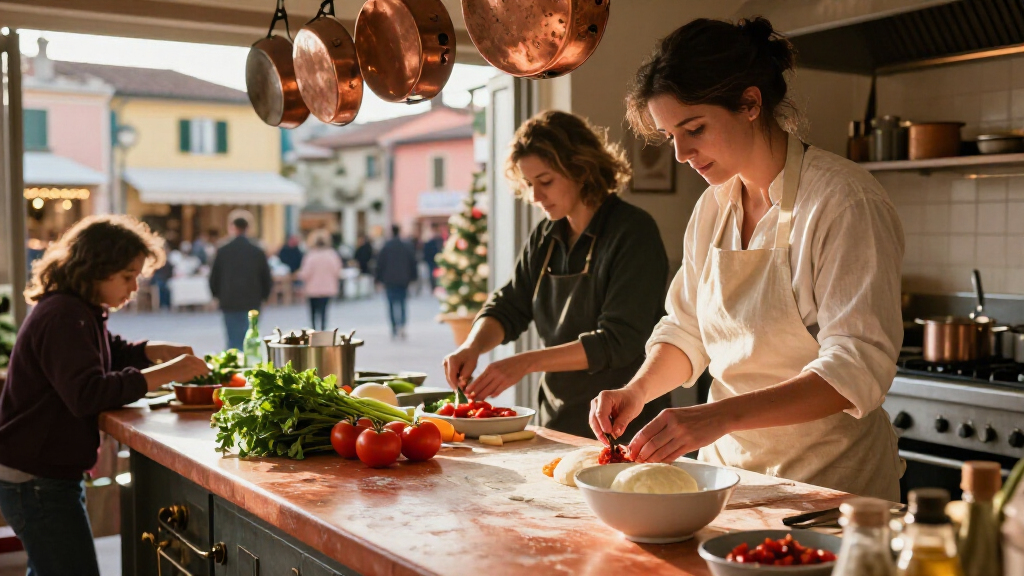
For one family, that anchor might be lasagna; for another, a pot of meatballs, a seafood supper, or a soup tied to a regional tradition. Christmas Eve in some Italian American homes includes a seafood meal, sometimes called the Feast of the Seven Fishes, though its dishes and number of courses vary. If you’re serving seafood, decide early which items can be prepped safely and which need to be cooked close to serving.
Think of the menu like a good Italian table: several parts should work together, but not every plate needs to compete for attention. A baked pasta, a vegetable side, a simple antipasto, and one dessert can feel generous without filling every inch of the table. Ask guests about head count, allergies, dietary needs, and what they plan to bring before you scale recipes.
For example, if a vegetarian guest is joining a meat-centered gathering, you can make a meat-free baked pasta their substantial main rather than leaving them with side dishes. Confirm ingredients and shared equipment with guests who have allergies. The point of a plan is to protect the family favorites and make room for everyone at the table.
Keep the meal’s meaning in the menu. Simplify around the dishes your family cares about most, instead of trying to cook every favorite in one day.
Products Worth Considering
Dyson Airstrait Wet-to-Dry Hair Straightener
Roborock F25 BX Cordless Wet/Dry Vacuum Cleaner
Levoit Vital Pet Pro Smart Air Purifier for Large Rooms
As an affiliate, we earn on qualifying purchases.
Use Sunday for sauces, braises, and sturdy desserts
The Sunday before Christmas is best used for dishes that need long cooking or can be safely stored according to their recipe: tomato sauce, soup, braised meats, meatballs, cookie dough, and some sturdy desserts. These dishes benefit from Sunday because their flavor and structure generally tolerate a pause, portioning, and reheating better than crisp or delicate foods do. That convenience has a limit: a meal prepared Sunday is not automatically safe to keep refrigerated until Christmas. Check the recipe and food-safety guidance for the storage method and time; when the gap exceeds the safe refrigerated window, freeze promptly and thaw safely in the refrigerator.
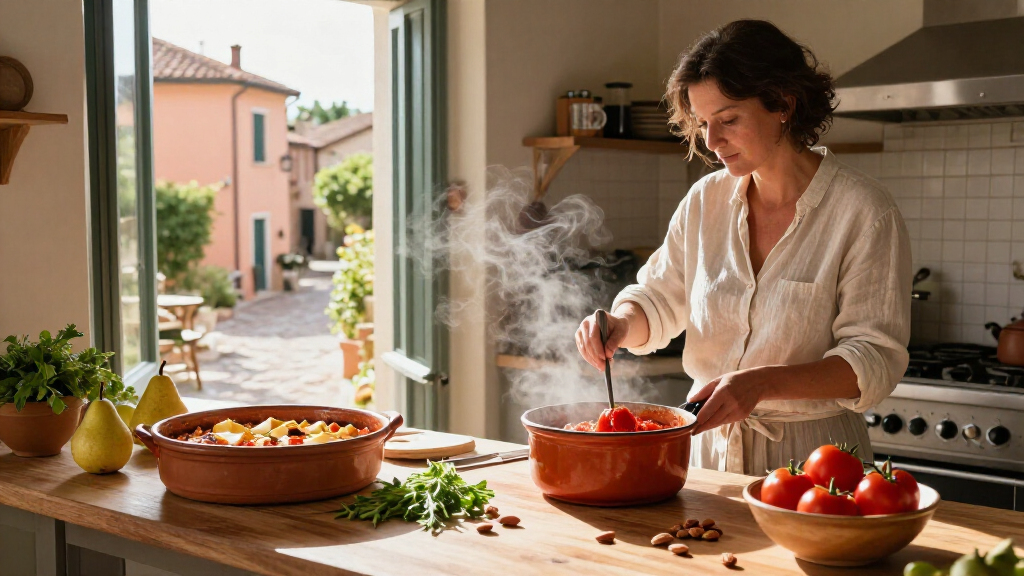
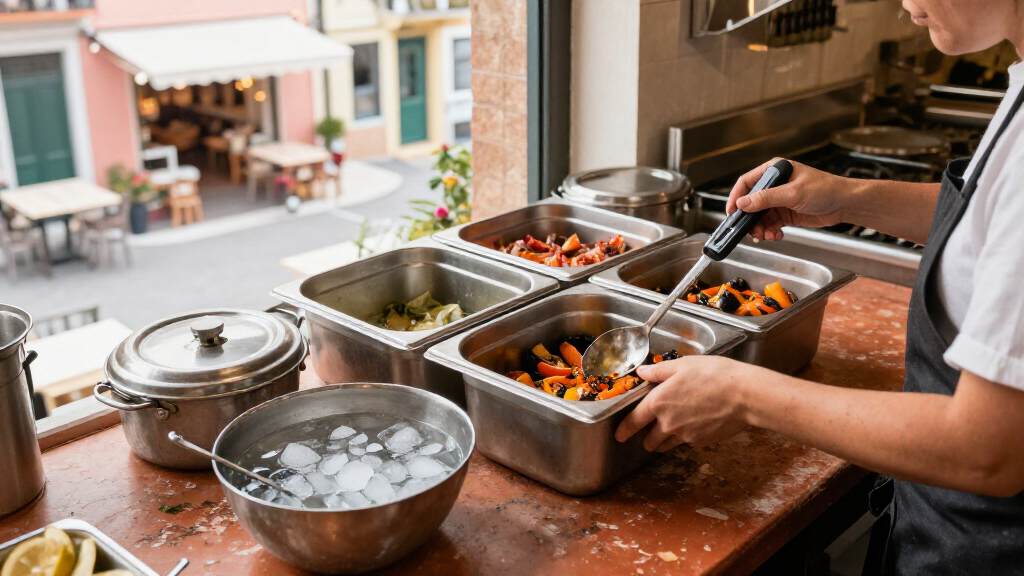
A tomato sauce bubbling slowly in the kitchen can make Sunday feel like part of the holiday already. Cooling and portioning it promptly is also what makes that early cooking useful: shallow containers release heat more effectively than a deep pot, and smaller portions are easier to thaw and reheat in the quantity you need. Label each one with the dish and date so you can see what should be used first and avoid discovering an unmarked container after the meal. The same approach works for cooked meatballs or braised meat; a full roasting pan retains heat and takes up scarce refrigerator space, while divided portions chill and fit more predictably.
Use this order to keep the day from becoming a marathon:
Start with your menu and shopping list. Check what’s already in the pantry and buy shelf-stable ingredients for the chosen dishes. This prevents last-minute store trips and keeps you from preparing more food than your refrigerator can hold.
Cook the longest dishes first. Make sauce, soup, braises, or meatballs while you have time to cool and store them properly. Their long cooking time is easier to accommodate now than on a day when several dishes need the oven.
Prepare items that hold well. Mix cookie dough or make a sturdy dessert if its recipe supports advance preparation. This frees holiday time without sacrificing the textures that depend on a fresh finish.
Cool, label, and store. Portion perishable food into shallow containers, mark the date, and refrigerate or freeze it promptly. Storage is part of the cooking plan, not a cleanup step to postpone until the kitchen is crowded.
Write down what remains. Note fresh groceries, thawing, assembly, and serving tasks for the days ahead. A short list makes the tradeoff visible: Sunday takes on the work that keeps well, while the holiday keeps the work that needs attention close to serving.
Say you’re making sauce and meatballs on Sunday for a holiday lasagna. That gives you a head start, but the lasagna’s assembly, storage window, and baking plan still need their own instructions. A prepared component saves time only if you can store it safely and fit its reheating or baking into the schedule. Treat Sunday as a useful beginning, not a blanket promise that every dish can wait in the refrigerator until Christmas.
Know what to refrigerate, freeze, and finish fresh
Make-ahead storage depends on the dish, how quickly it cools, and how many days pass before serving. Keep the refrigerator at or below 40°F (4°C), and use recipe instructions and food-safety guidance to decide whether a dish should be refrigerated or frozen. The practical tradeoff is between convenience and the time a dish spends in storage: refrigerating keeps food ready to use, while freezing can extend the plan but requires room and time for safe thawing. A dish-by-dish plan can keep good intentions from turning into forgotten containers at the back of the fridge.
For example, portion Sunday sauce into shallow containers and label them with the date; freeze what you won’t use within its safe refrigerated storage window. For a large lasagna, check its recipe for whether it can be assembled ahead, and decide how much refrigerator space it needs before you build it. An assembled pan may save holiday labor, but it occupies more space and can complicate cooling and thawing; storing components separately may be easier if space is tight. If the recipe allows freezing, leave enough time for safe refrigerator thawing before baking.
Dish
Sunday prep idea
Before serving
Tomato sauce or soup
Cook, divide into shallow containers, label, then refrigerate or freeze based on the serving date and safe storage guidance.
Thaw frozen portions in the refrigerator and reheat thoroughly.
Meatballs or braised meat
Cook fully, portion into shallow containers, and chill promptly.
Reheat with sauce or broth until thoroughly hot.
Lasagna or baked pasta
Assemble ahead only if the recipe supports it; refrigerate or freeze according to its directions.
Allow for safe thawing if frozen and adequate oven time.
Cookie dough or sturdy dessert
Prepare or bake ahead according to the recipe’s storage instructions.
Thaw or finish as directed, then plate.
Salad, fried food, delicate seafood
Wash or measure components where appropriate; store separately and safely.
Dress, fry, or cook close to serving for better texture and quality.
The table reflects a useful distinction: cooked foods that tolerate chilling and reheating can move work away from Christmas, while freshness-dependent foods often lose more than they save if finished too early. That last row matters at a long holiday meal. A crisp fried bite loses its crunch under a lid, and a fresh salad wilts as it waits beside a warm oven. Prep the components you safely can, but leave the final cooking and assembly for the moment when flavor and texture benefit from it.
Cool and reheat holiday food without cutting corners
To handle holiday food safely, refrigerate perishable dishes promptly in shallow containers, keep the refrigerator at or below 40°F (4°C), and reheat leftovers to 165°F (74°C). A deep casserole or full stockpot holds heat for a long time, so don’t rely on leaving it on the counter until it feels cool. Portioning makes food easier to chill, store, and reheat evenly.
Imagine a wide pan of lasagna coming out of the oven on Sunday evening. Instead of leaving it out for hours, follow safe cooling guidance and divide it into shallow portions once appropriate for handling; label the containers with the date and reheating instructions. Check the center when reheating, since a steaming edge does not tell you whether the middle is hot enough.
Use a food thermometer to verify temperature, especially with large portions and mixed dishes. Keep cold foods chilled until serving, and return perishables to refrigeration within two hours, or within one hour when the temperature is above 90°F (32°C). Those limits matter when dinner stretches into a long visit and serving dishes sit out while guests talk.
Food-safety recommendations are general guidance, not a guarantee that every recipe lasts the same length of time. Ingredients, cooling, storage, and handling all affect what you can serve later. If a dish has been stored too long or handled unsafely, don’t gamble on its smell or appearance; follow trusted food-safety guidance and discard it when needed.
Label every container with the dish and date. Add reheating notes, such as “thaw in refrigerator” or “heat to 165°F,” so a helper can finish dinner without guessing.
Give Christmas Day an oven schedule that can breathe
A workable holiday oven plan lists each dish’s temperature, cooking or reheating time, and rest time, then leaves a little room for the oven to heat and for plans to shift. Several pans that fit physically may still bake unevenly when crowded, and a dish that needs a hotter oven may not share time easily with a slow bake. Put the schedule on paper before Christmas Day begins.
For instance, if your lasagna needs a dedicated bake and a roast needs different heat, choose which one can go in first and which one can rest while you finish the other. Many braised dishes can be reheated on the stovetop or in the oven according to the recipe, which may relieve pressure on a crowded oven. Don’t invent a reheating temperature or time: use the recipe’s instructions and verify the center reaches 165°F for leftovers.
Write your timeline in reverse from the moment you want to serve:
Set the serving time. Count backward for reheating, baking, resting, and plating.
Group compatible oven dishes. Compare temperatures and pan sizes; avoid assuming every dish can cook together.
Assign stovetop or no-cook tasks. Leave burners and counter space for sauce, vegetables, and fresh assembly.
Build in a buffer. Allow time for preheating, a slow oven, and a dish that needs a few extra minutes.
Choose a helper for one clear job. Ask someone to set out labeled serving dishes or prepare the salad while you handle hot food.
Small kitchens need this plan just as much as big ones. If you have one oven and a compact refrigerator, a menu with one baked centerpiece and sides that finish on the stovetop can feel more relaxed than three casseroles competing for space. Mark each pan’s serving dish in advance, too, so you’re not searching for the right platter with the oven door open.
Make the menu work for Christmas Eve seafood and mixed diets
For a Christmas Eve seafood meal, prepare the items that tolerate advance work and reserve delicate seafood for close to serving. Traditions grouped under the Feast of the Seven Fishes vary widely among Italian American families; the name doesn’t require a fixed list of seven dishes. Build your menu around the seafood your household actually enjoys, and handle each ingredient according to safe storage and cooking guidance.
On Sunday, you might make a tomato sauce for a seafood pasta, portion a soup base, or organize pantry ingredients and serving dishes. Keep raw seafood properly refrigerated or frozen according to food-safety guidance, and avoid preparing it so early that storage becomes uncertain. Cooking shrimp or frying calamari close to dinner preserves texture: the first should stay tender, while the second should arrive crisp rather than soft.
Mixed diets need the same practical attention. If guests include vegetarians or people avoiding gluten, ask about their needs directly and confirm ingredient labels, including broth, pasta, cheese, and packaged items. Separate utensils and serving tools can help avoid unwanted contact with allergens or foods a guest cannot eat; guests with allergies may have specific safety needs, so ask what handling works for them.
Picture a table with a seafood pasta, a vegetable side, and a clearly marked vegetarian dish prepared with separate utensils. That arrangement gives guests a real meal rather than a collection of substitutions. It also lets the host spend less time answering last-minute questions while hot food waits to be served.
Keep the plan flexible enough for family traditions
A holiday plan should make space for the things people remember, not turn dinner into a timed production. Italian American food traditions vary by family, region, and generation, so an adaptable menu beats a rigid template. Decide which dish carries the most meaning, then simplify the dishes around it.
Maybe your grandmother’s baked pasta is the one plate no one wants to lose, while nobody will miss a third dessert. Or perhaps the most important moment is Christmas Eve seafood with a specific family recipe. Treat those dishes as anchors, and choose sides or sweets that fit the time and storage space you actually have.
Delegate jobs with clear instructions. A guest can bring a labeled, ready-to-serve antipasto or a dessert, but “bring something Italian” leaves room for duplicate dishes and timing confusion. If you’re an Italian American host carrying a tradition forward, explaining one short story about a dish can help younger guests understand why it matters—and make the meal feel like more than logistics.
Check your refrigerator and freezer before shopping, then map where each large pan will go. A small apartment kitchen might call for frozen portions thawed safely in the refrigerator and a single oven centerpiece. The best plan fits your household’s space, schedule, and appetite, with enough breathing room to notice the scent of sauce and enjoy the people gathered around it.
Frequently Asked Questions
What can I cook on Sunday and serve at Christmas?
You can often prepare sauce, soup, meatballs, braised meat, cookie dough, and some sturdy desserts ahead, but the safe storage window depends on the recipe and how the food is handled. Cool perishable dishes promptly in shallow containers, label and date them, then refrigerate or freeze according to trusted food-safety guidance. Don’t assume Sunday-to-Christmas refrigeration is safe for every dish.
Should I refrigerate or freeze lasagna, sauce, and meatballs?
Follow each recipe’s storage guidance and consider how many days remain before serving. Refrigerate promptly if the dish will be used within its safe refrigerated window; freeze it when the gap is longer and the recipe supports freezing. Thaw frozen food in the refrigerator, then reheat leftovers thoroughly to 165°F (74°C).
How do I cool a large casserole safely?
Don’t leave a full, deep pan on the counter for hours to cool. Divide food into shallow portions and refrigerate promptly, following food-safety guidance for cooling and handling. Portioning helps a large dish chill more efficiently and makes reheating manageable.
Can I make seafood ahead for the Feast of the Seven Fishes?
You can prepare some supporting items, such as a sauce or soup base, ahead, while keeping raw seafood safely refrigerated or frozen according to guidance. Cook delicate seafood close to serving for better texture, and handle each kind according to its recipe and food-safety instructions. The Feast of the Seven Fishes has no single required menu, so choose the dishes that suit your family.
How do I plan oven timing when dishes need different temperatures?
Write down each dish’s temperature, cooking or reheating time, and rest time, then count backward from serving. Group dishes only when their temperatures and space needs work together; use stovetop or no-cook tasks to reduce oven traffic. Leave time for preheating and verify reheated leftovers reach 165°F (74°C).
Conclusion
Use the Sunday before Christmas to prepare the dishes that reward a head start, then label and store them safely according to their recipes. Keep the holiday menu centered on a few family favorites, leave delicate foods for the last stretch, and write down the oven schedule before guests arrive.
When the sauce is ready and the last salad leaves are crisp, you can spend less time juggling pans and more time at the table. Let the holiday smell like dinner, not a stopwatch.
Tomato Risotto With Burrata: a Creamy Italian Favorite
Kiss your taste buds with the creamy indulgence of Tomato Risotto With Burrata, a tantalizing Italian dish that promises a culinary journey worth savoring.