
TL;DR
Italian pasta pairings are guided by the sauce’s weight and texture, the pasta’s ridges, curves, and hollows, and the ingredients available in a region. Use sturdy or ridged shapes for thick sauces, slender pasta for smooth, light sauces, and small shapes for soup; then adjust to your taste and pantry.
A spoonful of sauce should cling to your pasta, not puddle at the bottom of the bowl. That small pleasure explains much of Italy’s pasta logic: shape, texture, and sauce weight work together, while local traditions give each combination a sense of place.

Get kitchen staples and gadgets delivered free with Prime
- Fast, free delivery on millions of items
- Prime Video, Amazon Music and more included
- Member-only deals all year
Once you understand how ridges catch bits of tomato, how a hollow tube traps ragù, or how a fine strand moves through olive oil, choosing dinner gets easier. You can use a familiar Italian pairing as your starting point, then adapt it to what is fresh or already in your pantry.
This guide connects regional dishes to practical choices you can make at home. You’ll learn why Ligurian trofie suit pesto, when to reach for rigatoni, and how a little starchy pasta water helps bring a sauce and its pasta together.
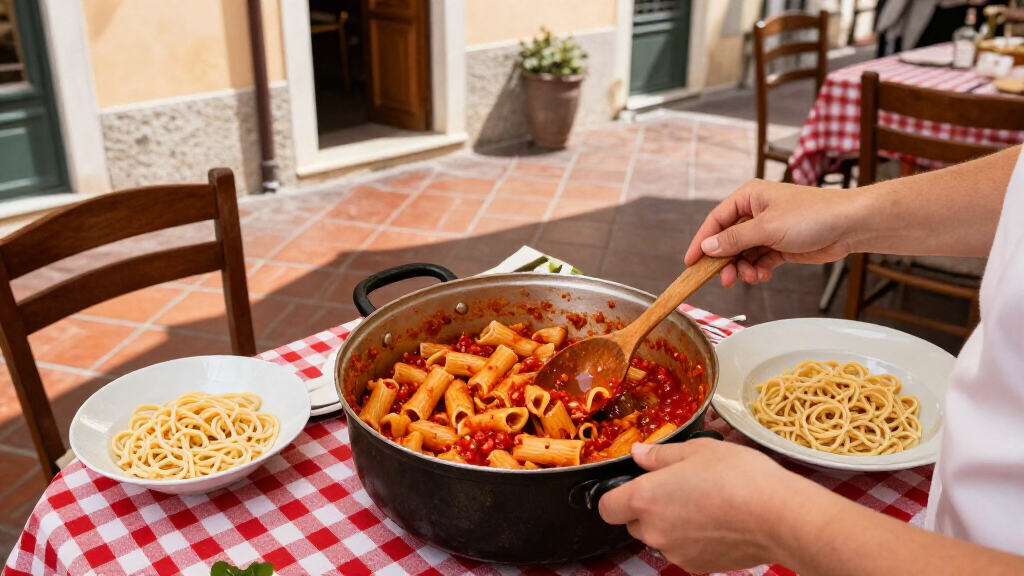
Use ridged, twisted, or hollow pasta for chunky sauces; penne rigate, fusilli, and rigatoni each catch sauce in a different way.
Choose slender pasta for light, smooth sauces and small shapes such as pastina or ditalini for broth.
Try Ligurian trofie with pesto, Puglian orecchiette with broccoli rabe, and Emilia-Romagna tagliatelle with ragù as regional starting points.
Reserve pasta water and toss the pasta in its sauce; add the water gradually until the sauce coats the pasta.
When substituting, choose a shape of similar size and sauce-carrying ability, then adjust large ingredients to fit.
Pasta shapes meet sauce logic
Match the pasta’s shape and texture to the sauce’s weight. Regional pairings offer useful starting points, while your ingredients and taste can guide substitutions.
Start with sauce texture
Choose a shape that carries the sauce and its ingredients evenly.
- Ridges catch bits of tomato and vegetables.
- Hollows and twists hold substantial sauces.
- Try penne rigate, rigatoni, or fusilli.
- Slender strands suit fluid sauces.
- Try spaghetti with tomato or garlic and oil.
- Small shapes such as pastina suit broth.
Regional pairings to try
Local ingredients and cooking traditions help explain why these combinations work.
Trofie with pesto
Trofie’s twists carry pesto in their folds.
Orecchiette with broccoli rabe
The shallow cups hold small pieces of greens.
Tagliatelle with ragù
Broad ribbons stand up to a substantial meat sauce.
Bring sauce and pasta together
A little starchy cooking water helps the sauce coat the pasta.
Keep some before draining the pasta.
Toss the cooked pasta directly with its sauce.
Add a splash of water until the sauce clings.
Substitute by shape and size
Traditional matches are guides, not rules.
Match the sauce’s weight to the pasta’s shape
Pasta shapes and sauces work best together when the pasta can carry the sauce without getting lost beneath it. A thick, chunky sauce needs a sturdy shape with ridges, curves, or hollows; a light, smooth sauce can coat slender strands without weighing them down.
Think of the difference between a spoonful of meat ragù and a slick of garlic-infused olive oil. Ragù has body and small pieces that need somewhere to settle, so rigatoni or tagliatelle makes sense. Oil and finely sliced garlic move easily around spaghetti, leaving each strand glossy rather than buried.
Shape matters because of what it does at the fork. The ridges on penne rigate give a chunky vegetable sauce more places to cling, while fusilli twists hold thicker, textured sauces in their turns. Smooth, fine pasta can suit a delicate tomato sauce, where bigger hollows might leave you with too much sauce in each bite.
At home, look at the sauce before opening the pasta box. If you can see bits of zucchini or sausage, pick a shape that can catch them. If the sauce is silky and fluid, use a slimmer pasta. Good italian pasta pairings are guided by balance: you want the sauce and the pasta to meet evenly, one forkful at a time.
Products Worth Considering

Hisense 55E6QF 55-Inch E6 Cinema Series 4K QLED Smart Fire TV

Levoit Core 600S-P Smart Air Purifier for Large Rooms

Dyson V8 Cordless Vacuum
As an affiliate, we earn on qualifying purchases.
Use ridges and hollows to catch chunky sauces
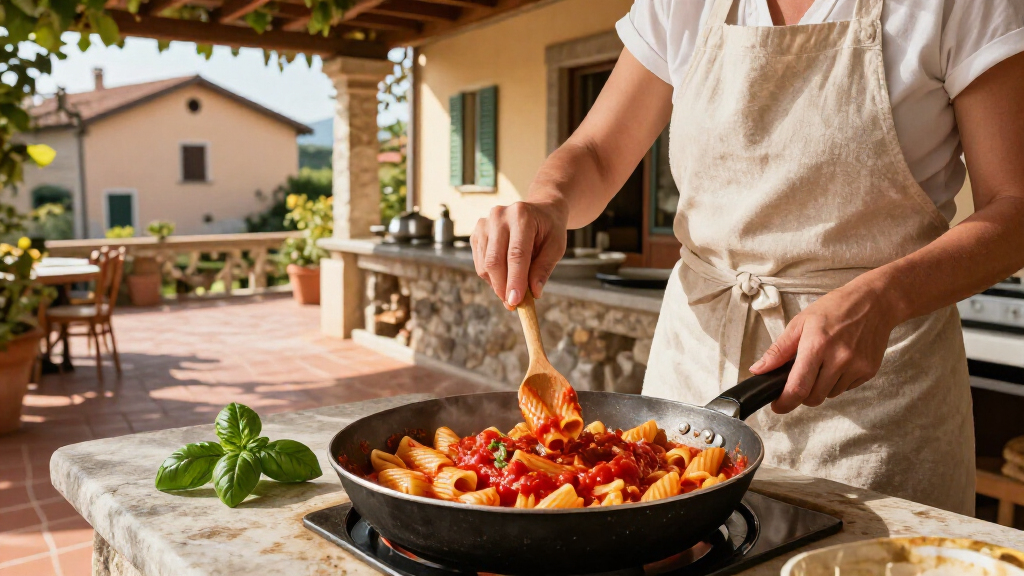
Ridges and hollow centers give chunky sauces places to cling, so tubes and twists are often the easiest choice when a sauce includes vegetables, meat, or other small pieces. Penne rigate, rigatoni, and fusilli can carry both the sauce and its texture from plate to fork.
Picture a weeknight tomato sauce with diced eggplant and olives. Smooth spaghetti can taste good with it, but some chunks will tumble off as you twirl. Penne rigate lets the sauce settle around the pasta, and the ridges pick up a little tomato on the way to your mouth. Rigatoni goes further with its wider hollow, which suits larger pieces and a substantial ragù.
Fusilli’s turns are useful when a sauce is thick rather than runny. A dense vegetable sauce can curl around each twist, giving you a balanced bite. With a thin sauce, those same turns may feel too substantial, and the sauce can slip to the bottom of the bowl instead of coating the pasta well.
Match the size of the pasta to the pieces in the sauce. Small diced vegetables pair comfortably with penne; a deep, meat-heavy sauce can stand up to rigatoni. If you only have one of those shapes, dinner can still work. How a shape holds sauce is a helpful guide, not a test you have to pass before supper.
Let regional pairings show you what to cook
Regional Italian pairings connect pasta to the ingredients, cooking habits, and traditions of a place. They offer a practical clue about what to make: trofie with pesto comes from Liguria, orecchiette with broccoli rabe is a Puglian classic, and tagliatelle with meat ragù belongs to the cooking traditions of Emilia-Romagna.
In Liguria, trofie’s small, twisted shape works beautifully with pesto, the region’s fragrant sauce of basil, olive oil, cheese, garlic, and pine nuts. The twists catch the sauce without needing a heavy coating. At home, toss the cooked pasta with pesto and a splash of pasta water; the steam lifts the fresh basil aroma, and the sauce settles into the folds.
In Puglia, the rounded, shallow shape of orecchiette means “little ears.” Its cup-like surface can carry small pieces of broccoli rabe. The greens’ pleasantly bitter edge, often called cime di rapa (turnip tops), balances the pasta and olive oil. If you’re shopping in season, ask your produce seller about fresh broccoli rabe; otherwise, use what’s available and cook it until tender.
Emilia-Romagna’s broad ribbons of tagliatelle pair well with meat ragù because they have enough width and substance for the slow-cooked sauce. You can take inspiration from these regional habits without treating them as laws. Place gives a pairing its story, and the shape gives you a useful way to bring that story into your kitchen.

Choose thin pasta for smooth sauces and small shapes for soup
Thin pasta suits lighter, smoother sauces because delicate strands let a modest coating shine. Small pasta shapes, meanwhile, are comfortable to eat in a bowl of broth. Spaghetti with tomato or garlic and oil shows the first principle; pastina or ditalini in soup shows the second.
For a simple tomato sauce, slender pasta lets the bright tomato flavor reach every strand. Garlic and oil is lighter still: thinly sliced garlic gently warmed in olive oil creates a fragrant coating, and a restrained amount goes a long way. A large tube can make that sauce feel uneven, with too much oil inside one bite and too little on another.
Soup calls for a different kind of match. Tiny pastina and ditalini sit neatly on a spoon and distribute through the broth rather than sinking into a few unwieldy mouthfuls. Imagine a cold evening with clear chicken broth and a handful of small pasta: the little shapes make each spoonful easy to eat, especially for children or anyone who wants a light meal.
There is room for preference. If you love spaghetti with a chunky sauce, make it; just expect more loose pieces on the plate. When you want the sauce to cling closely, choose a shape that fits its texture. Light sauce, fine strands; broth, small shapes is a simple starting point, not a restriction on what you’re allowed to enjoy.
Pick fresh or dried pasta to suit the sauce
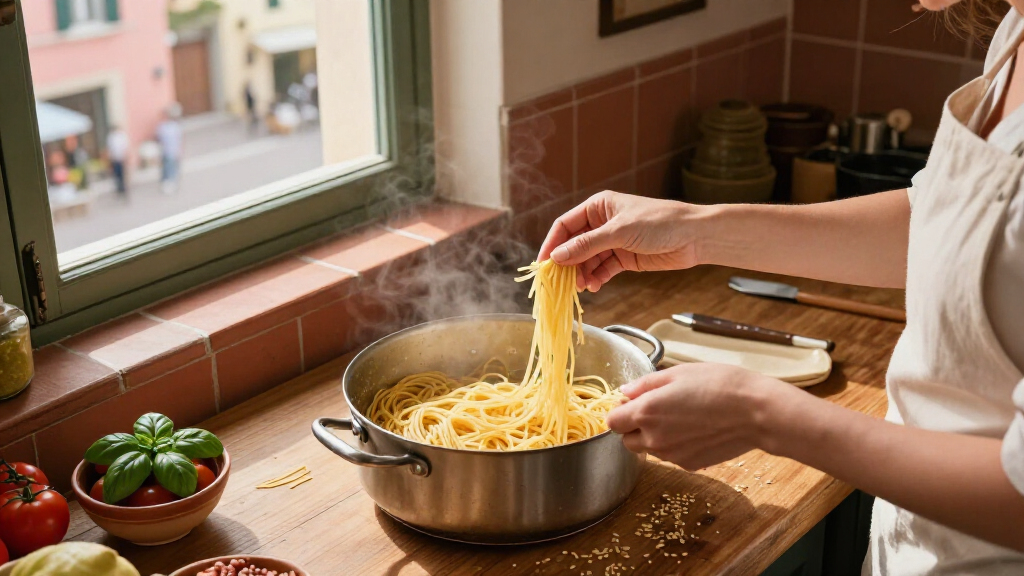
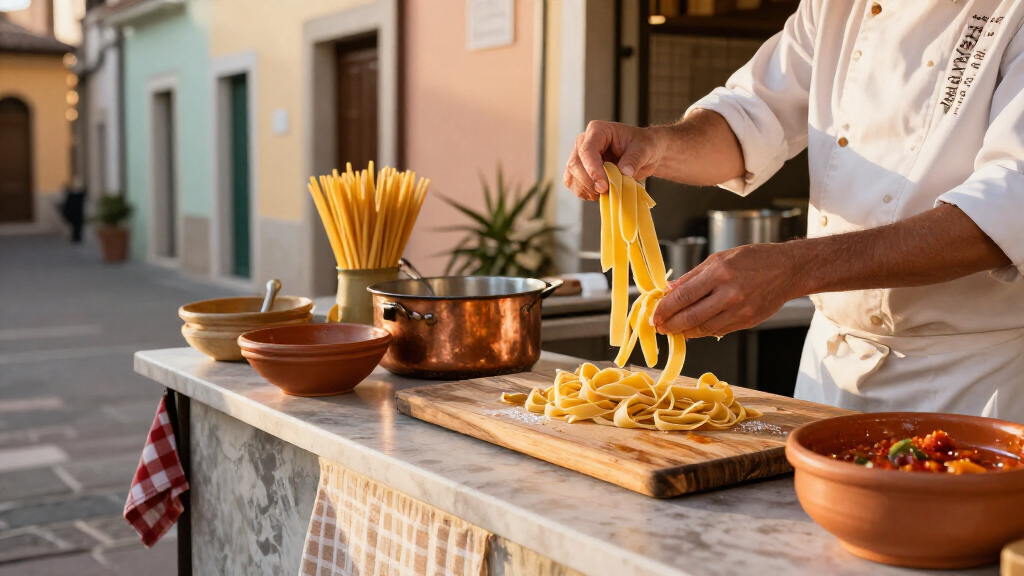
Fresh egg pasta is tender and often pairs well with butter-based sauces or ragù, while dried pasta is commonly served with tomato and olive oil sauces. The difference comes from texture and cooking character, but regional habits vary, and one type does not belong to only one family of sauces.
Fresh tagliatelle has a soft, yielding bite that works well beside a slow-cooked meat ragù in Emilia-Romagna. Dried rigatoni is firmer and can stand up to a hearty sauce or a baked pasta dish. For a quick meal, dried spaghetti gives a smooth tomato sauce a familiar, reliable partner.
Use the package as your guide to cooking time, then taste a piece before draining. Fresh pasta can cook quickly, so stay by the pot; dried pasta needs time to soften at the center while keeping some firmness. In either case, reserve a mug of cooking water before you drain it. That water helps bring the sauce to the texture you want.
You do not have to follow a hard division between fresh and dried. If your market only has dried pasta, serve it with the ragù you planned to make. If you have fresh pasta and a quick tomato sauce, dinner can still be lovely. Match the sauce to the pasta’s bite, then let availability and appetite settle the final choice.
Bring sauce and pasta together with these simple steps
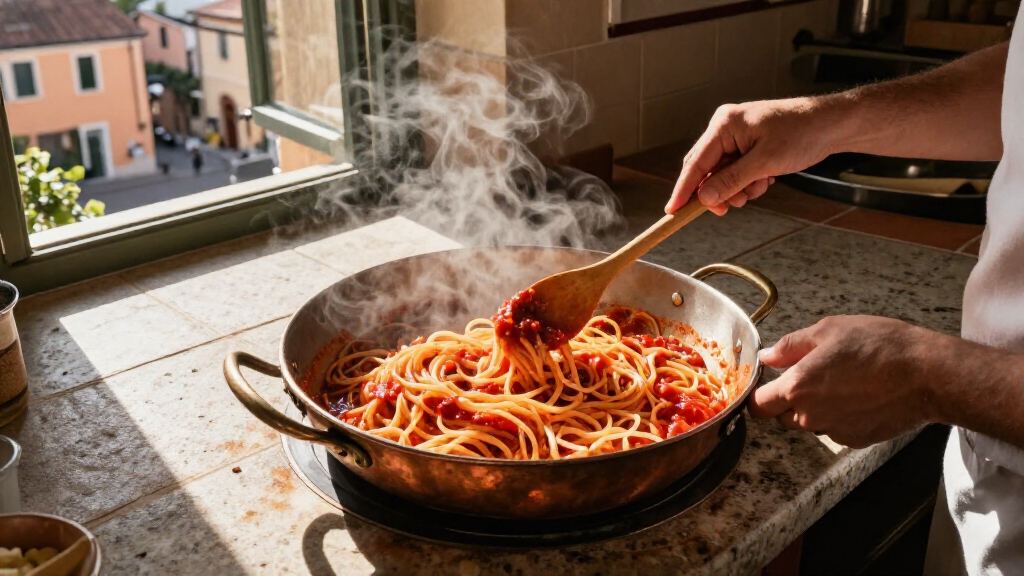
A sauce clings best when you finish the pasta in the sauce, using a little starchy cooking water to help them meet. Pasta water loosens a sauce and helps it coat the noodles; you can add it gradually until the texture looks glossy and cohesive.
- Cook the pasta in boiling water according to the package directions, tasting near the end for the bite you prefer.
- Save some cooking water before draining. A cup is plenty for a typical home meal; you may only need a few spoonfuls.
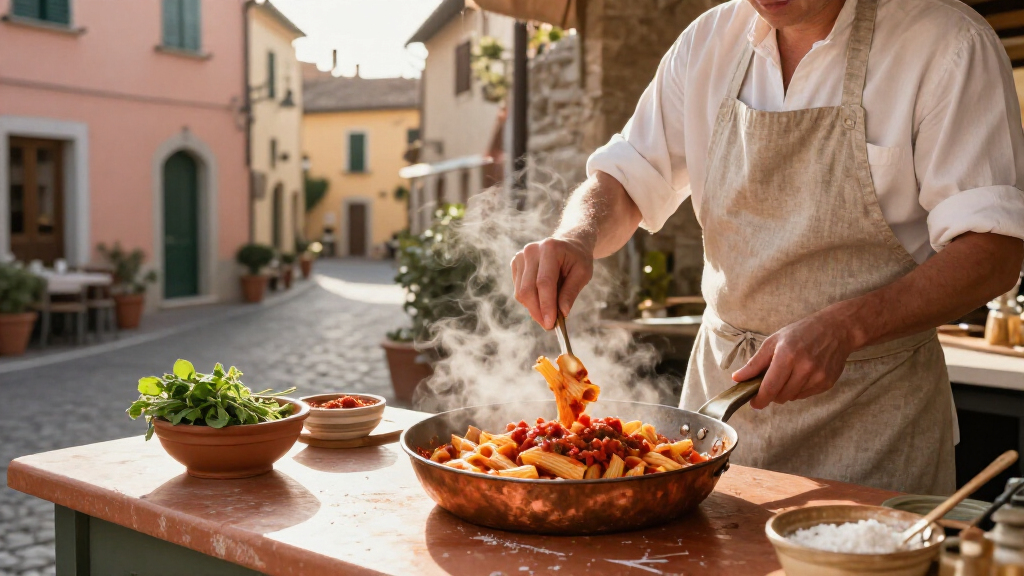
- Move the pasta into the sauce while both are hot, then toss them together over low heat for a short time.
- Add pasta water a little at a time if the sauce looks tight or sits in clumps. Stop when it clings smoothly to each piece.
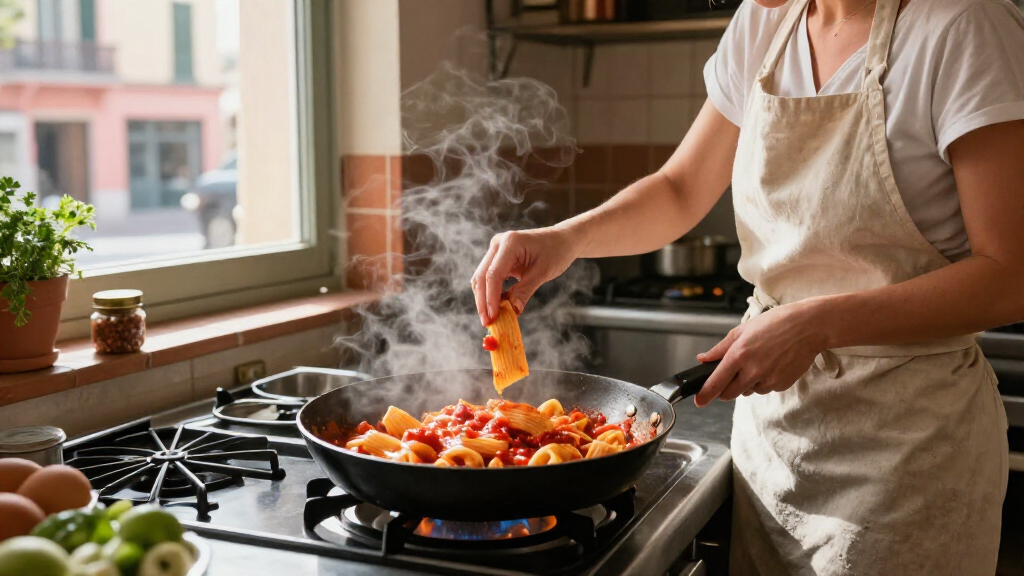
Imagine a pan of tomato sauce and penne on a Tuesday night. The drained pasta goes straight into the pan, followed by a splash of water from the pot. A few tosses later, the sauce coats the ridges instead of pooling beneath them. The change is small but visible.
Usually, don’t rinse pasta you’re serving with sauce: rinsing removes surface starch that helps the sauce adhere. Rinsing can make sense for a cold pasta salad or when a recipe specifically calls for it. Finish, toss, and adjust gradually; that lets you control the final texture without drowning the dish.
Swap pasta shapes without losing the point of the dish
You can usually substitute one pasta shape for another if the replacement has a similar size and can carry the sauce in a comparable way. The result will change in texture, but the meal can still work. Choose by shape and sauce weight, especially when the pantry is running low.
If a recipe asks for penne rigate and you have rigatoni, both ridged tubes can hold a chunky tomato or vegetable sauce. Rigatoni is wider, so it will make the dish feel more substantial and may need a little longer to cook. If you have fusilli instead, its twists offer another way to catch sauce and small pieces.
Substitutions work less neatly when the shapes are very different. Replacing a small soup pasta with wide ribbons can make a broth awkward to eat, and long spaghetti does not catch a thick ragù in the same way as broad tagliatelle. But there is no need to panic over an imperfect match: you can serve a little less sauce, cut larger ingredients smaller, or toss everything well before plating.
For example, if you planned orecchiette with broccoli rabe but only have small shells, use the shells and cut the greens into bite-size pieces. The dish will not have the same characteristic “little ear” cups, but the tender vegetables and pasta will still make a satisfying plate. Adapt the ingredient size to the pasta, and let taste matter more than a perfect pantry.
Frequently Asked Questions
Is there a rule for matching pasta and sauce?
Use texture and weight as your starting point: substantial or chunky sauces usually pair well with shapes that have ridges, twists, or hollows, while lighter sauces often suit slender pasta. Try rigatoni with a hearty ragù or spaghetti with garlic and oil. Regional traditions offer useful examples, but your taste gets the final say.
Why do ridged or hollow shapes hold sauce well?
Ridges and cavities give sauce somewhere to cling, especially when it contains small pieces of meat or vegetables. Penne rigate catches sauce on its ridges, while rigatoni’s hollow center holds more substantial bits. Tossing the hot pasta with sauce also helps it coat evenly.
Can I substitute one pasta shape for another?
Usually, yes. Choose a pasta with a similar size and ability to carry the sauce, such as rigatoni in place of penne for a chunky tomato sauce. The texture will change, so cut larger sauce ingredients to suit a smaller pasta shape.
Should I rinse pasta after cooking?
Usually, no, if you plan to serve it with sauce. The pasta’s surface starch helps the sauce cling, so drain it and toss it with the sauce while hot. Rinsing can be useful for cold pasta salad or when a recipe specifically asks for it.
What is pasta water for?
Pasta water loosens a sauce and helps it coat the pasta. Save some before draining, then add a few spoonfuls as you toss the pasta in the sauce. Stop when the sauce looks glossy and clings to each piece.
Conclusion
When you’re choosing pasta, start with the sauce in your pan: its weight and texture tell you which shape will carry it well. Reach for a sturdy tube or twist for chunks, fine strands for a light coating, and small pasta for soup. Then borrow a regional pairing, save a little cooking water, and finish the pasta in the sauce.
Let the last forkful tell you whether the pairing worked: every bite should carry enough sauce, and the bowl should smell like dinner just came together.