
TL;DR
Gaeta is a coastal town in southern Lazio, between Rome and Naples, known for tiella di Gaeta, a savory pie with fillings such as seafood, tomatoes, herbs, and olives. Its dark brined olives are associated with the Itrana variety grown in the surrounding hills. Plan time for bakeries, the historic waterfront, and the beaches and towns of the Riviera di Ulisse.
In Gaeta, a savory pie can travel as easily as a fisherman’s lunch, and the dark olive folded into its filling carries the taste of nearby hills. Tiella di Gaeta and Olive di Gaeta tell you something about a town where the Tyrrhenian Sea meets the farms of southern Lazio.

Get kitchen staples and gadgets delivered free with Prime
- Fast, free delivery on millions of items
- Prime Video, Amazon Music and more included
- Member-only deals all year
Gaeta sits between Rome and Naples, a practical stop for a coastal trip or a destination in its own right. Give yourself time to eat at a bakery or restaurant, walk the old town and waterfront, then head out toward the beaches and headlands of the Riviera di Ulisse.
This guide explains what to order, how to recognize the local flavors, and how to shape a visit around them. Recipes, shop hours, and seasonal events change, so use the food traditions as your map and check current local details before you set out.
Order tiella di Gaeta to try a portable pie made with two thin rounds of dough and a variable filling.
Look for dark, brined Olive di Gaeta, associated with the Itrana variety grown in the surrounding hills.
Ask bakeries which tiella fillings are available that day and whether portions suit a snack or a meal.
Pair local seafood with olives, tomatoes, and herbs, while asking which ingredients are actually local or seasonal.
Check current opening hours, beach access, event dates, and food transport rules before finalizing your trip.
Taste Gaeta from sea to hills
Tiella and dark brined olives bring together Gaeta’s fishing heritage and the surrounding hills. Build a food walk through the old town, waterfront, and Riviera di Ulisse.
A pie made to travel
Two thin rounds of dough hold a filling that varies by bakery and family.
Coastal flavors
Octopus, squid, or anchovies often meet tomatoes, herbs, and olives.
A changing filling
Vegetable versions are common too; ask what is available that day.
Taste the link to the hills
Olive di Gaeta are associated with the Itrana variety grown around town.
- Small, dark olives
- Typically cured in brine
- Savory, mildly bitter flavor
- Used in tiella, pasta, fish, and salads
Make it a food walk
Let a first bite lead you from everyday cooking to the coast.
Ask about fillings and whether the portion suits a snack or lunch.
Explore Gaeta’s historic streets and waterfront.
Pair a seafood meal with time for the beaches and towns of the Riviera di Ulisse.
Before you set out
| Check | Why it helps |
|---|---|
| Bakery hours and fillings | Recipes and availability vary |
| Beach access and events | Seasonal details can change |
| Food transport rules | Check requirements for your destination |
Order tiella for a taste of Gaeta’s everyday cooking
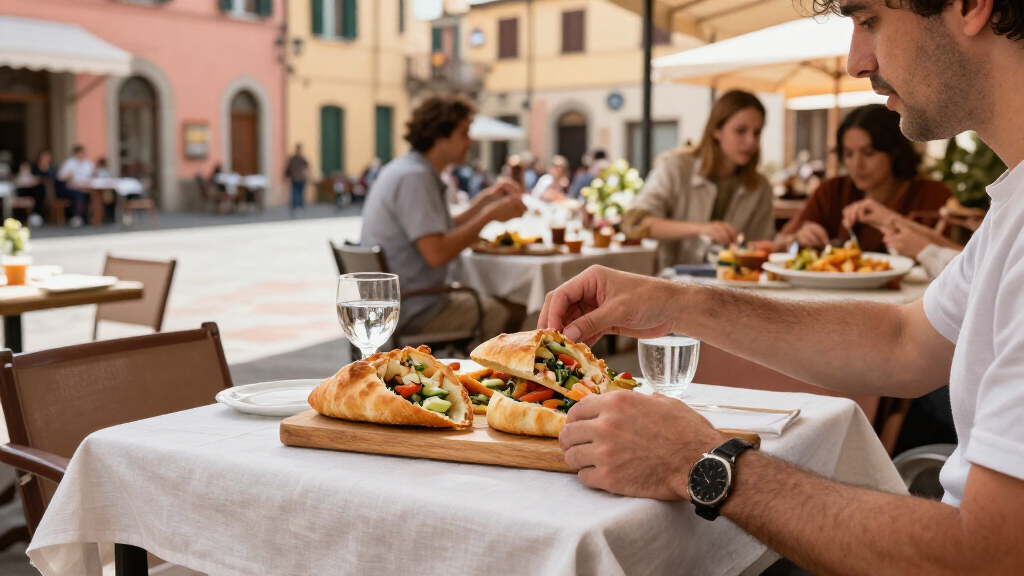
Tiella di Gaeta is a savory pie made from two thin rounds of dough wrapped around a filling, often seafood, tomatoes, herbs, and olives. It can work as a quick snack or a substantial meal, depending on the slice you buy. The crust gives you a firm, golden edge; inside, a warm filling brings together salty seafood and the gentle bitterness of olives. That self-contained shape is part of its meaning: the dough protects a moist filling and makes a meal easy to carry, whether from a bakery to the waterfront or from home to work.
Common fillings include octopus, squid, and anchovies, with garlic, parsley, tomatoes, and Olive di Gaeta appearing in familiar combinations. Vegetable versions are also part of the tradition. There is no single fixed recipe: a bakery’s tiella may differ from the one a family makes at home, much as two households can give the same Sunday sauce their own character. Rather than treating variation as a departure from an official recipe, it helps to see it as a record of practical choices: what was available, what a household liked, and how much time they had to cook.
That variety makes ordering part of the pleasure. At a local bakery or takeaway shop, ask what fillings are available that day and whether a portion is sized as a snack or lunch. Imagine picking up a wedge before a walk along the waterfront: the dough keeps the filling together, while a napkin handles the inevitable olive oil on your fingers. A seafood slice offers the most direct taste of the coast, while a vegetable filling can be a lighter choice or a better fit if you avoid fish; ask about ingredients because names alone may not tell you whether anchovies or seafood stock are included.
Tiella’s portability connects it to practical home cooking and the local fishing community. A pie that travels well makes sense beside a working port, where a filling lunch should be easy to carry. It also bridges ingredients from different parts of the landscape: seafood brings the port into the meal, while olives and vegetables point toward nearby cultivation. Try a seafood version first, then choose a vegetable one if you want to compare how the same crisp-edged pastry frames different flavors. The contrast shows why the form endured: it can adapt to the filling without losing its usefulness.
Products Worth Considering

Philips Hue Play Gradient Light Tube, Large, Black

Sonos One Two-Room Smart Speaker Set with Alexa, Black

Hisense 55E6QF 55-Inch E6 Cinema Series 4K QLED Smart Fire TV
As an affiliate, we earn on qualifying purchases.
Taste Gaeta olives for a briny link between hills and sea
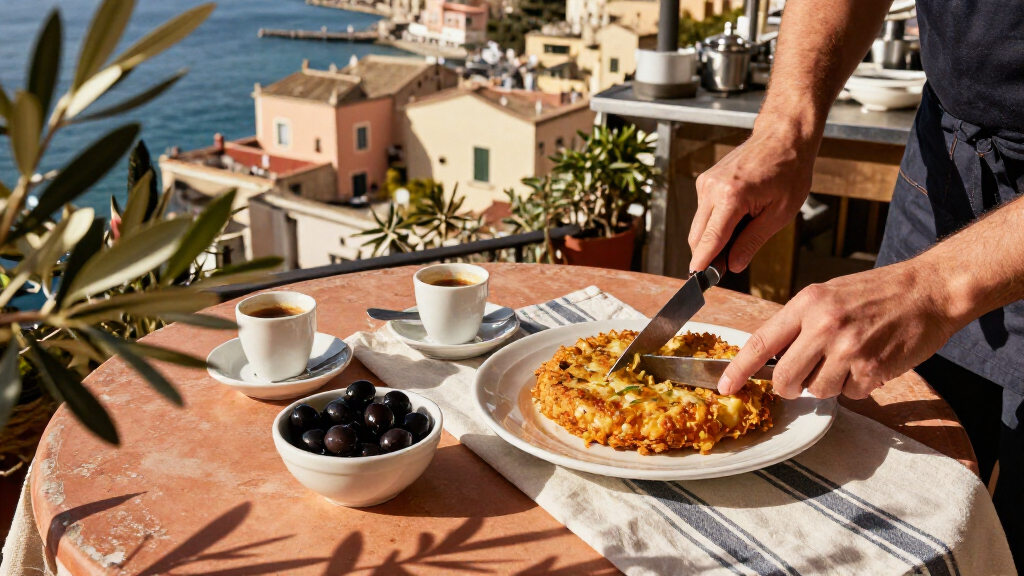
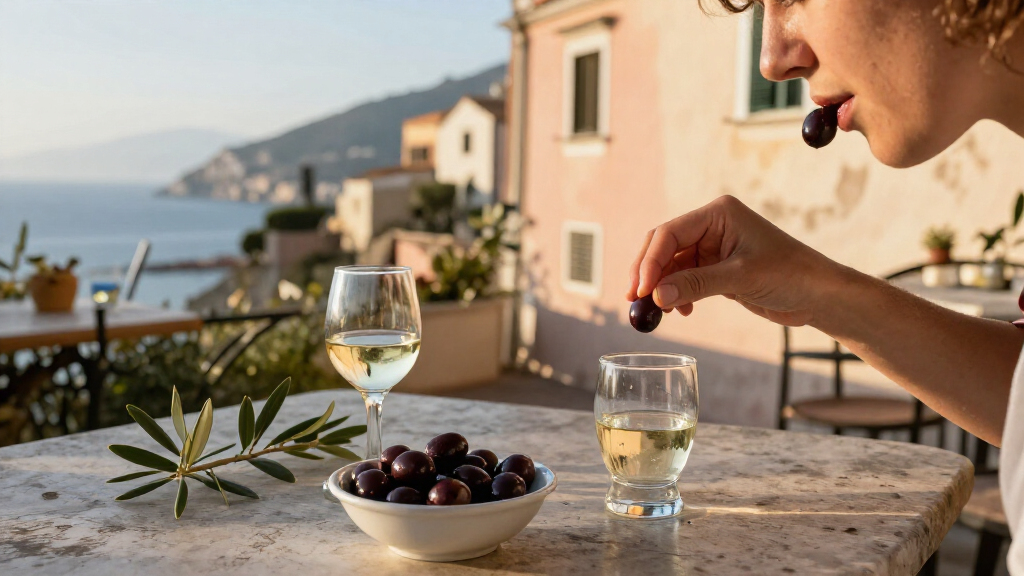
Olive di Gaeta are small, dark olives associated with the Itrana variety grown in the hills around Gaeta. They are typically cured in brine, giving them a savory, gently bitter flavor that pairs naturally with seafood and tomatoes. Their appeal comes from that balance: a spoonful can add depth without making a dish taste only of salt. In tiella, an olive’s brine cuts through rich dough and seafood; with tomatoes, it sharpens sweetness. The pairing makes the olive a useful bridge between the coast and the cultivated slopes inland.
Try them in a slice of tiella, or look for them in local pasta, fish dishes, and salads. If your plate arrives with a scattering of dark olives, taste one on its own before eating the rest of the dish. Its brine and mild bitterness can help explain why the same olive works with an anchovy, a ripe tomato, or a piece of grilled fish. Notice the tradeoff as well: olives bring complexity and a long finish, but too many can overwhelm delicate fish or make an already salty dish feel heavy.
The name does not guarantee that every jar or dish follows one identical production method. Products sold as Gaeta olives can vary, so read the label if you are buying some to take home, and follow its storage directions after opening. You can ask a shopkeeper which olives come from local producers and how the producer recommends serving them. That question matters because a jar is not just a souvenir: its cure and salt level affect how you will use it, whether as a snack, a cooking ingredient, or a seasoning in a sauce.
They also give you a useful souvenir that fits in a small bag. At a food shop, compare labels and packaging, then choose a jar with clear storage instructions. Before carrying food across a border, check the rules for your destination; those rules depend on where you are traveling, not on the olive’s reputation. If you plan to cook with the olives, choose a product whose label and storage details you understand; for a gift, a well-labeled jar is easier to explain and enjoy.
Build a Gaeta food walk around three easy stops
Gaeta for food lovers is easiest to enjoy when you let a meal lead you through the town: buy a tiella slice, explore the historic center and waterfront, then sit down for seafood. Gaeta is a coastal town in southern Lazio, between Rome and Naples, so you can make it a dedicated stay or a stop on a longer trip. A simple route links its everyday food with its port and old streets. The order matters: a portable first bite lets you explore at your own pace, while saving a restaurant meal for later gives you time to ask about the catch and local ingredients.
- Start with a bakery or takeaway counter. Ask which tiella fillings are ready. Choose seafood if you want the classic coastal flavors, or ask about a vegetable version. Buying a slice first is convenient, but it may be filling, so check the portion size if you have a sit-down lunch planned.
- Walk toward the old town and waterfront. Take your time around the historic streets and port; notice how close daily life remains to the sea. The walk gives the first bite context: a pie associated with practical meals feels different when you can see the working waterfront it suits.
- Choose a sit-down meal. Look for locally landed fish or seafood with tomatoes, herbs, and Gaeta olives. Ask staff what is local and what is in season. A menu can show the region’s flavor combinations, though a local dish does not guarantee every ingredient was grown or caught nearby.
- Finish with a coastal outing. Set aside the afternoon for a nearby beach or another stop along the Riviera di Ulisse. Keep this part flexible: beach access and facilities vary, and a longer meal or a hot afternoon can make a shorter stroll more appealing.
For example, a traveler arriving around lunchtime could buy tiella first, then walk the waterfront before choosing a restaurant for dinner. That pace leaves room for both a casual bite and a fuller meal without trying to squeeze every stop into one hurried hour. It also gives you a chance to discover which flavors you want to revisit at dinner. Check current opening times before building your day around a specific bakery or restaurant.
Where local food reflects both its fishing heritage and nearby agriculture, your best meal may pair seafood with ingredients from inland farms. Ask about the fish on offer, the olive used in a dish, and whether a tiella is made on site. Those small questions can turn a menu into a useful guide to the place, and help you choose between a convenient bakery snack and a longer meal based on the day’s catch, appetite, and schedule.
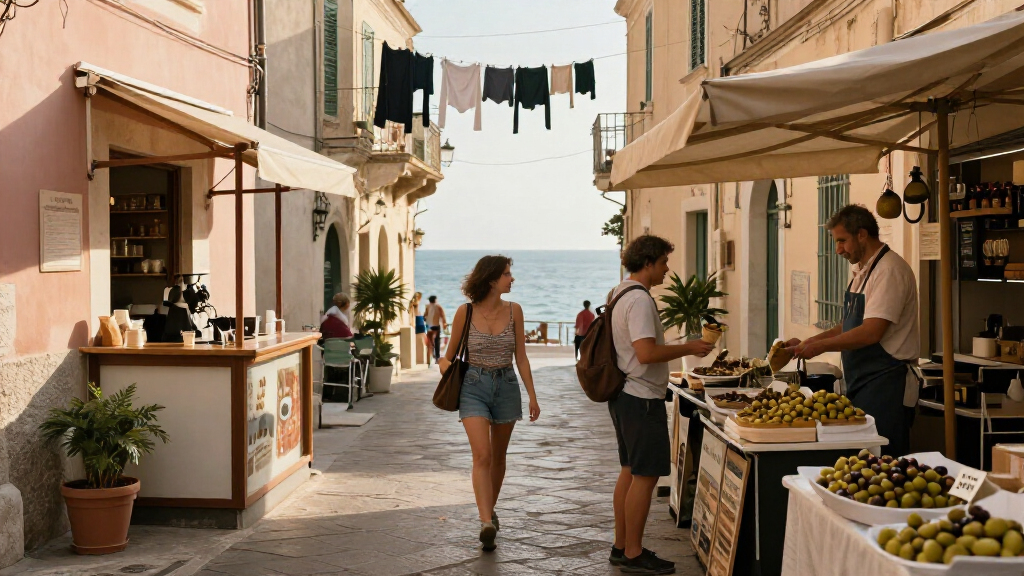
Pair seafood with the flavors that grow around Gaeta
Gaeta’s cooking is more than seafood: local meals can bring together fish from the coast, olives from surrounding hills, and vegetables or cheeses from nearby inland areas. That mix explains why a plate might pair a rich anchovy or squid filling with bright tomato and a distinctly briny olive. The coastline gives you one set of flavors; the surrounding farms add another. Their combination is practical as well as appealing: acidity and bitterness can balance rich seafood, while vegetables add freshness and substance to a meal built around the catch.
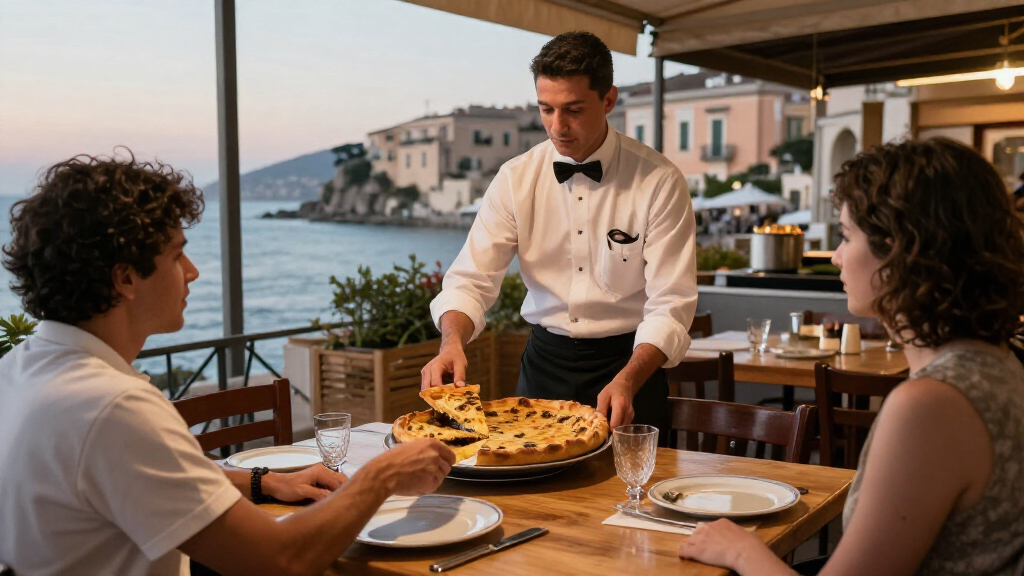
When you order, ask what came in that day and what the kitchen uses from local producers. A seafood pasta with olives may feel different from a tiella, even if both use similar ingredients: the pie’s soft filling sits behind a crisp shell, while pasta lets the sauce coat each bite. If you see grilled fish, ask whether the kitchen serves it with local olives, herbs, or seasonal vegetables. These formats change the balance: the pie concentrates flavors in a portable bite, while pasta or grilled fish gives each ingredient more room and makes it easier to notice the fish itself.
For a practical tasting, try two small dishes with contrasting textures. Share a wedge of tiella, then order a fish dish with tomatoes or olives; you will notice how the same ingredients shift when baked into dough or served alongside the fish. A simple salad can offer a break from richer, saltier flavors. This is a useful way to explore without ordering several full mains, though sharing portions depends on the restaurant and its serving sizes.
Local menus change with the catch and season, and a dish described as local does not mean every ingredient came from Gaeta itself. Spring and early autumn often bring milder weather for walking between meals than peak summer, though restaurant schedules and beach facilities vary. Follow the day’s menu and ask direct questions rather than assuming a particular fish or produce item will be available. Flexibility can lead to a better meal: choosing what is available that day may give you fresher seafood, even if it means passing up a dish you expected to find.
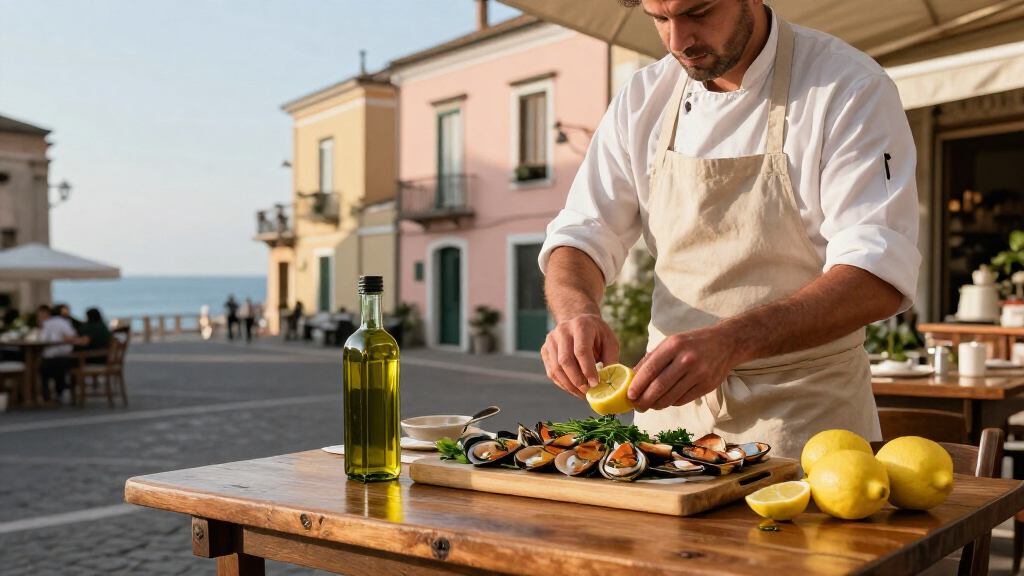
Use the Riviera di Ulisse to give lunch a coastal sequel
The Riviera di Ulisse is a coastal area in southern Lazio associated with beaches, headlands, and the legends of Odysseus. It gives a food-focused visit a natural second half: eat in Gaeta, then spend time by the water or visit another coastal town. The name draws on classical mythology, but it does not mean Gaeta’s food has one ancient Greek origin. Thinking of it as a route through a varied coastline is more useful for planning: the sea connects the places, while each town has its own food, sights, and practical access.
Start the morning in the old town, take a break for tiella or lunch, and keep the afternoon flexible for a beach or coastal walk. The plan works well for a couple traveling without a rigid schedule: if the sun is strong, linger over lunch; if the day turns breezy, explore historic streets and landmarks instead. Gaeta’s port and religious sites offer more to see when beach time does not suit the weather. A flexible afternoon avoids turning a coastal visit into a race between stops, though it also means choosing one beach or town rather than trying to cover the whole area.
In summer, the coast may be busier and facilities can follow seasonal schedules. Spring and early autumn often bring gentler conditions for a stroll, but check local transport, beach access, and opening times for the dates you have in mind. Ask your accommodation or local tourism office for current details before committing to a route. Season affects more than comfort: a quiet walk may be easier outside peak summer, while summer brings livelier beaches but can require more planning around access and crowds.
Food gives the outing a sense of place. Pick up tiella before a walk, then sit down later for seafood and olives; the change from a portable slice to a leisurely meal follows the landscape from town to shore. If you have more time, treat Gaeta as a base for nearby coastal stops rather than trying to see every beach in a single afternoon. That slower approach trades breadth for a fuller experience of one place, with time to notice how the food and waterfront fit together.
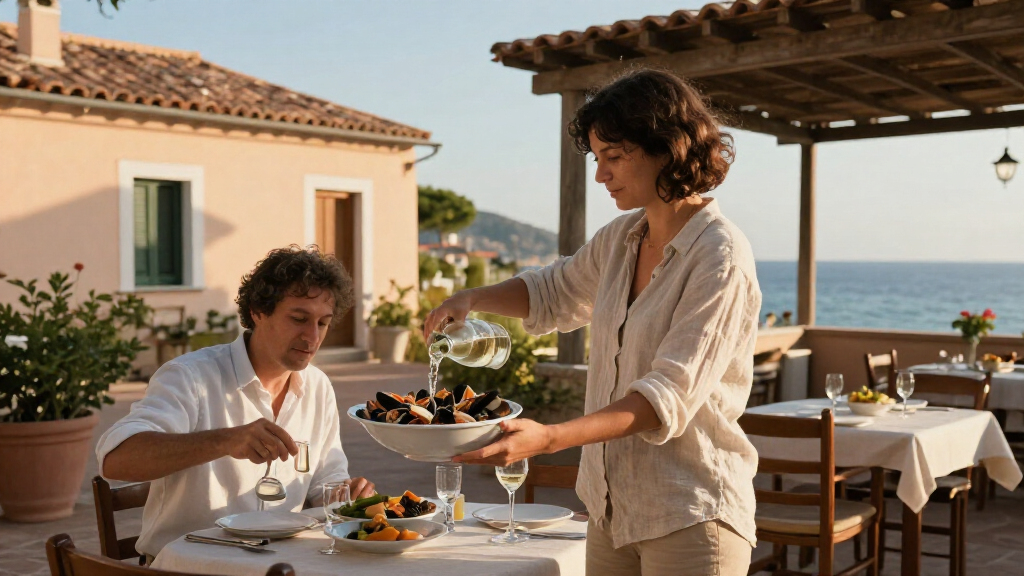
Choose your first bite by matching the filling to your appetite
The best first tiella depends on what you want to taste: choose seafood for a direct link to Gaeta’s fishing heritage, anchovies for a saltier, more assertive bite, or vegetables for a gentler option. Ask what is fresh from the oven and what a typical portion looks like. One wedge may be enough before dinner; a larger piece can serve as lunch on a day of walking. The choice is also a question of pacing: seafood offers the clearest taste of the coast, while a vegetable filling may leave more room to enjoy a later meal.
If you eat vegetarian, ask specifically whether the filling contains fish, anchovies, or seafood stock. A vegetable name on a menu does not always answer every ingredient question, and recipes vary from bakery to bakery. If you have a food allergy, tell staff clearly and ask about ingredients and cross-contact before ordering; tiella can include wheat, and fillings may include fish or other allergens. Asking before choosing helps avoid relying on a dish name that may describe its main ingredients without listing everything used in the filling.
For a small tasting, share two fillings with a companion. Try seafood first, then vegetable, and notice the contrast between the savory, briny filling and the softer sweetness of cooked vegetables. Pair both with water and a simple salad if you want a lighter meal before a beach walk. Sharing gives you more variety without committing to a full portion of each, although it depends on the shop’s serving size and whether the tiella is sold by the slice.
When the weather is hot, buy food from a shop that handles it properly and eat it promptly, especially if the filling contains seafood. Perishable foods should not sit at room temperature for more than two hours, or one hour above 90°F (32°C); refrigerate leftovers at 40°F (4°C) or below. If you are unsure how long a slice has been unrefrigerated, choose a fresh portion instead. This matters on a beach day, when carrying food in the heat can undo the convenience of a portable pie; buy close to mealtime and plan to eat it promptly.
Frequently Asked Questions
What is tiella di Gaeta?
Tiella di Gaeta is a savory pie made from two thin rounds of dough enclosing a filling. Traditional fillings often include seafood, tomatoes, herbs, and olives, though vegetable versions are also common.
What goes inside tiella di Gaeta?
Fillings vary by family and bakery. You may find octopus, squid, anchovies, tomatoes, garlic, parsley, and Gaeta olives, or a vegetable filling; ask what is available when you visit.
What makes Gaeta olives distinctive?
Olive di Gaeta are small, dark olives associated with the Itrana variety grown in the hills around town. They are typically cured in brine and bring a savory, gently bitter flavor to tiella, pasta, fish, and salads.
Where can I try tiella in Gaeta?
Look for tiella at local bakeries, takeaway shops, and restaurants. Availability and opening hours vary, so check current details and ask which fillings are ready that day.
Can vegetarians eat tiella di Gaeta?
Often, yes: vegetable fillings are part of the tradition. Ask staff whether the filling includes fish, anchovies, seafood stock, or other ingredients you avoid, since recipes differ.
When is a good time to visit Gaeta for food and the coast?
Spring and early autumn often offer milder weather for walking and eating outdoors than peak summer. Beach facilities, events, and restaurant schedules change by season, so confirm current local information before you travel.
Conclusion
Let one slice of tiella set the pace for your Gaeta visit. Ask what is inside, taste the olives, and give the old town and waterfront time before heading toward the coast.
Remember the town by its contrast: crisp dough in your hand, briny olives on your plate, and the Tyrrhenian Sea waiting at the end of the walk.