AIThis post was created with the assistance of artificial intelligence (AI).
TL;DR
Italy’s Christmas sweets follow several calendars: families enjoy some during Advent, serve others at Christmas, and save many for Epiphany on January 6. Panettone from Milan and pandoro from Verona are national favorites, but regional treats such as Sicilian buccellato, Neapolitan struffoli, Calabrian pitta ’mpigliata, and Tuscan ricciarelli tell a wider story. The best way to explore them is by place and date, while remembering that recipes vary from town to town and family to family.
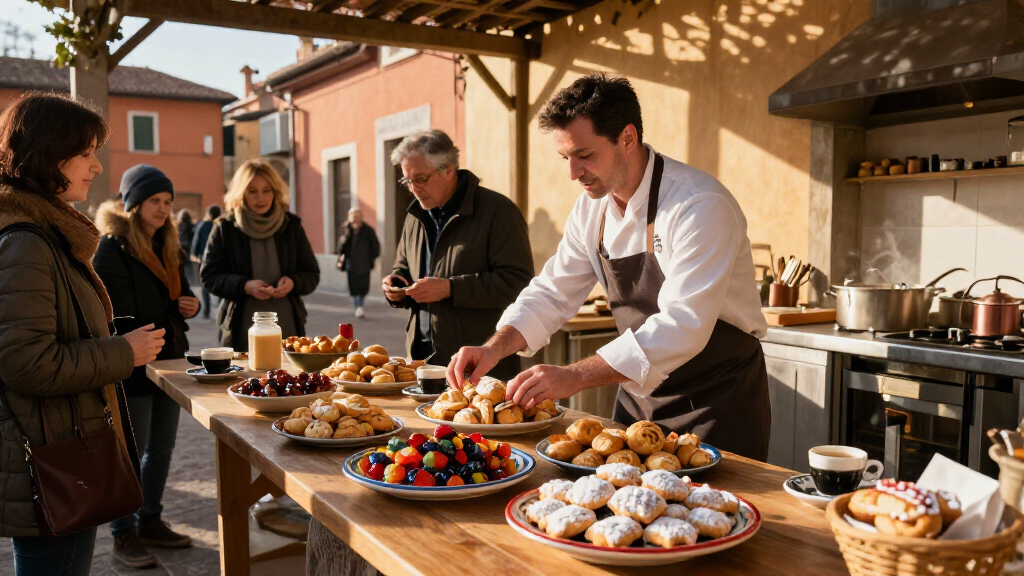
Italy’s Christmas dessert calendar runs past December 25. In many homes, the season’s sweets begin appearing during Advent and continue through Epiphany on January 6, when families may serve treats that never made it to Christmas Eve. A Milanese panettone, a Neapolitan plate of honey-glossed struffoli, and a tray of Tuscan almond cookies can all belong to the same holiday season, but they don’t tell the same regional story.
Before you orderOffer from Amazon
Get kitchen staples and gadgets delivered free with Prime
This is because Italy has no single Christmas dessert tradition. Local ingredients, religious dates, trade, and family habits shape what gets baked or bought, and recipes can change just across a provincial border. Use this guide to connect each sweet with its place and usual holiday moment, whether you’re planning a winter trip, choosing a bakery treat, or deciding what to bake at home.
One note before you set your menu: “region by region” is a helpful map, not a rulebook. A family might serve panettone alongside local pastries, adapt a recipe to what’s available, or skip a tradition altogether. The pleasure is in finding out what’s on the table where you are.
At a glance
Italy’s Christmas Sweets: An Advent Calendar by Region
Key insight
Italy’s familiar panettone and pandoro are tied respectively to Milan in Lombardy and Verona in Veneto, yet holiday sweets also follow local calendars that can extend through Epiphany on January 6.
Key takeaways
1
Panettone is associated with Milan in Lombardy; pandoro is associated with Verona in Veneto, and both are now eaten across Italy.
2
Sicilian buccellato is a ring-shaped pastry with dried-fruit filling; Neapolitan struffoli are fried dough balls coated in honey.
3
Calabrian pitta ’mpigliata layers pastry around nuts, raisins, and spices; Tuscan ricciarelli are soft almond cookies associated with Siena.
4
Italian holiday sweets can appear during Advent, Christmas, or Epiphany on January 6; local families may follow different dates and recipes.
5
Ask bakers about ingredients, allergens, and local serving customs, since names and recipes vary between towns and households.
Italian Christmas Sweets · Briefing
Advent Begins Italy’s sweets, by place and date
Italy’s holiday desserts follow different local traditions from Advent through Epiphany. The calendar is a guide: recipes and serving days vary between towns and families.
Jan 6
Epiphany closes the season
2 loaves
Panettone and pandoro are nationwide favorites
4 regions
Local sweets tell a wider story
A season with several dates
Sweets may be enjoyed during Advent, at Christmas, or for Epiphany.
Advent
Some treats appear in the weeks before Christmas.
Christmas
Families choose sweets for their holiday celebrations.
January 6
Epiphany brings the season to a close, with treats that may be saved for the occasion.
Two famous loaves, two home cities
Both are now eaten across Italy, often alongside local specialties.
Sweet
Place
What to expect
Panettone
Milan, Lombardy
Tall, airy loaf; often candied citrus and raisins
Pandoro
Verona, Veneto
Star-shaped, buttery loaf; often finished with powdered sugar
Regional specialties to seek out
Shapes, textures, and ingredients connect each sweet to local food traditions.
Sicily
Buccellato
A ring-shaped pastry with a dried-fruit filling.
Naples
Struffoli
Small fried dough balls coated in honey.
Calabria
Pitta ’mpigliata
Pastry rolled with nuts, raisins, and spices.
Tuscany
Ricciarelli
Soft almond cookies associated with Siena.
Choose by occasion and ingredients
A local bakery can help you find what is usually served where you are.
1
Ask when it is eaten
Serving customs can differ between Advent, Christmas, and Epiphany.
2
Ask what is inside
Check ingredients and allergens; recipes vary by town and household.
3
Follow local curiosity
Treat regional associations as a map, not a rulebook.
The takeaway
Italy’s Christmas sweets are a calendar of local traditions that can last through Epiphany.
Use the holiday dates to decide what to taste first
Italian Christmas sweets follow a holiday season that can stretch from Advent through Epiphany on January 6. That longer calendar matters because it turns dessert into a sequence of occasions: a treat bought early in December may be for sharing through Advent, while another is saved for a family gathering after Christmas. If you’re visiting Italy in early December, the bakery counter may tell a different story from a January market stall.
Think of the calendar as a guide to timing rather than a list of fixed rules. For example, a traveler arriving in Milan in December might find panettone stacked in shop windows and take one to a gathering; someone in Naples around Christmas could see struffoli made for a shared festive table. In January, a local bakery may still have seasonal sweets for Epiphany. These examples can help you plan, but serving days shift by town and household, and families may make a favorite whenever relatives gather.
Advent is the period of preparation before Christmas, and its weeks give households time to bake, share, or buy treats ahead of the main celebrations. Christmas Eve and Christmas Day bring their own meals and dessert choices, while Epiphany closes the season on January 6. The distinction affects what a visitor is likely to find fresh and what a household might consider part of the occasion. A guide to Italy’s sweets therefore works best as a calendar, not a definitive menu for every home.
If you’re shopping, ask a baker when the local specialty is usually eaten and whether it is made throughout the season or just for a particular date. That answer can help you choose between buying something to eat now and bringing home a treat intended for a later celebration. In one place, a pastry may be a Christmas Day favorite; a short drive away, a similar recipe might appear at New Year. The conversation can be as rewarding as the first bite.
Think of the dates as an invitation, not a schedule every family follows. Italian holiday sweets are traditions people keep, adjust, and share in their own ways.
Products Worth Considering
Google Nest Doorbell (Wired, 2nd Generation), Snow
eufy C30 Robot Vacuum and Mop
Levoit Vital 100S-P Air Purifier with Washable Pre-Filter
As an affiliate, we earn on qualifying purchases.
Taste Milan and Verona’s famous loaves, then look beyond them
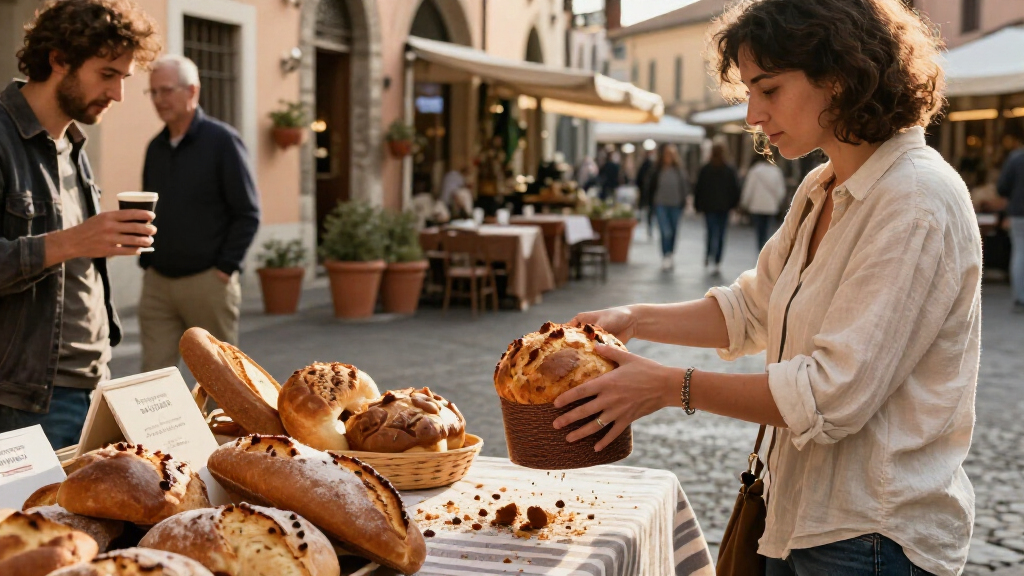
Panettone comes from Milan in Lombardy, and pandoro is associated with Verona in Veneto. Both have become nationwide Christmas favorites, but their different shapes and textures make them easy to tell apart. Their popularity shows how a local specialty can travel: the loaves now serve as familiar gifts and centerpieces well beyond their home cities. They’re a useful starting point for understanding Italy’s best-known holiday breads, not the full story of the season.
Panettone rises into a tall dome, with a soft, airy crumb and, in its familiar version, candied citrus and raisins. Pandoro has a golden, star-shaped form and a fine, buttery interior, often finished with powdered sugar. Imagine setting both on a table: panettone brings pockets of fruit and a little chew to each slice, while pandoro offers a more even, tender crumb. The choice is partly about texture and partly about what guests enjoy; one favors bursts of fruit, the other a simple buttery sweetness.
Artisanal panettone is also a bakery category associated with sourdough, long fermentation, and creative flavors. Longer fermentation takes time and skill, and it can shape a loaf’s aroma and texture; added flavors can make it distinctive, though they may move it away from the familiar fruit-and-citrus profile. For example, if you’re buying a gift for someone who expects a classic panettone, a traditional loaf may be the safer choice, while a local variation can be more interesting for a tasting. A classic version beside espresso after a family meal can be just right.
Sweet
Regional association
What you’ll notice
Panettone
Milan, Lombardy
Tall loaf; airy crumb; often candied citrus and raisins
Both now appear far beyond their home cities, in bakeries and homes across Italy and abroad. Serve them as they are, or offer slices after dinner with coffee. If you’re comparing loaves, check the label for ingredients and allergens: versions vary, and many contain wheat, eggs, milk, or other ingredients that matter to your guests. That check is especially useful when the loaf is a gift, since a beautifully wrapped regional specialty may not suit everyone at the table.
Find Sicily’s fruit-filled buccellato for a slower, richer bite
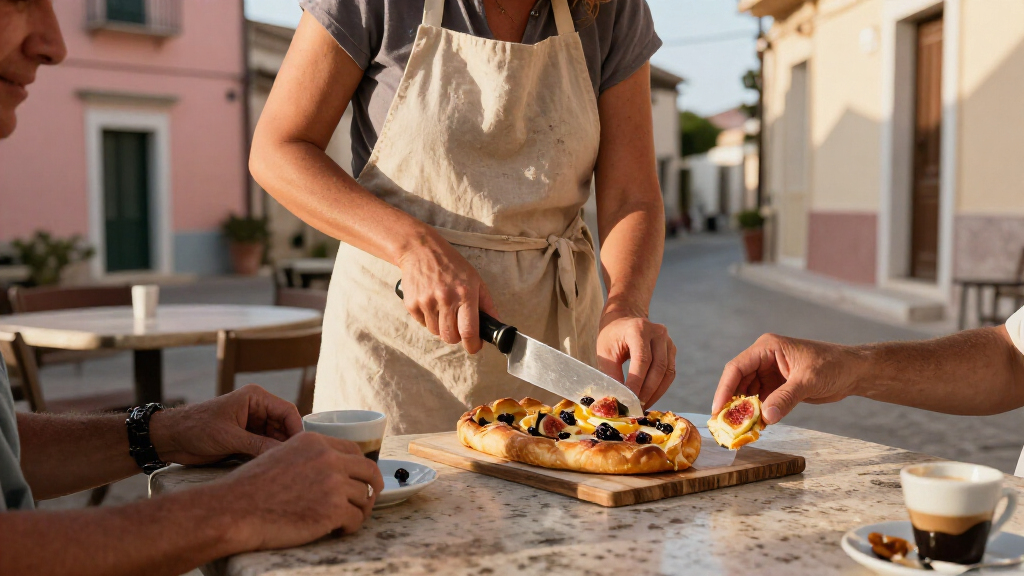
Sicilian buccellato is a ring-shaped pastry filled with dried fruit, often associated with the Christmas season. Its dark, sweet filling offers a contrast to the pale crumb of a holiday loaf: think of a pastry wreath as a small, edible pantry, packed with ingredients that keep well. That concentrated filling makes it a different kind of seasonal treat: a thin slice can satisfy where a soft, airy loaf invites a larger serving. Recipes vary, so a bakery’s version may differ from the one made in a family kitchen.
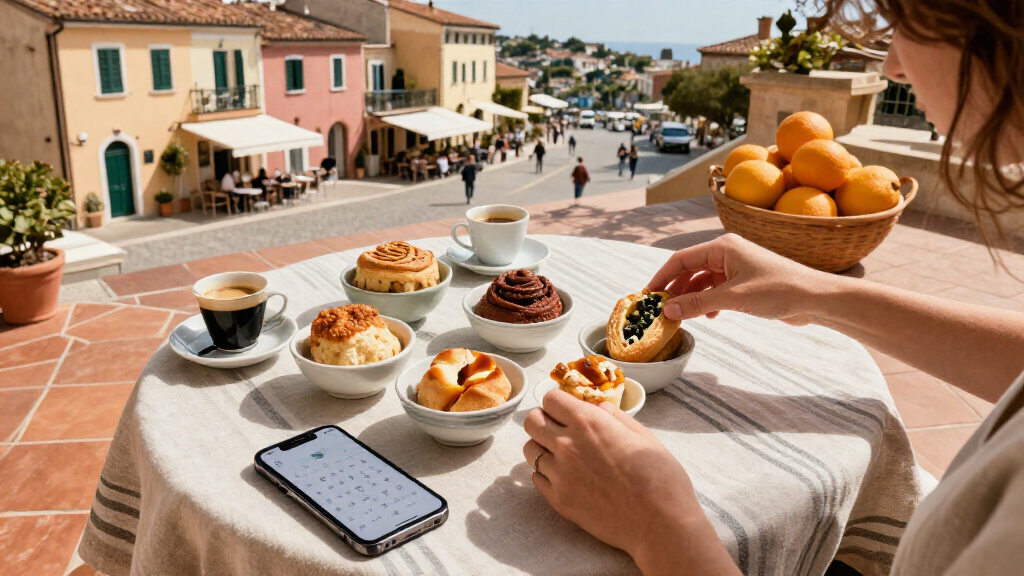
In Sicily, dried fruit and nuts make practical sense as well as a rich-tasting combination. When you cut through the pastry, look for a filling that may include figs and other dried fruit, with regional or household choices shaping the balance. For instance, after a large Christmas meal, someone might offer a narrow slice with coffee instead of another piece of bread-like panettone. A slice works well at the end of a meal or with coffee when you want something more concentrated than a fluffy bread.
Plan a bakery stop around the local version. If you’re in Palermo during December, ask what the shop calls its Christmas ring and whether it includes nuts, candied fruit, or other additions. The answer gives you a better sense of local practice than a tidy recipe label can. It also helps you decide whether it is a good choice for a shared table, a souvenir, or a guest with dietary restrictions. In another Sicilian town, the name or filling may differ.
At home, serve thin slices so guests can appreciate the filling without losing the pastry’s texture. Check ingredient and allergen information before sharing: recipes may contain wheat, and nut fillings or cross-contact may matter for some guests. For storage, follow the baker’s advice; if you bake your own, keep it wrapped in a cool, dry place and use a clean, airtight container once cut.
Make room for Naples’s honey-coated struffoli
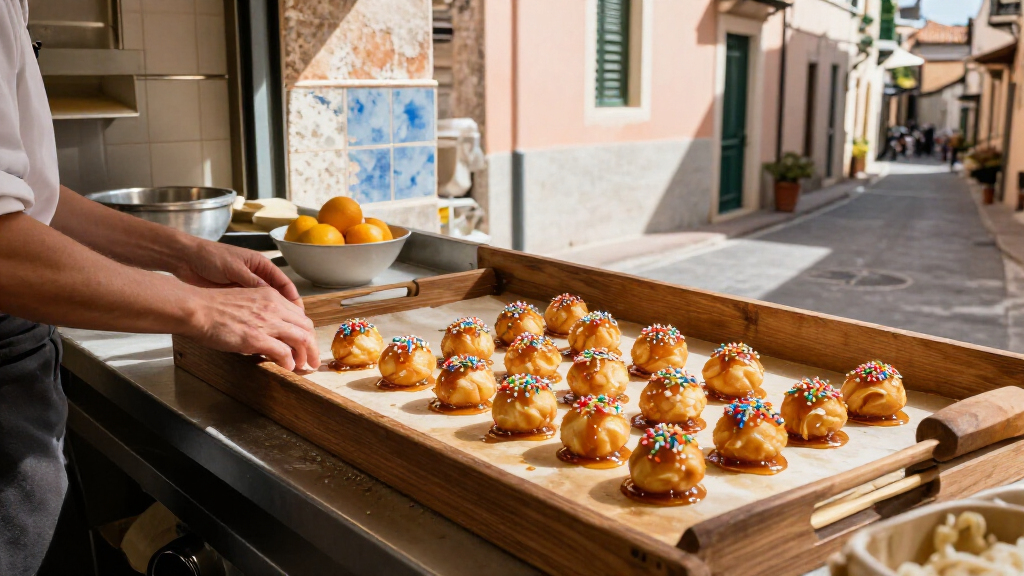
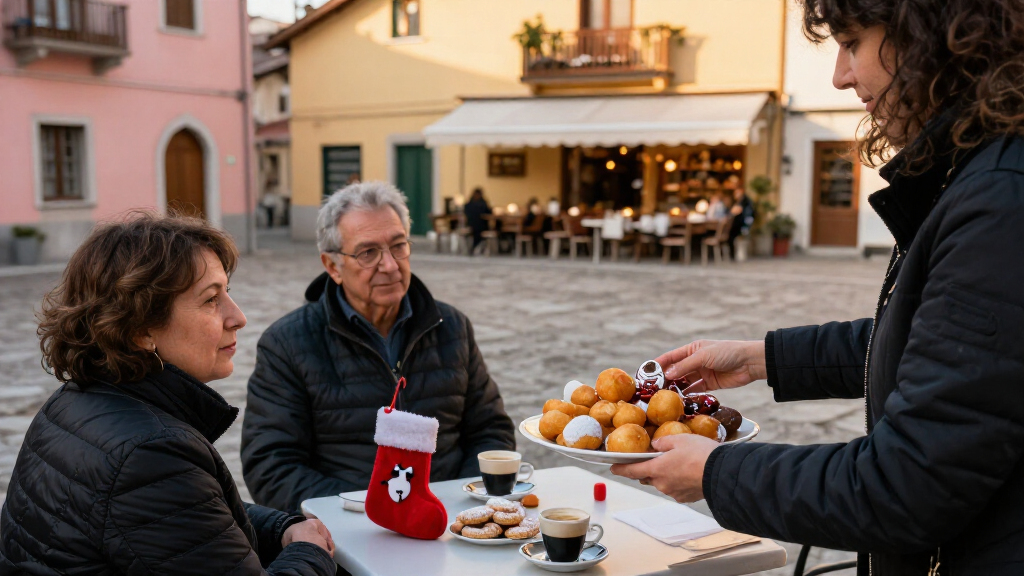
Neapolitan struffoli are small fried dough balls coated in honey, often gathered into a mound for Christmas celebrations. Their glossy surface and bright decorations make the platter feel festive before anyone takes a bite. The appeal lies in the combination: crisp edges, a tender center, and a sticky honey finish that asks for a napkin.
For a home cook, struffoli are a project best shared. One person can roll the dough into ropes and cut small pieces while another fries them in batches and prepares the honey coating. Picture a December afternoon with one person shaping dough at the counter and another tending the pot: the work is divided, and the finished mound becomes a shared reward. On a December afternoon, that turns the kitchen into a lively worktable; the finished mound looks generous enough to bring to a family gathering.
That shared preparation has a practical tradeoff: frying several batches takes attention and coordination, but making the pieces together can turn the effort into part of the celebration. A small test batch helps you judge the size and frying time before the rest of the dough is ready. Then use these steps:
Shape small pieces. Keep the dough portions similar in size so they cook at a similar pace.
Fry in manageable batches. Avoid crowding the pan, which can lower the oil temperature and leave the pieces greasy.
Drain and coat. Drain the fried dough, then combine it with honey according to your recipe.
Decorate and serve. Add the finishing touches your household prefers and serve while the coating is glossy.
Frying deserves care: use a stable, heavy pot, keep the handle turned inward, and don’t leave hot oil unattended. Never add water to an oil fire. Struffoli commonly contain wheat and eggs; some recipes use other allergens, so check the ingredients before serving. The honey binds the little pieces together, but the real glue is usually the group around the counter.
Follow Calabria’s rolled pastry from kitchen table to Christmas plate
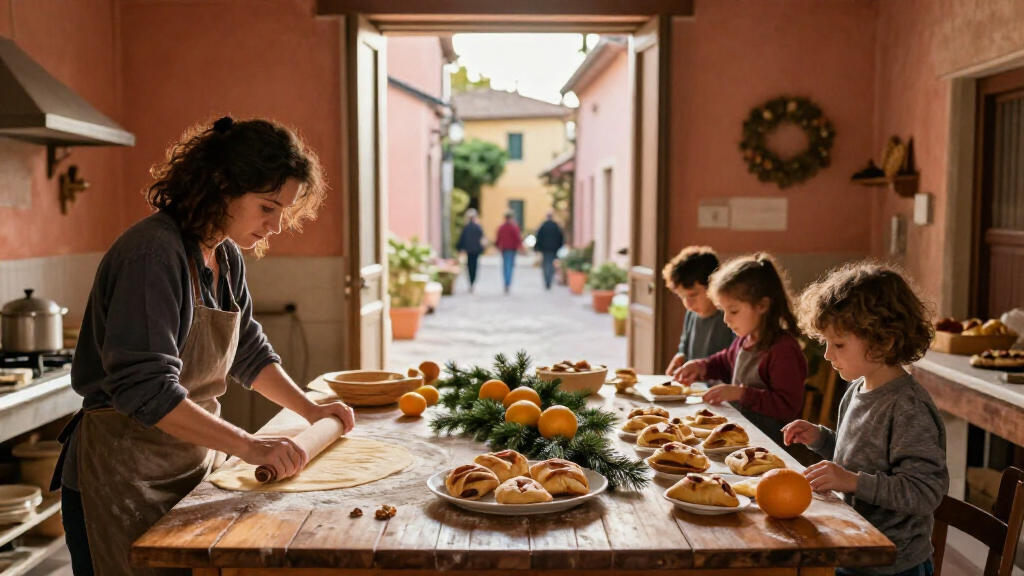
Calabrian pitta ’mpigliata is a rolled pastry filled with nuts, raisins, and spices. Its name, ingredients, and shape evoke a sweet built by layering: thin pastry surrounds a fragrant center, and the finished rolls create a textured, festive dish. It offers a very different experience from the airy northern loaves.
When you cut into a piece, the first impression is often the aroma of spice and dried fruit, followed by the crunch of nuts against pastry. A small slice can be enough after a large holiday meal. Imagine tasting it beside panettone: one bite is layered, fragrant, and crunchy; the other is soft and bread-like. The comparison helps explain why a household might serve both rather than treating one as a substitute for the other. If you’re traveling through Calabria in December, ask whether a bakery or household makes it locally; recipes and spellings can vary, and a town may have its own preferred version.
Ingredients tell a place-based story without proving one fixed origin. Nuts, raisins, and spices appear in many seasonal sweets because they bring fragrance and keeping quality to winter tables. These ingredients also hint at a practical tradeoff: a filling rich in nuts and dried fruit is flavorful and substantial, but may be less suitable after a heavy meal or for guests with allergies. Trade and family movement have carried recipes well beyond their home regions, so you may find versions outside Calabria or adaptations that use what a household can readily buy.
For a practical tasting, compare a thin slice of pitta ’mpigliata with a piece of panettone. The first is layered and spice-scented; the second is soft and bread-like. Ask about nuts before serving, and check for wheat and other ingredients that could affect guests with allergies. Store leftovers according to the recipe or baker’s guidance, wrapped to protect the pastry from drying out.
Choose Tuscan ricciarelli when you want a soft almond cookie
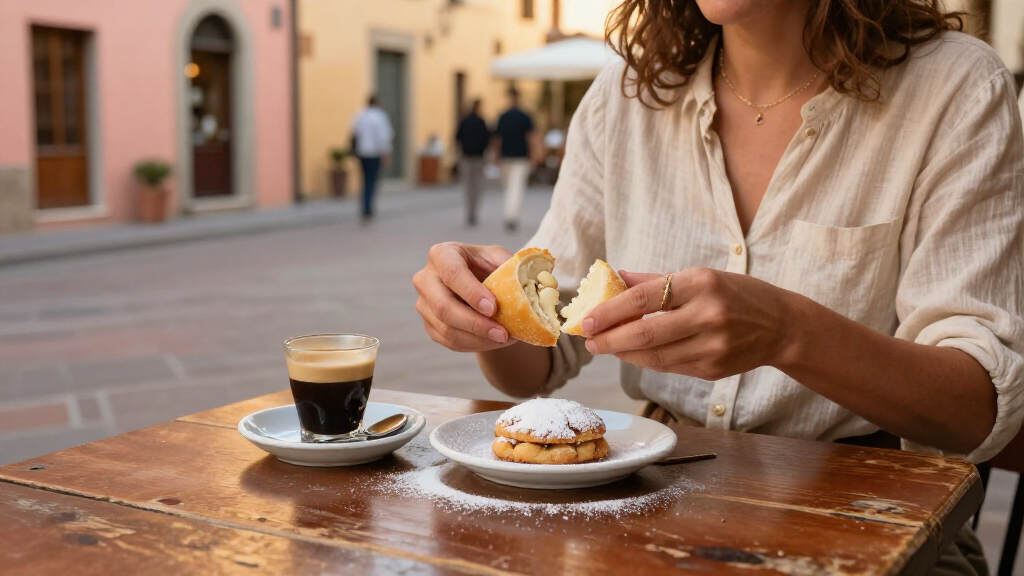
Tuscan ricciarelli are soft almond cookies associated with Siena and the Christmas season. Their pale, cracked surfaces give way to a tender, dense center, more like a little almond cloud than a crisp biscuit. If you’re looking for a small sweet to serve with coffee after dinner, they make a natural choice.
Their almond flavor makes them distinct from flour-based holiday breads, though exact recipes vary. A Siena bakery might offer a version with a delicate dusting of sugar, while a home recipe may follow a family’s preferred texture. Try one slowly: the outside gives a slight resistance, then the center turns soft and fragrant. For example, a host who has already served a rich meal can offer one or two cookies with coffee instead of cutting another large loaf.
Ricciarelli are a practical baking option if you want a smaller-format treat rather than a large loaf or platter. That size makes portioning easy and leftovers simple to store, though it doesn’t make them a safe choice for every guest: the almond base is central to the cookie. They suit a cookie tin, a dessert plate, or a gift for someone who enjoys almond sweets. If you’re baking for a group, label them clearly; almonds are a major allergen, and recipes may include egg or other ingredients guests need to avoid.
Food tourism and social media make regional specialties easier to spot, but a photo rarely shows how much recipes differ from one household to another. Ask a baker what makes the local ricciarelli distinctive. If you buy a box to take home, check its storage instructions and use a sealed container after opening so the cookies keep their soft texture.
Save room for Epiphany sweets and local family variations
Epiphany on January 6 can bring another round of Italian holiday sweets, so the calendar doesn’t end with Christmas Day. The treats served then depend on local custom, and a regional specialty can appear at a family gathering without being the only dessert on the table. For a visitor, this means a January trip may reveal traditions missed by a Christmas-week itinerary. When planning a winter visit, check what bakeries make for the first week of January.
This longer season also explains why regional sweets appear beyond their home towns. Migration and commerce have carried recipes across Italy and abroad; a specialty once tied closely to one place may now turn up in a city bakery elsewhere. A family might also adapt a recipe for a smaller household, a dietary need, or the ingredients available that year. Such changes keep a tradition usable, though they can make it harder to identify one definitive version.
Use a simple three-step approach when you want to explore:
Choose a date. Decide whether you want an Advent treat, a Christmas sweet, or something linked to Epiphany.
Choose a place. Start with a local bakery or market in the region associated with the sweet.
Ask about the household version. Find out what ingredients and serving customs are typical there, while leaving room for differences.
For example, if you arrive in a town on January 4, ask whether a seasonal pastry is made for Epiphany or whether the bakery’s Christmas selection has already ended. That practical question helps you plan what to taste while also opening a conversation about local custom. A dish’s origin story may be a cherished local tradition rather than a firmly documented fact, and nearby towns can claim different beginnings. Enjoy the story, but treat it as part of the sweet’s cultural life rather than a settled historical verdict. What you can verify most easily is what’s in the pastry and when the baker recommends eating it.
Frequently Asked Questions
Which Italian sweets are eaten at Christmas, and which are for Epiphany?
Panettone, pandoro, and many regional pastries appear during the Christmas season, but the exact day depends on local and family custom. Epiphany falls on January 6 and can bring another round of sweets. Ask a local baker what their town usually serves and when.
What’s the difference between panettone and pandoro?
Panettone is associated with Milan and is a tall, airy loaf often made with candied citrus and raisins. Pandoro is associated with Verona, with a golden star shape and soft, buttery crumb, commonly dusted with powdered sugar. Both are now enjoyed throughout Italy.
Which regions are known for particular Christmas desserts?
Milan in Lombardy is associated with panettone, and Verona in Veneto with pandoro. Sicily is known for ring-shaped buccellato, Naples for honey-coated struffoli, Calabria for nut-and-raisin pitta ’mpigliata, and Siena in Tuscany for soft almond ricciarelli. Recipes can vary within each region.
Are Italian Christmas sweets usually homemade or bought?
Both are common, and it depends on the sweet and the household. A family might bake together, buy a specialty from a local bakery, or mix homemade treats with a panettone or pandoro. Ask a baker which local sweets they make and when people usually serve them.
How should I check allergens in regional Christmas sweets?
Ask for the ingredient list and check labels, especially for wheat, eggs, milk, almonds, and other nuts. Ricciarelli contain almonds, while recipes for other sweets vary and may include several allergens. For a serious allergy, ask about cross-contact as well as listed ingredients.
Conclusion
Choose one sweet by place and one by date. Try panettone in Milan, look for struffoli in Naples around Christmas, or seek ricciarelli in Siena; then ask a local baker when their version belongs on the table. That small question often leads you to the best part of the tradition.
Italy’s Christmas calendar isn’t one loaf with a few regional footnotes. It’s a trail of pastry rings, honey-bright mounds, spice-scented rolls, and almond cookies that keeps going into January. Follow it one bakery window at a time.
Dalle Ricette Di Peppe Guida, Ecco La Sua Parmigiana Bianca: Strepitosa!
Chef Peppe Guida’s innovative white parmigiana recipe is gaining attention for its exceptional taste and originality, sparking increased search interest.