TL;DR
Sfincione is Palermo’s thick, airy baked bread, usually topped with tomato, slow-cooked onion, anchovy, oregano, and breadcrumbs. It’s eaten year-round but has a strong place in Christmas gatherings, when you can find it at bakeries, forni, and sometimes market stalls. Ask about anchovies and cheese, then try a slice warm or at room temperature.
In Palermo, Christmas can smell like onions slowly softening in a pan, oregano warming in the oven, and a fresh tray of sfincione making its way home. This thick, soft bread is often compared with pizza, but its tender crumb and sweet-savory topping give it a character all its own. It belongs to Palermo’s everyday food culture and carries a special warmth during the holiday season.

Get kitchen staples and gadgets delivered free with Prime
- Fast, free delivery on millions of items
- Prime Video, Amazon Music and more included
- Member-only deals all year
If you’re planning experiences in Sicily, sfincione offers an easy way to taste Palermo beyond a restaurant meal: stop at a neighborhood forno (bakery), ask what’s in the tray, and share a slice. This guide explains what goes on it, why it appears on Christmas tables, where to look, and how to compare Palermo’s style with sfincione from nearby Bagheria. You’ll also find practical questions to ask if you’re buying a slice or making one at home.
Palermo sfincione is thick, soft baked bread, commonly topped with tomato, onion, anchovy, oregano, and breadcrumbs.
It is eaten year-round but often appears at Christmas gatherings and around meatless Christmas Eve meals.
Try a neighborhood bakery or forno, and check holiday hours before planning a market stop.
Ask whether the exact batch contains anchovies or cheese, especially if you have a dietary restriction or allergy.
Bagheria’s paler sfincione often uses cheese and little or no tomato, though recipes vary.
Sfincione Season A taste of Palermo at Christmas
This thick, airy bread is part of Palermo’s everyday food culture and a familiar presence at holiday gatherings. A warm slice offers an easy way to taste the city beyond a restaurant meal.
What makes a Palermo slice
Soft, porous dough meets a sweet-savory, toasted topping.
Thick and airy
Tender bread gives sfincione a character distinct from thin-crust pizza.
Sweet meets savory
Tomato and slow-cooked onion pair with anchovy, oregano, and breadcrumbs.
Ask about cheese
Some batches include caciocavallo or another cheese; others have none.
Why it belongs on the holiday table
Sfincione is eaten all year, with a special place in Christmas gatherings and around meatless Christmas Eve meals.
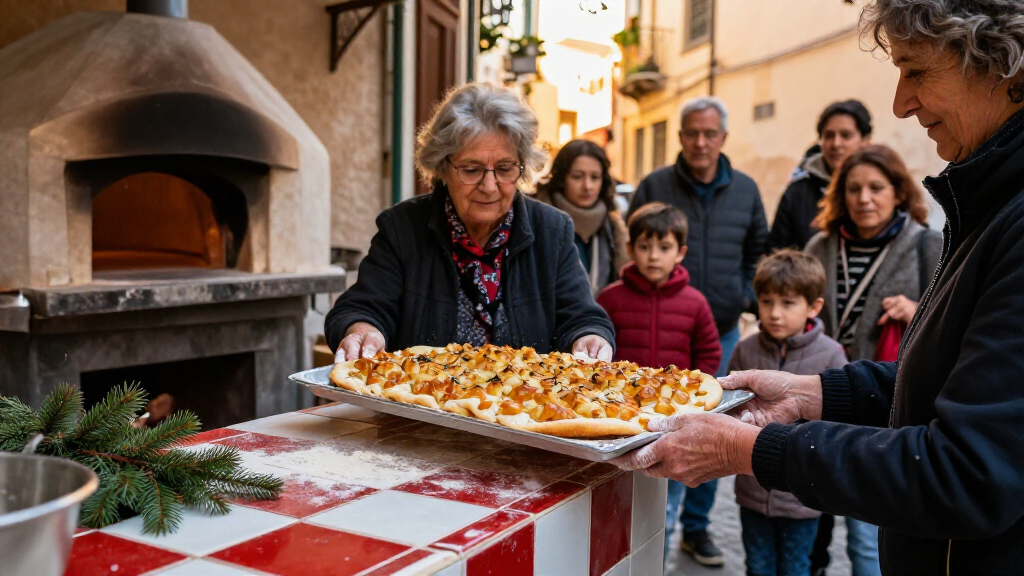
A tray can be cut into small squares for family and guests.
It works warm or at room temperature as a snack or part of a larger meal.
Find a slice and compare styles
Start at a neighborhood forno, then compare Palermo’s tomato-rich version with the paler style associated with nearby Bagheria.
| What to notice | Palermo | Bagheria |
|---|---|---|
| Color | Often red from tomato | Often pale, little or no tomato |
| Common topping | Tomato, onion, anchovy, oregano, breadcrumbs | Anchovy, tuma or ricotta, breadcrumbs |
| Ask the bakery | Does this batch contain anchovy or cheese? | Which cheese does this batch use? |
Make the bakery stop count
A direct question helps you choose a slice that suits your plans and dietary needs.
- Ask whether it was just baked and whether the batch contains anchovies or cheese.
- Try a slice warm or at room temperature; notice the airy center and savory surface.
- Check holiday opening hours before planning a market stop at Ballarò, Capo, or Vucciria.
What makes Palermo sfincione so soft and savory
Palermo sfincione is a thick, airy baked bread topped with a savory mixture that often includes tomato, cooked onion, anchovy, oregano, and breadcrumbs. Its soft, porous dough sets it apart from a thin-crust pizza, while the topping balances sweetness, salt, and a toasted finish. The name is commonly linked to spongia, Latin for “sponge,” a nod to that tender texture.
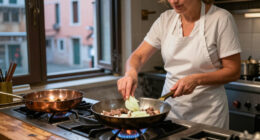
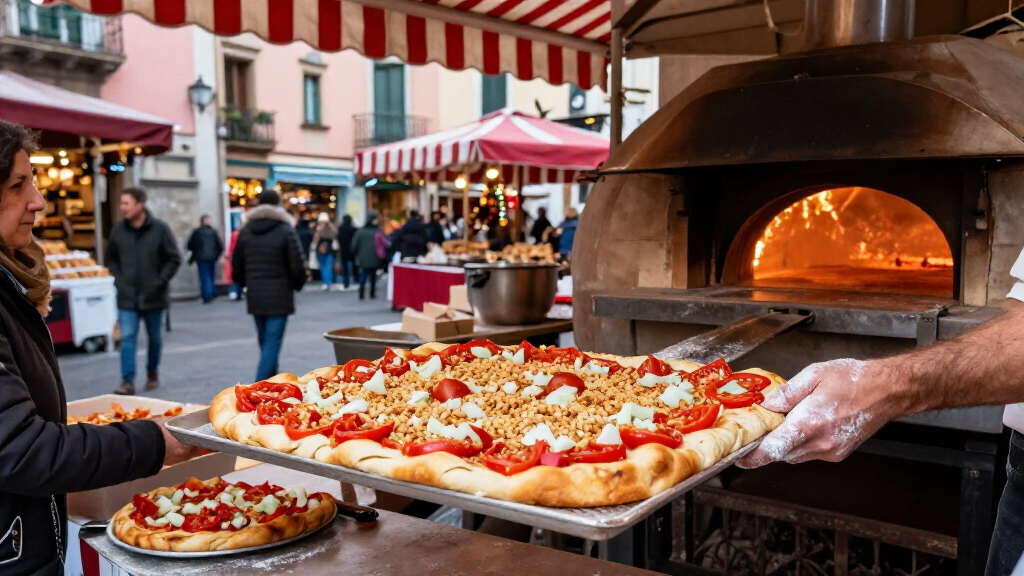
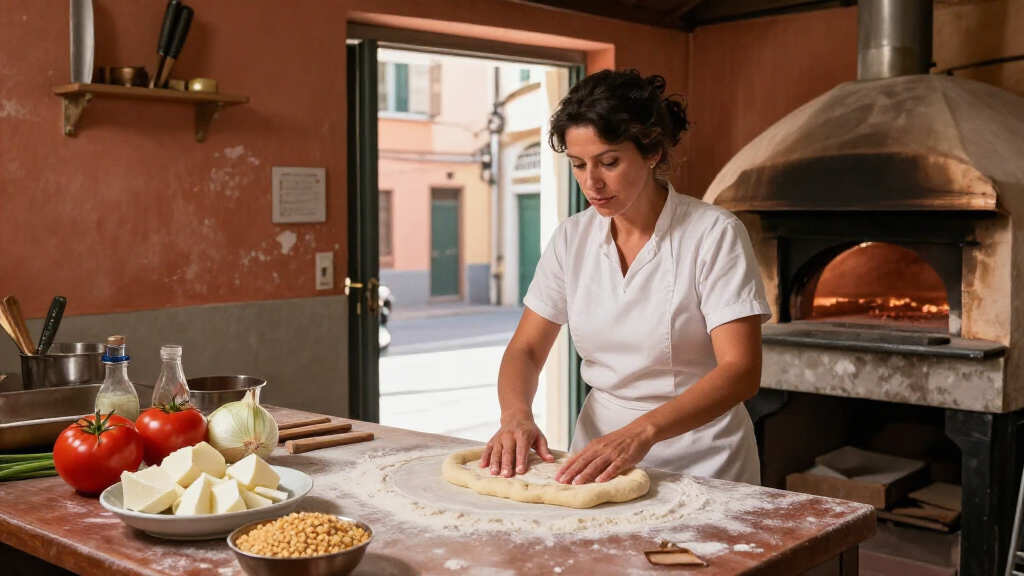
Picture a square slice with a pillowy center, a tomato-red surface, and breadcrumbs browned around the edges. Slow-cooked onion brings sweetness, anchovy adds a concentrated salty note, and oregano gives the top a fragrant, herbal lift. The ingredients are simple, but each one has a job: together they make a slice satisfying without needing elaborate toppings.
Recipes vary between families and bakeries. Some cooks add caciocavallo or another cheese; some versions have no cheese at all. A Palermo bakery’s tray might lean generous with onion, while a home cook may toast the breadcrumbs longer for a crisp top. If you avoid fish or dairy, ask about the particular batch rather than relying on the dish’s name.
Think of the topping like a small orchestra: onion sets the gentle rhythm, anchovy adds a sharp beat, and breadcrumbs finish with a warm crunch. That balance is why sfincione tastes at home as street food and as part of a holiday spread. Try it freshly baked if you can, but a room-temperature slice still makes a good walking snack.
Products Worth Considering

Dyson Airwrap i.d. Multi-Styler with Bluetooth Connectivity

Ring Battery Doorbell Plus (2nd Gen) and Spotlight Cam Plus Battery Bundle

Bose Lifestyle Ultra Wireless Home Speaker, White Smoke
As an affiliate, we earn on qualifying purchases.
Why Palermo families bring sfincione out at Christmas
Palermo sfincione has a strong Christmas association because families often serve it at holiday gatherings, including around Christmas Eve, when many Sicilian households traditionally prepare meatless dishes. The exact menu depends on the family, and sfincione is available throughout the year. Its place in December comes from how naturally it feeds a group and fits a table full of shared food.
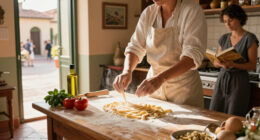
A tray can be cut into small squares for guests to nibble while other dishes are being finished. It can be eaten warm or at room temperature, which makes it practical when relatives arrive at different times. For a visitor spending Palermo at Christmas, the pleasure is in noticing those domestic details: flour on the counter, dough under a cloth, and the sweet smell of onions filling the kitchen.
Christmas food traditions are a rich subject for a blog article because they connect ingredients with the way people gather. In Palermo, sfincione makes that connection in a very tangible form: it’s easy to portion, easy to carry, and familiar enough to show up at both a family table and a bakery counter. If you’re invited to a holiday meal, ask how the household serves it; one family might offer a slice before dinner, another alongside other savory dishes.
When you’re planning a seasonal visit, treat sfincione as one piece of the food day rather than a full itinerary. Buy a slice in the afternoon, then leave room for dinner and other local specialties. Christmas opening hours can differ from ordinary weekdays, so check with a bakery before setting out. A few careful checks save you from arriving at a closed door with the aroma still in your imagination.
Where to find a memorable slice in Palermo
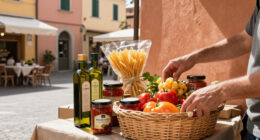
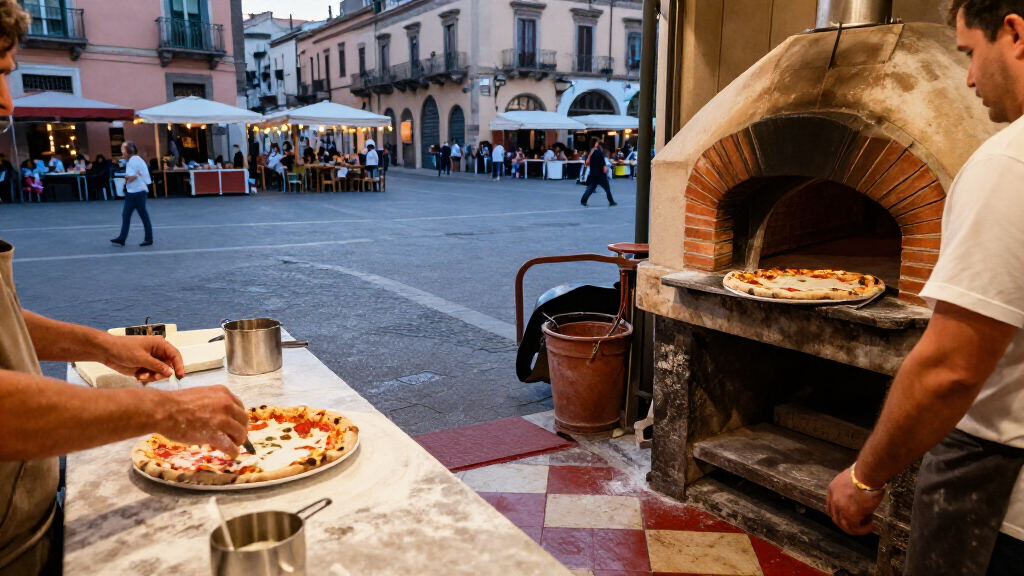
For a straightforward taste of sfincione, start at a neighborhood bakery or forno (bakery), where you can see the day’s tray and ask how the house prepares it. Palermo’s historic markets, including Ballarò, Capo, and Vucciria, are known for lively food scenes, though individual stalls and market activity vary by day and season. A bakery visit gives you a useful chance to compare the topping, thickness, and texture from one maker to another.
Try asking, “È appena sfornato?” (“Was it just baked?”) and “Ci sono acciughe?” (“Are there anchovies?”). These short questions help you learn whether the slice is warm and whether it contains fish. If you need to avoid dairy, ask about cheese too: some batches include it, others don’t. Recipes and counter labels can vary, so a direct question matters.
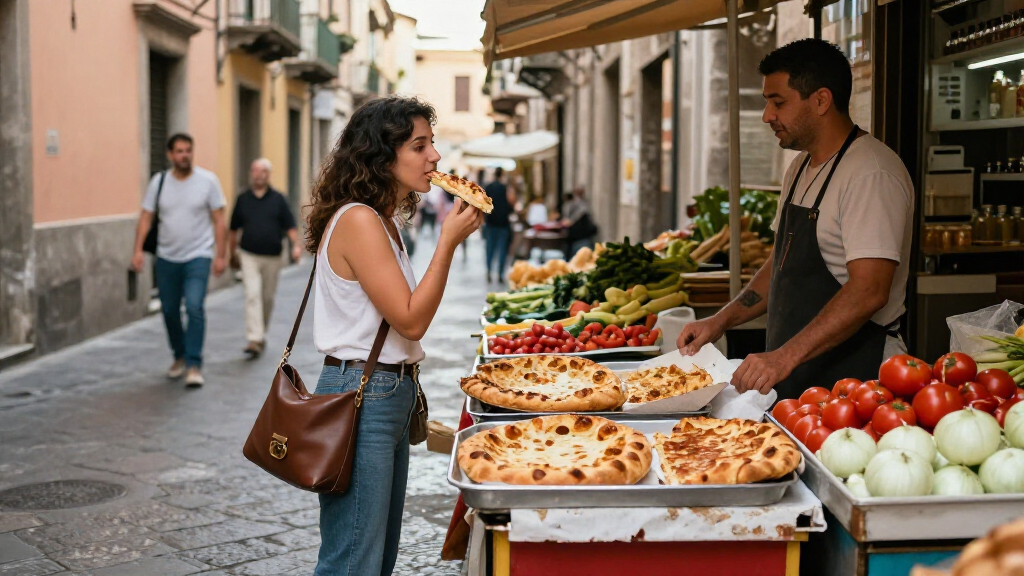
Say you’re walking near Ballarò on a winter afternoon and spot a tray beside arancine and other baked goods. A small square lets you sample sfincione without committing to a whole meal; the soft base makes it easy to eat on the go, though a bench is kinder to your coat and fingers. Ask for a piece that shows both the bread and topping, so you can taste the contrast between its airy center and savory surface.
Markets and bakeries change their hours around holidays, and a stall you see on one visit may not be open on another. Check current schedules before building a Christmas food walk around a particular stop. If a market is quiet, follow the neighborhood bakeries instead. The point is to taste sfincione where people buy it as food, not to chase a single famous address.
Compare Palermo sfincione with Bagheria’s paler version
Palermo sfincione usually has a tomato-based topping with cooked onion, anchovy, oregano, and breadcrumbs, while sfincione bagherese, associated with nearby Bagheria, is generally paler and often features anchovies, tuma or ricotta, and breadcrumbs with little or no tomato. Local recipes differ, so treat these as common patterns rather than strict rules. Tasting both gives you a quick lesson in how neighboring places shape a shared food.
| What you’ll notice | Palermo style | Bagheria style |
|---|---|---|
| Color | Often red from tomato | Often pale, with little or no tomato |
| Common topping | Tomato, onion, anchovy, oregano, breadcrumbs | Anchovy, tuma or ricotta, breadcrumbs |
| What to ask | Whether it contains anchovy or cheese | Which cheese the bakery uses |
The comparison works like hearing two dialects of the same tune: the dough-and-topping idea stays recognizable, but the emphasis changes. Palermo’s tomato and onion bring a sweeter, deeper flavor; Bagheria’s cheese-led version can feel milder and creamier, depending on the recipe. If you have time for a short trip outside Palermo, ask locally whether a bakery has a fresh tray before you go.
For one practical tasting, split a Palermo slice and a Bagheria slice with a companion and compare the first bite, not just the ingredient list. Notice whether tomato leads, whether cheese softens the anchovy, and how the breadcrumbs change the surface. That small exercise turns lunch into a useful memory you can carry home when you look for a recipe.
Order sfincione confidently, even with dietary restrictions
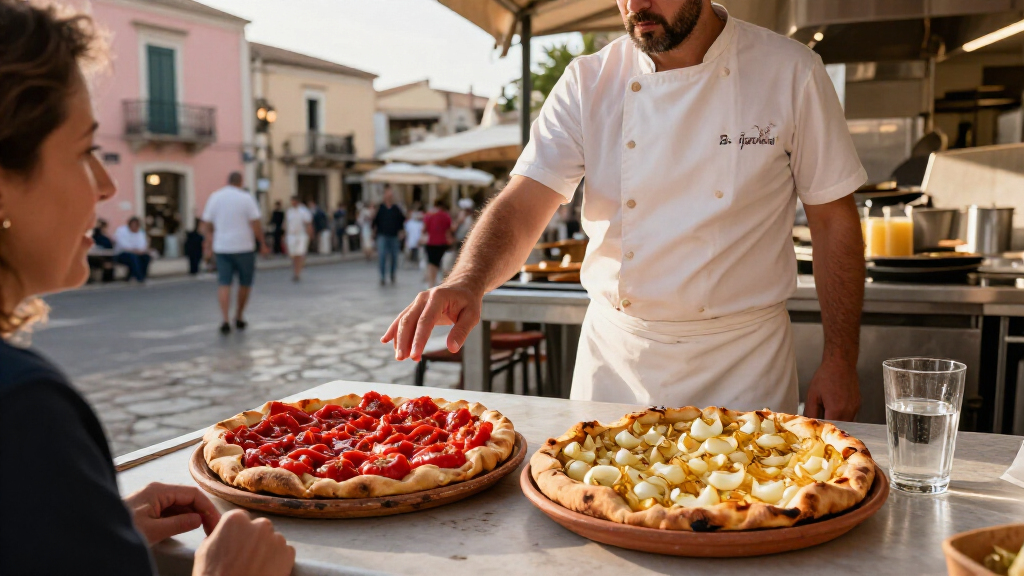
Before you order sfincione, ask whether the batch contains anchovies and cheese, because both can appear and recipes vary. A traditional Palermo topping often includes anchovy, so the dish is not automatically vegetarian. If you avoid fish, dairy, or both, checking the specific tray is more reliable than assuming every bakery follows the same recipe.
Use a few direct questions at the counter. “Contiene acciughe?” means “Does it contain anchovies?” “C’è formaggio?” means “Is there cheese?” If you have an allergy, explain it clearly and ask about possible cross-contact from shared counters or utensils. A quick question lets the baker answer about that day’s batch, which may differ from yesterday’s.
Imagine you’re buying a snack for a friend who avoids fish. The golden breadcrumbs and tomato may look like a safe choice, but the anchovy can be blended into the topping rather than visible on top. Asking first prevents an unpleasant surprise and gives the bakery a chance to suggest another item.
Ask about the ingredients in the exact tray you’re buying. Sfincione recipes vary, and anchovies or cheese may be mixed into the topping.
If the answer isn’t clear, choose something else rather than guessing. For an allergy, this matters even when an ingredient doesn’t appear on the surface: shared tools and preparation areas can create contact. You can still enjoy the ritual of stopping at a forno; just make your needs plain and give the staff time to respond.
Make the flavors at home with a simple plan
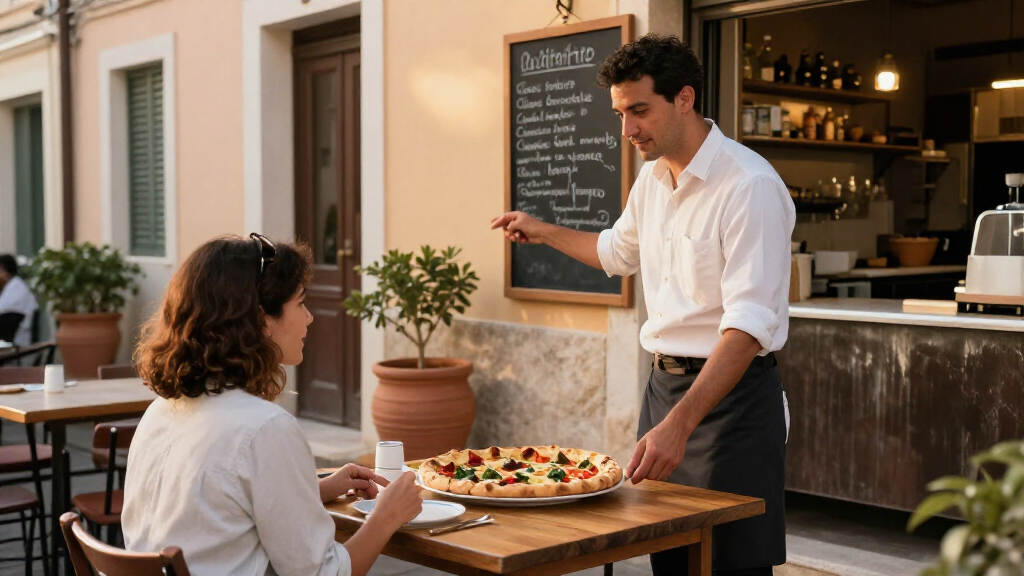
You can make a home version of sfincione by giving the dough time to rise, cooking the onions slowly, and baking the assembled bread until the base is tender and the topping is richly browned. The method rewards patience more than complicated technique. Start with the familiar Palermo combination of tomato, onion, anchovy, oregano, and breadcrumbs, then adjust the cheese to match the style you want.
- Give the dough time. Let it rise until visibly puffy; a thick base needs room to become soft and porous.
- Cook the onions gently. Let them soften rather than brown quickly, so their sweetness carries through the tomato.
- Build the topping. Spread on tomato and onion, add anchovy and oregano, then finish with breadcrumbs and optional cheese.
- Bake until tender and browned. Look for a cooked base and toasted surface, then let the tray settle briefly before cutting.
Think of the process like making a bed: the dough is the mattress, the onion-tomato mixture is the soft layer, and the breadcrumbs make the crisp cover. If one layer overwhelms the others, the slice loses its balance. For a first try, keep the topping modest; a thick flood of tomato can make the center heavy instead of airy.
Serve pieces warm or at room temperature, as Palermo families commonly do. If you’re cooking for guests, label the anchovy and cheese so nobody has to guess. Refrigerate leftovers promptly in a covered container and reheat until steaming hot; don’t leave cooked food sitting out for more than two hours, or one hour in temperatures above 90°F (32°C). This gives you a practical taste of a Sicilian tradition without pretending every household uses one fixed formula.
Let one slice tell you something about Palermo
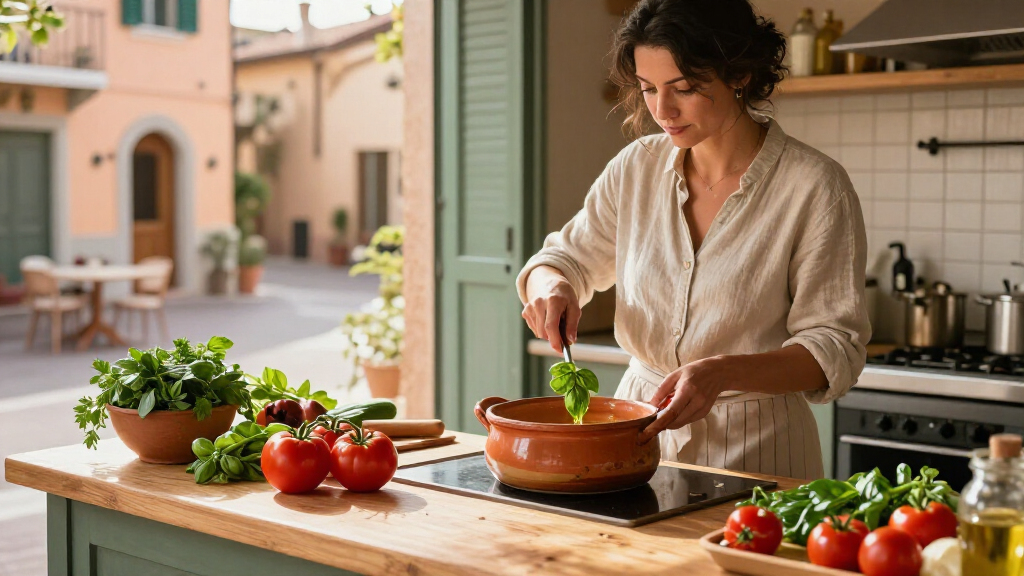
Sfincione tells you about Palermo through the way it makes inexpensive ingredients feel generous. Bread fills the hand, onion brings sweetness, anchovy brings depth, and breadcrumbs turn the top fragrant and crisp. The exact origins of the dish are difficult to pin down, so it’s more accurate to enjoy it as part of Palermo’s evolving local food culture than to assign it one definitive story.
That local character fits the city’s wider tradition of filling foods made to be carried and shared. A piece can travel from bakery to home, or from market counter to a shaded spot where you stop for lunch. On a December visit, you might see a tray bought for a family gathering; in another month, the same bakery may sell sfincione as an everyday snack. Seasonal meaning and year-round availability can sit side by side.
For a blog article—or simply your own travel notes—write down where you tried the slice and what stood out: a sweeter onion topping, a crisp edge, or a softer center. Details like those make a food memory more useful than a generic “it was delicious.” They also help you compare recipes without claiming one bakery speaks for all Palermo.
Keep your plans flexible. A stall may close, a bakery may sell out, and Christmas schedules can shift from year to year. If your first stop doesn’t have sfincione, ask another baker or return earlier the next day. The hunt itself can lead you through a neighborhood and give you a better feel for how Palermo eats.
Frequently Asked Questions
Is sfincione the same as pizza?
Sfincione is a topped baked dough, but it is usually thicker and softer than pizza, with a topping that often combines tomato, onion, anchovy, oregano, and breadcrumbs. Think of it as Palermo’s own savory bread rather than a direct copy of another style.
Is sfincione only eaten at Christmas?
No. You can find sfincione throughout the year, though it has a strong association with Palermo’s Christmas season and family gatherings. Bakeries and market stalls may change their hours or availability during holidays, so check ahead.
Does sfincione always contain anchovies?
Anchovies are common in traditional versions, but recipes vary by bakery and household. Ask “Contiene acciughe?” (“Does it contain anchovies?”) about the exact batch before you buy it.
Is sfincione vegetarian?
Not necessarily. Many versions contain anchovies, and some also include cheese. Ask the baker about fish, dairy, and possible cross-contact if you’re managing an allergy.
What is the difference between Palermo sfincione and sfincione bagherese?
Palermo sfincione commonly uses tomato and onion, while sfincione bagherese is generally paler and often includes tuma or ricotta with breadcrumbs and little or no tomato. Individual recipes differ, so ask the bakery what it uses.
Where should I try sfincione in Palermo?
Try a neighborhood bakery or forno, where you can ask about the recipe and whether the slice is freshly baked. Ballarò, Capo, and Vucciria are well-known markets, but stall activity varies; check current hours before making a special trip.
Conclusion
When you’re in Palermo, make time for a slice of sfincione from a neighborhood forno, and ask what went into that day’s tray. Notice the soft bread, sweet onion, salty anchovy, and crisp breadcrumbs; those few details explain why this everyday food belongs on a Christmas table too.
Then carry that taste with you through the city: a warm square in your hand, oregano in the air, and the winter street moving around you.