TL;DR
Fegato alla Veneziana is a Venetian dish of thinly sliced calf’s liver cooked with soft onions. Cook the onions slowly, then sear the liver briefly in an uncrowded pan and combine them at the end; serve promptly with polenta for a classic Veneto-style meal.
A pan of onions can make liver taste surprisingly gentle. In Venice and across the Veneto, fegato alla Veneziana pairs the ingredient’s savory, mineral richness with onions cooked until soft and sweet. The name means “Venetian-style liver”: fegato means liver, and alla Veneziana means in the Venetian style.

Get kitchen staples and gadgets delivered free with Prime
- Fast, free delivery on millions of items
- Prime Video, Amazon Music and more included
- Member-only deals all year
If liver has ever turned chewy or tasted too strong at your table, this dish gives you a practical way to approach it. You’ll learn what makes the pairing Venetian, how to choose and prepare calf’s liver, and why the onions and liver need different cooking times. Then you can serve the result with polenta, the soft cornmeal staple that makes the plate feel at home in the Veneto.
There isn’t one fixed family recipe. Some cooks add white wine or vinegar; others keep the ingredients spare. The shared idea is simple: give the onions time, give the liver very little, and bring them together while both are ready.
Fegato alla Veneziana means Venetian-style liver and centers on thinly sliced liver with soft onions.
Calf’s liver is generally milder and more tender than beef liver; ask the butcher to remove membranes and slice it thinly.
Cook onions slowly, then cook liver briefly in an uncrowded pan and combine them at the end.
Wine or vinegar can add brightness, but neither is required; taste before adding either.
Serve promptly with polenta, and follow safe handling, refrigeration, and local temperature guidance for liver.
Fegato alla Veneziana Made gentle
This Venice and Veneto classic balances savory calf’s liver with soft, sweet onions. Cook each at its own pace, then bring them together just before serving.
The Venetian balance
The onions mellow the liver’s rich, slightly mineral flavor; polenta makes a classic partner.
Soft onions
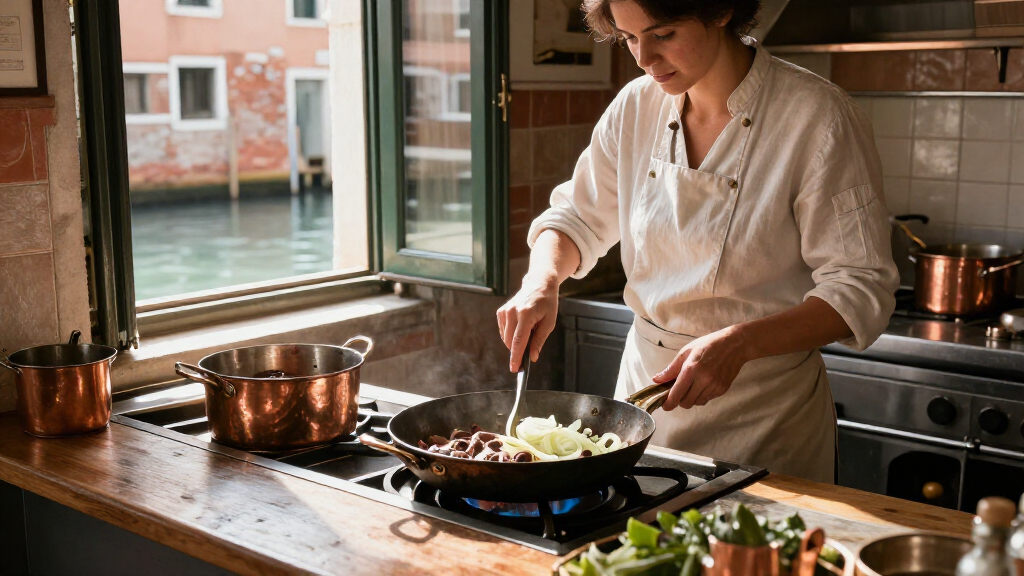
Cook thinly sliced onions slowly until soft and translucent.
Tender liver
Thin calf’s liver cooks quickly and keeps the flavor mellow.
Add polenta
Serve promptly with polenta, or use bread or potatoes.
Choose a gentler first try
Ask the butcher for fresh calf’s liver with membranes removed and slices cut thinly.
- Generally milder and more tender
- Thin slices cook quickly and evenly
- Pat dry so it browns instead of steams
- Can work if calf’s liver is unavailable
- Its flavor is stronger and texture differs
- Serve with plenty of soft onions
Two cooking tempos
Let the onions wait; the liver should not have to.
Cook over medium-low heat until soft and translucent, with light gold at the edges if desired.
Use a well-heated pan and a single layer; cook in batches if needed.
Join liver and onions at the end, then serve promptly as residual heat continues cooking.
Keep the finish simple
There is no single fixed family recipe, and the core pairing needs no complicated sauce.
| Choice | What it adds | Needed? |
|---|---|---|
| White wine | Brightness | No |
| Vinegar | A sharper finish | No |
| Parsley | A fresh finishing touch | No |
What Makes Fegato alla Veneziana Taste Venetian
Fegato alla Veneziana is a Venetian dish of thinly sliced liver cooked with a generous amount of softened onions. The onions temper the liver’s deep, slightly mineral flavor, creating a plate that tastes savory and mellow at once. In Venice, that contrast is the point: sweetness from the onions, richness from the liver, and often a simple starchy side to catch the juices.
The dish belongs to the cooking traditions of Venice and the wider Veneto, but it doesn’t have one unchanging formula. A home cook might use butter, olive oil, or both; another might add a splash of white wine or vinegar. Parsley often appears at the finish. Think of the onions as a soft blanket around the liver, not a heavy sauce that hides it.
For a practical dinner, start with yellow or white onions and slice them thinly so they soften evenly. If you’re cooking for two, one large onion can provide plenty of sweetness for a modest portion of liver. Let the onions turn translucent with a little gold at the edges, then taste before adding acidity. You may find the dish needs only salt, pepper, and parsley.
That flexibility is useful when you’re planning a Veneto-inspired meal at home. Serve the liver hot with polenta, or use boiled potatoes or crusty bread if that’s what you have. The defining balance remains the same even when the fat or finishing touch changes.
Products Worth Considering

Dyson Cyclone V10 Origin Cordless Vacuum

Roborock Qrevo S Pro Robot Vacuum and Mop with Multifunctional Dock

Samsung 65-Inch S90H OLED 4K Smart TV Bundle with HW-B630F Soundbar, Subwoofer, and Screen Cleaner (2026)
As an affiliate, we earn on qualifying purchases.
Choose Calf’s Liver for a Milder First Try
Calf’s liver is a good choice for a gentler version of fegato alla Veneziana because it is generally more delicate in flavor and tender in texture than beef liver. Ask your butcher for fresh liver with the membranes removed and the slices cut thinly. Thin pieces are easier to cook quickly and evenly, which matters when the difference between tender and tough can be just a short spell in the pan.
At the counter, tell the butcher how you plan to cook it: “thinly sliced for liver and onions.” If calf’s liver isn’t available, beef liver can work, though its stronger flavor and different texture may stand out more. You can compensate with a generous bed of soft onions, but don’t treat them as a way to fix liver that has been left too long on the heat.
Some cooks soak liver in milk to soften its stronger flavor. It’s an optional step, not a requirement, and it doesn’t replace fresh sourcing or careful cooking. If you try it, keep the liver chilled during the soak, then drain it and pat it thoroughly dry. A wet surface steams more readily than it browns, leaving the pieces pale and damp.
Liver is rich in nutrients, including iron, and also high in vitamin A. People who are pregnant or may become pregnant are generally advised to avoid liver and liver products; if you have a medical concern, follow guidance from a healthcare professional. For guests who avoid liver, set aside some of the onion mixture before adding it to the pan and serve it over polenta or potatoes.

Cook the Onions Slowly, Then the Liver Quickly
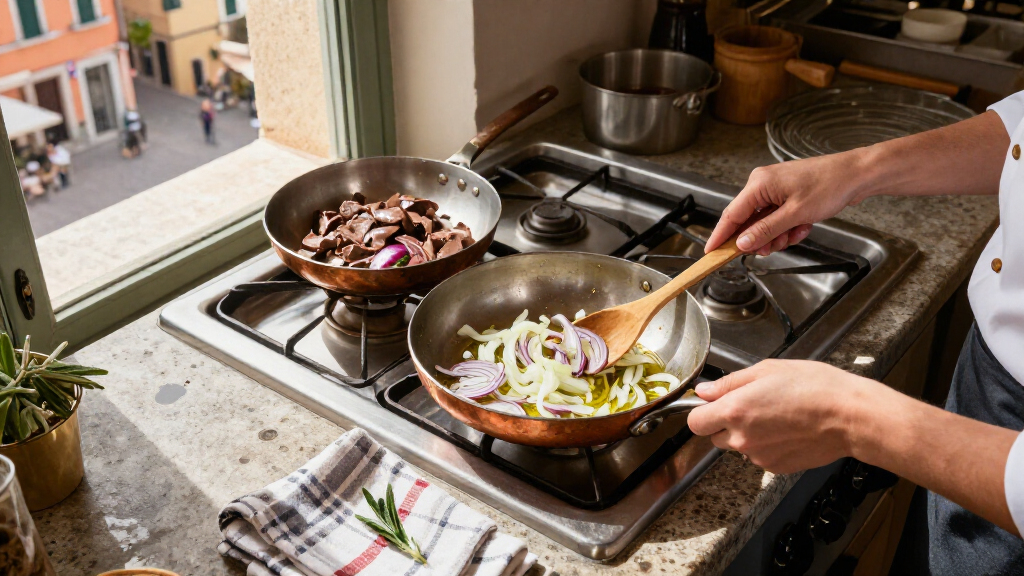
To keep fegato alla Veneziana tender, soften the onions patiently and cook the liver briefly over fairly high heat. This order lets the onions become sweet without holding the liver in the pan while they catch up. For example, when making dinner after work, cook the onions first; they can wait on low heat for a few minutes while you dry and season the liver.
- Slice the onions thinly and cook them in butter, olive oil, or a mix over medium-low heat until soft and translucent. Let them become lightly golden if you like, but avoid deep browning for a milder result.
- Pat the liver dry and season it. If the pieces are thick, ask the butcher to slice them thinner next time; thin slices make quick cooking easier to control.
- Heat the pan well and cook the liver in a single layer. Work in batches if needed, since a crowded pan releases moisture and can leave the liver steaming instead of searing.
- Stop as soon as it loses its raw appearance, following safe handling and cooking guidance for the liver you bought. Combine it with the onions at the end and serve promptly; residual heat continues to cook it.
Watch the texture as much as the clock. If a slice is thick, it needs more attention than a very thin piece, and pan heat varies from stove to stove. But leaving liver to cook slowly with the onions is a common route to toughness. Separate cooking gives you more control over each ingredient.
Food safety starts before the pan: keep raw liver refrigerated, wash hands and surfaces after handling it, and avoid contact between raw liver and ready-to-eat foods. Use a food thermometer and follow current guidance from your local food safety authority for safe internal cooking temperatures. Cooked liver should not sit at room temperature for more than two hours; refrigerate leftovers promptly.
Use Wine or Vinegar Only If the Plate Needs Brightness
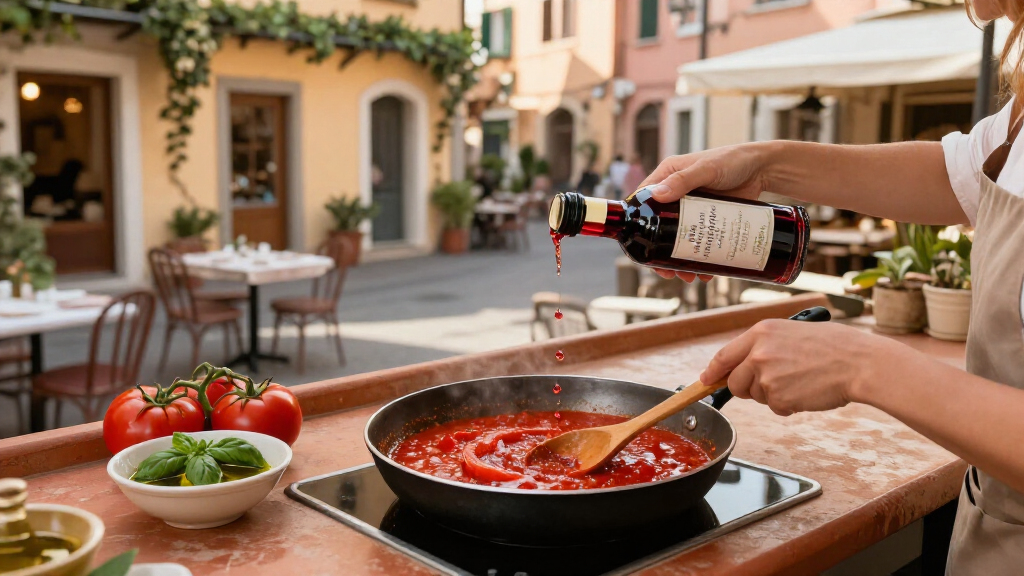
White wine and vinegar are optional in fegato alla Veneziana; they add brightness, but they aren’t required for the onions and liver to work together. If your onions taste sweet and the liver has a clean, savory flavor, the dish may already feel balanced. If the richness seems heavy, a small splash of wine or a little vinegar can sharpen it.
Try the simplest version first. Cook the onions, sear the liver, and taste a small bite with both together. If you want more lift, add a little white wine to the onion pan after the onions soften, then let it cook down before the liver goes in. A few drops of vinegar at the end can also wake up the plate without making it taste sour.
Deeply browned onions, balsamic vinegar, red onions, or added herbs can all make enjoyable variations, but they shift the flavor. For instance, balsamic brings sweetness and a darker tang that can compete with the liver. If you want to understand the Venetian pairing, keep the first batch spare and change just one element next time.
Wine is an adult beverage, and the dish doesn’t need alcohol to taste complete. You can skip it or use a little vinegar instead; if cooking with wine, remember that some alcohol can remain after cooking. Serve wine responsibly to adults only, and offer water or another nonalcoholic drink alongside the meal.
Serve It Hot With Polenta for a Veneto-Style Supper
Polenta is a classic partner for fegato alla Veneziana because its mild, soft texture gives the liver and sweet onions a comfortable place to land. A spoonful of pan juices can run into the cornmeal, carrying the dish’s savory flavor through each bite. If you don’t have polenta, boiled or mashed potatoes and crusty bread also make practical companions.
For a weeknight plate, start your polenta before cooking the liver so it’s warm when you serve. Keep it loose enough to spoon, or let it set and cut it into slices, depending on the style you enjoy. The contrast is appealing either way: soft cornmeal beneath tender liver, with onions that nearly melt at the edges.
Cook the liver just before eating rather than making the whole dish far ahead. You can prepare the onions in advance and reheat them gently, then cook the liver fresh and combine everything at the end. Reheating liver can make it tough, so leftovers are best warmed carefully and only until hot; refrigerate them promptly in a covered container.
When you bring the pan to the table, serve it promptly while the liver remains tender. Keep the dish warm during the meal and don’t leave it at room temperature for extended periods. If you’re hosting someone wary of offal, offer a small first portion beside polenta and onions. One careful bite often makes a better introduction than a large serving.

Make Your First Batch Gentle With These Five Choices
A gentle first batch depends on a few small decisions: choose fresh calf’s liver, let onions soften slowly, keep the liver slices thin and dry, avoid crowding, and serve as soon as the liver is cooked. Each choice addresses a different source of harshness. For example, a hot pan with too many wet slices won’t give you the same quick, controlled cooking as a dry, uncrowded pan.
- Ask for thin slices: Thin pieces cook quickly and are easier to check.
- Choose fresh calf’s liver: It is generally milder than beef liver, though availability varies.
- Give onions their own time: Soft, translucent onions bring sweetness without a heavy sauce.
- Cook in batches: Leave space between slices so they brown instead of steam.
- Finish simply: Taste before adding wine or vinegar; parsley and black pepper may be enough.
If you’re cooking for someone who says liver tastes too strong, start with a smaller portion and plenty of onions. The goal isn’t to disguise the ingredient, but to bring its savory flavor into balance. A side of plain polenta gives the meal room to breathe and helps you notice what the onions are doing.
These choices also make the recipe easier to repeat. Write down whether you liked the onions pale or lightly golden, and whether a little acidity improved the plate. The next time you cook it, you can adjust one thing at a time instead of changing the fat, onion, seasoning, and vinegar all at once.
Frequently Asked Questions
What does fegato alla Veneziana mean?
Fegato alla Veneziana means “Venetian-style liver.” Fegato is Italian for liver, and alla Veneziana means prepared in the Venetian style. It usually refers to liver served with soft onions.
Should I soak liver in milk before cooking?
You can soak liver in milk if you find its flavor strong, but the step is optional. Keep it chilled during the soak, then drain and pat it dry before cooking so it browns instead of steaming. Soaking doesn’t replace fresh sourcing or careful cooking.
How do I stop liver from becoming tough?
Ask for thin slices, dry them well, avoid crowding the pan, and cook them briefly. The liver continues cooking from residual heat, so combine it with the onions at the end and serve promptly. Use safe temperature guidance from your local food safety authority.
Do the onions need to be browned?
No. They should be soft, and cooks vary between pale, translucent onions and lightly golden ones. Deep browning makes their flavor stronger; for a gentler plate, stop when the onions are tender and just beginning to color.
What should I serve with Venetian liver and onions?
Polenta is a classic Veneto accompaniment, and its mild corn flavor works well with savory liver and sweet onions. Boiled or mashed potatoes and crusty bread are good alternatives. Serve the liver hot while it is still tender.
Can I make fegato alla Veneziana ahead?
You can soften the onions ahead and reheat them gently, but cook the liver just before serving for the best texture. Reheating can make liver tough. Refrigerate leftovers promptly in a covered container and reheat them carefully until hot.
Can I use beef liver instead of calf’s liver?
Yes. Beef liver usually has a stronger flavor and may differ in texture, so thin slicing and brief cooking matter even more. Serve it with plenty of soft onions and polenta to balance the richer taste.
Is liver suitable during pregnancy?
Liver is high in vitamin A, and people who are pregnant or may become pregnant are generally advised to avoid liver and liver products. If you have a health concern or need personal guidance, follow advice from a healthcare professional.
Conclusion
For a gentler plate of fegato alla Veneziana, let the onions take their time and the liver take only a short turn in the pan. Choose thin slices of calf’s liver, cook without crowding, and serve while tender beside warm polenta. The result carries a little of Venice to your table: a quiet sweetness under a deep, savory bite.
Start with the simple version, then decide whether your onions want a touch of wine, vinegar, or nothing at all. The best measure is the fork: soft onions, tender liver, and a plate you want to finish.