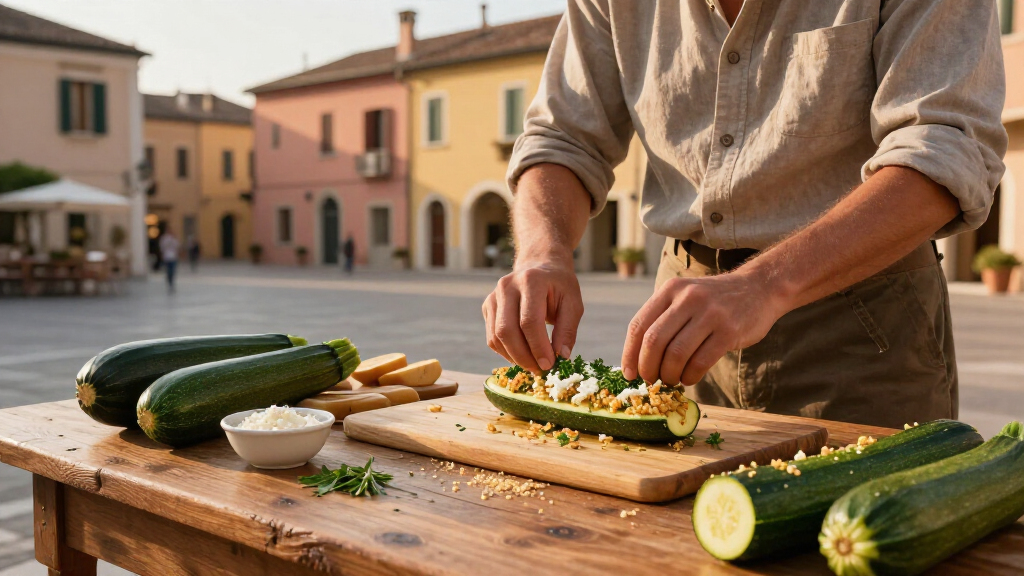

TL;DR
Listen free for 30 days with Audible
Thousands of audiobooks and originals — cancel anytime.
Start your free trialAs an affiliate, we earn on qualifying purchases.
Zucchine ripiene are Italian stuffed zucchini: hollowed shells refilled with a mixture of the scooped flesh plus meat, cheese, breadcrumbs, grains, or vegetables, then baked until tender and browned. The dish exists because late-summer gardens produce more zucchini than anyone can sauté, and the technique turns the vegetable into antipasto, side, or main course while wasting nothing.
Every August, Italian home cooks face the same quiet emergency: the zucchini patch has won. Key facts and common sense agree on the solution—zucchine ripiene (stuffed zucchini), a practical summer dish designed to absorb an abundant zucchini harvest into one baking dish, is the answer nonnas have used for generations.
The idea is beautifully circular. You hollow out the vegetable, chop and cook what you removed, fold it into a filling with whatever the kitchen offers—breadcrumbs, sausage, tuna, cheese, stale bread—and return it to the shell. Nothing is thrown away. The zucchini becomes its own serving vessel.
In this guide you’ll learn how to choose and hollow the right zucchini, the moisture-control tricks that prevent sogginess, the fillings different Italian regions favor from Liguria to Puglia, and how to serve, store, and pair the finished dish while the season still allows it.
Choose medium, firm zucchini (6–8 inches) and leave a ¼–⅓ inch shell wall so the boats hold their shape in the oven.
Sauté the scooped-out flesh before adding it to the filling—zucchini are roughly 95 percent water, and this one step prevents most sogginess.
Match the filling to a regional tradition: Emilia-Romagna’s meat and Parmigiano Reggiano, Piedmont’s tuna and capers, or the South’s pecorino, olives, and cape…
Assemble up to a day ahead and refrigerate; bake uncovered for the final 15 minutes at 400°F so the tops brown.
Leftovers keep 3–4 days refrigerated; meat, grain, and tomato fillings freeze better than ricotta-based ones.
Cook any raw-meat filling to an internal temperature of 165°F (74°C) before serving.
Zucchine Ripiene: Stuffed Zucchini Before the Season Ends
Every August, Italian home cooks face the same quiet emergency: the zucchini patch has won. The answer is zucchine ripiene — hollowed shells refilled with the scooped flesh plus meat, cheese, breadcrumbs, or grains, then baked until tender and browned. Nothing is thrown away.
Cucina Povera · Zero Waste · One Baking DishThe Zucchini Becomes Its Own Serving Vessel
There is no single authentic recipe — ask ten Italian families and you’ll get ten fillings, each defended as the only correct one. The constant is the circular logic: hollow, cook what you removed, return it to the shell.
Scoop the center
Halve lengthwise into “barchette” (boats) or top round varieties. Leave a ¼–⅓ inch wall.
Cook the flesh
Chop and sauté the scooped flesh with onion and garlic for 6–8 minutes until the water cooks off.
Fill the shells
Fold in breadcrumbs, egg, cheese, protein, or herbs. Mound loosely — packed filling splits the shell.
Brown the tops
Bake 30–40 minutes with a shallow layer of sauce or water; uncover the last 15 minutes for color.
Choose the Right Zucchini
Medium zucchini have developed seeds you can scoop easily, but the flesh is still dense and the skin thin enough to eat without peeling. The skin is what keeps the shell intact through the oven — so wash, dry, and don’t peel.
What to Grab
- Firm and medium: 6–8 inches long
- Heavy for their size
- Glossy, unblemished skin
- Round varieties (Tonda di Piacenza, Tonda Striata d’Italia) — fill whole for elegant individual portions
What to Watch For
- Soft spots and dull, wrinkled skin
- Bendy, rubbery bodies
- Oversized zucchini: usable, but remove mature seeds and spongy centers, and compensate with a drier filling
- Consider partially peeling tough skin on very large specimens
The Method That Prevents Soggy Stuffed Zucchini
Zucchini are about 95% water, so moisture management is the entire technical game. These are the five moves that matter — sautéing the scooped flesh rather than using it raw is the single technique that separates structured from soggy.
The Full Sequence
Optional shortcut: blanch or roast the shells for 5 minutes before filling — you trade a little structural firmness for a shorter final bake.
Preheat & cut
Heat the oven to 400°F (200°C). Halve zucchini lengthwise, or slice the tops off round ones like little hats.
Scoop
Remove the seedy center with a teaspoon or melon baller, leaving a ¼–⅓ inch wall so the shell holds its shape.
Salt & drain
Salt the shells lightly and drain cut-side down for 15–20 minutes; pat dry before filling.
Sauté the flesh
Chop and cook the scooped flesh with onion and garlic until the water cooks off, about 6–8 minutes.
Mix & fill
Combine flesh with protein, breadcrumbs, egg, cheese, and herbs. Fill loosely with a mound — packed filling expands and splits the zucchini.
Bake & brown
Bake on a lightly oiled dish with a shallow layer of tomato sauce or water, 30–40 minutes, uncovered for the last 15. Raw-meat fillings must reach 165°F (74°C) internally.
A Tour of Italy in Filling Choices
Northern versions lean rich and delicate; southern ones lean loud and briny. These are tendencies, not rigid rules — pick your region by mood. The classic Emilian version uses Parmigiano Reggiano DOP from Parma; the South answers with sharper sheep’s-milk pecorino that stands up to olives and capers.
| Region | Typical Filling | Character |
|---|---|---|
| Liguria | Breadcrumbs, cheese, herbs, sometimes mortadella | Vegetable-forward, light |
| Piedmont | Tuna, capers, breadcrumbs | Savory, picnic-friendly |
| Emilia-Romagna | Ground meat, sausage, mortadella, Parmigiano Reggiano | Rich, Sunday-table |
| Southern Italy | Tomato, garlic, pecorino, capers, olives, oregano | Bold, briny, sunny |
| Vegetarian household | Stale bread soaked in milk, sautéed flesh, egg, grated cheese, onion, herbs — arguably the most traditional filling of all | Economical, classic |
While the Season Still Allows It
The dish is well suited to advance preparation and flexible service — serve warm, at room temperature, or even chilled depending on the filling. One technique, three roles on the table: small tuna-filled boats as antipasto, or two meat-filled halves with a salad for dinner.
Make Ahead
Assemble and refrigerate; bake uncovered for the final 15 minutes at 400°F so the tops brown.
Leftovers
Meat, grain, and tomato fillings freeze better than ricotta-based ones. Reheat gently to protect the shell.
Food Safety
Cook any raw-meat filling to a safe internal temperature — or simply brown the meat first for an easier path.
What Zucchine Ripiene Really Are (and Why No One Owns the Recipe)
Zucchine ripiene (literally “stuffed zucchini”) is a technique, not a recipe: hollowed zucchini shells refilled with a savory mixture and baked until tender. Ask ten Italian families for their version and you’ll get ten different fillings, each defended as the only correct one. That flexibility isn’t a flaw—it’s the whole point of the dish.
The reason is economic history. Stuffed vegetables were cucina povera (cooking of the poor): a way to stretch a little meat, stale bread, and cheese across a whole family using free garden abundance. Whatever needed using up went inside the zucchini. That logic still works in your kitchen today.
The constant across every version is respect for the vegetable itself. The zucchini is not an edible container to be buried under filling—the scooped flesh goes back into the mix, its mild, green sweetness flavoring everything. When the zucchini tastes like an afterthought, the dish fails, no matter how good the stuffing is.
The dish slides easily between courses, too. Small boats of tuna-filled zucchini make an antipasto (starter); two meat-filled halves with a salad are dinner. One technique, three roles on the table.
As an affiliate, we earn on qualifying purchases.
Choose the Right Zucchini: What to Grab at the Market This Week
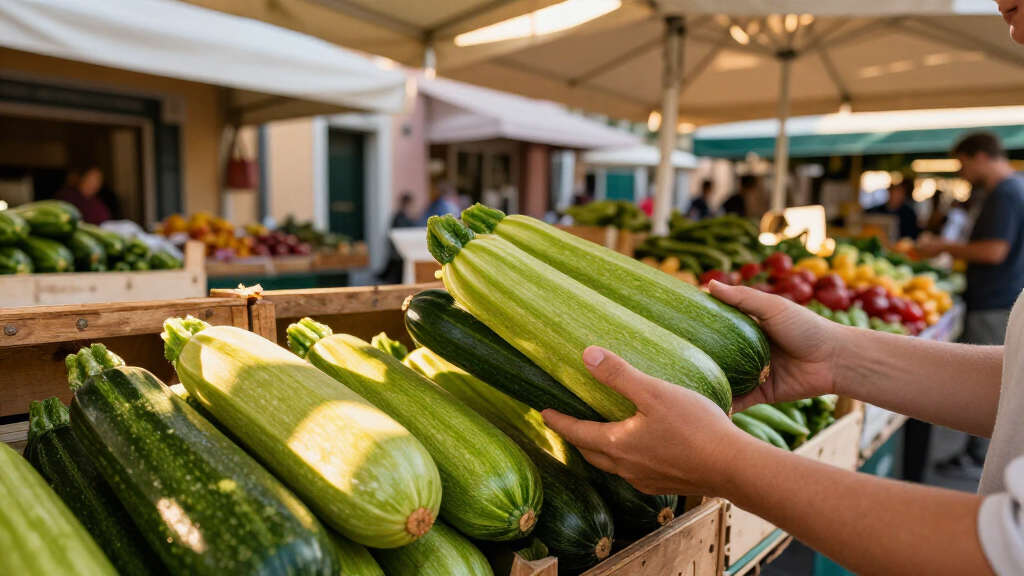
The best zucchini for stuffing are medium-sized and firm—roughly 6 to 8 inches long and heavy for their size, with glossy, unblemished skin and no soft spots. Medium zucchini have developed seeds you can scoop out easily, but the flesh is still dense and the skin still thin enough to eat without peeling.
Shape determines your format. Long zucchini get halved lengthwise into “barchette” (little boats). Round varieties—like the pale green Tonda di Piacenza or striped Tonda Striata d’Italia, both prized for stuffing in Emilia-Romagna—get their tops sliced off like little hats, then hollowed and filled whole for an elegant plated presentation.
That overgrown baseball bat from your garden? It’s actually usable. Oversized zucchini are easy to hollow, but cut out mature seeds and any spongy center, and consider partially peeling tough skin. The tradeoff is more moisture and less flavor per bite, so a drier filling balances them.
- Choose: firm, medium (6–8 in), heavy for size, glossy skin
- Avoid: soft spots, dull wrinkled skin, bendy bodies
- Round varieties (Tonda di Piacenza): fill whole, serve as individual portions
- Very large ones: fine for stuffing, but remove seeds and compensate for wateriness
Wash and dry the zucchini well, and don’t peel—the skin is what keeps the shell intact through the oven.
The Method That Prevents Soggy Stuffed Zucchini, Step by Step
Zucchini are about 95 percent water, so moisture management is the entire technical game. The five moves that matter: leave a sturdy shell wall, salt and drain, sauté the flesh, don’t overfill, and finish uncovered so the tops brown. Here’s the full sequence.
- Preheat the oven to 400°F (200°C).
- Cut zucchini in half lengthwise (or slice the tops off round ones).
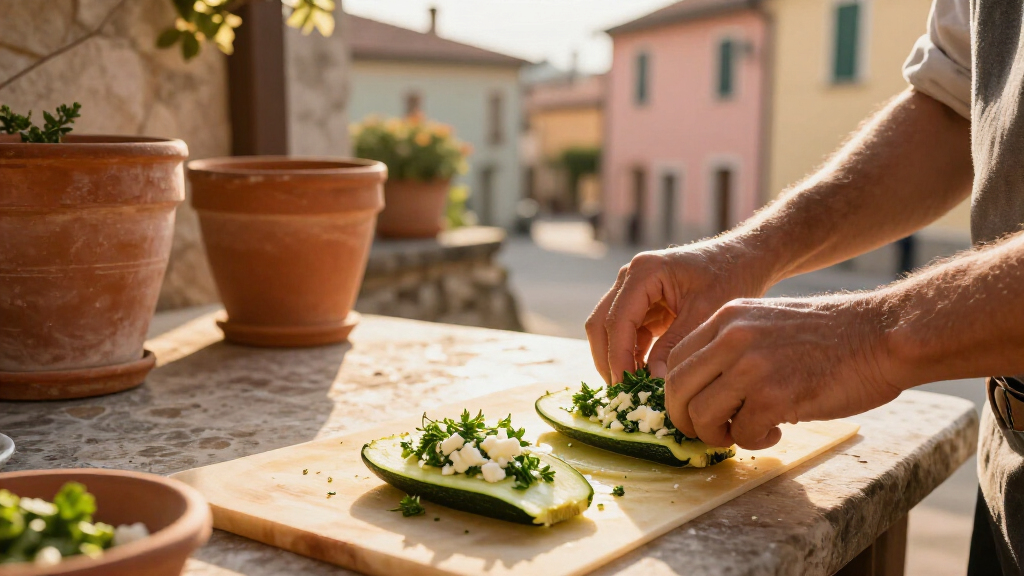
- Scoop the seedy center with a teaspoon or melon baller, leaving a ¼–⅓ inch wall so the shell holds its shape.
- Salt the shells lightly and let them drain cut-side down for 15–20 minutes; pat dry.
- Chop the flesh and sauté it with onion and garlic until the water cooks off, about 6–8 minutes.
- Mix the filling: sautéed flesh plus your choice of protein, breadcrumbs, egg, cheese, and herbs.
- Fill the shells loosely with a mound—packed filling expands and splits the zucchini.
- Bake on a lightly oiled dish with a shallow layer of tomato sauce or water, 30–40 minutes, uncovered for the last 15 so the tops brown.
A trickle of olive oil and a few tablespoons of liquid in the dish prevent sticking; a swimming pool of sauce guarantees mush. If you’re using raw ground meat in the filling, the center must reach 165°F (74°C) on an instant-read thermometer before serving—safer and simpler to brown the meat first.
The most common mistake is scooping the shell too thin. A wall under a quarter inch collapses in the oven, and you’re serving filling soup.
Optional shortcut: blanch or roast the shells for 5 minutes before filling. You’ll trade a little structural firmness for a shorter final bake.
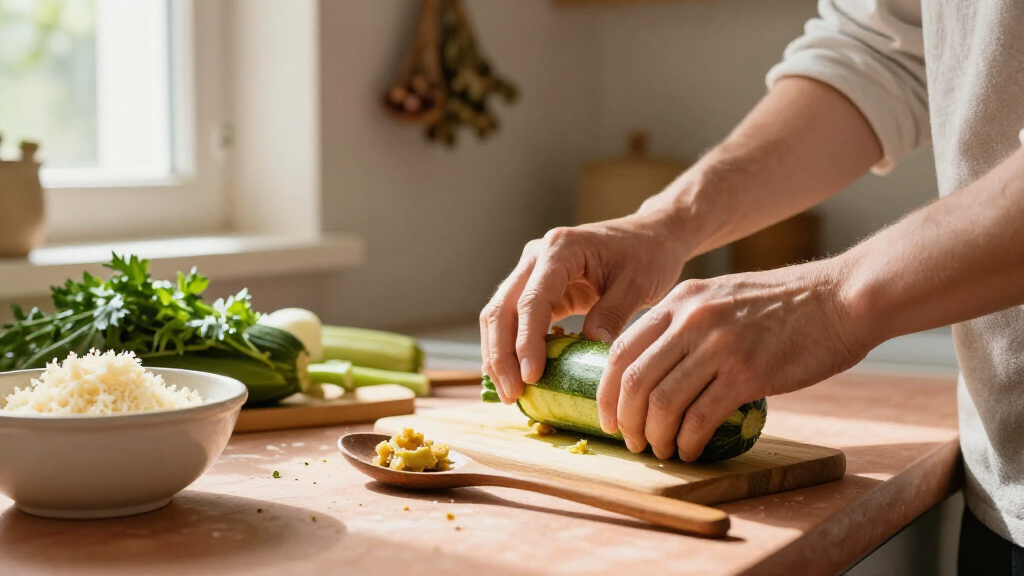
A Tour of Italy in Filling Choices: What Each Region Puts Inside
Fillings for zucchine ripiene vary by region, family, and season—and these are tendencies, not rigid rules. Northern versions lean rich and delicate; southern ones lean loud and briny. Pick your region by mood.
| Region | Typical filling | Character |
|---|---|---|
| Liguria | Breadcrumbs, cheese, herbs, sometimes mortadella | Vegetable-forward, light |
| Piedmont | Tuna, capers, breadcrumbs | Savory, picnic-friendly |
| Emilia-Romagna | Ground meat, sausage, mortadella, Parmigiano Reggiano | Rich, Sunday-table |
| Southern Italy | Tomato, garlic, pecorino, capers, olives, oregano | Bold, briny, sunny |
The classic Emilian version uses Parmigiano Reggiano DOP, the aged hard cheese from Parma and its neighboring provinces—the real thing matters here because it’s the backbone of the filling’s savory depth. Southern versions often call for pecorino, a sharper sheep’s-milk cheese that stands up to olives and capers.
For a vegetarian household classic, combine stale bread soaked in milk, the sautéed zucchini flesh, an egg, grated cheese, onion, and herbs. It’s economical, satisfying, and arguably the most traditional filling of all—the one that predates meat-rich versions. Reliable combinations to start from: sausage, Parmigiano, garlic, and parsley; tuna, capers, breadcrumbs, and lemon zest; or ricotta, spinach, nutmeg, and Parmigiano.
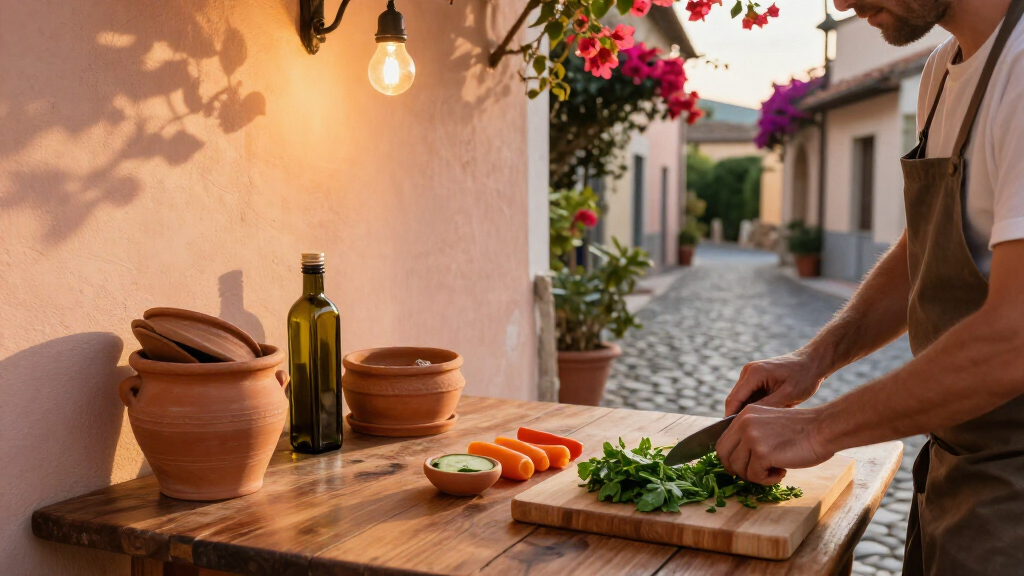
Serve, Store, and Plan Ahead Without Losing the Texture
Stuffed zucchini are one of the most make-ahead-friendly dishes in the Italian repertoire: assemble them, cover, and refrigerate for up to a day before baking. A chilled dish needs 5–10 extra minutes in the oven. This makes them ideal for entertaining—you stuff at noon, bake at eight, and never miss the conversation.
Temperature at serving is flexible. Vegetable and tuna versions are genuinely good at room temperature, which is why they appear on Italian summer buffet tables. But anything containing meat, seafood, eggs, or soft cheese shouldn’t sit unrefrigerated beyond two hours—food safety applies even to rustic Italian food.
Leftovers keep 3–4 days covered in the refrigerator; reheat until steaming throughout. Freezing works, with a caveat: thawed zucchini release water and soften, so meat, grain, and tomato fillings freeze far better than delicate ricotta-heavy ones. Reheat from thawed, uncovered, in a moderate oven rather than the microwave to recover some browning.
For pairing, match the wine to the filling: a crisp Italian white like a Vermentino from Sardinia or a Pinot Grigio delle Venezie DOC suits tuna and vegetable versions; a light red like a Valpolicella works with sausage or beef. Adults only, of course, and everything in moderation. On the plate, meat-filled zucchini need nothing but a green salad; lighter versions appreciate crusty bread or roasted potatoes.

Modern Twists Worth Trying (and Which to Skip)
Modern adaptations have pushed zucchine ripiene beyond the traditional meat-and-breadcrumb formula. The best of them honor the dish’s original spirit—using up what you have; the worst bury the zucchini entirely. Here’s an honest assessment.
Worth trying: plant-based fillings of lentils, chickpeas, or mushrooms with thyme and cheese; gluten-free versions bound with cooked rice, quinoa, or polenta; higher-protein spins with turkey or ricotta; Mediterranean combinations of feta, tomatoes, olives, and basil that lean Greek while staying delicious. A chickpea, tomato, olive, and basil filling is genuinely excellent cold the next day.
Low-waste versions may be the most authentic modern twist of all—stale bread, cheese ends, leftover grains, and the scooped flesh are exactly what the dish was invented to use. Air-fryer adaptations work for small boats and deliver serious browning in about 15 minutes at 380°F (190°C); just check early, because the filling can brown before the shell softens.
Skip: fillings so wet the zucchini steams instead of bakes (ricotta puddles, undrained tomatoes), and anything that leaves no room for the vegetable’s own flavor. If your stuffing would taste the same inside a bell pepper or a rolled crepe, rebalance it. The zucchini should taste like zucchini—mild, green, faintly sweet—amplified by everything around it.
Frequently Asked Questions
Do I need to peel zucchini before stuffing them?
No. The skin is edible and helps the shells hold their shape during baking. Wash and dry the zucchini well instead. Only very large, thick-skinned garden zucchini might need partial peeling.
How do I keep stuffed zucchini from becoming watery?
Scoop out the seedy center, lightly salt the shells and let them drain for 15–20 minutes, sauté the removed flesh until its moisture cooks off, and precook any watery vegetables like spinach or mushrooms. Also avoid adding too much egg or liquid to the filling, and don’t drown the baking dish in sauce—a shallow layer is enough.
Can I make zucchine ripiene ahead of time?
Yes. Assemble the stuffed zucchini, cover, and refrigerate for up to about a day before baking. A chilled dish may need 5–10 extra minutes in the oven. They also reheat well as leftovers for 3–4 days refrigerated.
What can I use instead of breadcrumbs in the filling?
Cooked rice, quinoa, couscous, polenta, crushed gluten-free crackers, ground nuts, mashed beans, or extra grated cheese all provide structure. Rice with mozzarella, tomato, and oregano is a classic Italian alternative binding.
Can I use very large garden zucchini for stuffing?
Yes. Their size makes them easy to hollow, but remove the mature seeds and any spongy center, and partially peel the skin if it’s tough. Expect more moisture, so use a drier filling and salt the shells before stuffing.
What wine pairs well with stuffed zucchini?
Match the wine to the filling: a crisp Italian white like Vermentino or Pinot Grigio suits tuna and vegetable versions, while a light-bodied red like Valpolicella works with sausage or beef fillings. Alcoholic drinks are for adults—enjoy responsibly.
Conclusion
Before the last zucchini leaves the market, make zucchine ripiene once—the real technique, not a stuffing recipe with zucchini as scenery. Hollow firmly, sauté the flesh, fill loosely, and let the oven do the late-summer alchemy of turning garden surplus into dinner.
The dish’s whole philosophy fits in one sentence: nothing wasted, everything seasoned, and the vegetable still the star. When the first cool evening of September arrives and you’re pulling browned, fragrant boats from the oven, you’ll understand why Italian cooks have spent generations quietly grateful for an overproductive garden.

Flea & tick season Picks
flea and tick prevention
As an affiliate, we earn on qualifying purchases.