TL;DR

Get kitchen staples and gadgets delivered free with Prime
- Fast, free delivery on millions of items
- Prime Video, Amazon Music and more included
- Member-only deals all year
Caldarroste are Italian roasted chestnuts, traditionally cooked in a perforated pan over a live fire and sold hot from street carts in autumn and winter. At home, choose firm chestnuts, score every shell, roast them in a skillet, oven, or grill until the flesh turns tender, then wrap and peel them while warm. A split shell helps, but tenderness—not the clock—is the best sign they are ready.
The first sign of caldarroste (Italian roasted chestnuts) is often the smell: sweet, nutty smoke drifting from a street cart on a chilly evening. You can bring a little of that autumn ritual home without a cart or a wood fire. A heavy skillet, a standard oven, or a grill can all turn fresh chestnuts into a warm snack.
This guide shows you how to pick good nuts, score their shells safely, choose a cooking method, and tell when the centers are tender. You will also learn why peeling while warm matters and how to handle leftovers. The goal is simple: chestnuts with soft, sweet flesh and a few toasted spots, ready to eat by the handful.
Choose firm, glossy sweet chestnuts that feel heavy for their size; discard nuts with mold, holes, soft patches, or a rattling feel.
Cut an X through every shell before roasting so steam can escape and peeling has a starting point.
Use a skillet for hands-on street-cart character, an oven for a larger batch, or a grill for more fire-like flavor.
Judge doneness by tender flesh, not just by an opened shell or a timer.
Wrap the roasted nuts briefly in a clean towel and peel them while warm; refrigerate cooked leftovers in a covered container.
Seasonal kitchen guide · Italy at home
Roasted Chestnuts at Home: The Caldarroste Method Without the Street Cart
Bring the warm, nutty aroma of autumn street carts into your kitchen. Choose sound chestnuts, score every shell, roast until tender, then peel while warm.
01 / Before the heat
Start with good nuts, then score safely
Freshness and a clear opening help the chestnuts roast evenly and make peeling easier.
Scoring each shell gives steam a way to escape and creates a starting point for peeling. An unscored shell can burst as the nut heats.
Choose firm and weighty
Look for glossy shells and chestnuts that feel heavy for their size. Avoid mold, holes, soft patches, sour smells, or a rattling feel.
Keep the cut controlled
Set one nut flat side down on a stable board. Keep fingertips clear, then use a small sharp knife or sturdy kitchen scissors.
Cut an X through the shell
Score the rounded side deeply enough to cross the shell. If a nut rolls, reposition it; never chase it with the blade.
02 / The roasting sequence
From market bag to tender center
A simple sequence works across skillet, oven, grill, or air fryer. Watch the nuts and adjust as they cook.
Sort
Remove chestnuts with mold, holes, soft spots, or a musty smell.
Score
Cut an X through every shell before it meets heat. Soaking is optional.
Roast
Arrange in one layer and turn or shake regularly for even cooking.
Check & peel
Test for tender flesh, wrap briefly in a towel, then peel while warm.
Doneness check: Remove one with tongs and let it cool just enough to handle. If the flesh is firm, dry, or chalky, return the batch to the heat and check again.
Tender beats timer03 / Choose your setup
Four ways to roast at home
The street-cart original uses a perforated pan over live fire. Home equipment trades some direct flame character for convenience.
| Method | Best for | What to watch |
|---|---|---|
| Heavy skillet | Small batch and hands-on turning | Turn or shake often to prevent scorching |
| Oven | Larger tray with more even heat | Check tenderness; timing varies by nut and oven |
| Grill | More fire-like flavor | Keep nuts moving and watch for flare-ups |
| Air fryer | Small batch and limited counter space | Check frequently; models and nut sizes vary |
Match the batch to the method
What changes the result?
Chestnut size, freshness, and equipment all affect cooking time. A solid skillet is easy to manage but may brown less dramatically than a perforated pan over flame. Grill cooking needs close attention.
Cook in one layer with room for heat to reach each shell. Turn unevenly browning nuts, and give firm ones more time.
04 / Serve & store
Keep the aroma. Make peeling easier.
Warmth and a little trapped steam can loosen the papery inner skin while keeping the classic snack simple.
Wrap briefly. Put roasted chestnuts in a clean kitchen towel for several minutes to hold warmth and moisture.
Peel while warm. Let them cool only enough to handle safely; shell and inner skin tighten as they cool.
Serve simply. Caldarroste are often eaten plain. A little salt is optional; butter, sugar, or herbs make variations.
Store leftovers cold. Refrigerate cooked chestnuts in a covered container. Keep fresh ones cool and use them soon.
Know your chestnuts: Sweet chestnuts are the edible kind used for caldarroste. Do not confuse them with horse chestnuts, which are not edible. Buy from a food seller and check the label or ask about the variety.
Autumn ritual, at homeChoose chestnuts that will roast sweet and tender
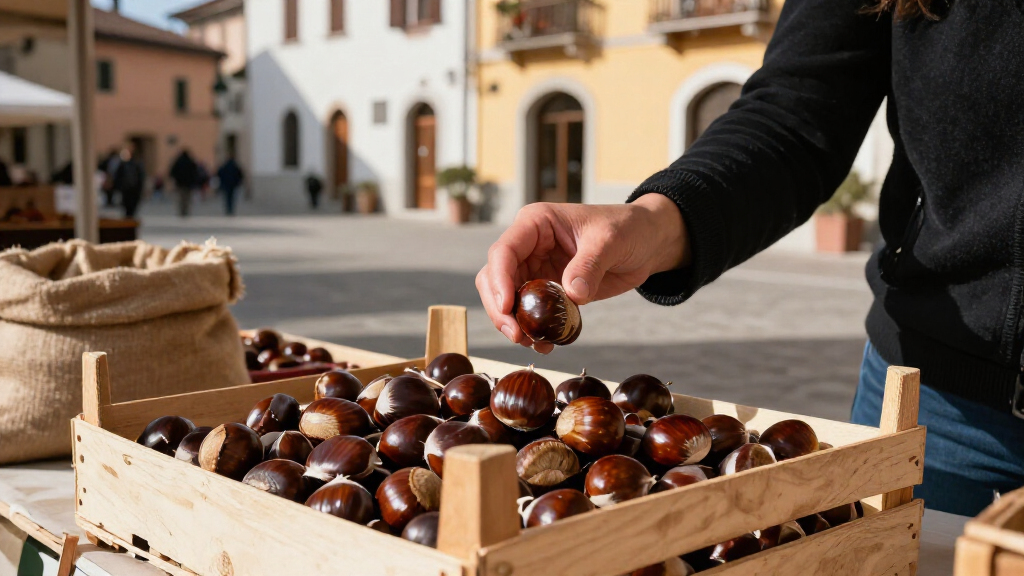
For roasted chestnuts at home, start with nuts that feel heavy for their size, with firm, glossy shells and no holes or mold. Freshness matters because chestnuts contain more moisture than many other nuts and can dry out or spoil in storage. A nut that rattles when you shake it may have shrunk inside its shell.
At a market, compare a few chestnuts in your palm instead of reaching for the largest ones. If a handful feels lively and weighty, with smooth shells and no soft patches, it is a good batch to bring home. Skip nuts with a sour or musty smell, visible mold, or pinholes that may signal insects.
Keep fresh chestnuts cool and use them soon; they are perishable. If you buy them for a weekend dinner, store them in a breathable bag in the refrigerator rather than leaving them in a warm kitchen. Before cooking, sort the batch once more and discard any that have developed mold or soft spots.
Sweet chestnuts are the edible kind used for caldarroste. Do not confuse them with horse chestnuts, which are not edible. A simple market habit helps: buy from a food seller, check the label or ask what variety you are getting, and keep chestnuts separate from decorative nuts gathered outdoors.
Products Worth Considering

Arlo Pro Wireless Security Camera, 2K HDR, 6th Generation, 4-Camera Kit

Philips Hue Starter Kit with Bridge Pro and 4 A19 E26 Smart Bulbs

Philips Hue Essential Starter Kit – Bridge and 4 E26 Smart Bulbs
As an affiliate, we earn on qualifying purchases.
Score every shell safely before the heat
Before you roast chestnuts, make a deep cut through each shell so steam can escape and the shell has a place to open. A cut also gives you a starting point when you peel the nut. If you leave shells intact, pressure can build as the chestnuts heat and cause them to burst.
Place one chestnut on a stable cutting board, flat side down if it has one. Hold it steady with your fingertips clear of the blade, then use a small, sharp knife to cut an X across the rounded side. A chestnut knife or sturdy kitchen scissors can make the job easier, especially if the shells feel tough and slippery.
For example, if you are preparing a dozen chestnuts for a quiet movie night, take a minute to line them up and check that every shell has a visible opening. A shallow scratch may not reach through the shell, so use enough pressure for a clear cut without driving the blade into the flesh. If the chestnut rolls, reposition it; do not chase it with the knife.
Score before soaking or roasting, and keep your hands dry so the nut does not slide. Some cooks soak chestnuts briefly, but soaking is optional. If you do, dry them well before they hit a hot pan or tray so surface water does not interfere with browning.
Pick the home method that fits your kitchen
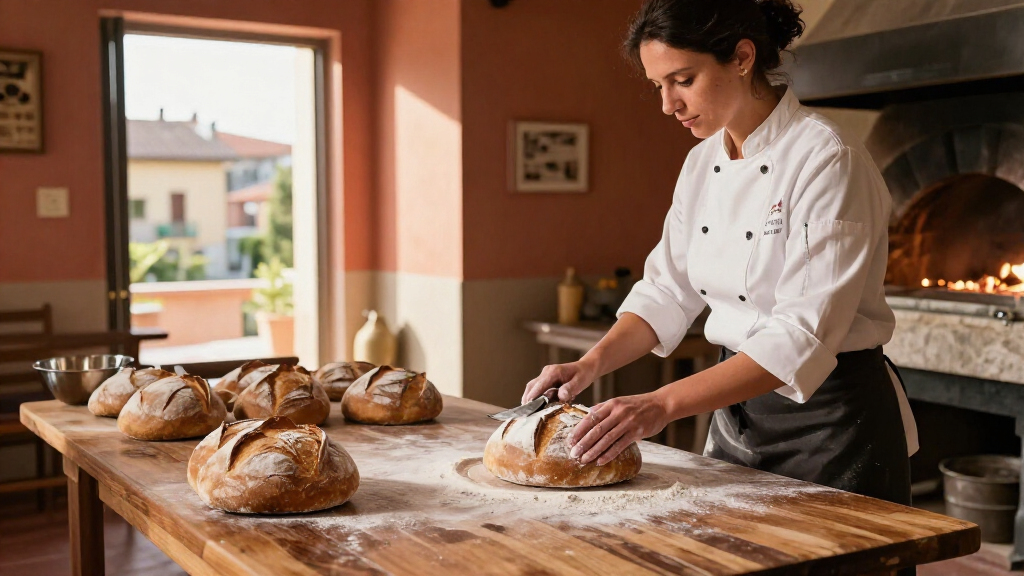
A heavy skillet gives you the closest hands-on feel of street-cart chestnuts, while an oven makes it easier to cook a larger batch evenly. A grill adds more fire-like flavor but needs close attention. No method exactly recreates a cart’s perforated pan over a strong flame, where direct heat creates smoky aromas and scattered charred spots.
| Method | Best for | What to watch |
|---|---|---|
| Heavy skillet | A small batch and hands-on turning | Turn or shake often to prevent scorching |
| Oven | A larger tray with more even heat | Check tenderness; timing varies by nut and oven |
| Grill | A taste closer to open-fire roasting | Keep the nuts moving and watch for flare-ups |
| Air fryer | A small batch when counter space is limited | Check frequently; models and sizes vary |
If you are roasting six nuts for an afternoon snack, a skillet is easy to manage. If you are serving a group after dinner, a tray in the oven saves you from standing at the stove. Choose the method you can watch comfortably; chestnuts can go from toasted to scorched quickly on concentrated heat.
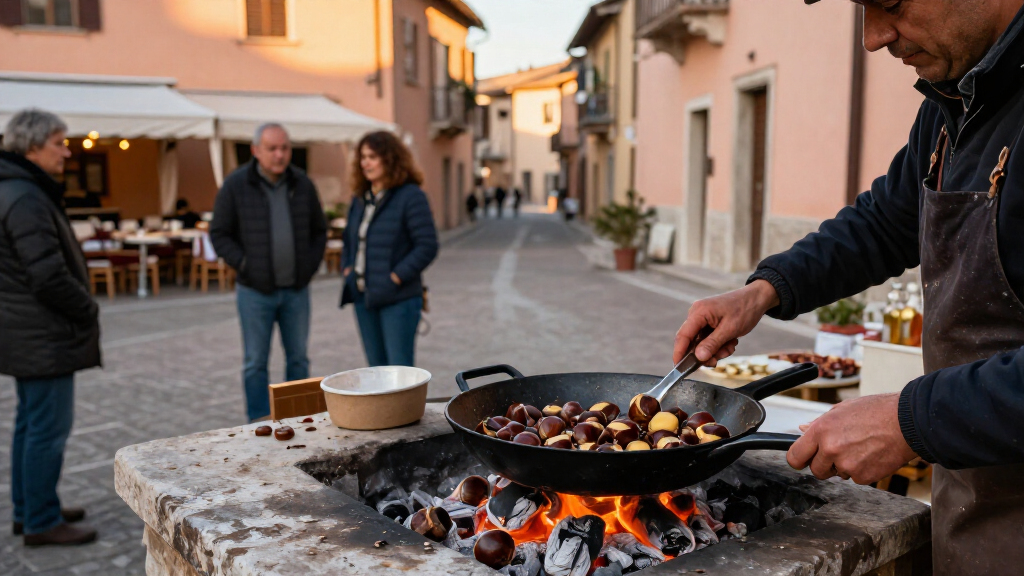
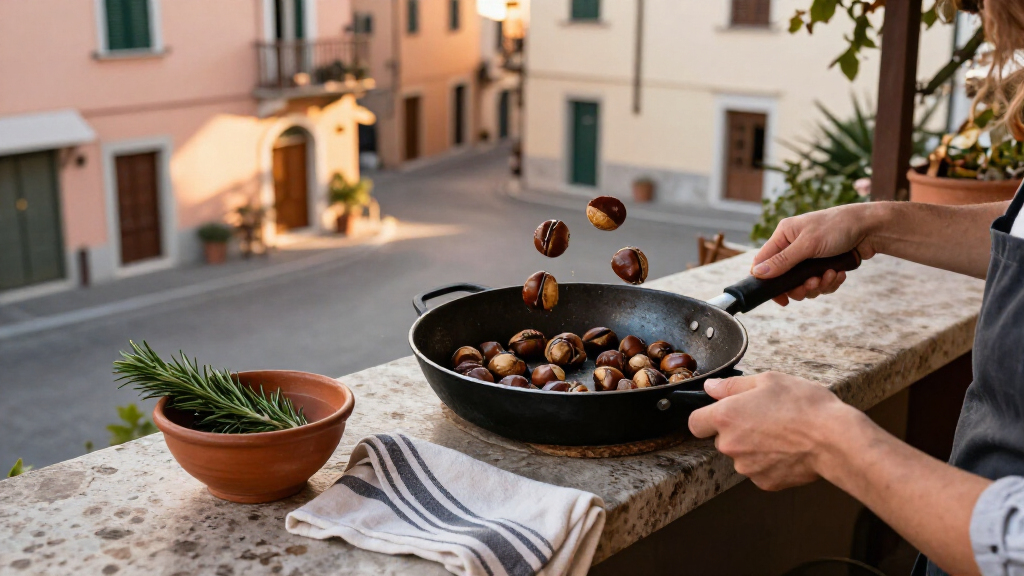
For a skillet, use a heavy pan over medium heat and spread scored chestnuts in one layer. A perforated chestnut pan can encourage more direct flame contact, but it is optional. A solid skillet still works, even if the browning is less dramatic than the street-cart style.
Roast chestnuts until the centers turn tender
To roast chestnuts at home, arrange scored nuts in a single layer and cook them until the cuts open and the flesh feels tender, not chalky. Exact timing changes with chestnut size, freshness, and equipment, so use the shell and the center as your guides instead of relying on a fixed number of minutes. If one still feels firm, return it to the heat.
- Preheat your chosen equipment. Set a heavy skillet over medium heat, or heat your oven before placing the chestnuts on a tray. For a grill, prepare a spot with steady heat.
- Add the scored chestnuts in one layer. Give them room so heat reaches each shell.
- Turn or shake regularly. Rotate the nuts in a skillet or on the grill; turn them on an oven tray if they brown unevenly.
- Check one carefully. Remove a chestnut with tongs, let it cool just enough to handle safely, and check that its flesh is soft and easy to bite.
- Keep cooking any firm nuts. Chestnuts in one batch may finish at different times.
Imagine a tray of mixed-size chestnuts from a neighborhood market. The smaller ones may open first, while the plump ones need a little longer. Set those soft, open nuts aside and give the firmer ones more heat; a few extra minutes can be the difference between a sweet, creamy center and a dry, starchy bite.
Do not judge by the shell alone. A split is a useful signal, but the cooked flesh should be tender rather than crunchy or powdery. Use tongs around hot cookware, and keep your hands clear when shaking a pan. The shells retain heat after cooking, even when the fire or burner is off.
Keep the aroma and make peeling easier
Peel roasted chestnuts while they are still warm because the shell and papery inner skin tighten as the nuts cool. A few minutes wrapped in a clean kitchen towel can trap warmth and steam, helping loosen the skins. Let them cool only enough to handle without burning your fingers.
When the chestnuts come off the heat, transfer them into the towel and fold it over loosely for several minutes. Then peel a few at a time, starting at the scored cut and removing both the hard outer shell and the thin brown skin. If a chestnut cools before you get to it, return the batch to gentle warmth briefly; overheated nuts can dry out, so keep checking.
Some nuts peel cleanly in one piece; others cling to their inner skins. That does not mean you made a mistake. A chestnut may be old, undercooked, or simply stubborn. If the flesh tastes dry or chalky, give the remaining nuts more heat; if the flesh is tender but the skin clings, peel carefully with a small paring knife.
Classic caldarroste are often eaten plain, with a little salt as an optional addition. You can serve them in a bowl after a walk, or tuck peeled chestnuts beside roasted squash. Butter, sugar, and herbs make pleasant variations, though the smoky, sweet taste is easiest to appreciate when you keep the seasoning light.
Serve a warm autumn snack with Italian roots
In Italy, caldarroste are a familiar cold-weather street snack: chestnuts traditionally cooked over a live fire and sold hot from street carts in autumn and winter. The home version keeps the simple pleasure—warm hands, sweet flesh, a little smoke—even if your skillet gives you less char than a cart’s perforated pan.
Make a small batch after a brisk walk or set a bowl beside a pot of soup on a chilly evening. In Tuscany, chestnuts are part of a wider food tradition, including dried chestnut flour and regional chestnut preparations; local products may carry protected designations, so check the label if you are seeking a specific place-based ingredient. For this snack, plain sweet chestnuts are enough.
Offer them soon after peeling, with napkins and a small bowl for shells. The texture should be soft and mealy, with edges that smell faintly toasted. A sprinkle of salt can bring out their sweetness, while a crowded tray or heavy seasoning can hide the roasted flavor you worked to bring out.
If you plan to serve adults a drink alongside the snack, keep it moderate and make water available; the chestnuts need no alcohol to feel festive. They also pair well with tea, sparkling water, or a mug of broth. Let the season set the mood: a warm bowl on the table, the shells cracking softly, and the kitchen smelling like toasted wood.
Store leftovers safely and reheat them gently
Cool leftover roasted chestnuts promptly, place them in a covered container, and refrigerate them. Peel before eating if the shells have become difficult to remove. Cooked chestnuts taste best fresh, but gentle reheating can soften them again without scorching the edges.
For example, if you roast more than you can eat after dinner, let the nuts cool briefly, then transfer them to the refrigerator rather than leaving them out overnight. The next day, warm a small portion gently in a covered pan or low oven and check that the centers heat through. Avoid leaving cooked chestnuts at room temperature for extended periods.
Keep the storage routine simple: separate any nuts with an off smell, mold, or an unusual texture, and do not save them if you are unsure they are still good. A covered container helps prevent them from drying out and picking up odors from other foods. For best texture, reheat only the amount you plan to serve.
Chestnuts also work in other meals once peeled. Chop a few into a warm grain bowl or serve them alongside roasted vegetables. Their mellow sweetness can balance bitter greens, but refrigeration may make the flesh firmer; gentle heat and a splash of water in a covered pan can help restore a softer bite.
Frequently Asked Questions
Do I have to soak chestnuts before roasting?
No, soaking is optional. Some cooks use a brief soak to add moisture or make the shell easier to cut, but dry the nuts before roasting so excess surface water does not interfere with browning.
Why do chestnuts need to be scored?
A cut lets steam escape as the chestnuts heat and helps prevent the shells from bursting. It also gives you a place to begin peeling once the nuts are roasted.
How can I tell when roasted chestnuts are done?
The shell should open around the cut, and the flesh should feel tender when you check it. If the center remains firm, crunchy, or chalky, return that chestnut to the heat for longer.
Can I roast chestnuts without a special pan?
Yes. A heavy skillet, oven tray, or grill-safe pan works for home roasting. A perforated chestnut pan mainly helps the nuts make more direct contact with the flame.
Why are my roasted chestnuts hard to peel?
They may be undercooked, dried out, old, or naturally difficult to peel. Wrap the hot batch in a clean towel for several minutes and peel a few at a time while warm.
Can I cook chestnuts in an air fryer?
Yes. Score each chestnut, arrange them in a single layer, and check often because air fryer models and nut sizes vary. Test one for tenderness before you call the batch done.
Can I eat chestnuts raw?
Sweet chestnuts are generally edible raw, though their starchy texture is often more pleasant after cooking. Do not confuse sweet chestnuts with horse chestnuts, which are not edible.
How should I store leftover roasted chestnuts?
Cool cooked chestnuts promptly, refrigerate them in a covered container, and reheat gently. Peel before eating if the shells have become hard to remove.
Conclusion
For tender caldarroste at home, choose fresh sweet chestnuts, score every shell, and roast until the flesh gives easily. A heavy skillet brings you close to the street-cart ritual; the oven makes a larger batch simple.
Wrap the nuts while they are warm, peel them at the table, and keep the seasoning spare. Soon your kitchen will carry that autumn scent of toasted shells and sweet, soft chestnut.