AIThis post was created with the assistance of artificial intelligence (AI).
TL;DR
Scacce ragusane are thin flatbreads from the Ragusa area of southeastern Sicily, filled, folded into layers, and baked until crisp outside and savory within. Start with tomato and cheese, roll the dough evenly thin, and keep the filling modest so each fold bakes through without turning soggy.
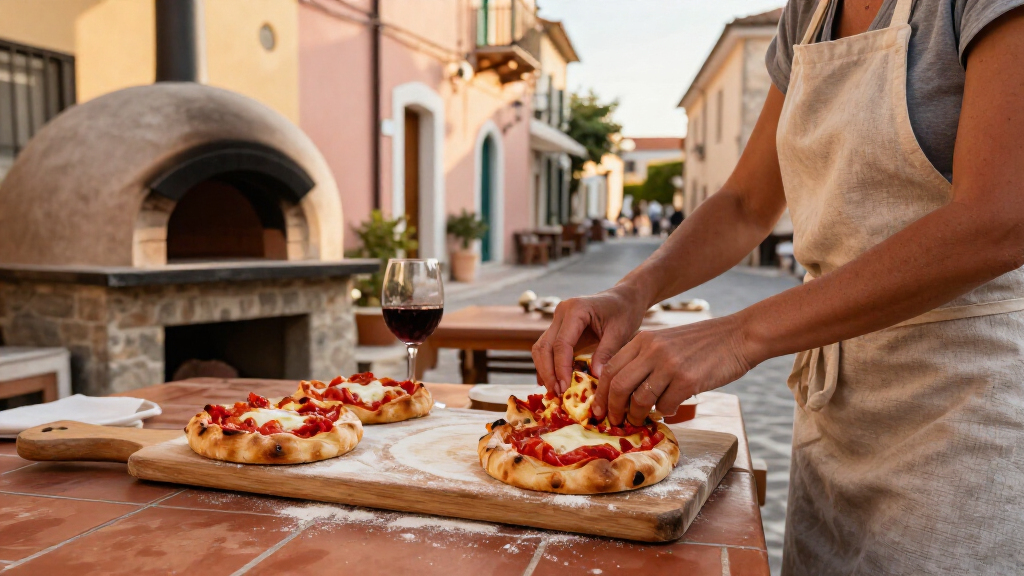
A scaccia can look like a small loaf from the outside, but slice it open and you’ll find a ribbon of tomato and cheese tucked between thin, browned layers. This folded flatbread comes from the Ragusa area of southeastern Sicily, where cooks shape a simple dough around whatever their household or town favors.
You’ll learn what makes scacce ragusane different from pizza and calzone, how to choose a filling, and how to fold and bake a version in a home kitchen. The details matter: a thin, even sheet and a restrained filling give you a crisp crust instead of a damp bundle. Local recipes vary, so think of the method as a useful starting point, not a claim that every Sicilian family makes the same scaccia.
At a glance
Scacce Ragusane: Sicily’s Folded Flatbread Pies
Key insight
Scacce ragusane are folded over the filling in several layers, creating a loaf-like parcel with filling distributed through the dough; that layered structure distinguishes them from a calzone’s singl…
Key takeaways
1
Scacce ragusane are thin, folded flatbreads associated with Ragusa and southeastern Sicily; their filling runs through several layers.
2
Tomato and cheese are a reliable first filling, but ricotta, onion, parsley, sausage, and vegetables also appear in family and local versions.
3
Roll the dough evenly thin, use thick sauce and drained fillings, and leave a clean border for sealing.
4
Serve scacce warm or at room temperature; refrigerate leftovers with perishable fillings and reheat in an oven or toaster oven for a crisper crust.
Step by step
1
How can you roll and fold scacce without a soggy center?
To make scacce ragusane at home, roll the dough evenly thin, use a modest amount of filling, and fold it into a sealed parcel before baking.
Sicilian Food · Briefing
Scacce Ragusane Sicily’s Folded Flatbread Pies
From the Ragusa area of southeastern Sicily, scacce are thin flatbreads folded around savory fillings. Their crisp, layered shape makes them easy to slice and share.
What makes a scaccia?
The filling runs between folds of thin dough, creating a loaf-like parcel.
Shape
Folded in layers
Unlike an open pizza or a single-pocket calzone, scaccia carries filling through several folds.
Texture
Crisp outside
A thin, even sheet bakes browned and crisp around a savory center.
Tradition
Local variations
Families and towns adapt fillings and dough; no single recipe represents every tradition.
Choose a filling
Tomato and cheese are a reliable starting point; keep the filling modest so the layers bake through.
Classic pairing
Thick tomato sauce
Melting cheese, such as caciocavallo
Other local favorites
Ricotta, drained first
Onion, parsley, sausage, or vegetables
Build a crisp parcel
A thin sheet, restrained filling, and sealed edges help prevent a soggy center.
1
Make and rest dough
Mix flour, water, salt, and yeast; add olive oil if your recipe calls for it.
2
Roll evenly thin
Roll from the center outward, allowing the dough to relax if it springs back.
3
Fill and fold
Spread thick sauce and drained fillings, leave a clear border, then fold and seal.
4
Bake until browned
Follow your recipe’s timing and look for a browned surface and hot filling.
Serve and save
Scacce work as a snack, light meal, picnic food, or antipasto.
Serve warm or at room temperature.
Refrigerate leftovers with perishable fillings.
Reheat in an oven or toaster oven for a crisper crust.
Key pointRoll the dough evenly thin and keep fillings restrained and drained for distinct folds and a crisp crust.
The takeaway
Scacce Ragusane turn simple dough and local fillings into a portable, layered Sicilian flatbread.
What makes scacce ragusane a layered Sicilian flatbread?
Scacce ragusane are thin flatbreads from the Ragusa area of southeastern Sicily, filled, folded over themselves in layers, and baked until the exterior browns. The name *scaccia* refers to the dish, while *ragusane* connects it to Ragusa; the plural is *scacce*. A finished scaccia often looks like a long rectangle or little loaf, but the cut face reveals its construction: dough, filling, and more folded dough, like pages tucked around a savory center.
The dough usually combines flour, water, salt, and yeast, sometimes with olive oil. Some cooks choose durum wheat flour or blend it with another flour. Tomato and cheese make a recognizable pairing, but ricotta, onion, parsley, sausage, and vegetables also appear in local and family recipes. That variety is part of the dish’s identity, not a problem for cooks to solve.
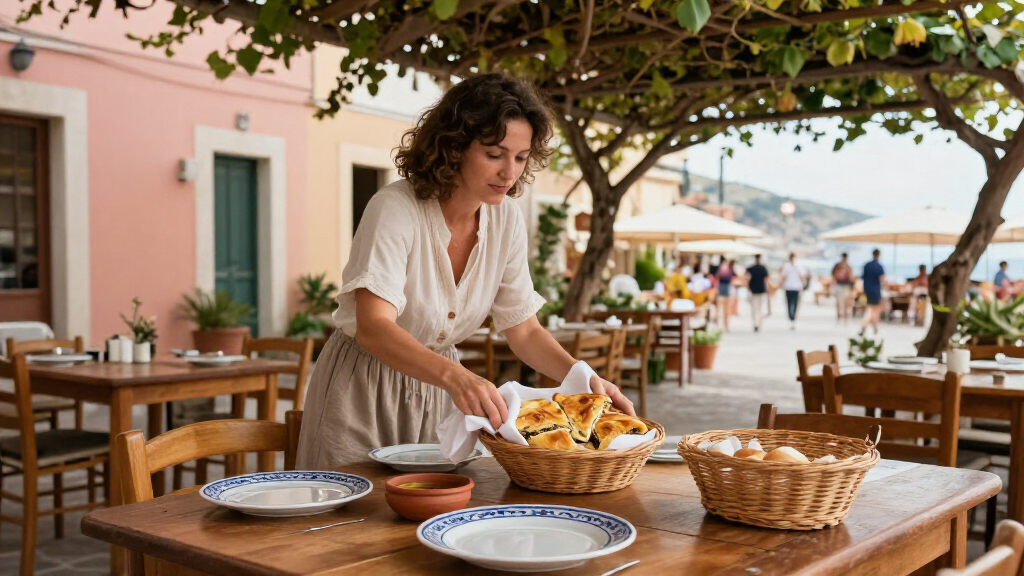
Imagine making one for a Saturday picnic near Ragusa: you can bake it until crisp, let it settle, then cut it into pieces that travel more easily than a saucy slice of pizza. Scacce are commonly eaten warm or at room temperature as a snack, light meal, or antipasto. Their practical shape reflects home cooking as much as flavor: one bake feeds a table, and each piece can be carried by hand.
Products Worth Considering
Dyson V8 Cyclone Cordless Vacuum
eufy E25 Robot Vacuum and Mop
LG StanbyME 2 Max 32-Inch 4K Portable Smart Touchscreen TV
As an affiliate, we earn on qualifying purchases.
How do scacce differ from pizza and calzone?
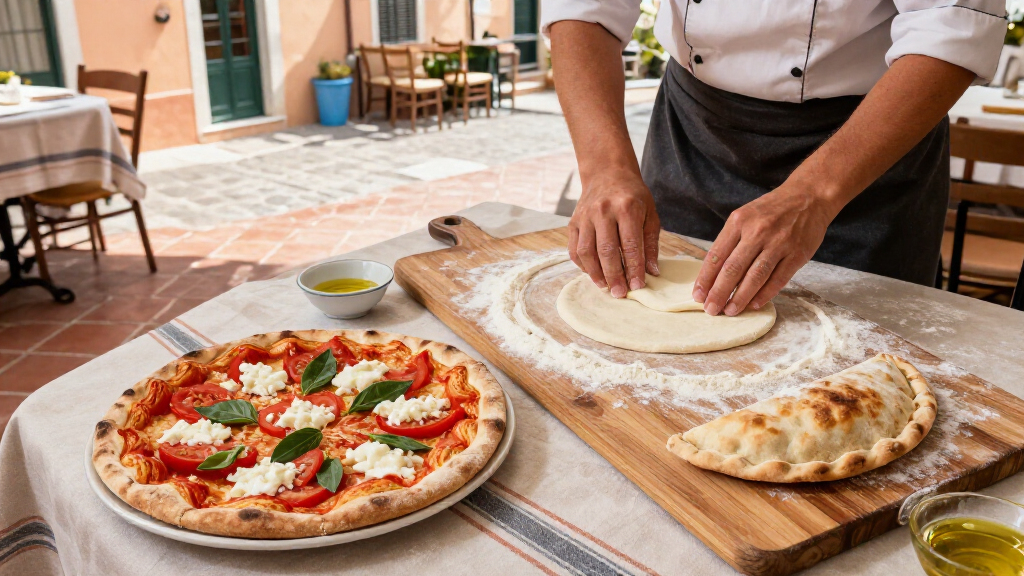
Scacce ragusane differ from pizza and calzone because cooks roll their dough into a thin sheet, spread the filling across it, and fold the sheet over itself in several layers. That gives you a loaf-like flatbread with filling running through the folds, rather than pizza with toppings on top or a calzone with one main pocket. The distinction is easy to see when you cut into each dish.
Think of the scaccia’s folding pattern like folding a letter: each turn carries a little filling into the next layer. A calzone usually closes one portion of dough around its filling, often into a half moon. Pizza keeps its toppings exposed on the surface. Scacce can still vary in thickness and shape, but the layered fold is their defining practical feature.
Dish
How the filling sits
What you’ll notice
Scaccia
Spread on thin dough, then folded into layers
Filling appears between folds
Calzone
Enclosed in a single folded pocket
One sealed center
Pizza
Placed on top of an open base
Toppings remain visible
If you’re choosing what to cook for a train picnic, a scaccia’s layered rectangle is straightforward to portion and wrap. A calzone may keep a wetter center more enclosed, while pizza is best when you want the topping itself to lead. All three reward good dough, but they ask you to handle the filling differently.
Which filling gives your first scaccia the best chance?
Tomato sauce and cheese are a strong first filling for scacce ragusane because they offer the familiar savory balance without demanding a complicated preparation. The sauce brings acidity and moisture; cheese melts into the folds and adds salt and richness. Keep both restrained: too much of either can escape at the seams or soften the dough before it browns.
For a home version, spread a thin coat of thick tomato sauce across the rolled sheet, leaving a narrow border. Add a modest layer of grated or thinly sliced cheese that melts well. In Ragusa and across Sicily, cooks may use caciocavallo, a flavorful stretched-curd cheese, or other local cheeses; outside the island, choose a tasty melting cheese you can find. If you use ricotta, drain it first in a sieve so excess liquid doesn’t turn the inner layers gummy.
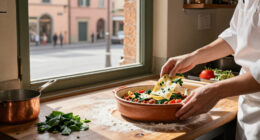
Other fillings reflect the season and household. Onion and parsley offer a sweet, herbal bite; vegetables can make a lighter version; sausage gives a more substantial, meat-forward result. For example, if you have a bowl of cooked greens left from dinner, squeeze out their moisture and combine them with a little cheese rather than spreading them wet across the dough. Recipes can include milk, gluten, and cheese, and sausage versions contain meat; check ingredients for allergens and dietary needs.
Let the dough show through. A thin layer of filling gives you distinct folds, a crisp edge, and a clean slice.
How can you roll and fold scacce without a soggy center?
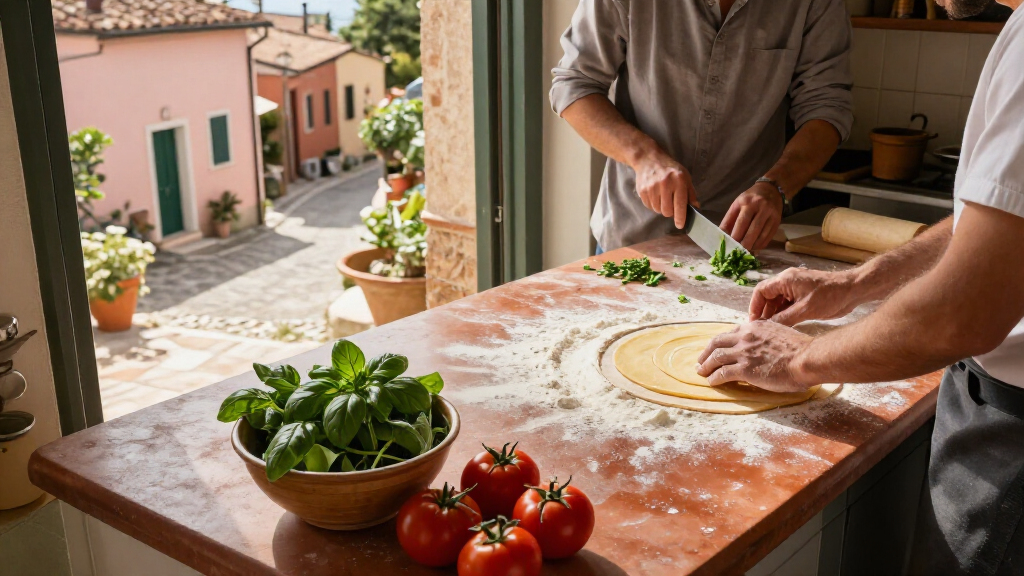
To make scacce ragusane at home, roll the dough evenly thin, use a modest amount of filling, and fold it into a sealed parcel before baking. These three choices help the center cook while the exterior turns golden and crisp. You don’t need a special machine; a rolling pin and a clear counter are enough for a first attempt.
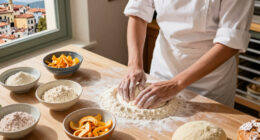
Make and rest the dough. Mix flour, water, salt, yeast, and a little olive oil if your recipe calls for it. Knead until smooth, then let the dough rise according to the recipe. Dough made with yeast needs time to relax and expand, so don’t rush the rest.
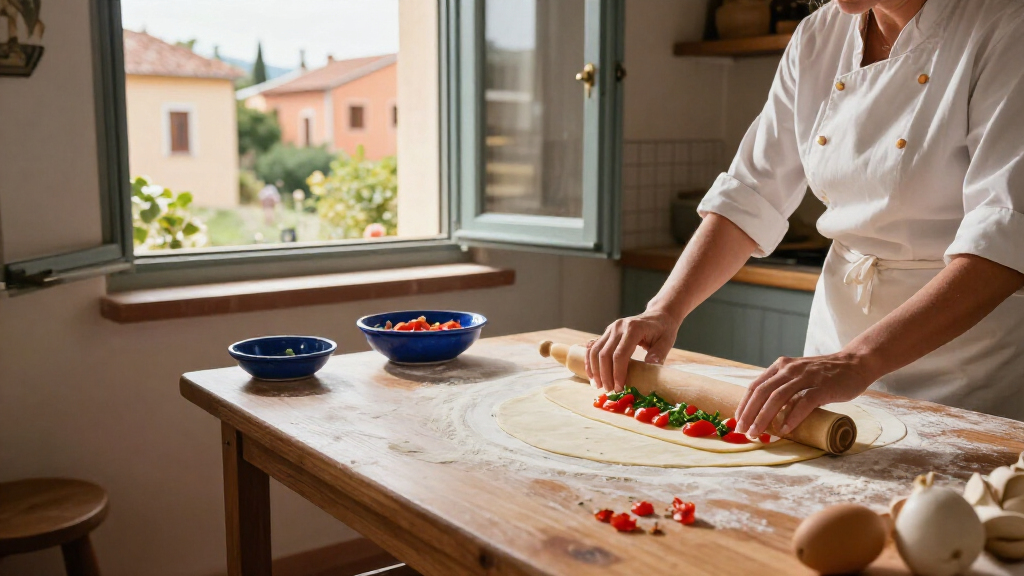
Roll a thin sheet. Lightly flour the counter and roll from the center outward. Aim for an even sheet rather than paper-thin edges and a thick middle. If one corner springs back, pause for a few minutes; the dough often becomes easier to roll after it relaxes.
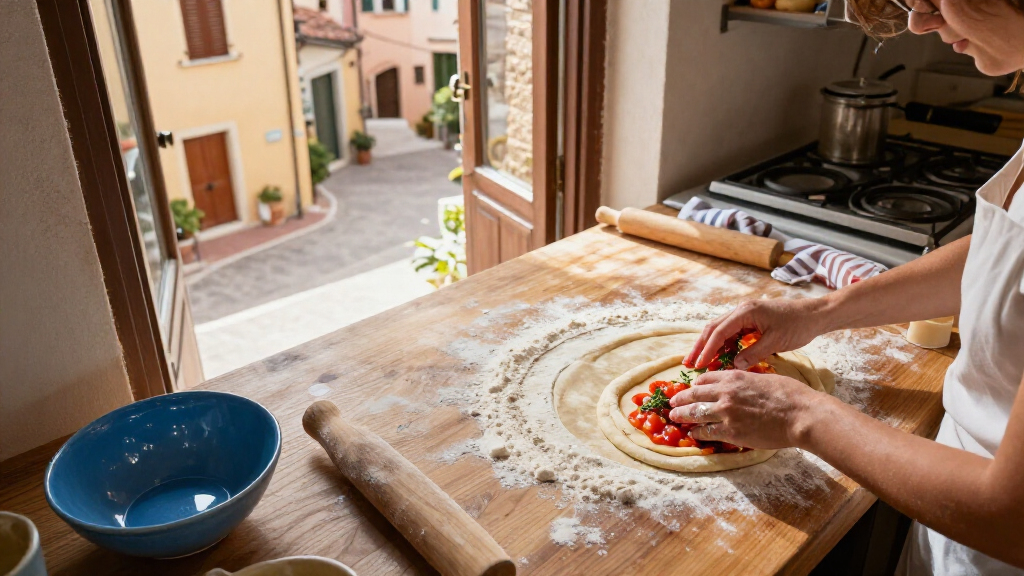
Spread a restrained filling. Use thick, cooled sauce and drained cheese or vegetables. Leave a border clear so you can seal the parcel without squeezing filling onto the edge.
Fold and seal. Fold the long sides over the filling in layers, then close the ends as your recipe directs. Press the seams gently. A tidy parcel helps the filling stay inside as it bakes.
Bake until browned. Follow your recipe’s oven temperature and timing, since dough thickness and oven behavior vary. Look for a browned surface and a hot filling; if the crust colors too quickly, check the oven and adjust the rack or time rather than adding more filling.
On your first try, make one smaller scaccia rather than dividing the whole counter’s worth of dough into many parcels. You’ll learn how thin your oven can bake the dough and how much sauce your chosen cheese can absorb. Keep raw dough and filling separate from ready-to-eat foods, and wash hands and utensils after handling raw sausage if you use it.
When should you serve scacce, and how do you keep leftovers crisp?
Scacce ragusane work as a snack, a light meal, picnic food, or antipasto because you can cut the baked parcel into hand-sized portions and serve it warm or at room temperature. Fresh from the oven, the crust gives a gentle crackle and the cheese stays soft; after cooling, the layers firm up and travel neatly. That change makes the dish useful for a relaxed lunch rather than only a sit-down dinner.
For a picnic, let the scaccia cool before wrapping it so trapped steam doesn’t soften the crust. Cut it into pieces once it has settled, and pack it in a clean container. If the filling contains fresh cheese, meat, or other perishable ingredients, don’t leave it sitting out for an extended stretch; keep it chilled until serving and return leftovers promptly to the refrigerator.
Store leftovers covered in the refrigerator, with the timing guided by the filling and its ingredients. Reheat pieces in an oven or toaster oven to restore some crispness; a microwave warms them quickly but tends to soften the folds. For instance, a slice reheated on a tray while you make a salad can regain a dry, browned edge without becoming brittle. Scacce are often good at room temperature, but that doesn’t remove the need for safe refrigeration when perishable fillings are involved.
If you’re planning a visit to Ragusa, look for scacce in the context of local bakeries and everyday meals rather than expecting one universal version. Towns and households differ, and a baker’s tomato-and-cheese fold may tell a different story from a family’s onion or ricotta filling. That’s part of the pleasure: order a piece, notice the layers, then use the shape as inspiration for your own kitchen.
What should you remember before calling a recipe ‘authentic’?
Scacce ragusane have no single filling or fold that represents every household, so a recipe is most useful when it names its local or family context. The dish is associated with Ragusa and the Val di Noto in southeastern Sicily, but the precise dough, cheese, and fillings vary by town and cook. A tomato-and-cheese recipe can be a classic choice without being the only legitimate one.
This matters when you adapt ingredients outside Sicily. If you can’t find caciocavallo, you can use another flavorful melting cheese; that substitution changes the taste, but it doesn’t erase the method or make the result dishonest. Likewise, seasonal vegetables make sense when you drain them well and respect how much moisture the thin dough can handle. A home cook in winter might use cooked greens, while a summer version might lean on tomato and herbs.
Regional food often travels through memory as much as measurement. Someone who learned to fold scacce beside a family member may use a different amount of oil or close the parcel in a different pattern from a bakery nearby. If you share your version, say what you used and where the recipe came from. That specificity gives readers a clearer picture than a sweeping promise of “the authentic Sicilian way.”
For a first bake, focus on what holds across variations: a thin dough sheet, an evenly distributed filling, careful folds, and enough baking to brown the crust and heat the center. Then adjust the cheese or vegetables to your taste. The next time you make it, you’ll have a better sense of which local detail you want to explore.
Frequently Asked Questions
What are scacce ragusane?
Scacce ragusane are thin Sicilian flatbreads associated with Ragusa in southeastern Sicily. Cooks spread a savory filling over the dough, fold it into layers, and bake it as a crisp, loaf-like parcel.
Are scacce the same as calzone?
No. Scacce are typically rolled thin and folded over filling in several layers, so the filling appears between folds. A calzone usually encloses filling in one folded pocket, while pizza keeps toppings on an open base.
What cheese can I use for scacce?
Caciocavallo and other local cheeses appear in Sicilian versions. Outside Sicily, choose a flavorful cheese that melts well; drain ricotta or other wet cheese before using it so it doesn’t make the dough soggy.
Can I make scacce without yeast?
Some recipes use little or no yeast, while others use yeast dough. Follow the method for the recipe you choose, since the dough’s resting and rolling behavior will vary.
How should I store and reheat leftover scacce?
Refrigerate leftovers in a covered container, especially when the filling includes fresh cheese or meat. Reheat pieces in an oven or toaster oven to bring back some crispness; a microwave warms them but softens the layers.
Are scacce ragusane vegetarian?
Many versions, including tomato-and-cheese or vegetable fillings, are vegetarian. Other local and family recipes use sausage, so check the filling and ingredients before serving.
Conclusion
Start your first scaccia with a thin dough sheet, a restrained tomato-and-cheese filling, and folds you can seal neatly. Bake until the crust is browned and the center is hot, then let it rest before slicing. Once you know how the layers behave, try a family-style variation with drained ricotta, onion, or seasonal vegetables. A good scaccia turns a few humble ingredients into a little edible map of Ragusa: crisp edges, warm folds, and Sicily in every slice.
While creating your own hummingbird nectar is effortless, the benefits for these tiny birds are profound. Discover the simple steps to ensure your feathered friends flourish.
In just a few simple steps, learn the secret to making sushi rice that’s perfectly sticky, flavorful, and restaurant-worthy. Continue reading to master this essential sushi technique.
With just two simple ingredients, create a tangy, versatile buttermilk that will elevate your baked goods, dressings, and more. Discover the full homemade buttermilk recipe now.
You’ll be delighted by the comforting flavors and delicate texture of homemade egg drop soup, a classic Chinese dish with a rich history that’s easy to whip up.