
Struffoli Practice: Naples' Honey-Ball Christmas Centerpiece
AIThis post was created with the assistance of artificial intelligence (AI).

TL;DR

Struffoli are small fried dough balls coated in honey and arranged as a mound or ring, a Christmas tradition closely associated with Naples and Campania. Cut the pieces evenly, fry them in uncrowded batches, and coat them with warm honey shortly before shaping; family recipes vary in dough, flavorings, and decorations.

A bowl of tiny golden dough balls can turn into the centerpiece of a Neapolitan Christmas table. Struffoli are crisp or tender fried bites coated in fragrant honey, piled into a mound or shaped into a ring, then scattered with colorful sprinkles and candied fruit. The kitchen fills with citrus and warm honey before anyone takes a bite. This Campanian tradition has no single official family formula. Some cooks add lemon zest, some use orange, and recipes differ in their choice of butter or lard, liqueur, and decorations. What stays recognizable is the small fried dough, honey coating, and festive shape. Here you’ll learn what struffoli are, how to fry them evenly, when to add the honey, and how to plan the work so your Christmas centerpiece is lovely to serve as well as look at.
At a glance
Struffoli: Naples’ Honey-Ball Christmas Centerpiece
Key insight
A Neapolitan struffoli centerpiece is held together by warm honey coating the fried dough balls, so a ring can be shaped around a glass or small bowl and the mold removed after the honey sets.
Key takeaways
1

Struffoli are small fried dough balls coated in honey and served as a Neapolitan and Campanian Christmas sweet.

2

Cut pieces to a similar size and fry in uncrowded batches for more even cooking.

3

Warm honey coats the dough and helps hold a mound or ring together; remove a glass mold after the honey sets.

4

Sprinkles called diavulilli , candied fruit, and sometimes nuts decorate the centerpiece; check for allergies before serving.

5

You can fry the dough ahead, but honey gradually softens it, so follow your recipe’s timing and storage guidance.

Step by step
1
How do you make evenly fried struffoli at home?
Struffoli turn out more evenly when you roll the dough into thin ropes, cut small pieces to a similar size, and fry them in batches.
Italian Christmas · Briefing

Struffoli Practice Naples’ Honey-Ball Centerpiece

These small fried dough balls become a festive mound or ring when warm honey coats and binds them. Even sizing and uncrowded batches help each bite cook consistently.

A family Christmas tradition

Struffoli are especially associated with Naples and Campania, where the shared platter is both decoration and dessert.

The classic

Fried dough and honey

Small golden pieces are coated in fragrant honey and arranged to share.

Family variation

No single formula

Dough, citrus or liqueur flavorings, and decorations vary by household.

Festive finish

Color and crunch

Diavulilli, candied fruit, and sometimes toasted nuts add personality.

Make the pieces cook evenly

Consistent size and room in the pan matter more than changing a family recipe.

1
Roll and cut

Shape thin ropes, then cut small pieces to a similar size.

2
Fry in batches

Avoid crowding so the oil keeps its heat and the pieces brown more evenly.

3
Drain and coat

Let the fried dough drain, then toss it in gently warmed honey.

Shape the centerpiece

Work while the honey is still pliable so the coated pieces hold together.

Ring
  • Pile coated struffoli around a glass or small bowl.
  • Lift the mold away once the honey sets.
Mound
  • Arrange the coated pieces in a festive pile.
  • Add sprinkles, candied fruit, or nuts.
Plan aheadFried dough can often be prepared ahead, but honey gradually softens it. Follow your recipe’s timing, and check for nut allergies before serving.

Keep the tradition recognizable

Flavorings and garnishes can change while the familiar fried dough, honey coating, and festive shape remain.

NaplesCampaniaCitrus zestFamily recipes
Key pointWarm honey binds the fried dough into the shared centerpiece; shape it while the coating is still workable.
The takeaway
Cut evenly, fry in uncrowded batches, and coat with warm honey shortly before shaping your Christmas struffoli.
Before you orderOffer from Amazon

Get kitchen staples and gadgets delivered free with Prime

  • Fast, free delivery on millions of items
  • Prime Video, Amazon Music and more included
  • Member-only deals all year
Start your free Prime trial Free trial for eligible customers · Cancel anytime
As an affiliate, we earn on qualifying purchases.

What makes struffoli a Neapolitan Christmas centerpiece?

Struffoli are small, fried balls of dough coated in honey and traditionally arranged in a mound or ring. They are especially associated with Christmas cooking in Naples and Campania, where the platter often sits in the middle of a family gathering. The combination is simple: crisp, golden bites, fragrant honey, and bright decorations. The presentation makes an everyday-sized piece of dough feel like a feast. Families keep their own proportions and finishing touches, so one household’s version may be more citrusy while another leans on candied fruit. Those differences matter because the dessert is also a way to carry family preference and memory forward: the familiar centerpiece can feel like home even when the details shift. Picture a Christmas table after the main meal: a ring of struffoli circles a glass, with red and green sprinkles catching the light. Guests pull off a piece at a time, and the honey gives the little balls just enough grip to stay together. That shared serving style makes the platter both decoration and dessert. Related fried-dough-and-honey sweets appear elsewhere in southern Italy, but names and customs vary by place. Struffoli are not a universal label for every honey-coated pastry. The name’s origins are also uncertain; explanations often connect it to words for rubbing or shaping dough, but no single account should be treated as settled fact. That uncertainty doesn’t make the dessert less rooted in Naples. It’s a tradition you can learn by making, sharing, and adapting it at home.

Products Worth Considering

As an affiliate, we earn on qualifying purchases.

How do you make evenly fried struffoli at home?

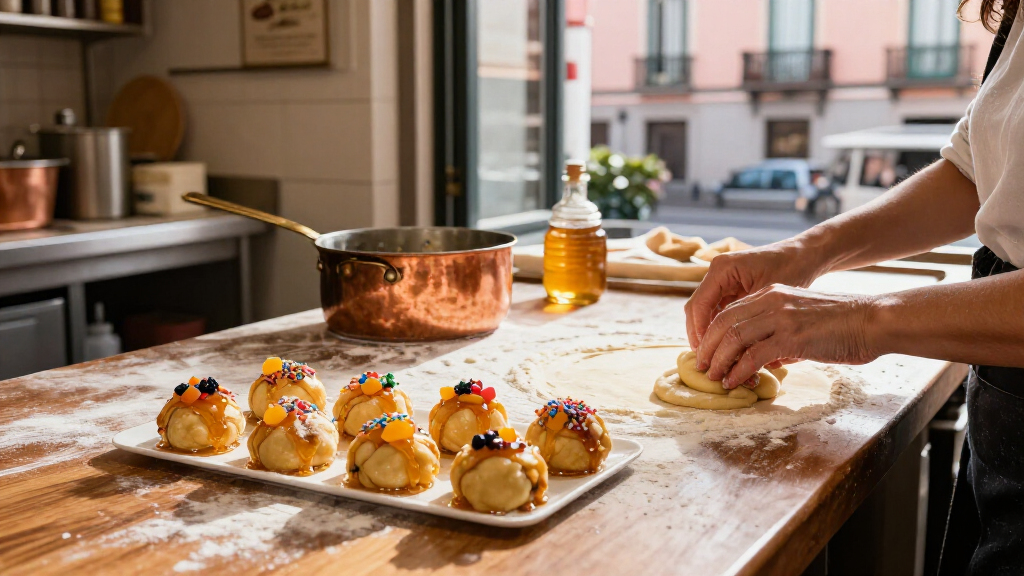
Struffoli turn out more evenly when you roll the dough into thin ropes, cut small pieces to a similar size, and fry them in batches. Those three habits matter more than owning a special tool: small, uniform pieces cook at a similar pace, while a crowded pan cools the oil and browns the dough unevenly. A home cook making a first batch can work one rope at a time and keep the cut pieces on a lightly floured tray.
  1. Mix a simple dough from flour, eggs, a little sugar, fat such as butter or lard, and flavorings such as citrus zest or liqueur. Follow a trusted recipe for exact quantities.
  2. Roll the dough into thin ropes, then cut them into small, even pieces. Keep them close in size so the centers cook before the outsides turn too dark.
  3. Fry a small test batch in hot oil, then continue in uncrowded batches. Let the pieces drain before you coat them.
  4. Warm honey gently, toss the fried pieces until coated, and arrange them as a mound or ring while the honey is still workable.
  5. Add sprinkles, candied fruit, or toasted nuts, then let the shape settle before serving.
For a family kitchen, a slotted spoon and a thermometer can make frying easier to manage. If your oil temperature drops sharply after adding dough, pause before the next batch. The correct frying temperature depends on the recipe and equipment, so use its temperature guidance instead of guessing. Hot oil can cause serious burns; keep water away from the pan and never leave it unattended.

Why does size matter more than fancy dough?

Small, evenly cut struffoli fry more consistently than large or irregular pieces. A piece that is twice as thick as its neighbor may brown on the outside while its center still feels doughy, and a crowded batch can turn greasy when the oil loses heat. This is why size is a useful first adjustment: it makes cooking more predictable without asking you to change a family dough recipe. The craft is in the repetition: roll, cut, fry, and adjust until each bite has a fine golden surface. The dough itself can vary. Recipes commonly combine flour, eggs, fat such as butter or lard, a little sugar, and flavorings such as lemon or orange zest; some include liqueur. That flexibility is part of the tradition, not a flaw to correct. Fat and flavorings influence richness and aroma, but they cannot compensate for uneven pieces or inconsistent frying. If you want a fragrant first batch, try the citrus zest your recipe calls for and keep the pieces small. A strong liqueur note can be pleasant, but it should support the honey rather than cover it. Try a short test fry before committing the whole tray. Cut a few pieces and see whether they cook through at the size you’ve chosen; then adjust the remaining pieces if needed. If your first struffoli seem hard, check whether the dough was very firm or the pieces too large. If they seem greasy, look at batch size and oil heat. These clues point to different problems, so changing one factor at a time helps you learn what your own stove and recipe need without losing track of what improved the result.

How do honey and decorations hold the whole platter together?

Warm honey coats struffoli and helps them stick into a mound or ring. This coating does more than add sweetness: it binds individual bites into a centerpiece, which is why its temperature and timing affect both shaping and eating. It also carries the flavor: golden dough becomes glossy, fragrant, and sweet, while citrus peel can add a fresh note. Heat the honey gently according to your recipe; a hard boil can make it difficult to handle and may change the finished texture. You want it loose enough to coat, not bubbling aggressively. To make a ring, set a small glass or bowl in the middle of your serving platter and pile the coated balls around it. Once the honey has set enough to hold the shape, lift the glass away. A mound is simpler if you’d rather skip the mold. In either case, work while the honey remains pliable. The tradeoff is between control and speed: shaping promptly makes an orderly ring easier, while a mound asks less precision. Waiting too long can make arranging the centerpiece a sticky wrestling match. Decorations show each household’s personality. Colorful sugar sprinkles, often called diavulilli in Neapolitan usage, bring a bright crunch; candied fruit adds jewel-like color and chewy sweetness, and some versions include toasted nuts. Their colors and textures make the platter festive, but toppings also affect who can comfortably share it. If you’re serving guests, ask about allergies before adding nuts, and flag likely allergens such as wheat, eggs, and dairy in the dough. Put extra decorations on the table so people can choose their own finishing touch.

How should you plan the work and serve struffoli?

You can prepare the fried dough ahead and coat it with honey closer to serving, because the honey gradually softens the pieces. That timing lets you spread the cooking across a busy holiday afternoon while keeping more texture in each bite. It also gives you a choice: coating earlier creates a more unified, tender centerpiece, while coating nearer to serving preserves more of the fried edges. Exact make-ahead windows vary by recipe, so treat the instructions you’re following as your guide rather than assuming every batch keeps the same way. For example, you might fry the pieces earlier in the day, store them as your recipe directs, and warm the honey before guests arrive. Arrange the platter once the coating is ready, then set it out after the meal. A crisp-edged piece straight from the platter has a different bite from one that has rested in honey for hours; neither is automatically wrong. Decide whether you prefer more crunch or a softer, more unified centerpiece, and time the coating to suit that preference. Serve struffoli at cool room temperature and keep leftovers covered. Their ingredients and handling affect safe storage, so follow the recipe’s storage guidance and avoid leaving them out longer than it recommends. Refrigeration can alter texture, and there isn’t one guaranteed shelf life for every version. For a table with children or guests who avoid alcohol, choose a recipe without liqueur or make a separate batch. The honey ring is meant for sharing, but you can also portion a small mound onto dessert plates to make serving simpler.

What changes can you make while keeping the tradition recognizable?

You can vary the flavor, shape, or serving size while keeping the familiar fried dough and honey coating at the heart of struffoli. A smaller ring creates manageable portions for a dinner party, and individual cups reduce sticky fingers at a crowded table. These adjustments help fit the dessert to the occasion while keeping its recognizable base. They are practical adaptations, not evidence that the Neapolitan Christmas custom has one modern replacement or a newly fixed style. Citrus zest is an easy place to begin. If your family likes a brighter aroma, use the zest specified in your recipe; if you prefer a warmer finish, keep the honey and decorations traditional. Chocolate or different garnishes can also be experiments, but the result will taste different from a classic honey-centered platter. The tradeoff is familiarity for novelty: a new topping may delight some guests while making the dessert less like the one others expect. Try a small portion first, especially when you’re cooking for relatives who expect the familiar holiday dessert. Baking instead of frying is another possible adaptation, but it changes the texture and isn’t the traditional method. Related sweets such as pignolata and cicerchiata also share the broad idea of little fried dough pieces, yet regional names, shapes, coatings, and customs differ. If you see one on a trip through southern Italy, ask how that local family or bakery makes it. The details are part of the pleasure: the same idea can take a different shape from one place to the next.

Frequently Asked Questions

Are struffoli specifically Neapolitan?

Struffoli are especially identified with Naples and Campania, where they are closely associated with Christmas. Related fried-dough-and-honey sweets appear in other parts of southern Italy, though names and local customs vary.

When do people eat struffoli?

They are most commonly served at Christmas, often as a centerpiece dessert for sharing. Families may bring them to holiday gatherings or set a ring or mound at the center of the dessert table.

Why did my struffoli turn out hard or greasy?

Large or uneven pieces may brown outside before cooking through, while overcrowding can cool the oil and leave the dough greasy. Check the dough texture, cut pieces evenly, and fry in batches using your recipe’s temperature guidance.

Can I make struffoli ahead?

You can often fry the dough ahead and coat it with honey closer to serving. Honey softens the fried pieces over time, so follow your recipe’s make-ahead advice and choose a timing that suits the texture you like.

How should I store leftover struffoli?

Keep them covered and follow the storage guidance for your particular recipe. Ingredient choices and handling affect how long they keep, and refrigeration can change their texture.

What are the colorful sprinkles on struffoli called?

In Neapolitan usage, the small sugar sprinkles are often called diavulilli. Candied fruit and sometimes toasted nuts are also common decorations.

Are struffoli the same as pignolata or cicerchiata?

They are related fried-dough sweets, but the names, shapes, coatings, and customs vary by region. The terms shouldn’t be treated as interchangeable everywhere.

Conclusion

Treat struffoli as a rhythm: small even cuts, steady batches, warm honey, and a little patience while the ring sets. Those choices give you a centerpiece with crisp golden edges, a honeyed shine, and decorations that make it unmistakably yours. Set the platter in the middle of the table, then let everyone pull away a sweet, sticky piece of Naples.
You May Also Like

Berry Crostata With Vanilla Ice Cream: a Delicious Summer Dessert

Awaken your taste buds with the irresistible pairing of sweet berries and flaky pastry in a berry crostata served with velvety vanilla ice cream.

Brown Butter Butterscotch Blondies: A Rich and Decadent Dessert

Uncover the secret to ultimate indulgence with Brown Butter Butterscotch Blondies, a luxurious treat that will elevate your baking game to new heights.

Cool Off This Summer with the Ninja CREAMi Deluxe Ice Cream Maker

Enjoy homemade frozen treats all summer long with the Ninja CREAMi Deluxe, featuring 11 programs, large capacity, and dietary flexibility.

MM Mudslide Cookies: A Chocolate Lover's Dream

Savor the exquisite blend of cocoa, chocolate chips, and walnuts in MM Mudslide Cookies – a sinful treat that will redefine your love for chocolate.