
TL;DR
Bigoli in salsa is a classic Venetian pasta dish pairing thick, rough-surfaced noodles with slowly cooked onions and salt-cured anchovies or sardines. Sweet onions soften the fish’s salinity, while pasta water helps the sauce cling; dried bigoli or another sturdy, ridged pasta can stand in when fresh noodles and a bigolaro are unavailable.
The first thing you notice about bigoli in salsa is not a blast of fish. It is the smell of onions collapsing slowly in a pan, sweet and warm, before salt-cured fish melts into them. Then the sauce catches on thick noodles, and every forkful tastes savory, mellow, and unmistakably Venetian.

Get kitchen staples and gadgets delivered free with Prime
- Fast, free delivery on millions of items
- Prime Video, Amazon Music and more included
- Member-only deals all year
This is a dish from Venice, in the Veneto region, where cooks made satisfying meals from a few ingredients that kept well. The name means “bigoli in sauce”: bigoli are substantial pasta strands, and salsa here means a sauce of onions and preserved fish. You’ll see the dish described as wheat anchovy pasta, though some recipes use sardines, and the noodles are not always entirely whole wheat.
Knowing those variations makes the dish easier to cook well. You’ll learn what makes the pasta distinctive, how to balance the sauce, what to buy when a bigolaro is out of reach, and why this meatless Venetian classic appears on days such as Good Friday. You can make a version at home with grocery-store ingredients, then order it in Venice with a better idea of what belongs on your plate.
Bigoli in salsa pairs thick, rough pasta with slowly cooked onions and preserved fish.
The sauce should taste savory and balanced; soft, sweet onions temper the fish’s salt.
Recipes vary: cooks may use anchovies or sardines, and the pasta may be whole wheat, mixed flour, or contain egg.
Dried bigoli or thick pasta such as bucatini can work when a bigolaro or fresh bigoli is unavailable.
The dish is meatless but not vegetarian, and it contains fish; check pasta labels for wheat and egg.
Bigoli in Salsa Venice’s Onion and Fish Pasta
Thick, rough-surfaced noodles carry a savory sauce of slow-cooked onions and preserved fish. Sweet onions soften the fish’s salt, making a simple pantry meal distinctly Venetian.
The balance that defines the dish
The sauce should taste mellow and savory, not sharply fishy.
- Cook gently until soft
- Temper the fish’s salt
- Anchovies or sardines
- Melts into the sauce
What makes bigoli distinctive
The thick, coarse strands give the soft onion sauce plenty to cling to.
Thick and rustic
Bigoli are often whole wheat, but flour blends and egg versions are also used.
Pressed into shape
A bigolaro extrudes dough into substantial strands.
Onion and fish
Here, salsa means a slow-cooked mixture of onions and preserved fish, without tomato or cream.
Make a balanced bowl
Let the onions soften first, then bring the sauce and sturdy pasta together.
Thin slices soften evenly.
Stir over low heat until soft and sweet; add a splash of water if needed.
Use prepared sardines or anchovies and taste before adding salt.
Reserve pasta water before draining.
Toss pasta with the sauce and a little pasta water so it clings.
Flexible ingredients, clear identity
Household and restaurant versions vary while keeping the traditional pairing.
| Choice | What to know |
|---|---|
| Fish | Anchovies are common; some Venetian versions use salt-cured sardines. |
| Pasta | Dried bigoli or thick, rough pasta such as bucatini can stand in. |
| Flour | Whole wheat is common, but blends and egg pasta are also used. |
A Venetian pantry dish
Bigoli in salsa is associated with Venice’s cucina povera and is often served on Good Friday and other meatless days.
What makes bigoli in salsa taste unmistakably Venetian?
Bigoli in salsa is a classic Venetian pasta dish made with thick, rough-surfaced noodles and a savory sauce of slow-cooked onions and preserved fish. The onions bring sweetness, the fish brings concentrated salt and savor, and the pasta gives both a substantial base. A good bowl tastes balanced and rounded, not sharply fishy or slick with oil.
The dish belongs to Venice’s cucina povera, or “resourceful cooking,” where durable pantry ingredients could become a filling meal. In a maritime trading city, salted fish made practical sense when fresh food was less dependable. Onions, which soften and sweeten with patient cooking, make that powerful fish gentler. You can think of the sauce as a small tug-of-war: the onion pulls the salt toward sweetness, while the fish gives the whole dish its backbone.
That balance explains why tomato and cream are not needed. The sauce is not meant to be bright and red or heavy and silky; it should be soft, savory, and clinging. Imagine a cold evening at a kitchen table in Venice: a bowl of pasta, a little seasonal vegetable on the side, and enough sauce to coat each strand without pooling at the bottom.
The dish is also a reminder that “meatless” does not mean vegetarian. Anchovies and sardines are fish, so ask about the sauce if you’re avoiding animal products. In a restaurant, a useful question is whether the kitchen uses anchovies, sardines, or both, because that choice changes the saltiness and flavor.
Products Worth Considering

Dyson V8 Cyclone Cordless Vacuum

Philips Hue Festavia 130-Foot Indoor/Outdoor Smart String Lights, 500 LEDs

Google Nest Smart Thermostat, Charcoal
As an affiliate, we earn on qualifying purchases.
How bigoli’s rough strands hold onto the sauce
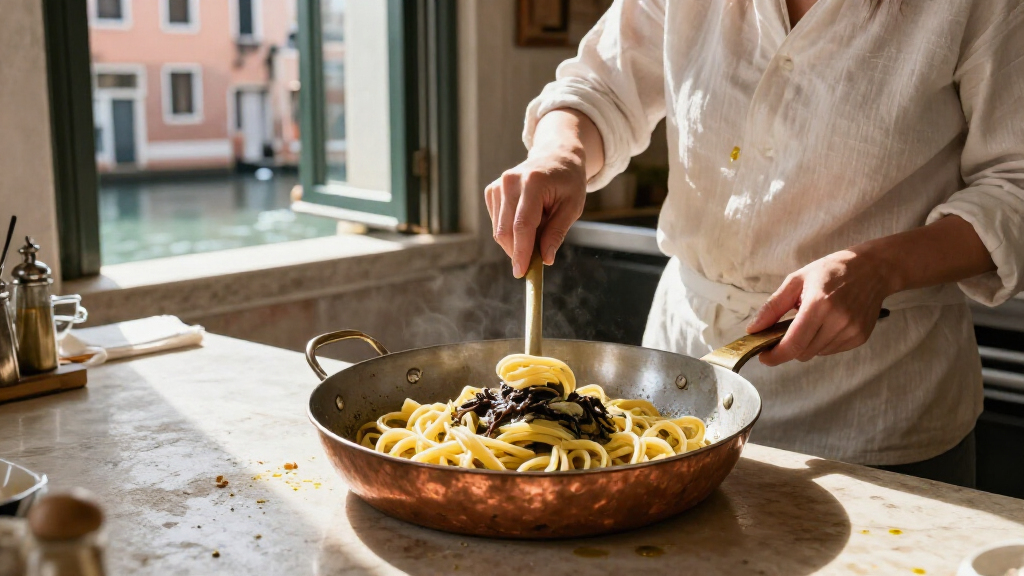
Bigoli are long, thick noodles traditionally made from whole-wheat flour and water, though some versions include egg or use a blend of flours. Their substantial shape and coarse surface help onion-and-fish sauce cling. The phrase “made with thick, surfaced noodles and” points to the dish’s central pairing: a sturdy pasta that can carry a sauce with no tomato or cream to thicken it.
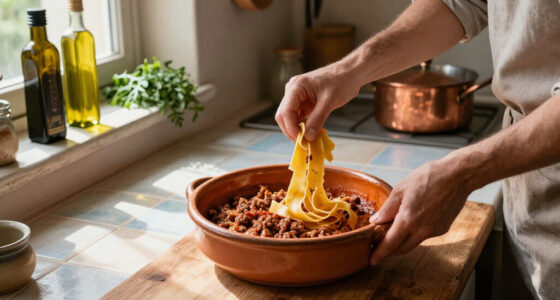
Traditional bigoli are pressed through a tool called a bigolaro, which extrudes dough into thick strands. The result is more rustic than smooth, fine pasta. Think of the difference between a polished drinking straw and a piece of ridged rope: the rougher strand offers more places for a soft onion sauce to catch. If you visit a pasta shop in the Veneto, ask whether the bigoli are whole wheat, mixed flour, or egg pasta; the label can vary.
At home, you don’t need to buy special equipment to get close. Dried bigoli are a useful choice when available. Otherwise, choose a thick pasta with some texture, such as bucatini; it won’t have exactly the same heft or surface, but it can still carry the sauce. A smooth, delicate strand is less satisfying here, especially if the onions are soft and the fish has dissolved into them.
Keep in mind that whole wheat is a useful shorthand, not an absolute rule. If you serve the dish to someone who expects an earthy whole-grain flavor, check the pasta package first. A mixed-flour version may taste milder, while whole-wheat strands have a deeper, nuttier flavor that stands up well to sardines.
Why slow onions make the fish taste mellow
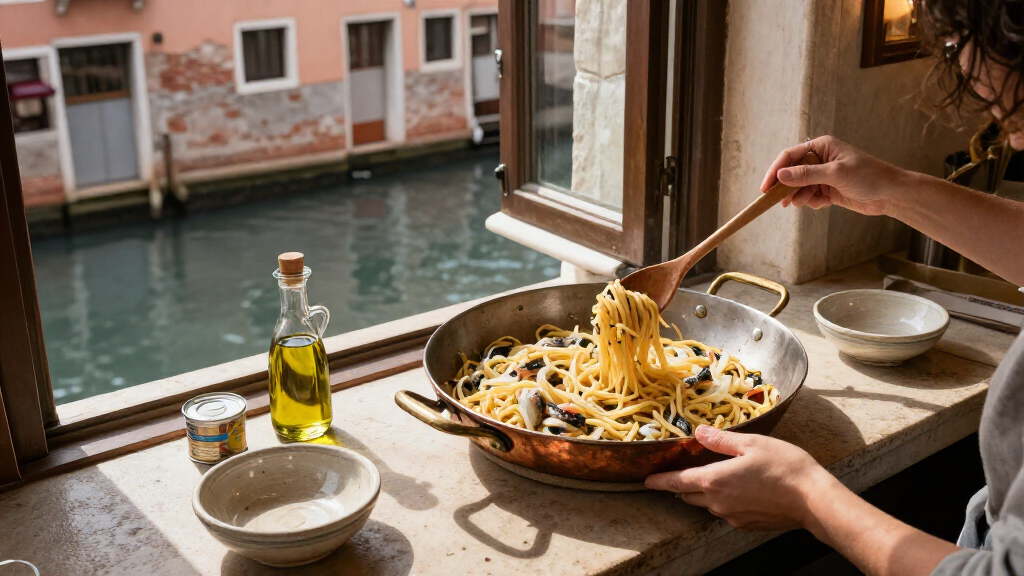
Slow-cooked onions balance the fish by becoming soft and sweet before the preserved fish is stirred in. The fish then melts into the onion rather than sitting in large, briny pieces. This is why the sauce tastes deeply savory when it is made well, but not like a mouthful of anchovy.
Give the onions time over gentle heat. If they brown too quickly, their sweetness turns sharp and the sauce can taste harsh beside the salt-cured fish. At home, you might start the onions while you bring a pot of water to a boil, then keep them moving in the pan as the kitchen fills with a warm, sweet smell. If the pan looks dry, add a small splash of water and lower the heat.
The type of fish matters, too. Salt-cured sardines appear in traditional Venetian versions, while anchovies are familiar and easier to find in many places. Salt-packed fish and anchovies packed in oil can differ noticeably in intensity. Drain or prepare the fish according to its packaging, and wait to add extra salt until the sauce has met the pasta.
A practical test: taste an onion strand with a little fish before you season the whole pan. If it is already pleasantly savory, let the pasta do the rest. Pasta water contributes both starch and salt, and a final handful of grated cheese can add more salt again. This is a dish where a cautious pinch at the end often beats a confident one at the beginning.
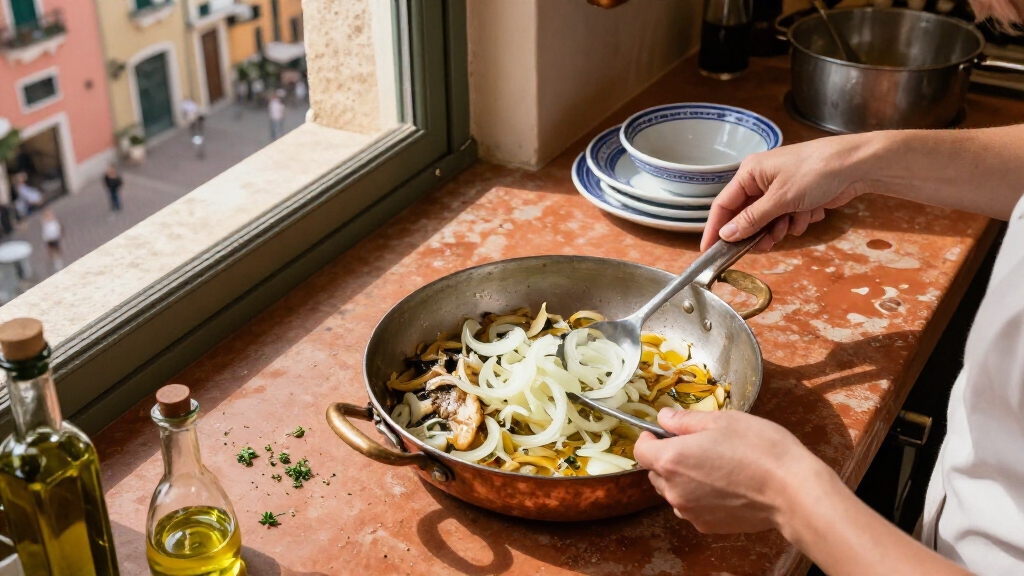
Cook a balanced bowl with these five practical steps
To make bigoli in salsa at home, cook the onions until very soft, blend in prepared anchovies or sardines, boil sturdy pasta, and finish the two together with pasta water. That sequence gives sweetness time to develop and lets the sauce coat the noodles. The method works with dried bigoli or a thick substitute such as bucatini.
- Slice the onions thinly. Thin slices soften evenly. For two people, start with two medium onions; they will shrink as they cook.
- Cook them gently. Set a pan over low heat and stir now and then until the onions are soft and sweet. Don’t rush them to deep brown. Add a spoonful of water if they begin sticking.
- Add the fish. Stir in prepared salt-cured sardines or anchovies, or drained anchovies packed in oil. Let the fish soften into the onions. Taste before adding any salt.
- Boil the pasta. Follow the package directions and reserve a mug of pasta water before draining. Use a food thermometer or the package’s storage guidance for leftovers; don’t leave cooked pasta sitting at room temperature for more than two hours.
- Bring it together. Toss the pasta into the pan with a splash of pasta water. Add just enough to make the sauce glossy and cling to the noodles, then taste again.
For a simple dinner, put the pan on the table and serve with a green salad or seasonal vegetables. The contrast is useful: crisp leaves or lightly cooked greens cut through the dish’s salty richness. If you’re cooking for a guest who avoids fish, make a separate pasta rather than trying to pick the anchovies back out; they dissolve into the sauce.
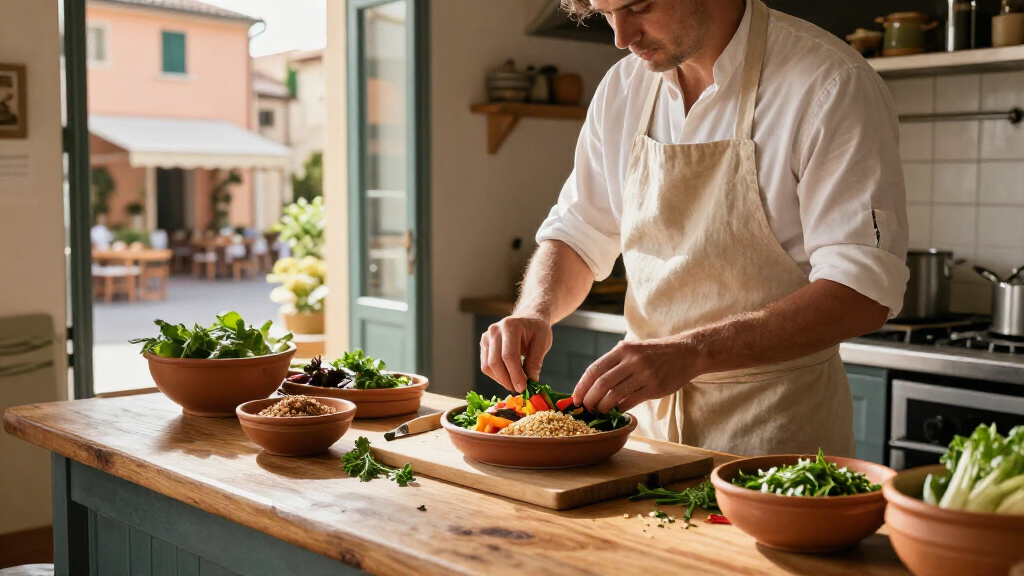
Choose the fish and pasta that suit your pantry
Anchovies and sardines both belong in the conversation, but they create different versions of the dish. Salt-cured sardines can bring a more traditional Venetian character; anchovies are often easier to locate and can be convenient for a weeknight. Pasta varies too: you may find whole-wheat bigoli, mixed-flour strands, or versions made with egg. No single ingredient list captures every household tradition.
| Choice | What it brings | Practical note |
|---|---|---|
| Salt-cured sardines | A strong, traditional preserved-fish flavor | Prepare as directed and taste before salting |
| Anchovies | A concentrated savory base that melts into onions | Oil-packed anchovies are widely available |
| Fresh or dried bigoli | The dish’s characteristic thick, substantial strand | Check flour and egg details on the package |
| Bucatini | A sturdy stand-in with a different shape | Useful when you cannot find bigoli or a bigolaro |
Suppose you’re in a grocery store far from the Veneto and the pasta shelf has no bigoli. A rough-surfaced, thick noodle is a better stand-in than a delicate spaghetti, because it gives the soft sauce more to hold. If the only option is smooth bucatini, the dish can still work; expect a looser coating and let the pasta water help bind it.
Salt levels depend on the fish, the pasta water, and any cheese you choose to add. The table is a guide to flavor and convenience, not a ranking of authenticity. If you want to learn the local variation on a trip, ask a Venetian cook or restaurant what they use and how they prepare it.
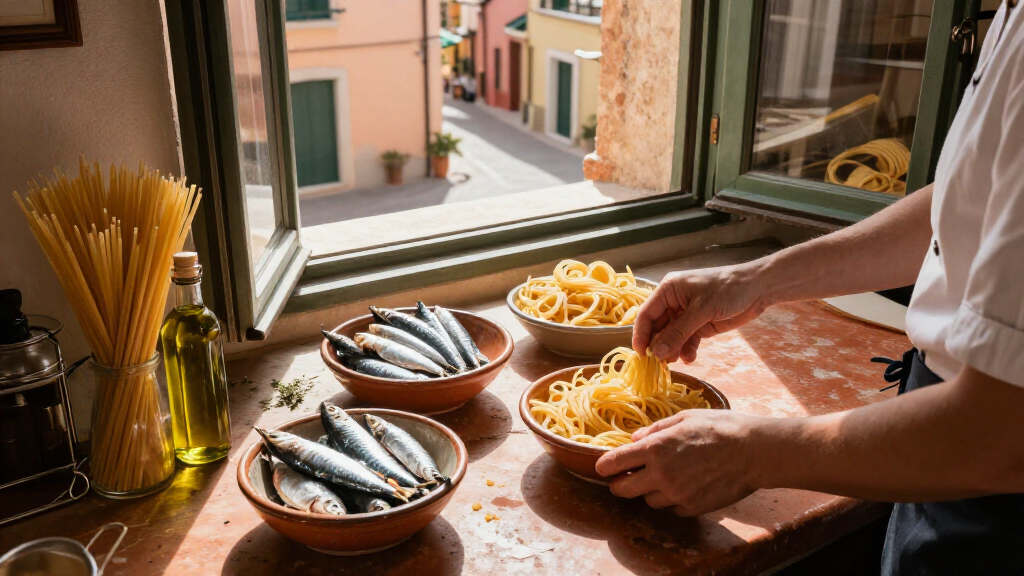
Serve it on a meatless day or plan a Venice meal
Bigoli in salsa is often served on Good Friday and other meatless days, and it also appears in connection with Venetian feast days, including the Festa del Redentore. Preserved fish made the dish practical, while its satisfying noodles and onions made it a meal rather than a small side. “Meatless” here describes the absence of meat; the dish still contains fish.
If you are in Venice, look for the dish on a seasonal menu and ask which fish the kitchen uses. A bowl made with sardines may taste more assertive than one made with oil-packed anchovies. You could plan lunch around a walk through the historic center, then keep dinner light with grilled vegetables or a salad. The pasta itself brings enough salt and richness to feel complete.
At home, the same meal works especially well on a cool evening when you want pantry cooking with a strong sense of place. Serve it as soon as the sauce clings to the noodles; it can thicken as it stands. If you’re preparing dinner for a mixed group, label it clearly as containing fish and check for pasta ingredients such as egg or wheat.
The pasta contains wheat, and some bigoli also contain egg; anchovies and sardines are fish allergens. Check labels and tell guests what is in the dish. Refrigerate leftovers promptly in a covered container and reheat until steaming hot, loosening the sauce with a splash of water if it has tightened in the fridge.
Frequently Asked Questions
Is bigoli in salsa made with anchovies or sardines?
Both appear in Venetian recipes. Salt-cured sardines are a traditional choice in some versions, while anchovies are common and easier to find elsewhere. Ask which fish is used if you’re ordering it in Venice.
Does bigoli in salsa taste strongly of fish?
It should taste savory and salty, but slowly cooked onions soften the fish’s intensity. The fish usually dissolves into the sauce rather than remaining in large pieces. If the sauce tastes harsh, it may need more soft onion or pasta water.
Is bigoli always whole wheat?
No. Bigoli are often described as whole-wheat pasta, but flour blends and egg versions also exist. Check the package if you want a particular texture or need to avoid egg.
Can I make bigoli in salsa without a bigolaro?
Yes. Use dried bigoli if you can find them, or choose a thick pasta such as bucatini. The shape and surface will differ, but the onion-and-fish sauce still works well with a sturdy noodle.
Is bigoli in salsa vegetarian?
No. Anchovies and sardines are fish, even though the dish is traditionally served on meatless days. It also commonly contains wheat, and some pasta contains egg, so check ingredients for guests with allergies.
How do I keep the sauce from becoming too salty?
Prepare salt-cured fish as directed, drain it well, and hold off on extra salt until the pasta and sauce are combined. Taste before adding cheese or seasoning, since both the fish and pasta water can contribute plenty of salt.
Conclusion
Remember the dish by its balance: sweet onions, savory preserved fish, and thick pasta that holds them together. Cook the onions slowly, add salt only after tasting, and use a splash of pasta water to bring the sauce onto every strand.
Then set a bowl on the table, add something crisp and green beside it, and let Venice arrive through the smell of onions softening in the pan.