TL;DR

Get kitchen staples and gadgets delivered free with Prime
- Fast, free delivery on millions of items
- Prime Video, Amazon Music and more included
- Member-only deals all year
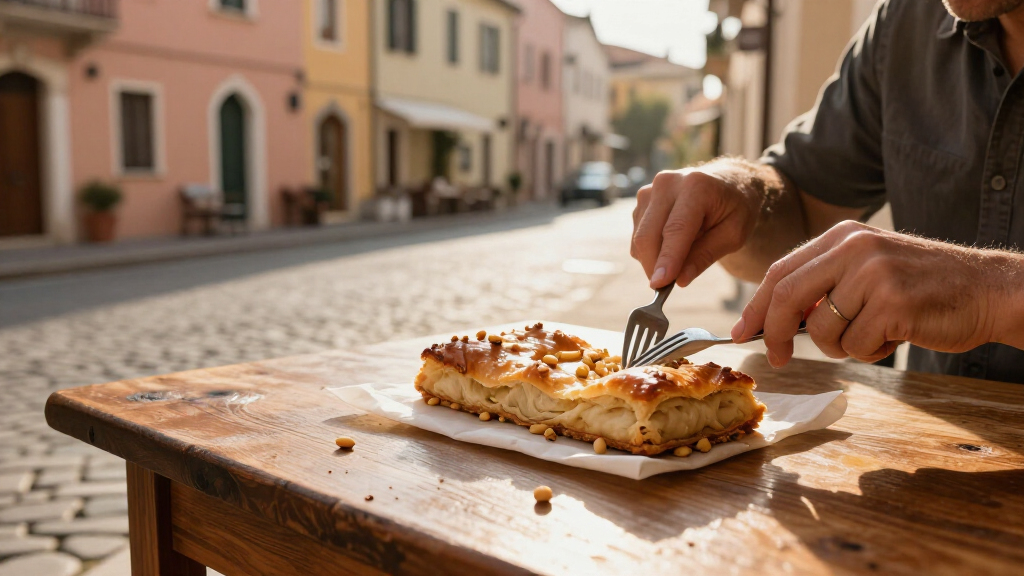
Torta della nonna (literally ‘grandmother’s cake’) is a classic Italian dessert consisting of a crisp pasta frolla shell filled with lemon-scented crema pasticcera (pastry cream), topped with pine nuts and powdered sugar. It is strongly associated with Tuscany — Florence and Arezzo in particular — though its exact origin is disputed, with one account crediting Florentine chef Guido Samorini. It keeps well, serves at room temperature, and refrigerates for two to three days.
The dessert menu at a Florentine trattoria is usually short. Tiramisù, maybe panna cotta, gelato if you’re lucky. And then, almost always, a pale golden tart scattered with pine nuts and dusted with powdered sugar: torta della nonna, literally grandmother’s cake.
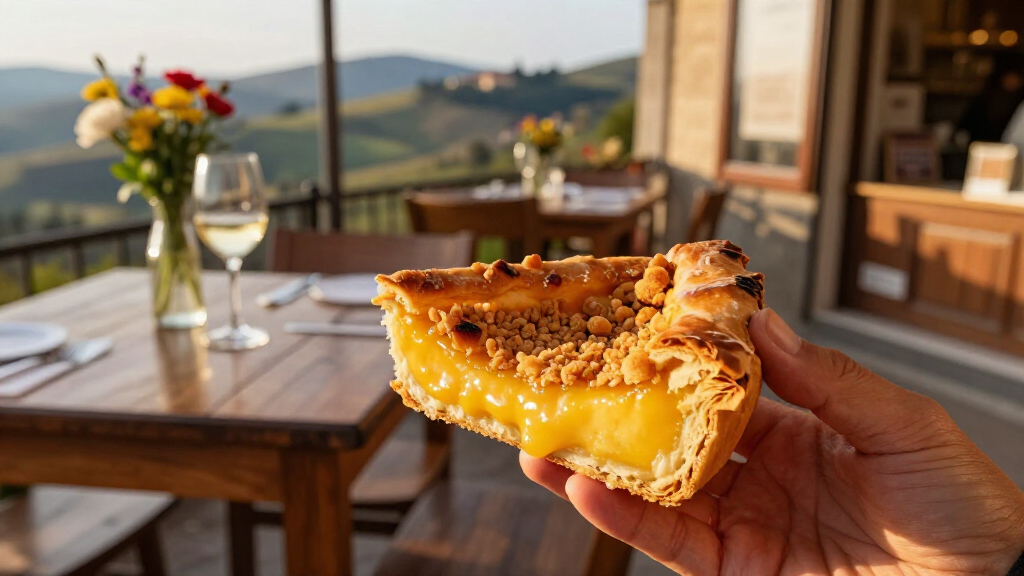
It looks humble. That’s the point. Under the powdered sugar there’s a shell of pasta frolla — Italy’s tender, crumbly shortcrust pastry — wrapped around crema pasticcera, a lemon-scented custard, with a layer of toasted pine nuts on top. Crisp, silky, nutty, faintly citrus. It’s a study in contrasts that has earned it a permanent spot on Tuscan menus.
In this article you’ll learn where the tart actually comes from (the story is murkier than the name suggests), how the versions differ, what goes into a good one, and how to make it at home without soggy pastry, lumpy custard, or burnt pine nuts.
Torta della nonna is a Tuscan-associated classic — likely popularized by Florentine chef Guido Samorini in the 20th century — not a documented centuries-old re…
Both the enclosed (two-crust) and open versions are equally traditional; choose enclosed for transport and make-ahead, open for same-day elegance.
Chill the pasta frolla twice, use cold thickened custard, and bake until the base is golden to prevent the two classic failures: tough pastry and a soggy botto…
Soak pine nuts briefly in water or tent with foil to prevent burning — they darken in a matter of minutes near the end of baking.
Refrigerate the tart at 40°F (4°C) or below and eat within two to three days; dust with powdered sugar only just before serving.
Tuscan Dessert Guide · Classic Italian Baking
Torta della Nonna: The Custard-and-Pine-Nut Tart Every Trattoria Serves
Crisp pasta frolla wrapped around lemon-scented crema pasticcera, finished with toasted pine nuts and a snowfall of powdered sugar. Humble on purpose — and a permanent fixture on Tuscan dessert menus.
Key Insight
“The most repeated origin story credits Florentine chef Guido Samorini — making this a 20th-century creation, not a documented centuries-old recipe.”
Origin: Florence, Tuscany (disputed)
01 · Anatomy
What Torta della Nonna Actually Is — In One Bite
Three elements working in tension: a buttery pastry shell, a soft egg-yolk custard, and a crunchy pine-nut topping. Each layer exists to offset the others — remove one and the dessert collapses into something generic. That interdependence is why the recipe has barely needed to change.
Pasta Frolla
Italy’s tender shortcrust: flour, butter, sugar, egg. Closer to a French pâte sablée than a flaky pie crust — it melts on the tongue rather than snapping. Chill twice to avoid tough pastry.
Crema Pasticcera
Pastry cream of milk, egg yolks, sugar, and starch, almost always perfumed with fresh lemon zest. The citrus does real structural work, cutting through the butter’s richness.
Pine Nuts & Zucchero
Not optional garnish — the tart’s visual and textural signature. Toasted nuts supply the one thing pastry and custard can’t: bite and resinous sweetness. Powdered sugar goes on only after cooling.
02 · History
The Origin Story Nobody Can Quite Prove
“Every trattoria” is affectionate hyperbole — and so is “centuries-old family recipe.” The honest answer: the tart is strongly associated with Tuscany, especially Florence and Arezzo, but no one can prove a documented history beyond living memory.
The Samorini Account
Most widely repeatedFlorentine restaurateur and chef Guido Samorini reportedly created the tart in the 20th century when diners kept asking for a new dessert. If true, the “grandmother’s cake” was new within a generation — a familiar pattern in Italian food history.
The Household Recipe
Partly true, tooHome cooks may already have been making similar custard tarts under different names; Samorini likely codified and popularized the version that spread through Tuscan restaurants. The name itself — “grandmother’s cake” — is branding before branding was a word.
Practical Takeaway
Call it a Tuscan-associated classic
Claim a farmhouse birth in 1600 and you’ll be repeating a legend. Precision is its own kind of respect when writing about, serving, or teaching Italian food.
Regional Reality
Not literally every menu
Within Tuscany, near-universal presence — from highway osterias to refined Florence ristoranti. In Rome: tiramisù and crostata. In Sicily: cassata and cannoli. In the north: panna cotta and regional cakes.
03 · The Dessert Landscape
How the Competition Stacks Up
A rough guide to the Italian dessert case — where each treat dominates, and how its texture profile differs.
| Dessert | Where You’ll See It Most | Texture Profile |
|---|---|---|
| Torta della nonna | Tuscany (Florence, Arezzo) | Crumbly pastry, silky custard, toasted nuts |
| Tiramisù | Nationwide; Treviso claim | Soft, creamy, coffee-soaked |
| Panna cotta | Piedmont origin; everywhere | Wobbling, gelatin-set cream |
| Crostata | Everywhere, home kitchens | Shortcrust with jam or fruit |
| Torta del nonno | Tuscany | Chocolate custard, often almonds |
04 · Versions & Technique
Two Crusts or One? Neither Is “The Authentic One”
Both the enclosed (two-crust) and open versions are equally traditional — Italian recipes differ by household, pastry shop, and region. Choose by use case: enclosed for transport and make-ahead, open for same-day elegance.
Relative frequency encountered in Tuscan restaurants & bakeries (illustrative)
How to Make It Without Ruining It
Most failures come down to a handful of fixable mistakes. Follow the chain.
Make the frolla
Work quickly, don’t overmix — overworked dough bakes tough.
Chill twice
Rest the dough before and after rolling to keep it tender.
Cold custard
Use fully thickened, chilled crema pasticcera — prevents a soggy bottom.
Soak the nuts
Brief water soak (or foil tent) stops pine nuts burning in minutes.
Bake to golden
The base must be golden, not pale — underbaking means sogginess.
Dust last
Powdered sugar only just before serving, once fully cooled.
05 · Key Takeaways
Five Things to Remember
A Tuscan-associated classic likely popularized by Guido Samorini in the 20th century — not a documented centuries-old recipe.
Enclosed (two-crust) and open versions are equally traditional: enclosed for transport, open for same-day elegance.
Chill the pasta frolla twice, use cold thickened custard, and bake until the base is golden to prevent tough pastry and soggy bottoms.
Soak pine nuts briefly in water or tent with foil — they darken in a matter of minutes near the end of baking.
Refrigerate at 40°F (4°C) or below and eat within two to three days; dust with powdered sugar only just before serving.
From Case to Table
What Torta della Nonna Actually Is — In One Bite
Torta della nonna is a classic Italian dessert consisting of three parts working in tension: a buttery pastry shell, a soft egg-yolk custard, and a crunchy pine-nut topping finished with powdered sugar. The shell is pasta frolla, the Italian shortcrust made with flour, butter, sugar, and egg — closer in texture to a French pâte sablée than to a flaky pie crust. Inside sits crema pasticcera, pastry cream built from milk, egg yolks, sugar, and a thickener, almost always perfumed with fresh lemon zest and sometimes vanilla.
Why this architecture matters: each element exists to offset the others. Pasta frolla is deliberately rich and tender — high butter content means it melts on the tongue rather than snapping like a pie crust — but richness without contrast reads as heavy. The custard supplies moisture and acidity (the lemon does real structural work here, cutting through the butter), while the pine nuts contribute the one thing neither component can: bite and a resinous, almost savory sweetness. Remove any one layer and the dessert collapses into something generic. That interdependence is why the recipe has barely needed to change — it’s already solved the balance problem.
The pine nuts are not optional garnish. They are the tart’s visual and textural signature, the way you recognize it from across a crowded dessert case. The final snowfall of powdered sugar, applied only after the tart has cooled, gives it that familiar trattoria look — and signals sweetness before the first bite, preparing the palate for what is actually a restrained dessert.
Despite the word torta, this is not a cake in the English sense. There is no leavening, no crumb. It is a custard-filled tart — or, as Italians sometimes call it, a crostata in spirit — built for clean slicing and relaxed serving. That distinction has practical implications: unlike a cake, it doesn’t dry out at the edges when cut ahead of time, and it doesn’t depend on freshness the way a sponge does. It is also, by modern dessert standards, not very sweet — a deliberate choice that makes it viable at the end of a long meal and, as we’ll see, at breakfast the next morning. The appeal is balance: butter, citrus, cream, toast.
Picture the first bite at a trattoria near Santa Croce in Florence. The pastry shatters. The custard is cold and faintly lemony. The pine nuts have that low, resinous sweetness you only get from toasting. That contrast is the whole dessert.
Italian tart pan for torta della nonna
As an affiliate, we earn on qualifying purchases.
As an affiliate, we earn on qualifying purchases.
The Origin Story Nobody Can Quite Prove
Torta della nonna is usually described as an old Tuscan family recipe, and Tuscany — particularly Florence and Arezzo — is where the association is strongest. But here’s the honest answer: nobody can prove a centuries-old history. The most widely repeated account credits Guido Samorini, a Florentine restaurateur and chef, who reportedly created the tart in the 20th century when diners kept asking for a new dessert. Other accounts treat it as a genuine household recipe whose name simply evokes rustic, grandmotherly cooking.
Both stories can be partly true. Samorini may well have codified and popularized the version that spread through Tuscan restaurants, while home cooks were already making similar custard tarts under different names. Italian food history is full of dishes that were ‘traditional’ within a generation of their invention.
The name itself does a lot of work. ‘Grandmother’s cake’ signals home, family, hospitality, nostalgia — everything a trattoria wants you to feel when the dessert menu arrives. It’s branding before branding was a word.
The practical takeaway: call it a Tuscan-associated Italian classic and you’ll always be right. Claim it was invented in a specific farmhouse in 1600 and you’ll be repeating a legend. That distinction matters if you’re writing about, serving, or teaching Italian food — precision is its own kind of respect.
No — ‘every trattoria’ is affectionate hyperbole. Torta della nonna is common in Tuscan restaurants and widely recognized across Italy, but menus vary enormously by region and season. In Rome you may see tiramisù and crostata instead. In Sicily, cassata and cannoli dominate. In the north, panna cotta and regional cakes compete for space.
What is true: within Tuscany, the tart has near-universal presence, from highway osterias to refined Florence ristoranti. Travel south to Arezzo and you’ll find it alongside torta del nonno — ‘grandfather’s cake’ — a darker sibling made with chocolate or cocoa, sometimes with almonds instead of pine nuts.
Here’s how the dessert landscape roughly compares:
| Dessert | Where You’ll See It Most | Texture Profile |
|---|---|---|
| Torta della nonna | Tuscany (Florence, Arezzo) | Crumbly pastry, silky custard, toasted nuts |
| Tiramisù | Nationwide; Treviso claim | Soft, creamy, coffee-soaked |
| Panna cotta | Piedmont origin; everywhere | Wobbling, gelatin-set cream |
| Crostata | Everywhere, home kitchens | Shortcrust with jam or fruit |
| Torta del nonno | Tuscany | Chocolate custard, often almonds |
For restaurants, the tart has quiet commercial logic. It can be made in advance, portioned neatly, and served chilled or at room temperature — no à la minute work during the dinner rush. That’s a real reason it survives on menus, alongside the nostalgia.
Two Crusts or One? The Versions You’ll Meet
Both enclosed and open versions are established, and neither is ‘the authentic one.’ Italian recipes differ by household, pastry shop, and region — there is no single canonical recipe, and anyone who tells you otherwise is overselling certainty.
- Two-crust (enclosed) version: custard sealed between a bottom and top layer of pastry. This is the especially widespread trattoria format, and it travels and slices well.
- Open tart: custard left exposed, pine nuts pressed directly into the surface. More elegant, more delicate, common in pastry shops.
- Torta del nonno: the chocolate counterpart — cocoa or dark chocolate custard, often almonds.
- Flavor variants: orange zest, vanilla, almond, chocolate, or a splash of liqueur, though lemon remains the standard association.
- Modern adaptations: gluten-free pastry, dairy-free custard, individual tartlets, and deconstructed restaurant platings — best understood as riffs, not replacements.
The choice between them isn’t just aesthetic — it changes how the tart behaves. The top crust on the enclosed version acts as insulation: it slows moisture migration from the custard into the pastry, which is why the two-crust format keeps better overnight and holds up to transport. The tradeoff is that you lose direct contact with the custard; the top layer softens as it sits, so by day two the whole thing trends toward uniform tenderness rather than contrast. The open version inverts that trade: you get maximum contrast — toasted nuts sitting directly on silky custard — but a shorter window of perfection, because the exposed filling steadily softens the pastry beneath it.
I once watched a pastry chef in Arezzo make both in one morning: the enclosed version for a restaurant order, the open version for the shop counter. Same dough, same custard, two completely different eating experiences. The enclosed one eats like a picnic tart; the open one eats like a patisserie dessert. Neither chef nor customer considered either one wrong — the format follows the context.
The lesson for home bakers: pick the version that fits your constraints, not your idea of authenticity. Serving a crowd, transporting it, or making it a day ahead? Go enclosed — the structural margin is worth more than the visual flourish. Eating it same-day and want to show off the custard? Go open, and accept that it’s a dessert for right now, not for Tuesday.
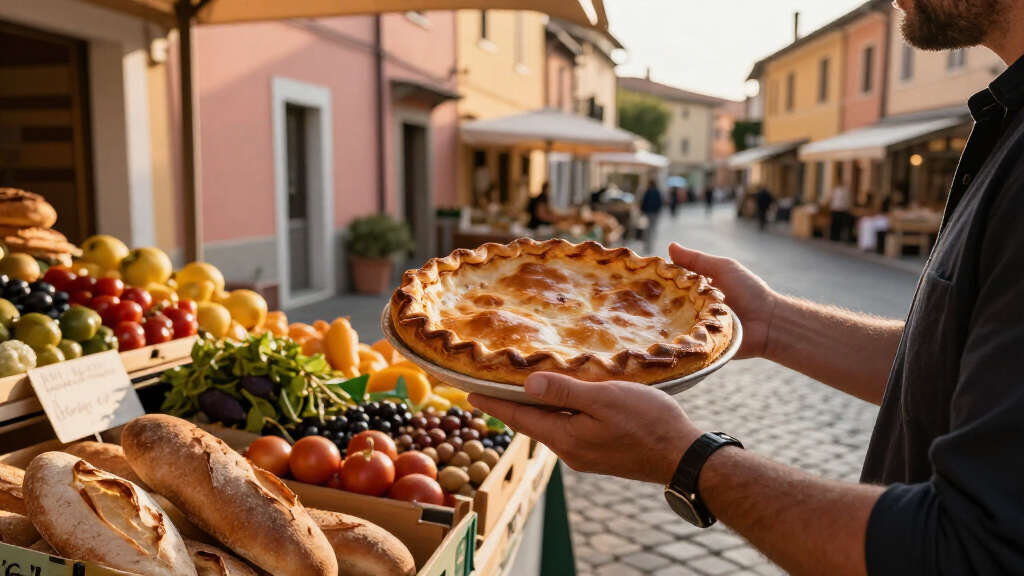
How to Make It Without Ruining It: 8 Steps
Most torta della nonna failures come down to a handful of fixable mistakes. Follow this sequence and you’ll avoid nearly all of them.
- Don’t overwork the pasta frolla. Rub the butter into the flour until it resembles coarse sand, bring it together quickly, and stop. Overworked gluten makes the crust tough instead of tender.
- Chill the dough twice: once before rolling (at least 30 minutes) and again once the tart is assembled, before it goes in the oven. Cold pastry bakes flakier and holds its shape.
- Cook the custard until properly thickened, stirring constantly. It should coat the back of a spoon and hold a line drawn through it.
- Cool the custard correctly. Press plastic wrap directly onto the surface to prevent a skin, and refrigerate until fully cold — warm custard softens the pastry and creates food-safety risk.
- Prevent the soggy bottom by using cold, thick custard, avoiding overfilling, and baking until the base is fully golden. A dark metal tart pan helps conduct heat to the underside.
- Protect the pine nuts. They go from golden to burnt fast. Soak them briefly in water before topping, press lightly into the pastry, and tent with foil if they darken too quickly.
- Cool completely before slicing so the filling sets — a warm tart will slump.
- Refrigerate leftovers. The filling contains milk and eggs; keep the tart at 40°F (4°C) or below and eat within two to three days.
One ingredient note worth the money: fresh lemon zest beats lemon extract every time — zest gives the custard a natural aroma that extract imitates poorly. And on thickeners: cornstarch yields a lighter, cleaner custard, while flour gives a firmer, more traditional-feeling filling. Many recipes use a combination. Both work; choose your texture.
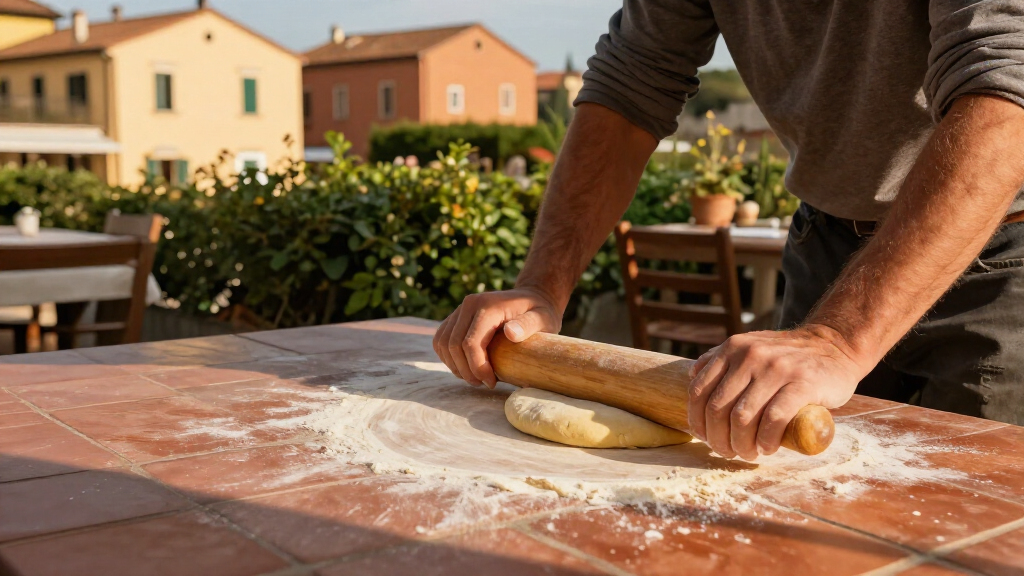
Pine Nuts: The Expensive Problem at the Heart of the Tart
Pine nuts are central to the tart’s identity, and they are also its most expensive ingredient — Italian pine nuts (from Pinus pinea, the stone pine that dots the Tuscan coast) can cost dramatically more than the Asian varieties commonly sold in supermarkets. The price gap is structural, not temporary: stone pines take years to mature and yield nuts laboriously extracted by hand, while Asian varieties are harvested at industrial scale. That means the cost pressure on this dessert is permanent, and it explains a quiet trend — some Tuscan bakeries now use fewer nuts, scatter them only across the center, or substitute almonds entirely. The classic tart is, in effect, being economically edited.
Does the substitution work? Partially — and understanding why requires knowing what pine nuts actually contribute. Almonds toast beautifully and preserve the textural contrast, but they lack pine nuts’ distinctive resinous, almost sweet-butter flavor. That flavor is what keeps the tart from tasting like a generic custard tart; it’s the note that makes the dessert recognizable with your eyes closed. The tradeoff is therefore real: with almonds you get a perfectly good dessert that costs half as much, but you lose the singular element. If budget forces the swap, say so on the menu or to your guests — the honesty costs nothing and the alternative is a dessert that quietly disappoints someone who ordered the classic.
Quality varies noticeably by origin, and the implications go beyond flavor. Chinese pine nuts are cheaper but blander, and a small percentage of people experience pine mouth — a metallic aftertaste lasting days — most often linked to certain Asian species. For a home baker, this creates a genuine decision: pay significantly more for Mediterranean nuts with reliable flavor, or accept a small risk of a ruined-aftertaste experience to save money. For most occasions, the premium nuts are worth it precisely because pine nuts are the tart’s signature; economizing on the defining ingredient is a false economy.
Allergen flag: pine nuts are tree nuts. The tart is not suitable for people with nut allergies in its standard form, and simply removing the nuts isn’t enough if the tart was prepared where cross-contamination can occur. The custard and pastry also contain milk, egg, wheat, and often butter — worth checking before serving guests, because this is one dessert that resists simplification: nearly every substitution that addresses one allergen (dairy-free custard, gluten-free pastry) still leaves others intact.
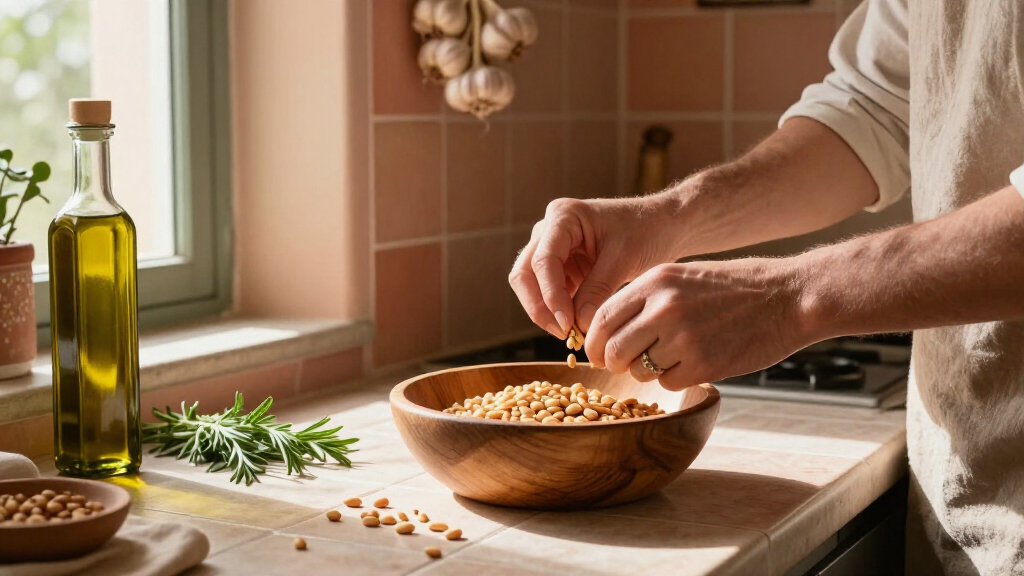
Serving It Like a Trattoria Would (And Storing What’s Left)
Torta della nonna is normally served cool or at room temperature, never hot. A small dusting of powdered sugar is all it needs; whipped cream or fruit sauce is optional and, honestly, unnecessary. The tart’s restraint is the point — piling on garnishes misses the mood.
It’s also one of the most make-ahead-friendly desserts in the Italian repertoire. Assemble it the morning of your dinner, or even the day before; it often slices better after a night’s rest in the fridge. Cut it with a thin, sharp knife wiped clean between slices so the custard stays neat.
Storage is straightforward because it’s custard-based:
- Refrigerate within two hours of serving; keep at 40°F (4°C) or below.
- Best within two to three days — the pastry softens gradually as it sits.
- Freezing is possible but imperfect: both custard and pastry can lose their ideal texture after thawing. If you must freeze, wrap airtight and thaw slowly in the refrigerator.
- Dust with powdered sugar just before serving, not before storing — it absorbs moisture and disappears in the fridge.
A chilled slice with an espresso the next morning is, quietly, one of the best ways to eat it. Tuscan grandmothers would presumably approve — whoever they were.
Frequently Asked Questions
What does ‘torta della nonna’ mean?
It means ‘grandmother’s cake’ or ‘grandmother’s tart’ in Italian. The name evokes rustic home cooking and family tradition, which is part of why it feels so familiar on a trattoria menu — even though its documented history is surprisingly short.
Is torta della nonna a cake or a tart?
Despite the word torta, it is most accurately described in English as a custard-filled tart. There’s no leavening and no cake crumb — just pasta frolla pastry, pastry cream, pine nuts, and powdered sugar.
Where did torta della nonna originate?
It is strongly associated with Tuscany, especially Florence and Arezzo, but the exact inventor and birthplace remain disputed. The best-known account credits Florentine chef Guido Samorini; others treat it as a traditional household recipe. ‘Tuscan-associated Italian classic’ is the safest description.
Why did my custard turn out lumpy?
Common causes: pouring hot milk into the yolks too quickly, insufficient stirring, or cooking over heat that’s too high. Strain the finished custard through a fine sieve to remove small lumps — and whisk constantly as it thickens next time.
Can I substitute almonds for pine nuts?
You can, especially for budget reasons, but the result is a variation rather than the classic tart — almonds lack pine nuts’ distinctive resinous sweetness. Also note that pine nuts and almonds are both tree nuts, so the substitution doesn’t help with nut allergies.
Is torta della nonna very sweet?
Not by modern dessert standards. Its appeal comes from balanced custard, citrus fragrance, buttery pastry, and toasted nuts rather than sugar intensity — which is exactly why it pairs so well with espresso and why it doesn’t tire on the palate.
Conclusion
Make the tart, or order it — but do it with your eyes open. Torta della nonna is not ancient folklore; it’s a 20th-century Tuscan classic with brilliant instincts: buttery pastry, lemon custard, toasted pine nuts, restraint. Whether you bake it in your own kitchen or meet it at the end of a long Florentine dinner, that’s what you’re tasting.
The next time a waiter recites a short dessert list and lands on ‘torta della nonna,’ you’ll know exactly what’s coming — and why the grandmother, whoever she was, still gets the last word.
Fall Picks
fall essentials
As an affiliate, we earn on qualifying purchases.