
TL;DR

Get kitchen staples and gadgets delivered free — and shop member deals
- Fast, free delivery on millions of items
- Access to Prime Big Deal Days deals on October 6–7
- Prime Video, Amazon Music and more included
Sugoli is a soft pudding made by cooking fresh grape must with flour until it thickens, a tradition tied to Mantua and Lombardy; schiacciata con l’uva is a Tuscan harvest flatbread baked with whole wine grapes, typical of Florence and Chianti. Both appear in early autumn during the grape harvest, both use simple pantry ingredients, and both adapt easily to supermarket grapes and juice when fresh must isn’t available.
Every September, in two different corners of Italy, kitchens start smelling like grapes. In Mantua, in Lombardy, pots of dark grape juice thicken into a purple pudding called sugoli. In the hills of Chianti, bakers press whole wine grapes into olive-oil dough and pull a stained, jammy flatbread — schiacciata con l’uva — from the oven.
Both sweets begin with grape must: the fresh juice pressed from grapes, often before fermentation begins. It’s an ingredient most home cooks never touch, yet it has long shaped autumn cooking in Italy, where nothing from the harvest goes to waste — not even the juice too delicate to become wine.
In this guide you’ll learn what grape must actually is, how each dish is made, how the two traditions compare, and how to cook both at home even if your nearest vineyard is a supermarket shelf.
Grape must is fresh, unfermented pressed grape juice containing pulp and skins — check how your recipe defines it (strained, reduced, or raw) before cooking.
Sugoli is a Lombard pudding from Mantua: strained must cooked with flour or cornstarch, naturally vegan and gluten-free with starch.
Schiacciata con l’uva is a Tuscan flatbread from the Florence–Chianti area, baked with whole small wine grapes like Canaiolo; it’s bread-like and best eaten th…
Substitutions work: unsweetened grape juice for must (taste before sweetening) and halved seedless table grapes for wine grapes.
Plan tastings for mid-September to mid-October, when bakeries and harvest festivals in Chianti and around Mantua carry both sweets.
Grape Must and Sweet Traditions: Sugoli and Schiacciata con l’Uva
Every September, in two different corners of Italy, kitchens start smelling like grapes. In Mantua, pots of dark grape juice thicken into a purple pudding. In the hills of Chianti, bakers press whole wine grapes into olive-oil dough. Two regions, one harvest ingredient, two completely different desserts.
What Grape Must Really Is (and Why It’s Not Just Juice)
Grape must is freshly pressed grape juice, usually still carrying pulp, skins, and sometimes seeds, taken before it has fermented into wine. In Italian it’s mosto d’uva — grapes caught in the exact moment between fruit and wine. The word causes confusion in recipes, though: some mean raw, unstrained must; others mean strained or gently reduced juice. Check how your recipe defines the term before cooking.
Raw Must
Carries all solids. Gives more body and tannic grip from the skins, but a grittier texture in the finished dish.
Filtered Juice
Smoother and cleaner, but needs longer cooking to thicken. This is what most sugoli recipes actually start with.
Mosto Cotto / Saba
Pre-reduced to a syrup. Already concentrated — it makes a pudding far denser than intended. Adjust recipes accordingly.
Sugoli: The Three-Ingredient Pudding of Mantua
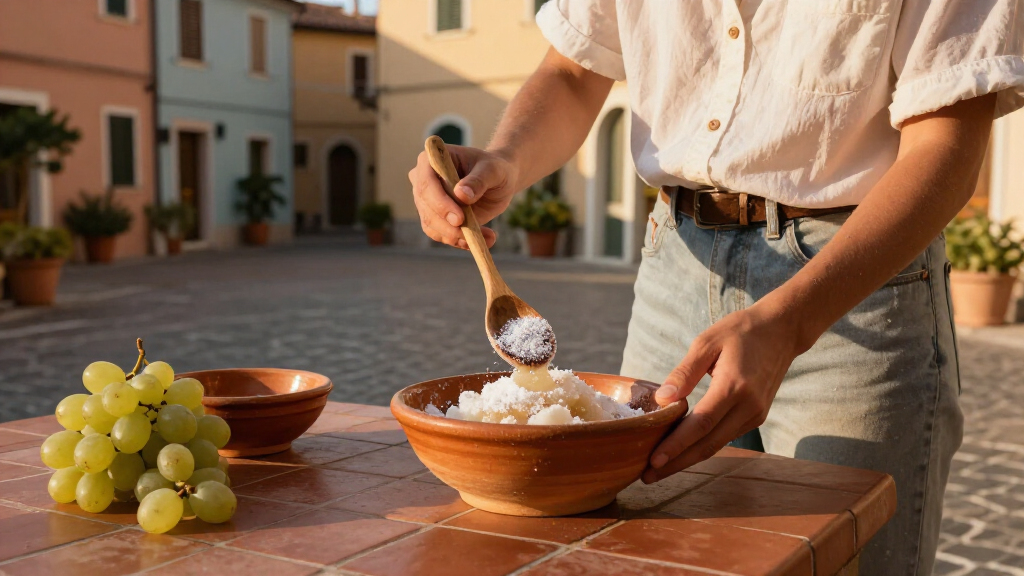
A soft, spoonable pudding from Mantua and the Lombard countryside: must cooked with flour or starch until glossy and thick, like a loose polenta made of grapes. The technique is identical to pudding or gravy-making — except here, the liquid does the flavoring.
Strain the Must
1 L (4 cups) fresh must or unsweetened grape juice, strained of skins and pulp.
Whisk in Starch
80–100 g (⅔–¾ cup) flour or cornstarch, whisked until no lumps remain.
Simmer & Stir
15–20 minutes over medium-low heat until the mixture coats a spoon.
Taste & Set
Taste before adding sugar. Serve warm, or chill 2–3 hours for a firmer set.
Flour vs. Cornstarch, Barbera vs. Trebbiano
The finished pudding depends entirely on your choices. Wheat flour keeps it soft and slightly opaque with a faint toasted-grain note; cornstarch sets glossier and translucent, with a cleaner grape flavor — and makes the dish gluten-free. Dark grapes yield a deep garnet pudding; white grapes give something closer to honeyed cream of wheat.
The color spectrum of sugoli — no two family batches ever look quite the same:
Two Traditions Compared
| Aspect | Sugoli | Schiacciata con l’Uva |
|---|---|---|
| Region | Mantua, Lombardy | Florence & Chianti, Tuscany |
| Grape form | ✓ Strained juice (must) | ~ Whole grapes, unstrained |
| Technique | Stovetop — starch-thickened pudding | Oven — leavened focaccia-style dough |
| Base | Flour or cornstarch only | Flour, yeast, water, olive oil, salt |
| Traditional grape | Barbera, Trebbiano | Canaiolo, Sangiovese |
| Naturally vegan | ✓ Yes (dairy-free) | ✓ Yes (olive-oil dough) |
| Gluten-free option | ✓ With cornstarch | ✗ No — wheat dough |
| Sweetness | Restraint — grapes carry it | Rustic, moist — less sweet than cake |
| Storage | 3 days refrigerated; texture loosens | Best eaten fresh, day of baking |
Same Harvest, Opposite Methods
Both recipes turn the grape harvest into something to eat right away — but they use the fruit in opposite ways. One cooks pressed juice into a pudding; the other bakes whole grapes into leavened dough.
🍇 Sugoli
Pressed, strained grape must simmered with flour until the starch gelatinizes and the juice turns glossy. A practical preservation trick: cooking perishable must with starch turns a liquid that spoils in hours into a meal-worthy dish within the hour.
🍞 Schiacciata con l’Uva
Whole small wine grapes pressed into olive-oil focaccia dough. As it bakes, the grapes release juice that stains the dough and creates pockets of sweet-tart flavor — rustic, moist, and best eaten the day it’s made, often with sugar and rosemary.
No Vineyard? No Problem.
Fresh must is genuinely difficult to find outside harvest time and wine country — the reason is chemistry, not marketing: wild yeasts begin fermenting within hours of pressing. Italian cooks improvise out of season, and so can you.
Unsweetened Grape Juice → Must
Works well for sugoli, though it may be sweeter or less concentrated than fresh must. Taste before adding any sugar, and thicken gradually.
Halved Seedless Table Grapes → Wine Grapes
Larger and juicier than Canaiolo. Halve them for schiacciata and expect a slightly different texture and sweetness.
Frozen at Harvest → Fresh Must
Freezing stops fermentation entirely. Many cooks stock up during the harvest window and thaw must all autumn.
Plan Your Tasting Trip
Mid-September to mid-October: bakeries and harvest festivals in Chianti and around Mantua carry both sweets at their seasonal peak.
What Grape Must Really Is (and Why It’s Not Just Juice)
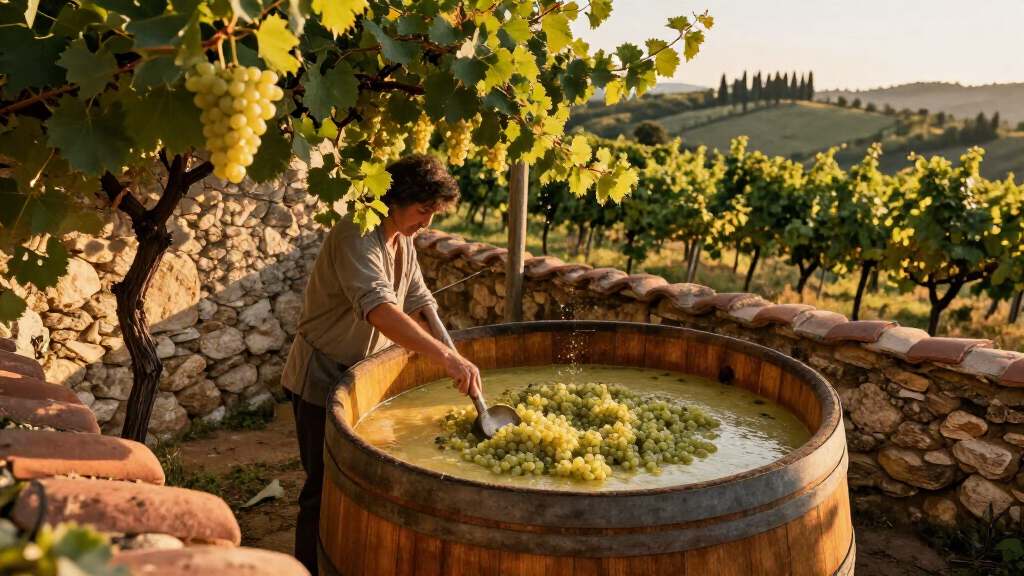
Grape must is freshly pressed grape juice, usually still carrying pulp, skins, and sometimes seeds, taken before it has fermented into wine. In Italian it’s mosto d’uva, and for a few weeks each autumn it flows through every winery in the country — sweet, cloudy, and perishable, with a shelf life measured in hours, not weeks. Think of it as grapes caught in the exact moment between fruit and wine.
Why does that moment matter? Because must is the brief window when grape sugar is at its peak but the yeasts haven’t yet converted it to alcohol. Cook with must and you capture that raw sweetness; wait a day and you have wine, something entirely different to cook with. It’s the culinary equivalent of cooking with milk versus butter — same origin, opposite behavior in the pot.
The word causes confusion in recipes, though. Some recipes mean raw, unstrained must with all the solids. Others mean juice that has been strained, or even gently reduced to concentrate the sugars. The tradeoffs are real: unstrained must gives more body and tannic grip from the skins but a grittier texture; strained must is smoother but needs longer cooking to thicken; pre-reduced must (what Italians call mosto cotto, or saba) is already syrupy and will make a pudding far denser than intended. Before you cook with it, check how your particular recipe defines the term, because the thickness and sweetness of what you start with changes everything downstream.
Fresh must is genuinely difficult to find outside of harvest time and wine country, and the reason is chemistry, not marketing: wild yeasts on grape skins begin fermenting within hours of pressing, so must starts becoming wine almost immediately. Refrigeration slows it, freezing stops it, but shipping it fresh across the country is barely practical. Wine grapes like Sangiovese or Canaiolo — a small, seeded red grape traditional in Tuscan blends — get pressed in early autumn and that’s when these dishes appear. Out of season, Italian cooks improvise: unsweetened grape juice, must frozen at harvest, or briefly cooked table grapes all stand in, each with tradeoffs in sweetness and body you’ll want to account for.
The color tells a story too. Dark grapes produce a must that cooks down to deep garnet; lighter grapes give something closer to dusty rose. That single variable is why no two family batches of sugoli ever look quite the same — a Mantuan grandmother using white Trebbiano grapes and a neighbor using dark Barbera are, in effect, making two different desserts that happen to share a name.
Top picks for "grape sweet tradition"
As an affiliate, we earn on qualifying purchases.
Sugoli: The Three-Ingredient Grape Pudding of Mantua
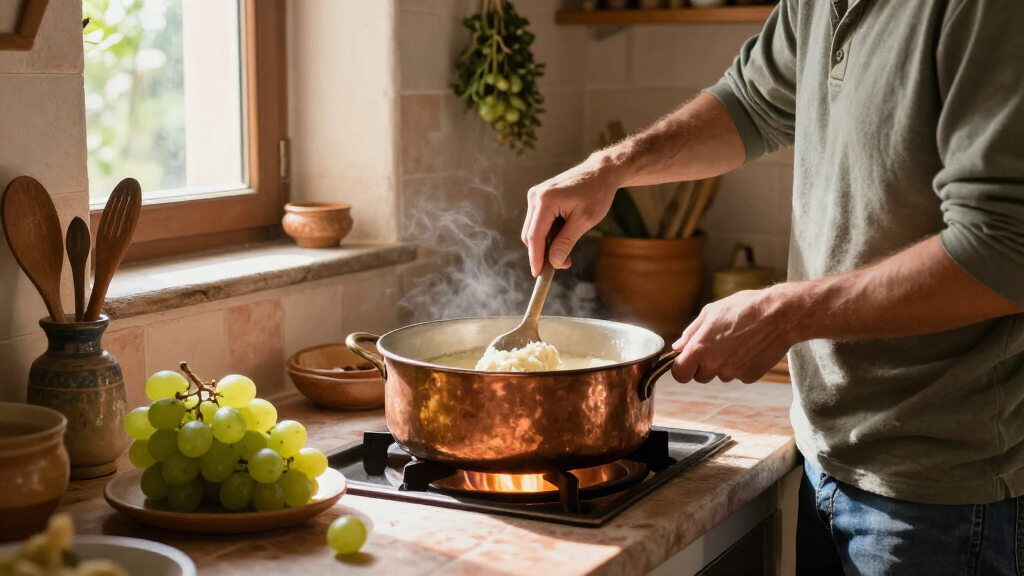
Sugoli is a soft, spoonable pudding made by cooking grape must with flour or starch until it thickens — a harvest tradition tied especially to Mantua and the surrounding Lombard countryside. It’s rustic in the best sense: grape juice, a thickener, maybe a little sugar, and nothing else pretending to be fancy. The dish exists for a practical reason: must spoils fast, and cooking it with starch both preserves the harvest’s sweetness and turns a perishable liquid into a meal-worthy dish within the hour.
The method is simple. You strain the fresh must, simmer it, and whisk in flour — traditionally plain wheat flour, though cornstarch works and makes the pudding gluten-free. As it cooks, the starch gelatinizes and the juice transforms, going from watery purple to something glossy and thick, like a loose polenta made of grapes. If you’ve ever made pudding from scratch or thickened a gravy, you already understand the technique; the only difference is that here the liquid does the flavoring. Some households add sugar; many don’t, trusting ripe grapes to carry the sweetness on their own — a call you make only after tasting, since an underripe harvest can leave the must tart enough to pucker.
- Strain 1 liter (about 4 cups) of fresh must or unsweetened grape juice to remove skins and pulp.
- Whisk in roughly 80–100 g (⅔–¾ cup) of flour or cornstarch until no lumps remain.
- Cook over medium-low heat, stirring constantly, for 15–20 minutes until it coats a spoon.
- Taste before adding sugar — ripe must often needs none.
- Pour into bowls or one dish and serve warm, or chill for 2–3 hours for a firmer set.
Two practical examples of how this plays out: with wheat flour, the pudding stays soft and slightly opaque, closer to a loose cream-of-wheat texture, and it tastes faintly of toasted grain. With cornstarch, the set is glossier and more translucent — think berry gelatin’s firmness — and the grape flavor reads cleaner because the starch itself is neutral. Neither is wrong; the choice is partly texture preference, partly family tradition.
The finished pudding depends entirely on the grapes. Dark Barbera-type fruit yields a pudding the color of red wine with a tart edge that cuts the sweetness; white grapes give a paler, more delicate version closer to honeyed cream of wheat. It’s often eaten plain, though some families add a pinch of cinnamon or clove, or serve it with dry biscuits — the Tuscan biscotti con l’uva style of dunking a hard cookie into something soft is the same instinct Lombards apply here, the crunch doing the work that the pudding deliberately refuses to.
One practical note: sugoli is dairy-free in most traditional versions, which makes it a rare Italian dessert that’s naturally vegan and, with cornstarch, gluten-free — a genuine asset when you’re feeding an autumn table with mixed dietary needs. Store it covered in the refrigerator and eat within three days; the texture loosens as it sits, because the starch network slowly releases the liquid it trapped (the same weeping you see in old pudding or lemon meringue pie).
Schiacciata con l’Uva: Tuscany’s Harvest Flatbread, Piece by Piece
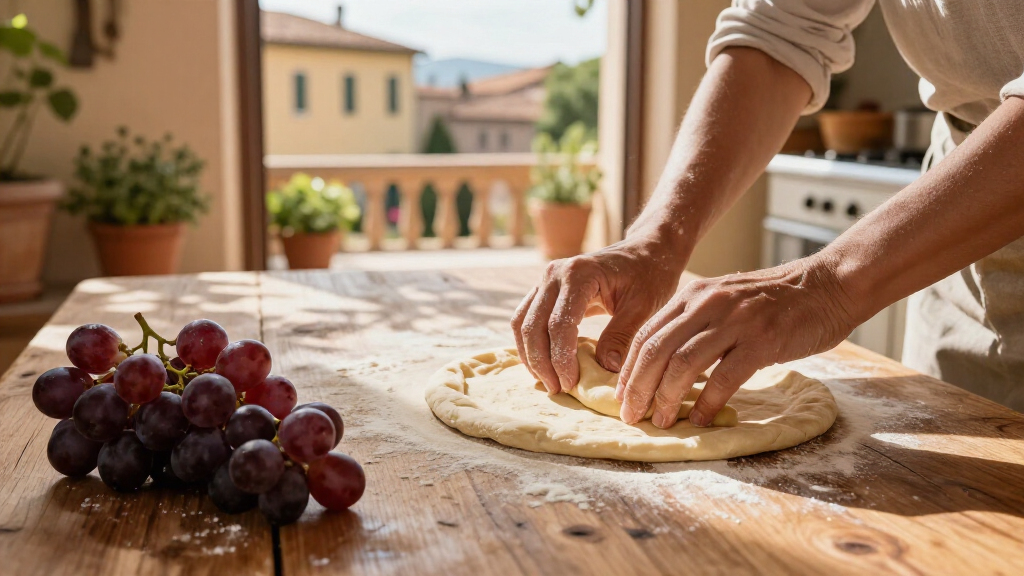
Schiacciata con l’uva — literally “flattened bread with grapes” — is a focaccia-like Tuscan bread baked with whole grapes pressed into the dough, traditionally made during the September and October harvest around Florence and the Chianti hills. It’s bread first, dessert second, and that balance is exactly why people chase it: it satisfies the savory-to-sweet arc of a whole harvest meal in a single slab, the way fig bread does in Spain or stollen does at Christmas.
The dough is straightforward: flour, yeast, water, olive oil, and salt. What makes it special is the assembly. Half the dough is stretched into an oiled pan, covered thickly with grapes — classically small, seeded wine grapes like Canaiolo — sprinkled with sugar and sometimes rosemary, then capped with the second half of the dough and more grapes on top. As it bakes at around 200°C (400°F), the grapes burst and release juice that stains the dough wine-dark and pools into pockets of sweet-tart jam. In effect, the bread builds its own jam layer in the oven: no preserve-making required, just fruit, sugar, heat, and time.
The result is rustic and moist, closer to bread than cake. The bottom crust goes crisp with olive oil, the middle stays tender and soaked through, and the top grapes caramelize slightly at their edges — a small piece of textural engineering where every layer plays a different role, crisp base, soaked middle, jammy top, in one bite. Traditionally it was workers’ food, eaten in the fields during the harvest, which explains its sturdy, unfussy character: it had to survive a morning in a basket and still be worth eating at noon, nothing like a fragile pastry.
Expect juice. A lot of it. Use a pan with sides, don’t skimp on the grapes — coverage should look almost excessive before baking — and accept that the center will stay damp. That moisture is the point, not a flaw: it’s the same logic as a molten-centered dessert, where what looks underdone is actually the signature. It’s best eaten the day it’s made or the day after; beyond that, the juice softens the bread into something closer to pudding — pleasant, but no longer the dish it was.
Sugoli vs. Schiacciata: How the Same Harvest Becomes Two Different Sweets
Grape must and the autumn harvest are the shared root of both sweets, but the two dishes diverge completely in technique: sugoli cooks pressed juice into a pudding, while schiacciata bakes whole grapes into leavened dough. One extracts the juice and discards the fruit; the other keeps the fruit and lets the oven do the extracting. It’s the same fork in the road a cook faces with any fruit — think of apple juice versus a whole apple baked in a dumpling: the first gives you clean, controlled sweetness; the second gives you texture, surprise, and juice where you least expect it.
| Sugoli | Schiacciata con l’uva | |
|---|---|---|
| Region | Lombardy, especially Mantua | Tuscany, especially Florence and Chianti |
| Base | Strained grape must | Yeasted dough with olive oil |
| Grape form | Juice only | Whole grapes, seeds and all |
| Texture | Soft, spoonable pudding | Moist flatbread with jammy pockets |
| Sweetness | Mild to sweet, grape-dependent | Restrained; sugar sprinkled on top |
| Eaten | Warm or chilled, same day or next | Best fresh, ideally day of baking |
| Dietary notes | Often vegan; gluten-free with starch | Contains wheat and yeast |
What the comparison reveals is two different culinary philosophies at work. Sugoli is about transformation — the grape disappears entirely and re-emerges as something new, which suits a northern kitchen tradition of gentle, stovetop cooking. Schiacciata is about coexistence — fruit and bread keep their identities and meet in the oven, which reflects a Tuscan instinct for keeping ingredients legible, the same instinct behind ribollita where the bread stays recognizably bread. The practical implication for the home cook: if you want a make-ahead, spoonable dessert that accommodates gluten-free guests, sugoli wins; if you want something to tear and share warm from the oven with coffee or vin santo, schiacciata wins.
Neither dish has one universal recipe, and that’s worth internalizing. Grape variety, sweetness, dough thickness, seasoning, and family custom all vary by town and household. Two neighboring farms in Chianti will argue about rosemary — some find it essential for cutting the sweetness, others consider it an intruder; two families in Mantua will disagree about whether sugoli needs sugar at all, usually along the line of how ripe their grapes run that year. When a recipe says “traditional,” treat it as one branch of a family tree, not the trunk.
How to Make Both at Home Without Fresh Must
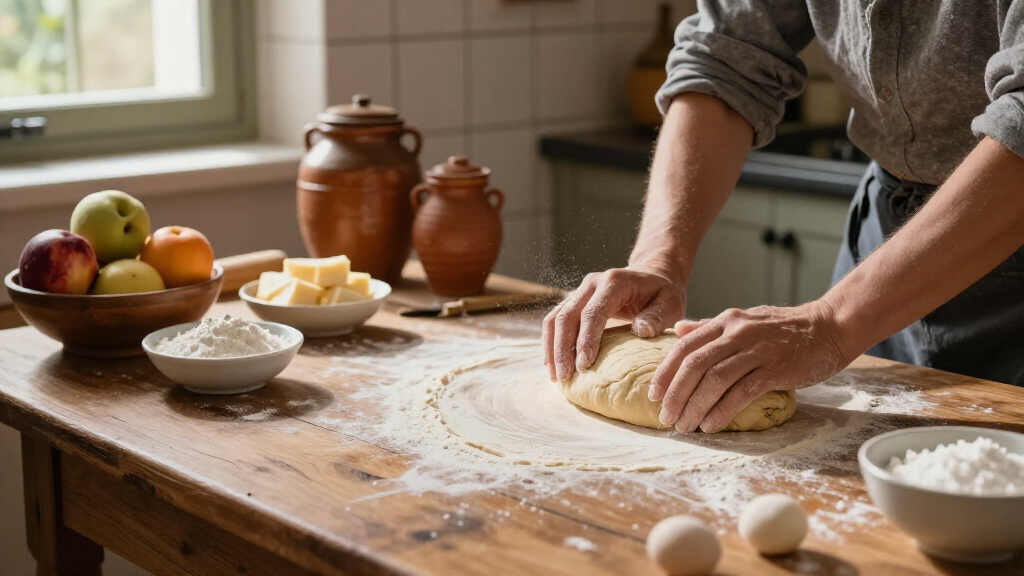
You can make both sweets outside harvest season by substituting unsweetened grape juice for must and table grapes for wine grapes — the results are good, just different in thickness and sweetness. These are practical adaptations, and modern Italian home cooks make them too, not purists’ compromises. The reason they work is that both dishes are built on flexible scaffolding — a starch-thickened liquid in one case, a basic dough in the other — and the grape is a variable the recipes were always designed to absorb.
For sugoli, use 100% unsweetened purple grape juice. Packaged juice tends to be sweeter and thinner than fresh must, so taste before adding any sugar and expect to cook a few minutes longer to reach a spoon-coating consistency. Concretely: if your juice tastes like something you’d happily drink straight from the glass, skip the sugar entirely — with a sweet juice and added sugar, sugoli tips from dessert into candy. Frozen must, if you can get it from a winery in autumn, is the closest match — freeze it flat in bags the day it’s pressed, the same way cooks freeze pesto in thin sheets so a piece thaws in minutes rather than hours.
For schiacciata con l’uva, small seedless table grapes are the easiest swap. They’re bigger and juicier than Canaiolo, so halve the large ones and press them cut-side down into the dough; expect a slightly wetter bake and a touch more sweetness. A practical scenario: a black seedless grape from the supermarket, halved and pressed into the dough, gives you about 80% of the traditional experience — the missing 20% is the mild tannic bite and crunch of the seeds, which some people don’t miss at all. Wine grapes with seeds are more authentic — the seeds are part of the traditional experience — but removing them makes the bread easier to eat. Preference, not correctness, decides it.
- Taste your grapes first. Sweetness varies wildly — a late-summer Muscat can be nearly honey-sweet while an early crop of the same grape runs tart — so adjust sugar accordingly.
- Thicken sugoli gradually. You can always add more starch; you can’t remove it. An over-thickened batch becomes sliceable jelly, which is a different (if still edible) dessert.
- Let schiacciata rest 10 minutes before cutting so the scalding juice pockets settle — cut too soon and the jam runs out onto the board instead of staying in the slice.
- Store both refrigerated and eat within 1–3 days; reheat schiacciata briefly to revive its aroma.
Neither recipe contains common allergens beyond wheat (skip it with cornstarch in sugoli), dairy, or nuts in traditional versions — but always check your specific recipe, since some doughs include milk or butter. If you’re cooking for someone with celiac disease, note the tradeoff: cornstarch-based sugoli is the safer choice entirely, since schiacciata depends structurally on wheat gluten and doesn’t convert cleanly.
Where to Taste Them in Italy: A Very Short Harvest Trip
If you want to eat these sweets at the source, plan around the grape harvest — roughly mid-September through mid-October — when both dishes appear in bakeries, sagre (village food festivals), and family kitchens. Timing shifts with the region, the grape variety, and the year’s weather, so check local harvest forecasts before booking. The seasonality isn’t marketing — it’s supply: once the grapes are pressed, there’s no more must until next year, so a hot August that ripens grapes early will pull the whole season forward by a week or two.
In Tuscany, bakeries around Florence and through the Chianti towns — Greve, Radda, Panzano — sell schiacciata con l’uva by the slab for a few short weeks. It appears without ceremony and disappears just as fast. Look for the telltale dark staining on the cut edge; a pale, dry-looking slice means skimpy grapes and a disappointing bite. A useful scene to picture: you’re standing at a bakery counter in Greve at 9 a.m., the tray comes out still warm, and the baker cuts you a rough square with the dough showing deep violet where the grapes bled into it — that stained edge is the visual shorthand for a good slab, the way a charred blister tells you a Neapolitan pizza was properly baked.
In Lombardy, sugoli is more of a home dish than a shop product, which changes the hunt: instead of a bakery counter, your best bet is a sagra — many villages around Mantua hold autumn festivals where local cooks serve homemade sugoli alongside the region’s better-known pumpkin tortelli. Pair the trip with a visit to a small winery during pressing week, when the air smells of crushed fruit and fresh must is literally running through the cellar. Many small producers will let you taste must straight from the press — a memorable thing in itself, like tasting an ingredient at the exact second of its existence that both of these dishes are built to capture.
Both sweets are harvest foods, not standardized desserts. The version you taste in one village may bear little resemblance to the one served ten kilometers away — and both are correct.
Traveling with wine? Must and early wines are for adults; if you’re tasting at a winery, plan a driver or arrange transport, and drink responsibly.
Frequently Asked Questions
Are sugoli and schiacciata con l’uva the same dish?
No. Sugoli is a thickened grape-juice pudding from Lombardy; schiacciata con l’uva is a Tuscan flatbread baked with whole grapes. They share the same seasonal ingredient — fresh grape must or grapes at harvest — but use completely different techniques and textures.
Can I make sugoli without fresh grape must?
Yes. Unsweetened grape juice works well, though it may be sweeter and thinner than fresh must. Taste before adding sugar, thicken gradually with flour or cornstarch, and simmer a few minutes longer to reach the right spoon-coating consistency.
What grapes work best for schiacciata con l’uva?
Small, flavorful wine grapes like Canaiolo are traditional in Tuscany. Seedless table grapes are a convenient substitute but larger and juicier — halve the big ones and expect a slightly wetter, sweeter bake. Seeds are a matter of preference: traditional grapes have them.
Is schiacciata con l’uva a dessert or a bread?
It sits between the two. The dough is a straightforward olive-oil bread dough, while the grapes and sugar add sweetness. Tuscans eat it as a snack, a dessert, or part of a harvest meal — there’s no wrong slot for it.
Can I make schiacciata con l’uva ahead of time?
It’s best fresh or within a day, because the grape juices gradually soften the bread. Store it covered at room temperature and reheat briefly in a warm oven to bring back some of the aroma and just-baked texture.
Are these recipes vegetarian or vegan?
Many traditional versions are naturally plant-based: sugoli is typically just grape juice and starch, and schiacciata dough uses olive oil rather than butter. Check your specific recipe, since some variations include milk or animal fats.
Conclusion
One harvest, two instincts. In Lombardy the cook presses the grapes and cooks the juice into a spoonable pudding; in Tuscany the baker leaves the fruit whole and lets the oven turn dough and grapes into something between bread and jam. Neither approach is better — together they show how the same September ingredient becomes two completely different pleasures depending on the kitchen it lands in.
Pick one and make it this autumn. A bowl of chilled purple sugoli or a slab of still-warm schiacciata, eaten the day it’s made, will teach you more about Italian harvest cooking than any restaurant menu can.
Evergreen bestsellers Picks
bestsellers
As an affiliate, we earn on qualifying purchases.