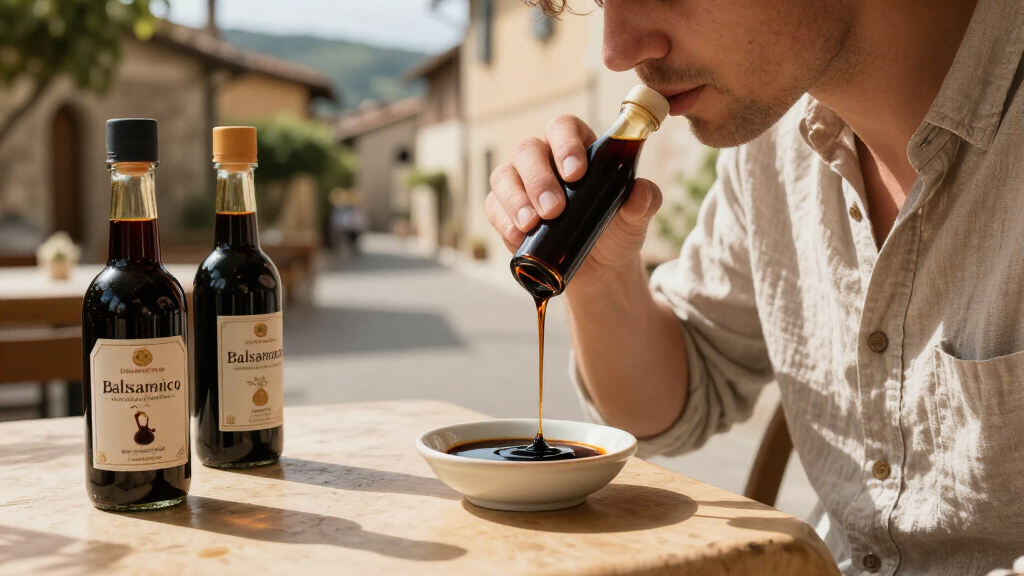
TL;DR
Open a free Amazon Business account
Business pricing, bulk buying and tax-exempt orders.
Create a free accountAs an affiliate, we earn on qualifying purchases.
Aceto Balsamico Tradizionale di Modena DOP contains cooked grape must alone, matures for at least 12 years, and belongs on finished food in carefully measured drops. Aceto Balsamico di Modena IGP combines grape must with wine vinegar, matures for at least 60 days, and works better for vinaigrettes, marinades, sauces, and everyday cooking.
A bottle of true Tradizionale di Modena DOP may hold only 100 milliliters, yet cost more than a pantry-sized bottle beside it. The difference is not fancy packaging alone. One has spent at least 12 years moving through a battery of wooden barrels; the other may be ready after 60 days.
That contrast changes what happens in your kitchen. Pour the older vinegar into a bubbling reduction, and its woodland aromas disappear into steam. Use a sharp everyday IGP drop by drop on Parmigiano Reggiano, and you may get more sting than velvet. Each bottle can be excellent, but only when you ask it to do the right job.
You will learn how to identify Aceto Balsamico Tradizionale di Modena DOP, choose a useful Aceto Balsamico di Modena IGP, and spot labels that borrow the language of age without carrying a protected meaning. You will also see where each vinegar belongs: strawberries in early Emilia-Romagna summer, a pan of roasted radicchio, a glossy meat sauce, or a quiet spoonful after dinner.
The key to balsamico di Modena is simple: buy by culinary purpose, not by darkness, thickness, or gold lettering. Once you understand that split, the crowded vinegar shelf becomes much easier to read.
Use Aceto Balsamico Tradizionale di Modena DOP in two- or three-drop portions after cooking; use Modena IGP when a recipe needs spoonfuls, heat, or direct acid…
Treat Affinato, Extravecchio, and Invecchiato as regulated terms: they mean at least 12 years, 25 years, and three years respectively within their protected ca…
Read the exact protected name, EU designation logo, bottle format, and ingredient list before trusting thickness, darkness, wax seals, or large age numbers.
Choose a brighter IGP for vinaigrettes and marinades, while a denser, must-rich IGP can finish roasted vegetables, cheese, or fruit.
Keep a two-bottle pantry: one reliable IGP for daily work and one 100 ml Tradizionale DOP for dishes where its concentrated aroma remains intact.
Balsamico di Modena: Tradizionale vs IGP
These are not two grades of the same vinegar. They are distinct protected products built for different jobs: Tradizionale DOP is a concentrated finishing condiment, while Modena IGP supplies the volume and acidity needed for dressings, marinades, sauces, and heat.
Cooked grape must alone, matured through a sequence of wooden barrels.
The minimum maturation for grape must blended with wine vinegar.
Finish with DOP. Season, dress, marinate, reduce, and cook with IGP.
Two protected products, two culinary purposes
DOP means Protected Designation of Origin; IGP means Protected Geographical Indication. Their legal specifications shape the ingredients, maturation, packaging, flavor, cost, and ideal use.
| What to compare | Tradizionale di Modena DOP | Aceto Balsamico di Modena IGP |
|---|---|---|
| Ingredients | ✓Cooked grape must only | ~Grape must plus wine vinegar; limited caramel coloring may be permitted |
| Minimum maturation | ✓12 years | ~60 days |
| Older designation | Extravecchio: at least 25 years | Invecchiato: at least 3 years |
| Production character | Slow concentration in a battery of progressively smaller wooden barrels | Blended, acidified, and matured for a substantially shorter period |
| Typical character | Syrupy, glossy, layered, intensely aromatic, and sweet-sour | Usually brighter, thinner, and sharper; styles range from brisk to dense |
| Packaging | Consortium-approved 100 ml bulb-shaped bottle | Many bottle shapes and sizes |
| Best kitchen role | Finishing food in carefully measured drops | Dressings, marinades, sauces, reductions, and everyday cooking |
| Price logic | High because time, evaporation, certification, and tiny yield remove volume | Accessible to premium, depending on must content and maturation |
A premium IGP may be rich enough to finish cheese or fruit, but it does not become a younger Tradizionale. The production method and protected category remain different.
What twelve years of barrels creates
Tradizionale begins with cooked must from grapes associated with the region, including Lambrusco and Trebbiano. Fermentation, acidification, evaporation, and fractional transfers build concentration without added wine vinegar.
Local grape must
Fresh must provides the fruit, sugars, and aromatic foundation.
Slow cooking
Water reduces as the must gains sweetness, depth, and body.
Fermentation
Sugars and acids evolve through a living transformation.
Wooden batteria
Oak, chestnut, cherry, mulberry, ash, or juniper may shape the profile.
Measured release
Assessment and protected bottling precede sale in the distinctive 100 ml format.
Tradizionale DOP timeline
Evaporation steadily sacrifices volume while concentrating aroma, acidity, viscosity, and value.
IGP timeline
Wine vinegar supplies direct acidity while grape must contributes sweetness, fruit, and texture.
Choose the bottle by the job
Ask whether the dish needs volume, direct acidity, or a final aromatic accent. Darkness, thickness, heavy glass, wax seals, and gold lettering answer none of those questions reliably.
Vinaigrettes
A lively IGP disperses through olive oil and provides enough acidity to season every leaf.
Use by the tablespoon.Marinades
Direct acidity balances fat and sweetness while the larger format makes generous quantities practical.
Ideal for pork, chicken, mushrooms, and onions.Sauces and reductions
IGP can simmer into a glaze without sacrificing the rare aromas of a long-matured DOP.
Add early, reduce, and adjust.Parmigiano Reggiano
Two or three glossy drops create concentrated notes of sweet must, dried fruit, acidity, and wood.
Add immediately before serving.Fruit and desserts
Use on strawberries, figs, pears, peaches, vanilla gelato, panna cotta, or custard.
Apply sparingly so the fruit remains audible.Risotto and roast meat
Finish selected bites after cooking, preserving aroma instead of sending it away in steam.
Never treat it as an ordinary reduction base.Volume, acidity, heat, emulsions, and repeatable daily use.
Concentrated aroma, texture, ceremony, and drop-by-drop control.
Read the label before the liquid
The exact protected name carries more meaning than color or viscosity. A thick pour can be engineered; a protected designation must meet its specification.
Exact protected name
Look for Aceto Balsamico Tradizionale di Modena DOP or Aceto Balsamico di Modena IGP.
EU designation
Confirm the protected designation logo instead of trusting suggestive heritage language.
Ingredients and format
DOP uses cooked must alone and its protected 100 ml bottle; IGP lists wine vinegar and grape must.
Regulated age terms
Affinato means at least 12 years, Extravecchio 25 years, and IGP Invecchiato three years.
Two bottles solve nearly every balsamico question
A balanced Modena IGP
Choose enough brightness for dressings and enough must character to round sauces without excessive sweetness.
- Vinaigrettes and bean salads
- Marinades and pan sauces
- Roasted radicchio, squash, and onions
- Reductions and everyday glazing
A 100 ml Tradizionale DOP
Reserve it for moments when its concentration remains intact and every carefully placed drop can be tasted.
- Parmigiano Reggiano and mature cheese
- Strawberries, figs, pears, and peaches
- Risotto, filled pasta, steak, and polenta
- Gelato or a quiet spoonful after dinner
Why These Two Bottles Belong in Different Parts of Your Kitchen
Balsamico di Modena comes in two protected forms that serve different needs: Tradizionale DOP is a concentrated finishing condiment, while Modena IGP is a flexible vinegar for dressings, marinades, sauces, and cooking. Calling one merely better misses the practical difference between them.
Think of the relationship as similar to that between a mature Parmigiano Reggiano and a cheese chosen for melting. The first rewards slow tasting; the second may perform better across a whole dish. In the same way, DOP gives you aromatic concentration, while IGP gives you useful volume and acidity.
The legal initials describe different connections to place. DOP, or PDO in English, means Protected Designation of Origin and imposes the tighter production framework. IGP, or PGI, means Protected Geographical Indication and protects a product made under a broader specification in Modena or neighboring Reggio Emilia.
Suppose you are preparing dinner for six. A few drops of Tradizionale can perfume individual slices of Parmigiano Reggiano with notes of dried fruit, polished wood, and sweet must. For the salad beside it, you need several tablespoons of vinegar, so a balanced IGP gives you bright acidity without emptying an expensive 100 ml DOP bottle.
The useful question is not “Which balsamic is best?” Ask, “What am I making, and do I need volume, acidity, or a final aromatic accent?”
This works well as a buying rule, except when a must-rich premium IGP crosses into finishing territory. Some IGP vinegars are dense and rounded enough for cheese or fruit. They still remain IGP by method and law, however, rather than becoming a younger form of Tradizionale DOP.
Top picks for "balsamico modena tradizionale"
As an affiliate, we earn on qualifying purchases.
See the Tradizionale vs IGP Difference at a Glance
Balsamico di Modena is easiest to compare through its rules: Tradizionale DOP uses cooked grape must alone and matures for at least 12 years, whereas Modena IGP includes wine vinegar and may be released after 60 days. Those rules shape everything from texture to price.
| What you are comparing | Tradizionale di Modena DOP | Aceto Balsamico di Modena IGP |
|---|---|---|
| Core ingredients | Cooked grape must only | Grape must plus wine vinegar; limited caramel coloring is permitted |
| Minimum maturation | 12 years | 60 days |
| Older designation | Extravecchio, at least 25 years | Invecchiato, at least 3 years |
| Typical character | Syrupy, glossy, aromatic, complex, sweet-sour | Usually thinner and sharper; style varies widely |
| Packaging | Consortium-approved 100 ml bulb-shaped bottle | Many sizes and bottle shapes |
| Best kitchen role | Finishing food drop by drop | Dressings, marinades, reductions, sauces, and daily use |
| Typical cost | High because of time, evaporation, certification, and low yield | Accessible to premium, based on ingredients and maturation |
The numbers tell a physical story. Over 12 or 25 years, water evaporates and the remaining liquid becomes concentrated. The producer loses volume while gaining fragrance, acidity, and texture, which helps explain why Tradizionale costs so much for such a small bottle.
IGP follows another path. Wine vinegar supplies a direct acidic backbone, and grape must brings sweetness, fruit, and body. A young bottle can taste brisk enough to wake up lentils or cut through pork fat; a must-rich Invecchiato IGP can feel rounder and more polished after its three-year minimum.
Imagine dressing warm roasted squash. A lively IGP runs into the creases, meets the olive oil, and sharpens the squash’s caramelized edges. Tradizionale would sit in dark, glossy beads and perfume selected bites. Both taste good, but one seasons the whole dish while the other creates accents.
The two quality levels shoppers often expect are not really levels at all. They are distinct products, and that distinction frees you from treating IGP as a disappointing substitute. In many recipes, IGP is the more capable tool.
What 12 Years of Barrels Gives Tradizionale DOP
Balsamico di Modena Tradizionale DOP is cooked grape must transformed by at least 12 years of fermentation, acidification, evaporation, and maturation in a sequence of wooden barrels. The result is not ordinary vinegar made thicker; it is a glossy, intensely aromatic condiment with sweetness and living acidity.
Producers traditionally cook must from grapes associated with the area, including Lambrusco and Trebbiano. The liquid then matures in a batteria, meaning a battery of progressively smaller barrels, often made from oak, chestnut, cherry, mulberry, ash, or juniper. Each wood can add a different shade, from warm spice to resin or dried cherry.
The barrels are periodically topped up as evaporation steals water and concentrates the must. This process ages the vinegar and tests the producer’s patience. In a Modenese attic, hot summers and cold winters help shape the slow rhythm, while the barrel mouths release both moisture and potential profit into the air.
A 25-year Extravecchio does not mean every drop sat untouched in one barrel for exactly 25 years. The multibarrel method resembles fractional maturation: liquid moves through the sequence, and official classifications describe a regulated process rather than a simple vintage. That nuance matters when a salesperson turns age into an overly tidy story.
According to the protected production framework, Tradizionale reaches the market as Affinato after at least 12 years or Extravecchio after at least 25 years [1]. Approved vinegar is bottled in the recognizable 100 ml vessel designed by Giorgetto Giugiaro, giving you a useful visual check before you even read the label.
Try three drops on a warm shard of Parmigiano Reggiano DOP. The cheese’s salty crystals catch the sweet-sour liquid, and the aroma opens with fig, cherry, old wood, and must. That tiny serving explains the bottle better than a spoonful stirred into salad dressing ever could.

What Modena IGP Gives You for Everyday Cooking
Balsamico di Modena IGP gives you the acidity, fruit, and usable quantity needed for daily cooking. It combines grape must with wine vinegar, matures for at least 60 days, and ranges from lean, sharply acidic bottles to dense, must-rich versions that work as affordable finishing condiments.
- Light, bright IGP: choose it for vinaigrettes, bean salads, and fatty meats.
- Round, must-rich IGP: use it on roasted vegetables, mature cheese, or strawberries.
- Invecchiato IGP: expect at least three years of maturation and a more integrated flavor.
- Balsamic glaze: treat it as a prepared sauce, not as naturally concentrated Tradizionale.
The minimum 60-day maturation does not tell you that every IGP tastes alike. Regulations create a shared identity, not a single flavor. Grape-must proportion, acidity, concentration, barrel time, and blending choices can move a bottle from brisk and winey to soft, dark, and raisin-like.
For example, a thin, lively IGP is exactly what you want for a bowl of Castelluccio lentils. Whisk one tablespoon with three tablespoons of extra-virgin olive oil, a pinch of salt, and minced shallot. The vinegar slips between the lentils and lifts their earthy flavor without coating them in sweetness.
A denser IGP earns a different place. Spoon a little over radicchio roasted until its purple leaves turn almost black at the edges. The vinegar can grab the caramelized bitterness and the serving platter at once, a small example of zeugma that also describes what a good sauce should do.
Limited caramel coloring is permitted under the IGP rules, mainly for visual consistency [1]. Its presence does not make the vinegar fake, though you may prefer a shorter ingredient list. If you need to reduce balsamic for a glaze, reduce IGP over gentle heat; boiling Tradizionale would spend its aroma along with your money.
Read the Label Before Color and Thickness Fool You
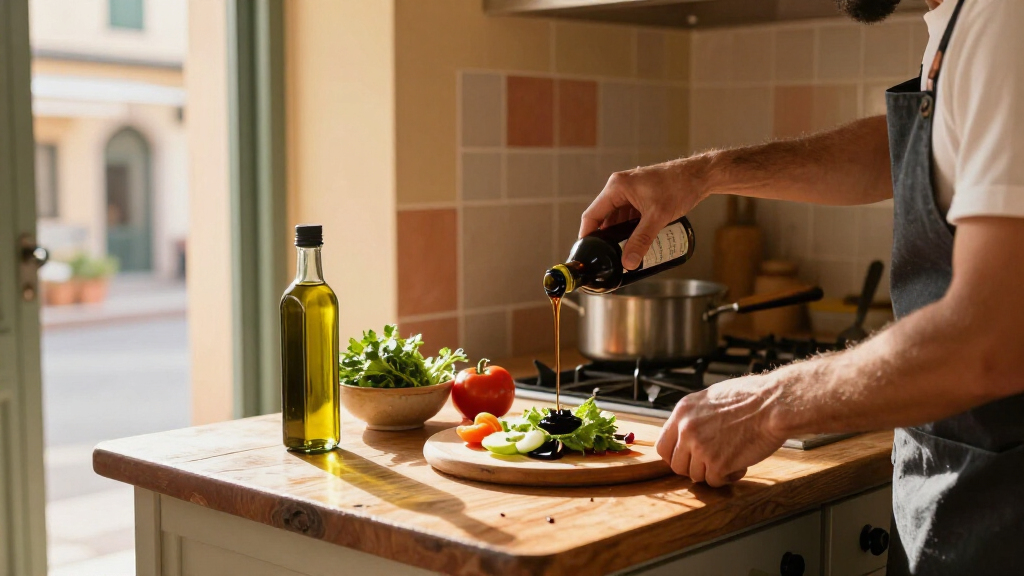
The protected name tells you more than dark color, heavy glass, wax seals, or a thick pour. Look for Aceto Balsamico Tradizionale di Modena DOP or Aceto Balsamico di Modena IGP, then check the EU logo, bottle format, ingredient list, and regulated age terms.
- Find the exact name. “Tradizionale di Modena DOP” and “di Modena IGP” describe protected products; “balsamic condiment” does not.
- Check the designation logo. DOP/PDO and IGP/PGI marks confirm which protected framework applies.
- Read the ingredients. Tradizionale uses cooked grape must alone. IGP lists grape must and wine vinegar and may list caramel.
- Interpret age language carefully. Affinato, Extravecchio, and Invecchiato carry defined meanings; “reserve,” “gold,” and a large year number may not.
- Match the bottle to the claim. Authentic Modena Tradizionale appears in the standardized 100 ml bulb-shaped bottle.
On IGP labels, ingredients generally appear in descending order by weight. If grape must appears before wine vinegar, the bottle may taste sweeter and rounder. This clue is useful, but only if you remember that an ingredient list cannot measure balance, aroma, or skillful blending.
Suppose two bottles sit side by side. One says “Gold Reserve 25” in sweeping script but carries no DOP logo; the other says “Extravecchio” on a small 100 ml DOP bottle. The second has the legally defined 25-year minimum process, while the first needs more investigation despite its dramatic age-like number.
The word condimento, meaning condiment, does not automatically signal poor quality. Some unprotected condimenti are carefully made and delicious. You simply cannot infer their ingredients, origin, or age from that word, so buy them when the producer offers clear, checkable details.
Also separate vinegar from crema di balsamico, or balsamic glaze. A glaze may contain sugar, starch, flavorings, or other thickeners. It can draw tidy stripes across a plate, but those stripes do not prove the natural concentration of long maturation.
Use Each Balsamic Where Its Flavor Actually Pays Off
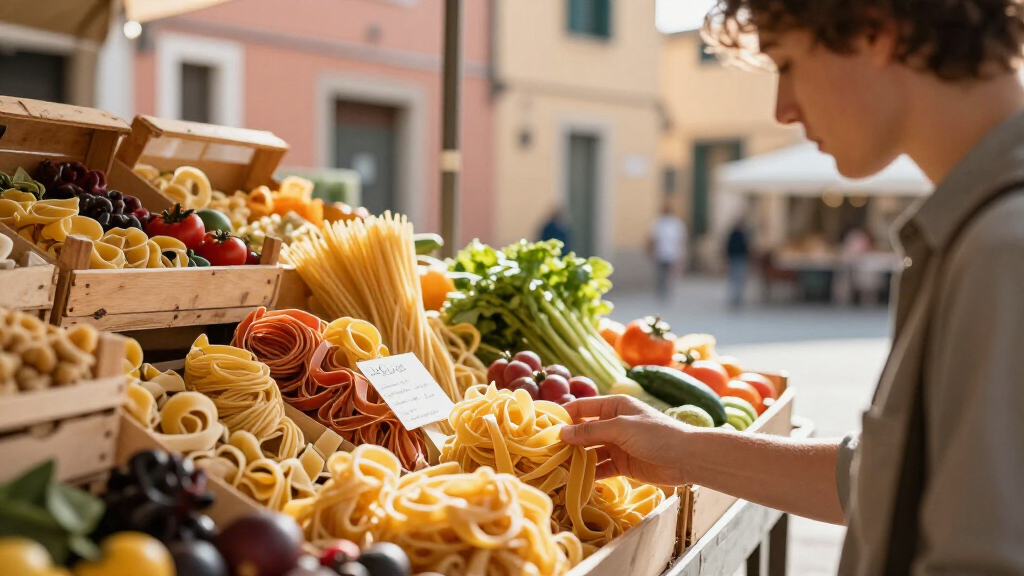
Use Tradizionale after cooking and use IGP during cooking whenever a recipe needs several spoonfuls, extended heat, or assertive acidity. This one division protects the delicate aromas of DOP, controls your cost, and gives marinades or sauces enough vinegar to work across the entire dish.
For Tradizionale DOP
- Add two or three drops to Parmigiano Reggiano, ripe pears, figs, strawberries, or peaches.
- Finish risotto, polenta, filled pasta, grilled steak, or simply cooked vegetables.
- Dot it over vanilla gelato, panna cotta, or a plain custard.
- Taste a small amount from a spoon at the end of a meal.
In Modena, the pleasure lies in restraint. Imagine a September pear cut beside a wedge of crumbly Parmigiano Reggiano. Add three glossy drops to each slice, and you get floral sweetness, salt, acidity, and the faint scent of old barrels in one bite. Add a tablespoon, and the condiment buries the fruit.
For Modena IGP
- Whisk it into vinaigrettes for tomatoes, bitter greens, or grain salads.
- Use it in marinades, pan sauces, braises, gravies, and reductions.
- Splash it onto roasted onions, squash, mushrooms, or Brussels sprouts.
- Stir it into lentils and beans just before serving to brighten earthy flavors.
For a simple pan sauce, remove cooked pork chops, pour off excess fat, and add 60 milliliters of stock with one tablespoon of IGP. Simmer until lightly glossy, then return the chops long enough to coat them. The vinegar cuts richness; the stock keeps the sauce savory.
Marinades that touched raw meat should be discarded or brought to a full rolling boil before reuse. Cook whole cuts of pork or beef to a safe temperature suited to the cut and your local guidance; poultry should reach 165°F or 74°C. Vinegar adds flavor, but it does not sanitize raw meat.
Common allergens depend on the dish rather than plain balsamic alone. Parmigiano Reggiano and gelato contain milk, custard may contain egg, and bottled sauces may contain other allergens. Wine-vinegar products can also carry a sulfite declaration, so read the label when serving someone with a sensitivity.
Judge Flavor Without Falling for the Thickest Bottle
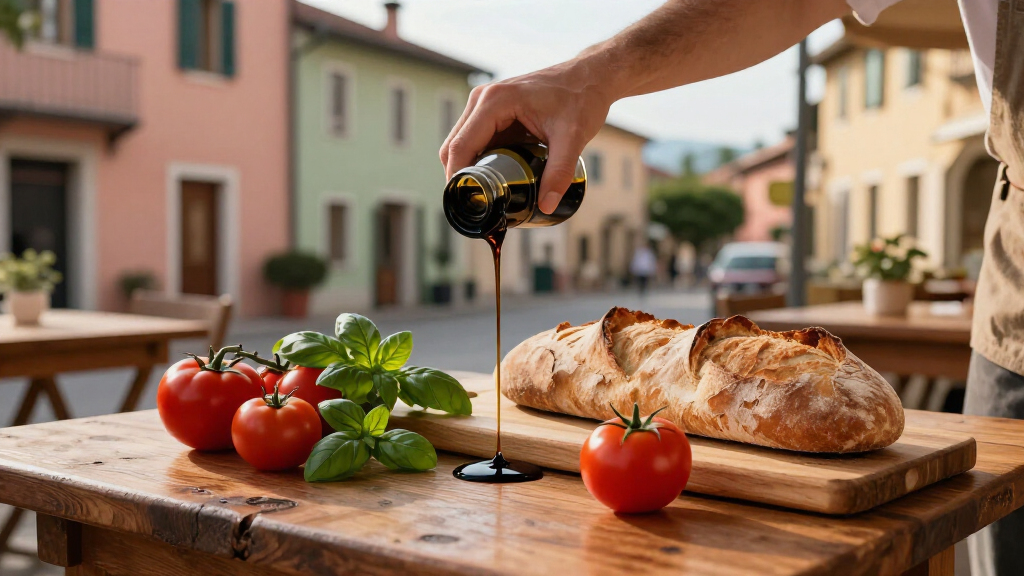
Thickness does not prove quality because viscosity can come from long maturation, concentrated grape must, cooking, added sugar, starch, or other thickeners. A worthy balsamic balances sweetness with bright acidity and gives you clear aromas, not merely a dark, sticky texture that resembles dessert syrup.
True Tradizionale often moves slowly across a spoon, but it should still taste alive. You may notice cooked plum, cherry skin, spice, wood, and a clean acidic lift. If the flavor lands as plain sugar, the bottle lacks the tension that makes DOP compelling, no matter how dramatically it clings to the glass.
A thin IGP can be the smarter bottle for salad. Try pouring syrupy glaze over delicate spring lettuce: it drops in heavy ribbons and turns crisp leaves sweet. A leaner IGP disperses through olive oil, seasoning every leaf with clean acidity and leaving the green, peppery oil audible on your palate.
Color can mislead you too. IGP may legally contain a limited amount of caramel for color, while a glaze may look almost black because of concentration or added ingredients. Judge designation, ingredient transparency, aroma, and balance before relying on darkness or density.
This rule has an exception: texture matters when you want a finishing condiment to remain in distinct drops. A must-rich IGP or Tradizionale can sit beautifully on grilled radicchio or aged cheese. Yet the texture should arrive with layered flavor, not act as a costume hiding a flat sweet sauce.
At home, taste a new bottle from a teaspoon before mixing it into food. Then try one drop on plain bread and another with Parmigiano Reggiano. This quick test shows whether the vinegar brings sharpness, sweetness, or aromatic depth, helping you assign it to the stove, salad bowl, or table.

Build a Two-Bottle Balsamic Setup That Covers Real Meals
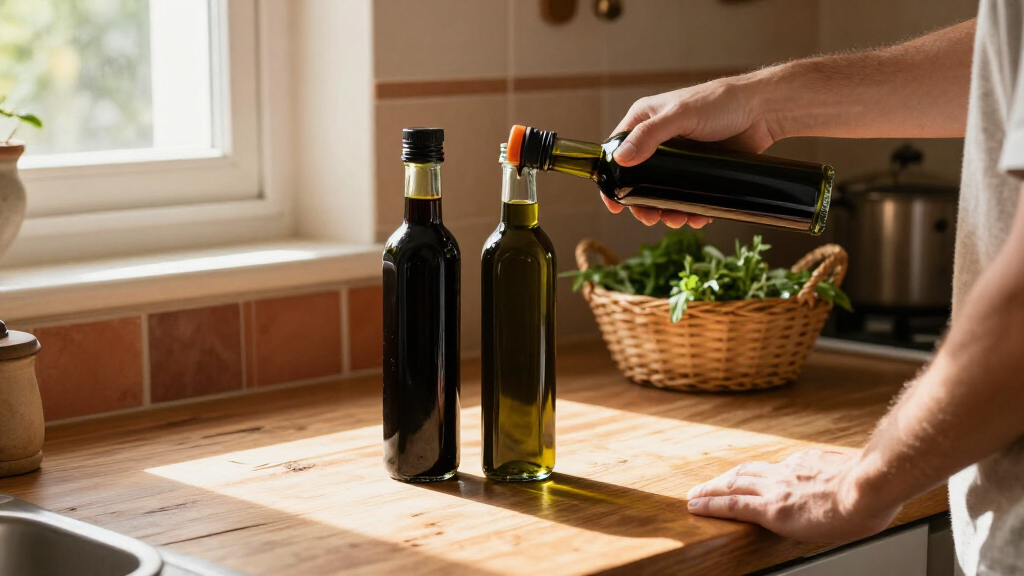
The most practical setup uses two bottles: a balanced Modena IGP for cooking and, if your budget allows, a 100 ml Tradizionale DOP for finishing. This pairing covers generous dressings, hot sauces, weeknight vegetables, mature cheese, summer fruit, and special meals without wasting either product.
- Buy the IGP first. Choose clear protected labeling and an ingredient profile that matches your cooking.
- Taste it before assigning a job. Sharp bottles suit salads and marinades; rounder bottles suit roasting and finishing.
- Add DOP when you will use it deliberately. Affinato offers the full protected experience without requiring the cost of Extravecchio.
- Store both correctly. Keep the caps closed in a cool, dark cupboard away from the stove and strong odors.
For a typical week, your IGP might dress a tomato salad on Tuesday, brighten lentils on Thursday, and deglaze a pan on Saturday. The DOP waits for Sunday lunch, when you place three drops on risotto or pass peaches and Parmigiano Reggiano at the table. Different speeds. Different pleasures.
Balsamic vinegar usually does not need refrigeration. Its acidity makes it stable, though aroma can fade slowly after opening. A cool cupboard protects flavor and consistency; the refrigerator may make the liquid temporarily cloudier or thicker without improving everyday storage.
Harmless sediment can appear, and a best-before date usually speaks more to peak quality than sudden spoilage. Discard the product if you see unusual contamination around the closure, the bottle has been diluted, or the aroma becomes plainly unpleasant. Keep the neck clean so sticky residue does not trap dust or pantry debris.
One geographical detail belongs in your shopping knowledge: Aceto Balsamico Tradizionale di Reggio Emilia DOP is a separate protected product with its own specification and classification. It shares a regional tradition with Modena, but it is not a subtype of Tradizionale di Modena DOP.
The EU geographical-indications framework adopted in 2024 strengthened online protection, enforcement, and producer-group powers around registered names [2]. The full protected names matter even though the isolated word “balsamico” may appear on products made elsewhere. Reference [1] reflects the applicable protected product specifications and consortium guidance; reference [2] is Regulation (EU) 2024/1143 on geographical indications.
Frequently Asked Questions
Is Tradizionale always better than Modena IGP?
Tradizionale is more restricted, older, and usually more complex, but it is not better for every recipe. A reliable IGP is the better tool for a large marinade, vinaigrette, pan sauce, or long-cooked reduction because it supplies enough acidity and volume at a sensible cost.
Does Aceto Balsamico di Modena IGP contain added sugar?
The sweetness in Modena IGP normally comes from grape must, while the product also contains wine vinegar. Check the ingredient list, especially on balsamic glazes and prepared sauces, which may include sugar, starch, or other sweeteners. Permitted caramel in IGP is primarily used for color.
Does a 25-year claim mean the bottle is authentic Tradizionale?
No, an age number alone proves very little. Authentic Modena DOP aged under the older classification uses the term Extravecchio, carries the protected designation, and appears in the approved 100 ml bottle. Treat large numbers on unprotected condimenti as marketing until the producer explains what they measure.
Can you reduce Tradizionale DOP in a saucepan?
You can, but prolonged heat drives off the aromas that justify Tradizionale’s price. Reduce a suitable Modena IGP instead, then use DOP in drops after the dish leaves the heat. You will get both a glossy sauce and the older vinegar’s fragrance.
Which balsamic belongs on a Caprese salad?
A balanced Modena IGP is the practical balsamic choice, although many Italian cooks serve fine tomatoes and mozzarella with olive oil alone. If you use Tradizionale DOP, add only a few drops after plating. Remember that mozzarella contains milk, a common allergen.
Should balsamic vinegar be refrigerated after opening?
Refrigeration is usually unnecessary. Store balsamic tightly closed in a cool, dark cupboard, away from heat and strong odors. Cold storage can make it temporarily cloudier or more viscous, while a clean neck and secure cap do more to preserve its aroma.
Is darker or thicker balsamic always better?
No. Darkness may come partly from permitted caramel, and thickness may come from concentrated must, cooking, sugar, or thickeners. Judge balance, aroma, protected designation, and ingredient clarity; a thin, lively IGP can outperform a syrupy bottle in a vinaigrette.
Conclusion
Your best move is to stop treating Tradizionale DOP and Modena IGP as rivals. Let IGP splash into the salad bowl, hiss in the roasting pan, and sharpen a pot of lentils. Save Tradizionale for the moment food reaches the table, when a few measured drops can still show every year of their making.
Buy the label, taste the balance, and match the bottle to the task. Then slice a ripe pear, break off a craggy piece of Parmigiano Reggiano, and add three dark drops of Tradizionale. That small Modenese ritual tells you more than any gold script on a bottle.
Evergreen bestsellers Picks
bestsellers
As an affiliate, we earn on qualifying purchases.