
To prevent mold, keep your home’s humidity below 60%, ideally between 30-50%, using dehumidifiers and hygrometers to monitor levels. guarantee proper ventilation by running exhaust fans in bathrooms and kitchens, opening windows regularly, and fixing leaks immediately. Keep surfaces dry, clean regularly, and insulate cold surfaces to avoid condensation. Consistently controlling moisture and airflow is key; learn more about effective strategies to keep your home mold-free.
Key Takeaways
- Maintain indoor humidity levels between 30-50% using hygrometers and dehumidifiers.
- Ensure proper ventilation by using exhaust fans and opening windows regularly.
- Fix leaks immediately and insulate cold surfaces to prevent condensation.
- Keep surfaces dry and clean to reduce mold spores and growth.
- Regularly inspect and maintain ventilation systems and moisture control devices.
Mold can quickly become a problem if you don’t take proactive steps to prevent it. The key is understanding how to manage moisture and improve airflow in your home. Implementing effective ventilation strategies and moisture control techniques is essential to keep mold at bay. You need to guarantee that your indoor environment stays dry and well-ventilated, especially in areas prone to humidity like bathrooms, kitchens, and basements.
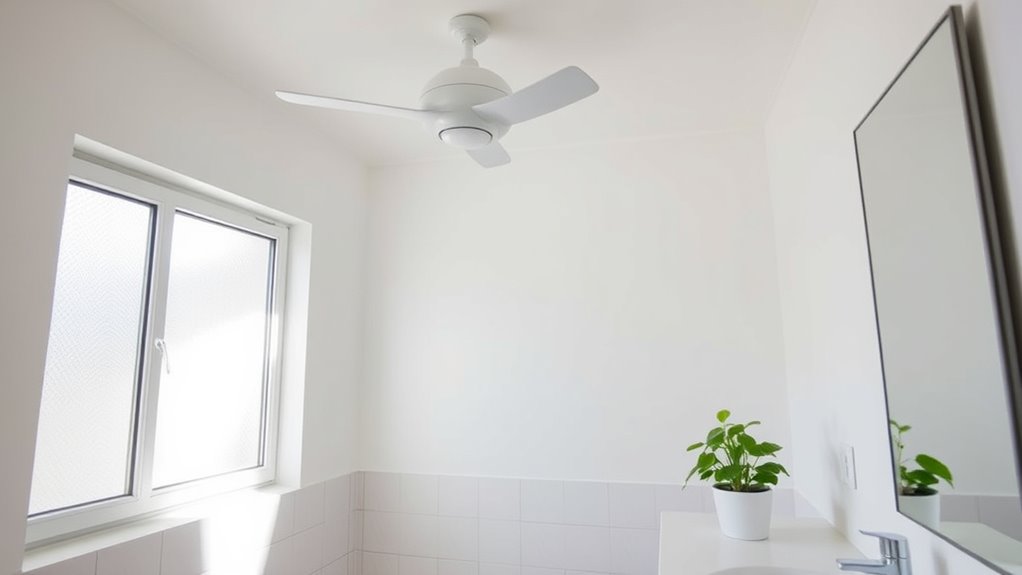
Start by adopting ventilation strategies that promote consistent airflow. Using exhaust fans in bathrooms and kitchens helps remove excess moisture generated during daily activities. Make sure these fans are functioning properly and run them during and after showers or cooking. If your home has windows, open them regularly to allow fresh air in and stale air out, especially when outdoor conditions are dry. Installing air vents or exhaust systems in areas like laundry rooms can also aid in maintaining proper airflow. This reduces the humidity level and discourages mold growth.
Promote airflow with exhaust fans, open windows, and install vents to reduce humidity and prevent mold growth.
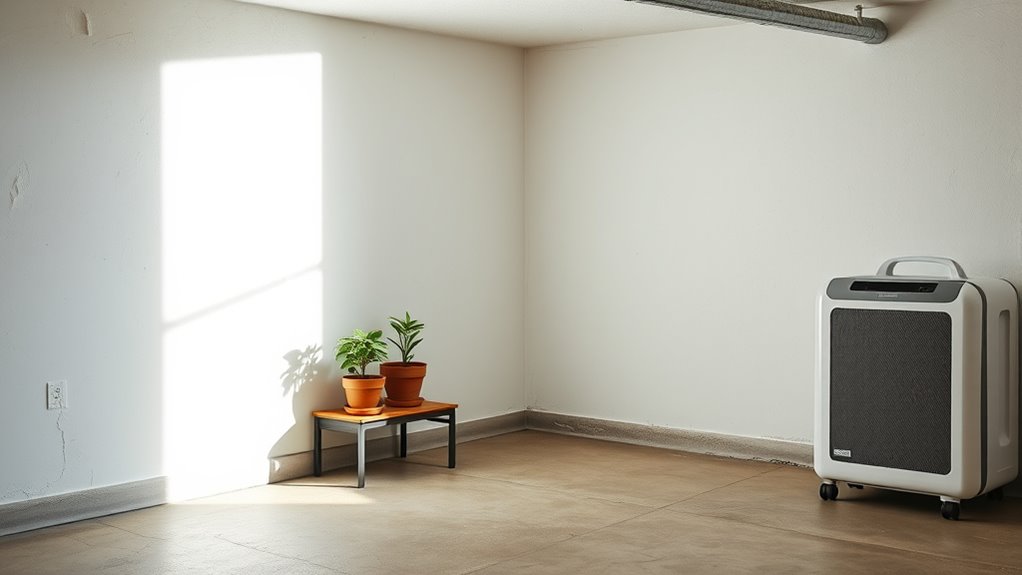
Moisture control techniques play an essential role in mold prevention. Keep indoor humidity below 60%, ideally between 30-50%. You can measure humidity levels with a hygrometer, which is an affordable and simple tool to monitor moisture in your home. If you notice high humidity, use dehumidifiers to extract excess moisture from the air. Fix any leaks immediately—be it from pipes, roofs, or windows—since even small leaks can create a damp environment conducive to mold. Pay special attention to areas that are often hidden or hard to reach; moisture can accumulate in hidden spaces and go unnoticed until mold appears.
Another moisture control tip involves controlling condensation. Insulate pipes and walls to prevent cold surfaces that attract moisture. When warm, moist air comes into contact with cold surfaces, condensation occurs, providing a perfect breeding ground for mold. Wipe down condensation on windows and walls regularly to prevent water buildup. Additionally, avoid overwatering houseplants, as excess moisture can contribute to humidity levels. Monitoring and controlling airflow in your home is crucial, as it directly impacts how moisture disperses and where mold might develop.
Combining good ventilation strategies with moisture control techniques creates a hostile environment for mold growth. Regular cleaning and maintenance are also essential — wiping down surfaces, especially in bathrooms and kitchens, removes any mold spores that might be starting to develop. With consistent effort, you’ll considerably reduce the risk of mold taking hold in your home. Remember, mold prevention isn’t a one-time fix; it requires ongoing vigilance and the right combination of airflow management and moisture control to keep your living space healthy and mold-free.
hygrometer for home humidity monitoring
As an affiliate, we earn on qualifying purchases.
As an affiliate, we earn on qualifying purchases.
Frequently Asked Questions
How Long Does It Take Mold to Develop After Water Damage?
Mold can start developing within 24 to 48 hours after water damage occurs. The timing of mold depends on factors like moisture levels, temperature, and materials affected. If you don’t dry the area quickly, mold spores will settle and grow rapidly. To prevent mold development, you should dry out the area as soon as possible, ideally within the first day or two, and keep it well-ventilated.
Are Certain Building Materials More Resistant to Mold Growth?
Like a trusty smartphone, certain building materials today offer better mold resistance. You’ll find materials like PVC, metal, and treated wood are more resistant to mold growth compared to traditional drywall or untreated wood. These materials help prevent moisture absorption, fundamentally acting like a shield against mold. Choosing mold-resistant building materials is a smart move, especially in high-humidity areas, ensuring your space stays healthier and mold-free longer.
Can Household Cleaning Products Fully Eliminate Mold Spores?
Household cleaning products can help remove visible mold and reduce mold spores temporarily, but they can’t fully eliminate all mold spores embedded in porous surfaces. To effectively control mold, you need specialized cleaning solutions and proper ventilation. Regular cleaning is essential, but for persistent or extensive mold, it’s best to consult a professional. This way, you guarantee mold spores are thoroughly addressed, preventing future growth.
What Are the Health Risks Associated With Hidden Mold?
Imagine breathing in unseen spores that cling to your indoor air quality like a silent fog. Hidden mold risks your health by triggering allergy symptoms, asthma attacks, and respiratory issues. It can quietly weaken your immune system over time, making you feel tired and unwell without realizing the cause. Protect yourself by addressing hidden mold promptly, ensuring clean indoor air, and reducing allergy symptoms that can disrupt your daily life.
How Often Should Ventilation Systems Be Inspected for Mold?
You should inspect your ventilation systems, including air ducts, at least once a year for mold. Regular ventilation maintenance helps prevent mold buildup by identifying moisture issues early. If you notice musty odors or visible mold, increase inspections and cleanings. Proper maintenance guarantees your air ducts stay mold-free, improving indoor air quality and protecting your health. Don’t skip routine checks—they’re key to mold prevention.
Conclusion
By keeping your home dry and well-ventilated, you stand as a fortress against mold’s silent invasion. Regularly check for leaks, clean surfaces promptly, and control humidity levels—think of it as tending a garden that needs your care. Mold is like a thief in the night, sneaking in when you least expect it. Stay vigilant and proactive; your home’s health depends on it, turning prevention into your strongest shield.