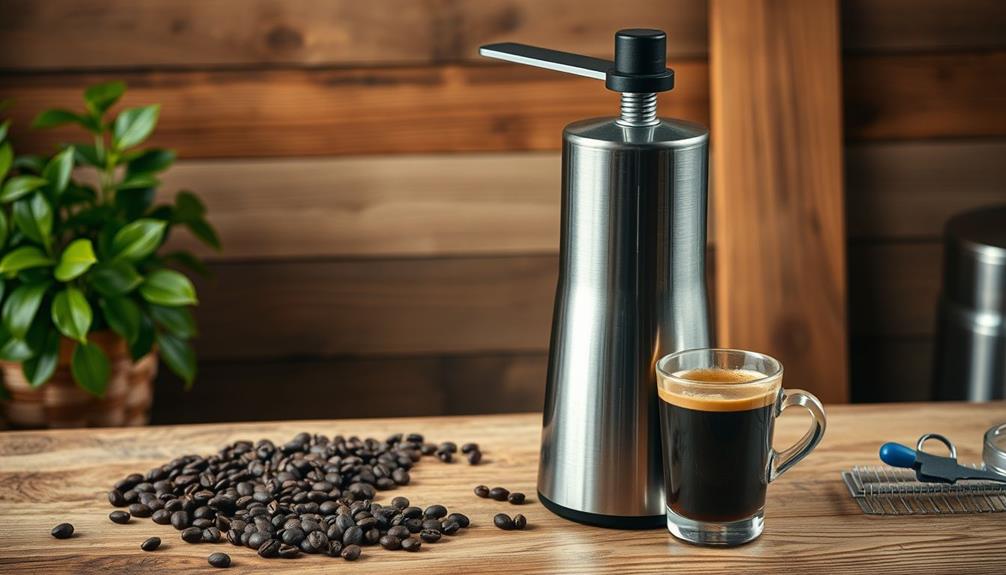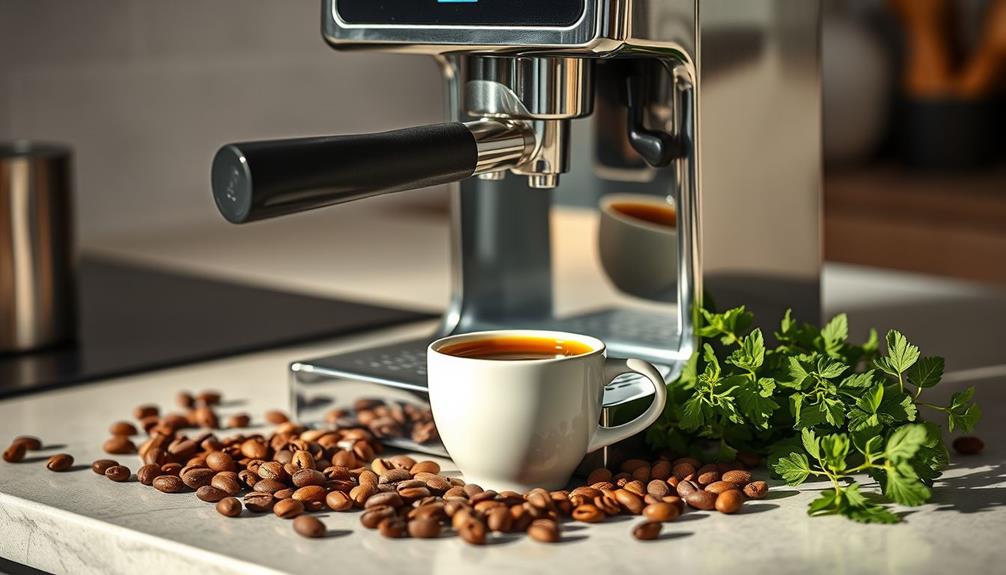

For a non-toxic espresso machine, I would start with the parts that touch hot water and coffee: stainless steel and aluminum stovetop makers offer a simple brew path, while electric machines add more materials and components. My best overall pick is the CASABREWS 5418 MAX PFAS-Free Espresso Machine, since its stated PFAS-free design addresses a specific material concern while keeping milk drinks in reach. The WALDWERK Stainless Steel Moka Pot is a straightforward stovetop alternative, and the Breville Barista Express suits buyers who value an integrated grinder and more control. The tradeoffs are material transparency, convenience, capacity, and how much espresso-making effort you want. Read on for the full comparison and guidance on choosing the right option for your priorities.

Get kitchen staples and gadgets delivered free with Prime
- Fast, free delivery on millions of items
- Prime Video, Amazon Music and more included
- Member-only deals all year
Complete the kit


Key Takeaways
- The two CASABREWS PFAS-free models stand out on a named material claim, but buyers should still check which specific parts the claim covers.
- Stainless steel moka pots keep the brew path simple; the WALDWERK, Pedro, London Sip, and 4-cup models differ in capacity, handle design, and induction suitability.
- Bialetti’s Moka Express options use aluminum, so they are a recognizable stovetop choice for buyers comfortable with that material, not a stainless steel substitute.
- Electric machines offer steam wands and more convenience, but their added parts make material verification more involved than with a moka pot.
- The Barista Express offers the most integrated control with its grinder, while compact machines such as CHULUX and CASABREWS CM5418 favor a smaller footprint and simpler setup.




| non toxic espresso machine | Material |
|---|---|
| Pedro Stovetop Espresso Maker | 18/8 stainless steel |
| London Sip Stainless Steel Sto | Stainless steel |
| Bialetti Moka Express: Iconic | Aluminum |
| CASABREWS 3700 Essential Espre | Stainless steel |
| CHULUX Slim Espresso Machine w | — |
| 4-Cup Stainless Steel Moka Pot | 304 stainless steel |
| CASABREWS CM5418 Espresso Mach | Stainless steel |
| Gevi 20-Bar Compact Espresso M | — |
| De’Longhi EM400M Classic Espre | Stainless steel |
| Bialetti Moka Express 6-Cup St | Aluminum |
| Espresso Machine 20 Bar with M | Stainless steel |
| Breville Barista Express Espre | — |
| CASABREWS 5418 MAX PFAS-Free E | — |
| CASABREWS PFAS-Free Espresso M | — |
| WALDWERK Stainless Steel Moka | — |
More Details on Our Top Picks
Pedro Stovetop Espresso Maker 6-Cup 300ml Stainless Steel Moka Pot
For buyers who want a stovetop brewer with stainless steel in the coffee path, the Pedro is a practical choice: its 18/8 body avoids the aluminum construction of the Bialetti Moka Express elsewhere in this lineup. Its 300 ml capacity suits several small servings, and compatibility with induction, gas, and electric stovetops makes it more flexible than a brewer limited to one heat source. The manual design keeps operation simple, though dialing in fine grounds and heat takes some practice. Compared with the London Sip, Pedro lists its steel grade and dimensions, giving buyers more material detail; both offer similar capacity and broad stovetop compatibility. It is still a moka pot, not a pump espresso machine, and its six-cup limit and hands-on brewing make it a weaker fit for large households or push-button convenience.
Pros:- 18/8 stainless steel construction is a clear alternative to the aluminum Bialetti Moka Express
- Works with gas, electric, and induction stovetops
- 300 ml capacity can serve several small moka-style cups
- Disassembles for cleaning and has a listed dishwasher-safe design
Cons:- Manual brewing requires attention to grind and heat
- Six-cup capacity may fall short for larger groups
- Produces moka-style coffee rather than pump-brewed espresso
Best for: Stovetop coffee drinkers who want a 300 ml stainless steel moka pot that works on induction
Not ideal for: Buyers who want automatic espresso extraction, larger batch capacity, or minimal involvement in brewing
- Capacity:300 ml (6 cups)
- Material:18/8 stainless steel
- Dimensions:4.92 × 3.82 × 8.27 inches
- Weight:816 g
- Operation:Manual
- Heat source compatibility:Gas, electric, and induction
- Dishwasher safe:Yes
Our verdict“Choose the Pedro if you want a flexible, stainless steel stovetop brewer and are comfortable managing the brew yourself.”
London Sip Stainless Steel Stovetop Espresso Maker Moka Pot Italian Coffee Percolator, Silver, 6 Espresso Cups
The London Sip earns its place for buyers seeking a stainless steel moka pot that works across gas, electric, ceramic, and induction cooktops. Like the Pedro, it offers a 300 ml capacity and a safety valve; its large, outward-facing heatproof handle gives it a more explicit handling advantage in the supplied details. The Pedro, by comparison, specifies 18/8 steel and dishwasher safety, so it may appeal more to shoppers prioritizing material detail and cleanup. Neither brewer automates extraction: you still need a stovetop and some control over the coffee and heat. Its six-cup capacity also refers to small espresso-style portions, not six full mugs. This is a sound fit for stovetop traditionalists, but buyers wanting milk steaming or one-button operation should look to a machine such as the CASABREWS 3700 instead.
Pros:- Stainless steel body offers an alternative to aluminum moka pots
- Compatible with gas, electric, ceramic, and induction stovetops
- Large heatproof handle supports safer handling
- Steam safety valve is included
Cons:- Requires stovetop heating and manual brewing
- Six small cups may not satisfy a group seeking larger servings
- Does not provide a steam wand for milk drinks
Best for: Induction-stove owners who want a manual stainless steel brewer with a large heatproof handle
Not ideal for: People who want automated espresso, a milk frother, or enough brewed coffee for a large gathering
- Capacity:300 ml (6 espresso cups)
- Material:Stainless steel
- Color:Silver
- Stovetop compatibility:Gas, electric, ceramic, and induction
- Handle:Large, outward-facing, heatproof
- Safety feature:Steam safety valve
Our verdict“Pick the London Sip if induction compatibility and an easy-to-grip handle matter more to you than extra material and cleaning details.”
Bialetti Moka Express: Iconic Stovetop Espresso Maker, 1 Cup (2 Oz – 60 Ml), Aluminum, Silver
The Bialetti Moka Express is the lineup’s most compact choice for someone who wants one small stovetop serving and values the familiar moka design. Its 60 ml capacity is a distinct advantage over the Pedro and London Sip, which brew 300 ml batches, when a solo drinker wants to avoid making more coffee than needed. That compact size also limits flexibility: it is a poor match for sharing or preparing several drinks at once. Its aluminum construction sets it apart from the stainless steel Pedro and London Sip, so it does not fit buyers specifically seeking a stainless steel brew path. It works on gas and electric stovetops; induction requires an adapter. Hand washing is required, making this a better fit for someone who accepts a little care in exchange for a compact, traditional manual brewer.
Pros:- 60 ml size suits a single small moka-style serving
- Compact format takes little storage space
- Traditional design with a safety valve
- Made in Italy
Cons:- Aluminum body may not suit buyers seeking stainless steel construction
- Induction use requires an adapter
- Hand washing and manual care are required
Best for: Solo coffee drinkers who want a compact, traditional moka pot for one small serving
Not ideal for: Buyers seeking stainless steel coffee-contact materials, dishwasher cleanup, or multiple servings per brew
- Capacity:60 ml (1 cup, 2 oz)
- Material:Aluminum
- Color:Silver
- Made in:Italy
- Stovetop compatibility:Gas and electric
- Induction compatibility:With adapter
- Safety feature:Safety valve
Our verdict“Choose the Bialetti for a compact solo brew if aluminum and hand cleaning fit your preferences.”
CASABREWS 3700 Essential Espresso Machine 20 Bar, Stainless Steel Cappuccino & Latte Coffee Maker with Steam Frother for Home, 43.9oz Water Tank, Silver
For buyers who want espresso-style drinks and steamed milk at home, the CASABREWS 3700 offers more drink-making range than the Pedro stovetop pot or other manual moka options. Its stainless steel construction, 20-bar pressure system, and steam frother support espresso, cappuccino, and latte preparation, while the 43.9 oz tank reduces how often you need to refill during a coffee routine. Those conveniences bring more parts to set up and clean than a simple stovetop brewer. The listed steel construction also does not specify every material that contacts water or coffee, so it alone cannot establish that the machine is entirely free of substances a buyer may wish to avoid. Compared with the narrower CHULUX Slim, this machine has a larger tank, but it also lacks the CHULUX’s listed pressure gauge and pre-infusion details.
Pros:- Stainless steel construction
- Steam frother supports milk drinks
- 43.9 oz water tank accommodates multiple brews between refills
- Compact design is intended for home or office use
Cons:- More setup and cleaning than manual moka pots such as the Pedro
- Product details do not identify all water- and coffee-contact materials
- Tank capacity may still be limiting for high-volume households
Best for: Home coffee drinkers who want a stainless steel machine with a steam wand for lattes and cappuccinos
Not ideal for: Shoppers seeking a simple stovetop brewer, minimal cleanup, or verified details for every coffee-contact material
- Water tank capacity:43.9 oz
- Pressure:20 bar
- Power:1350 W
- Material:Stainless steel
- Milk frother:Steam frother
- Product type:Home espresso machine
Our verdict“Choose the CASABREWS 3700 if a steam wand and larger water tank matter more than the simplicity of a stovetop brewer.”
CHULUX Slim Espresso Machine with Milk Frother
The CHULUX Slim is the lineup’s space-saving pump machine: at 5.5 inches wide, it takes less counter space than the CASABREWS 3700 while still offering a steam wand for milk drinks. A pressure gauge and pre-infusion add useful control over extraction, features the supplied CASABREWS details do not list. Its 40 oz tank is slightly smaller than the 3700’s 43.9 oz, a modest tradeoff for the narrow footprint. For this roundup’s non-toxic focus, the product data names brewing features but does not specify the materials of the water path, boiler, or other coffee-contact parts. Buyers who need those details should seek manufacturer confirmation before choosing it. It also requires ground coffee, so it is less convenient than a capsule system, and its slim body does not remove the routine cleaning that comes with a steam wand.
Pros:- 5.5-inch width saves counter space
- Pressure gauge and pre-infusion provide extraction feedback and control
- Steam wand supports lattes and cappuccinos
- Removable drip tray and 25-minute auto shut-off add convenience
Cons:- Product details do not specify water-path or coffee-contact materials
- Requires ground coffee rather than offering capsule convenience
- 40 oz tank is smaller than the CASABREWS 3700’s 43.9 oz tank
Best for: Apartment dwellers or office users who want a narrow pump machine with a steam wand and ground coffee
Not ideal for: Buyers who need confirmed coffee-contact material details, capsule convenience, or a larger tank
- Pump pressure:20 bar
- Power:1350 W
- Preheating time:30 seconds
- Water tank capacity:40 oz
- Width:5.5 inches
- Auto shut-off:After 25 minutes of inactivity
- Milk frother:Steam wand
- Extraction features:Pressure gauge and pre-infusion
Our verdict“Pick the CHULUX if counter width is tight and you want pump-based brewing with a steam wand, after checking its contact-material details.”
4-Cup Stainless Steel Moka Pot Stovetop Espresso Maker, 200ml, Suitable for Induction, Home & Camping
Stainless steel construction and stovetop brewing make this 200 ml moka pot a practical pick for campers who want coffee without an electric machine. It works with induction and other stovetops, giving it more cooking-surface flexibility than the Bialetti Moka Express, which needs an adapter for induction according to the supplied product data. At 0.73 kg, though, it is heavier than that aluminum option, so weight-conscious hikers may prefer a lighter setup. The four-cup capacity suits a small group, but larger parties will need repeat brews. Its manual process also calls for attention to heat; too much can overheat the brew. For a roundup focused on lower-contact materials, the steel body is a useful feature, but the product details do not specify the materials of every internal component.
Pros:- 304 stainless steel body
- Compatible with induction and other stovetops
- 200 ml capacity makes up to four small servings
- Manual design works without an electrical outlet
Cons:- Small capacity may require multiple brewing rounds
- Heavier than the aluminum Bialetti Moka Express
- Requires careful heat control, and the product data notes an initial odor may need washing
Best for: Campers and travelers who want an induction-compatible moka pot with a stainless steel body and can brew in small batches
Not ideal for: Weight-conscious hikers or households that need several servings at once, since it weighs 0.73 kg and holds 200 ml
- Capacity:200 ml (4 cups)
- Material:304 stainless steel
- Dimensions:3.7 × 3.7 × 7.5 in
- Weight:0.73 kg
- Operation:Manual
- Stovetop compatibility:Including induction
- Recommended uses:Camping, hiking, home use, and travel
Our verdict“Choose this for small-batch camping or travel coffee when induction compatibility and a stainless steel body matter more than minimizing pack weight.”
CASABREWS CM5418 Espresso Machine 20 Bar, Compact Stainless Steel Coffee Maker with Milk Frother, 34oz Water Tank, Silver
The steam wand and removable 34 oz water tank make the CM5418 a fit for people who want espresso drinks with frothed milk in a compact countertop machine. Compared with the Gevi 20-Bar Compact Espresso Machine, its supplied details emphasize a stainless steel body and a larger stated tank capacity, while Gevi adds a hot water function and pressure gauge. The CM5418’s 20-bar system is a pump specification; it does not by itself establish safer materials or better extraction than a machine with a different pressure rating. For a non toxic focused choice, the description identifies stainless steel but does not clarify the materials of water-contact parts, so buyers who need specific material disclosures should check those details. The machine also needs a cooling period after steaming, which can interrupt back-to-back drinks.
Pros:- Stainless steel exterior
- Steam wand supports milk frothing
- Removable 34 oz water tank
- Compact form intended for home or office use
Cons:- Requires a cooling period after frothing to prevent overheating
- Setup instructions may take time to learn
- Product details do not identify materials for all water-contact parts
Best for: Home coffee drinkers who make occasional cappuccinos or lattes and want a compact machine with a removable water tank
Not ideal for: Buyers prioritizing documented materials for every water-contact part or people who want to steam and brew several drinks in quick succession
- Pressure system:20 bar
- Power:1350 W
- Water tank:34 oz, removable
- Material:Stainless steel
- Color:Silver
- Milk frother:Steam wand
Our verdict“Pick the CM5418 for occasional milk-based drinks in a compact machine, provided its unspecified internal materials meet your requirements.”
Gevi 20-Bar Compact Espresso Machine
Pre-infusion, temperature control, and a pressure gauge give this Gevi more brewing feedback than the simpler CASABREWS CM5418 description provides. That can help a hands-on home brewer adjust a shot, while the hot water function adds a convenient route to Americanos or tea. The stainless steel housing is a positive exterior detail for a roundup about material-conscious choices, but the supplied data does not name the materials inside the water path. Its 20-bar pump rating is not a materials certification, either. This is a semi-automatic machine, so it asks the user to manage the process rather than offering a fully automatic routine. Compared with the De’Longhi EM400M’s stated 9-bar extraction and preset recipes, Gevi emphasizes manual control and visible brewing information over preset convenience.
Pros:- Stainless steel housing
- Pre-infusion and pressure gauge provide brewing feedback
- Temperature control supports adjustment during brewing
- Hot water function serves tea and Americanos
Cons:- Semi-automatic operation requires user involvement
- Product details do not specify water-contact materials
- 12-month warranty is shorter than the stated lifetime technical support
Best for: Countertop-conscious home brewers who want shot feedback, temperature control, and hot water in one compact machine
Not ideal for: Buyers who want push-button drink routines or full disclosure of materials used in water-contact components
- Pump pressure:20 bar
- Temperature control:NTC
- Brewing features:Pre-infusion and pressure gauge
- Milk frother:Steam wand with removable froth nozzle
- Housing:Stainless steel
- Hot water function:Yes
- Warranty:12 months
- Technical support:Lifetime
Our verdict“Choose Gevi if brewing controls and a hot water outlet matter more to you than preset simplicity or detailed internal material disclosures.”
De’Longhi EM400M Classic Espresso Machine, Stainless Steel
The EM400M’s customizable preset recipes and auto-stop function make it the lineup’s clearest choice for someone who wants a repeatable routine without manually stopping each shot. Its stated 9-bar extraction also contrasts with the higher pump-pressure figures listed for the Gevi and CASABREWS machines; those numbers alone do not establish material safety or cup quality. The Thermoblock system is described as providing fast temperature control, and the adjustable steam wand covers milk drinks. Against the Bialetti Moka Express, this machine offers recipe controls and milk frothing, while the moka pot avoids an electric appliance and has a simpler stated construction. For a non toxic focused buyer, the stainless steel material listing is useful but incomplete: the supplied details do not identify every water-contact component.
Pros:- Customizable preset recipes
- Auto-stop function simplifies shot timing
- Stainless steel material listing
- Thermoblock technology and adjustable steam wand
Cons:- No built-in grinder
- Limited to espresso and milk frothing functions
- Product details do not identify materials for all water-contact parts
Best for: Home espresso drinkers who value repeatable preset recipes, auto-stop brewing, and an adjustable milk wand
Not ideal for: Buyers seeking a manual non-electric brewer, a built-in grinder, or specific disclosure of all internal materials
- Pressure:9 bar
- Material:Stainless steel
- Features:Auto-stop function, customizable preset recipes, adjustable steam wand, and Thermoblock technology
- Design:Compact Italian style
- Adjustable tray:Yes
- Built-in grinder:None
Our verdict“Choose the EM400M for a more guided espresso routine with presets, while checking internal material details if that is your main buying criterion.”
Bialetti Moka Express 6-Cup Stovetop Espresso Maker
The manual stovetop design keeps this Bialetti simple: it brews without an electric machine, preset controls, or a steam wand. Its 300 ml capacity is larger than the 200 ml stainless steel moka pot in this batch, making it more suitable for households sharing a brew. The tradeoff is its aluminum body, which gives buyers focused on avoiding aluminum less reassurance than the steel stovetop option. The supplied data says it works on gas, electric, and induction with an adapter, while the stainless steel pot lists induction compatibility directly. Compared with electric options such as the De’Longhi EM400M, this moka pot has fewer functions and requires monitoring, but it is also a straightforward stovetop brewer. The product details do not specify all internal component materials.
Pros:- 300 ml capacity serves more than the 200 ml stainless steel moka pot
- Manual stovetop brewing needs no electric machine
- Simple rinsing for routine cleaning
- Works with gas and electric stoves, and induction with an adapter
Cons:- Aluminum body may not suit buyers avoiding aluminum
- Requires manual heat monitoring
- Not dishwasher safe and limited to stovetop brewing
Best for: Traditional moka coffee drinkers who want a six-cup manual brewer and are comfortable with an aluminum body
Not ideal for: Buyers specifically seeking a stainless steel brewer or those who want automatic brewing and milk frothing
- Material:Aluminum
- Capacity:300 ml (6 cups)
- Dimensions:2 × 2 × 2 in (as supplied)
- Weight:0.48 lb
- Operation:Manual
- Power source:Stovetop
- Compatible stoves:Gas, electric, and induction with adapter
- Exterior finish:Silver
Our verdict“Choose the Bialetti for a larger traditional moka brew if aluminum is acceptable; choose the stainless steel moka pot for a steel-bodied alternative.”
Espresso Machine 20 Bar with Milk Frother, Stainless Steel Compact Cappuccino Maker for Home, Office, Latte (Silver)
For a buyer focused on a stainless steel exterior and a small footprint, this machine pairs a 5.3-inch width with a removable tank and drip tray, making it easier to fit into a tight kitchen or office. Its pressure gauge offers a visible reference while dialing in a shot, and the steam wand covers milk drinks without a separate appliance. Compared with the Breville Barista Express, it takes up less counter width but lacks an integrated grinder and PID temperature control, so the Breville offers more control for someone willing to learn its workflow. The listed stainless steel construction does not specify the materials of every internal component or certify the full water path as PFAS-free. Plan for a preheat before brewing and a cool-down after steaming; quick back-to-back drinks may take patience.
Pros:- Narrow 5.3-inch body fits counters where wider machines may not
- Pressure gauge gives a visible reference when preparing espresso
- Steam wand supports milk drinks and latte art
- Removable water tank and drip tray simplify routine cleaning
Cons:- No integrated grinder, so fresh-bean users need a separate grinder
- Requires preheating and cooling between steaming and brewing
- Stainless steel exterior alone does not establish the materials of the full water path
Best for: Apartment dwellers or office users who need a narrow machine with a steam wand and use pre-ground coffee
Not ideal for: Buyers seeking documented PFAS-free water-path materials, an integrated grinder, or fast consecutive brewing after steaming
- Pump pressure:20 bar
- Power:1450 W
- Preheat time:20 seconds
- Water tank:34 oz, removable
- Dimensions:5.3 × 12.2 × 11.5 in
- Material:Stainless steel
- Type:Semi-automatic 2-in-1 espresso machine
- Color:Silver
Our verdict“Choose this for a narrow counter and manual milk drinks if you can accept the temperature pauses and the unverified internal water-path materials.”
Breville Barista Express Espresso Machine, Brushed Stainless Steel (BES870XL)
The Barista Express suits buyers who want to manage the full espresso routine, with an integrated conical burr grinder, dose control, pre-infusion, and PID temperature regulation. Those features can make fresh-bean preparation more repeatable and reduce the need for a separate grinder. Compared with the compact CASABREWS 5418 MAX, it occupies a more involved role: it offers built-in grinding and temperature control, while the CASABREWS emphasizes a PFAS-free water path and fast heat-up. The stainless steel finish is not a statement about every internal surface, and the supplied details do not establish PFAS-free materials throughout the water path. Manual grinding, dosing, tamping, and milk texturing also mean a steeper learning curve. Its 67-ounce tank suits repeated drinks, but the one-year limited warranty is brief for an appliance with this many functions.
Pros:- Integrated conical burr grinder delivers freshly ground coffee into the portafilter
- PID temperature control supports steadier brewing temperature
- Pre-infusion supports gradual wetting of the coffee puck
- 67-ounce water tank reduces refill frequency
Cons:- Manual grinding, dosing, tamping, and steaming take practice
- No PFAS-free water-path claim is provided in the product details
- One-year limited warranty
Best for: Home espresso learners who want freshly ground beans and hands-on control over extraction and milk texture
Not ideal for: Buyers prioritizing a documented PFAS-free water path, minimal setup, or a small footprint
- Model:BES870XL
- Grinder:Integrated precision conical burr grinder
- Temperature control:Digital PID
- Bean hopper:1/2 lb
- Water tank:67 oz
- Power:1600 W
- Voltage:120 V
- Warranty:1 year limited
Our verdict“Pick the Barista Express if grind-to-cup control matters more to you than a compact design or documented PFAS-free water-path materials.”
CASABREWS 5418 MAX PFAS-Free Espresso Machine with Fast Heating System
Among these countertop machines, the clearest materials detail belongs to the 5418 MAX: its description identifies a PFAS-free internal water path, a useful distinction for shoppers who do not want to infer internal materials from a stainless steel exterior. Flashheat is specified to reach brewing temperature in under five seconds, and a three-second steam switch aims to shorten the wait between brewing and frothing. Compared with the similarly sized CASABREWS PFAS-Free Espresso Machine with Milk Frother, this model foregrounds faster heat and steam switching; the other CASABREWS lists a pressure gauge and included shot accessories. Neither description establishes every component material beyond the stated water path and portafilter. The 5418 MAX also lacks a built-in grinder, so it fits pre-ground coffee users better than buyers seeking a grind-to-cup setup.
Pros:- Product description specifies a PFAS-free internal water path
- Flashheat system is specified to reach brewing temperature in under five seconds
- Three-second steam switch supports quicker transitions to milk frothing
- Compact stainless steel design measures under six inches wide
Cons:- No built-in grinder; requires pre-ground coffee or a separate grinder
- The PFAS-free claim applies to the water path and does not detail every component
- At 8.6 lb, it may be inconvenient to move often
Best for: Space-conscious coffee drinkers who prioritize a stated PFAS-free water path and quick transitions between brewing and steaming
Not ideal for: Fresh-bean users who need an integrated grinder or shoppers who want a pressure gauge and listed shot accessories
- Water path:PFAS-free
- Wattage:1550 W
- Voltage:120 V
- Operation mode:Semi-automatic
- Output pressure:20 bar
- Capacity:34 fl oz
- Dimensions:12.28 × 5.47 × 11.97 in
- Weight:8.6 lb
Our verdict“Choose this compact CASABREWS if a stated PFAS-free water path and fast heat-up matter more than built-in grinding or a pressure gauge.”
CASABREWS PFAS-Free Espresso Machine with Milk Frother
This CASABREWS combines a PFAS-free internal water path with a built-in pressure gauge and the basic accessories needed to start pulling single or double shots. That makes its materials information more specific than the stainless steel-only description for the Espresso Machine 20 Bar with Milk Frother, while the gauge gives beginners a visual reference. The 34-ounce removable tank and narrow body also suit a small home setup. Its tradeoff against the CASABREWS 5418 MAX is speed: the 5418 MAX lists under-five-second heating and a rapid steam switch, while this model’s details emphasize the gauge and included portafilters. Both lack an integrated grinder. After frothing, this machine needs to cool before brewing, and its protection may activate if you skip that pause. PFAS-free describes the stated water path, not every component.
Pros:- Product description specifies a PFAS-free internal water path
- Pressure gauge gives a visible reference for shot preparation
- Includes single- and double-shot portafilters, tamper, and spoon
- Removable 34-ounce tank is practical for home or office use
Cons:- Requires a cool-down after frothing before brewing
- No built-in grinder for whole-bean coffee
- Materials beyond the specified water path and aluminum portafilter are not detailed
Best for: New espresso makers who want a stated PFAS-free water path, a pressure gauge, and included shot accessories
Not ideal for: People making drinks back-to-back or buyers who need built-in grinding and temperature control
- Operation mode:Semi-automatic
- Pump pressure:20 bar
- Water tank:34 fl oz, removable
- Wattage:1350 W
- Voltage:120 V
- Water path:PFAS-free
- Portafilter:Aluminum
- Dimensions:12.28 × 5.9 × 11.97 in
- Weight:8.6 lb
Our verdict“This is a sensible starter choice for buyers who want a gauge and stated PFAS-free water path, provided they can work around the cooling pause.”
WALDWERK Stainless Steel Moka Pot, 10 oz, with Oak Wood Handle
The WALDWERK is the outlier for buyers whose priority is avoiding an electric machine’s more complex internal water path: its listed brewing body is stainless steel, with an oak wood handle and reusable filter. It makes espresso-style coffee on a stovetop rather than pump-driven espresso, so the result and method differ from the CASABREWS 5418 MAX, which has a stated PFAS-free water path and a steam system for milk drinks. The WALDWERK’s compatibility with induction, gas, ceramic, and electric stovetops gives it broad kitchen flexibility, and the safety valve is a useful listed feature. Capacity is 10 ounces, but that does not mean ten conventional espresso shots; it is a small batch brewer. It also requires ground coffee and offers no steam wand or electric temperature control.
Pros:- Stainless steel body avoids the aluminum construction listed for some moka pots
- Oak wood handle provides a nonmetal grip
- Works on induction, gas, ceramic, and electric stovetops
- Includes a reusable filter and safety valve
Cons:- Brews espresso-style coffee rather than pump-driven espresso
- No steam wand for milk drinks
- 10-ounce capacity may be limiting for larger households
Best for: Stovetop coffee drinkers seeking a listed stainless steel brewing body and compatibility with several cooktop types
Not ideal for: Espresso purists wanting pump extraction, milk frothing, or a machine that heats independently of a stovetop
- Capacity:10 fl oz
- Body material:Stainless steel
- Handle material:Oak wood
- Operation mode:Manual
- Coffee input:Ground coffee
- Filter:Reusable
- Stovetop compatibility:Induction, gas, ceramic, and electric
- Safety feature:Safety valve
- Weight:0.76 kg
Our verdict“Choose the WALDWERK if a simple stovetop brewer with a listed stainless steel body fits your routine better than an electric espresso machine.”
How We Picked
I compared the 15 listed models through the lens of hot beverage contact materials, separating stovetop moka pots from electric espresso machines because their designs create different questions for buyers. I gave weight to clearly identified materials, explicit PFAS-free claims, construction, capacity, induction compatibility where specified, milk-frothing features, footprint, and the effort required for daily care. A named claim is useful, but it does not establish that every component is free of a substance; buyers should confirm its scope with the manufacturer.
The ranking favors products that make a buyer-relevant material distinction without giving up the intended use. The CASABREWS 5418 MAX leads for its specific PFAS-free positioning, while stainless steel moka pots follow for their comparatively simple construction. Aluminum Bialetti models remain sensible for buyers who accept aluminum, and electric machines without clear material claims rank lower for this particular search. Premium features such as an integrated grinder affect convenience and control, but they do not by themselves make a machine a safer material choice.
Factors to Consider When Choosing Non Toxic Espresso Machine
I would choose by first deciding which material question matters most, then matching the machine format to the coffee routine I actually want. These broader checks can prevent a polished feature list from distracting from the parts that matter to a buyer focused on material choices.
Trace the Full Brew Path
Look beyond the exterior shell and ask which materials touch water, brewed coffee, and steam. A stainless steel body does not automatically mean every internal component, gasket, coating, or accessory is stainless steel. Request a parts list or written material statement when a product page leaves those details vague. Also check whether the answer applies to the exact model and current version, since product lines can change. A short, documented brew path may be easier to assess than a feature-rich machine with many internal parts.
Read PFAS-Free Claims Precisely
A PFAS-free label can help narrow a search, but the wording should identify what it covers. Check whether it refers to a particular coating, water-contact components, or the whole appliance, and whether the frothing system is included. Do not treat a material claim as proof about unrelated concerns such as metals, plastics, or manufacturing residues. If the claim matters to your purchase, save the manufacturer’s specification or ask customer support before ordering. This extra check is more useful than assuming all machines carrying similar wording have identical construction.
Pick Stovetop or Electric Based on Routine
A moka pot uses the stovetop and avoids the pump, boiler, and steam system found in electric machines, but it calls for more hands-on preparation and does not make café-style pressure espresso. Electric models can simplify repeat brewing and milk drinks, though they bring more components to inspect and clean. Think about whether you make straight coffee or routinely steam milk before paying for a frother. A compact electric machine can save counter space, while a stovetop model needs compatible heat and a place to store it. Choosing a format first narrows the material research substantially.
Match Capacity to How Much You Drink
Moka pot cup labels describe small servings, not full mugs, so a six-cup designation may not mean six typical portions. A one-cup pot can suit an individual but becomes tedious when serving several people. Larger pots reduce repeat brewing and may take more storage space. For electric machines, tank size affects how often you refill but says little about the number of drinks you can make before other steps are needed. Estimate your normal morning quantity rather than buying for an occasional gathering.
Factor Cleaning and Replacement Parts Into Ownership
Daily cleaning affects both convenience and how long a machine remains pleasant to use. Ask whether the manufacturer supplies replacement gaskets, filters, and other wear parts, and follow its cleaning instructions rather than using harsh products by default. Moka pots have fewer systems to maintain, but still need attention to seals and residue. Electric machines can require descaling and careful cleaning around the group head and frother. A machine that is easy to maintain is more likely to stay in regular use, even if its feature list looks less ambitious.
Pay More for Useful Control, Not Just More Features
An integrated grinder can reduce counter clutter and give more control over freshness, but it also adds complexity and maintenance. A steam wand is worthwhile for regular cappuccino drinkers; occasional milk drinkers may prefer a simpler setup. Before paying for programmability or pressure claims, check whether the machine gives you settings you will use and whether those features change the materials you are trying to verify. For a buyer focused on a straightforward brew path, a moka pot may be the more direct fit. Spend extra when a feature solves a repeated need, not simply because a model has a longer specification list.
Frequently Asked Questions
Does a PFAS-free label mean the entire espresso machine is free of concerning materials?
No. The phrase may apply to a specific coating or component, and it does not automatically describe the boiler, seals, tubing, or milk frother. I would look for a statement that names the parts covered and ask the manufacturer when that scope is unclear. It is also useful to distinguish PFAS information from other material questions, such as whether water-contact parts contain plastic. Compare the documentation for the exact model rather than relying on a broad product family claim.
Should I choose a stainless steel moka pot over an aluminum Bialetti?
That depends on which material you prefer and the tradeoffs you accept. Stainless steel models in this roundup can suit buyers seeking that material and may work on induction when the product specifies compatibility. The Bialetti Moka Express is aluminum, so it is not the right match if avoiding aluminum is a firm preference. Capacity and stove compatibility also vary, so check those details alongside material. Neither format produces the same process or convenience as an electric espresso machine.
Can a moka pot make espresso in the same way as an electric machine?
A moka pot makes concentrated coffee using stovetop pressure, but it is not the same brewing method as a pump espresso machine. Its appeal is a simpler setup and a small number of main parts, while an electric machine can offer more repeatable pressure control and milk steaming. If your priority is classic espresso drinks with a steam wand, choose an electric model and investigate its materials. If you mainly want concentrated coffee and a straightforward device, a moka pot may fit better. Expect a different cup and technique either way.
What should I verify before buying an electric espresso machine for material reasons?
Ask for the materials of the water tank, boiler, internal water lines, seals, group head, and any coated surfaces that contact hot liquid. Check whether the milk frother introduces separate parts that need to be included in your research. Confirm that any PFAS-free statement applies to the specific model and components you care about. If the manufacturer provides no clear answer, treat that as an information gap rather than making assumptions from the stainless exterior. Keep the response or specification page for future reference.
Is a premium machine automatically a better choice for someone seeking a non-toxic option?
No. Premium features can improve control, workflow, or grinding convenience, but they do not establish a machine’s material profile. The Breville Barista Express is a stronger fit for someone who wants an integrated grinder and hands-on espresso control, while a simpler moka pot may be easier to evaluate by construction. A premium electric model still merits component-level material checks. Decide which performance features matter first, then compare documented materials among models that meet those needs.
Conclusion
For the best overall fit in this roundup, I would choose the CASABREWS 5418 MAX PFAS-Free Espresso Machine for its explicit PFAS-free positioning, after confirming the claim’s scope. The WALDWERK Stainless Steel Moka Pot is my pick for buyers who want a simple stainless steel stovetop option, while the 4-Cup Stainless Steel Moka Pot makes more sense when induction compatibility and a smaller batch matter. For beginners, a moka pot offers fewer controls to learn; those wanting a milk wand and electric workflow should compare compact options such as CHULUX and CASABREWS CM5418, checking material details first. The Breville Barista Express is the premium choice for buyers who value an integrated grinder and greater control, while the Bialetti Moka Express suits those comfortable with aluminum and drawn to its classic stovetop format. Choose according to the material documentation you can verify and the brewing routine you will use most.