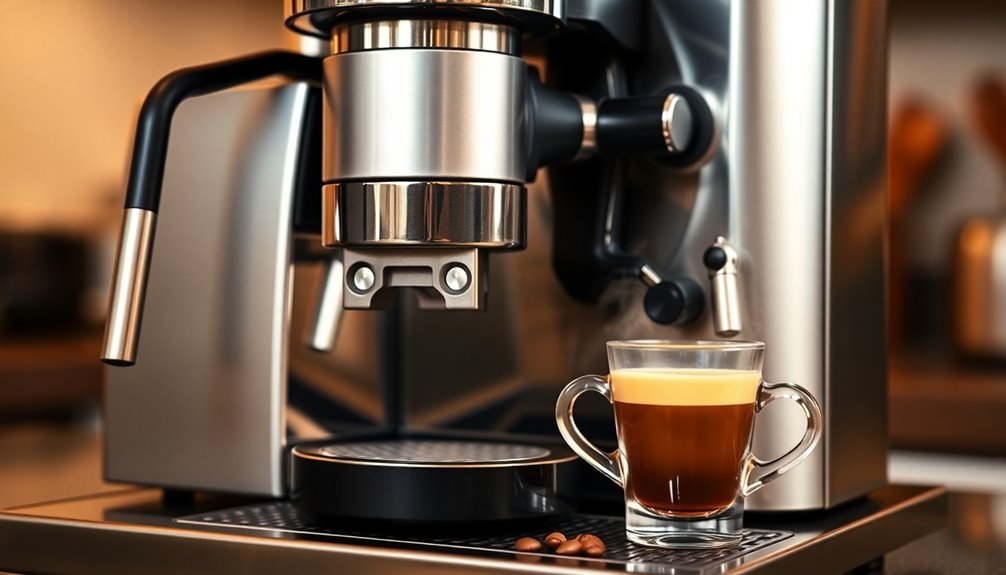
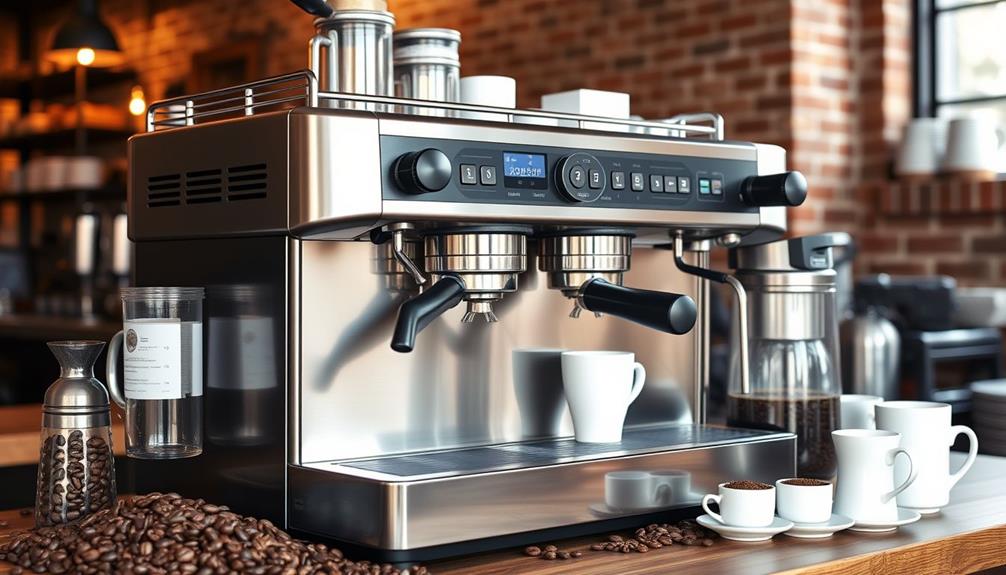
A coffee espresso combo machine with a grinder saves counter space and keeps the brewing process in one place, but the models here vary widely in how much control they give you. I’d choose the Breville Barista Express as the best overall for its built-in grinder and hands-on espresso workflow; the Ninja Luxe Café Premier stands out for drink variety, while the Philips 3300 suits buyers who want automatic milk drinks. The main tradeoff is between control and convenience: semi-automatic machines ask you to grind, tamp, and adjust, while fully automatic options do more of that work for you. Grinder range, milk preparation, cleaning, and counter space also separate these picks. Read on for my comparison, buying advice, and recommendations by brewing style.

Get kitchen staples and gadgets delivered free with Prime
- Fast, free delivery on millions of items
- Prime Video, Amazon Music and more included
- Member-only deals all year
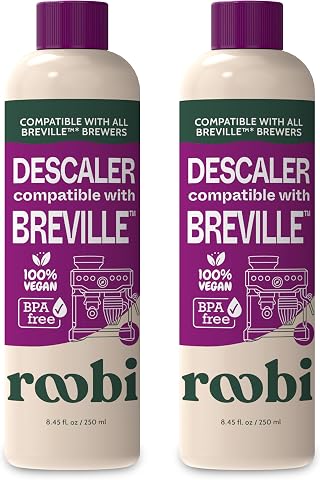
Complete the kit


Key Takeaways
- The Breville Barista Express is my best overall pick for buyers who want a grinder built into a familiar, hands-on espresso setup.
- The Ninja Luxe Café Premier stands apart for drink range, combining espresso, drip coffee, and cold brew functions in one machine.
- Philips 3300 and 5500 favor convenience with fully automatic brewing and LatteGo milk systems; the 5500 is the higher-feature option in that pair.
- Gevi’s 35 grind settings give it a wider adjustment range than the listed 20-setting AMZCHEF model, which may matter to buyers who like dialing in beans.
- Compact machines still need a workflow check: a smaller footprint does not tell you whether the grinder, milk system, or cleaning routine will suit your daily habits.




| coffee espresso combo machine with grinder | Dimensions | Operation mode | Pump pressure | Weight |
|---|---|---|---|---|
| AMZCHEF Semi-Automatic Espress | 11.2 × 9.1 × 14.2 in (D × W × H) | — | 20 bar | — |
| Chefman 8-in-1 Coffee Station | 11.81 × 13.19 × 13.98 in | — | 20 bar | — |
| Espresso Machine with Grinder | 10.04 × 11.22 × 14.17 in (D × W × H) | Semi-automatic | — | — |
| Gevi Espresso Machine 20 Bar w | 12.28 × 10.31 × 12.4 in (D × W × H) | — | 20 bar | 8.6 lb |
| Breville Barista Express Espre | 13.8 × 12.5 × 15.9 in | — | — | 22.1 lb |
| PULZO Espresso Machine with Gr | 10.5 × 10.9 × 14.3 inches | Semi-automatic | 20 bar | 13.3 pounds |
| Ninja Luxe Café Premier 3-in-1 | 12.99 × 13.39 × 14.57 inches | Fully automatic | — | 31.6 pounds |
| Philips 3300 Series Fully Auto | 9.68 × 17.04 × 14.6 inches | Fully automatic | 15 bar | 17.6 pounds |
| AMZCHEF Espresso Machine with | — | — | 20 bar | — |
| Philips 5500 Series Fully Auto | — | Fully automatic | 15 bar | — |
| AMZCHEF Semi-Automatic Espress | 12.5 × 10.82 × 13.38 in (D × W × H) | — | — | 13.9 lbs |
| AIRMSEN Espresso Machine with | 10.2 × 7.9 × 12 in (D × W × H) | Semi-automatic | — | 12.6 lbs |
| Espresso Machine with Grinder | — | Semi-automatic | — | — |
| Gevi 20 Bar Espresso Machine w | — | Semi-automatic | — | — |
More Details on Our Top Picks
AMZCHEF Semi-Automatic Espresso Machine with Built-In Grinder, Black
The AMZCHEF 5560 suits buyers who want room to adjust extraction while keeping grinder, brewer, and steam wand together. Its 20 grind settings, adjustable pre-infusion, and three PID-controlled temperature choices give more ways to tune a shot than the simpler control set described for the Chefman 8-in-1 Coffee Station. That control comes with a learning curve: you still need to set the grind, dose, and tamp yourself. Its 11.2-inch depth also makes it a relatively compact choice beside the larger Breville Barista Express, though the AMZCHEF’s listed specs don’t include hopper capacity or weight. Choose it if dialing in espresso matters more than push-button convenience; skip it if you want a machine that handles milk automatically or serves drip coffee too.
Pros:- Twenty grinder settings give flexibility when changing beans or shot preferences
- Three PID-controlled brewing temperatures and adjustable pre-infusion allow extraction adjustments
- Built-in steam wand supports lattes and cappuccinos
- Removable water tank and integrated grinder reduce the need for separate countertop equipment
Cons:- Semi-automatic brewing requires dialing in grind, dose, and tamp
- 120-volt rating limits compatibility in regions using different household voltage
- No listed bean hopper capacity makes storage planning harder
Best for: Home espresso drinkers who want adjustable brewing temperature and pre-infusion in a compact machine
Not ideal for: Beginners seeking automated milk drinks or buyers outside regions that use 120-volt appliances
- Machine type:Semi-automatic espresso machine
- Pump pressure:20 bar
- Power:1350 watts
- Grinder settings:20
- Pre-infusion:Adjustable from 3 to 10 seconds
- Brewing temperature:197–205°F
- Water tank:Removable
- Dimensions:11.2 × 9.1 × 14.2 in (D × W × H)
Our verdict“Choose the AMZCHEF 5560 if you want hands-on shot control in a relatively compact grinder-and-espresso setup.”
Chefman 8-in-1 Coffee Station with Espresso Machine and Automatic Milk Frother
The Chefman 8-in-1 is the lineup’s broadest brewing station, but it is a less direct fit for shoppers specifically seeking a grinder-and-espresso combo: its listed inputs are ground coffee, K-Cup pods, and Nespresso Original pods, with no built-in grinder specified. In return, it covers drip, espresso, and iced coffee, and its 12-cup carafe works better for shared coffee routines than the single-shot focus of the Breville Barista Express. The automatic milk frother also reduces hands-on work, although its 16-ounce capacity sets a limit on each batch. A 3-liter removable tank and accessory storage help with daily use. Pick this when variety and convenience matter more than grinding fresh beans inside the machine.
Pros:- Brews drip coffee, espresso, and iced coffee in one station
- Accepts ground coffee, K-Cup pods, and Nespresso Original pods
- Automatic removable milk frother supports lattes and cappuccinos
- Large 3-liter removable water tank and 12-cup carafe suit shared use
Cons:- No built-in grinder is specified, so whole beans require a separate grinder
- Milk frother capacity is limited to 16 ounces per batch
- Carafe keep-warm setting lasts up to one hour
Best for: Households that switch between drip coffee, espresso-style drinks, and pods and value automatic milk frothing
Not ideal for: Whole-bean espresso buyers who require a built-in grinder and want to adjust grind size
- Coffee maker type:Specialty coffee system
- Brewing functions:Drip coffee, espresso, and iced coffee
- Compatible coffee inputs:Ground coffee, K-Cup pods, and Nespresso Original pods
- Pump pressure:20 bar
- Carafe capacity:12 cups
- Water tank capacity:3 liters
- Milk frother capacity:16 ounces
- Dimensions:11.81 × 13.19 × 13.98 in
Our verdict“Choose the Chefman if your household wants several coffee styles and pod compatibility more than an integrated grinder.”
Espresso Machine with Grinder, 20-Bar Compact Espresso Maker with Steam Milk Frother, Coffee Maker for Home (Black, Medium)
This compact semi-automatic machine makes the most sense for buyers who prefer an on-machine LED touchscreen to a more traditional control layout. It pairs a built-in grinder with a steam wand, similar in core setup to the AMZCHEF 5560, while its listed 61-ounce tank and 1.8-liter capacity indicate a useful home-scale reservoir. The description also claims rapid heating in under a minute, which may reduce the wait before a shot, though that timing is a product claim rather than a detailed heating spec. Compared with the Breville Barista Express, this model emphasizes touchscreen operation and a narrower footprint, but gives no grinder-setting count or detailed extraction controls in the supplied data. The screen may take time to learn, and the frother and tank need regular cleaning.
Pros:- Built-in grinder and steam wand combine key espresso functions in one appliance
- Touchscreen offers a clear control interface
- 61-ounce removable tank supports multiple drinks before refilling
- Listed rapid heating claim may shorten startup time
Cons:- Supplied product data does not specify the number of grinder settings
- Touchscreen controls may require a learning period
- Milk frother and water tank need regular cleaning
Best for: Space-conscious home users who want an integrated grinder and touchscreen-guided operation
Not ideal for: Espresso hobbyists who need documented grinder adjustment ranges and hands-on extraction controls
- Operation mode:Semi-automatic
- Wattage:1350 watts
- Voltage:120 volts
- Capacity:1.8 liters
- Water tank capacity:61 oz
- Controls:LED touchscreen
- Features:Removable water tank, cup warmer, milk frother, auto shut-off
- Dimensions:10.04 × 11.22 × 14.17 in (D × W × H)
Our verdict“Choose this model if touchscreen operation and a compact grinder-and-steamer setup matter more than detailed grinder specifications.”
Gevi Espresso Machine 20 Bar with Grinder, Professional Espresso Maker with 35 Grind Settings, Super-Automatic Coffee Machine
The Gevi’s clearest advantage over the AMZCHEF 5560 is its 35 grinder settings, the largest documented range among these five products. That gives bean-focused users more points to adjust grind size, though the supplied data calls it super-automatic while also noting that some functions need manual operation; buyers should expect less hands-off use than that label may suggest. A steam wand and included accessories support milk drinks and routine upkeep, while the 1-liter capacity is modest beside the Chefman’s 3-liter tank or the Breville’s 67-ounce reservoir. Its compact dimensions and listed 8.6-pound weight make it easier to place or move than the heavier Breville. This is a better fit for experimenting with grind settings than for serving many drinks before refilling.
Pros:- Built-in burr grinder has 35 adjustable settings
- Steam wand supports cappuccino and other milk drinks
- Compact listed dimensions and 8.6-pound weight ease placement
- Accessories are included for brewing customization and cleaning
Cons:- One-liter capacity is limited for repeated drinks or group serving
- Some functions require manual operation despite the super-automatic label
- Supplied data does not specify detailed temperature or pre-infusion controls
Best for: Espresso drinkers who want a wide range of grinder adjustments in a compact machine
Not ideal for: Large households or frequent hosts who need a bigger water capacity and minimal refills
- Machine type:Listed as super-automatic
- Pump pressure:20 bar
- Power:1350 watts
- Grinder settings:35
- Capacity:1 liter
- Voltage:120 volts
- Dimensions:12.28 × 10.31 × 12.4 in (D × W × H)
- Weight:8.6 lb
Our verdict“Choose the Gevi if grind adjustment range matters more than a large reservoir or fully hands-off operation.”
Breville Barista Express Espresso Machine with Built-In Grinder, Brushed Stainless Steel
The Breville Barista Express is the most substantial, hands-on pick here for buyers who want an integrated conical burr grinder and a traditional portafilter workflow. Its low-pressure pre-infusion and PID temperature control give extraction more defined controls than the supplied specs for the touchscreen model, while the adjustable grind dial lets you tune for different beans. That flexibility asks for time: grinding, extraction, and milk texturing all involve manual work. At 22.1 pounds and 15.9 inches tall, it also takes more counter space than the AMZCHEF 5560. Its 67-ounce tank and half-pound bean hopper support repeated home use, and the included portafilter, tamper, milk jug, and tools make the setup more complete. Pick it for control and accessories; skip it for compactness or automation.
Pros:- Integrated precision conical burr grinder feeds coffee directly into the portafilter
- PID temperature control and low-pressure pre-infusion support shot adjustment
- Steam wand can produce microfoam for milk drinks
- Includes portafilter, tamper, milk jug, and cleaning accessories
Cons:- Manual grinding, extraction, and milk texturing require practice and attention
- Larger and heavier than the AMZCHEF 5560, at 15.9 inches tall and 22.1 pounds
- 120-volt rating may not suit regions with different household voltage
Best for: Espresso enthusiasts who want a portafilter workflow, adjustable grinding, and manual milk texturing
Not ideal for: Beginners who want automatic drink preparation or buyers with limited counter space
- Machine type:Manual espresso machine
- Grinder:Integrated precision conical burr grinder
- Water tank capacity:67 oz
- Bean hopper capacity:0.5 lb
- Power:1600 watts
- Dimensions:13.8 × 12.5 × 15.9 in
- Weight:22.1 lb
- Warranty:1-year limited
Our verdict“Choose the Barista Express if you want a complete, hands-on espresso station and have room for its larger footprint.”
PULZO Espresso Machine with Grinder, 20 Bar Professional Coffee Maker, Stainless Steel, 67oz Water Tank
The PULZO pairs a built-in burr grinder with a semi-automatic workflow, giving home baristas control over grind size and milk steaming without the wider drink menu of the Ninja Luxe Café Premier. Its 20 grind settings let you adjust the grounds to suit your beans, while the touchscreen and rapid heating keep the steps more approachable than a fully manual setup. The 67-ounce water tank also means fewer refills than the Philips 3300’s 1.8-liter reservoir. In return, you’ll need to learn how to prepare and steam each drink yourself, and there’s no bean storage compartment. At nearly 11 inches wide, it also takes more counter space than a compact machine. This is a practical fit if fresh grinding and hands-on espresso matter more than one-touch convenience.
Pros:- Built-in burr grinder offers 20 settings for tuning the grind to different beans
- 67-ounce water tank reduces refill frequency
- Touchscreen controls make settings easier to access
- Stainless steel construction gives the machine a durable exterior
Cons:- Semi-automatic brewing and manual milk steaming involve a learning curve
- No built-in bean storage compartment
- Its roughly 11-inch width can crowd a small counter
Best for: Home espresso drinkers who want an integrated grinder and milk wand with room to adjust their brewing routine
Not ideal for: Small-kitchen owners or beginners who want automatic milk drinks and minimal setup
- Operation mode:Semi-automatic
- Grinder:Built-in burr grinder with 20 settings
- Pump pressure:20 bar
- Water capacity:2 liters
- Wattage:1350 watts
- Material:Stainless steel and plastic
- Dimensions:10.5 × 10.9 × 14.3 inches
- Weight:13.3 pounds
Our verdict“Choose the PULZO if you want a relatively large reservoir and adjustable built-in grinder in a hands-on espresso machine.”
Ninja Luxe Café Premier 3-in-1 Espresso Machine, Stainless Steel, ES601
The Ninja Luxe Café Premier has the broadest brewing range in this group: it makes espresso, drip coffee, and cold brew with one built-in grinder. That flexibility sets it apart from the PULZO, which focuses on espresso drinks, and from the Philips 3300, which automates espresso-style beverages. Guided grinding, dosing, and tamping reduce guesswork for people learning espresso, while automatic frothing offers preset options plus manual control. The tradeoff is a large, heavy machine that claims substantial counter space and is awkward to move. Its 70-ounce reservoir suits repeated brewing, but the number of drink styles and adjustments may feel like more machine than someone who only wants a quick latte needs. Pick it when variety across coffee styles is the priority.
Pros:- Combines espresso, drip coffee, and cold brew in one machine
- Conical burr grinder has 25 settings and guided dosing
- Automatic frothing includes four presets and a manual mode
- Removable 70-ounce reservoir and included cleaning accessories support routine use
Cons:- At 31.6 pounds, it is heavy to move for cleaning or storage
- Its footprint is larger than a dedicated espresso machine
- Requires a 120-volt power supply
Best for: Households that switch between espresso, drip coffee, and cold brew and want guided preparation
Not ideal for: Buyers with limited counter space or those who only make a simple espresso drink each day
- Machine type:Espresso, drip coffee, and cold brew maker
- Operation mode:Fully automatic
- Grinder:Built-in conical burr grinder with 25 settings
- Water reservoir:70 ounces, removable
- Milk frothing:Automatic dual froth system with four presets and manual mode
- Wattage and voltage:1650 watts; 120 V
- Dimensions:12.99 × 13.39 × 14.57 inches
- Weight:31.6 pounds
Our verdict“Choose the Ninja if you want one grinder-equipped appliance for espresso, drip coffee, and cold brew, and have room for its size.”
Philips 3300 Series Fully Automatic Espresso Machine with LatteGo Milk System
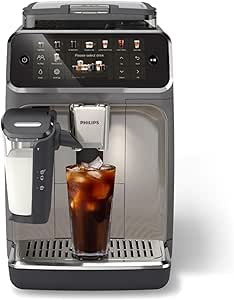
The Philips 3300 puts convenience ahead of hands-on espresso control: it grinds, tamps, and brews at the touch of a button, then uses LatteGo’s three-part, tube-free milk system for milk drinks that are simpler to rinse than a traditional steam wand setup. Compared with the PULZO, it asks less of the buyer during each drink; compared with the Philips 5500, it offers six presets rather than a much broader menu and saved profiles. Strength, volume, milk level, and temperature can be adjusted, so the preset approach still leaves room to tune a cup. Its 1.8-liter reservoir is smaller than the Ninja’s 70-ounce tank, and the 120-volt specification may not suit every region. It makes sense for bean-to-cup convenience with straightforward milk cleanup.
Pros:- Fully automatic grinding, tamping, and brewing simplify drink preparation
- LatteGo has three parts and no internal milk tubes
- Six presets cover espresso, coffee, iced coffee, cappuccino, latte macchiato, and hot water
- Removable brew group and guided descaling support routine maintenance
Cons:- The 1.8-liter reservoir may need frequent refilling in a busy household
- Fewer presets than the Philips 5500
- 120-volt power specification may not fit outlets in some regions
Best for: Busy households that want one-touch espresso and milk drinks with a simple-to-clean frother
Not ideal for: Hands-on espresso hobbyists or high-volume households that want a larger water reservoir
- Model:EP3341/50
- Operation mode:Fully automatic
- Beverage presets:6
- Milk system:LatteGo, three parts
- Pump pressure:15 bar
- Water capacity:1.8 liters
- Dimensions:9.68 × 17.04 × 14.6 inches
- Weight:17.6 pounds
Our verdict“Choose the Philips 3300 for automated bean-to-cup drinks and tube-free milk cleanup without needing the Philips 5500’s larger preset selection.”
AMZCHEF Espresso Machine with Grinder, 3 Temp, 20 Grind Settings, Latte & Cappuccino Maker
The AMZCHEF stands out for buyers who want to adjust more than grind size: it offers three temperature settings and a short pre-infusion stage before extraction. Those controls provide more room to tailor espresso than the Philips 3300’s mostly preset, fully automatic routine. Its 20-setting built-in grinder and steam wand also cover the core steps for lattes and cappuccinos, but this is a more hands-on choice than the automatic Ninja Luxe Café Premier, whose guided dosing and tamping are designed to reduce guesswork. The available data does not specify its dimensions or reservoir capacity, making counter fit and refill planning harder to judge. Grinding and steaming can be noisy, and the several adjustments may slow down a beginner. It suits a home barista who values control over convenience.
Pros:- Built-in grinder offers 20 settings
- Three temperature levels allow extraction adjustments
- Pre-infusion can help wet grounds before full extraction
- Steam wand supports manual milk frothing
Cons:- Multiple settings and manual steaming can challenge new users
- Grinding and steaming may be noisy
- Provided product data does not list reservoir capacity or dimensions
Best for: Espresso hobbyists who want to tune grind size and temperature and practice milk steaming
Not ideal for: Beginners seeking guided preparation, automatic milk frothing, or clearly specified capacity and dimensions
- Pump pressure:20 bar
- Wattage:1350 watts
- Temperature control:Three levels, 197–205°F
- Grinder:Built-in grinder with 20 settings
- Pre-infusion time:3–10 seconds
- Milk frothing:Steam wand
Our verdict“Choose the AMZCHEF if temperature and pre-infusion adjustments matter more to you than guided, one-touch drink making.”
Philips 5500 Series Fully Automatic Espresso Machine with LatteGo Milk System
The Philips 5500 is the convenience pick for households that want a wide drink menu without moving to a hands-on setup. Its 20 hot and iced presets go beyond the Philips 3300’s six, and up to four profiles let household members save preferences. Both use the tube-free LatteGo system, while the 5500 adds a touchscreen, QuickStart, and a ceramic grinder for a more feature-rich daily routine. The tradeoff is that its 1.8-liter reservoir remains modest for frequent use, and the stated 230-volt requirement limits compatibility in many homes. The listed weight is 3.6 pounds, a figure that may be worth checking against the retailer’s current product details before planning placement. This suits buyers who prioritize drink choice and saved settings over manual control.
Pros:- Twenty hot and iced drink presets offer more variety than the Philips 3300
- Up to four profiles can save household drink preferences
- Three-part LatteGo system is dishwasher safe and has no internal tubes
- Touchscreen and QuickStart streamline drink selection
Cons:- 230-volt power requirement may not match common outlets in some regions
- 1.8-liter water capacity may require refilling during frequent use
- Listed weight of 3.6 pounds may need verification before assessing portability
Best for: Households with different coffee preferences who want saved profiles and many automatic hot and iced drinks
Not ideal for: Buyers in 120-volt regions or anyone seeking manual espresso control and a large reservoir
- Drink presets:20
- Operation mode:Fully automatic
- Grinder:Ceramic
- Milk system:LatteGo, three dishwasher-safe parts
- Pump pressure:15 bar
- Water capacity:1.8 liters
- Power:1500 watts; 230 volts
- Profiles:Up to 4
Our verdict“Choose the Philips 5500 if you want a broad automatic drink menu and saved profiles, and its voltage matches your kitchen.”
AMZCHEF Semi-Automatic Espresso Machine with Built-In Grinder
The AMZCHEF CM1626 is the most adjustable pick here for someone who wants to tune beans and brewing temperature without adding a separate grinder. Its 44 grind settings and 190°F–201°F temperature range offer more room to experiment than the AIRMSEN’s 10 grind settings, while the touchscreen puts grind time, brew time, and temperature controls in one place. A one-touch cold brew option also widens its use beyond espresso, and the steam wand gives milk drinkers manual control over frothing. The tradeoff is that more adjustment can mean more setup for a beginner, and the listed 60 oz tank may need refilling during larger batches. At 13.9 lbs, it is also heavier than the AIRMSEN. I’d choose it for control and drink range, not the simplest routine.
Pros:- 44 grind settings give broad control over grind size
- Adjustable brewing temperature suits different beans and roast levels
- One-touch cold brew adds another brewing option
- Removable tank and descaling function support routine maintenance
Cons:- The touchscreen controls and wide adjustment range may take time to learn
- The 60 oz tank may require refilling for larger batches
- 120 V power limits use to compatible outlets
Best for: Home espresso drinkers who switch between bean types and want fine control over grind and brew temperature
Not ideal for: People who want a straightforward, low-adjustment machine or regularly make large batches without refilling
- Model:CM1626
- Type:Semi-automatic espresso machine
- Grind settings:44
- Brewing temperature:190°F–201°F
- Water tank:60 oz
- Wattage:1500 watts
- Dimensions:12.5 × 10.82 × 13.38 in (D × W × H)
- Weight:13.9 lbs
Our verdict“Choose the AMZCHEF CM1626 if you value extensive grind and temperature adjustments alongside espresso and cold brew options.”
AIRMSEN Espresso Machine with Burr Grinder, 20 Bar, Milk Frother, Stainless Steel Coffee Maker for Home
The AIRMSEN makes the strongest case for saving counter space among these four: its listed footprint is just 7.9 inches wide, and it weighs 12.6 lbs. A built-in conical burr grinder, touchscreen, and manual steam wand keep the main espresso workflow together in a compact body. Compared with the larger-footprint AMZCHEF CM1626, it gives up grind range—10 settings versus 44—but may suit a small kitchen where width matters more than extensive dialing-in. The listed 61 oz tank is a useful capacity for its size. Its 20-bar pressure figure is part of the product data, though the listing does not provide the same temperature range or grind-time controls described for AMZCHEF. The compact format may also constrain cup size, and the semi-automatic setup still asks the owner to learn the workflow.
Pros:- Narrow 7.9-inch listed width suits tight counters
- Built-in conical burr grinder and manual steam wand cover core espresso tasks
- 61 oz water tank reduces frequent refills
- Touchscreen centralizes machine controls
Cons:- 10 grind settings offer less adjustment than the AMZCHEF CM1626
- Compact body may limit the size of cups that fit
- Semi-automatic operation requires some practice
Best for: Apartment dwellers and home espresso drinkers with limited counter width who want a grinder and steam wand in one machine
Not ideal for: Tinkerers who want a broad grind range or buyers who need room for larger cups
- Operation mode:Semi-automatic
- Grind settings:10
- Pressure:20 bars
- Water tank:61 oz
- Wattage:1350 W
- Voltage:120 V
- Dimensions:10.2 × 7.9 × 12 in (D × W × H)
- Weight:12.6 lbs
Our verdict“Pick the AIRMSEN if counter width is your main constraint and you are comfortable trading grind range for a compact all-in-one setup.”
Espresso Machine with Grinder, 20-Bar Programmable Semi-Automatic Coffee Maker, Visual Pressure Gauge & Touchscreen, Compact Design with Tamper, Make Americano, Latte, Cold Brew, Silver
This 20-bar machine with a visual pressure gauge suits buyers who want feedback during brewing and are willing to make adjustments themselves. Its listed 0–44 grind settings offer a broad range, and the included portafilter, filter baskets, dosing funnel, tamper, and cleaning brush give a new owner several core tools out of the box. Compared with the AIRMSEN, whose listing includes a manual steam wand, this model has no built-in milk frother, so milk drinks require another method or equipment. It also lacks the stated 190°F–201°F temperature controls found on the AMZCHEF CM1626. The compact design may fit a smaller kitchen, but the listing gives no dimensions to confirm its footprint. I’d favor this model for pressure feedback and accessories over an integrated milk workflow.
Pros:- Visual pressure gauge provides brewing feedback
- Adjustable grind range is listed as 0–44 settings
- Includes portafilter, baskets, dosing funnel, tamper, and cleaning brush
- Compact design is intended for smaller kitchens
Cons:- No built-in milk frother is listed
- Semi-automatic operation requires hands-on brewing
- Dimensions and water tank capacity are not provided in the product data
Best for: Hands-on espresso beginners who want a pressure gauge and a supplied starter set of portafilter tools
Not ideal for: Latte and cappuccino drinkers who need an integrated milk frother or buyers who prefer automatic operation
- Bar pressure:20 bar
- Grind settings:0–44
- Material:Stainless steel
- Color:Silver
- Warranty:12 months
- Included accessories:Portafilter handle, single and double shot filter baskets, aluminum dosing funnel, coffee tamper, measuring spoon, cleaning brush
- Operation mode:Semi-automatic
Our verdict“Choose this model if you want pressure feedback and included barista tools, and do not need an integrated milk frother.”
Gevi 20 Bar Espresso Machine with Grinder & Milk Frother (2026 Upgrade)
The Gevi 20 Bar is the most complete fit here for buyers who regularly make espresso drinks with milk. Its 58 mm portafilter, adjustable shot volume, pre-infusion, and cup warmer point to a more traditional espresso workflow, while the built-in conical grinder and steam wand cover the bean-to-cappuccino routine. The 2.3 L tank is larger than the listed 60 oz AMZCHEF tank, so it may mean fewer refills during a busy morning. Compared with the compact AIRMSEN, Gevi provides a larger listed tank and a 58 mm portafilter, but the product data gives no dimensions to confirm how much counter space it needs. It remains semi-automatic and takes practice; buyers seeking push-button simplicity should look elsewhere. The stainless steel exterior also is not listed as dishwasher safe.
Pros:- Built-in conical grinder and steam wand cover espresso and milk drink preparation
- 2.3 L removable water tank supports multiple drinks between refills
- Adjustable shot volume and pre-infusion allow control over brewing
- 58 mm portafilter supports a traditional espresso workflow
Cons:- Semi-automatic controls require practice
- No dimensions are provided to judge counter fit
- Dishwasher-safe cleaning is not listed
Best for: Households that make espresso, cappuccinos, and lattes regularly and want a larger tank with manual milk frothing
Not ideal for: Buyers with very limited counter space or anyone who wants fully automatic brewing and milk preparation
- Pressure:20 bars
- Water tank:2.3 L
- Portafilter size:58 mm
- Operation mode:Semi-automatic
- Wattage:1450 watts
- Voltage:120 V
- Features:Adjustable shot volume, pre-infusion, auto shut-off, cup warmer
- Material and finish:Stainless steel
Our verdict“Pick the Gevi if you make milk drinks often and want a larger tank and traditional portafilter workflow in one semi-automatic machine.”
How We Picked
I compared these 14 machines on the parts of the decision that affect everyday use: how the grinder is integrated, the degree of control over espresso, milk preparation, drink range, ease of operation, cleaning demands, and stated capacity or footprint. I gave more weight to clear workflow advantages than headline pressure claims, since a pressure number alone does not explain how easy a machine is to use or maintain.
The ranking reflects distinct buyer needs rather than treating every machine as interchangeable. The Breville leads for a balanced manual workflow; the Ninja earns attention for breadth of drinks; and Philips models rank well for users who want automation. Other semi-automatic options remain useful for tighter spaces, adjustable grinding, or a straightforward espresso setup, though buyers should compare their controls and upkeep closely. Product descriptions do not establish long-term reliability or measured cup quality, so I avoid claims that require hands-on testing.
| coffee espresso combo machine with grinder | Operation mode |
|---|---|
| AMZCHEF Semi-Automatic Espress | — |
| Chefman 8-in-1 Coffee Station | — |
| Espresso Machine with Grinder | Semi-automatic |
| Gevi Espresso Machine 20 Bar w | — |
| Breville Barista Express Espre | — |
| PULZO Espresso Machine with Gr | Semi-automatic |
| Ninja Luxe Café Premier 3-in-1 | Fully automatic |
| Philips 3300 Series Fully Auto | Fully automatic |
| AMZCHEF Espresso Machine with | — |
| Philips 5500 Series Fully Auto | Fully automatic |
| AMZCHEF Semi-Automatic Espress | — |
| AIRMSEN Espresso Machine with | Semi-automatic |
| Espresso Machine with Grinder | Semi-automatic |
| Gevi 20 Bar Espresso Machine w | Semi-automatic |
Factors to Consider When Choosing Coffee Espresso Combo Machine With Grinder
Before choosing a combo machine, decide which part of the routine you want the machine to handle: grinding, espresso extraction, milk, or drink selection. That choice often matters more than the longest feature list.
Choose Your Level of Control
A semi-automatic machine gives you more influence over dose, tamping, and extraction, but it also makes your morning routine more hands-on. A fully automatic model reduces those steps and can be easier to share among people with different skill levels. Think about whether you enjoy adjusting coffee or mainly want a repeatable drink with little intervention. A common mistake is buying for the most involved workflow and then resenting the extra steps. The reverse can happen too: someone who likes experimenting may find automation limiting. Choose based on the routine you expect to keep using on ordinary weekdays.
Match Grinder Adjustability to Your Beans
Grind adjustment helps compensate for changes in bean freshness, roast, and taste preference. More settings can offer finer control, but they do not guarantee better results or make dialing in effortless. If you tend to buy the same beans and prefer a consistent recipe, a simpler grinder may be enough. People who switch between beans or want to tune shots should look for clear adjustment steps and controls they can repeat. Also check how easily grounds move from grinder to portafilter and whether the workflow fits your counter setup. Avoid treating a high setting count as a substitute for good brewing habits.
Decide How Much Milk Automation You Need
Milk systems range from a manual steam wand to automatic frothing components. A wand offers more control over texture, though it takes practice and needs cleaning after use. An automatic system can make milk drinks simpler for beginners or households that value repeatability. Consider how often you make cappuccinos or lattes; buyers who mostly drink straight espresso may not need to pay for elaborate milk features. Check which parts detach and how they are cleaned, since milk residue can quickly become a daily chore. Choose the method you will maintain, not just the one that sounds easiest in a product description.
Check the Full Countertop Footprint
Measure the machine’s width and depth, then account for space to open the bean hopper, remove the water tank, and work with the portafilter. A machine can look compact while still needing room above or beside it for routine tasks. If it has a milk container or separate accessories, include those in your storage plan. Buyers often focus on the machine body and forget that cleaning and refilling require access. Consider where the cord and nearby outlets sit as well. A slightly larger model can be easier to live with if its controls and removable parts are more accessible.
Look Beyond the Drink Menu
A long drink list is useful only if the machine can make the drinks you actually want with a workflow you like. Multi-function models may include coffee styles beyond espresso, while dedicated espresso machines concentrate on that brewing path. If you already own a drip brewer, extra coffee modes could duplicate equipment rather than save space. Check whether drink sizes and settings can be adjusted to suit your cups and preferences. Think about who will use the machine: simple presets help a shared kitchen, while manual controls may suit one person who wants to experiment. Prioritize useful choices over a large menu of buttons.
Plan for Cleaning and Daily Upkeep
Every grinder and milk system adds parts that collect coffee grounds, oils, or milk residue. Before buying, find out which components are removable and how often the manufacturer calls for cleaning or descaling. A machine that is quick to rinse after each drink may fit daily use better than one with a more involved routine. Water hardness and how often you brew also affect maintenance needs, so follow the manufacturer’s care guidance. Do not assume a fully automatic machine is maintenance-free; its internal brewing path still needs attention. The best fit is the machine whose upkeep matches the time you will reliably give it.
Frequently Asked Questions
Is a built-in grinder a good choice if I already own a separate grinder?
It depends on whether saving counter space and keeping the workflow together matter more than using your existing grinder. A built-in grinder can simplify dosing into the espresso workflow, while a separate grinder gives you flexibility if you also brew other coffee styles. Check whether the machine lets you bypass its grinder when needed. If you are satisfied with your current grinder, paying for another one may add little value. If you want one appliance to handle the whole routine, an integrated setup can make sense.
Should I choose a fully automatic machine or a semi-automatic one for my first espresso setup?
Choose fully automatic if you want the machine to handle more of the brewing steps and prioritize repeatable drinks. A semi-automatic machine makes more sense if you want to learn how grind, dose, and tamping affect a shot. Neither path guarantees a better fit for every beginner; the right choice depends on how much practice you want to put in. Consider who else will use the machine, since presets can make shared use simpler. Look at cleaning and milk preparation alongside the espresso controls before deciding.
Do more grinder settings make noticeably better espresso?
More settings can give you more room to adjust when a shot runs too quickly or too slowly, but the setting count alone does not determine cup quality. Bean freshness, dose, tamping, and the machine’s brewing process matter too. If you use one kind of bean and prefer a stable routine, a smaller adjustment range may be sufficient. Frequent bean changes or a desire to tune shots make additional adjustment steps more useful. Treat the grinder controls as a tool for matching your coffee, not a guarantee of a preferred result.
Does a combo machine replace both a drip coffee maker and an espresso machine?
Some combo models offer multiple coffee styles, but many machines in this roundup focus mainly on espresso-based drinks. Check the listed brewing modes and serving sizes rather than assuming every model makes a familiar pot of drip coffee. The Ninja Luxe Café Premier is the clearest choice here for buyers seeking espresso plus other coffee styles. If your household regularly needs a full carafe, confirm that the machine supports that format. A combo appliance saves space only when its modes match the drinks you actually make.
How much should I weigh the milk system when comparing these machines?
Give milk preparation high priority if lattes and cappuccinos are part of your daily routine, since the difference between steaming manually and using an automatic system affects both effort and cleanup. If you mainly drink espresso or americanos, milk features may add complexity without much benefit. Automatic milk systems can lower the skill needed to make milk drinks, while a wand offers more hands-on control. Check how the milk parts detach and what cleaning they require. Your drink habits and willingness to clean the system should guide the choice.
Conclusion
I recommend the Breville Barista Express as the best overall choice for buyers who want an integrated grinder and room to develop a hands-on espresso routine. For a best value direction, compare the AMZCHEF semi-automatic models against your must-have controls and included features before choosing; for beginners who value automation, the Philips 3300 is a natural fit. The Philips 5500 is my premium pick among the fully automatic options, while the Ninja Luxe Café Premier best fits households seeking more than espresso from one machine. If grinder adjustment is your priority, look closely at the Gevi with 35 settings; if counter space is tight, focus on the listed compact models and confirm their working clearance. Match the machine to the routine you will use every day.