
TL;DR

Get kitchen staples and gadgets delivered free — and shop member deals
- Fast, free delivery on millions of items
- Access to Prime Big Deal Days deals on October 6–7
- Prime Video, Amazon Music and more included
A weekend in Alba during white-truffle season gives you a taste of the Langhe through the Alba International White Truffle Fair, seasonal meals, and nearby wine country. The fair usually runs from October into early December, but dates and events change each year, so check the official schedule and book meals, winery visits, and transport ahead. Ask restaurants whether truffle is fresh and how it is priced before ordering.
In Alba, autumn can arrive at the table as a few pale shavings of white truffle, warm enough to release a heady, earthy aroma over fresh pasta. That dish is a pleasure, but it is only one part of a weekend in Piedmont: market stalls, vineyard roads, hazelnut sweets, and long lunches all belong in the plan.
This guide shows you how to plan around the Alba International White Truffle Fair, what to order beyond truffles, and how to fit in the surrounding Langhe wine country. You’ll also find practical tips for reservations, truffle pricing, and transport, so your weekend feels like a visit to a real region rather than a dash between famous names.
White-truffle season is typically in autumn, while the fair generally runs from October into early December. Each edition has its own dates and arrangements, so check the official program for your travel year before booking. Then leave breathing room in the itinerary: a good meal in Alba often takes longer than you expect, in the best way.
The Alba International White Truffle Fair usually runs from October into early December, but its dates and program change each year; check the official schedul…
Ask whether a truffle dish uses fresh white truffle and confirm the current price by weight and estimated serving before you order.
Tajarin, eggs, and risotto give fresh white truffle a simple base; agnolotti del plin, brasato al Barolo, and bagna càuda show other sides of Piedmontese cooki…
Book restaurants, accommodation, and winery visits early for autumn weekends, and arrange safe transport before wine tastings.
Use Alba as a walkable base for the fair, or choose a Langhe village for a quieter stay if you have transport arranged.
Food and Dining Experiences in Piedmont: A Truffle-Season Weekend in Alba
Follow autumn’s aroma from the Alba International White Truffle Fair to relaxed tables and the vineyard roads of the Langhe. Build in time for long lunches, local specialties, and plans that can flex with the season.
Let the fair set the date. Let Alba and the Langhe set the pace.
Make the fair your anchor, not the whole itinerary
Think of the fair as a lively town festival. Arrive with a plan, then leave space for Alba’s streets, shops, and table-side discoveries.
Check the yearly program
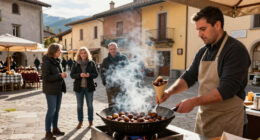
Expect sellers, tastings, demonstrations, food stands, and cultural events. Exact dates, ticketing, and arrangements change each edition; check the official schedule.
Leave room to wander
Browse the historic center, pause beneath the arcades, and make time for espresso or a local shop. A weekday may feel calmer; a Saturday can bring more activity.
Look beyond the stalls
Cheeses, hazelnut sweets, autumn produce, hilltop villages, and vineyards add context to the prized tartufo bianco (white truffle).
Give fresh white truffle a simple stage
Warm, restrained dishes let the aroma come forward. Ask clear questions before ordering so the preparation and final cost are no surprise.
Fresh truffle is commonly priced by weight, and the portion may be decided at the table. Ask for today’s rate, an estimated amount, and whether the quoted price includes the truffle.
Rate + portion = estimateGive each day one main event
Book key appointments early, especially on fair weekends. Leave gaps for a long lunch, a quiet pause, or a spontaneous stop.
Day one · Alba and the fair
Explore the truffle market and check the official program for that year’s events.
Choose a trattoria or restaurant. Confirm fresh truffle, current pricing, and estimated serving before ordering.
Walk Alba’s historic center, browse local food shops, or rest. A late lunch may make dinner unnecessary.
Day two · Vineyards and villages
Take a pre-booked winery visit or choose a nearby Langhe hill town for a slower start.
Enjoy regional cooking and ask which local wine or dish the restaurant recommends alongside it.
Allow time for vineyard views and the drive back. The Langhe’s wine-growing landscape is UNESCO-listed.
Balance food, wine, and practical plans
Alba works well as a walkable base for the fair. A nearby village can offer a quieter stay if transport is arranged.
Follow your appetite beyond Barolo
The Langhe is known for Barolo and Barbaresco, with Dolcetto, Barbera, and Nebbiolo offering other local styles to explore. Winery visits usually need advance booking. If you plan to taste, arrange a safe ride before you set out; rural roads and wine tastings do not mix.
Restaurants and stays
Autumn weekends can be busy. Book meals and accommodation early, then reconfirm hours and details close to your visit.
Choose your base
Stay in Alba for easy access to the fair, or in a Langhe village for countryside calm if you have transport arranged.
Prepare for autumn
Bring layers and comfortable shoes. Cool or rainy weather is possible, and market days often mean plenty of walking.
Plan around the fair, then leave room for Alba
A truffle-season weekend in Alba works best when you treat the fair as an anchor, not your entire itinerary. The Alba International White Truffle Fair usually runs from October into early December, with sellers, tastings, demonstrations, food stands, and cultural events, but the dates and program change every year. Check the official schedule before choosing your weekend. The fair gives you a concentrated introduction to local products and the season’s excitement; it can also make the town busier and less spontaneous, especially on popular dates.
Think of the fair as a busy town festival rather than a quiet market stroll. On a peak Saturday, you may find a lively crowd around the truffle stalls, then discover that a nearby café offers the quieter pause you need. Arriving earlier in the day can leave you more time to browse; if you prefer a slower pace, plan a weekday visit when the schedule allows. There is a tradeoff: a weekend may offer more programmed activity, while a weekday can make it easier to move at your own pace. Either way, avoid filling the whole day with timed stops, since queues and lingering over lunch can shift your plans.
The market is a useful place to see and learn about the season’s prized tartufo bianco (white truffle), but it is not the only place to eat or buy regional food. You might sample a local cheese, pick up hazelnut treats, or simply watch the sellers handle a fragrant find. Availability and buying arrangements vary, so check event details before traveling with a shopping list. Treat browsing as part of the experience rather than assuming every product or price will suit you: a visit can be worthwhile even if you do not buy truffle to take home.
Save time for Alba’s historic center, too. Walk beneath its arcades, pause for an espresso, and notice how the town’s everyday rhythm sits alongside the autumn rush. The fair gives your trip a date; the streets and meals make it feel like Alba. Leaving open time also gives you room to respond to the town as you find it, rather than measuring the weekend by how many stalls or landmarks you manage to cover.

As an affiliate, we earn on qualifying purchases.
Order white truffle with dishes that let it speak
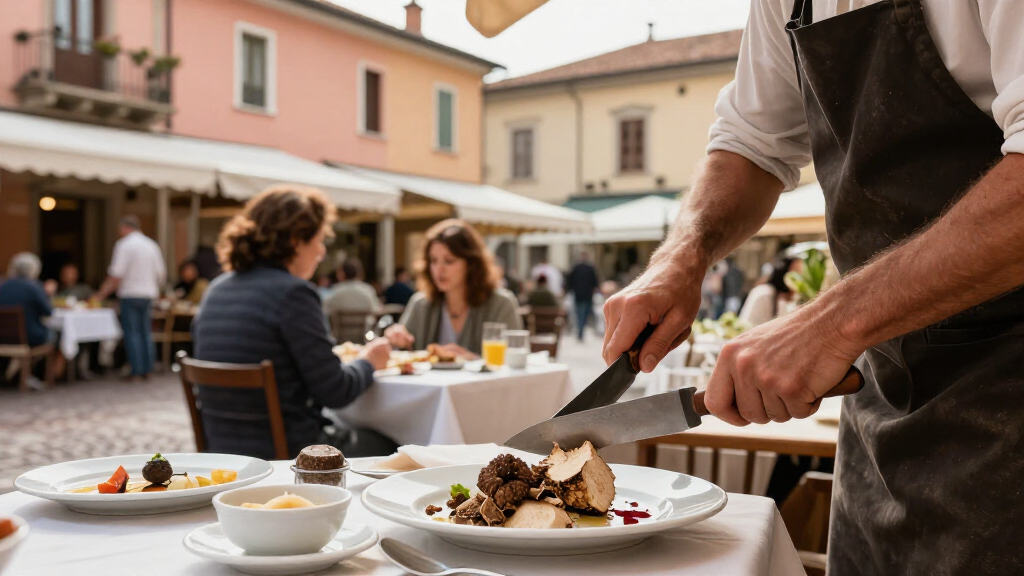
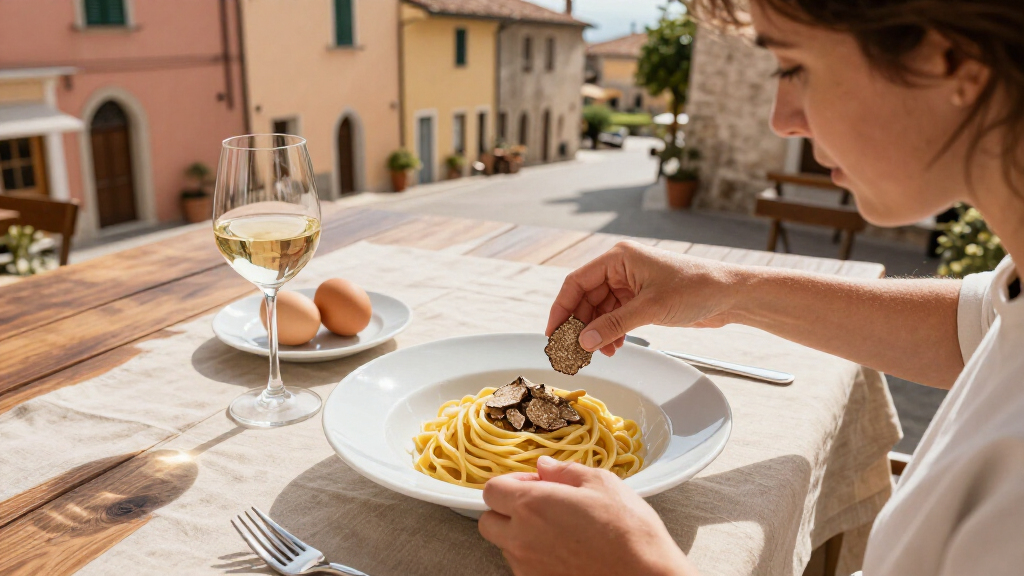
White truffle in Alba shines most when a restaurant shaves it over a simple, warm dish such as tajarin, eggs, or risotto. Its perfume is the star, so a plate with restrained seasoning gives you a clearer sense of its earthy, almost garlic-like aroma. A rich sauce or a pile of competing flavors can crowd that delicate moment. The simplicity is part of the point: you are paying for an ingredient whose appeal is primarily its aroma, and a plain base makes it easier to notice what makes it distinctive.
Try tajarin (thin egg pasta), a Piedmontese favorite often served with butter and seasonal truffle. Imagine a plate arriving while the pasta still steams: the shavings soften slightly, and the aroma rises before you take a bite. Eggs are another simple match, while risotto offers a creamy backdrop that carries the scent through each spoonful. Tajarin is a classic way to experience the pairing, while eggs can make a smaller, less elaborate course; the right choice depends on how much truffle you want and how substantial you want the meal to be.
Ask your server whether the truffle is fresh white truffle or a preserved preparation, oil, or another ingredient. Menus may use “truffle” broadly, and the difference matters if you’re paying for fresh seasonal shavings. Restaurants commonly price fresh truffle by weight; ask for the current rate and an estimated amount before ordering, and confirm whether the quoted price includes it. Because the portion is often decided at the table, a rate per weight alone does not tell you the final cost. A clear estimate lets you choose whether the experience fits your budget before the truffle is shaved.
For a first taste, share one truffle dish rather than ordering it across the entire table. You can compare the aroma on pasta with a second course such as carne cruda (finely chopped raw beef), then decide which pairing suits you. Sharing keeps the cost and the rich aroma manageable while leaving room for other regional dishes. Since that beef is raw, ask about preparation and skip it if you have a food-safety concern or need to avoid raw meat.
Use this simple two-day plan to balance food and wine
A two-day Alba itinerary feels generous when you give each day one main event: the fair on one day and a winery or hill town on the other. Book your restaurant and winery appointments before you travel, especially for a fair weekend, then keep gaps in the schedule for a long lunch or a spontaneous stop. This approach gives you structure without turning every meal into a race. It also reflects a practical constraint: the fair and a countryside visit each take time, and trying to fit both into one day can leave you seeing places mainly through a car window.
- Day one morning: Explore the fair and its truffle market, checking the official program for that year’s events. Take a relaxed walk through Alba’s historic center afterward.
- Day one lunch: Choose a trattoria or restaurant serving seasonal dishes. Ask about fresh truffle pricing before ordering tajarin, eggs, or risotto.
- Day one afternoon: Browse local food shops or rest at your hotel. A late lunch can make dinner unnecessary or best kept light.
- Day two morning: Take a prebooked winery visit or explore a Langhe village. Wineries usually require an appointment, and opening schedules vary.
- Day two lunch: Try another Piedmontese dish, such as agnolotti del plin or brasato al Barolo (beef braised in Barolo wine), then allow time for the return journey.
For example, you could spend Saturday among the fair stalls and Sunday among the vineyard hills. That rhythm keeps food at the center while giving you two different views of the region: Alba’s bustling streets and the quieter countryside of the Langhe. If you only have one day, prioritize the fair or the countryside according to your main interest; a shorter, focused visit is more satisfying than squeezing both into an already full schedule.

Choose Piedmontese dishes that taste of the whole region
Piedmontese cooking is much broader than white truffle: pasta, raw beef, slow-braised meat, seasonal vegetables, cheeses, and hazelnuts all belong on your weekend table. Each dish offers another way to understand the region’s cooking, so consider ordering differently at lunch and dinner instead of repeating a truffle pasta at every meal. This variety matters in practical terms, too: truffle is a seasonal splurge, while other dishes let you explore local technique and ingredients without making every course hinge on a costly garnish.
Look for agnolotti del plin, small filled pasta whose name refers to the pinch used to seal it. Recipes vary, but you may find them dressed simply or served with a roast-meat sauce. Brasato al Barolo is a slower, richer choice: beef braised with the region’s celebrated red wine, made for a cool evening and an unhurried appetite. Choosing between them can shape the meal: the pasta is a useful way to sample a local staple, while the braise is more filling and calls for time and appetite. You do not need both in one sitting to get a sense of the region.
Bagna càuda (a warm anchovy and garlic dip) connects the table to autumn and winter gatherings. It is often eaten with vegetables for dipping, though preparations differ. If garlic or anchovies are not for you, ask about the ingredients before ordering. A dish can be a regional classic and still not suit every guest. Its strong flavors and communal style make it a distinctive choice to share, but they can dominate a meal, so consider ordering it when the group is curious and the rest of the menu can complement it.
Save space for Piedmontese hazelnuts and chocolate. The hazelnut known as Nocciola Piemonte IGP is a protected regional product, often used in sweets and desserts. A slice of hazelnut cake with coffee makes a satisfying finish after a substantial lunch. If you’re shopping for food gifts, look for the IGP designation on the label rather than relying on a generic “Italian hazelnut” description. The label helps distinguish a protected regional product from a broad flavor claim, while a dessert lets you enjoy it without adding another heavy savory course.
Pair Langhe wines with your meal and your plans
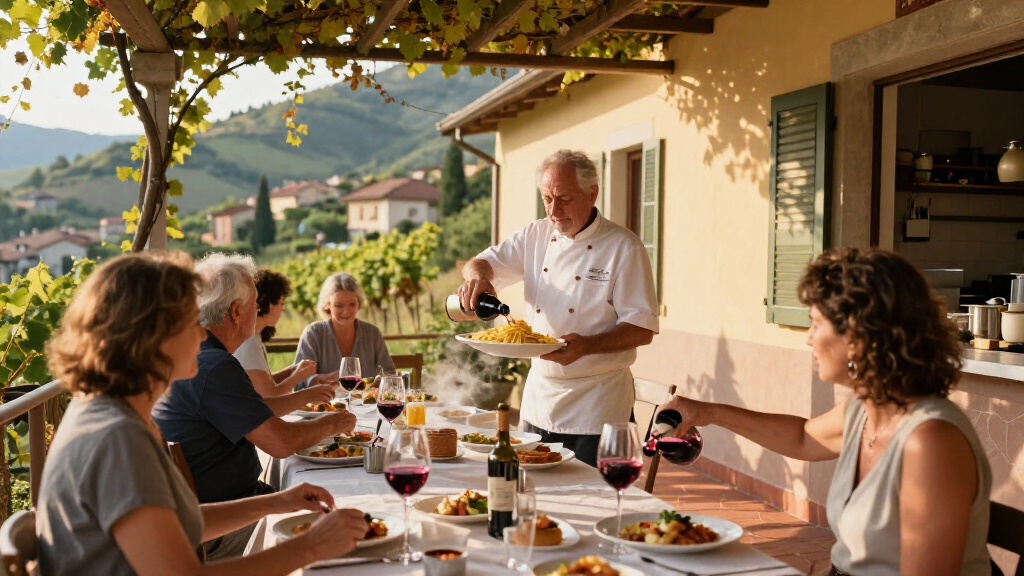
Langhe wine gives you several ways to explore Piedmont, from Barolo and Barbaresco to Dolcetto, Barbera, and Nebbiolo. A restaurant can help match a wine to the meal: a structured red may suit brasato, while a lighter choice might work better with a simple pasta course. Ask what the staff would pour with the dish you actually ordered. This keeps the pairing grounded in your meal and appetite instead of treating famous names as automatic upgrades; a more powerful wine can overwhelm a delicate course, and a lighter pour may leave room to enjoy several dishes.
Barolo and Barbaresco are internationally known, but your weekend does not need to revolve around the most famous bottles. If you are curious about local styles, ask to compare a glass of Dolcetto or Barbera with Nebbiolo. Think of it like listening to different instruments in the same orchestra: each wine shows a different part of the region’s character. A comparison by the glass can also be a lower-commitment way to learn than choosing a full bottle, especially if you are still deciding what styles you enjoy.
A winery visit can bring those names to life, but appointments are usually required and schedules change. Contact the winery directly before you build a drive around it. You might visit one producer in the morning, then have lunch in a nearby village rather than trying to fit several tastings into a single day. One visit leaves time to ask questions and understand the place; several visits may offer breadth, but can blur together and add pressure to the day.
Plan transport before tasting. Alba and the Langhe’s vineyard villages sit among rural roads, and driving after wine is a poor choice. If you have a designated driver, agree on the plan before the first pour; otherwise, arrange a taxi, guided visit, or other transport in advance. This matters most if you stay outside Alba, where getting between a village, winery, and dinner can take more planning than the map suggests. The transport decision affects where you stay and how many appointments are realistic, so settle it before committing to a tasting schedule.

Book early and check these details before you go
Fair-weekend logistics reward a little advance planning. Restaurants, accommodation, winery visits, and tasting appointments can fill up when visitors gather for the autumn season. Book the parts of your trip with limited capacity first, then leave open blocks for walking, shopping, or changing your plans when the weather turns. This balances certainty with flexibility: an appointment protects the experiences you care about most, while unscheduled time absorbs delays and lets you respond to the actual pace of the weekend.
Before confirming a restaurant, ask whether its truffle dish uses fresh seasonal white truffle and how the price is calculated. A quick question can save confusion when the bill arrives. If you want a particular dish, ask whether it is available on your chosen date; seasonal menus and restaurant hours can change. These details help you compare options on more than reputation: the menu, final price, and timing all affect whether a restaurant fits the day you are planning.
Alba makes a convenient base if you want to visit the fair on foot and dine in town. A nearby village may offer a quieter vineyard setting, but it can mean arranging transport for meals and tastings. Choose based on the kind of weekend you want: walkable and lively, or rural and slower. The location is not just a view preference; it determines how much of your day you spend moving between places and how easily plans can change after lunch or a tasting.
- Check the official fair schedule for the exact dates, ticketing, events, and market arrangements.
- Reserve meals and winery visits ahead of autumn weekends, and confirm opening hours directly.
- Pack layers and comfortable shoes; fall days can be cool or rainy, and you may spend hours on your feet.
- Plan transport before wine tastings, especially if you stay outside Alba.
- Ask what “truffle” means on the menu and confirm the rate for fresh shavings.
With those details settled, you can make room for the best kind of unplanned stop: a hilltop view, a small food shop, or a long coffee after lunch. The Langhe’s vineyard hills are part of a UNESCO-listed wine-growing landscape, and a slow drive or walk can be as memorable as another reservation. Leaving some time unbooked lets you enjoy that landscape at its own pace instead of treating it as scenery between appointments.
Frequently Asked Questions
When is white-truffle season in Alba?
White-truffle season in Alba is mainly in autumn. The Alba International White Truffle Fair usually runs from October into early December, but dates vary each year. Check the official program for your travel dates.
How much does fresh white truffle cost at a restaurant?
Prices fluctuate with the harvest, season, and market conditions. Restaurants often charge fresh white truffle by weight, so ask for the current rate and an estimated serving price before you order.
What should I order with white truffle in Alba?
Tajarin, eggs, and risotto are simple choices that let the truffle’s aroma stand out. Ask whether the truffle is fresh and what the restaurant recommends that day; a menu may use “truffle” for fresh, preserved, or oil-based preparations.
Do I need reservations for a truffle-season weekend?
Yes, book ahead for popular restaurants, accommodation, and winery visits during fair weekends. Confirm opening hours and appointment details directly, since schedules can change during the season.
Can I visit Langhe wineries without a car?
Some visits may be possible by taxi or organized tour, but wineries are spread across the countryside and appointments are usually needed. Arrange transport before tasting, and do not plan to drive after drinking wine.
What else should I eat in Piedmont besides truffle?
Try agnolotti del plin, brasato al Barolo, bagna càuda, and hazelnut desserts for a wider taste of Piedmontese cooking. Ask about ingredients when needed: bagna càuda commonly includes anchovies and garlic, and carne cruda is raw beef.
Conclusion
Plan your Alba weekend around one fair visit, one unhurried meal, and one look at the Langhe beyond town. Check the dates, reserve early, and ask clear questions about fresh truffle and its price; then let tajarin, vineyard roads, and a slice of hazelnut cake fill in the rest.
When the autumn air turns cool and a warm plate releases its earthy perfume, you’ll understand why the best souvenir may be a meal you took your time eating.
Halloween Picks
halloween
As an affiliate, we earn on qualifying purchases.