
TL;DR

Get kitchen staples and gadgets delivered free — and shop member deals
- Fast, free delivery on millions of items
- Access to Prime Big Deal Days deals on October 6–7
- Prime Video, Amazon Music and more included
Tajarin is Piedmont’s fine, yolk-rich fresh pasta, traditionally rolled thin and cut into narrow ribbons. For an Alba-style plate, toss freshly cooked tajarin with gently melted butter and a splash of pasta water, then shave fresh white truffle over it at the table; heat the truffle as little as possible so its aroma stays clear.
In Alba, a few paper-thin shavings of white truffle can turn a bowl of golden pasta into the scent of an autumn walk through the Langhe. The dish does not need cream or a complicated sauce. It needs fine tajarin, good butter, and truffle added at the right moment.
This guide shows you how to make an Alba-style plate at home, even if you have never rolled fresh pasta or bought a truffle. You’ll learn what makes tajarin different from tagliatelle, how to build a glossy butter coating with pasta water, and what to do when fresh white truffle is out of season or beyond your budget.
The aim is a dish that tastes like its ingredients: tender, egg-rich ribbons under a warm, nutty sheen, followed by the earthy perfume of truffle. Think of the butter as a frame around a small painting. Keep it light, and the details stay visible.
Tajarin is Piedmont’s fine, yolk-rich fresh pasta; it is usually narrower than tagliatelle.
For the Alba-style version, melt butter gently and use pasta water to make a light, glossy coating.
Shave fresh white truffle over the finished pasta at the table; avoid cooking it in the pan.
Fresh white truffle is closely linked to autumn, but harvest, quality, and price vary each year.
Fresh tagliolini or very thin tagliatelle can stand in for tajarin; dried pasta gives a different texture.
Piedmont · Langhe · Autumn Table
Tajarin with Butter and Truffle
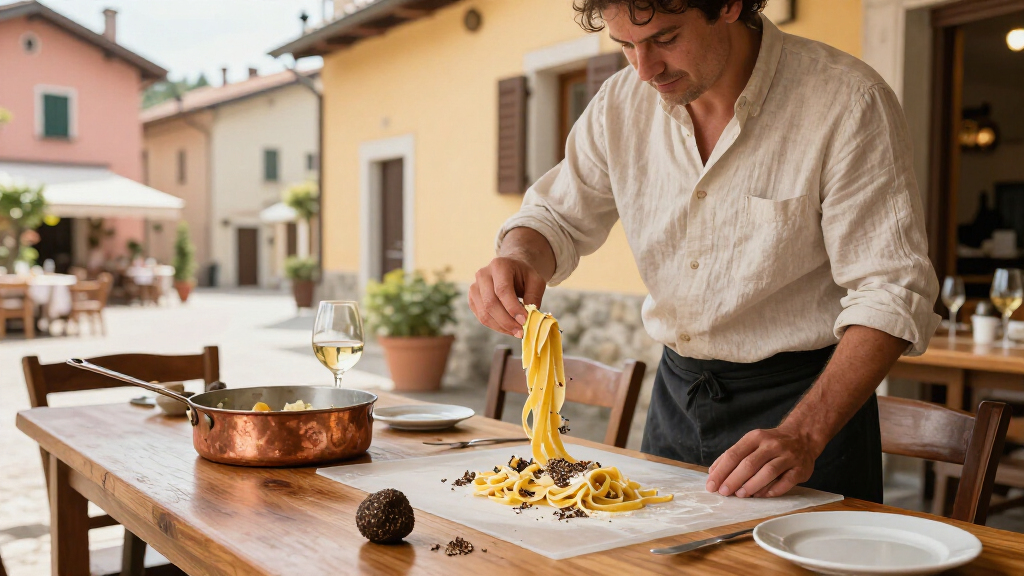
The Alba-style plate is beautifully spare: fine, yolk-rich ribbons, a light butter gloss, and fresh white truffle shaved over the steaming pasta at the table.
01 / The Langhe in a ribbon
What makes tajarin taste like Alba
Tajarin is Piedmont’s fine, fresh egg pasta: golden, tender strands rolled thin and cut narrow. Its restrained butter coating lets the pasta’s richness and the truffle’s aroma share the plate.
The pasta
Fine, golden, yolk-rich
Recipes vary by family. A generous share of yolks often gives tajarin its rich color and delicate bite.
The place
Langhe to Alba
Closely associated with Piedmont, tajarin is served with butter, meat ragù, or seasonal truffle.
The name
“To cut”
The name is commonly linked to the Piedmontese word tajé, meaning “to cut.”
02 / A delicate balance
Keep the sauce light; protect the aroma
Butter and starchy pasta water form a thin, glossy coating. The truffle goes on only after plating, when gentle warmth helps release its perfume.
Butter is the frame, not the subject.
Toss the cooked ribbons with gently melted butter and a splash of pasta water. The water helps the fat cling to each strand instead of pooling in the bowl.
03 / Know your truffle
Classic Alba white, or a different delicious dish
Alba is renowned for prized white truffle, especially Tuber magnatum pico. Season, quality, supply, and price shift with the harvest each year.
| Choice | What to expect | How to use it |
|---|---|---|
| Fresh white truffle | Classic Alba aroma; autumn is its signature season | Shave a few thin slices onto each hot plate |
| Fresh black truffle | A distinct aroma and flavor; a delicious variation | Shave over finished pasta and name it clearly |
| Truffle oil | Convenient, but often driven by added aroma compounds | Use sparingly; do not describe it as fresh Alba truffle |
| No truffle | Buttered tajarin still makes a satisfying dish | A little Parmigiano-Reggiano is possible, with a different emphasis |
Buying fresh truffle?
Ask what is actually available. A calendar date cannot guarantee harvest quality or supply.
How much should you shave?
There is no universal weight. Start with a few thin slices per serving, smell, then add more if desired.
04 / The calm, fast dinner
Five steps from pot to table
Fresh tajarin cooks quickly. Warm the plates and set out the slicer first, then finish the pasta while everyone is ready to eat.
Set up
Warm two plates. Cut the butter and place the slicer or peeler within reach.
Boil & season
Use a roomy pot and salt the water until pleasantly seasoned, not briny.
Cook & taste
Follow the pasta guidance, but taste early: fresh fine strands cook fast.
Toss glossy
Melt butter gently. Toss with tajarin and small splashes of reserved pasta water.
Serve & shave
Plate at once and shave truffle over the hot ribbons at the table.
05 / Two servings
A simple, glossy butter finish
Keep the pan on low heat and let the reserved cooking water do the work of loosening the butter into a light sheen.
Finish with a light hand
- Bring a large pot of water to a boil. Salt it, then cook the tajarin according to its thickness. Taste a strand early.
- Before draining, scoop out a mug of starchy cooking water.
- Melt butter over low heat in a wide skillet. Add drained tajarin and toss.
- Add pasta water a tablespoon or two at a time until the sauce clings in a thin sheen. Toss briefly if it looks watery.
- Season lightly, divide onto warm plates, and shave the truffle over the top. Serve immediately.
06 / The texture check
What “glossy” should look like
Aim for a delicate coating that follows the pasta, with no butter lake at the bottom of the pan.
07 / If the market is missing something
Choose a substitute that keeps the spirit
Fine fresh pasta and gentle butter are the foundation. Truffle makes the classic seasonal flourish, but the plate can adapt honestly.
Best pasta swap
Tagliolini
Fresh tagliolini is a close stand-in. Very thin tagliatelle also works; choose the narrowest fresh ribbons available.
Pantry option
Fine dried pasta
It can work, but the egg-rich character and tender texture will differ. Follow package timing and taste as it cooks.
No pasta machine?
Roll & cut by hand
Roll the dough thinly with a pin, dust lightly with flour, and cut narrow ribbons with a sharp knife.
08 / Keep the details visible
Small choices that make the plate sing
Is tajarin the same as tagliatelle?
They are related, but tajarin is typically narrower and often richer in egg yolks.
Can the pasta be prepared ahead?
Yes. Keep cut strands lightly floured in loose nests or dry them briefly. Avoid piling damp strands together.
Should cream, garlic, or strong cheese go in?
The classic emphasis is aroma and a light coating. Heavy or assertive additions can obscure the truffle.
What is the final rule?
Have warm plates ready, finish the butter sauce in the pan, and bring the steaming pasta straight to the table.
What Makes Tajarin Taste Like the Langhe
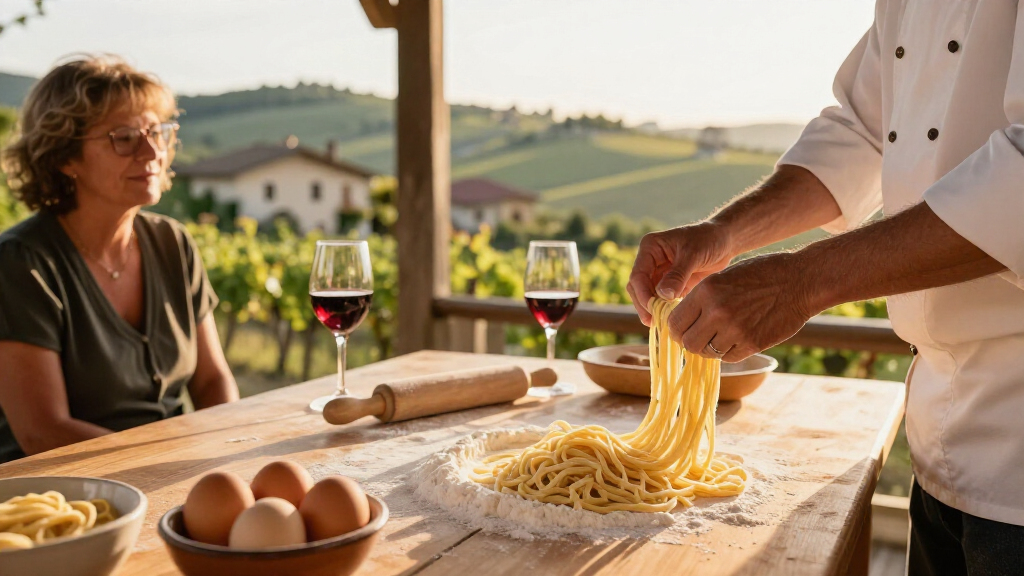
Tajarin with butter and truffle is a Piedmontese pasta dish built around very fine, egg-rich ribbons and a light butter coating. Tajarin is Piedmont’s fresh pasta, traditionally rolled thin and cut into narrow strands, with a golden color and tender bite that suits the rich aroma of Alba’s white truffle.
Its name is commonly linked to the Piedmontese word tajé, meaning “to cut.” You’ll find tajarin associated especially with the Langhe and Alba, where cooks pair it with butter, meat ragù, or seasonal truffle. It is especially well suited to a spare sauce because its egg flavor can stand beside the truffle without disappearing.
Tajarin resembles tagliolini, but recipes often use a generous share of egg yolks, and the strands are usually finer than tagliatelle. There is no single household ratio that every cook follows. One local family might roll a deeply golden dough for Sunday lunch; another might make a slightly sturdier version that holds up to ragù.
That variation is part of the dish’s character. Fresh tajarin is more like a fine silk ribbon than a broad noodle: it cooks quickly and catches butter along its length. If you can’t find it, fresh tagliolini or very thin tagliatelle will work. Choose the narrowest fresh pasta available, so each forkful still feels delicate.
As an affiliate, we earn on qualifying purchases.
Choose White Truffle for the Classic Alba Aroma
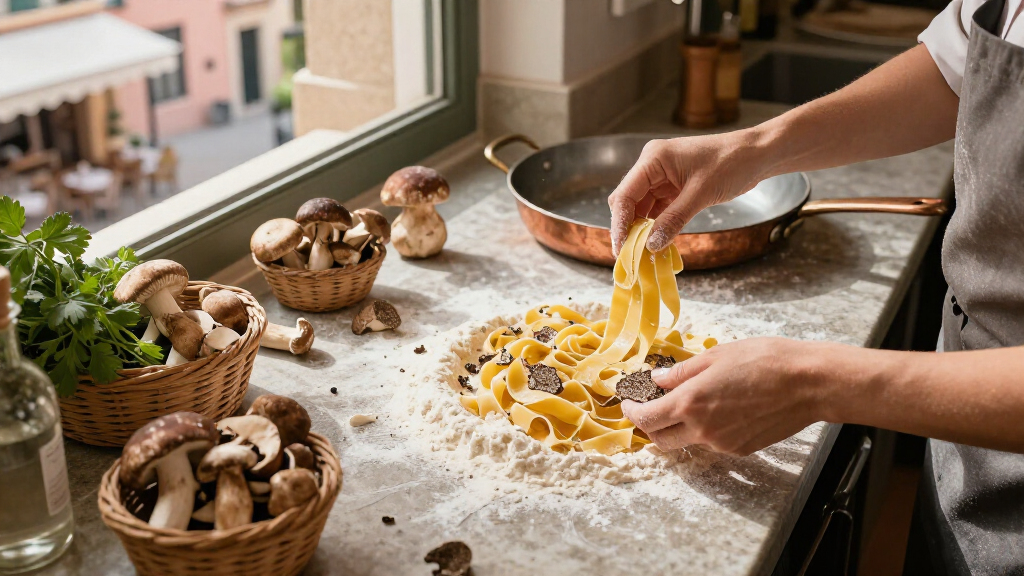
White truffle is the classic choice for tajarin in Alba, particularly Tuber magnatum pico, the prized white truffle associated with northern and central Italy. Its aroma is earthy and heady, with a warmth that can fill a dining room before the first forkful reaches the table. Add it just before serving, when the pasta is hot but the truffle never touches the pan.
Alba’s white-truffle season is generally in autumn, but harvest conditions change from year to year, affecting supply, quality, and price. If you plan a trip, ask local restaurants what is actually available during your visit rather than assuming a calendar date guarantees fresh truffle. A rainy or difficult harvest can change what appears on the menu.
Black truffle can also be delicious over buttered pasta, but it gives you a different aroma and flavor. Treat it as its own version of the dish. For example, if you buy black truffle from a specialty shop in winter, shave it over the finished tajarin and enjoy its particular character instead of describing it as Alba white truffle.
Fresh truffle varies in strength, so there is no universal shaving weight that guarantees the same result. Start with a few thin slices per serving, smell the plate, and add more if needed. A truffle slicer makes delicate, even shavings, but a sharp vegetable peeler can work carefully in a home kitchen.

Make the Sauce Glossy with Butter and Pasta Water
Butter and pasta water make the simple sauce: melt the butter gently, then toss in the cooked tajarin with a small splash of starchy water. The water helps the fat cling to the ribbons, creating a glossy coating instead of a pool at the bottom of the bowl. Keep the pan off fierce heat; the butter should melt, not brown.
For two servings, set out about 7 ounces of fresh tajarin and 3 tablespoons of unsalted butter. Bring a large pot of water to a boil, salt it so it tastes pleasantly seasoned, and cook the pasta according to its thickness. Fresh strands may need only a short time, so taste one early rather than walking away to set the table.
Before draining, scoop out a small mug of cooking water. Melt the butter over low heat in a wide skillet, add the drained tajarin, and toss. Add a tablespoon or two of pasta water until the sauce clings in a thin sheen. If the pan looks dry, add another small splash; if it looks watery, keep tossing briefly over low heat.
For a real dinner scenario, have warmed plates waiting beside the stove. Tajarin cools quickly, and a cold plate can dull the aroma before you even shave the truffle. Salt lightly at the end, taste, then serve at once. The pasta water is already salted, so a heavy hand can push the dish out of balance.
Follow These Five Steps for a Calm, Fast Dinner
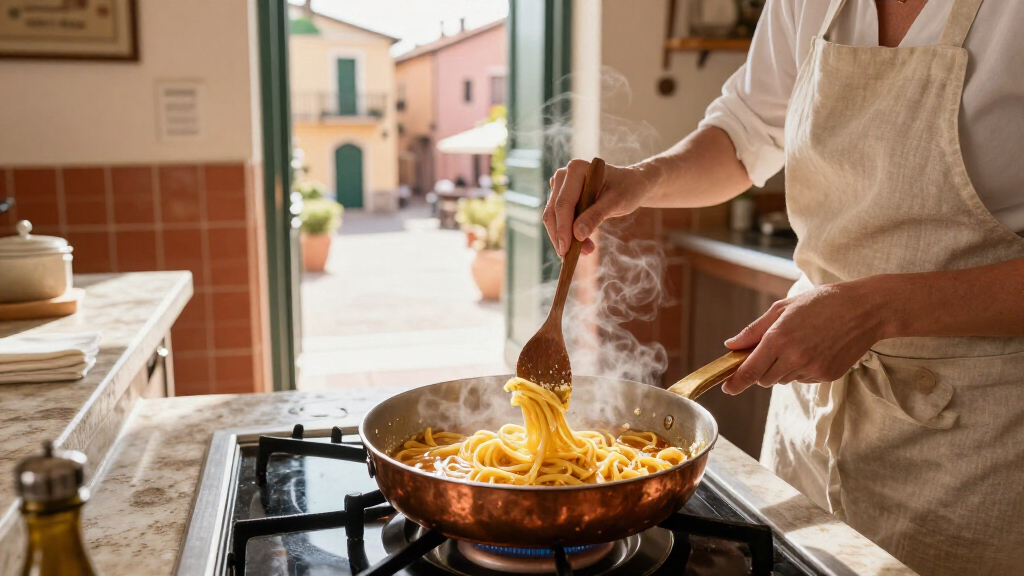
Tajarin with butter and truffle comes together quickly when you prepare the table before the pasta hits the water. The key is to finish the sauce in the pan, move the hot ribbons straight to warm plates, and shave the fresh truffle at the table. Here is a practical order of operations for two people.
- Set up first. Warm two plates, cut the butter into small pieces, and place your truffle slicer or peeler within reach.
- Boil and salt the water. Use a roomy pot, then taste the water; it should be seasoned but not briny.
- Cook the tajarin. Follow the maker’s guidance, but start tasting early because fresh pasta cooks fast.
- Emulsify the sauce. Melt the butter gently in a skillet, add the pasta, and loosen it with pasta water until glossy.
- Serve and shave. Divide the pasta, shave truffle over each plate, and bring it to the table immediately.
Picture a small kitchen in November: your guests are already seated, the plates are warm, and the tajarin finishes in the time it takes to pour water. That pace is part of the pleasure. This is not a sauce that waits patiently on the stove; the pasta should meet the table while the ribbons still steam.
If you are making fresh pasta yourself, you can roll and cut the strands earlier in the day. Dust them lightly with flour and keep them in loose nests on a tray, or let them dry briefly before cooking. Avoid piling damp strands together, where they can stick into a thick knot.
Know What to Substitute When Tajarin or Truffle Is Missing
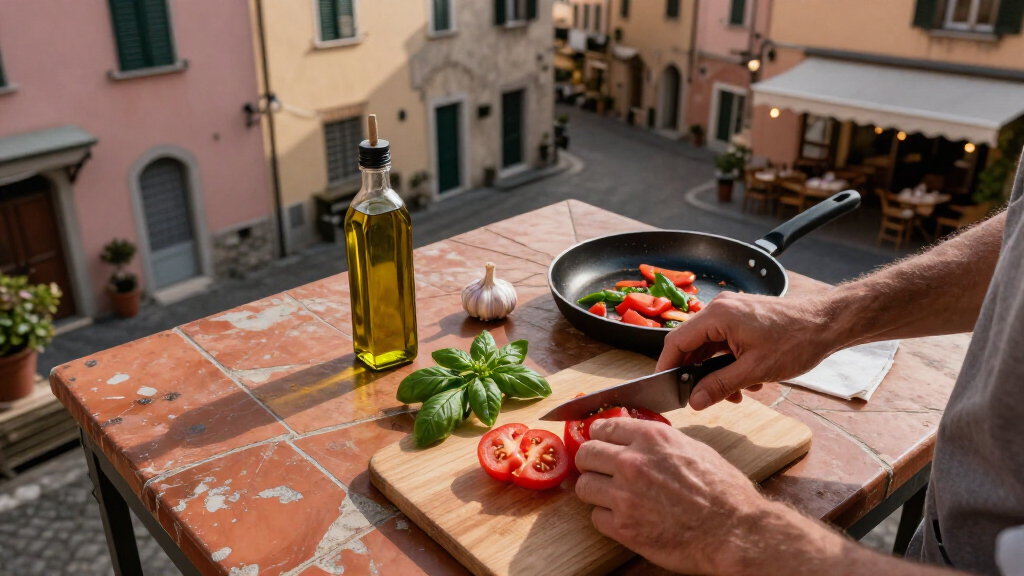
Fresh tajarin and Alba white truffle make the most classic pairing, but you can still cook a satisfying version when one ingredient is unavailable. For pasta, choose fresh tagliolini or very thin tagliatelle. For truffle, use black truffle as a distinct variation, or serve the buttered pasta on its own and let the egg-rich strands take center stage.
Think of substitutions like changing the lead instrument in a small ensemble. Fresh tagliolini keeps the fine texture close to tajarin; dried pasta changes the bite and usually needs longer cooking. Choose a narrow dried noodle and follow the package time, tasting before draining. It won’t have the same yolk-rich softness, but the butter sauce can still make a lovely lunch.
| What you have | What to do | What changes |
|---|---|---|
| Fresh tajarin | Cook briefly and toss with butter | Golden, delicate, traditional texture |
| Fresh tagliolini | Use the same method and taste early | Close in shape, though recipes vary |
| Thin tagliatelle | Cook until tender, then coat lightly | Wider, slightly more substantial strands |
| Dried fine pasta | Use package timing and reserve water | Less tender and less egg-rich |
| No fresh truffle | Serve plain buttered tajarin or use a little shaved black truffle | A simpler dish or a different truffle aroma |
Truffle oil is convenient, but many versions rely on added aroma compounds and won’t taste like fresh Alba white truffle. If you use it, add only a few drops and describe the dish honestly. A little Parmigiano-Reggiano is another possible addition, though it shifts attention from truffle toward salty, savory cheese.
Keep the Flavor Clear by Skipping Heavy Additions
The best Alba-style sauce stays light. Butter coats the pasta, while pasta water brings the sauce together; neither should bury the egg flavor or the truffle. Cream, garlic, and a large snowfall of strong cheese can make the plate taste richer, but they also compete with the aroma that makes this dish special.
That doesn’t mean every household must follow one rigid rule. Recipes differ, and a little Parmigiano-Reggiano can suit your taste. The useful question is what you want to notice first. If your truffle is fresh and fragrant, keep the other ingredients restrained; if you are making buttered tajarin without truffle, cheese may be a welcome finishing touch.
Picture two plates arriving together: one with a heavy cream sauce and garlic, the other with a thin butter gloss and a few truffle shavings. The second gives you a clearer first smell and lets the pasta’s golden color show. It also feels lighter after a long meal in the Langhe, where local lunches can stretch from one course to the next.
For the same reason, season carefully. Salt the cooking water, then taste the finished pasta before adding more. If the butter is salted, reduce the water seasoning slightly. A small adjustment protects the dish’s balance better than trying to fix an overly salty plate with extra butter.

Serve It Safely and Make the First Bite Count
Serve fresh tajarin as soon as it is cooked, and handle fresh eggs and dairy with ordinary kitchen care. Keep refrigerated pasta cold until cooking, wash your hands after touching raw egg dough, and clean boards and utensils that contacted it. If the pasta package gives storage instructions, follow them; don’t leave fresh pasta sitting at room temperature for hours.
Eggs, wheat, and milk are the main allergens in this dish: tajarin usually contains egg and wheat, while butter is dairy. If you are cooking for guests, ask about allergies before serving and check the pasta label, especially for packaged substitutes. A dairy-free butter alternative changes the flavor and may not give the same glossy finish.
For a small dinner, make the meal feel intentional without adding fuss. Put the warm plates on the table, bring the truffle slicer with you, and shave the truffle where everyone can smell it. The soft rasp of the blade and the earthy scent rising from the steam become part of the meal, like hearing bread crackle as it comes from the oven.
Serve modest portions as a first course or a generous bowl as lunch. If you have leftovers, refrigerate them promptly in a covered container and reheat gently until steaming hot; the truffle aroma will fade, so add fresh truffle only after reheating if you have more. The texture is best on the day you cook it.
Frequently Asked Questions
What is tajarin?
Tajarin is a Piedmontese fresh egg pasta cut into very fine ribbons. It is closely related to tagliolini and often uses many egg yolks, which gives it a golden color and tender texture.
Is tajarin the same as tagliatelle?
No. They are related ribbon pastas, but tajarin is typically narrower and often richer in egg yolks. If you can’t find tajarin, fresh tagliolini or very thin tagliatelle makes a practical substitute.
Can I make tajarin without a pasta machine?
Yes. Roll the dough thinly with a rolling pin, dust it lightly with flour, and cut narrow ribbons with a sharp knife. Keep the cut strands in loose, lightly floured nests so they don’t stick together.
Should I cook the truffle in the butter sauce?
For this preparation, no. Toss the pasta with butter first, then shave fresh truffle over the hot noodles just before serving so its aroma stays prominent. Direct heat can overwhelm the delicate fragrance.
Can I use black truffle instead of white truffle?
Yes, but expect a different aroma and flavor. Black truffle makes a good variation; describe it as such rather than treating it as interchangeable with Alba’s classic white truffle.
Can I use truffle oil?
You can use a few drops for convenience, but many truffle oils rely on added aroma compounds and do not taste like fresh Alba white truffle. The buttered pasta is also satisfying without truffle oil.
How much truffle should I shave over each serving?
There is no fixed amount because fresh truffles vary in strength and price. Start with a few thin shavings per plate, smell and taste, then add more if you want a stronger aroma.
Conclusion
Keep the plate simple: fine pasta, gently melted butter, a little pasta water, and truffle shaved at the last moment. Buy fresh Alba white truffle when the autumn harvest and your budget line up; when they don’t, make the buttered tajarin anyway and enjoy the golden ribbons for what they are.
Bring the slicer to the table, let the warm steam carry that earthy scent, and take the first bite while the pasta still glistens.

Halloween Picks
halloween
As an affiliate, we earn on qualifying purchases.