
TL;DR
Zampone Modena IGP is seasoned pork and rind stuffed into a pig’s trotter casing, traditionally cooked slowly and served hot, especially at winter holiday meals. In Modena, pair a seasonal market, a relaxed trattoria, and a booked visit to a producer for a fuller taste of Emilia-Romagna’s food culture. Try tortellini, Parmigiano Reggiano, traditional balsamic vinegar, and Lambrusco alongside the famous dish.
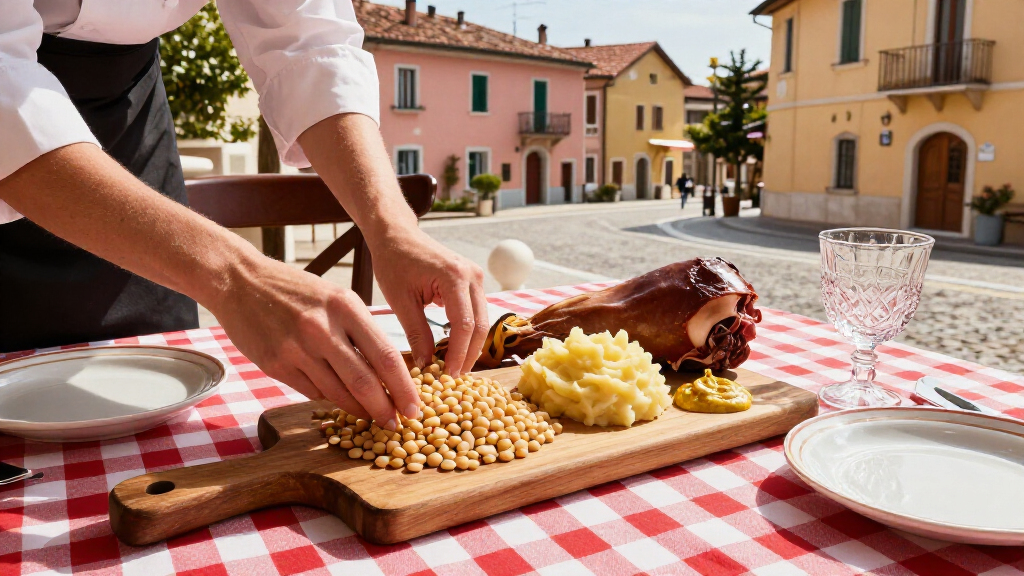
In Modena, a winter table can hold a whole story inside one dish: zampone, warm and savory, its filling tucked into a pig’s trotter casing. Often served with lentils, it is a celebratory specialty with deep ties to the city and its cold-weather meals. The dish is substantial, but the food culture around it is anything but one-note.

Get kitchen staples and gadgets delivered free with Prime
- Fast, free delivery on millions of items
- Prime Video, Amazon Music and more included
- Member-only deals all year
This guide shows you how to experience Modena’s food culture through more than a single plate. You’ll learn what the IGP label means, how zampone differs from cotechino, what else to order, and how to plan a day that moves from market counters to trattoria tables and producer visits. Modena is a strong starting point for exploring Emilia-Romagna, where recipes shift from town to town and the best meal often begins with a question: what’s good today?
The phrase “Modena Before N” needs its missing ending before it can guide a route or itinerary. Here, the focus is clear: Modena before New Year, when zampone’s festive reputation feels especially close. You can still find the dish at other times, though availability varies by restaurant and season.
Zampone Modena IGP is pork and rind stuffed into a pig’s trotter casing; related cotechino uses a sausage casing.
Zampone is closely associated with winter holidays and New Year’s, but availability outside the season varies by venue.
Pair a market or food shop with a trattoria and one prebooked producer visit to experience several sides of Modena’s food culture.
Traditional Balsamic Vinegar of Modena DOP and Balsamic Vinegar of Modena IGP have different rules and uses.
Lambrusco ranges from dry to sweet; ask for a style that fits both your taste and the meal.
Zampone country before New Year
Zampone’s festive reputation is part of Modena’s food story. Pair a seasonal meal with markets and a booked producer visit to experience more than one dish.
What makes zampone distinctive
The casing is the defining difference between two related specialties.
- Seasoned pork and rind
- Stuffed into a pig’s trotter casing
- Often served hot with lentils
- Related seasoned pork filling
- Stuffed into a sausage casing
- Also often served with lentils
Build a fuller food day
Choose a few complementary stops and leave time to enjoy the meal.
Look for seasonal produce, fresh pasta, salumi, and local breads.
Ask what is seasonal, made in-house, and whether zampone is available.
Check the tour language, tasting details, and transport in advance.
What else to try
Local menus vary, so ask what suits the season and the meal.
Tortellini in broth
A familiar local choice; ask about the kitchen’s seasonal specialties too.
Parmigiano Reggiano
Dairies around Modena may offer tours and tastings by advance booking.
Traditional balsamic
Traditional Balsamic Vinegar of Modena DOP has different rules and uses from the IGP version.
Lambrusco
Styles range from dry to sweeter; ask which suits your taste and meal.
What makes zampone a true taste of Modena?
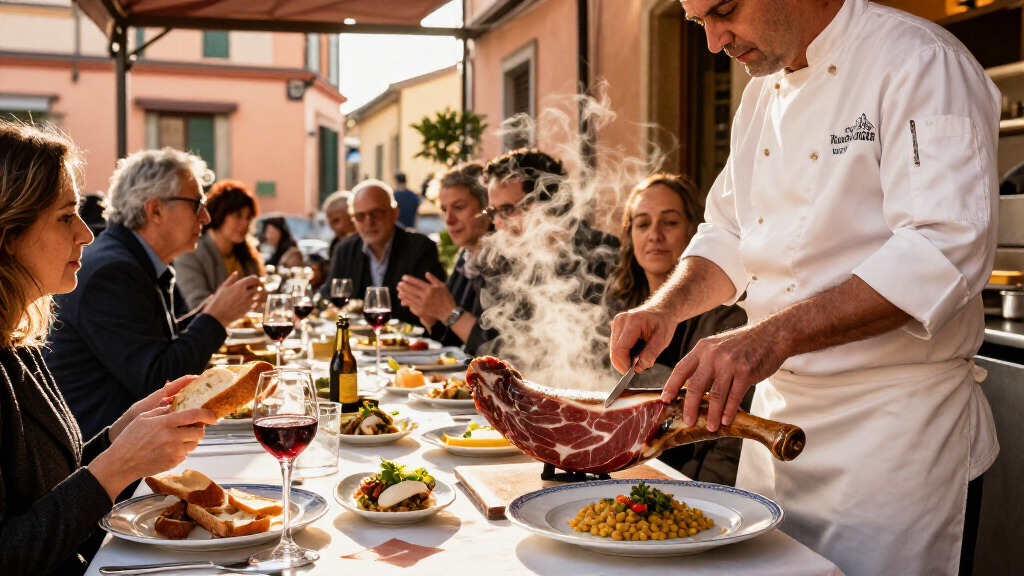
Zampone in Modena is seasoned pork meat and rind stuffed into the casing of a pig’s trotter, then cooked slowly and served hot. Its shape gives the dish its name and unmistakable look; its rich, savory filling makes it a natural centerpiece for a winter meal. The European IGP designation—Protected Geographical Indication—links the certified product to a defined place and production rules. That matters because the name signals a particular local tradition and standard, giving diners a way to distinguish certified zampone from products that merely resemble it. It does not mean every preparation tastes identical: recipes, accompaniments, and cooking methods still shape the meal.
Think of the casing as the frame around a painting: it gives zampone its form, while the filling carries much of the flavor. That filling is related to cotechino, but cotechino uses a sausage casing. The casing changes more than appearance; it defines two separate specialties and helps explain why menus preserve both names. If you see both on a menu, the distinction is not simply size or serving style. It is part of what makes each named specialty recognizable, and a useful prompt to ask how the kitchen prepares each one.
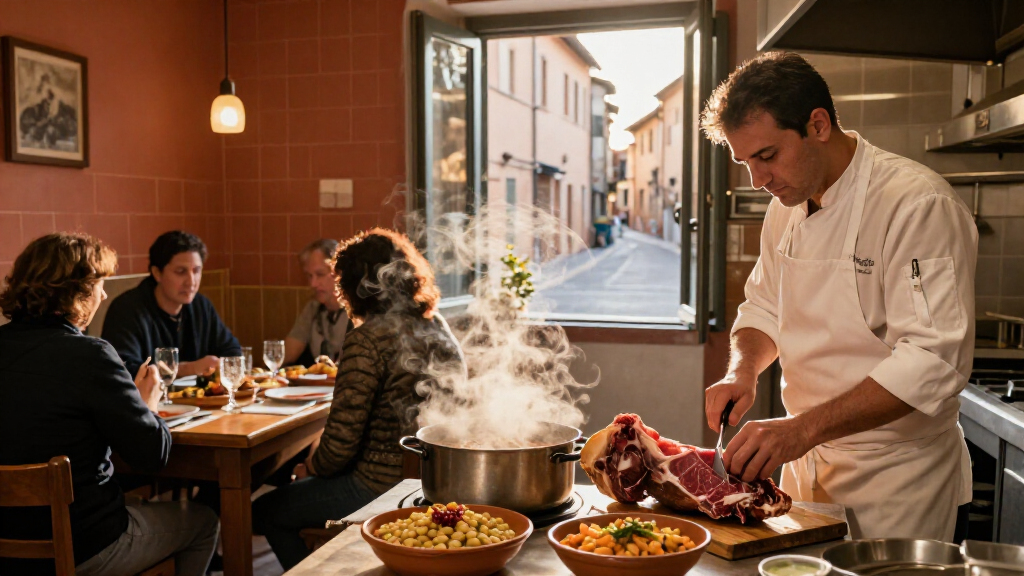
Zampone’s festive reputation comes from its place in winter celebrations and New Year’s meals. Lentils are a classic partner, with beans or mashed potatoes also appearing alongside it. The combination is satisfying partly because the accompaniments soften the intensity of the pork: lentils add an earthy counterpoint, while potatoes offer a mild, creamy contrast. Imagine arriving in Modena in December, cheeks chilled from a walk, then cutting into a steaming slice beside a spoonful of lentils. The appeal is both sensory and social: a substantial dish suited to a cold day, served as part of a meal tied to celebration and shared tradition.
You may find zampone beyond the holiday season, but don’t assume every trattoria serves it year-round. Its richness and traditional association with winter make it a less predictable choice in warmer months, so ask whether it is available and how the kitchen prepares it before planning a meal around it. For an at-home version, follow the package’s cooking directions and keep the food at a safe temperature: refrigerate leftovers promptly, ideally within two hours, and reheat them to 165°F (74°C). Zampone contains pork, so it is not suitable for vegetarians or anyone avoiding pork.
Products Worth Considering

Blueair Blue Pure 211i Max Smart Air Purifier for Large Rooms

Roborock Qrevo 2 Pro Robot Vacuum and Mop

Philips Hue Play Gradient Light Tube, Large, Black
As an affiliate, we earn on qualifying purchases.
How can you build a satisfying day around Modena’s food?
Food and dining experiences in Emilia-Romagna feel richer when you visit more than one kind of place: a market or food shop, a trattoria, and—if you book ahead—a producer. Each stop adds a different layer. A shop counter shows what locals buy and what is in season; a restaurant shows how cooks turn ingredients into a meal; a producer visit explains the time and technique behind protected foods. The tradeoff is time and transport: a nearby shop is easy to fit in, while a visit outside the city may require advance planning. Choose a few complementary stops so the day has room for eating and getting around.
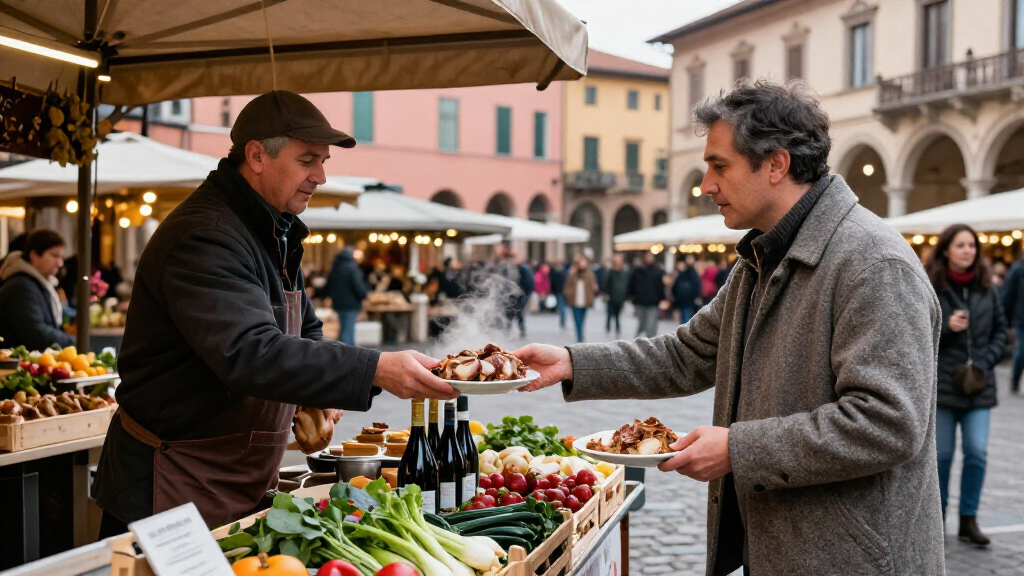
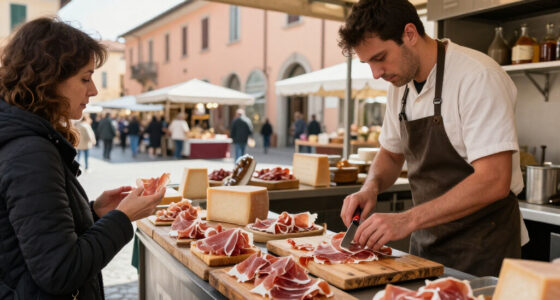
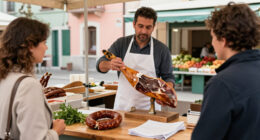
- Start with a market or food shop. Look for seasonal produce, fresh pasta, salumi (cured meats), and local breads. Take a moment to notice what people are buying for that day’s meal. This gives you a practical sense of what is available now, rather than relying only on a list of famous specialties.
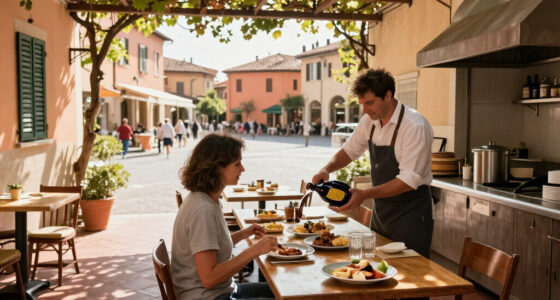
- Ask a trattoria what is made in-house. A relaxed osteria or trattoria is a good place to try tortellini in broth or a seasonal special. Ask what the kitchen recommends and whether zampone is available. Asking about the house approach can reveal the difference between a dish served as a familiar local staple and one prepared for a particular season.
- Book one producer visit. Dairies, balsamic vinegar makers, or Lambrusco producers may offer tours and tastings. Confirm the language, fee, duration, and transport before you go. A visit can make a product’s price and flavor easier to understand by showing the aging or production process, but it is worthwhile only if the schedule and journey fit your day.
- Leave room for a festive plate. In colder months, look for zampone or cotechino with lentils. If neither is on the menu, ask about another local winter dish. This keeps the meal flexible while still giving you a chance to explore seasonal cooking.
For example, you might browse pasta and cheese in the morning, sit down to broth and tortellini at lunch, and spend the afternoon at a booked dairy visit. That plan has a comfortable rhythm: tasting, walking, then tasting again. It also gives you a better sense of Modena before New Year than trying to squeeze every famous food into one long meal. The sequence matters: beginning with browsing leaves room to discover something unexpected, while a substantial lunch before a tasting can make the afternoon more comfortable.
Producer visits and restaurant schedules can change, so contact venues directly before building them into a tight itinerary. Ask about advance booking, visitor access, accessibility, dietary needs, and how you’ll get there. A tasting room outside the city can be memorable, but only if your transport plan works; a centrally located meal may be the better choice when time is short. If you have food allergies, ask about ingredients and cross-contact before ordering; broths, stuffed pasta, and cured meats can contain unexpected ingredients.
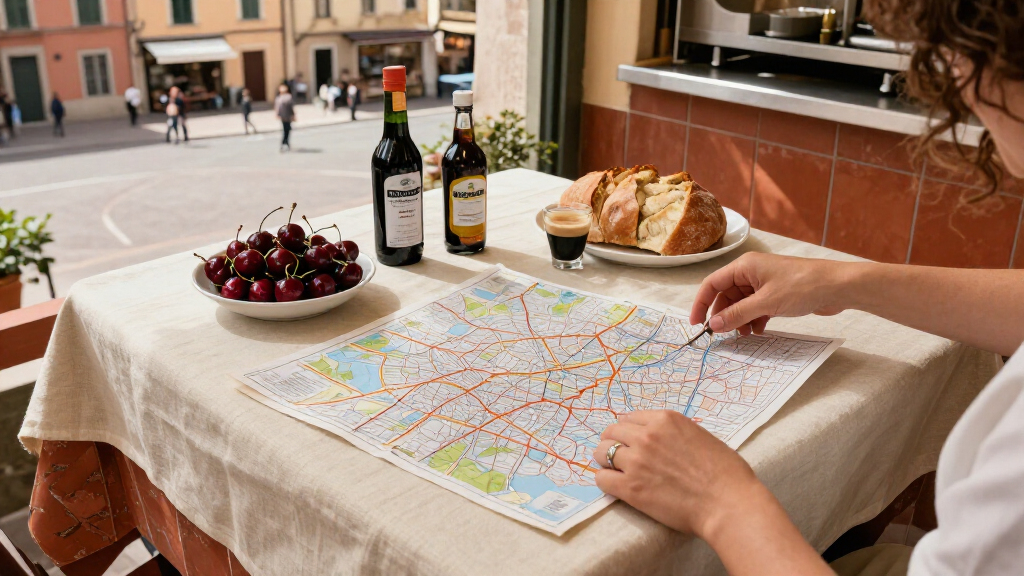
What should you order besides zampone?
Modena’s table extends well beyond zampone, with fresh pasta, aged cheese, cured meats, breads, vinegar, and wine all offering a different view of local cooking. There is no single menu that represents every town or household in Emilia-Romagna. A good way to explore is to order dishes with different textures and ask how the restaurant serves them locally. That variety is useful when zampone is unavailable or too rich for the meal you want: you can still explore the region through a lighter pasta, a shared bread and salumi plate, or a cheese tasting.
| What to try | What it brings to the meal | What to ask |
|---|---|---|
| Tortellini | Small stuffed pasta, commonly served in broth | Is it handmade, and is broth the house style? |
| Gnocco fritto | Fried dough served with cured meats and other accompaniments | Which salumi does the kitchen pair with it? |
| Tigelle or crescentine | Small breads whose name and serving customs vary by area | What fillings or spreads are served locally? |
| Parmigiano Reggiano | Aged cheese with a firm, granular bite | What age or tasting selection is available? |
| Lambrusco | Local wine styles range from dry to sweet, often with lively acidity and gentle fizz | Could you recommend a dry or off-dry style for the meal? |
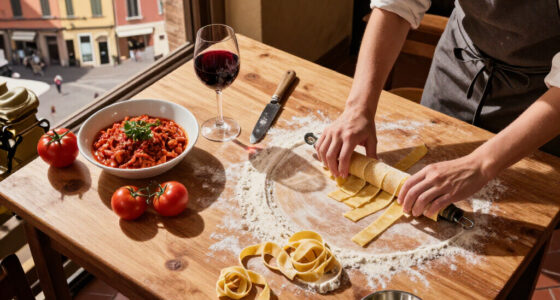
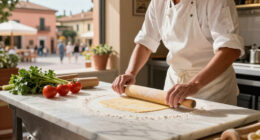
Picture a shared table at lunch: tortellini arrives in a fragrant bowl of broth, then gnocco fritto (fried dough) lands with a plate of salumi. The meal feels generous, but each dish has a different job—the warm broth comforts, while the crisp dough and savory cured meat invite another bite. That contrast helps explain why a balanced order can be more satisfying than choosing several dishes with the same rich, salty profile. This kind of variety makes the food culture of Emilia-Romagna easier to appreciate than a menu built around one famous dish.
Ask about ingredients before ordering, especially if you avoid meat, dairy, gluten, or eggs. Fresh pasta and filled shapes commonly involve wheat and egg, while cheese brings dairy and some cured meats may have varied ingredients. Restaurants can explain their recipes, but menus and kitchen practices differ. If you’re dining with someone who wants a lighter meal, a small pasta portion shared with seasonal vegetables or cheese may work better than stacking several rich courses. Sharing lets you sample more flavors, though it is sensible to check portion sizes and dietary needs before ordering for the table.
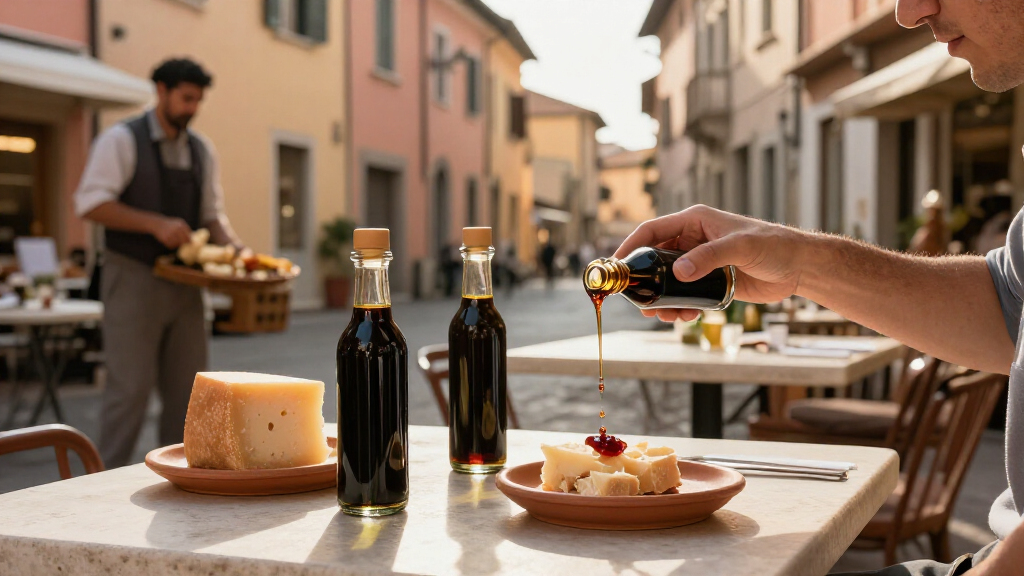
How do you choose between Modena’s two balsamic vinegars?
Traditional Balsamic Vinegar of Modena DOP and Balsamic Vinegar of Modena IGP are distinct products with different rules, production methods, aging, and typical uses. Their names may look similar on a shelf, but they aren’t interchangeable labels for the same vinegar. Knowing the difference helps you choose a tasting or bottle that suits your meal and budget: traditional balsamic is generally used sparingly as a finishing condiment, while IGP vinegar is commonly suited to everyday cooking and dressings. The designation tells you about the product’s rules, not whether you will personally prefer its flavor.
Traditional balsamic vinegar is made from cooked grape must and aged carefully. Its texture and flavor suit small amounts: a few drops over Parmigiano Reggiano, for instance, can bring a sweet-sour note to the cheese’s savory, nutty finish. Because it is so concentrated and used drop by drop, a small bottle may last a long time; its price makes more sense when you treat it as a finishing ingredient rather than a pour-over dressing. Balsamic Vinegar of Modena IGP follows different production rules and has broader everyday uses. You might use it in a dressing or marinade, depending on the bottle and your taste.
At a tasting, ask the producer to explain the designation on each sample and suggest a food pairing. Try a drop on a small piece of cheese before tasting it on its own. The vinegar’s sweet and sharp notes can linger, so give each sample a moment. Comparing the two styles side by side shows how production and aging affect texture and intensity, while tasting them with food reveals why one might suit a finishing touch and another a sauce. A producer’s explanation also turns a quick souvenir stop into a practical lesson in how place and process shape flavor.
If you’re buying a bottle to take home, check the full product name and designation rather than relying on the word “balsamic.” The label helps you judge what the bottle is made for and compare it fairly with others, but taste and intended use should guide the final choice. Food import rules differ by destination, and products containing animal ingredients have their own restrictions. Check your country’s current customs guidance before buying cheese, salumi, or other foods to carry across a border. If you’re storing a bottle at home, follow the producer’s label directions and keep it away from direct heat and sunlight.
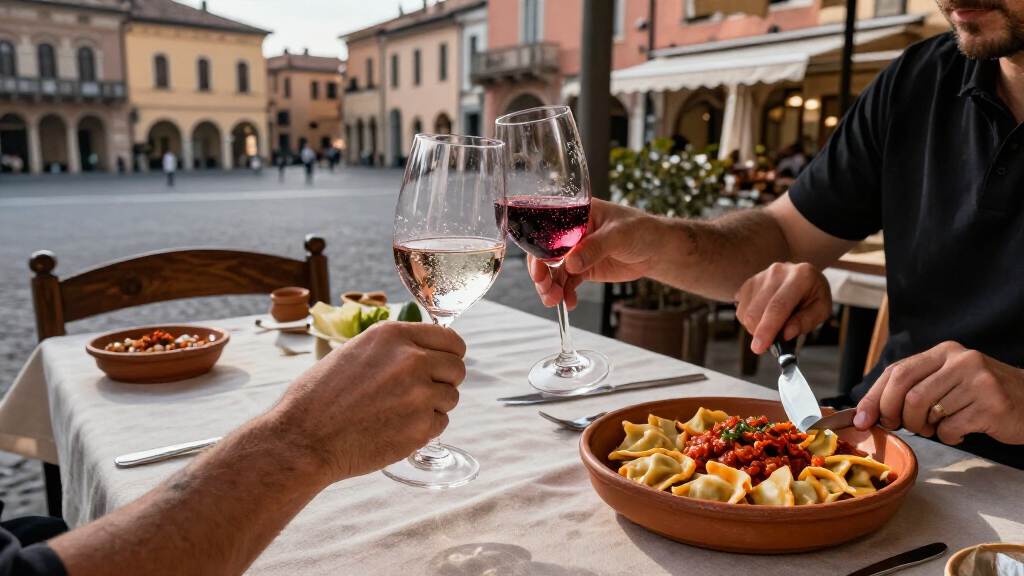
Which Lambrusco belongs with a rich Modena meal?
Lambrusco is not always sweet: styles range from dry to sweet, and many have lively acidity and gentle fizz. That variety makes it a natural match for the rich foods of Modena. The useful choice is the style that balances the meal and suits your own taste: acidity and bubbles can feel refreshing alongside rich food, while sweetness may be preferable if you like a rounder, fruitier wine. Rather than guessing from the name alone, tell the server what you’re eating and ask for a dry or off-dry bottle in the style you prefer.
Consider a plate of zampone with lentils. The pork is rich and savory, while the lentils bring a soft, earthy note; a wine with freshness and bubbles can help the meal feel lively. It’s a bit like opening a window in a warm kitchen. The food stays the center of the experience, while the wine gives each bite a brighter edge. But pairing is a preference, not a rule: if you find a drier wine too sharp or a sweeter one too heavy, choose the glass you enjoy rather than forcing a conventional match.
Wine names and styles can vary, so ask what the bottle tastes like rather than relying on a single rule about pairing. A guest who likes crisp wines may enjoy a dry choice, while someone who prefers rounded fruit may want something off-dry. You can also ask for a glass before committing to a bottle, if the restaurant offers it. This is a practical way to discover your preference without committing to a full bottle. Lambrusco can be sparkling or lightly fizzy, so ask how it is served.
Alcohol is for adults of legal drinking age. Enjoy it with food, pace yourself, and choose a nonalcoholic drink if you’re driving or don’t drink. A useful alternative at lunch is water alongside a shared tasting of cheese and pasta. That way you can focus on the differences between the dishes without turning the meal into a test of how much wine you can sample.
When should you visit Modena for zampone and seasonal food?
Winter is the most natural season for zampone, because the dish’s reputation is closely tied to holiday tables and New Year’s meals. But there is no single best season for every food-focused trip to Modena. Your timing depends on whether you most want festive specialties, seasonal produce, or a particular event—and local calendars can change from year to year. Choosing winter raises the chance of finding zampone on menus, but it also means planning around holiday opening hours and busy dates. Other seasons offer a different emphasis and can make it easier to focus on produce and booked visits.
For a December visit, contact restaurants ahead of time and ask whether zampone or cotechino will be on the menu during your dates. That is more reliable than assuming a holiday dish will appear on every menu. If you visit in another season, you can still explore fresh pasta, cheeses, salumi, vinegar, and Lambrusco. A different month changes the emphasis of the meal, not the value of the trip. When a particular dish is the main reason for traveling, confirm its availability before buying tickets or reserving a meal around it.
Build your plan around what you can confirm. A market visit can show you seasonal ingredients; a trattoria can help you taste regional cooking; and a producer tour can explain how a protected product is made. Think of the day like a good playlist: each stop should offer a different sound, with enough space between them to enjoy it. You don’t need a long list of reservations to experience Emilia’s food traditions. One well-chosen meal and one visit that explains how an ingredient is made may teach you more than rushing between several venues.
If you need vegetarian, vegan, or allergy-aware meals, check menus and contact venues before booking. Many well-known local specialties feature pork, cheese, or eggs, and cross-contact may matter for serious allergies. Ask what can be prepared, how substitutions work, and whether staff can discuss ingredients. For a planned producer visit, verify booking rules, language, fees, and transport directly. Those small checks make it easier to enjoy the food once you arrive.
Frequently Asked Questions
What is zampone?
Zampone Modena IGP is seasoned pork meat and rind stuffed into a pig’s trotter casing. It is usually cooked slowly and served hot, often with lentils, beans, or mashed potatoes.
How is zampone different from cotechino?
The fillings are related, but the casing differs: zampone uses a pig’s trotter casing, while cotechino is stuffed into a sausage casing. Both are pork specialties associated with Modena and winter meals.
Can you eat zampone outside the holiday season?
Often, yes, but menus and shop availability vary. Ask the restaurant or specialty food shop before you plan a meal around it.
Is Lambrusco sweet?
Not always. Lambrusco styles range from dry to sweet, and many have lively acidity with gentle fizz. Tell the server what you prefer and ask whether a wine is dry, off-dry, sparkling, or lightly fizzy.
What should you try in Modena if you don’t eat pork?
Ask about fresh pasta, seasonal produce, and cheese, while checking whether broth or sauces contain meat. Many regional specialties include pork, dairy, or eggs, so contact restaurants ahead of time if you have strict dietary needs or allergies.
Can you visit a balsamic vinegar producer or dairy?
Some producers welcome visitors, but tours are not guaranteed. Contact them directly to check advance booking, language, fees, tasting details, and transport before setting your itinerary.
Conclusion
Let zampone give your Modena trip a winter anchor, then make room for tortellini, Parmigiano Reggiano, balsamic vinegar, and Lambrusco. A market visit, a relaxed meal, and one producer stop can show you how place, craft, and family cooking meet on the table.
Ask what is seasonal, check bookings before you go, and take your time over lunch. In Modena, the best souvenir may be the memory of steam rising from a bowl of broth while the winter street waits outside.