TL;DR
Listen free for 30 days with Audible
Thousands of audiobooks and originals — cancel anytime.
Start your free trialAs an affiliate, we earn on qualifying purchases.
Alto Adige (South Tyrol) is Italy’s northernmost major wine region and a cultural crossroads where Italian, Austrian, and Ladin traditions meet on one plate. Speck Alto Adige PGI is lightly smoked and air-cured ham; canederli are bread dumplings born of farmhouse thrift; and the region’s steep, high-altitude vineyards produce whites like Pinot Bianco and Gewürztraminer plus native reds Schiava and Lagrein. Pair by acidity, serve speck at room temperature, and visit in autumn for harvest season.
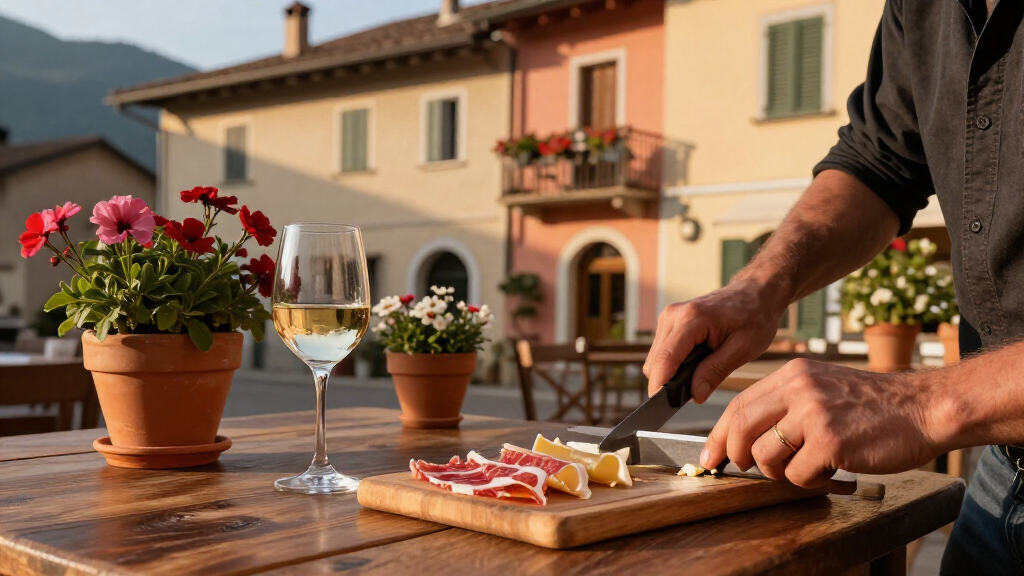
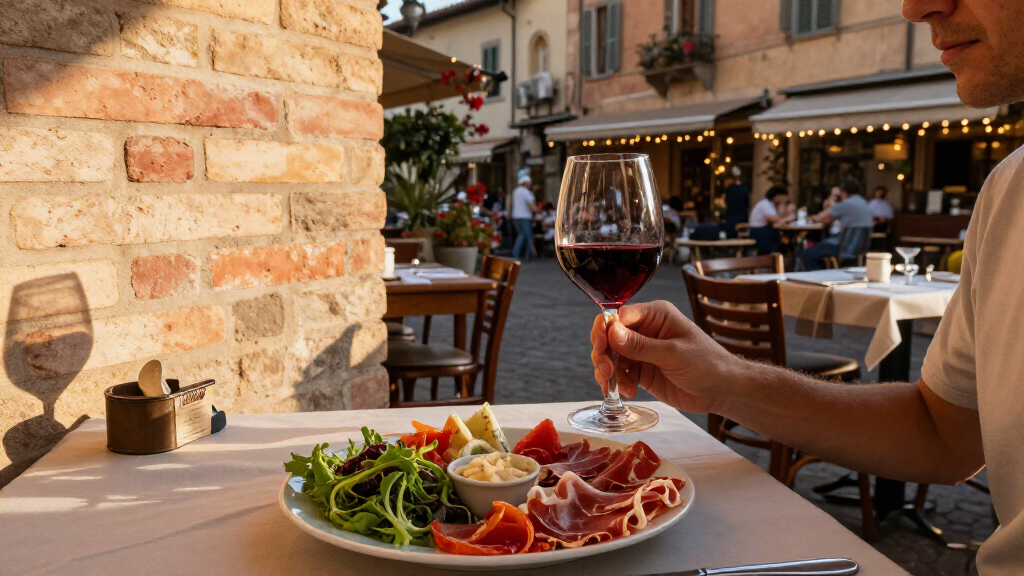
The waiter sets down a wooden board with thin-cut ham, dark rye bread, pickles, and a glass of pale red wine. You could be in Innsbruck. You’re actually in Bolzano, the capital of Alto Adige, and everything on that board was made within an hour’s drive.
Alto Adige — also called South Tyrol or Südtirol — is a borderland. It belonged to the Austro-Hungarian world until after the First World War, and its food reflects that split personality: Italian ingredients and hospitality layered over Tyrolean smoking, dumpling-making, and mountain heartiness. Menus often list dishes in German, Italian, and Ladin, the ancient language of the region’s valleys.
In this guide you’ll learn what makes Speck Alto Adige PGI different from prosciutto and bacon, how canederli turn stale bread into dinner, which wines to seek out from one of Europe’s most vertically dramatic vineyard regions, and how to put it all together — whether you’re planning a trip or building a tasting board at home.
Speck Alto Adige PGI is lightly smoked AND air-cured — a hybrid method distinct from prosciutto (never smoked) and bacon (cured for cooking); PGI certifies pro…
Serve speck at room temperature, sliced thin or cut into batons, with rye bread, pickles, and an acidic wine like Schiava, Pinot Bianco, or traditional-method…
Canederli are poached bread dumplings born of thrift; order them misti (mixed) to taste several varieties, and vegetarians should confirm the broth is meat-fre…
When pairing, choose acidity over tannin: very tannic reds make salty, smoked foods taste harsher.
Visit in autumn (late September–October) for harvest, new wine, chestnuts, and Törggelen farmhouse feasts; a three-bottle souvenir of Pinot Bianco, Schiava, an…
Alto Adige on a Plate: Speck, Canederli, and Alpine Wines
A wooden board lands on the table: thin-cut ham, dark rye bread, pickles, and a glass of pale red wine. You could be in Innsbruck — you’re actually in Bolzano. Alto Adige (South Tyrol / Südtirol) is Italy’s northernmost major wine region, where Italian, Austrian, and Ladin traditions converge on one plate.
What Speck Alto Adige Actually Is
Speck splits the difference between Italian and northern European traditions: a cured pork leg seasoned with salt and spices — typically juniper, pepper, rosemary, and bay — then gently smoked and air-cured for months. The result is firm, savory, and aromatic, with a whisper of smoke rather than a shout. That juniper note gives the ham a faint gin-like perfume prosciutto never has.
| Product | Smoked? | Air-Cured? | Character |
|---|---|---|---|
| Speck Alto Adige PGI | ✓ Lightly | ✓ Months | Hybrid method: Austrian smoking + Italian air-drying. Firm, subtly smoky, juniper-scented. |
| Prosciutto crudo | ✗ Never | ✓ Long | Salted and air-dried only; sweeter, purely savory profile. |
| Northern European smoked ham | ✓ Heavily | ~ Variable | Leans hard on the smokehouse; often cured for cooking. |
| Bacon | ✓ Usually | ✗ No | Cured for cooking, not raw consumption. |
What the seal guarantees — and what it doesn’t
PGI (Protected Geographical Indication) certifies that production and processing follow traditional methods in Alto Adige. One nuance: unlike stricter PDO rules governing Parma ham, PGI does not necessarily mean the pigs were raised there. Look for the branded sun mark on the rind — a sign of authenticity. The rind itself is edible.
How Speck Is Made
Four steps, months of patience. Each producer guards its own spice blend, but the sequence stays true to tradition.
Season
Pork leg rubbed with salt and spices — juniper, pepper, rosemary, bay.
Light Smoke
Gentle cold smoking, done intermittently — never heavy-handed.
Air-Cure
Months of maturation in Alpine air, developing firm texture and aroma.
Serve
Slice paper-thin or cut into batons — at room temperature, with rye and pickles.
Canederli: How Stale Bread Became Dinner
Known in German as Knödel, canederli are Alpine bread dumplings made by binding day-old bread with milk, eggs, and herbs — the region’s purest expression of thrift cooking, centuries before “low-waste” was a phrase. Cubed bread is soaked, mixed into a soft dough, rolled into tennis-ball spheres, and gently poached in salted water or broth. Done right: tender but cohesive. Order them misti (mixed) to taste several varieties in one bowl.
Speckknödel
With diced speck folded through — the definitive Alto Adige dumpling, served in clear broth or with browned butter.
Käseknödel
Enriched with mountain cheese. Rich, comforting, ideal alongside goulash or mushrooms.
Spinatknödel
Spinach dumplings, often fully meat-free — but confirm the broth is vegetable-based before ordering.
Pressknödel
Flattened and fried until golden — crisp outside, soft within.
Fruit Knödel
Filled with apricots or plums; served as dessert or even a main course.
Canederli Misti
A traditional mixed serving brings several flavours to one bowl — the fastest way to taste the range.
What Grows on a Mountain Grows Nowhere Else Quite the Same
Alto Adige packs extraordinary diversity into a small space: vineyards climb from warm valley floors to cool slopes above 1,000 metres. Most wine falls under the Alto Adige/Südtirol DOC. Crucially, many growers cultivate tiny, steep parcels and deliver grapes to highly regarded cooperatives — several rank among Italy’s most awarded producers.
Whites to Know
Reds to Know
Pair by Acidity, Not by Tannin
The golden rule of the region: choose acidity over tannin. Very tannic reds make salty, smoked foods taste harsher. Reach instead for bright, high-acid wines.
Speck Tasting Board
Schiava served slightly cool, Pinot Bianco, or a traditional-method sparkling wine. Room-temperature speck, rye bread, cornichons, butter.
Canederli in Broth
Pinot Bianco, Sylvaner, or Kerner — crisp whites that cut the richness and echo the dumplings’ delicacy.
The Souvenir Three
A three-bottle takeaway: one Pinot Bianco, one Schiava, one Lagrein — the region in miniature.
When to visit: autumn (late September–October)
Harvest season brings new wine, roasted chestnuts, and Törggelen — traditional farmhouse feasts where the year’s wine is drunk with speck, canederli, and chestnut dishes in the cellars that made them.
Five Things to Remember
Speck is a hybrid: lightly smoked AND air-cured — distinct from prosciutto (never smoked) and bacon (cured for cooking). PGI certifies the method, not the pigs’ origin.
Serve speck at room temperature, sliced thin or in batons, with rye bread, pickles, and an acidic wine like Schiava or Pinot Bianco.
Order canederli misti to taste several varieties — and vegetarians should confirm the broth is meat-free.
Acidity over tannin: very tannic reds make salty, smoked foods taste harsher.
Visit in autumn for harvest, new wine, chestnuts, and Törggelen farmhouse feasts.
What Speck Alto Adige Actually Is (and Why It’s Neither Prosciutto Nor Bacon)
Speck Alto Adige is a cured pork leg that gets seasoned with salt and spices, lightly smoked, and then air-cured for months — a method that splits the difference between Italian and northern European traditions. Prosciutto crudo is salted and air-dried, never smoked. Northern European smoked hams often lean hard on the smokehouse. Speck does both, gently, and the result is firm, savory, and aromatic with a whisper of smoke rather than a shout.
The spice blend varies by producer, but you’ll usually find juniper, pepper, rosemary, and bay in the rub. That juniper note is a good tell when you taste blind — it gives the ham a faint gin-like perfume that prosciutto never has.
Speck Alto Adige PGI (protected geographical indication) is the regulated version. The designation guarantees the production and processing standards happen in Alto Adige according to traditional method. One nuance worth knowing: PGI status does not necessarily mean the pigs were raised there, unlike the stricter PDO (protected designation of origin) rules that govern Parma ham.
A few practical pointers for serving:
- Serve it at room temperature. Straight from the fridge, the fat is waxy and the flavor is muted. Let slices sit 15–20 minutes.
- The rind is edible. Some diners trim it, some don’t — both are acceptable. On the rind you’ll often see the PGI’s branded sun mark, a sign of authenticity.
- Slice it thin for a tasting board, or cut it into small batons the Tyrolean way, with rye bread, cornichons, and butter.
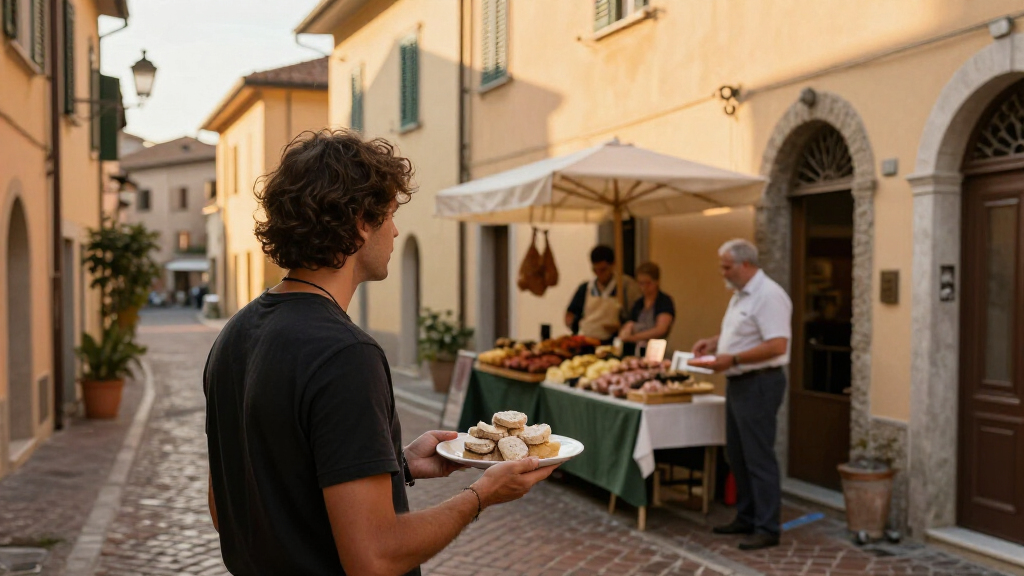
Speck is also a cooking ingredient, not just a board item. It shows up diced in dumplings, rendered into pasta sauces, tucked into soups, and draped over salads. In fine dining kitchens around Bolzano and Merano, chefs now use it in lighter, more precise forms — a crisp shard here, a thin veil there — while keeping its farmhouse soul intact.
As an affiliate, we earn on qualifying purchases.
Canederli: How Stale Bread Became Alto Adige’s Signature Dish
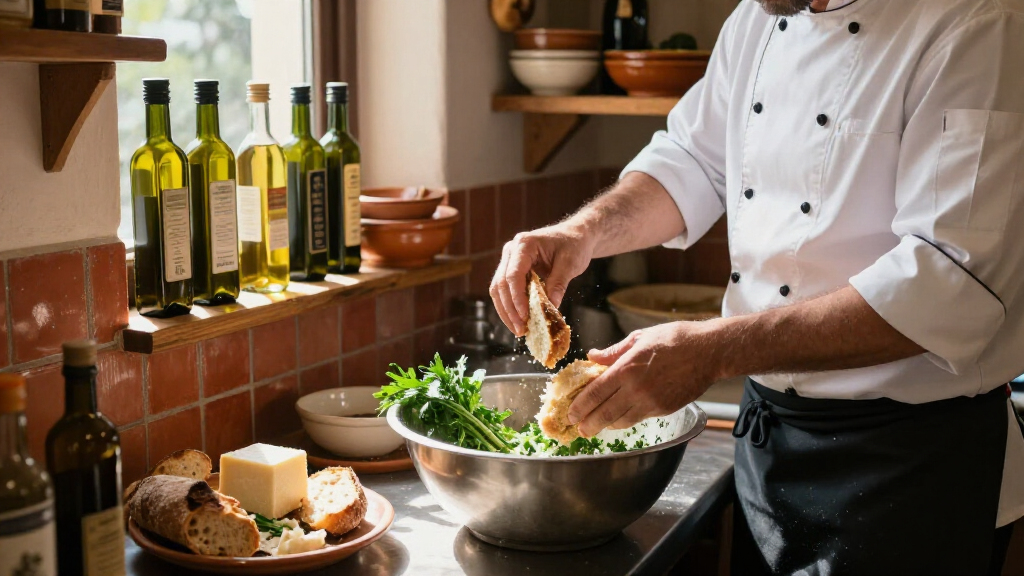
Canederli are Alpine bread dumplings, known locally in German as Knödel, made by binding stale bread with milk, eggs, herbs, and whatever the farmhouse had on hand. They are the region’s purest expression of thrift cooking: nothing wasted, everything transformed. A two-day-old loaf, a rind of cheese, the end of a speck slab — that was dinner.
The technique matters more than the recipe. Bread is cubed and soaked in milk, mixed into a soft dough, rolled into tennis-ball-sized spheres, and gently poached in salted water or broth. Done right, they’re tender but cohesive. Done wrong, they’re heavy cannonballs that fall apart mid-pot.
The classic varieties you’ll encounter on menus:
- Speckknödel — with diced speck, the most iconic version
- Käseknödel — enriched with mountain cheese
- Spinatknödel — spinach dumplings, often vegetarian
- Pressknödel — flattened and pan-fried until golden
- Sweet fruit Knödel — filled with apricots or plums, served as dessert or a main
A traditional canederli misti serving brings several flavors to one bowl — a good way to taste the range in a single restaurant visit.
How they’re served matters too. In clear beef broth, a speck canederlo is cold-weather comfort at its most direct. Drizzled with browned butter and grated cheese, they become a main course. As a side, they accompany goulash, mushrooms, or braised meat.
Canederli are low-waste cooking centuries before anyone used that phrase. Their origin story is simply this: alpine farm families could not afford to throw bread away.
Vegetarians can absolutely join in — spinach, cheese, beetroot, and herb versions are common. One caution: confirm the broth is vegetable-based, because speck or beef broth often lurks beneath an otherwise meat-free dumpling.
The Wines: What Grows on a Mountain That Grows Nowhere Else Quite the Same
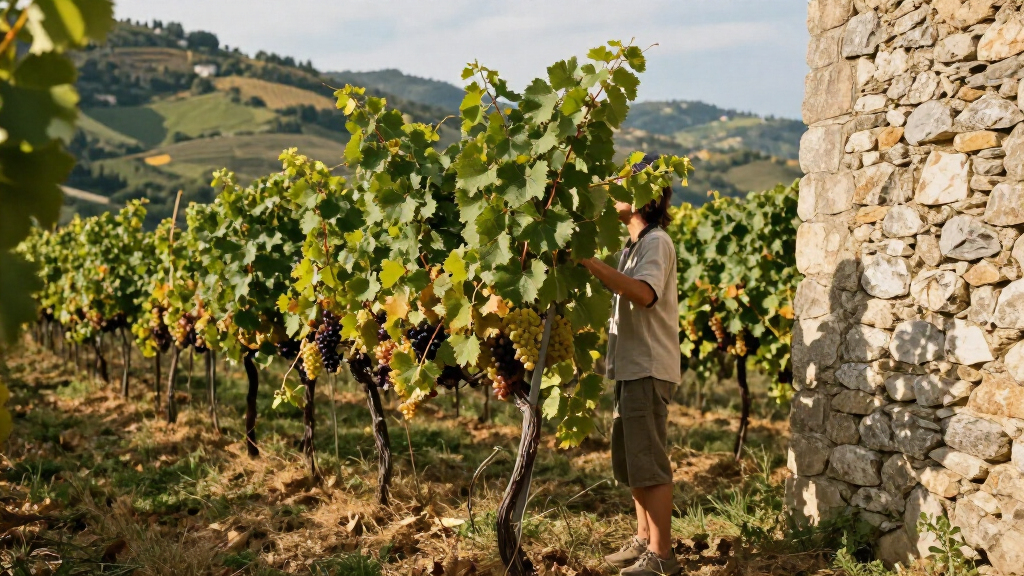
Alto Adige is Italy’s northernmost major wine region, and it packs extraordinary diversity into a small space. Vineyards climb from warm valley floors to cool mountain slopes, sometimes above 1,000 metres (3,300 feet). Within a short drive, altitude, sunlight, temperature, and soil change so dramatically that a huge range of grape varieties thrives in a compact area.
Most of the wine falls under the Alto Adige/Südtirol DOC designation. And here’s a structural fact that shapes everything: many growers cultivate tiny, steep parcels — too small to make wine from profitably — and deliver their grapes to highly regarded local cooperatives. These aren’t the bland co-ops of old stereotypes; several rank among Italy’s most awarded producers.
The white varieties to know:
| Variety | Profile | Try it with |
|---|---|---|
| Pinot Bianco | Elegant, mineral, often age-worthy | Fish, speck, canederli in broth |
| Pinot Grigio | Fresher and more structured than mass-market versions | Antipasti, asparagus |
| Sauvignon Blanc | Aromatic, herbal, crisp | Goat cheese, greens |
| Gewürztraminer | Intensely floral and spicy | Aromatic cheeses, pâté, mildly spicy dishes |
| Kerner, Sylvaner, Grüner Veltliner | Cool-climate specialists from northern valleys | Cheese and spinach canederli |
The reds are where the local identity runs deepest. Schiava (called Vernatsch in German) is a light-bodied traditional red with delicate red-fruit and almond notes — served slightly cool, it’s the classic speck wine. Lagrein is its opposite: deep-colored, with dark fruit, violet, spice, and firm tannins. Pinot Noir (Blauburgunder) is increasingly prominent on cooler, higher slopes, while Merlot and Cabernet do well in warmer valley sites.
One etymology worth savoring: Gewürztraminer’s name is tied to the village of Tramin, or Termeno in Italian, right in this region. The grape’s precise genetic origins are more complicated than the local story suggests, but the village owns the name — and pours it proudly.
How to Pair Speck and Canederli With Wine Without Guessing
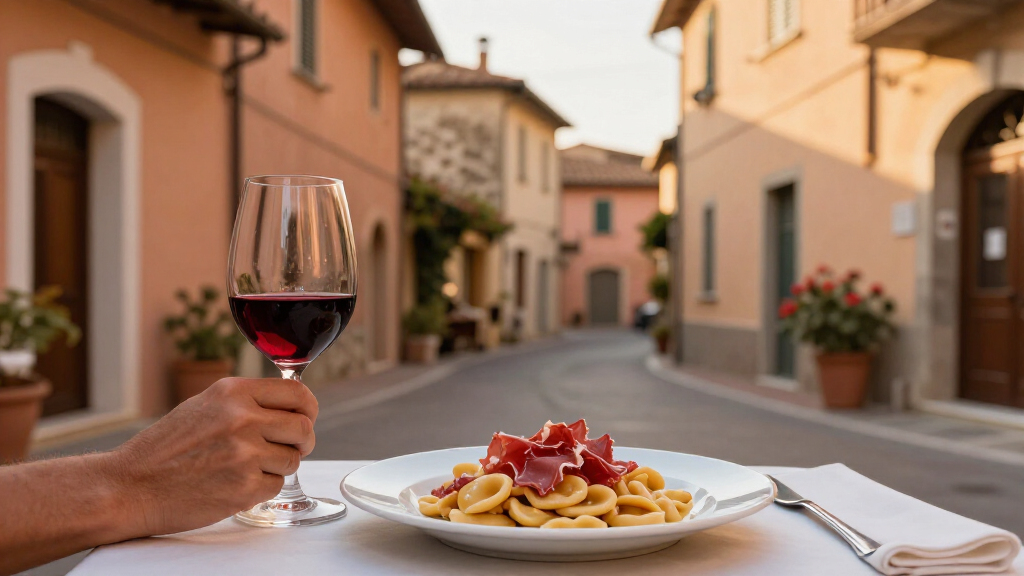
The single most useful pairing rule for this cuisine: acidity matters more than color. Speck’s salt and fat coat your palate, and a wine with bright acidity scrubs it clean between bites. A very tannic red does the opposite — it makes salty, smoked food taste harsher and more aggressive.
That’s why the traditional local answer to speck is Schiava, a red so light and fresh it behaves almost like a rosé. It’s not an accident of habit; it’s logic.
A quick pairing map you can use at a restaurant or at home:
| Dish | Best wine matches |
|---|---|
| Speck tasting board | Schiava, Pinot Bianco, traditional-method sparkling |
| Speck canederli in broth | Pinot Bianco, Sylvaner, light Schiava |
| Cheese or spinach canederli | Kerner, Chardonnay, Sauvignon Blanc |
| Rich dumplings with mushrooms or browned butter | Pinot Noir |
| Goulash or braised meat | Lagrein |
| Aromatic cheeses or pâté | Gewürztraminer |
Consider a home scenario. You’ve sliced speck, toasted rye bread, opened a jar of cornichons. Pour a tannic Barolo and the smoke turns bitter; pour a chilled Pinot Bianco and the ham tastes sweeter, the pickles brighter. Same food, different glass, completely different evening.
Sparkling wine deserves more attention than it gets here. Alto Adige’s cool vineyards suit traditional-method sparkling based on Chardonnay, Pinot Noir, or Pinot Bianco, and the bubbles plus acidity make it arguably the best speck match of all. It’s also a category growing fast in the region.
For newcomers, start with Pinot Bianco — it shows the region’s freshness and precision clearly. Then try Schiava for the traditional red character, and Lagrein for something darker and more powerful. That trio tells you most of what Alto Adige’s glass is about.
Plan the Trip: When to Go and What a Perfect Food Day Looks Like
The best time for a food-focused visit to Alto Adige is autumn, roughly late September through October, when the grape harvest brings new wine, roasted chestnuts, and traditional farmhouse feasts called Törggelen. But every season makes a case: spring offers mild weather and flowering orchards, summer suits hiking between mountain huts, and winter pairs Alpine food with skiing and the Christmas markets of Bolzano, Merano, and Bressanone.
Here’s how a well-built day in the region runs:
- Morning: Visit a producer or shop selling Speck Alto Adige PGI in Bolzano’s Lauben arcades, or tour a cooperative winery in the Oltradige wine road area near Termeno.
- Lunch: Order a canederli misti — mixed dumplings — in a traditional gasthaus or osteria. Ask which are made in-house; the good ones always are.
- Afternoon: Take the cable car from Bolzano to Soprabolina or hike to a mountain refuge for a speck board with a view and a glass of Schiava.
- Evening: A restaurant doing modernized mountain cuisine in Bolzano or Merano, where chefs lighten the classics without losing their roots.
- Before leaving: Buy a bottle each of Pinot Bianco, Schiava, and Lagrein — a three-bottle souvenir that costs less than most hotel minibars charge for one.
Budget note: Alto Adige wines are relatively expensive compared with some Italian regions, and the reason is structural. Steep slopes, tiny plots, extensive hand labor, and low yields all push costs up. You’re paying for mountains — literally.
The region is also easy to navigate linguistically. German, Italian, and Ladin names increasingly appear together on labels and menus, and locals switch between them without thinking. You can too: canederli or Knödel, Alto Adige or Südtirol — order either and the same dumpling arrives.
What’s Changing in Alto Adige Right Now
Alto Adige’s wine and food scene is in the middle of a quiet transformation, driven by climate, market shifts, and a generation of producers thinking harder about place. Knowing what’s changing helps you buy smarter and taste more curiously.
Altitude is the new frontier. As valley floors warm, producers are planting higher, cooler sites — especially for Pinot Noir and high-acid whites. Vineyard decisions that once made sense in 1980 are being redrawn for 2040: grape choices, canopy management, harvest timing, irrigation, and site selection are all under review.
Sustainability has gone mainstream. Organic and biodynamic farming, reduced chemical inputs, lighter packaging, renewable energy, and biodiversity projects are increasingly visible across the region — no longer niche gestures but competitive positioning.
Native varieties are getting serious. Schiava, long treated as an inexpensive everyday red, is being repositioned as a site-sensitive wine worth attention — low in tannin, high in charm, deeply tied to local culture. Lagrein is appearing in fresher, less heavily oaked styles that emphasize fruit over power. If you wrote these grapes off a decade ago, look again.
Site expression is sharpening. Winemakers increasingly label and talk about individual villages, slopes, and soil types rather than relying only on the grape name. The direction is Burgundian: smaller place names carrying more meaning.
The kitchen is lightening up too. Younger chefs are presenting speck and canederli in refined, precise forms — cleaner broths, more vegetables, more delicate plating — while keeping the farmhouse connection intact. The classics aren’t disappearing; they’re being edited.
None of this replaces the essentials. It just means the speck board you eat in Bolzano next year may come with a sparkling wine made from grapes grown 200 meters higher than anyone planted twenty years ago.
Frequently Asked Questions
Is Alto Adige part of Italy or Austria?
Alto Adige is an autonomous province of northern Italy bordering Austria. It belonged to the Austro-Hungarian world until it became part of Italy after the First World War, which is why its food and language still carry strong Tyrolean influence.
How is Speck different from prosciutto and bacon?
Speck is seasoned with salt and spices, lightly smoked, and air-cured. Prosciutto is salted and air-dried without smoking, while bacon is cured and intended for cooking. Properly cured Speck Alto Adige PGI is ready to eat without cooking, usually in thin slices.
Can vegetarians eat canederli?
Yes, if you choose cheese (Käseknödel), spinach (Spinatknödel), beetroot, or herb versions — but confirm the broth and seasoning contain no meat, since beef or speck broth is often used even under otherwise vegetarian dumplings.
Why are Alto Adige wines relatively expensive?
Mountain viticulture involves steep slopes, small plots, extensive hand labor, and low yields, which all raise production costs. The wines also compete in a quality-focused market segment rather than a volume one.
Which Alto Adige wine should a newcomer try first?
Pinot Bianco is the clearest introduction to the region’s freshness and precision. Schiava shows the traditional light red character, while Lagrein reveals the darker, more powerful side. Gewürztraminer, with its intense floral spice, is the region’s most distinctive aromatic white.
When is the best time to visit Alto Adige for food?
Autumn, roughly late September through October, brings the grape harvest, new wine, roasted chestnuts, and traditional farmhouse feasts known as Törggelen. Spring offers flowering orchards, summer suits hiking, and winter combines Alpine food with skiing and Christmas markets.
Conclusion
Alto Adige rewards you for paying attention. The ham on the board carries Austrian smoke and Italian air-curing in one slice. The dumpling in your broth holds a farmhouse economy that predates every food trend. The wine in your glass — whether a delicate Schiava or a brooding Lagrein — grew on slopes steep enough that no machine could ever harvest them.
Start small if you like: buy a wedge of Speck Alto Adige PGI, let it come to room temperature, slice it thin, and open a crisp white. One board, one glass, and you’ve already tasted the borderland.
Fall Picks
fall essentials
As an affiliate, we earn on qualifying purchases.