TL;DR
Ricotta-spinach ravioli pairs thin fresh pasta with a savory filling and sage butter. Squeeze the spinach very dry, use firm ricotta, press air from the seams, and simmer the ravioli gently for a few minutes; you can freeze shaped ravioli and cook them straight from frozen.
A raviolo should feel like a soft little pillow when your fork cuts through it. If the filling leaks or the seam bursts in the pot, though, dinner can turn into a pan of ricotta soup. The good news: dry filling, thin pasta, and gentle cooking solve most of the trouble.

Get kitchen staples and gadgets delivered free with Prime
- Fast, free delivery on millions of items
- Prime Video, Amazon Music and more included
- Member-only deals all year
This weekend recipe brings together ricotta and spinach with butter scented by crisp sage, a pairing found across northern and central Italian home cooking. You’ll learn how to shape the dough, season the filling, seal each piece, and time the sauce so it’s ready when the ravioli are. For a real Saturday rhythm, make the filling after breakfast, let the dough rest while you tidy up, and shape the pasta before dinner.
The result is satisfying without requiring restaurant equipment. A hand-cranked pasta machine makes even sheets easier, but a rolling pin and a little patience work too. Either way, you can turn a quiet afternoon into a meal with tender pasta, a savory filling, and the warm, nutty smell of sage butter.
Squeeze cooked spinach until nearly dry and drain ricotta that looks watery.
Use small filling mounds, press out trapped air, and seal before the pasta dries.
Cook fresh ravioli in salted water at a gentle simmer; taste one to check doneness.
Freeze shaped ravioli in one layer, then cook them from frozen without thawing.
Finish sage butter as you serve, watching closely as it turns nutty and golden.
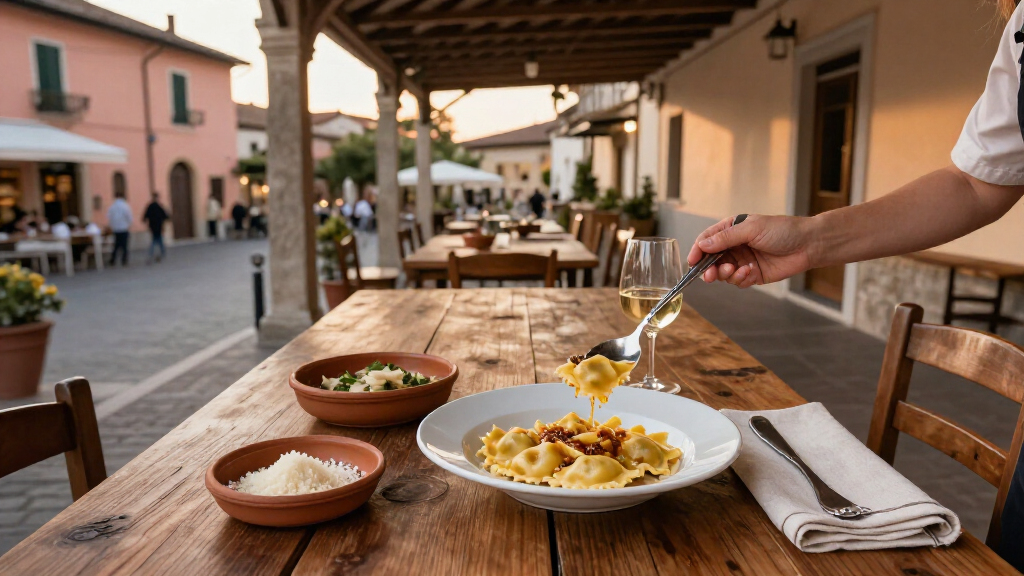
Weekend Ravioli Ricotta, Spinach & Sage Butter
Tender pasta, a savory filling, and fragrant butter make a relaxed weekend meal. Dry filling and careful sealing help keep every raviolo intact.
Build a filling that holds
A creamy filling should mound on a spoon, not slump or leave a pool of water.
Cook until tender, cool, then squeeze out as much liquid as possible before chopping.
If it looks watery, drain it in a fine sieve or cheesecloth. Add Parmesan, lemon zest, pepper, and a little nutmeg.
Seal each little pillow
Thin, even pasta and a firm seam help protect the filling in the pot.
Keep dough covered
Rest the dough for about 30 minutes, then roll it thinly and cover unused portions so they do not dry out.
Use modest mounds
Leave roughly 1½ inches between spoonfuls. Press out trapped air and seal firmly before the dough dries.
Cook gently, check one
A vigorous boil can knock ravioli around and open the seams.
- Simmer in salted water for a few minutes.
- Cook in batches if the pot is crowded.
- Taste one for tender pasta and a hot center.
- Cook straight from the freezer; do not thaw.
- Let the water return to a gentle simmer.
- Allow extra time, then taste one to check.
Finish with sage butter
Make the sauce just before serving so its aroma is ready with the pasta.
- Melt butter over moderate heat and add fresh sage.
- Cook until the butter smells nutty and the leaves crisp.
- Watch closely as it browns; it can burn quickly.
Build a filling that stays creamy, not watery
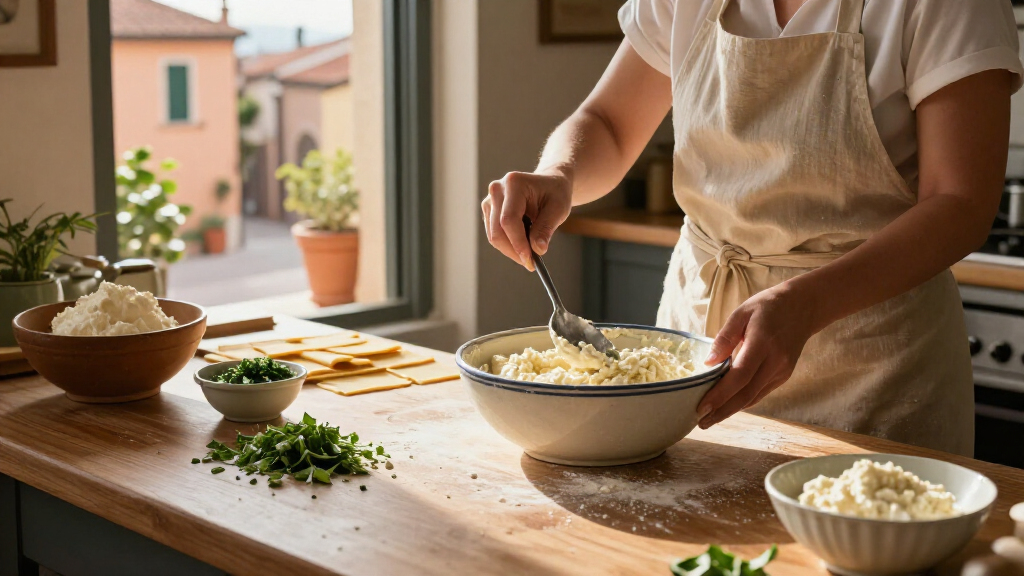
Ricotta-spinach ravioli holds together best when the spinach and cheese are dry enough to mound on a spoon. Cook the spinach until tender, cool it, and squeeze out the liquid before chopping it finely. If your ricotta leaves whey in its container, drain it in a fine sieve or cheesecloth first. That small bit of prep helps keep the filling creamy instead of runny. It also makes sealing easier: a wet filling can coat the pasta edges, where moisture keeps dough from sticking securely to itself.
For a practical batch, combine about 10 ounces of cooked, well-squeezed spinach with 1 cup firm ricotta, ½ cup finely grated Parmesan, a little lemon zest, black pepper, and a pinch of nutmeg. Taste before adding much salt; Parmesan already brings a salty, savory edge. You want a filling that tastes lively on its own, since the pasta and butter will soften its flavor. The balance matters: ricotta gives a mild, creamy base, while spinach and Parmesan keep that richness from tasting flat.
Imagine setting a spoonful on a plate: it should hold a rounded shape rather than slump into a puddle. If it does slump, drain the ricotta longer or squeeze the spinach again. Frozen spinach works well too, but thaw it fully and wring it out in a clean towel. Its fine texture can make the filling denser than chopped fresh spinach, so avoid adding more than the mixture can hold. The bright green flecks should be visible throughout a creamy ricotta mixture, with no pool of water underneath.
Spinach, ricotta, and Parmesan are common allergens: this dish contains milk, and egg pasta contains eggs; wheat flour contains gluten. Keep the filling refrigerated while you prepare the dough, and don’t leave dairy at room temperature for an extended stretch. A chilled bowl is handy if your kitchen is warm.
Products Worth Considering

Philips Hue Play HDMI Sync Box 8K

Ring Alarm 5-Piece Home Security Kit

Roborock Q7 M5+ Robot Vacuum and Mop with Self-Emptying Dock
As an affiliate, we earn on qualifying purchases.
Roll and seal ravioli so they don’t split
To keep ricotta-spinach ravioli intact, roll the dough thin, use modest portions of filling, and press the air out before sealing. Trapped air expands in hot water and can push a seam open. Fresh dough also dries quickly, so cover the portion you aren’t rolling with a clean towel or plastic wrap. Thin pasta cooks quickly and feels tender, but if it is rolled unevenly, thin spots may tear while thicker spots remain chewy; aim for an even sheet rather than the thinnest possible one.
- Rest the dough. After kneading, cover it and let it rest for about 30 minutes so it relaxes and rolls more easily. Resting reduces the dough’s springiness, which means less force is needed to roll it and the sheet is less likely to shrink back.
- Roll a small piece at a time. Use a pasta machine or rolling pin to make long, thin sheets. Dust lightly with flour if they stick, but brush away loose flour before sealing. Too much flour acts like a barrier between the dough surfaces, weakening the seam; too little can leave the sheet sticking to the counter.
- Add small mounds. Leave roughly 1½ inches between spoonfuls. A teaspoon is often enough for a small raviolo; too much filling makes the edges hard to close. A smaller parcel may seem modest, but it leaves a wider band of dough for sealing and is less likely to burst as the filling heats.
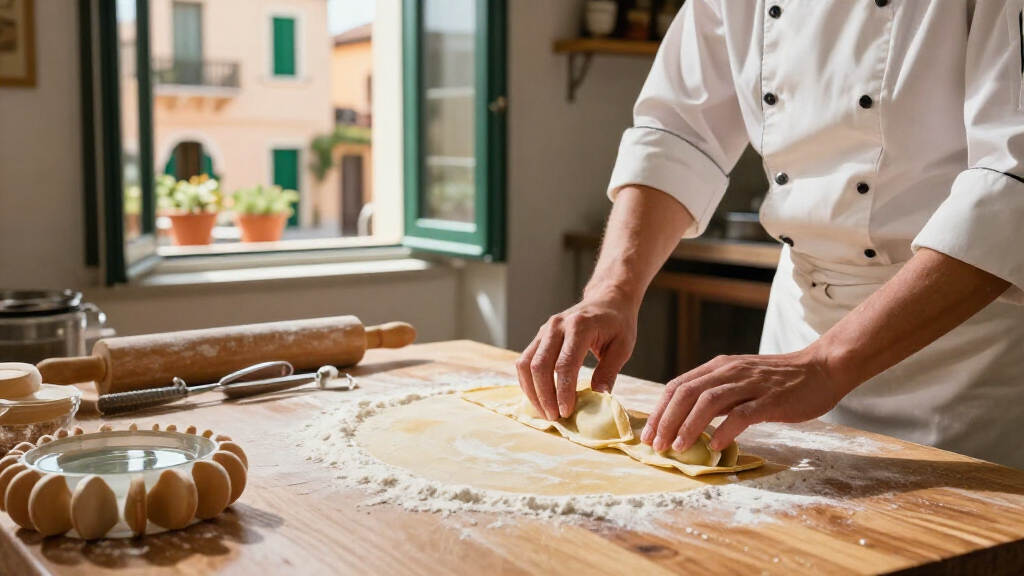
- Seal from the filling outward. Fold over the sheet or lay a second sheet on top. Press gently around each mound to push out air, then seal the edges firmly and cut. Work from the filling toward the outside edge so air has somewhere to escape instead of being trapped in a pocket.
For example, if you’re working with one sheet on a crowded counter, place only six or eight mounds at a time. Seal those before the dough turns leathery. Lightly dampen the edge with water if it feels dry, but avoid soaking it; a wet edge can slide rather than stick. This small-batch pace trades a little speed for a better chance of getting every seam closed while the dough is still workable.
Lay finished ravioli on a tray dusted with flour or semolina, with space between each piece. That gives you room to move them without tearing their delicate edges. If one seam looks uncertain, press it again now instead of hoping it survives the pot. A secure seam protects the filling and prevents it from clouding the cooking water, which can make it harder to judge doneness.
Get tender pasta with a gentle simmer
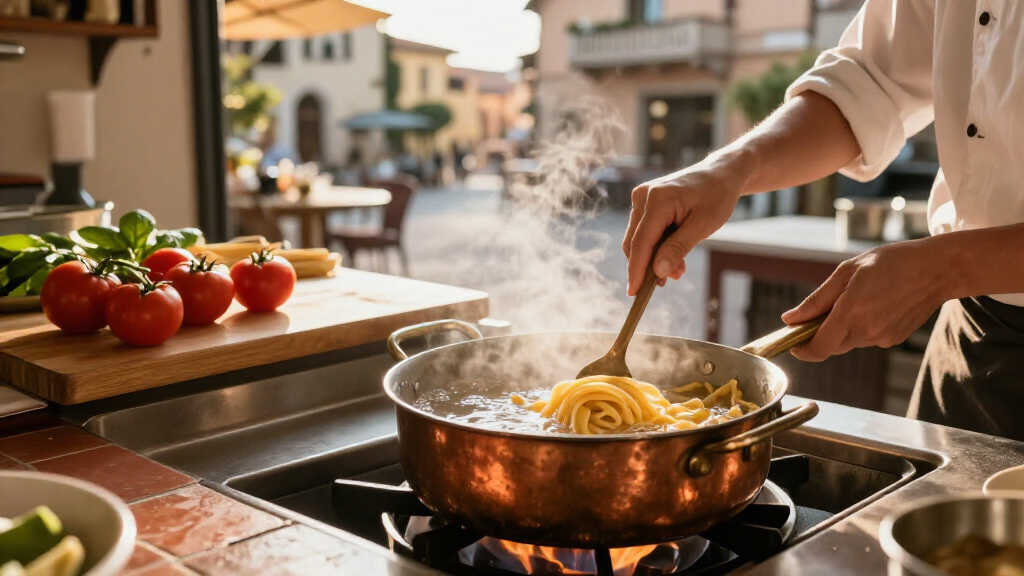
Fresh ricotta-spinach ravioli usually cook in just a few minutes, but size and pasta thickness affect the timing. Bring a large pot of salted water to a boil, then lower the heat so it settles into a gentle simmer before adding the ravioli. A rolling boil tosses the pasta around and can batter open the seams. The aim is enough heat to cook the dough and warm the filling without making each raviolo collide repeatedly with the pot or its neighbors.
Cook in batches if your pot feels crowded. Stir once, carefully, to keep the pasta from sticking to the bottom, then watch for the edges to turn tender. Ravioli may float before the filling has heated through, so use that as a clue, not a timer. Pull one out with a slotted spoon and taste it: the pasta should be tender, and the center should be hot. Testing one costs a small piece but gives you a more useful timing guide for the rest, especially when the sheets are thicker or the ravioli are larger.
If you froze the ravioli, put them into the water straight from the freezer; thawing can make them sticky and fragile. Give them extra time, then test one in the same way. For a Saturday dinner, cook a sample piece first if you’re unsure how thick you rolled the dough. That quick check tells you whether the rest needs another minute. Frozen pieces may cool the water briefly, so let it return to a gentle simmer rather than turning the heat up until it boils hard.
Keep the water at a quiet simmer. Gentle movement cooks the pasta without knocking its seams apart.
Use a slotted spoon to transfer the cooked ravioli directly into the sage butter. Don’t drain them in a colander, where they can pile up and tear. A spoonful of pasta water can loosen the sauce and help it cling to the pasta. The starchy water brings butter and pasta together into a light coating; add it a little at a time so the sauce turns glossy without becoming diluted.
Make sage butter fragrant without burning it
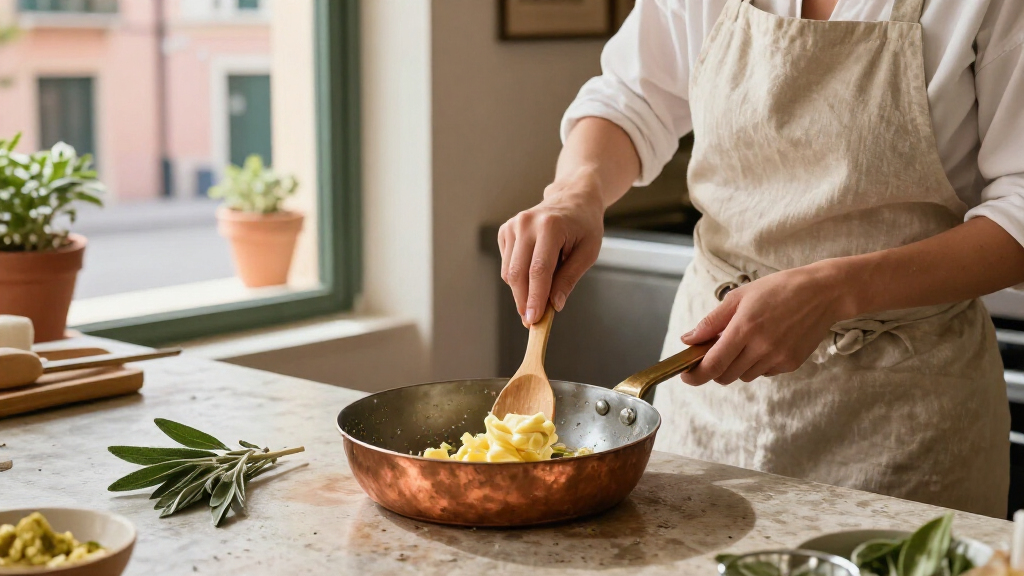
Sage butter is ready when the butter smells nutty and the leaves turn crisp, usually after only a few minutes over moderate heat. Melt butter in a wide skillet, add fresh sage leaves, and watch the foam. The color moves quickly from pale gold to brown, and the aroma changes from sweet and toasted to bitter if you leave it unattended. The leaves and butter signal doneness together: crisp leaves show that their moisture has cooked off, while lightly browned milk solids give the sauce its toasted flavor.
For two servings, start with about 4 tablespoons of butter and a small handful of sage leaves. Swirl the pan rather than walking away. When the butter is golden and the leaves look crisp, take the skillet off the heat; the pan’s warmth will keep cooking it. Add the ravioli carefully and turn them in the butter just long enough to coat. Removing the pan at this point gives you a little margin before the butter crosses from nutty to burnt, especially if you still need a moment to lift the pasta from the pot.
This is where the dish’s appeal comes through: soft, savory filling meets a sauce that tastes toasted and herbal. A little grated Parmesan and a fine shower of lemon zest brighten the plate. If you prefer a lighter meal, use less butter and serve a smaller portion beside simply dressed greens. Less butter makes the coating lighter, though it also carries less sage aroma; pasta water can help a smaller amount spread across the ravioli.
Sage is the classic match, but thyme can work if that’s what you have. Rosemary is more forceful, so use a few leaves rather than a full handful. For instance, a winter dinner in Emilia-Romagna might call for a richer butter finish, while a warm evening meal can benefit from lemon and a crisp salad to cut through it. These choices shift the balance: a stronger herb or richer sauce makes the pasta feel more substantial, while acidity and crunchy greens refresh the palate between bites.
Choose a make-ahead plan that fits your weekend
Ravioli can be made ahead by preparing the dough, filling, or shaped pasta in stages. You can make the filling earlier in the day and keep it covered in the refrigerator, then roll and shape the pasta closer to dinner. If you shape the ravioli in advance, arrange them in one layer on a floured or semolina-dusted tray; stacking can make them stick together. Staging the work spreads out the hands-on time, while shaping close to dinner keeps the pasta from drying out or absorbing moisture from the filling.
For a short hold, refrigerate the tray and cook the ravioli soon after shaping. For longer storage, freeze them uncooked on the tray until firm, then transfer them to a freezer-safe container. Cook them directly from frozen in gently simmering water and allow more time. Don’t thaw first: thawed pasta can become damp and cling to the tray. Freezing individually before packing also keeps the pieces separate, so you can cook only what you need without prying delicate ravioli apart.
There are useful shortcuts, but each changes the texture. Store-bought pasta sheets reduce rolling time; wonton wrappers are convenient but taste different and can be thinner. Frozen spinach saves washing and chopping, while gluten-free or egg-free dough can suit some diets. Those swaps still make a good home meal, though the classic combination is fresh pasta, ricotta and greens, and sage butter. The tradeoff is mostly control: homemade dough lets you choose thickness and shape, while ready-made options make the project faster but may need a gentler hand or shorter cooking time.
Picture a busy Sunday: you freeze a tray of ravioli Saturday afternoon, then cook only what you need after a walk. A crisp salad, grated Parmesan, and the last handful of sage turn the freezer stash into a proper supper. Keep dairy filling refrigerated while you work, and refrigerate leftovers promptly in a covered container. Having the ravioli ready in portions makes the meal feel spontaneous, even though the careful work happened earlier.

Serve the ravioli with balance and a sense of place
Ravioli with sage butter makes a rich first course, so a modest portion and a fresh side keep the meal balanced. In northern Italy, filled pastas often appear as a primo, or first course, before a smaller main dish. At home, you can serve a few ravioli with a green salad and call it dinner, especially after a day spent cooking. Thinking of it as a first course is useful even at home: the rich filling and butter can satisfy quickly, so portion size and what you serve alongside shape how heavy the meal feels.
Choose a salad with crunch and acidity: tender greens, thinly sliced fennel, or radicchio dressed with olive oil and vinegar. The bitter snap of radicchio is especially good against sweet butter. Add Parmesan at the table, where each person can choose how much they want, and finish with lemon zest if the filling tastes especially rich. The salad’s sharpness refreshes the palate between creamy bites; fennel adds a mild anise note, while radicchio brings a more pronounced bitterness.
For a weekend table, warm shallow bowls before serving so the butter stays glossy. Spoon the ravioli in gently, then drizzle any sage butter left in the skillet over the top. The golden sauce should shine, not pool heavily. A few crisp sage leaves give each serving a fragrant finish and a little crunch. Serving promptly matters because fresh pasta cools quickly, and butter thickens as it cools; warm bowls help preserve the sauce’s silky coating through the meal.
Regional traditions vary, and this home version doesn’t claim a single town as its birthplace. Its familiar ingredients evoke the filled pastas of Emilia-Romagna and neighboring regions, where pasta-making remains part of home cooking. If you visit Bologna or Modena, notice how fresh pasta appears in everyday markets; back home, a flour-dusted counter can bring a little of that ritual into your own kitchen. The point is the practice as much as the reference: shaping food by hand turns a familiar supper into a shared weekend activity.
Frequently Asked Questions
Can I use frozen spinach for ricotta-spinach ravioli?
Yes. Thaw it completely, then squeeze it very dry in a clean towel before chopping and mixing it with the ricotta. If it still feels wet, squeeze again so the filling holds its shape.
How do I stop homemade ravioli from opening?
Use a modest amount of filling, keep the dough covered, and press trapped air out from around each mound before sealing. If the edges feel dry, dampen them lightly with water and press firmly.
Can I cook ravioli straight from frozen?
Yes. Add frozen ravioli directly to gently simmering salted water without thawing them first. They’ll need extra cooking time, so taste one to check that the pasta is tender and the filling is hot.
How long should fresh ravioli cook?
Most fresh ravioli need only a few minutes, depending on their size and how thinly you rolled the dough. Check a piece for tender pasta and a hot center; floating alone doesn’t guarantee the filling is ready.
Can I make ravioli ahead of dinner?
Yes. Refrigerate shaped ravioli briefly in a single layer on a floured tray, or freeze them uncooked until firm and then store them in a freezer-safe container. Don’t stack fresh ravioli, since they can stick and tear when separated.
What can I use instead of sage?
Thyme works well, and a small amount of rosemary can add a more assertive, piney note. Sage remains the traditional partner for butter and filled pasta, so start with a light hand when swapping herbs.
Conclusion
Make the filling dry, give each raviolo a careful seal, and keep the water at a gentle simmer. Those three habits turn a long afternoon of pasta-making into a calm, delicious dinner. Set out a tray of flour-dusted pillows, warm the butter until sage perfumes the kitchen, and let the first bite tell you the work was worth it.
Start with a small batch this weekend. If a few ravioli make it into the freezer, next Sunday’s dinner already has a head start.