
TL;DR
Agnolotti del plin are small filled pasta from Piedmont, especially the Langhe, Roero, and Monferrato; *plin* means “pinch” in Piedmontese and names the motion that seals each parcel. To make them, prepare a cool, moist but firm filling, roll rested egg dough thin, place small mounds in a line, fold, press out air, pinch between mounds, and cut. Boil fresh plin briefly and serve with roast juices, butter and sage, or broth.
A plate of agnolotti del plin can look almost too delicate to have come from a roast dinner. These tiny pasta parcels belong to Piedmont, especially the Langhe, Roero, and Monferrato, where a line of rich filling becomes a row of neat bites with a quick pinch between the fingers.

Get kitchen staples and gadgets delivered free with Prime
- Fast, free delivery on millions of items
- Prime Video, Amazon Music and more included
- Member-only deals all year
The word plin means “pinch” in Piedmontese. That gesture gives the pasta its name and its shape. If you have leftover braised meat, a rolling pin, and a little patience, you can make a home version that honors the tradition without pretending every family in the region uses the same recipe.
This guide walks you through the dough, filling, shaping, cooking, and serving. You’ll learn what to watch for at each stage, how to keep the parcels from opening, and why a light dressing often suits them better than a heavy sauce. Think of the method as a small kitchen rhythm: fill, fold, press, pinch, cut.
In Piedmontese, *plin* means “pinch”; the pinch between filling mounds defines these small parcels.
Traditional fillings commonly use cooked meats such as beef, pork, or rabbit, but recipes vary by household and locality.
Cool the filling, use small mounds, and press out trapped air before sealing to help prevent parcels from opening.
Cook fresh plin briefly in salted water and taste one to check doneness.
Try roast juices, butter and sage, broth, or the Langhe custom *al tovagliolo*—on a napkin without sauce.
Agnolotti del Plin The Pinch That Makes Them
These small filled pasta from Piedmont take their name from the finger pinch that seals each parcel. Cool filling, thin rested dough, and a light finish keep the method and flavor in focus.
A regional shape, made by hand
Plin means “pinch” in Piedmontese. The pasta is associated especially with the Langhe, Roero, and Monferrato.
Pinch to seal
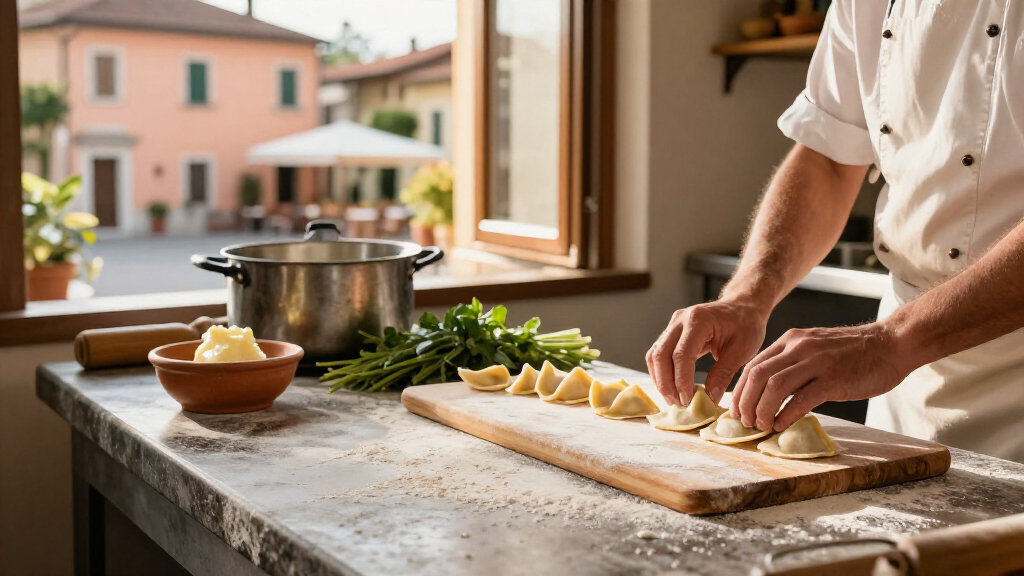
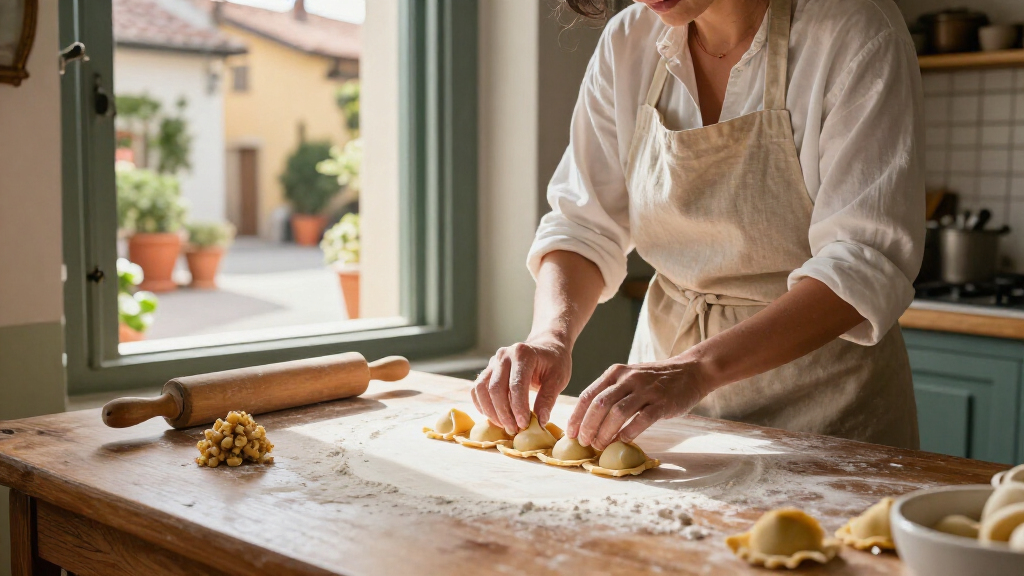
Small mounds are folded into thin egg dough, pinched between, then cut into individual parcels.
Cooked meats
Beef, pork, or rabbit are common; recipes vary by household and locality.
Build a filling that seals
The right texture is moist enough to hold together, but firm enough to stay in a small mound.
Finely chop cooked meat and vegetables, then add cooking juices gradually.
Knead flour and eggs into smooth, elastic dough. Wrap and rest it before rolling.
Keep unused dough covered so it stays supple and does not dry out.
Fill, fold, pinch, cut
Small, evenly spaced mounds leave room to seal each parcel cleanly.
- Lay a line of filling near one edge.
- Fold dough over the mounds and press out trapped air.
- Pinch between mounds, then cut into parcels.
- Boil fresh plin briefly in salted water; taste one for doneness.
- Dress with roast juices, butter and sage, or broth.
- In parts of the Langhe, serve al tovagliolo, without sauce.
What makes agnolotti del plin worth the careful pinch?
Agnolotti del plin are small, hand-pinched filled pasta from Piedmont, in northwestern Italy, and their signature comes from the way you seal them. You place filling in a line on thin egg dough, fold the dough over it, then pinch between the mounds to form individual parcels. The name *plin* means “pinch” in Piedmontese, referring to how you close the pasta with your fingers.
They are closely associated with the Langhe, Roero, and Monferrato, areas where handmade pasta sits naturally beside roasts, braises, and seasonal produce. Picture a Sunday meal: meat has cooked slowly until tender, the table is set, and the cook turns the remaining roast into a filling rather than letting it go to waste. One common origin account connects plin to this practical use of leftover cooked meat. It is a useful tradition to know, though the precise origin story and date are difficult to establish.
In that sense, the pasta works like a small edible pantry: a little dough gives yesterday’s roast a new place at the table. The filling often combines meats such as beef, pork, and rabbit, sometimes with vegetables and cooking juices. Household recipes vary, so treat the method as a regional framework rather than a single fixed formula.
That regional identity also helps distinguish plin from other filled pasta. *Agnolotti* is a broader name for Piedmontese filled pasta; *del plin* signals the small parcels and their characteristic pinched construction. If you make a batch after roasting meat, you are putting a practical kitchen habit into your hands, one tiny seal at a time.
Products Worth Considering

Levoit Vital 100S-P Air Purifier with Washable Pre-Filter

Arlo Pro Wireless Security Camera, 2K HDR, 6th Generation, 4-Camera Set

Philips Hue Festavia Permanent Outdoor String Lights, 80 Lights, 150 ft
As an affiliate, we earn on qualifying purchases.
Build a filling that stays moist without leaking
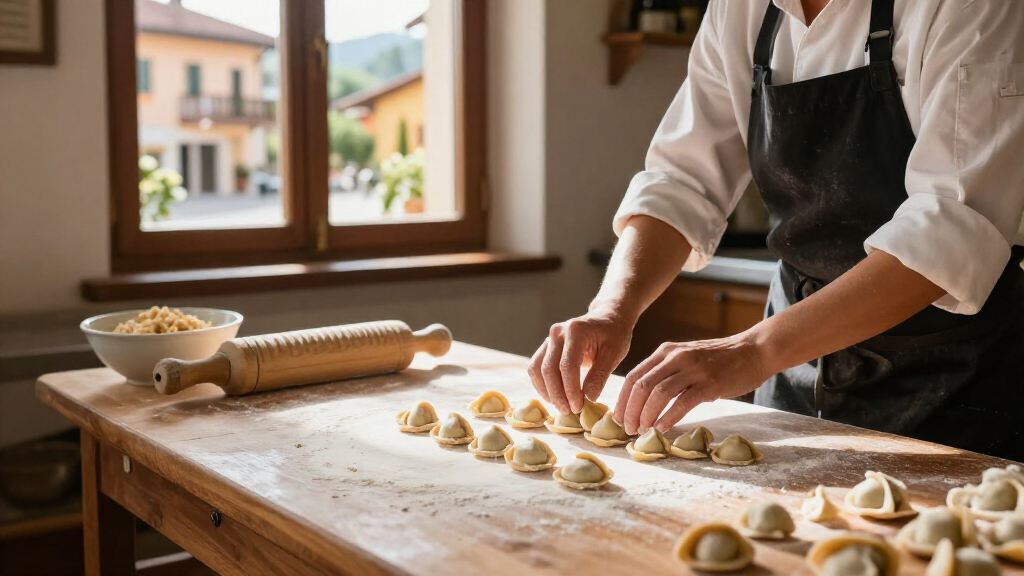
The filling should be cool, finely chopped, and moist but firm enough to hold a small mound on the dough. Traditional agnolotti del plin often use cooked meats such as beef, pork, or rabbit, sometimes mixed with vegetables and a little of the meat’s cooking liquid. Exact combinations and seasoning differ from town to town and from one household to another.
For a practical home example, start with leftover braised beef and pork. Remove bones and tough pieces, then chop or mince the meat finely so you do not leave long fibers that can pull through the pasta. Add a spoonful of the cooled braising juices at a time. Stop when the mixture clumps together; it should feel supple, not wet like a sauce.
Let the filling cool completely before shaping. Warm filling can soften the dough and make it harder to seal, especially if you are working slowly on a warm kitchen counter. Keep it covered in the refrigerator while you prepare the pasta, and take out only what you need. If you prepare it ahead, refrigerate it promptly in a shallow covered container; avoid leaving cooked meat at room temperature for more than two hours.
Season thoughtfully, since the roast juices may already carry plenty of salt. Taste a small portion and adjust before filling the pasta. This is also the point to decide whether you are making a traditional meat version or a clearly marked variation: finely chopped seasonal vegetables or other vegetarian ingredients can work, but they make a modern interpretation rather than the classic meat-based preparation.
Make egg dough that rolls thin and seals cleanly
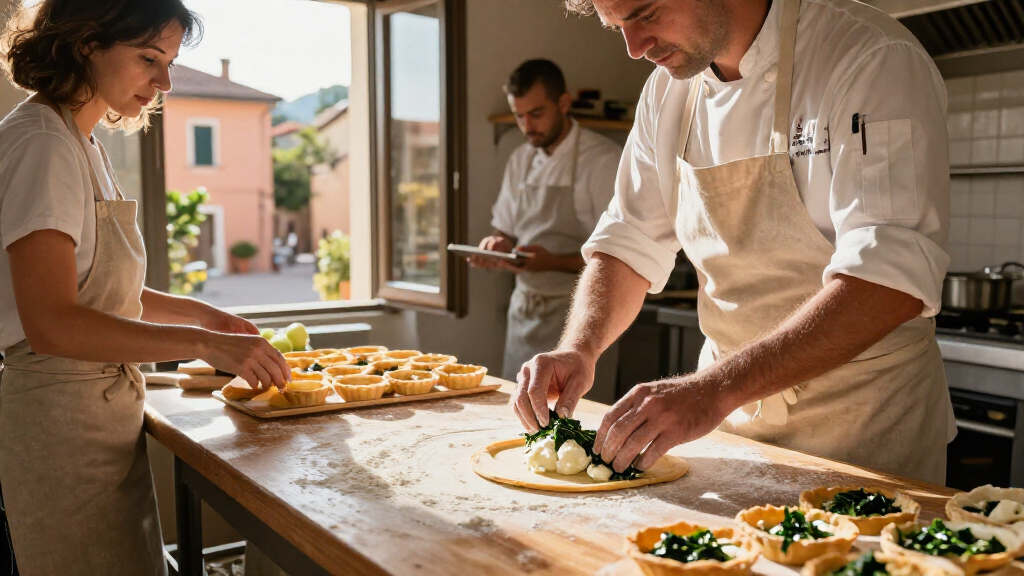
Good pasta dough should feel smooth, elastic, and rested before you roll it. A common starting point is wheat flour and eggs, worked together until no dry patches remain and kneaded until the surface feels supple. The exact ratio depends on egg size, flour, and the air in your kitchen, so add flour gradually instead of forcing a stiff dough from the start.
For a first batch, bring the dough together on a clean counter, then knead it until it springs back gently when pressed. Wrap it well and let it rest so the gluten relaxes; rested dough is easier to roll without shrinking back. If you are shaping alone, divide it into manageable portions and keep the portions you are not using wrapped. A pasta sheet that dries while you shape can crack at the fold, like paper left too long beside a radiator.
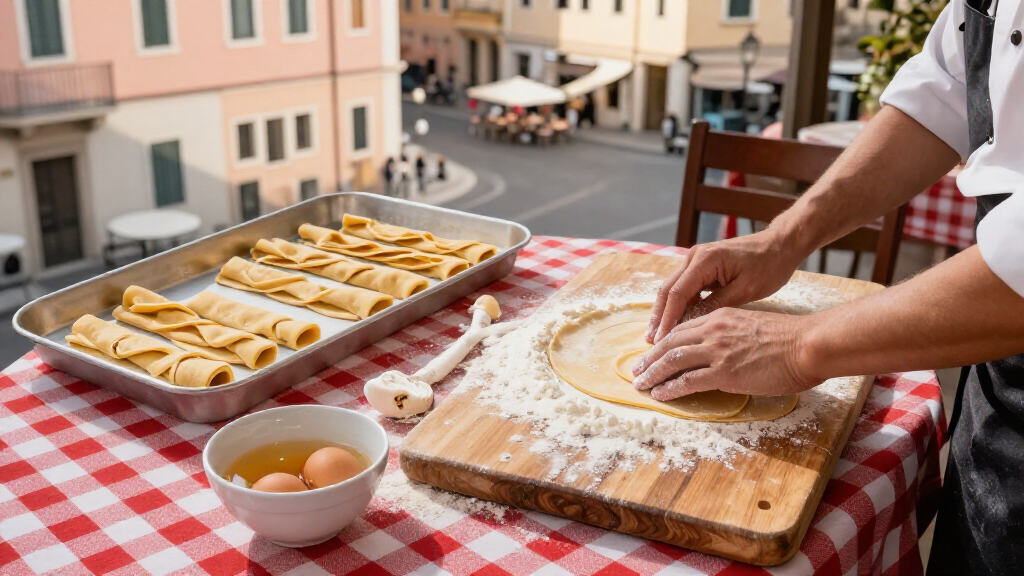
Roll each piece thin enough that the filling’s outline can show through, but not so thin that the dough tears when you press around a mound. A hand-cranked pasta machine makes thickness more even, while a rolling pin gives you a more tactile feel for the sheet. In either case, dust lightly with flour if the dough sticks, and brush away excess before folding so flour does not interfere with the seal.
For example, if your first sheet keeps springing back, cover it and give it a few more minutes to rest rather than pulling harder. Work with one sheet at a time. That small change keeps the dough supple and gives you a calmer pace for the pinching that follows.
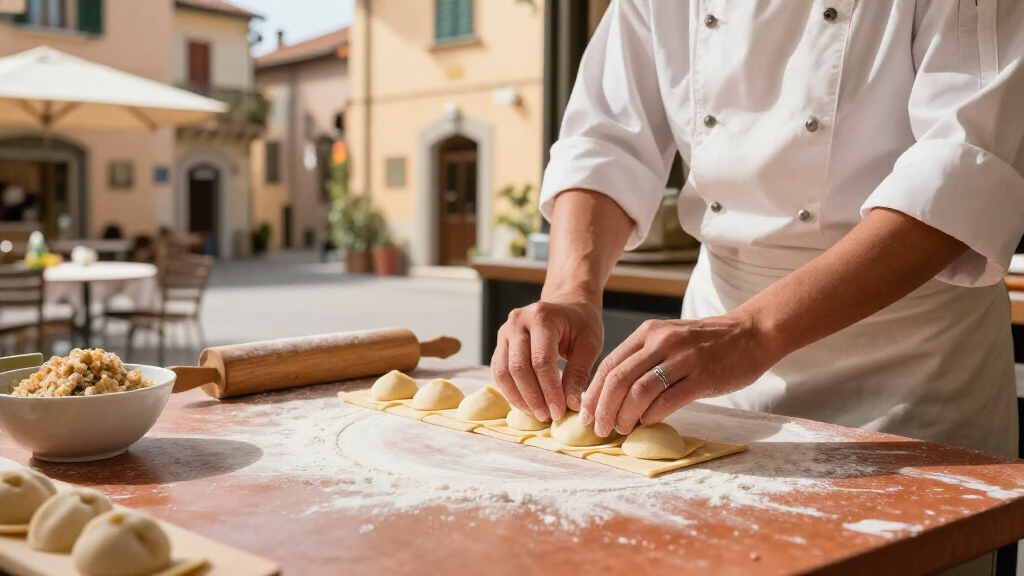
Shape each parcel with this simple fold-and-pinch rhythm
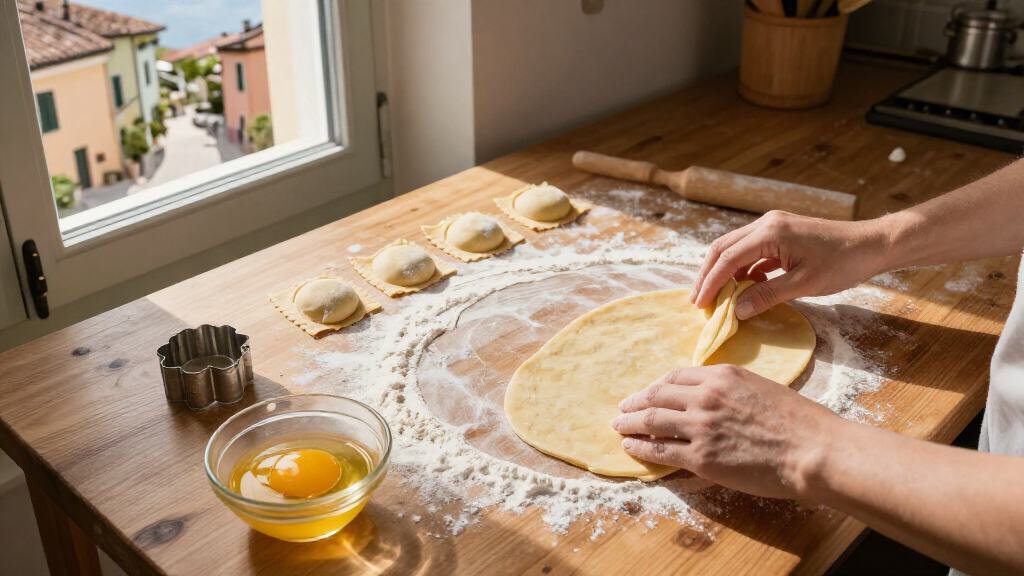
- Lay out one thin sheet on a lightly floured surface, keeping the rest of the dough covered.
- Place a narrow line of filling near one edge. Use small, evenly spaced mounds and leave a clean border.
- Fold the dough over the filling. Press the top layer against the bottom around each mound and push out trapped air.
- Pinch between the mounds with your fingers to make the defining *plin*. Keep the pinches firm and consistent.
- Cut the parcels with a fluted pastry wheel or knife, trimming the folded edge and separating each piece.
This order is the heart of the method: filling, fold, air out, pinch, cut. The pinch closes the space between parcels and gives each one the distinctive shape. Keep the filling modest. A mound roughly the size of a small bean is easier to seal than a generous spoonful, and less likely to burst in the pot.
Try making a short row first instead of filling an entire sheet. If the dough feels dry, lightly moisten the edge with a fingertip; if it feels sticky, dust the counter lightly. A common first-batch problem is trapped air. Press around each mound before pinching, because a pocket of air can expand in boiling water and push a seam open.
Set the finished parcels on a lightly floured tray with space between them. If you are making enough for a family meal, work in small batches and keep the shaped pasta from touching. The pace may feel slow at first. After a few rows, your fingers start to find the distance between each mound without measuring.
Choose a traditional filling or a thoughtful variation
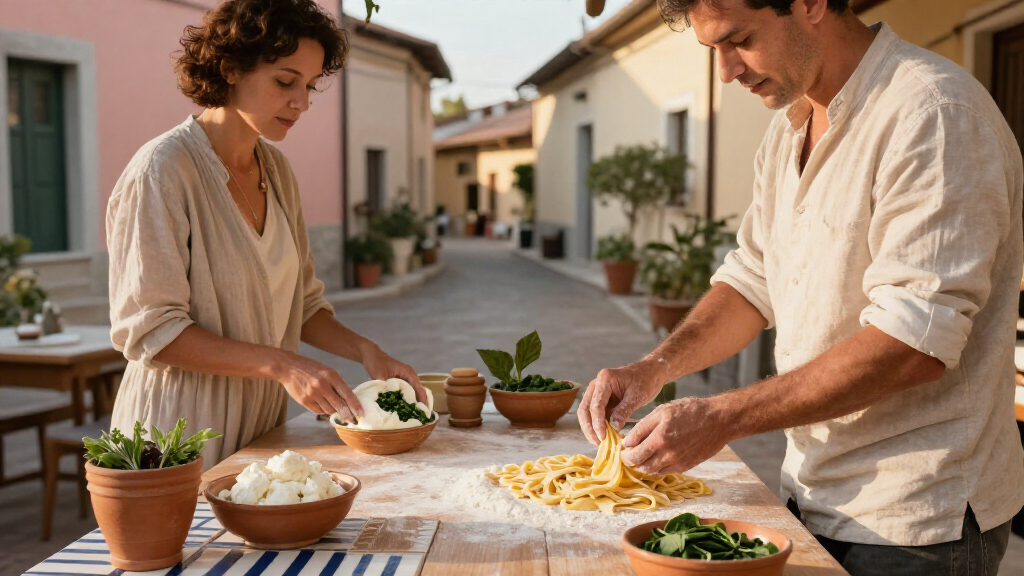
There is no single universal filling for agnolotti del plin, but cooked meat is the classic starting point. Beef, pork, and rabbit appear in traditional versions, sometimes with vegetables and the juices from the roast or braise. The proportions, herbs, and seasonings reflect local and family habits, so a home cook can follow the shape and technique without claiming one combination represents every kitchen in Piedmont.
Here is a useful comparison when you are deciding what to make:
| Filling approach | What it brings | What to watch |
|---|---|---|
| Cooked beef and pork | Rich, savory flavor and a cohesive texture | Chop finely and add juices sparingly |
| Cooked rabbit with vegetables | A lighter, tender filling with a gentle sweetness | Remove every bone and keep the mixture moist |
| Seasonal vegetarian filling | A meat-free interpretation that can follow the season | Cook off excess moisture so parcels seal well |
Imagine you have leftover beef from a winter braise: a little carrot and cooking liquid may help bind it, while too much liquid makes the filling runny. In spring, a cook might choose a vegetable filling as a contemporary variation; the same sealing method applies, but the mixture should be cool and firm before it meets the dough.
Filling choice changes the balance of the finished dish. A rich meat filling needs only a restrained dressing, while a milder vegetable filling may welcome butter and herbs. Label the variation honestly when serving guests, especially if someone avoids meat or has dietary restrictions. Pasta made with wheat flour and eggs contains common allergens: wheat and egg. Check every ingredient in your filling and sauce as well, since additions can introduce other allergens.
Cook fresh plin briefly and dress them with restraint
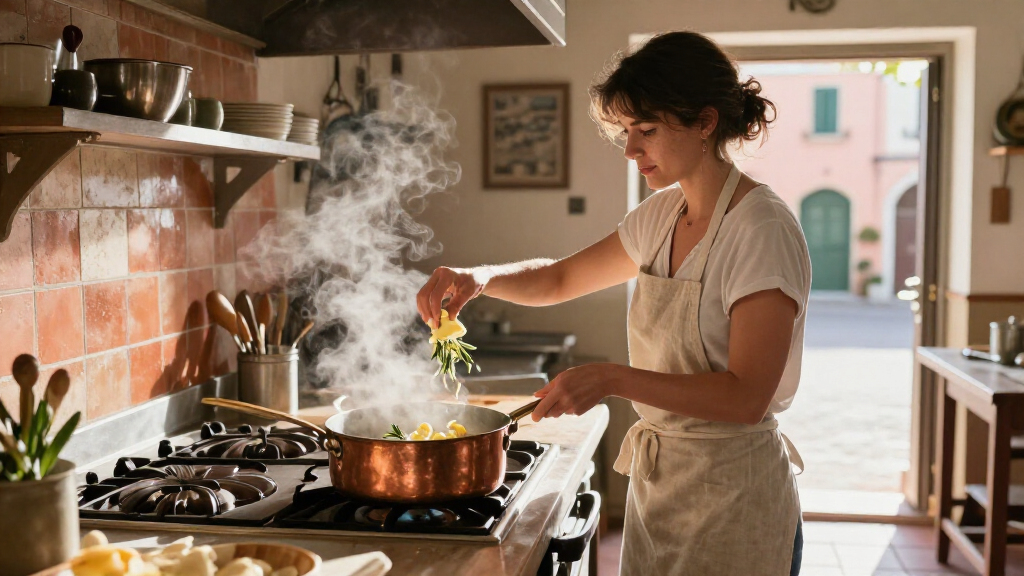
Fresh agnolotti del plin cook quickly, usually in only a few minutes, depending on the thickness of the dough and the size of the parcels. Bring a pot of salted water to a steady boil, add the pasta carefully, and stir gently so the pieces do not stick to the bottom. Taste one as it nears doneness; the pasta should feel tender while still holding the filling securely.
Do not use a long timer as your only guide. A small parcel made from a thin sheet can cook sooner than a larger one, and a home-rolled sheet may vary slightly in thickness. If one opens, reduce the heat to a gentler boil and check whether the filling was too wet, the seal too dusty, or air trapped inside. A test parcel before the main batch can save a whole tray.
Serve the pasta with something that lets the filling speak. Roast-meat juices make a natural choice for a meat filling; butter and sage lend a soft herbal aroma; broth turns the parcels into a warming bowl. In parts of the Langhe, plin may be served *al tovagliolo*—“on the napkin”—without sauce, so the pasta’s flavor stays front and center. That custom makes a lovely small first course when you want guests to notice the filling itself.
If you made extra, freeze uncooked plin in one layer until firm, then move them to a sealed container. Cook them from frozen and allow extra time, checking a piece for doneness. Refrigerate leftovers promptly and reheat them thoroughly; keep cooked pasta chilled rather than leaving it on the table for hours. A light hand with sauce and sensible storage preserve both flavor and food safety.
Turn a first attempt into a smoother second batch
The easiest way to improve your plin is to change one shaping habit at a time. If the parcels open, reduce the filling and press out air before pinching. If the dough tears, roll it a little thicker or keep it covered between steps. If the filling smears instead of forming clear mounds, cool it further and add less liquid. Each small adjustment points to a specific cause.
Consider a home cook preparing dinner for four on a Saturday. They braise meat the day before, chill the filling overnight, and make the dough in the morning. Instead of racing to shape enough for a large platter, they roll one portion, make a short row, and boil a test parcel. The test reveals that the dough needs another light dusting of flour and the filling mound should be smaller. The rest of the batch goes more smoothly.
Keep a tray nearby and separate finished pieces so their edges do not stick together. If you are making the pasta with someone else, divide the jobs: one person portions the filling while the other folds and pinches. You can also pause between sheets, as long as the unused dough stays wrapped and the filling remains chilled. These are small kitchen choices, but they protect the texture you worked to create.
Patience matters because plin are deliberately small. Their charm comes from a fine sheet, a generous but controlled filling, and a confident seal—not from making each one identical to a factory product. Your first dozen may vary in size. By the end of the tray, your hands will likely find a steadier rhythm, and dinner will carry the shape of the work you put into it.
Key facts for cooking and serving agnolotti del plin
Agnolotti del plin are small Piedmontese parcels defined by their pinched seal, and the simplest way to honor them at home is to pay attention to filling moisture, dough thickness, and a light serving touch. Here are the practical points to carry into your kitchen:
- “Plin” means “pinch” in Piedmontese and describes how you close the dough between filling mounds.
- The pasta is associated especially with the Langhe, Roero, and Monferrato in Piedmont.
- Traditional fillings commonly use cooked meat, though exact recipes vary by household and place.
- Keep filling cool and firm, use modest mounds, and press out air before sealing.
- Fresh plin cook in a few minutes; taste one instead of relying only on a timer.
- Roast juices, butter and sage, broth, or the Langhe custom *al tovagliolo* are restrained serving choices.
These details matter in a real meal. If you plan to serve plin after a roast, save a little of the cooking juice before you reduce or season the sauce. If you make the pasta ahead, freeze the parcels in a single layer so they keep their shape. And if you are serving guests, tell them whether the filling is meat-based or a vegetarian variation, and flag the wheat and egg in the pasta.
Making plin does not require a special machine or a perfect first try. It asks for a thin sheet, a filling that behaves, and a repeated pinch. Once that motion makes sense, the dish connects a practical use for cooked meat with a distinct regional pasta tradition you can recreate in your own kitchen.
Frequently Asked Questions
What does “plin” mean?
Plin means “pinch” in Piedmontese. It refers to the finger motion that seals the dough between the filling mounds and gives each parcel its characteristic shape.
What is the difference between agnolotti and agnolotti del plin?
Agnolotti is a broader name for filled pasta associated with Piedmont. Agnolotti del plin describes the small parcels made with the characteristic pinch between the mounds of filling.
Can I use leftover roast meat for the filling?
Yes. Remove bones and tough pieces, chop the cooked meat finely, and mix in a little cooled cooking juice at a time until it holds together. Keep the filling chilled while you shape the pasta, and do not leave cooked meat at room temperature for more than two hours.
How do I stop the parcels from opening while they cook?
Use a modest amount of filling, press out air around each mound, and seal the dough firmly before pinching and cutting. If the filling is wet or the dough is dusty with flour, the edges may not hold well; try a test parcel before cooking the full batch.
How long do fresh agnolotti del plin cook?
They generally need only a few minutes in salted boiling water, but size and dough thickness affect the timing. Taste one when it looks nearly done; the pasta should be tender while the parcel stays intact.
Can I freeze agnolotti del plin?
Freeze uncooked parcels in a single layer until firm, then transfer them to a sealed container. Cook them from frozen and allow extra time, checking a piece for doneness before serving.
Are agnolotti del plin vegetarian?
The traditional filling is generally meat-based, but cooks also make contemporary vegetarian variations. Pasta dough commonly contains wheat and eggs, so it is not suitable for people avoiding those allergens.
Conclusion
Remember the rhythm: fill, fold, press, pinch, cut. Keep the filling cool and firm, give the dough time to rest, and make the parcels small enough to seal without strain. Those few choices matter more than chasing one supposedly definitive recipe.
Serve your first batch with a little roast juice or simply on a napkin, and let the Piedmontese pinch do the talking. The best reward is a tray of tender little parcels that carry yesterday’s roast into tonight’s dinner.