
TL;DR
In Italy, lentils, or *lenticchie*, are a traditional New Year’s food because their coinlike shape is thought to symbolize money and good fortune. Serve them as a gently simmered stew, with or without *cotechino* or *zampone*, and cook until tender while following package directions for soaking and timing.
At a New Year’s table in Italy, a spoonful of lentils can stand for a year’s worth of good fortune. The little discs look like coins, and eating them as the calendar turns is a way to wish for abundance. The symbolism is simple; the dish itself is earthy, warm, and made for a winter evening.

Get kitchen staples and gadgets delivered free with Prime
- Fast, free delivery on millions of items
- Prime Video, Amazon Music and more included
- Member-only deals all year
You’ll often find *lenticchie* (lentils) alongside *cotechino* or *zampone*, rich seasoned pork specialties. But there is no single recipe every family follows, and you don’t need a specialty sausage—or a trip to Italy—to take part. This guide explains the tradition, helps you choose lentils, and walks you through a flavorful pot that can be vegetarian, prepared ahead, and adjusted to your own New Year’s table.
Italians eat *lenticchie* around New Year because their coinlike shape is thought to symbolize money and good fortune.
Serve lentils with *cotechino* or *zampone*, or make them a standalone vegetarian or vegan stew.
Small brown or green lentils are practical choices; Castelluccio lentils from Umbria are a notable option when available.
Sort and rinse lentils, check package directions, simmer gently, and add liquid if they become too dry.
Cook lentils ahead, refrigerate promptly, and reheat until steaming hot with a splash of broth or water.
Lentils for Luck A New Year’s tradition
Lenticchie are eaten around New Year as a wish for wealth and good fortune. Their coinlike shape gives a humble bowl of lentils a celebratory meaning.
Why lentils mean good fortune
The shared gesture matters: a familiar food becomes a wish for abundance in the year ahead.
- Coinlike lentils symbolize money and good fortune.
- Often served on New Year’s Eve or New Year’s Day.
- Some accounts link the custom to ancient Rome.
- Treat the leather purse story as tradition, not a universal documented origin.
Choose your lentils
Small lentils can hold their shape in a savory stew; follow the package for soaking and timing.
Castelluccio
Grown around Castelluccio di Norcia in Umbria, these small lentils often hold their shape well.
Brown or green
Dependable pantry options for a New Year’s pot, even when specialty lentils are hard to find.
Build a tender, flavorful pot
A gentle simmer helps soften the lentils without turning them mushy.
Check for stones, rinse well, and soak only if the package recommends it.
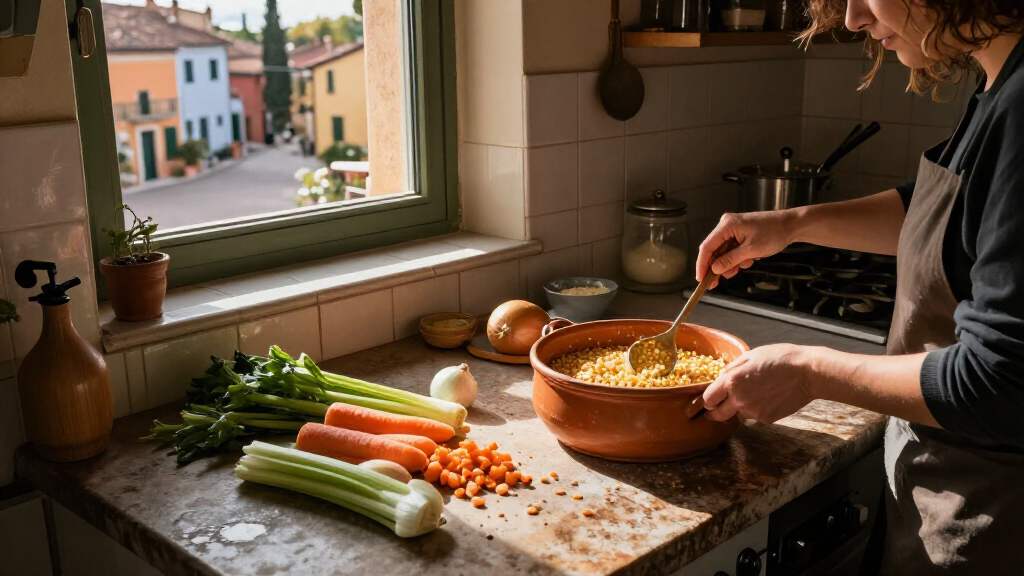
Slowly soften chopped onion, carrot, and celery in olive oil.
Add lentils and broth or water; keep the heat gentle and add liquid as needed.
Serve it your way
There is no single recipe every Italian family follows.
| At the table | What to serve |
|---|---|
| Traditional pairing | Cotechino or zampone, rich seasoned pork specialties |
| Vegetarian or vegan | Vegetable broth, olive oil, and herbs; skip the pork |
| Make ahead | Reheat gently with a splash of broth or water until steaming hot |
Why lentils stand for good fortune at an Italian New Year’s table
Italian New Year lentils are eaten as a wish for wealth and good fortune because their round, coinlike shape is thought to symbolize money. Families serve them around the turn of the year, often at dinner on New Year’s Eve or during New Year’s Day. Each spoonful turns a familiar pantry ingredient into a small, edible wish for the months ahead.
The custom is especially easy to understand when you see a bowl of cooked lentils: tiny brown or green discs gathered together, a little like coins spilling across a plate. Some traditional accounts connect the practice to ancient Rome, where people gave a small leather purse of lentils in the hope that the lentils would turn into coins. Treat that as an origin story, not a universally documented account of how every Italian family began the custom.
There is no need to take the symbolism too literally. The point is the shared gesture: you put a humble food on the table and wish for a year with enough to go around. If you’re hosting, you could bring out the pot just before midnight, or serve it at lunch on January 1. Either way, the lentils give the meal a story alongside their savory, earthy flavor.
Products Worth Considering

Arlo Pro Wireless Security Camera, 2K HDR, 6th Gen, 4-Camera System

Hisense 40-Inch QD4SR Series Hi-QLED Full HD Smart Roku TV

Levoit Vital 100S-P Air Purifier for Home and Pets
As an affiliate, we earn on qualifying purchases.
Serve lentils with pork, or let them carry the meal on their own
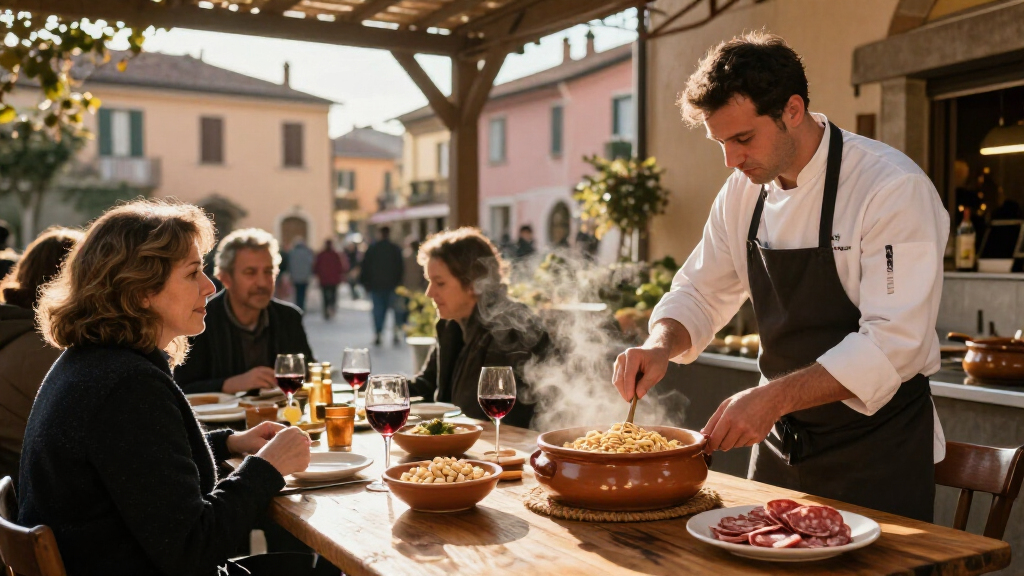
Italian New Year lentils are commonly served with *cotechino* or *zampone*, two seasoned pork specialties whose richness plays well against the lentils’ earthy flavor. Cotechino is sausage in a casing; zampone is traditionally stuffed into a pig’s trotter. Both make a hearty centerpiece, but a simple bowl of lentils can also stand on its own.
On a cold evening, the contrast is appealing: a slice of savory, fatty pork beside spoon-tender lentils and their olive-oil-scented broth. The pork brings richness; the lentils answer with soft texture and a grounding, earthy taste. Follow the sausage package’s cooking and serving directions, since preparation can vary by product. If you want a vegetarian or vegan table, use vegetable broth, olive oil, and herbs, and skip the pork. The symbolic wish for good fortune stays in the pot.
Households shape the dish in their own ways. You might serve the lentils as a stew in shallow bowls, or spoon a thicker preparation onto a platter next to the sliced sausage. For a smaller gathering, make the lentils the main dish and offer crusty bread. That gives guests a satisfying choice without requiring every plate to follow the same tradition.

Choose lentils that cook evenly and keep their shape
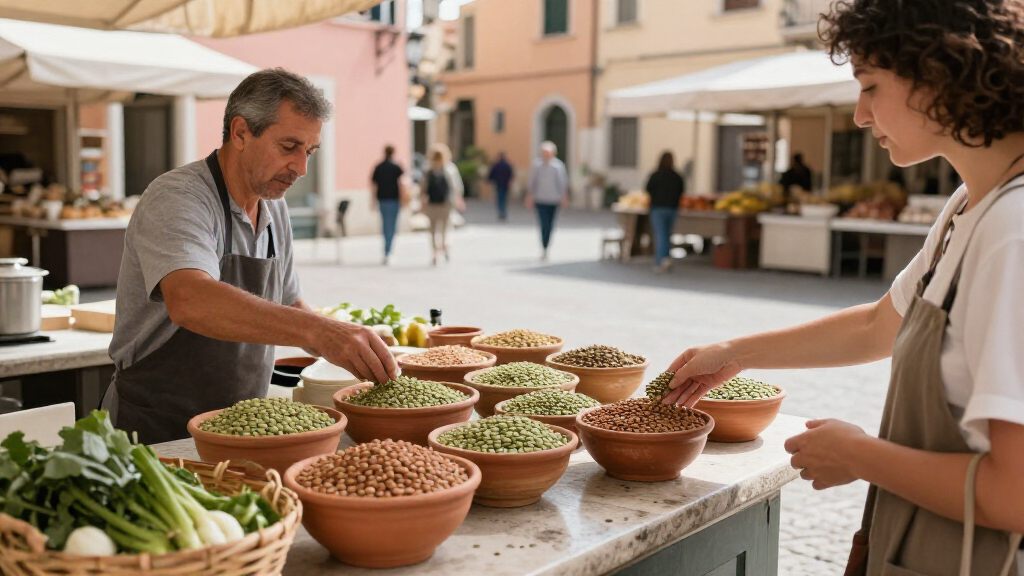
Small brown or green lentils are dependable for New Year’s lentils because they cook into a tender stew without requiring a specialty Italian variety. Castelluccio lentils, grown around Castelluccio di Norcia in Umbria, are a notable choice: they are small and often hold their shape well. If you find them, you can bring a taste of central Italy to your kitchen; if you don’t, ordinary brown or green lentils work just fine.
Check the package before you start. Many small lentils don’t need soaking, but directions vary, and older lentils can take longer to soften. Spread the dry lentils across a plate to spot any tiny stones or damaged pieces, then rinse them under cool water. This quick sorting step matters more than hunting for a rare variety: a stray pebble is an unwelcome surprise in an otherwise celebratory bowl.
Think about the texture you want. For a stew served alongside sausage, lentils that stay distinct make a neat, satisfying contrast to soft slices of pork. If your lentils turn out creamier, they can still taste excellent spooned with broth and aromatics. A package of lentils in the pantry is enough to make the tradition accessible, even if Castelluccio’s hills are far from your kitchen.
Build deep flavor with a slow soffritto and a gentle simmer
For flavorful Italian New Year lentils, start by slowly cooking chopped onion, carrot, and celery in olive oil, then add rinsed lentils and broth or water. This aromatic base, called *soffritto* (slow-cooked chopped aromatics), gives the finished pot a savory sweetness without much work. Gentle heat helps the vegetables soften rather than brown too quickly.
Use this simple sequence as a guide, and let your package directions set the timing:
- Sort and rinse the lentils; soak them only if the package recommends it.
- Warm olive oil in a pot and cook chopped onion, carrot, and celery over low to medium heat until soft.
- Add garlic or herbs if you like, then stir in the lentils and enough broth or water to cover them well.
- Bring the pot to a gentle simmer, then cook until the lentils are tender, adding liquid as needed.
- Taste near the end and adjust the seasoning. Salt toward the end when cooking times are uncertain.
A low, steady simmer is the goal: bubbles that rise quietly, not a rolling boil that batters the lentils. Begin checking for tenderness before the package’s longest cooking estimate, especially if the lentils are small. If they still feel firm, keep cooking and add a splash of hot liquid; when they soften, take the pot off the heat before they collapse into mush.

Balance the pork’s richness with herbs, broth, and a vegetarian option
Lentils pair well with cotechino and zampone because their earthy flavor balances the pork’s rich, seasoned taste. They don’t need to compete with the sausage: a gently seasoned lentil stew gives the plate a softer, savory base, while the pork supplies the richer bite. Keep the lentils moist enough to spoon, but not swimming in broth if you’re serving them beside sliced meat.
For a meat-free New Year’s meal, use vegetable broth and olive oil, then add herbs that suit your pantry. A bay leaf in the simmering pot or a little rosemary can make the kitchen smell warm and woodsy. Remove whole herbs before serving. If you’re cooking for guests, tell them what’s in the pot; packaged broths and sausages can contain ingredients that matter to people with food allergies or dietary restrictions.
Try tasting the lentils before the sausage goes on the platter. If they taste flat, add a little salt near the end or a small splash of broth; if they taste too rich alongside the pork, keep the lentils simply seasoned and let their freshness provide contrast. That balance is personal. One family might prefer a thick, nearly dry side dish; another might want a soupy bowl with bread for catching every last bit.
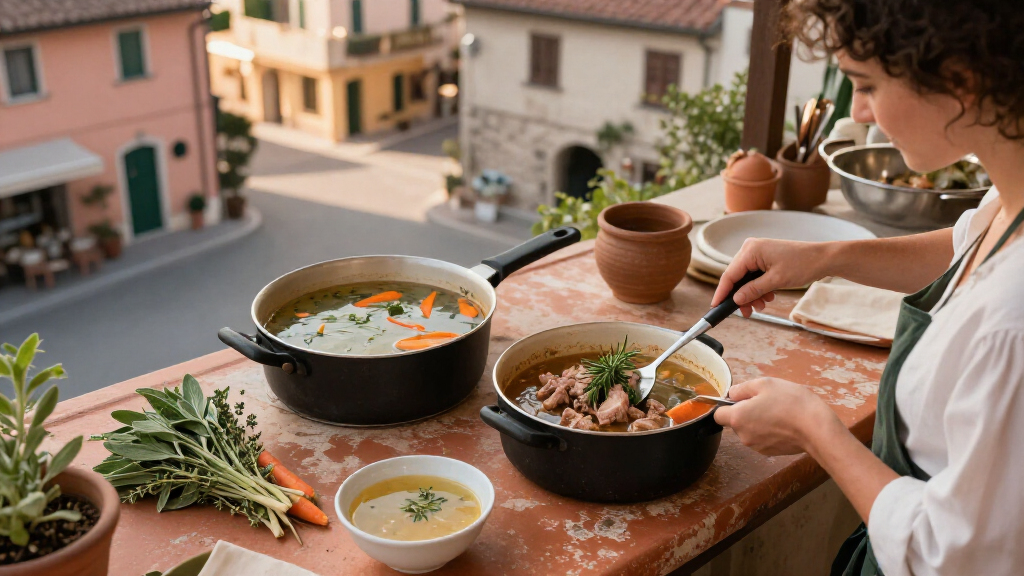
Cook the lentils ahead so New Year’s dinner feels relaxed
You can cook Italian New Year lentils ahead, refrigerate them promptly, and reheat them gently with a splash of broth or water. Lentils are well suited to a celebration meal because the base can be ready before guests arrive. When it’s time to eat, a low heat and a little extra liquid help restore their soft, spoonable texture without scorching the bottom of the pot.
For example, you might make the lentils on the afternoon of December 31, cool and store them safely, then reheat them while you prepare the rest of dinner. Divide leftovers into shallow containers and refrigerate promptly; don’t leave cooked food sitting at room temperature for more than two hours. Reheat until steaming hot throughout, and follow package instructions for any sausage served alongside. Keep the lentils and pork stored separately when that makes serving or dietary choices easier.
Watch the pot as it warms. Lentils absorb liquid as they stand, so yesterday’s stew may need a few spoonfuls of water or broth to loosen it. Stir gently and taste before serving, since the flavor may have settled overnight. A small adjustment is often enough to bring back the rounded, savory taste of a freshly cooked pot.
Frequently Asked Questions
Why do Italians eat lentils at New Year?
Italians traditionally eat lentils, or *lenticchie*, around New Year because their coinlike shape is thought to symbolize money and good fortune. The meal expresses a wish for abundance in the year ahead.
When should you serve New Year’s lentils?
Families commonly serve them at New Year’s Eve dinner or on New Year’s Day. The timing varies by household, so serve them whenever they fit your celebration.
What do Italians serve with lentils?
Lentils are often served with *cotechino*, a seasoned pork sausage in a casing, or *zampone*, traditionally stuffed into a pig’s trotter. They’re also delicious on their own as a stew.
Do lentils need to be soaked before cooking?
Many small lentils don’t need soaking, but check the package because instructions vary. Older lentils can take longer to soften, so allow extra time if they remain firm.
Can you make Italian New Year lentils vegetarian or vegan?
Yes. Cook them with olive oil, vegetable broth, and aromatics such as onion, carrot, and celery, then omit the pork. The New Year symbolism comes from the lentils, so the dish still carries the tradition.
Can you cook lentils ahead and reheat them?
Yes. Refrigerate them promptly in a covered container, then reheat until steaming hot throughout. Add a splash of broth or water if they have thickened, and follow package directions for any meat served alongside.
Conclusion
Make a pot of lentils for New Year with the variety you can find, a slow-cooked *soffritto*, and enough time for a gentle simmer. Serve it with cotechino or zampone if that suits your table, or let vegetable broth and herbs carry a meat-free version.
When the year turns, those small lentil “coins” won’t predict your fortune—but they will put a warm, generous dish in front of everyone at the table.