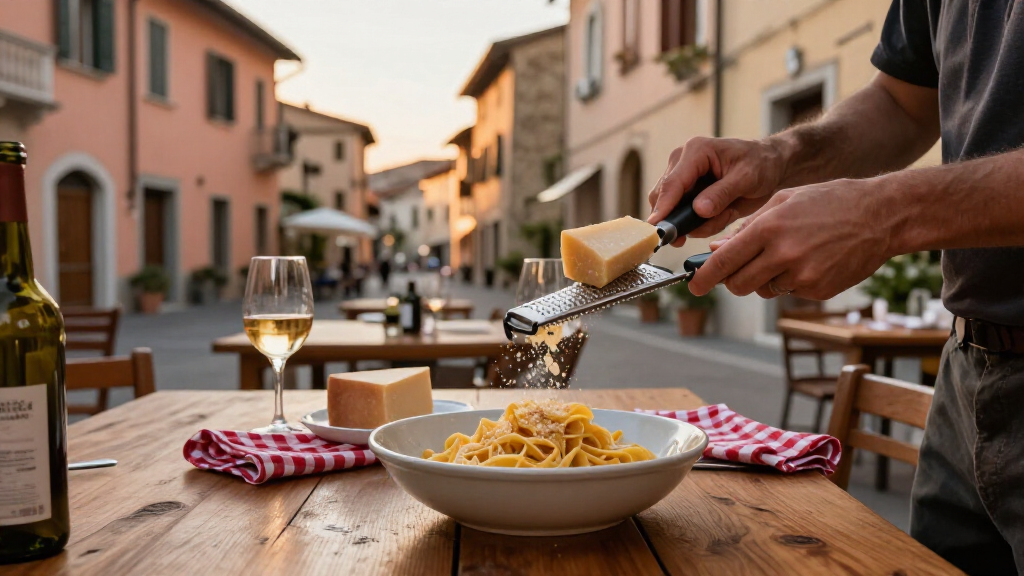

TL;DR

Get kitchen staples and gadgets delivered free with Prime
- Fast, free delivery on millions of items
- Prime Video, Amazon Music and more included
- Member-only deals all year
A good Parmesan grater makes clean, fluffy shreds without demanding excessive pressure, slipping on the counter, or trapping cheese where you cannot reach it. Choose a rasp for fine finishing over pasta and a rotary grater for larger amounts with more distance between your fingers and the blade; a fresh wedge of Parmigiano Reggiano DOP gives either tool more aroma and character.
A good wedge of Parmigiano Reggiano DOP can perfume a bowl of pasta before the cheese even touches it. Give it the wrong grater, though, and you get tiring strokes, clogged teeth, and a clump where you wanted airy snow.
The best grater depends on what you cook. A rasp-style tool is quick for a last-minute shower over soup or roasted vegetables; a rotary grater feels steadier when you need a mound for risotto or a family-size tray of baked pasta. This guide helps you judge the cut, grip, safety, and cleanup before you buy.
That choice starts with the cheese, too. In Emilia-Romagna, Parmigiano Reggiano is made under a protected designation with specific production rules. Whether you bring home a wedge from a trip or pick one up at your neighborhood market, grating it fresh lets its texture and aroma shine.
Choose a rasp for fine finishing shreds and a rotary grater for larger quantities with more finger distance from the blade.
Prioritize sharp teeth, a secure grip, and a stable position over a tool with many surfaces.
Use light strokes, stop before the rind, and clean promptly without wiping across the blade.
Check the manufacturer’s care instructions before putting a grater in the dishwasher, and dry it before storage.
Grate fresh Parmigiano Reggiano close to serving for its aroma and texture; use the rind to flavor soups or sauces.
The Parmesan Grater Test Tools that respect the cheese
A good grater makes fluffy shreds with light effort and stays steady as you work. Choose by the portions and texture your cooking calls for.
Match the tool to the dish
The cut and the amount you need matter more than extra grating surfaces.
| Tool | Best for | What to check |
|---|---|---|
| Rasp | Fine finishing shreds | Sharp teeth and a secure grip |
| Rotary grater | Larger, even batches | Stable base and easy to open |
| Box grater | Several kitchen jobs | Stable sides and accessible corners |
What a good test feels like
Hard, aged cheese should cut cleanly without forcing your wrist or making the tool slip.
Sharp teeth
Fine, airy shreds melt readily; pressure can compact cheese against the blade.
Secure grip
A comfortable handle and stable position make light strokes easier.
Right-sized tool
A rasp suits a finishing touch; a rotary grater helps with a larger batch and keeps fingers farther from the blade.
Grate with care
Keep the tool steady, move cheese away from your fingertips, and stop before the rind reaches the blade.
Let a sharp blade do the work; pressing hard can clog the teeth.
Brush or rinse in the direction that clears the teeth. Never wipe across the blade.
Dishwasher instructions vary by model. Dry the grater before storing it.
Fresh cheese makes the difference
Parmigiano Reggiano is a protected Italian designation with specific production rules.
- More pronounced aroma
- Looser, less uniform texture
- Grate close to serving
- Too hard to grate finely
- Adds flavor to soups or sauces
- Remove before serving
The best grater is the one that suits how you cook
The Parmesan grater test is simple: the tool should cut hard cheese cleanly, feel controlled in your hand, and leave you with the texture your dish needs. Fine, airy strands melt quickly into hot food; more uniform shreds give you a little more bite. Your usual meal matters more than the number of settings on the box.
Think about a Tuesday bowl of spaghetti. If you finish one serving at the table, a compact rasp is fast and easy to bring along. If Sunday means grating a full wedge for lasagna, a rotary tool can make the batch feel less like a workout and keep your fingers farther from the teeth.
Look for sharp stainless steel teeth, a handle you can hold without pinching, and a shape that stays put while you work. A grater with several surfaces can handle more kitchen jobs, but extra surfaces do not help if the cheese catches or the tool rocks on your cutting board.
There is a useful kind of organized chaos in a busy Italian kitchen: the pot bubbles, someone tears basil, and cheese lands on the table just before dinner. Your grater should make that moment easier. For a household that mostly wants a finishing touch, a smaller, easy-to-clean tool often earns its drawer space faster than a large gadget.
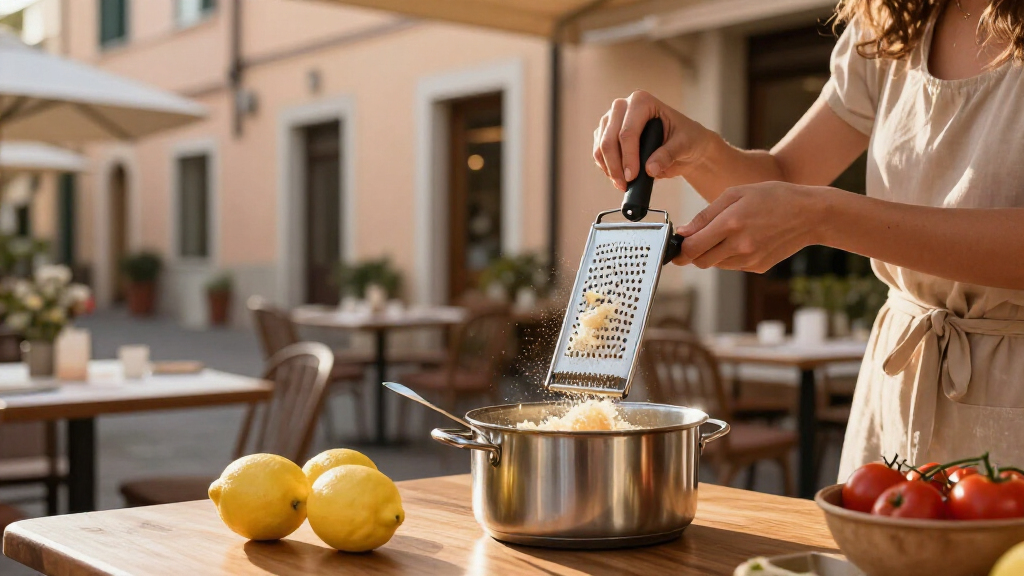
Products Worth Considering

Shark AI Ultra Robot Vacuum with Matrix Clean Navigation, Self-Empty Base, HEPA Filtration, Pet Hair Friendly, Wi‑Fi, Dark Grey

Hisense E6SR Series 55-Inch 4K UHD Hi-QLED Roku Smart TV

Blueair Blue Pure 511i Max Smart Air Purifier
As an affiliate, we earn on qualifying purchases.
Choose a rasp for delicate finishing or a rotary for a larger batch
The Parmesan grater test favors a rasp when you want fine, fluffy strands, and a rotary grater when you need a larger, more even pile. Both can handle aged cheese; the difference is how they hold the cheese, how the shreds feel, and how much work your hand does.
| Tool | Best for | What to check |
|---|---|---|
| Rasp | Finishing pasta, soup, and vegetables | Comfortable grip, sharp teeth, protective cover |
| Rotary | Grating a larger amount with added finger distance | Steady base, smooth handle, easy-to-open drum |
| Box grater | Several grating sizes in one tool | Stable sides, useful fine face, accessible corners |
For a bowl of tagliatelle at lunch, a rasp can lay down light shavings that soften as soon as they hit the pasta. A rotary model makes more sense when you are preparing cheese for a large pot of minestrone (vegetable soup) or several plates at once. Its handle turns the work into a steady rhythm, though the drum and joints can take longer to clean.
A box grater is a familiar compromise. Its fine side works for Parmesan, and the other faces can tackle vegetables or softer cheese, but hard aged cheese can ask more of your wrist. You may also need a brush to clear cheese from the corners. Match the tool to the portion size, and you are less likely to leave it unused in the drawer.
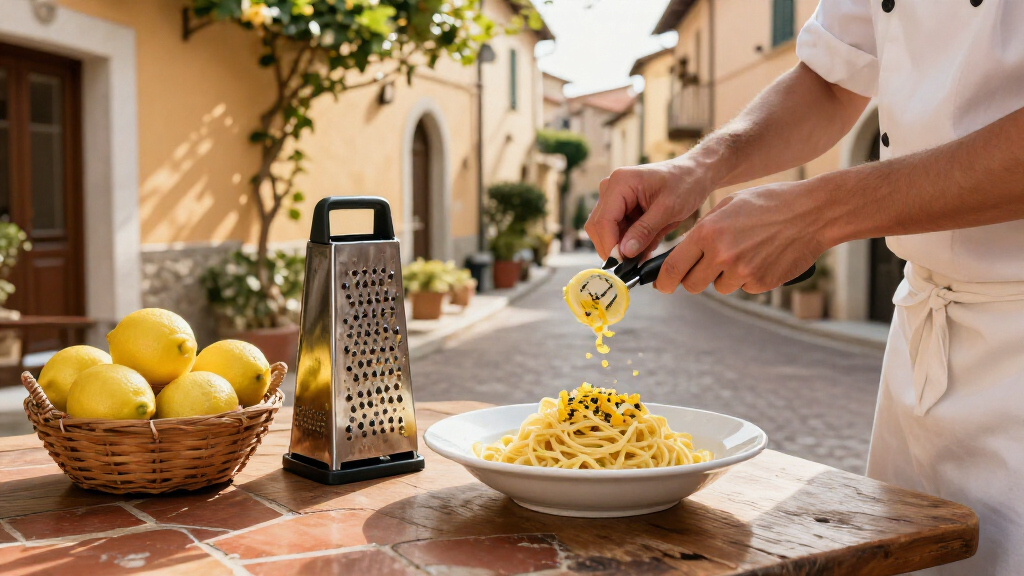
Test the grip and blade before hard cheese tests your wrist
Comfort comes from control, leverage, and a sharp blade. Parmesan is hard and aged, so a dull or awkward grater makes you push harder than you should. A grater should produce fine shavings without forcing your fingers to brace against the counter or your wrist to twist through each stroke.
If you can handle the tool in a store, try holding it as you would at home. Does the handle sit securely in your palm? Can you rest the lower end on a cutting board or bowl without it sliding? A rasp with a long, balanced handle can feel easier to guide than a short tool with a slippery grip, especially when your hands are damp from cooking.
Consider a real dinner scenario: you have a wedge of cheese and a pot of squash soup ready. With a stable rasp, a few light passes give you a delicate topping. If you have to lean your body weight into every stroke, the teeth may be dull, the cheese too cold, or the tool too awkward. Let the wedge sit out briefly if it is very cold; avoid leaving it at room temperature for extended periods.
Gentle strokes beat force. Pressing hard can compact cheese against the blade and clog the teeth instead of making airy strands. If your hand tires quickly, a rotary grater may suit your routine better. The tradeoff is extra parts to wash, but less repeated pressure on a large batch.
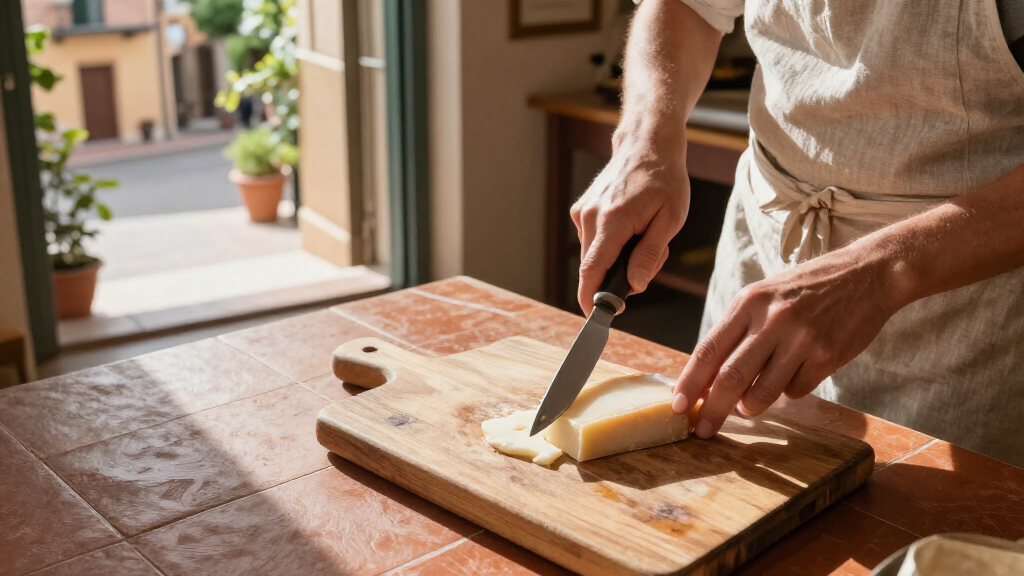
Keep your fingertips clear and clean the teeth safely
A stable working position and prompt cleaning do more for safe grating than rushing through the last scrap. Rasp teeth cut quickly, particularly when your hand reaches the end of a wedge; rotary drums and guards add distance, but still need careful handling.
Set a rasp on a bowl or cutting board if its shape allows, and keep the cheese moving away from your fingertips. Stop before you reach the hard rind. A small leftover piece is better than a cut finger. Save the rind for a pot of beans or tomato sauce instead: simmer it for flavor, then remove it before serving.
Clean the grater soon after use, before the cheese dries into the teeth. Follow the maker’s care instructions, and use a brush or rinse in the direction that clears the teeth. Do not wipe across the sharp surface with your fingers or a dishcloth. For a rotary model, open the drum if the design allows and clear the joints without forcing parts.
Dishwasher care varies by model. Stainless steel may resist corrosion, but a handle, coating, or joint can still be damaged by machine washing. Check the manufacturer’s guidance, then dry the grater thoroughly before storing it. If a blade cover comes with the tool, use it; that thin cover can save you from an unpleasant surprise when reaching into a crowded drawer.
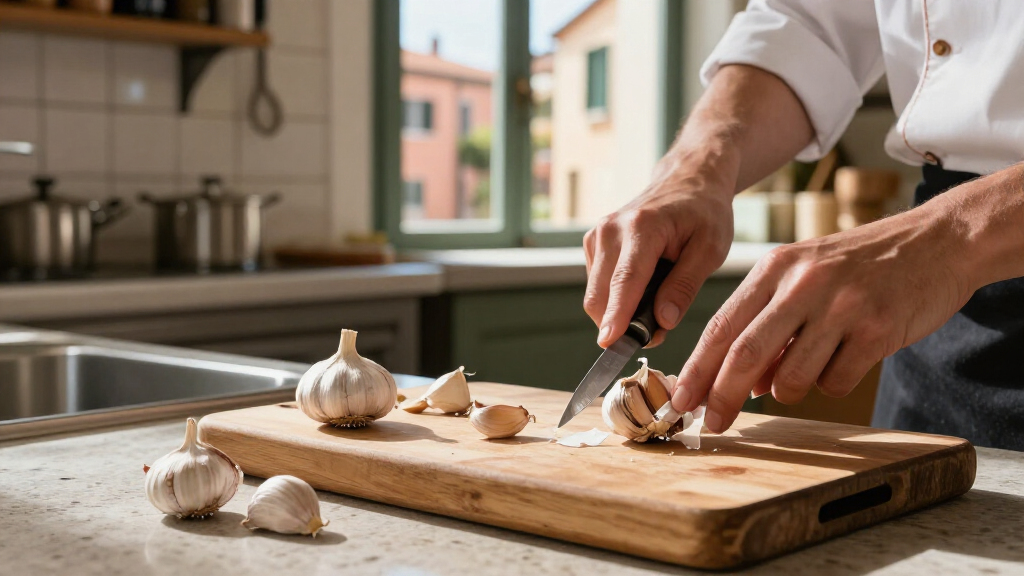
Fresh Parmigiano Reggiano gives the grater a fair test
Freshly grated Parmigiano Reggiano DOP usually has a more pronounced aroma and a less uniform texture than pre-grated cheese. “Parmesan” often serves as a casual name for hard grating cheese, but Parmigiano Reggiano is a protected designation tied to production rules in Italy. The wedge you choose changes what comes off the blade.
At a cheese counter, ask for a piece you can grate at home and keep it wrapped and refrigerated according to the seller’s advice. When dinner is ready, grate only what you need. The smell is nutty and savory, and the shreds fall loosely rather than landing as a uniform, dry layer. That difference comes through on a simple plate of buttered pasta.
Pre-grated cheese has a place when convenience matters. It can save time on a rushed weeknight, though it may contain anti-caking agents and can have a different texture. If you are checking an ingredient label, look for those additives and consider how the cheese will behave in the dish. A smooth sauce and a quick table topping do not always need the same kind of shred.
Temperature and age affect grating, too. A very cold wedge can feel harder and less yielding, while cheese with different moisture or aging can shed differently. If your rasp clogs, ease your pressure and clear the teeth; if the cheese feels unusually firm, let the wedge rest briefly while you finish the sauce. Grate close to serving time for the freshest aroma and texture.
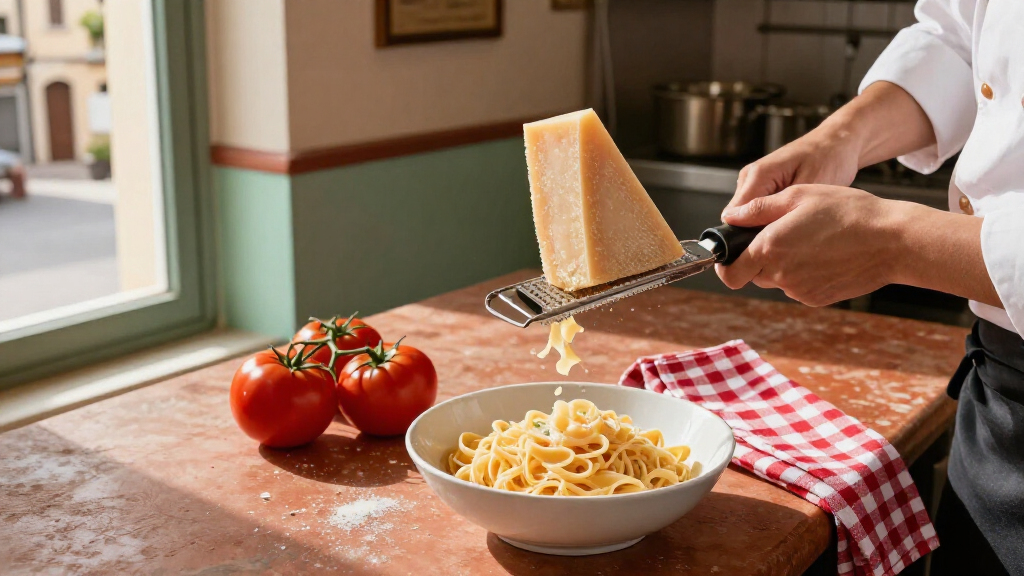
Use one grater for citrus, chocolate, and hard spices
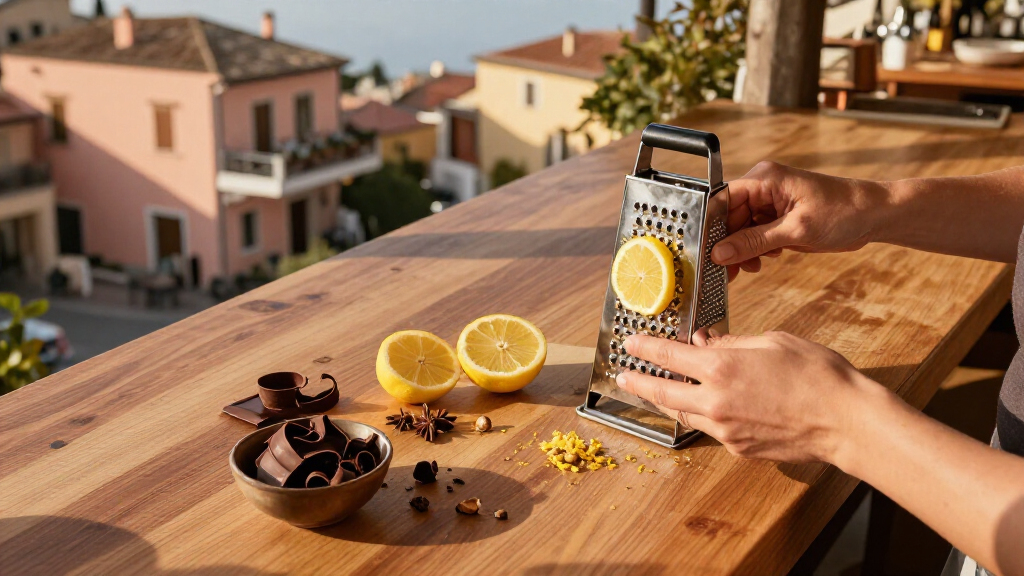
A rasp can earn its place beyond Parmesan because the same fine teeth handle citrus zest, chocolate, nutmeg, and other hard spices. That versatility suits a small kitchen where every tool needs to justify its drawer space. A dedicated rotary grater, by contrast, can be more convenient if cheese is the only job you expect it to do.
Picture making a lemony pasta in summer. First zest the lemon with a clean rasp, then rinse and dry it before grating cheese. The bright citrus oils cling to the teeth, so washing between ingredients helps prevent a lemon-scented shower over a dish where it does not belong. For chocolate over a warm dessert, use a dry rasp and clean it promptly before the chocolate softens and smears.
Versatility comes with a small tradeoff: fine teeth can hold strong aromas. Nutmeg or garlic can linger, even after a quick rinse, so decide whether one multipurpose tool fits your cooking habits. If you regularly grate spices and cheese for separate dishes, a second inexpensive rasp can keep flavors apart.
Look for a cover if you plan to store a rasp in a drawer, and choose a handle that gives you room to work over a bowl. A tool that is easy to grab is more likely to get used. One compact grater can support both savory and sweet cooking, from a bowl of soup with cheese to a plate of fruit with dark chocolate.
Frequently Asked Questions
Which grater is best for Parmesan?
A rasp works well when you want fine, fluffy shreds for pasta, soup, or vegetables. A rotary grater is handy for larger amounts and keeps your fingers farther from the blade. Choose based on how much you usually grate.
Is a Microplane-style rasp good for Parmesan?
Yes. A rasp-style grater makes fine shreds that settle lightly over food and melt readily into hot dishes. It can be less convenient for grating a whole block than a rotary model, so it suits finishing portions best.
Can I use a box grater for Parmesan?
Yes. The fine face works for hard cheese, though it can take more effort and cheese may lodge in corners. Clean it promptly with a brush or careful rinse, following the maker’s guidance.
Should I buy pre-grated Parmesan or grate it fresh?
Freshly grated cheese generally offers a stronger aroma and less uniform texture. Pre-grated cheese is convenient and may contain anti-caking agents, so check the label and choose according to your time and the dish.
How do I clean a grater without cutting myself?
Follow the manufacturer’s care instructions and clean soon after use, before cheese dries. Brush or rinse in the direction that clears the teeth, and never wipe across the blade with your fingers or a cloth.
Can Parmesan graters go in the dishwasher?
It depends on the model. Check the manufacturer’s instructions because handles, coatings, and joints may not suit machine washing. Hand washing and thorough drying can help preserve the tool.
How should I store a Parmesan grater?
Dry it thoroughly and use its protective cover if it has one. Otherwise, store it where the sharp surface cannot catch your hand when you reach into a drawer.
Conclusion
For a last shower over pasta, choose a sharp, comfortable rasp; for a big batch, choose a rotary grater that turns hard cheese into steady work. Keep the tool stable, use light strokes, and grate a fresh wedge close to serving.
Then let the rind simmer in a pot of beans or sauce. Your grater has done its small job, and the kitchen still smells of dinner.