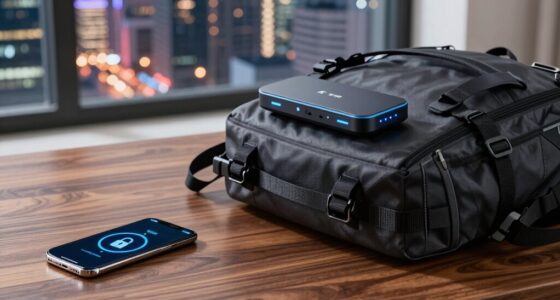
If you want a 27,000mAh TSA-approved power bank, the main choice is how much charging power and convenience you need while staying within airline battery limits. My best overall pick is the Anker Prime 27,650mAh 250W, which pairs near-capacity-limit energy with strong output for multiple devices. The citicr 27,000mAh 165W stands out for laptop charging with a built-in cable, while the Feidyns 27,000mAh 35W adds a wall plug and built-in cables for simpler packing. The tradeoffs are weight, charging speed, ports, and whether a bank with an AC outlet suits your airline and device rules. Read on for the full comparison and advice on choosing a model for your trip.

Get kitchen staples and gadgets delivered free with Prime
- Fast, free delivery on millions of items
- Prime Video, Amazon Music and more included
- Member-only deals all year
Key Takeaways
- The Anker Prime 27,650mAh 250W is the strongest all-around fit in this group for travelers who want high output and three ports in a capacity close to the common 100Wh carry-on limit.
- The citicr 27,000mAh 165W and Anker 25,000mAh 165W make more sense for laptop users than the 22.5W and 30W options, but output alone does not guarantee compatibility with every laptop.
- Built-in cables and wall plugs on the FlyKangaroo and Feidyns simplify packing, while adding parts that may be less flexible than carrying separate cables and a charger.
- The EF ECOFLOW Rapid Pro 300W and Anker Prime 26,250mAh 300W prioritize high output; travelers should weigh that capability against bulk and the needs of their actual devices.
- Capacity labels do not settle airline eligibility: check the watt-hour rating printed on the power bank and confirm current airline rules, especially for AC outlet and CPAP-oriented models.
| FlyKangaroo 27000mAh 30W Portable Charger with Built-In Cables |  | Best for Built-In Convenience | Capacity: 27,000mAh | Maximum output: 30W | Charging technology: USB-C PD | VIEW ON AMAZON | See Our Full Breakdown |
| citicr 27,000mAh 165W Laptop Power Bank with Built-In USB-C Cable, Silver |  | Best for Laptop Charging | Battery capacity: 27,000mAh | Maximum total output: 165W | Single-port maximum: 100W | VIEW ON AMAZON | See Our Full Breakdown |
| Feidyns 27,000mAh Portable Charger with Wall Plug and Built-In Cables, 35W |  | Best for One-Piece Travel Charging | Battery capacity: 27,000mAh | Maximum output: 35W | Ports: 4 | VIEW ON AMAZON | See Our Full Breakdown |
| EF ECOFLOW Rapid Pro 4-Port Power Bank with 300W Output |  | Best for High-Power Multi-Device Charging | Battery capacity: 99.54Wh | Maximum total output: 300W | Maximum USB-C output: 140W | VIEW ON AMAZON | See Our Full Breakdown |
| LOOPEAK 27,000mAh 22.5W Fast Charging Power Bank with USB-C, LED Display, 3 Outputs, and 2 Inputs, Red |  | Best for Simple Phone Charging | Capacity in title: 27,000mAh | Battery capacity in specifications: 30,000mAh | Charging power: 22.5W | VIEW ON AMAZON | See Our Full Breakdown |
| INIU 20,000mAh 65W Laptop Power Bank |  | Best Compact Alternative | Battery capacity: 20,000mAh | Maximum output: 65W | Ports: 2 USB-C, 1 USB-A | VIEW ON AMAZON | See Our Full Breakdown |
| 27,000mAh 120W Fast-Charging Power Bank with Smart Display |  | Best Value Full-Size Pick | Capacity: 27,000mAh (99.9Wh) | Maximum output: 120W | Ports: 2 USB-C, 1 USB-A | VIEW ON AMAZON | See Our Full Breakdown |
| Anker Prime 27,650mAh 3-Port 250W Portable Power Bank |  | Best Overall | Capacity: 27,650mAh (99.54Wh) | Total output: 250W | Maximum single-port output: 140W | VIEW ON AMAZON | See Our Full Breakdown |
| Anker Prime 26,250mAh 300W Power Bank |  | Best Premium for Power Users | Capacity: 26,250mAh (99.75Wh) | Maximum total output: 300W | Maximum single-port output: 140W (requires 5A cable) | VIEW ON AMAZON | See Our Full Breakdown |
| PSOOO 65W 27,000mAh Power Bank for Laptops |  | Best Budget Backup | Capacity: 27,000mAh | USB-C output: Up to 65W | USB-C input: Up to 65W | VIEW ON AMAZON | See Our Full Breakdown |
| Flyvair 27,000mAh Portable Laptop Charger with AC Outlet |  | Best for Mixed Device Charging | Capacity: 27,000mAh (98Wh) | AC output: 110V, up to 100W | USB-C output: 65W PD | VIEW ON AMAZON | See Our Full Breakdown |
| Anker 25,000mAh Laptop Power Bank with 165W Output |  | Best for Cable-Light Laptop Travel | Capacity: 25,000mAh | Total output: 165W | USB-C ports: 3, up to 100W each | VIEW ON AMAZON | See Our Full Breakdown |
| 27,000mAh 130W AC Laptop Charger and TSA-Approved CPAP Power Bank |  | Best for Compatible CPAP Backup | Capacity: 27,000mAh / 99.9Wh | AC output: 110V, up to 130W | USB ports: 2 QC3.0 ports at 18W each and 1 USB-C PD port at 20W | VIEW ON AMAZON | See Our Full Breakdown |
| power bank 27000mah tsa approved | Ports | Capacity |
|---|---|---|
| FlyKangaroo 27000mAh 30W Porta | — | 27,000mAh |
| citicr 27,000mAh 165W Laptop P | — | — |
| Feidyns 27,000mAh Portable Cha | 4 | — |
| EF ECOFLOW Rapid Pro 4-Port Po | 4 | — |
| LOOPEAK 27,000mAh 22.5W Fast C | 4 | — |
| INIU 20,000mAh 65W Laptop Powe | 2 USB-C, 1 USB-A | — |
| 27,000mAh 120W Fast-Charging P | 2 USB-C, 1 USB-A | 27,000mAh (99.9Wh) |
| Anker Prime 27,650mAh 3-Port 2 | 2 USB-C, 1 USB-A | 27,650mAh (99.54Wh) |
| Anker Prime 26,250mAh 300W Pow | 2 USB-C, 1 USB-A | 26,250mAh (99.75Wh) |
| PSOOO 65W 27,000mAh Power Bank | Multiple output ports | 27,000mAh |
| Flyvair 27,000mAh Portable Lap | 4 ports and 1 AC outlet | 27,000mAh (98Wh) |
| Anker 25,000mAh Laptop Power B | — | 25,000mAh |
| 27,000mAh 130W AC Laptop Charg | — | 27,000mAh / 99.9Wh |
More Details on Our Top Picks
FlyKangaroo 27000mAh 30W Portable Charger with Built-In Cables
The FlyKangaroo pairs 27,000mAh capacity with 30W USB-C PD, giving phones a quicker top-up than the LOOPEAK’s 22.5W output while keeping charging straightforward. Its built-in cables and six outputs suit travelers who want to charge several devices without packing a bundle of separate leads, and the percentage display makes the remaining charge easier to judge than a basic indicator. At 421 g, it is lighter than the 700 g EF ECOFLOW Rapid Pro, though still substantial for a pocket. Its 30W ceiling also makes it less suited to demanding laptop charging than the citicr’s 100W single-port output. The listed capacity is below the 100Wh carry-on limit, but airline rules and device limits can vary, so check current requirements before flying.
Pros:- 30W USB-C PD supports faster compatible-device charging than the LOOPEAK’s 22.5W output.
- Built-in cables reduce the number of separate leads to pack.
- LED percentage display makes remaining charge easy to check.
- Lighter than the 700 g EF ECOFLOW Rapid Pro.
Cons:- At 421 g, it may feel heavy to carry in a pocket.
- 30W maximum output is limited for laptops compared with the citicr’s 100W single-port output.
Best for: Phone and tablet travelers who want built-in charging cables, multiple connections, and a clear battery readout.
Not ideal for: Laptop users who need high-wattage charging, or travelers seeking a genuinely light pocket charger.
- Capacity:27,000mAh
- Maximum output:30W
- Charging technology:USB-C PD
- Outputs:6
- Built-in cables:Yes
- Display:LED digital battery percentage
- Dimensions:14.5 × 6.8 × 3.0 cm
- Weight:421 g
Our verdict“Choose the FlyKangaroo if you want high capacity and built-in cable convenience for phones and tablets, and can accept its weight and modest laptop output.”
citicr 27,000mAh 165W Laptop Power Bank with Built-In USB-C Cable, Silver
The citicr stands apart from the other 27,000mAh options here by offering up to 100W from one port and 165W total output. That makes it the clearest fit for travelers carrying a compatible laptop alongside a phone or tablet; the FlyKangaroo’s 30W output is much more phone-focused. A built-in USB-C cable, display, and 300-lumen flashlight add practical travel utility, while the listed protections address common charging faults. There is a tradeoff in the listing itself: it describes three charging connections but specifies two ports plus the built-in cable, so I would verify the layout before relying on it for a particular setup. Its three-hour recharge time is also slower than a quick layover may allow, and its output advantage matters only for compatible devices.
Pros:- Up to 100W single-port output suits compatible laptops better than the FlyKangaroo’s 30W ceiling.
- Up to 165W total output and support for three devices at once.
- Built-in USB-C cable, LED display, and 300-lumen flashlight add travel utility.
- Listed overcurrent, overvoltage, overheating, and short-circuit protections.
Cons:- The listed three-hour recharge time can be inconvenient during short stops.
- Port details are inconsistent between the stated ports and charging connections.
- High output depends on device compatibility.
Best for: Laptop travelers who need high USB-C output and want to charge up to three devices from one power bank.
Not ideal for: Phone-only users who prefer a lighter, simpler charger or need a quick recharge between flights.
- Battery capacity:27,000mAh
- Maximum total output:165W
- Single-port maximum:100W
- Connections:1 USB-C port, 1 USB-A port, and 1 built-in USB-C cable
- Simultaneous devices:Up to 3
- Flashlight:300 lumens
- Recharge time:3 hours
- Battery type:Lithium polymer
Our verdict“Pick the citicr if laptop charging power matters more than recharge speed and you can confirm its connection layout suits your devices.”
Feidyns 27,000mAh Portable Charger with Wall Plug and Built-In Cables, 35W
The Feidyns is the most self-contained option in this group: its foldable wall plug and built-in USB-C and iOS cables reduce the separate charger and leads a traveler needs to pack. That makes it more convenient for overnight stays than the FlyKangaroo, which has built-in cables but no listed wall plug. Its four ports and 35W maximum output can serve several devices, though that ceiling remains far below the citicr’s laptop-focused 100W single-port capability. Recharging is the main compromise: the listing gives up to five hours by USB-C or eight by wall plug, so this is better for planned charging than a brief stop between connections. Its 27,000mAh capacity is also likely to feel bulkier than smaller phone-first chargers.
Pros:- Foldable wall plug and built-in USB-C and iOS cables reduce packed accessories.
- Four ports support charging multiple devices at once.
- 35W maximum output exceeds the LOOPEAK’s 22.5W rating.
- Digital display shows remaining battery level.
Cons:- USB-C recharge takes up to five hours, and wall-plug recharge up to eight hours.
- 35W output is limited for demanding laptop charging compared with the citicr.
- 27,000mAh capacity may make it bulky beside lower-capacity phone chargers.
Best for: Frequent travelers who want a power bank, wall plug, and phone cables combined in one unit for overnight stays.
Not ideal for: Laptop users needing high-wattage output or travelers who depend on a fast recharge during a short layover.
- Battery capacity:27,000mAh
- Maximum output:35W
- Ports:4
- Built-in features:Foldable wall plug, USB-C cable, iOS cable, digital display
- Fast-charging protocols:QC 3.0, PD 3.0, SCP, FCP, AFC
- USB-C recharge time:Up to 5 hours
- Wall-plug recharge time:Up to 8 hours
- Battery cell type:Lithium polymer
Our verdict“Choose the Feidyns for an all-in-one travel charging kit, provided its slow recharge and 35W output fit your routine.”
EF ECOFLOW Rapid Pro 4-Port Power Bank with 300W Output
The EF ECOFLOW Rapid Pro is the output leader in this batch, with 300W total output, four ports, and a built-in USB-C cable rated up to 140W. For travelers charging several compatible devices, that gives it more headroom than the citicr’s 165W total output. Its 99.54Wh capacity is listed as compliant with TSA carry-on rules and sits just below the commonly cited 100Wh threshold, making capacity a strong fit for this roundup’s travel focus. The tradeoff is portability: at 700 g, it weighs substantially more than the FlyKangaroo’s 421 g. A 3.9-inch LCD and app controls provide more charging information, but full speeds depend on device compatibility, and the listed 320W input capability does not by itself guarantee a particular recharge time.
Pros:- 300W total output provides more combined power than the citicr’s 165W.
- Built-in USB-C cable supports up to 140W output.
- Four ports can serve several devices at once.
- 99.54Wh capacity is listed as compliant with TSA carry-on rules.
Cons:- At 700 g, it is much heavier than the FlyKangaroo.
- Full charging speeds depend on device compatibility.
- The listed 320W input figure does not specify a recharge time.
Best for: Laptop and tablet travelers who need high combined output for several compatible devices and value a detailed display.
Not ideal for: Light packers or phone-only travelers who would rather carry less weight than gain high output.
- Battery capacity:99.54Wh
- Maximum total output:300W
- Maximum USB-C output:140W
- Ports:4
- Recharge input:Up to 320W
- Display:3.9-inch LCD
- Weight:700 g
- Dimensions:6 × 2 × 2 inches
Our verdict“Choose the EF ECOFLOW Rapid Pro if you need high output for multiple compatible devices and are willing to carry its 700 g weight.”
LOOPEAK 27,000mAh 22.5W Fast Charging Power Bank with USB-C, LED Display, 3 Outputs, and 2 Inputs, Red
The LOOPEAK keeps its proposition simple: a listed 27,000mAh capacity, 22.5W charging, USB-C, and an LED display for compatible smartphones. It is a lower-output choice than the FlyKangaroo’s 30W model and far below the laptop-oriented citicr, so I would rank it for everyday phone backup rather than laptop travel. The listing’s capacity needs particular scrutiny: the title says 27,000mAh, while the specifications say 30,000mAh. That discrepancy makes it harder to compare runtime or judge the advertised capacity with confidence. Its red finish and multiple inputs and outputs may appeal to phone users sharing power, but compatibility details are limited, so buyers should confirm their devices and charging needs before choosing it.
Pros:- Listed capacity is in the same range as the other 27,000mAh models in this batch.
- 22.5W charging supports faster charging than basic low-output power banks.
- LED display shows remaining battery level.
- Three outputs and two inputs provide several connection options.
Cons:- Capacity is inconsistent: 27,000mAh in the title and 30,000mAh in the specifications.
- 22.5W output is lower than the FlyKangaroo’s 30W and Feidyns’ 35W.
- Compatibility details are limited, and the described use is smartphone-focused.
Best for: Smartphone users who want a high-capacity backup with a display and multiple charging connections, and can verify device compatibility.
Not ideal for: Laptop users or capacity-sensitive travelers who need consistent, clearly documented specifications.
- Capacity in title:27,000mAh
- Battery capacity in specifications:30,000mAh
- Charging power:22.5W
- Connector type:USB Type-C
- Ports:4
- Outputs:3
- Inputs:2
- Battery cell type:Lithium polymer
Our verdict“Consider the LOOPEAK for phone backup if its capacity and device compatibility are confirmed; skip it when precise specifications or laptop output matter.”
INIU 20,000mAh 65W Laptop Power Bank
This option stands out for travelers who want laptop charging without the bulk of a full 27,000mAh brick. At 20,000mAh it sits comfortably under the TSA 100Wh limit, but the real appeal is size: it slips into a sling bag far more easily than the Anker Prime 27,650mAh, which is nearly half a pound heavier. The 65W output is enough for most ultrabooks, though a power-hungry workstation will pull more than it can deliver — a gap the 120W smart-display model covers better. The braided lanyard cable is a clever touch, doubling as a carry handle, but at 4.7 inches it’s too short for desktop use. Compared with the PSOOO 27,000mAh, you trade raw capacity for portability, and that trade makes sense if you fly light.
Pros:- Genuinely compact for a laptop-capable power bank
- 65W output handles most ultrabooks and all phones
- Three ports allow simultaneous charging of phone, laptop, and earbuds
- Braided lanyard cable doubles as a carrying handle
Cons:- 65W ceiling limits compatibility with gaming or workstation laptops
- Included cable is only 4.7 inches, awkward for desk use
- 20,000mAh won’t fully recharge a laptop more than roughly once
Best for: Minimalist travelers and commuters who need occasional laptop top-ups in a small, carry-anywhere size
Not ideal for: People charging power-hungry laptops multiple times — the 65W ceiling and smaller capacity will run out mid-trip
- Battery capacity:20,000mAh
- Maximum output:65W
- Ports:2 USB-C, 1 USB-A
- Battery cell type:Lithium polymer
- Special features:Digital display, detachable braided USB-C lanyard cable, multi-protection circuitry
- Warranty:3-year replacement promise stated in description
Our verdict“This pick makes the most sense for light packers who value portability over maximum capacity.”
27,000mAh 120W Fast-Charging Power Bank with Smart Display
This model hits the sweet spot in the lineup: full 27,000mAh capacity at 99.9Wh, right at the TSA ceiling, with enough wattage (120W) to charge a laptop and phone at the same time. Compared with the Anker Prime 27,650mAh, it gives up 130W of total output and app control, but for most travelers those extras are paying for headroom they’ll never use. The real-time display showing input/output power and estimated recharge time is genuinely useful — you can see at a glance whether your laptop is actually negotiating fast charging. At 1.32 lbs it’s lighter than both Anker Prime models, though it’s still noticeably heavier than the INIU 20,000mAh. The one unanswered question is how long the bank itself takes to refill, which no listed spec addresses.
Pros:- Full 99.9Wh capacity maximizes what you can legally fly with
- 120W output across three ports handles laptop-plus-phone charging
- Display shows live power draw and estimated recharge time
- Lighter than both Anker Prime models at 1.32 lbs
Cons:- Recharge time for the power bank itself is not specified
- No app control or ecosystem support like Anker offers
- 120W total output can bottleneck when charging two high-draw laptops
Best for: Budget-conscious travelers who want near-flagship capacity and wattage without paying premium-brand prices
Not ideal for: Buyers who need guaranteed fast recharging of the bank itself — recharge time is not specified
- Capacity:27,000mAh (99.9Wh)
- Maximum output:120W
- Ports:2 USB-C, 1 USB-A
- Charging protocols:PD 3.0, QC 3.0, PPS
- Weight:1.32 lbs
- Dimensions:6.10 × 2.17 × 1.77 inches
- Display:LED battery, input/output power, and recharge-time display
Our verdict“The most sensible choice for travelers who want maximum legal capacity and solid 120W output at a mid-tier price.”
Anker Prime 27,650mAh 3-Port 250W Portable Power Bank
If one bank has to do everything, this is the one I’d point most travelers toward. The 250W total output with 140W on a single port means a full-size MacBook Pro charges at native speed while a phone and tablet top up alongside it — something the 120W smart-display model can’t manage under heavy load. The 99.54Wh capacity keeps it TSA-compliant, and the roughly 37-minute recharge with dual chargers flips the usual travel-bank problem: instead of overnight refills, you top it up while you shower. Two caveats matter. That 37-minute figure requires two high-wattage chargers you may not own, and the optional charging base is sold separately. Compared with the Anker Prime 26,250mAh 300W, you get slightly more capacity here but slightly less peak output — a fair trade for most people.
Pros:- 250W total output charges a laptop and peripherals simultaneously at full speed
- 140W single-port output supports power-hungry 16-inch laptops
- Refills in roughly 37 minutes with dual chargers
- App control, device locating, and a clear digital display
Cons:- Charging base not included
- Advertised fast recharge requires two high-wattage wall chargers
- 1.5 lbs weight is among the heaviest in this lineup
Best for: Frequent flyers and remote workers who charge a laptop, phone, and accessories daily and want the fastest possible turnaround
Not ideal for: Buyers on a tight accessory budget — the 37-minute recharge requires dual chargers and the base is extra
- Capacity:27,650mAh (99.54Wh)
- Total output:250W
- Maximum single-port output:140W
- Ports:2 USB-C, 1 USB-A
- Recharge time:About 37 minutes with dual chargers
- Weight:1.5 lbs
- Warranty:24 months
Our verdict“The best all-around pick for serious travelers who need flagship output and don’t mind buying chargers to unlock its full speed.”
Anker Prime 26,250mAh 300W Power Bank
This model is the escalation of the Anker Prime 27,650mAh: slightly less capacity, but a 300W total output and 250W dual-port input that makes it the fastest-refilling and hardest-hitting option here. The catch is that the headline 140W single-port figure requires a 5A-capable cable — one is included, but lose it and a standard cable quietly caps your speed. Compared with the EF ECOFLOW Rapid Pro at the same 300W class, this Anker brings app controls and a more refined travel form factor rather than pure port count. Against the 120W smart-display model, the difference shows up when you’re charging two laptops at once: this one doesn’t blink, the other one throttles. Like its Prime sibling, the charging base is a separate purchase.
Pros:- 300W combined output charges two high-draw laptops simultaneously
- 140W single-port output matches native MacBook Pro charging speed
- 250W dual-port input refills the bank exceptionally fast
- Includes a 3.3 ft 240W cable, long enough for real desk use
Cons:- 140W output requires a 5A cable, so third-party cables may throttle speed
- Charging base sold separately
- Slightly lower capacity than the Prime 27,650mAh sibling
Best for: Tech-heavy travelers carrying multiple laptops or a laptop plus camera gear who need simultaneous high-wattage charging
Not ideal for: Single-device travelers — a phone-and-occasional-laptop user gets no benefit from 300W and pays for headroom they won’t touch
- Capacity:26,250mAh (99.75Wh)
- Maximum total output:300W
- Maximum single-port output:140W (requires 5A cable)
- Maximum dual-port input:250W
- Ports:2 USB-C, 1 USB-A
- Battery type:Lithium polymer
- Included accessories:3.3 ft 240W USB-C to USB-C cable, travel pouch
- Warranty:24 months
Our verdict“The pick for power users who charge multiple demanding devices at once and want the strongest output and refill speeds available.”
PSOOO 65W 27,000mAh Power Bank for Laptops
This option makes the most sense as a no-frills spare rather than a primary travel bank. You get the full 27,000mAh capacity and 65W USB-C charging in both directions, which covers an ultrabook, several phone charges, or a tablet on a long trip — but without the display, app features, or high wattage of the Anker Prime models. The built-in LED flashlight is a small but real differentiator for campers and roadside emergencies that no other bank in this lineup offers. Compared with the INIU 20,000mAh, you gain a third more capacity at the same 65W speed, at the cost of a larger, heavier brick. Note that usable output will fall short of the rated capacity due to conversion losses — expect roughly two-thirds of the sticker figure in real device charging.
Pros:- Full 27,000mAh capacity at an accessible price point
- 65W USB-C input means the bank itself recharges reasonably fast
- Built-in LED flashlight is unique in this lineup
- Four-layer protection covers overcharge, overheating, shorts, and overcurrent
Cons:- Real-world usable capacity is noticeably lower than the 27,000mAh rating
- No display or app feedback to confirm charging speed
- 65W output limits compatibility with high-wattage laptops
Best for: Budget-minded travelers, campers, and emergency-kit builders who want big capacity and a flashlight without premium features
Not ideal for: Owners of gaming laptops or fast-charging phones — 65W is the ceiling, and there’s no display to verify charging speeds
- Capacity:27,000mAh
- USB-C output:Up to 65W
- USB-C input:Up to 65W
- Ports:Multiple output ports
- Additional feature:Built-in LED flashlight
- Protection:Overcharge, overheat, short circuit, and overcurrent protection
Our verdict“A sensible spare or emergency bank for buyers who prioritize capacity per dollar over speed and features.”
Flyvair 27,000mAh Portable Laptop Charger with AC Outlet
The Flyvair pairs a 110V AC outlet with USB-C and USB-A ports, so it can serve a small mix of electronics when a trip or outage leaves you away from wall power. Its 98Wh capacity is below the stated 100Wh carry-on limit, while the 65W USB-C PD port can charge compatible laptops more directly than the AC outlet. Compared with the Anker 25,000mAh Laptop Power Bank, the Flyvair adds AC power and more capacity, while Anker offers higher total USB output and built-in cables. That flexibility has limits: the Flyvair’s AC output tops out at 100W, which rules out higher-draw appliances, and its 65W recharge adapter is not included. I’d choose it for varied, modest-power devices, not as a substitute for a high-output laptop bank.
Pros:- AC outlet, USB-C PD, and USB-A cover several device types.
- 65W USB-C PD supports compatible laptop charging.
- 98Wh capacity is under the stated 100Wh carry-on limit.
- Aluminum body includes an LED flashlight.
Cons:- 100W AC output cannot support higher-powered appliances.
- A 65W adapter for recharging is not included.
Best for: Travelers who want one carry-on-sized bank for a compatible laptop, phone, and low-draw AC devices.
Not ideal for: People powering appliances above 100W or buyers who need a ready-to-use fast-recharge kit, since the AC output is limited and the 65W adapter is sold separately.
- Capacity:27,000mAh (98Wh)
- AC output:110V, up to 100W
- USB-C output:65W PD
- USB-A outputs:QC 3.0 18W and standard USB-A
- Ports:4 ports and 1 AC outlet
- Dimensions:6.9 × 2.8 inches
- Recharge time:2.5 hours with a 65W adapter
- Material:Aluminum alloy
Our verdict“Choose the Flyvair if AC output matters alongside USB charging; pick the Anker 25,000mAh instead for stronger USB-focused charging and built-in cables.”
Anker 25,000mAh Laptop Power Bank with 165W Output
The Anker puts its capacity toward high-output USB charging: three USB-C ports rated up to 100W each and 165W total output let it serve several devices without relying on an AC socket. Its built-in retractable cable and second cable that doubles as a strap reduce the loose accessories a laptop traveler has to pack. Compared with the Flyvair, it gives up the AC outlet and 2,000mAh of stated capacity, but offers higher total USB output and integrated cables. That makes it a more focused choice for phones, tablets, and compatible laptops, rather than devices that need household-style AC power. The listed capacity complies with the 100Wh carry-on limit, though a wall charger is not included for recharging. I’d favor it when cable convenience and USB-C performance matter more than an AC outlet.
Pros:- Three USB-C ports support up to 100W each.
- 165W total output supports charging multiple devices.
- Two built-in cables reduce the need to pack separate USB-C cables.
- Capacity complies with the stated 100Wh carry-on limit.
Cons:- No AC outlet for devices that need household-style power.
- Wall charger is not included.
Best for: Laptop travelers carrying several USB-C devices who want charging cables built into the bank.
Not ideal for: Buyers who need to power AC devices or want the wall charger included for recharging.
- Capacity:25,000mAh
- Total output:165W
- USB-C ports:3, up to 100W each
- Device charging:Up to 4 devices at once
- Retractable cable:USB-C, up to 2.3 ft
- Cable/strap:USB-C, 0.98 ft
- Airline compatibility:Complies with 100Wh carry-on restrictions
- Included accessory:Protective pouch
Our verdict“Choose the Anker for cable-light, USB-C-heavy laptop travel; choose the Flyvair if you need an AC outlet for compatible devices.”
27,000mAh 130W AC Laptop Charger and TSA-Approved CPAP Power Bank
This bank’s standout is its combination of a 110V AC outlet and a stated 99.9Wh capacity, aimed at travelers who want backup power for compatible CPAP equipment within the listed carry-on limit. Its AC output reaches 130W, higher than the Flyvair’s 100W ceiling, while three USB ports add options for smaller devices. That extra AC headroom still has a firm boundary: connected equipment must stay below 130W, and CPAP runtime depends on the machine and settings. The Anker 25,000mAh offers a stronger USB-C setup for laptops, but it has no AC outlet; this model trades that USB-C performance for AC flexibility. At 2.6 lb, it is also a substantial item to carry. I’d shortlist it for specific compatible backup needs, not general lightweight travel.
Pros:- 99.9Wh capacity is below the stated 100Wh carry-on limit.
- 130W AC outlet supports compatible devices with more headroom than the Flyvair.
- Two QC3.0 ports and a USB-C PD port provide additional charging options.
- LED power display shows remaining charge.
Cons:- AC output is limited to devices rated below 130W.
- CPAP runtime varies by machine and settings.
- Weighs 2.6 lb.
Best for: Travelers seeking an AC-equipped backup bank for a compatible CPAP machine or other device below 130W.
Not ideal for: People who need long, predictable CPAP runtime, high-output USB-C laptop charging, or the lightest carry-on setup.
- Capacity:27,000mAh / 99.9Wh
- AC output:110V, up to 130W
- USB ports:2 QC3.0 ports at 18W each and 1 USB-C PD port at 20W
- Simultaneous devices:Up to 4
- Weight:2.6 lb
- Dimensions:6.5 × 5.9 × 1.6 in
- Recharge time:About 3.5 hours
- Input:DC 19V/2A
- Material:Aluminum alloy shell
Our verdict“Choose this model for compatible CPAP or other sub-130W AC backup; choose the Anker 25,000mAh for a lighter USB-C-centered charging setup.”

How We Picked
I compared the 13 listed models on the factors that matter most for a travel power bank: stated capacity and watt-hour information, maximum output, port and cable setup, charging convenience, and fit for phones, tablets, laptops, or specialized equipment. I gave more weight to combinations that serve a clear travel need than to a high wattage number on its own. A built-in cable or wall plug can reduce packing friction, while multiple ports and stronger USB-C output matter more to people charging a laptop and phone together.
The ranking favors versatile options with useful output and clear travel relevance, then places more specialized or lower-output models where their tradeoffs make sense. Names and headline specifications alone cannot confirm real-world capacity, airline acceptance, or device compatibility. I treat TSA approval as a capacity and carry-on question: travelers should verify the watt-hour rating on the unit and check the rules of their airline and route before flying.
Factors to Consider When Choosing Power Bank 27000mah Tsa Approved
Start with what you need to charge and how you plan to carry it. A power bank near 27,000mAh can serve multiple devices, but output, airline limits, and charging setup determine whether it works well for your trip.
Check Watt-Hours, Not Just mAh
Airline battery limits are generally expressed in watt-hours, while product listings often lead with milliamp-hours. The conversion depends on the battery’s nominal voltage, so mAh by itself cannot confirm whether a specific unit fits a carry-on allowance. Look for a Wh figure printed on the power bank or in its official specifications before buying. If the number is missing or unclear, ask the manufacturer rather than guessing from the capacity label. Rules can differ by airline and may change, so check the carrier’s current policy for your itinerary. Keep the unit in your carry-on and follow any instructions about access or use during the flight.
Match USB-C Output to Your Device
Maximum wattage matters only when the power bank, cable, and device all support a compatible charging standard. A laptop that expects high-wattage USB-C may charge slowly or not at all from a lower-output bank, even if the capacity is ample. Check your laptop’s included adapter or manufacturer specifications for its input requirements. For phones and tablets, a smaller output may be perfectly practical and can leave more capacity for other devices. Multi-port banks may also divide available power when several devices are connected, so check the per-port and shared-output details. Buying for your actual charging pattern avoids carrying unnecessary output or finding that a laptop is underpowered.
Treat Capacity as Usable Energy, Not a Device Count
A capacity figure does not translate directly into a fixed number of full phone or laptop charges. Energy is lost as the power bank converts voltage, and the amount delivered varies with device size, charging conditions, and the bank’s design. Laptop charging generally draws more energy per session than topping up a phone, so a high-capacity unit can still run down quickly during demanding use. Think through a typical day: which devices need a full charge, and which only need a backup top-up? If you mostly carry a phone, a smaller and lighter bank may be easier to live with. Choose a larger unit when the extra reserve solves a real trip need.
Choose Convenience Features for Your Packing Style
Built-in cables, wall plugs, and displays can reduce the loose accessories you need to pack. They can also make the bank less adaptable if a cable wears out, your devices use different connectors, or you want to swap charging cables. A wall plug is most useful when you regularly recharge from an outlet between travel legs. Displays can help you judge remaining charge, but they do not replace knowing how much energy your devices need. Before choosing an all-in-one design, check which cable types are built in and whether the bank still has ports for your other devices. Travelers who already carry a charger and cables may prefer a simpler bank with a layout that suits their kit.
Weigh High Output Against Size and Port Sharing
High-output models can serve power-hungry laptops or charge multiple devices faster, but that capability often comes with extra bulk. For a phone-only trip, a 250W or 300W headline rating may add little practical benefit. If you do connect several devices, check how much power each port can provide at the same time; the maximum figure may describe a single port or a particular setup. Consider whether the bank fits your bag and whether you can comfortably access it during travel. A modest-output option can be the better choice when light packing matters more than rapid laptop charging. Pay for higher output when your devices can use it and your charging schedule benefits from it.
Check Special Device and Airline Requirements
Power banks with AC outlets or CPAP-oriented labels may suit specific equipment, but those descriptions do not prove that every device will work with them. Confirm the device’s required voltage, wattage, connector, and any startup power needs against the power bank’s specifications. Ask the device maker whether battery operation is supported, especially for medical equipment. Airline rules for using, storing, or connecting power banks can differ, so check the carrier’s latest guidance before travel. Do not assume an AC outlet model has the same airline handling as a standard USB-C bank simply because both advertise a similar capacity. For essential equipment, plan a backup power option that does not depend on a single battery.
Frequently Asked Questions
Does a 27,000mAh power bank qualify as TSA approved?
mAh alone does not determine whether a particular power bank meets carry-on rules. Check the watt-hour rating printed on the unit, then compare it with TSA guidance and your airline’s current battery policy. Keep the power bank in your carry-on rather than checked baggage. If the Wh rating is absent or difficult to read, contact the manufacturer before flying. Airline staff make the final call at the airport, so clear labeling helps avoid confusion.
Can a 27,000mAh power bank charge my laptop?
It can if its USB-C output supports your laptop’s charging requirements and the right cable or protocol. Check the laptop’s input wattage and the bank’s per-port output, not just its maximum advertised wattage. Some banks list a high peak output that may not be available across multiple ports at once. Also consider that laptop charging consumes a substantial share of a power bank’s stored energy. If you need dependable laptop charging throughout a trip, prioritize verified compatibility over capacity alone.
Should I choose built-in cables or bring separate cables?
Built-in cables can make travel easier by reducing the number of accessories to pack, especially if your devices use the included connectors. Separate cables offer more flexibility and are easier to replace if one is damaged. Check whether a built-in cable supports the output speed your phone or laptop needs, since connector fit alone does not guarantee fast charging. A hybrid setup, with built-in cables plus at least one spare, can work well for travelers carrying several device types. Let your actual devices and packing habits guide the choice.
Is a 250W or 300W power bank worth carrying?
That output can help charge compatible laptops or several devices at once, but it may be unnecessary for a phone and earbuds. Confirm both the device’s charging limit and how the power bank distributes output among connected ports. Higher output does not automatically mean more stored energy or more full charges. Consider the extra weight and size alongside how often you will use the added power. If your largest device draws far less, a lower-output model may be easier to carry without limiting your routine.
Can I use an AC outlet or CPAP power bank on a flight?
Do not infer in-flight permission from an AC outlet or CPAP label. Check the power bank’s Wh rating and ask your airline about carrying and using that specific type of battery and equipment. For CPAP use, verify the machine’s power needs and battery compatibility with the equipment maker, then plan for the flight’s duration and any delays. Keep required medical equipment documentation accessible if your airline requests it. A dedicated battery can support travel plans, but it should not be treated as approval to operate equipment onboard.
Conclusion
For the broadest mix of laptop and device charging, I would start with the Anker Prime 27,650mAh 250W as the best overall pick. The best value in features for a laptop-focused traveler is the citicr 27,000mAh 165W, while the Anker Prime 26,250mAh 300W is the premium choice for buyers who can use its higher output. Beginners who want fewer accessories to manage may prefer the Feidyns 27,000mAh 35W with its wall plug and built-in cables. For specialized needs, compare the Flyvair AC outlet and CPAP-oriented 130W model against your device and airline requirements before choosing. Whichever model fits, verify its printed Wh rating and your airline’s current rules before packing it.
Halloween Picks
halloween
As an affiliate, we earn on qualifying purchases.