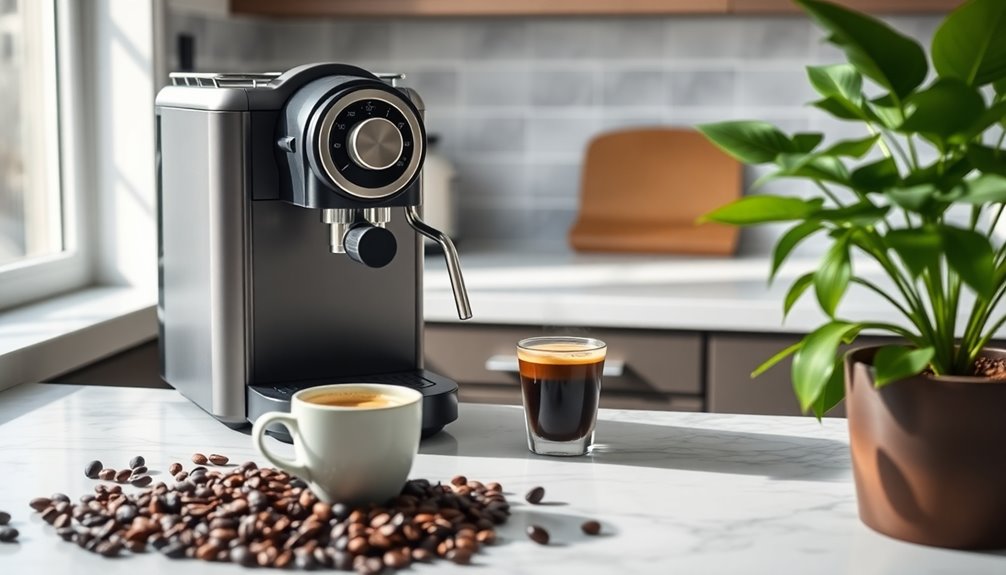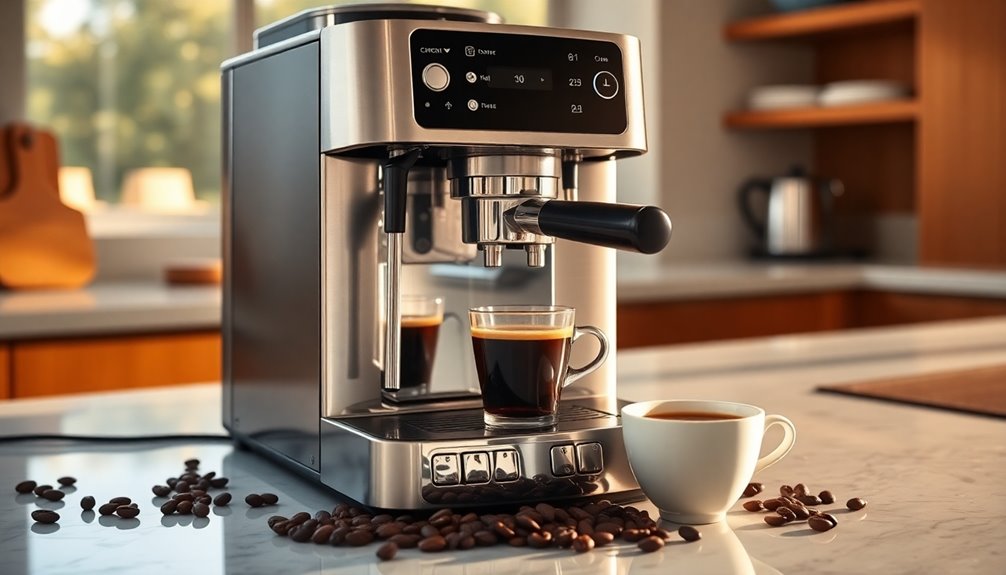

A high-end automatic espresso machine should make better coffee easier, but the right choice depends on whether you value drink variety, milk convenience, or hands-on control. I rank the Gaggia Accademia as the best overall for its broad drink selection and more involved customization, while the De’Longhi PrimaDonna Aromatic stands out for a feature-rich daily routine and the Jura E6 for buyers who favor a focused, polished coffee menu. The main tradeoffs are how much you want to spend on flexibility, how much cleaning the milk system demands, and whether you need more than espresso drinks. Read on for a comparison of all 15 machines, including simpler picks that may suit your kitchen better than a premium model.

Get kitchen staples and gadgets delivered free with Prime
- Fast, free delivery on millions of items
- Prime Video, Amazon Music and more included
- Member-only deals all year
Complete the kit


Key Takeaways
- Drink range separates the most capable picks. The Gaggia Accademia’s 19 drink settings make it a stronger fit for varied preferences than simpler Philips models centered on a smaller menu.
- Milk convenience comes in different forms. Philips LatteGo models emphasize a straightforward milk system, while machines with a steam wand suit buyers willing to take a more hands-on approach.
- Premium does not always mean more useful. The Jura E6 and Miele CM 6160 are better matched to buyers who value their particular coffee and milk routines than to households seeking the widest possible menu.
- The Ninja Luxe Cafe Premier serves a different kind of household. Its espresso, drip coffee, and cold brew options make it more versatile across brew styles, but it is not a like-for-like choice for a fully automatic espresso routine.
- Philips’ lineup offers a clear convenience ladder. The 2200 is a simpler entry point, while the 3300, 4400, and 5500 add reasons to pay more for buyers who want a broader or more convenient daily menu.
| Philips 2200 Series Fully Automatic Espresso Machine with Classic Milk Frother, 2 Coffee Varieties, Intuitive Touch Display, 100% Ceramic Grinder, AquaClean Filter, Aroma Seal (EP2220/14) |  | Best for Straightforward Espresso | Machine type: Fully automatic espresso machine | Beverage options: Espresso, coffee, hot water | Grinder: 100% ceramic | VIEW ON AMAZON | See Our Full Breakdown |
| Philips 3200 Series Fully Automatic Espresso Machine with LatteGo Milk Frother |  | Best for Low-Fuss Milk Drinks | Model: EP3241/54 | Beverage options: Espresso, coffee, Americano, cappuccino, latte macchiato | Coffee input: Whole beans | VIEW ON AMAZON | See Our Full Breakdown |
| Gaggia Accademia Fully Automatic Espresso Machine, 19 Drink Settings, Brushed Stainless Steel |  | Best Premium Customization | Model: RI9782/46, as listed in product information | Beverage settings: 19 | Display: Color glass touchscreen | VIEW ON AMAZON | See Our Full Breakdown |
| Bosch 300 Series Fully Automatic Espresso Machine with Ceramic Grinder and Steam Wand |  | Best for Two Drinks at Once | Operation: Fully automatic | Grinder: Ceramic | Milk system: In-cup milk frother | VIEW ON AMAZON | See Our Full Breakdown |
| Ninja Luxe Cafe Premier 3-in-1 Espresso Machine, Drip Coffee & Cold Brew |  | Best for Brewing Beyond Espresso | Brewing formats: Espresso, drip coffee, rapid cold brew | Grinder: Conical burr with 25 settings | Frothing system: Magnetic whisk and automatic steamer | VIEW ON AMAZON | See Our Full Breakdown |
| De’Longhi PrimaDonna Aromatic Fully Automatic Espresso Machine |  | Best for Bean-Adaptive Brewing | Operation: Fully automatic | Recipes: 38 hot and iced presets | Grinder: Integrated burr grinder with adaptive grinding | VIEW ON AMAZON | See Our Full Breakdown |
| Philips 4400 Series Fully Automatic Espresso Machine with LatteGo Milk System |  | Best for Low-Maintenance Daily Use | Coffee presets: 12 hot and iced presets | Milk system: Three-part LatteGo with no internal tubes | Pressure: 15 bar | VIEW ON AMAZON | See Our Full Breakdown |
| De’Longhi Rivelia Fully Automatic Espresso Machine with Milk Frother, Black |  | Best for Shared Households | Recipes: More than 50 hot and cold recipes | Grind settings: 13 | User profiles: 4 | VIEW ON AMAZON | See Our Full Breakdown |
| De’Longhi Magnifica Evo Espresso Machine with Manual Milk Frother – Silver |  | Best for Hands-On Milk Frothing | Grinder: Built-in conical burr grinder | Grind settings: 13 | One-touch recipes: More than 50 | VIEW ON AMAZON | See Our Full Breakdown |
| Miele CM 6160 MilkPerfection Automatic Coffee Machine, Lotus White |  | Best for Two-Drink Convenience | Water tank: 1.8 liters | Bean container: 10.6 ounces | Profiles: 4 programmable profiles | VIEW ON AMAZON | See Our Full Breakdown |
| Jura E6 Platinum Super-Automatic Espresso Machine |  | Best for Espresso-Focused Simplicity | Type: Fully automatic espresso machine | Grinder: Professional Aroma Grinder | Brew technology: Pulse Extraction Process and 3D brewing technology | VIEW ON AMAZON | See Our Full Breakdown |
| Gaggia Cadorna Prestige Super-Automatic Espresso Machine |  | Best for Shared Households | Beverage programs: 14 | User profiles: Up to 4 | Operation: Fully automatic | VIEW ON AMAZON | See Our Full Breakdown |
| Philips 3300 Series Fully Automatic Espresso Machine with LatteGo Milk System |  | Best for Low-Fuss Milk Cleanup | Beverage presets: 6 hot and iced options | Milk system: LatteGo | Filter: AquaClean | VIEW ON AMAZON | See Our Full Breakdown |
| EUHOMY Fully Automatic Espresso Machine with Built-In Grinder and Milk Frother |  | Best for Hands-On Grind Adjustments | Water tank capacity: 1.5 liters | Bean hopper capacity: 200 g | Pump pressure: 20 bar | VIEW ON AMAZON | See Our Full Breakdown |
| Philips 5500 Series Fully Automatic Espresso Machine with LatteGo |  | Best for Extensive Drink Choice | Drink presets: 20 hot and iced options | Milk system: Three-part LatteGo with no internal tubes | Grinder: Built-in ceramic grinder | VIEW ON AMAZON | See Our Full Breakdown |
| high end automatic espresso machine | Dimensions | Weight | Grinder | Wattage |
|---|---|---|---|---|
| Philips 2200 Series Fully Auto | 14.6 × 9.6 × 17 in | — | 100% ceramic | 1500 W |
| Philips 3200 Series Fully Auto | 10 × 17 × 15 in | — | Integrated ceramic grinder | 1500 W |
| Gaggia Accademia Fully Automat | 16.5 × 11.1 × 15.2 in | 13.8 kg | — | 1400 W |
| Bosch 300 Series Fully Automat | 16.5 × 9.75 × 14.88 in | 14.7 lb | Ceramic | 1600 W |
| Ninja Luxe Cafe Premier 3-in-1 | 12.99 × 13.39 × 14.57 in | — | Conical burr with 25 settings | 1650 W |
| De’Longhi PrimaDonna Aromatic | 21.65 x 12.2 x 18.9 inches | 27.7 pounds | Integrated burr grinder with adaptive grinding | — |
| Philips 4400 Series Fully Auto | 9.68 × 17.04 × 14.6 inches (D × W × H) | 17.6 pounds | — | — |
| De’Longhi Rivelia Fully Automa | 12.01 x 19.69 x 19.09 inches | 21.4 pounds | — | — |
| De’Longhi Magnifica Evo Espres | 19.53 x 12.09 x 16.06 inches | 20.8 pounds | Built-in conical burr grinder | — |
| Miele CM 6160 MilkPerfection A | 9.9 × 16.8 × 14.1 inches | 21.8 pounds | Conical grinder with selectable settings | — |
| Jura E6 Platinum Super-Automat | 11 × 17.6 × 13.8 inches | 22 pounds | Professional Aroma Grinder | 1450 watts |
| Gaggia Cadorna Prestige Super- | 10.2 × 17.3 × 15 inches | 21 pounds | — | 1400 watts |
| Philips 3300 Series Fully Auto | 9.68 × 17.04 × 14.6 inches | 17.6 pounds | — | 1500 watts |
| EUHOMY Fully Automatic Espress | — | — | — | — |
| Philips 5500 Series Fully Auto | 9.69 × 14.61 × 17.05 inches | — | Built-in ceramic grinder | — |
More Details on Our Top Picks
Philips 2200 Series Fully Automatic Espresso Machine with Classic Milk Frother, 2 Coffee Varieties, Intuitive Touch Display, 100% Ceramic Grinder, AquaClean Filter, Aroma Seal (EP2220/14)
The Philips 2200 suits buyers who want bean-to-cup espresso without a long menu to manage. Its touchscreen lets you adjust drink strength and volume, while the ceramic grinder and one-touch brewing handle the main steps automatically. Compared with the Philips 3200 Series, it offers fewer preset drinks and a manual classic frother rather than the LatteGo system, so it asks more of you when making milk drinks but keeps the controls simpler. The frother can work with dairy or plant-based milk, giving hands-on control over texture. An AquaClean filter can reduce how often descaling is needed when replaced as directed. Its plastic construction and relatively deep, tall body are less premium than the steel-and-glass Gaggia Accademia, and the limited drink range may feel restrictive in a high-end setup.
Pros:- One-touch grinding and brewing simplifies daily espresso preparation
- Touch display allows strength and volume adjustments
- Ceramic grinder and Aroma Seal support whole-bean use
- Classic frother accommodates dairy and plant-based milk
Cons:- Smaller drink selection than the Philips 3200 Series
- Manual frothing requires more involvement than LatteGo or an automatic carafe
- Plastic body and 14.6-inch depth may not suit buyers prioritizing premium materials or compact placement
Best for: Buyers who mainly drink espresso or coffee and want automatic bean grinding with simple strength and volume controls.
Not ideal for: Households seeking a broad one-touch milk-drink menu or a compact machine for a shallow countertop.
- Machine type:Fully automatic espresso machine
- Beverage options:Espresso, coffee, hot water
- Grinder:100% ceramic
- Milk system:Classic milk frother
- Wattage:1500 W
- Voltage:120 V
- Dimensions:14.6 × 9.6 × 17 in
- Filter:AquaClean
Our verdict“Choose the Philips 2200 if simple espresso and hands-on milk frothing matter more to you than menu variety or a fully automatic milk system.”
Philips 3200 Series Fully Automatic Espresso Machine with LatteGo Milk Frother
The Philips 3200 Series is the practical step up from the Philips 2200 for households that regularly order milk drinks. Its five presets include espresso, coffee, Americano, cappuccino, and latte macchiato, while the two-part LatteGo system can be rinsed or placed in a dishwasher. That simpler milk cleanup is the main distinction from the 2200’s classic frother, which gives more direct manual control but needs hands-on work. The integrated ceramic grinder and removable brew group support a routine built around whole beans and accessible maintenance. This is still a plastic-bodied machine, and its menu is less expansive than the Gaggia Accademia’s customizable drink lineup. Buyers should also note that the supplied product details leave its stated capacity unclear and do not specify a warranty duration.
Pros:- Five one-touch drink options, including Americano and latte macchiato
- LatteGo’s two-part design is quick to rinse and dishwasher-cleanable
- Integrated ceramic grinder uses whole beans
- Removable brew group and AquaClean filter support routine maintenance
Cons:- Plastic exterior feels less premium than the Gaggia Accademia’s glass-and-steel construction
- LatteGo automates milk preparation but offers less hands-on texture control than a steam wand
- Product details do not clearly establish capacity or warranty duration
Best for: Households that make cappuccinos or latte macchiatos often and want a milk system that is quick to clean.
Not ideal for: Espresso purists who want a steam wand and hands-on milk texture control, or buyers seeking premium metal construction and extensive customization.
- Model:EP3241/54
- Beverage options:Espresso, coffee, Americano, cappuccino, latte macchiato
- Coffee input:Whole beans
- Grinder:Integrated ceramic grinder
- Milk system:Two-part LatteGo
- Wattage:1500 W
- Voltage:110 V
- Dimensions:10 × 17 × 15 in
Our verdict“Pick the Philips 3200 if convenient, easy-clean milk drinks matter more than manual frothing control or a broad customization menu.”
Gaggia Accademia Fully Automatic Espresso Machine, 19 Drink Settings, Brushed Stainless Steel
The Gaggia Accademia is the most feature-rich traditional super-automatic in this group, with 19 customizable drinks and two distinct ways to prepare milk: an auto-frothing carafe and a commercial steam wand. That choice makes it more adaptable than the Philips 3200, whose LatteGo system favors convenience over hands-on technique. The color touchscreen, integrated grinder, programmable settings, and automatic cleaning functions suit buyers who want a machine they can tailor rather than a short list of fixed presets. Its glass-and-steel materials also give it a more substantial premium feel than the plastic Philips models. The tradeoff is a larger, heavier machine with more settings and components to manage. Product information also lists conflicting model numbers, so confirm the exact version before ordering.
Pros:- Nineteen customizable beverage settings provide a wide range of choices
- Includes both an auto-frothing carafe and commercial steam wand
- Color touchscreen and programmable settings support tailored drinks
- Glass-and-steel construction is more premium than the Philips 3200’s plastic exterior
Cons:- Larger and heavier than the Philips 2200 and Bosch 300 Series
- More milk options and programmable settings mean more to learn and maintain
- Supplied product information lists inconsistent model numbers
Best for: Experienced home coffee drinkers who want extensive drink customization and both automatic and manual milk preparation.
Not ideal for: Buyers who want a compact, simple appliance, or who prefer a clearly documented model listing and minimal setup.
- Model:RI9782/46, as listed in product information
- Beverage settings:19
- Display:Color glass touchscreen
- Milk systems:Auto-frothing carafe and commercial steam wand
- Water capacity:1.6 L
- Wattage:1400 W
- Dimensions:16.5 × 11.1 × 15.2 in
- Weight:13.8 kg
Our verdict“Choose the Accademia if you want a premium, customizable machine with both automatic milk drinks and steam-wand control.”
Bosch 300 Series Fully Automatic Espresso Machine with Ceramic Grinder and Steam Wand
The Bosch 300 Series earns its place for practical features that serve shared routines: its Double Cup function can prepare two drinks at once, and five strength levels let different drinkers adjust their cups. A ceramic grinder and Aroma Max System support the bean-to-cup workflow, while the removable brew unit makes internal cleaning more accessible than on a machine that keeps those parts fixed. Compared with the Philips 3200, Bosch offers a steam-based in-cup milk frother rather than a separate LatteGo setup; that changes the milk routine and may suit buyers who want a more integrated approach. It does not match the Gaggia Accademia’s 19 customizable drinks or dual milk-preparation choices. The Bosch is also heavy, and its Calc’n Clean maintenance means descaling remains part of ownership.
Pros:- Double Cup function can brew two drinks simultaneously
- Five strength levels allow adjustments for different preferences
- Ceramic grinder and Aroma Max System support automatic bean-to-cup brewing
- Removable brew unit and Calc’n Clean guide aid routine maintenance
Cons:- At 14.7 pounds, it is heavier than the Philips 3200
- Regular descaling and maintenance are required
- Drink selection and milk options are less extensive than the Gaggia Accademia
Best for: Couples or small households who often prepare two drinks together and want adjustable strength with an integrated milk-frothing approach.
Not ideal for: Buyers seeking a lightweight machine, a wide selection of customized recipes, or a filter-based way to avoid regular descaling.
- Operation:Fully automatic
- Grinder:Ceramic
- Milk system:In-cup milk frother
- Special functions:Double Cup, programmable, five strength levels
- Wattage:1600 W
- Voltage:120 V
- Dimensions:16.5 × 9.75 × 14.88 in
- Weight:14.7 lb
Our verdict“Choose the Bosch 300 if preparing two cups together and adjusting brew strength are higher priorities than extensive recipe choice.”
Ninja Luxe Cafe Premier 3-in-1 Espresso Machine, Drip Coffee & Cold Brew
The Ninja Luxe Café Premier is the outlier for buyers who want one countertop machine to cover espresso, drip coffee, and rapid cold brew. Its guided Barista Assist technology and 25-setting conical burr grinder offer more format flexibility than the espresso-focused Philips 3200 or Bosch 300, while the 70-ounce reservoir can reduce refills when several people use it. The dual frothing system includes a magnetic whisk and automatic steamer, giving milk-drink makers a hands-free option across more than one coffee style. That breadth comes with a different kind of complexity: more programs and components to learn and clean, and a larger footprint than the Philips 2200. Buyers focused on a high-end automatic espresso routine alone may prefer the Gaggia Accademia’s dedicated drink customization and steam wand.
Pros:- Brews espresso, drip coffee, and rapid cold brew in one system
- Conical burr grinder offers 25 grind settings
- Barista Assist guides newer users through drink preparation
- 70-ounce removable reservoir limits frequent refilling
Cons:- Broader feature set can make setup and cleaning more involved
- Larger countertop footprint than the Philips 2200
- Less focused on dedicated espresso customization than the Gaggia Accademia
Best for: Households that want guided espresso alongside drip coffee and cold brew, with a large reservoir and automatic milk frothing.
Not ideal for: Espresso-focused buyers who want a dedicated super-automatic with a compact footprint and fewer setup and cleaning steps.
- Brewing formats:Espresso, drip coffee, rapid cold brew
- Grinder:Conical burr with 25 settings
- Frothing system:Magnetic whisk and automatic steamer
- Froth styles:Four preset styles
- Water reservoir:70 oz, removable
- Wattage:1650 W
- Voltage:120 V
- Dimensions:12.99 × 13.39 × 14.57 in
Our verdict“Pick the Ninja Luxe Café Premier if drink-format versatility matters more than a dedicated, espresso-first automatic machine.”
De’Longhi PrimaDonna Aromatic Fully Automatic Espresso Machine
The PrimaDonna Aromatic is the pick for households that want the machine to do more than follow a fixed recipe. Its bean recognition and adaptive grinding adjust grind, dose, and temperature, while 38 hot and iced presets cover espresso, drip coffee, and cold brew. Compared with the De’Longhi Rivelia, it offers fewer recipes and user profiles, but its 5-inch touchscreen is larger and its adaptive brewing gives it a distinct focus on tailoring extraction to the beans.
The adjustable LatteCrema system handles dairy and plant-based milk, and dishwasher-safe milk components reduce cleanup. The tradeoff is scale: at 21.65 inches deep and 27.7 pounds, it needs a generous, fairly permanent counter spot. I’d skip it if compactness or easy repositioning matters more than bean-specific adjustments.
Pros:- Adjusts grind, dose, and temperature based on bean recognition.
- Offers 38 hot and iced recipes, including drip coffee and cold brew.
- Adjustable frothing supports dairy and plant-based milk.
- Dishwasher-safe milk components and an auto-clean function simplify upkeep.
Cons:- Its 21.65-inch depth and 27.7-pound weight demand substantial counter space.
- Offers fewer recipes and saved profiles than the De’Longhi Rivelia.
Best for: Coffee drinkers who rotate between bean types and want automatic brewing adjustments, broad drink choices, and milk options for a shared home or office.
Not ideal for: Small-kitchen owners or anyone who needs a lightweight machine; its deep footprint and 27.7-pound weight make it harder to place and move.
- Operation:Fully automatic
- Recipes:38 hot and iced presets
- Grinder:Integrated burr grinder with adaptive grinding
- Milk system:LatteCrema Hot and Cool; adjustable textures
- Display:5-inch touchscreen
- Power:1350 watts
- Dimensions:21.65 x 12.2 x 18.9 inches
- Weight:27.7 pounds
Our verdict“Choose the PrimaDonna Aromatic if adaptive bean handling and varied drinks matter more than a compact footprint.”
Philips 4400 Series Fully Automatic Espresso Machine with LatteGo Milk System
The Philips 4400 makes sense for buyers who want automatic milk drinks without a complicated cleanup routine. Its three-part LatteGo system has no internal tubes and is dishwasher safe, while the machine offers 12 hot and iced presets with adjustable strength, volume, and froth. Compared with the De’Longhi PrimaDonna Aromatic, it has far fewer recipes and no listed bean-adaptive brewing, but its narrower 17.04-inch width is easier to fit on a crowded counter.
QuickStart makes it ready to brew in three seconds, and SilentBrew is aimed at quieter operation. The AquaClean filter can support up to 5,000 cups before descaling, subject to filter use and water conditions. Its limits are customization and capacity: it saves just two profiles and has a 1.8-liter water tank. I’d choose it for easy everyday lattes, not extensive personalization.
Pros:- LatteGo has three parts, no internal tubes, and dishwasher-safe components.
- QuickStart brew readiness is listed at three seconds.
- SilentBrew is certified by Quiet Mark.
- AquaClean supports up to 5,000 cups without descaling when used as directed.
Cons:- Stores only two user profiles.
- Its 12 presets provide less drink variety than the De’Longhi Rivelia.
- The 1.8-liter tank may need frequent refilling in a busy household.
Best for: Busy households that regularly make milk-based coffee and value quick startup, quieter brewing, and a milk system that is easy to rinse or put in the dishwasher.
Not ideal for: Homes with several coffee drinkers who want individual saved profiles, or enthusiasts seeking a large recipe library and bean-specific brewing adjustments.
- Coffee presets:12 hot and iced presets
- Milk system:Three-part LatteGo with no internal tubes
- Pressure:15 bar
- Water capacity:1.8 liters
- Saved profiles:Up to 2
- QuickStart readiness:3 seconds
- Dimensions:9.68 × 17.04 × 14.6 inches (D × W × H)
- Weight:17.6 pounds
Our verdict“Pick the Philips 4400 for convenient, quieter milk drinks and easy cleanup rather than a broad menu or extensive profile control.”
De’Longhi Rivelia Fully Automatic Espresso Machine with Milk Frother, Black
The Rivelia is the strongest fit here for a household with several distinct coffee routines. It pairs 50+ hot and cold recipes with four saved profiles, so people can keep their preferred drinks without resetting the machine each time. Its interchangeable bean hoppers are useful for switching between coffee types, while 13 grind settings and Bean Adapt Technology add control. Compared with the Philips 4400, it offers far more recipes and twice as many profiles, though the Philips is narrower and has a particularly simple LatteGo cleanup routine.
Cold brew in under three minutes adds variety without a separate brewer, and automatic milk frothing keeps preparation hands-off. The compromise is counter space: at nearly 20 inches wide and 19 inches high, it is one of the larger options in this group. I’d avoid it for a small kitchen or for anyone who rarely changes beans or recipes.
Pros:- Offers more than 50 hot and cold one-touch recipes.
- Four user profiles save drink preferences for different household members.
- Interchangeable bean hoppers support switching between bean types.
- Bean Adapt Technology and 13 grind settings offer brewing flexibility.
Cons:- Its 19.69-inch width and 19.09-inch height require substantial counter clearance.
- At 21.4 pounds, it is not convenient to move regularly.
- The larger recipe and profile range may be unnecessary for buyers with a fixed routine.
Best for: Multi-user households that switch between bean types, want individual saved drink settings, and make both hot and cold coffee drinks.
Not ideal for: People with limited counter space or buyers who prefer a simpler, smaller machine with fewer menu choices.
- Recipes:More than 50 hot and cold recipes
- Grind settings:13
- User profiles:4
- Display:3.5-inch color touchscreen
- Bean handling:Interchangeable bean hoppers with Bean Adapt Technology
- Power:1450 watts
- Dimensions:12.01 x 19.69 x 19.09 inches
- Weight:21.4 pounds
Our verdict“Choose the Rivelia when multiple drinkers need saved preferences and bean flexibility, provided you have room for its large footprint.”
De’Longhi Magnifica Evo Espresso Machine with Manual Milk Frother – Silver
The Magnifica Evo stands apart from the fully automatic milk systems in this group by giving the user more direct control over frothing. Its manual milk frother suits buyers who want to shape foam themselves rather than hand the entire milk step to an automatic system. The machine still handles grinding and brewing, with a conical burr grinder, 13 settings, and more than 50 listed drink recipes. Compared with the De’Longhi Rivelia, it offers a similarly broad menu but fewer personalization cues in the supplied details, and its manual frother asks for more effort at each milk drink.
Hot and cold frothing options extend the menu, while auto-clean and dishwasher-safe frother components help with routine care. At 20.8 pounds, it is not a compact choice. I’d favor the Philips 4400 instead if fast, low-effort milk cleanup matters more than hands-on foam control.
Pros:- Built-in conical burr grinder offers 13 grind settings.
- More than 50 listed one-touch drink recipes include iced drinks and cold brew.
- Hot and cold milk frothing supports a varied drink menu.
- Auto-clean and dishwasher-safe frother components help with maintenance.
Cons:- Manual milk frothing requires more attention than the automatic systems on the Rivelia or Philips 4400.
- Its 20.8-pound weight and 19.53-inch depth make placement and moving less convenient.
Best for: Espresso drinkers who want automatic grinding and brewing but prefer to control milk froth themselves for cappuccinos and other milk drinks.
Not ideal for: Anyone who wants one-touch automatic milk preparation or needs a lighter machine for a small counter.
- Grinder:Built-in conical burr grinder
- Grind settings:13
- One-touch recipes:More than 50
- Milk frother:Manual with hot and cold foam technology
- Power:1250 watts
- Water tank capacity:3.8 pounds
- Dimensions:19.53 x 12.09 x 16.06 inches
- Weight:20.8 pounds
Our verdict“Pick the Magnifica Evo if you want automatic coffee preparation with hands-on control over milk, not a fully automated latte routine.”
Miele CM 6160 MilkPerfection Automatic Coffee Machine, Lotus White
The Miele CM 6160 is the most appealing choice here for couples who often prepare drinks together. OneTouch for Two can make two specialty drinks in one operation, while four programmable profiles keep individual preferences available. Its menu also reaches beyond espresso and milk coffee to tea and hot water, giving it a broader household role than the De’Longhi Magnifica Evo, whose listed strengths center on coffee recipes and manual milk frothing. The Miele adds DoubleShot for a stronger coffee, plus WiFiConn@ct for connected control.
A quiet conical grinder and built-in cleaning programs support regular use, though its 1.8-liter tank and 10.6-ounce bean container are modest for frequent group service. The coffee pot is sold separately, and the supplied voltage details conflict between 120 V and 220–240 V. I’d verify electrical compatibility before buying.
Pros:- OneTouch for Two prepares two specialty drinks in one operation.
- Four programmable profiles retain individual drink preferences.
- Drink selection includes coffee, espresso, cappuccino, milk froth, tea, and hot water.
- Removable components and automatic cleaning programs support routine maintenance.
Cons:- The coffee pot is sold separately.
- The supplied product details list conflicting voltage specifications.
- The 1.8-liter water tank and 10.6-ounce bean container may require frequent refills for group use.
Best for: Couples or small households that frequently make two milk or coffee drinks at once and want separate profiles plus tea and hot-water options.
Not ideal for: Buyers who need a large-capacity machine for office-style serving, want a coffee pot included, or cannot confirm the correct voltage for their location.
- Water tank:1.8 liters
- Bean container:10.6 ounces
- Profiles:4 programmable profiles
- Grinder:Conical grinder with selectable settings
- Drink volume:20–300 ml
- Dimensions:9.9 × 16.8 × 14.1 inches
- Weight:21.8 pounds
- Features:OneTouch for Two, DoubleShot, WiFiConn@ct, ComfortClean
Our verdict“Choose the Miele CM 6160 for convenient paired drinks and household profiles, after confirming voltage and accounting for the separate coffee pot.”
Jura E6 Platinum Super-Automatic Espresso Machine
The Jura E6 Platinum suits buyers who want a polished automatic coffee routine centered on espresso and milk foam, rather than a long menu of specialty drinks. Its Professional Aroma Grinder and Pulse Extraction Process handle grinding and brewing automatically, while programmable strength, volume, and temperature let you tune repeat drinks. Compared with the Gaggia Cadorna Prestige, the E6 offers fewer stated beverage programs and no saved user profiles, so it is less suited to a household with competing preferences. In return, its 1.9-liter tank is larger than the Gaggia’s 1.5-liter capacity, and it includes hot water on demand plus integrated maintenance programs. The tradeoff is a narrower menu and an optional preground-coffee chute, which limits flexibility for anyone who regularly switches between beans and decaf.
Pros:- Automates grinding, brewing, milk frothing, and self-cleaning programs.
- Programmable strength, volume, temperature, milk foam, and hot water.
- Professional Aroma Grinder and Pulse Extraction Process support a more tailored espresso routine.
- Its 1.9-liter capacity exceeds the Gaggia Cadorna Prestige’s 1.5-liter tank.
Cons:- Offers less menu breadth than the Gaggia Cadorna Prestige’s 14 beverage programs.
- Preground coffee requires an optional chute.
- A one-year warranty provides limited coverage.
Best for: Espresso drinkers who want automated grinding, brewing, milk foam, and maintenance with adjustable settings but do not need many preset drinks.
Not ideal for: Households that want multiple saved profiles, a broad specialty-drink menu, or an easy built-in option for preground decaf.
- Type:Fully automatic espresso machine
- Grinder:Professional Aroma Grinder
- Brew technology:Pulse Extraction Process and 3D brewing technology
- Capacity:1.9 liters
- Wattage:1450 watts
- Dimensions:11 × 17.6 × 13.8 inches
- Weight:22 pounds
- Warranty:1 year
Our verdict“Choose the Jura E6 if you want a streamlined, customizable espresso-and-milk routine more than a large preset menu or multiple household profiles.”
Gaggia Cadorna Prestige Super-Automatic Espresso Machine
The Gaggia Cadorna Prestige earns its place for households where drink variety and repeatable personal settings matter more than a premium-feeling exterior. Its 14 beverage programs cover options such as cappuccino and latte macchiato, and four user profiles let different people save preferences instead of reconfiguring each drink. That gives it a stronger household focus than the Jura E6 Platinum, which has customizable settings but no stated profile system. The integrated milk carafe and automatic rinse cycle also reduce work after milk drinks, though the milk system still needs regular care. At 1.5 liters, its tank is smaller than the Jura’s, and the plastic exterior is a clear compromise for buyers seeking a more substantial finish. I’d pick it for menu flexibility and shared use, not for materials-led luxury.
Pros:- Four user profiles help household members save distinct drink settings.
- Fourteen beverage programs offer more menu variety than the Jura E6 Platinum.
- Integrated milk carafe has an automatic rinse cycle.
- Color display and adjustable settings make drink customization accessible.
Cons:- Plastic exterior feels less premium than a metal-bodied machine.
- The 1.5-liter tank is smaller than the Jura E6 Platinum’s 1.9-liter capacity.
- Milk-system components still require regular care.
Best for: Households of up to four coffee drinkers who want saved preferences and one-touch access to a varied menu of milk drinks.
Not ideal for: Buyers prioritizing a metal exterior, a larger water tank, or minimal attention to milk-system maintenance.
- Beverage programs:14
- User profiles:Up to 4
- Operation:Fully automatic
- Capacity:1.5 liters
- Wattage:1400 watts
- Coffee input:Whole bean
- Dimensions:10.2 × 17.3 × 15 inches
- Weight:21 pounds
Our verdict“Choose the Cadorna Prestige when several people want personalized milk drinks and saved settings, and accept its plastic exterior and smaller tank.”
Philips 3300 Series Fully Automatic Espresso Machine with LatteGo Milk System
The Philips 3300 Series makes the most sense for buyers who want automatic milk drinks without a complicated cleanup routine. Its LatteGo system has no internal tubes and is described as cleaning in as little as 10 seconds, a practical advantage over the Gaggia Cadorna Prestige’s integrated carafe, which still calls for regular milk-system care. The 3300 offers six hot and iced presets, with adjustable strength, volume, and milk settings; that is a simpler menu than the Gaggia’s 14 programs, but easier to narrow down for everyday use. SilentBrew targets lower operating noise, while the AquaClean filter is rated for up to 5,000 cups without descaling under the stated conditions. Buyers do give up the Gaggia’s four saved profiles, and its footprint may be awkward in a compact kitchen.
Pros:- LatteGo froths milk automatically and is described as cleaning in as little as 10 seconds.
- Six hot and iced presets include espresso, cappuccino, and latte macchiato.
- SilentBrew is designed to reduce operating noise compared with previous models.
- AquaClean filter is rated for up to 5,000 cups without descaling.
Cons:- Six presets provide less menu variety than the Gaggia Cadorna Prestige’s 14 programs.
- No user-profile count is specified, unlike the Gaggia’s four profiles.
- The stated dimensions may be challenging for small counters.
Best for: People who make milk drinks regularly and value quick, straightforward milk-system cleanup over a very large drink menu.
Not ideal for: Multi-user households that want separate saved profiles, or buyers with limited counter space.
- Beverage presets:6 hot and iced options
- Milk system:LatteGo
- Filter:AquaClean
- Capacity:1.8 liters
- Pressure:15 bar
- Wattage:1500 watts
- Dimensions:9.68 × 17.04 × 14.6 inches
- Weight:17.6 pounds
Our verdict“Pick the Philips 3300 if fast milk-system cleanup and a quieter routine matter more than an extensive menu or saved household profiles.”
EUHOMY Fully Automatic Espresso Machine with Built-In Grinder and Milk Frother
The EUHOMY Fully Automatic Espresso Machine is the pick here for buyers who want more control over grind size without moving to a manual espresso setup. Its 15 grind settings, adjustable drink controls, and touchscreen give more visible adjustment points than the Philips 3300 Series, whose supplied details focus on drink strength, volume, and milk settings rather than a stated grind range. The machine also combines automatic milk frothing with espresso, latte, cappuccino, and Americano options, and its bean-purge and internal cleaning programs aim to make upkeep less involved. Those features are appealing on paper, but the supplied information does not establish reliability or beverage performance, so I would not rank it ahead of the better-documented Jura or Philips options for buyers seeking a high-end investment. Its 200-gram hopper and 1.5-liter tank also call for more frequent refills than a larger-capacity setup.
Pros:- Fifteen grind settings provide more stated grind adjustment than the Philips 3300 Series.
- Touchscreen controls include adjustable drink settings and alerts.
- Automatic milk frothing supports several café-style drink types.
- Automatic cleaning and a bean-purge function are designed to simplify maintenance.
Cons:- The supplied product information does not establish reliability or real-world performance.
- The 1.5-liter water tank is smaller than the Philips 3300 Series’ 1.8-liter capacity.
- A 200-gram bean hopper may require frequent refilling for heavy use.
Best for: Buyers who want an automatic machine with touchscreen controls and several grind adjustments, and are comfortable weighing limited product-performance information.
Not ideal for: Shoppers who need a well-documented long-term ownership record or prefer a larger water tank and bean hopper.
- Water tank capacity:1.5 liters
- Bean hopper capacity:200 g
- Pump pressure:20 bar
- Grind settings:15 levels
- Milk frother:Built-in automatic system
- Controls:Touchscreen
- Cleaning:Automatic internal cleaning program
- Spout:Adjustable height
Our verdict“Consider the EUHOMY if touchscreen control and 15 grind settings are priorities, but choose a better-documented alternative if confidence in performance is your main concern.”
Philips 5500 Series Fully Automatic Espresso Machine with LatteGo
The Philips 5500 Series is the lineup’s menu-first choice: its 20 hot and iced presets offer far more variety than the Philips 3300 Series’ six, while LatteGo keeps milk cleanup straightforward with a tube-free, three-part design. That combination suits households that rotate between coffee styles but still want one-touch preparation and up to four saved profiles. QuickStart is listed as ready to brew in three seconds, and AquaClean is rated for up to 5,000 cups without descaling, which can reduce routine friction. The tradeoff is that its feature advantage over the 3300 is mainly breadth and personalization, not a simpler machine or a smaller footprint. The supplied data also lists a 230-volt supply and an unusually low 3.6-pound weight; buyers should verify both against their intended market and unit before purchasing.
Pros:- Twenty hot and iced presets offer substantially more choice than the Philips 3300 Series’ six.
- LatteGo has no internal tubes, rinses clean in about 10 seconds, and is dishwasher safe.
- Up to four profiles can save individual preferences.
- QuickStart and the AquaClean filter are designed to reduce waiting and routine maintenance.
Cons:- The listed 230-volt requirement may not suit every household electrical supply.
- The stated 3.6-pound weight appears unusually low for a fully automatic machine and warrants verification.
- Its larger preset menu may be unnecessary for buyers who repeatedly make only a few drinks.
Best for: Households that want a broad mix of hot and iced drinks, quick milk cleanup, and saved personal settings.
Not ideal for: Buyers who need a compact, uncomplicated model, or anyone whose electrical supply is not compatible with the listed 230 volts.
- Drink presets:20 hot and iced options
- Milk system:Three-part LatteGo with no internal tubes
- Grinder:Built-in ceramic grinder
- Pump pressure:15 bar
- Water capacity:1.8 liters
- Profiles:Up to 4
- Voltage:230 volts
- Dimensions:9.69 × 14.61 × 17.05 inches
Our verdict“Choose the Philips 5500 if your household will use its extensive hot-and-iced menu and saved profiles, after verifying the voltage and product weight for your market.”

How We Picked
I compared these machines on the things that change everyday ownership: drink selection, adjustment options, milk preparation, controls, grinder design, cleaning demands, and the range of coffee routines each can support. A feature mattered most when it solved a real buyer problem—for example, a simpler milk system can save cleanup, while a wider menu helps when several people want different drinks. I also weighed whether a machine’s added complexity matched its intended audience, rather than treating the longest feature list as an automatic win.
The ranking favors machines that offer a strong balance of capability, usability, and flexibility for a high-end automatic espresso purchase. The Gaggia Accademia leads for its unusually broad menu and customization; the De’Longhi PrimaDonna Aromatic and Jura E6 follow for different priorities rather than identical strengths. Models with narrower menus, more manual milk work, or a specialized purpose rank lower for general use, though they can be better fits for specific households. The Ninja is included for buyers who want several brew styles, but its broader format makes it a distinct alternative rather than a direct match for every super-automatic.
Factors to Consider When Choosing High End Automatic Espresso Machine
Before choosing a machine, I would start with the drinks and routines your household repeats—not the number of drinks in a menu. These broader tradeoffs can help you decide whether a premium machine’s added options will earn their space and upkeep.
Match the menu to your daily routine
A long drink list sounds appealing, but it only adds value when people in your home will use those drinks. Think about whether your usual order is espresso, a milk drink, or several different beverages across the day. A household with varied preferences may benefit from more recipes and saved adjustments, while a one-drink routine may be better served by a simpler interface. Also check whether the machine lets you change strength, volume, or temperature for the drinks you actually make. A common mistake is paying for menu breadth while overlooking the quality of the controls used to adjust those drinks. Choose flexibility you will use, not a menu that looks impressive on paper.
Choose a milk system you will maintain
Milk preparation can shape ownership more than espresso settings because residue needs prompt, regular cleaning. A contained milk system may make routine cleanup more straightforward, while a steam wand gives you more direct control but asks for more hands-on work. Consider where milk is stored between drinks, which parts need rinsing, and whether the machine’s cleaning steps fit your kitchen habits. If several milk drinks are made back-to-back, speed and easy access to removable parts matter. If you mostly drink black coffee, paying extra for an elaborate milk setup may add clutter without improving your routine. Decide how much effort you are willing to spend after each use before choosing a machine for its milk features.
Think beyond the grinder headline
Grinder material and adjustment range are useful clues, but they do not tell the whole story of the cup. Your beans, roast level, dose, and drink settings also shape flavor, so a grinder feature should be judged alongside how much control the machine gives you. Buyers who rotate between beans may value easy adjustment and access to settings more than a single headline specification. Those who keep one preferred bean can place more weight on consistency and a simple workflow. Check whether adjustments are easy to find and repeat, especially if more than one person uses the machine. Avoid assuming that a premium grinder alone will compensate for limited control over the rest of the brew.
Account for cleaning, water, and counter space
Automatic machines still need routine care, and the work varies with the brew group, milk system, water setup, and frequency of use. Before buying, look at how accessible removable components are and whether the maintenance routine fits the time you will give it. Water hardness affects descaling needs, so check the manufacturer’s guidance and whether the machine supports a water filter suited to your home. Measure the countertop footprint and the clearance needed to fill the water tank or add beans; a compact-looking machine can still be awkward under cabinets. A common mistake is measuring only the machine’s width and forgetting daily access. The easiest machine to live with is often the one whose upkeep and placement fit your kitchen, not the one with the most features.
Pay for control or convenience—not both by default
Premium machines can add drink presets, user adjustments, milk automation, or a broader set of brewing options, but each benefit matters to a different buyer. If your priority is a fast button-driven drink, convenience features may earn their place. If you like adjusting recipes, make sure the controls allow changes you can understand and repeat rather than adding menus you rarely open. A multi-style machine can be useful when people want drip coffee or cold brew as well as espresso, but it may not match the workflow of a dedicated super-automatic. Set your must-haves first, then treat extra features as worthwhile only when they solve a specific need. This keeps a high-end purchase from becoming a complex appliance used for one basic drink.
Frequently Asked Questions
Is a machine with more drink presets automatically a better buy?
No—preset count matters only if the recipes match the drinks your household actually orders. A wider menu can help when users want different styles, but it may add interface complexity and cleaning steps without changing your everyday cup. Check which adjustments are available for the drinks you make most, such as strength and volume. If you mainly drink espresso or one milk recipe, a simpler model may be easier to operate and maintain. I would prioritize useful customization over a large menu label.
Should I choose LatteGo or a machine with a steam wand?
Choose based on how much hands-on milk preparation you want. A LatteGo-style system is aimed at simplifying milk drinks and cleanup, which can suit frequent use by several people. A steam wand gives you a more manual process and asks you to clean the wand after use, so it fits buyers who accept that extra work. Neither approach is right for everyone, and the milk routine can matter more than small differences in drink menus. If most of your coffee is black, the milk system should carry less weight in your decision.
Can the Ninja Luxe Cafe Premier replace a fully automatic espresso machine?
It can be a better fit if your household wants espresso alongside drip coffee and cold brew from one appliance. Its wider brew-style remit makes it different from a machine centered on automatic espresso drinks, so compare workflows rather than treating the machines as interchangeable. If one-touch espresso and milk drinks are your main goal, a dedicated fully automatic model may suit that routine more closely. If you regularly switch between brew styles, the Ninja’s versatility may matter more than a specialist menu. Decide which drinks need to be convenient every day before choosing.
Is it worth paying more for a premium machine if I mostly drink cappuccinos?
Possibly, but focus on how often you make milk drinks and how much effort the machine saves each time. A higher-end model is easier to justify if it combines a milk workflow you like with controls that let you repeat your preferred drink. If you make cappuccinos only occasionally, a simpler model with a milk frother may cover your needs without paying for unused recipes. Also account for milk-system cleaning, since a more automated drink is not automatically maintenance-free. Compare the complete routine, from starting the drink to rinsing the parts afterward.
What should I check before buying an automatic espresso machine for a shared kitchen?
Start with the number of people who will use it, their preferred drinks, and whether they need separate settings. A broad menu such as the Gaggia Accademia’s can help serve varied tastes, while simpler controls may be easier for occasional users. Check tank and bean capacity against how often the machine will be used, and make sure each person can operate the controls without changing someone else’s preferred recipe. Counter clearance and access for cleaning matter more when the machine is used throughout the day. Shared use favors a machine that is easy to reset, refill, and clean as much as one with a long drink list.
Conclusion
For the broadest all-around choice in this lineup, I would start with the Gaggia Accademia: its extensive drink selection and customization make it the best overall for households with varied preferences. The Philips 2200 Series is my best value-style pick for buyers who want a simpler automatic espresso routine, while the De’Longhi PrimaDonna Aromatic is the best premium fit for shoppers drawn to a feature-rich daily experience. For beginners, I would compare the Philips 3200 Series with LatteGo and Philips 2200, choosing the former if easy milk drinks matter and the latter if a simpler menu is enough. For specific needs, choose the Ninja Luxe Cafe Premier when drip coffee and cold brew belong in the same appliance, or the Jura E6 when its focused coffee routine matches your preferences. The right high-end machine is the one whose drinks, controls, and cleaning demands fit your real day—not the one with the longest feature list.