
TL;DR

Get kitchen staples and gadgets delivered free with Prime
- Fast, free delivery on millions of items
- Prime Video, Amazon Music and more included
- Member-only deals all year
Saint Martin’s Day falls on November 11, and in parts of Italy it brings tastings of vino novello, a fresh young wine, alongside local autumn foods. Goose appears in some regional and wider European traditions, but menus and event schedules vary, so check with the winery or municipality before you travel.
On a cool November evening in Italy, the first glass may taste like a bright pause between harvest and winter: fresh fruit, a little chill in the air, and a plate of something hearty nearby. That scene belongs to San Martino, or Saint Martin’s Day, celebrated on November 11 in Italy and across parts of Central Europe.
This guide explains what vino novello is, why goose sometimes joins the table, and how the local calendar shapes each celebration. You’ll also find practical steps for checking a tasting before you travel, plus ideas for bringing the season home with a bottle and a simple autumn meal. San Martino is a useful preview of late-autumn Italy, but its customs change from town to town.
San Martino falls on November 11, but local events and menus vary by town and year.
Vino novello is a young wine intended for early drinking; check the producer’s current release and serving guidance.
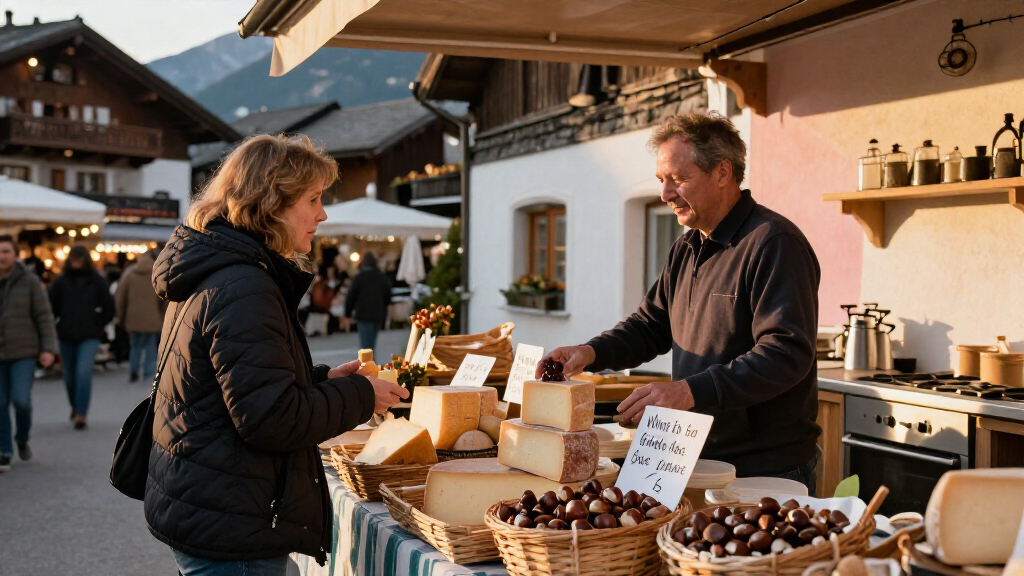
Goose appears in some regional and European traditions, but chestnuts, cured meats, cheese, and wine-only tastings are also common possibilities.
Confirm venue, hours, reservations, food, costs, and transport directly with the organizer before traveling.
Ask producers about grapes, local pairings, and any DOP or IGP designation on foods you plan to bring home.
San Martino Preview Novello Wine and Goose Feasts
Saint Martin’s Day brings young wine and autumn food to some Italian communities. Events and menus vary by town, so check local details before you travel.
A local calendar, not one festival
San Martino celebrations reflect each community’s producers, organizers, and autumn customs.
- Winery tastings or village gatherings
- Goose, chestnuts, cured meats, or cheese
- Venue, hours, and public access
- Menus and tasting programs
Meet vino novello
This young wine is released soon after harvest and made for fresh, early drinking.
Enjoy it young
Ask the producer about the grapes, vintage, and suggested drinking window.
A seasonal milestone
The saying “By Saint Martin’s Day, all must becomes wine” evokes the harvest turning toward the table.
Plan before you go
Confirm current details directly with the winery, municipality, or event organizer.
Verify the year, venue, hours, and whether the event is open to the public.
Check reservations, costs, food, and whether tastings include a meal.
Confirm transport and the producer’s current release and serving guidance.
What San Martino Tells You About Italy’s November Wine Season
San Martino is the November 11 feast day of Martin of Tours, a fourth-century Christian bishop, and in parts of Italy it marks the shift from autumn harvest work toward winter. The date gathers together local wine tastings, seasonal meals, and customs that differ by town. It gives you a calendar point for exploring the season, not one nationwide festival with a fixed menu.
A familiar Italian saying captures the wine connection: “A San Martino ogni mosto diventa vino”, roughly, “By Saint Martin’s Day, all must becomes wine.” Mosto means grape must, the freshly crushed juice and skins before fermentation finishes. The saying makes the cellar feel close to the village square: the harvest has moved on, and wine is becoming part of the season’s table. Its value is cultural as much as technical: it marks a point when agricultural work turns into something a community can taste and share. It is a seasonal image, though, not a production schedule; fermentation and release depend on the grapes, cellar choices, and rules for each wine.
For instance, a small town might hold an evening tasting near its parish square while a nearby winery offers appointments by reservation. Another community may mark November 11 quietly, with no public tasting at all. The scale depends on local organizers, producers, and what the region already does for autumn. This variation is part of the appeal: a town’s event can reveal its own food and wine economy. It also means a traveler who expects a large public festival everywhere may find only a normal winery visit—or no event at all.
That local variation matters when you plan a trip. Look for an event listing from the municipality, winery, or organizer and check its year, venue, hours, and public access. A San Martino preview can point you toward the season, but current details tell you where the welcome actually is. Confirming directly helps you choose between the spontaneity of a public gathering and the more personal, scheduled experience of a winery visit.
Products Worth Considering

Philips Hue White and Color Ambiance A19 Smart Bulb Starter Kit, 2-Pack

Dyson Supersonic Nural Hair Dryer

Ring Alarm 14-Piece Wireless Security System
As an affiliate, we earn on qualifying purchases.
What Novello Wine Tastes Like and When to Drink It
Vino novello is a young wine released soon after the harvest, generally made for fresh, early drinking. It often leans toward lively fruit and a light feel, making it a natural match for a casual autumn meal. It is not simply a nickname for every new wine, and release rules and dates can change, so check current information from the producer. The early-release character is the point: it lets drinkers encounter the harvest while it still feels immediate, though that freshness comes with a shorter horizon than wines intended to develop in a cellar.
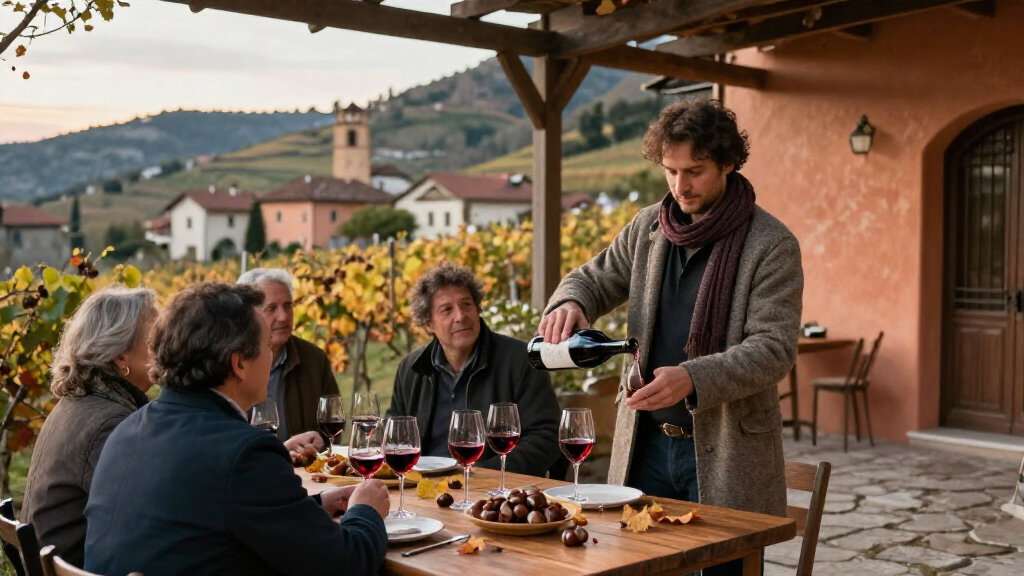
Imagine tasting it at a winery on a crisp afternoon: a glass arrives beside sliced cured meat and a wedge of local cheese. You notice that the wine is easy to drink now, without the weight or promise of long cellaring that you might expect from a wine built to mature. Ask the producer about the grapes, the vintage, and the suggested drinking window; those answers will tell you more than the word “young” alone. They also help set expectations: a fruit-forward wine may be pleasing on its own or with a light plate, but it may not have the structure to balance every rich dish.
Novello and France’s Beaujolais Nouveau share the idea of celebrating an early-release wine, but they belong to different countries and production traditions. That comparison can help you understand the festive timing, but it should not lead you to assume that their rules or flavors are interchangeable. Each bottle reflects its own grapes, region, and winemaking choices. For a traveler, the distinction is useful because it shifts the question from “Is this like Beaujolais?” to “What does this producer’s wine express, and what food does the local table serve with it?”
If you buy a bottle for home, follow the winery’s storage and serving advice and plan to open it while it is young. Novello is generally not a bottle to set aside for several years. Its pleasure is immediate: fruit in the glass while the season’s chestnuts roast or dinner warms on the stove. That makes it a good choice for a near-term meal, but a less suitable souvenir if you want a bottle to save for a future occasion.

Why Goose Appears at Some San Martino Tables
Goose feasts are part of some San Martino traditions because the bird has a place in both local autumn meals and wider European stories about Saint Martin. One familiar legend says Martin hid among geese to avoid being made bishop, though versions differ. The bird also made a substantial meal after the harvest, when communities had reason to gather around hearty food. These explanations overlap: a feast can preserve a story while also reflecting what was practical and nourishing at a particular point in the farming year.
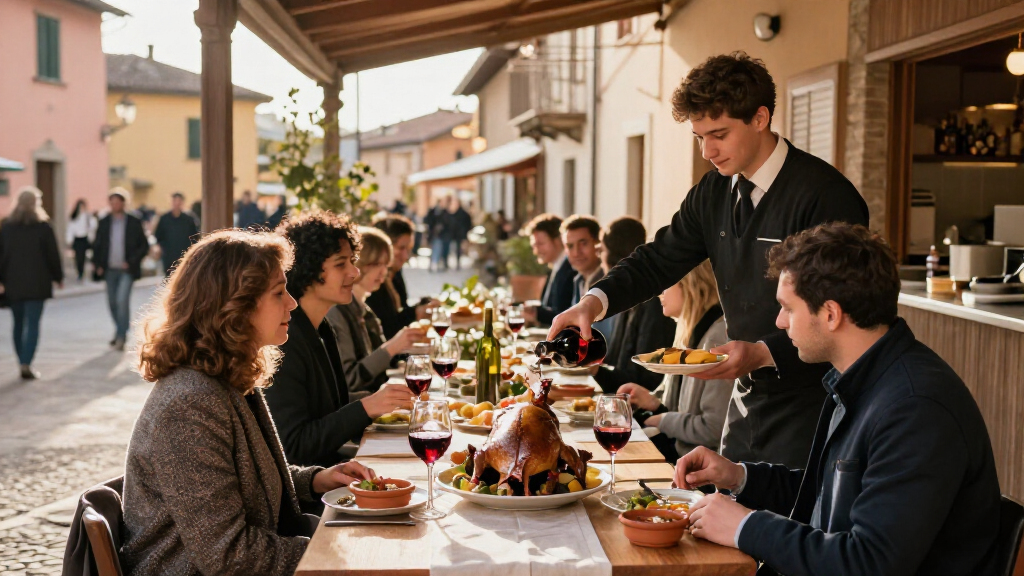
The custom is not universal. A town’s San Martino menu may feature roast goose, while another leans on chestnuts, cured meats, cheeses, or a simple glass of novello. Across parts of Italy and Central Europe, food follows what the place grows, raises, and cooks. That is why a menu from one region should not stand in for the whole country. The difference matters to visitors because the food is a clue to local identity, not a standardized requirement for celebrating the day.
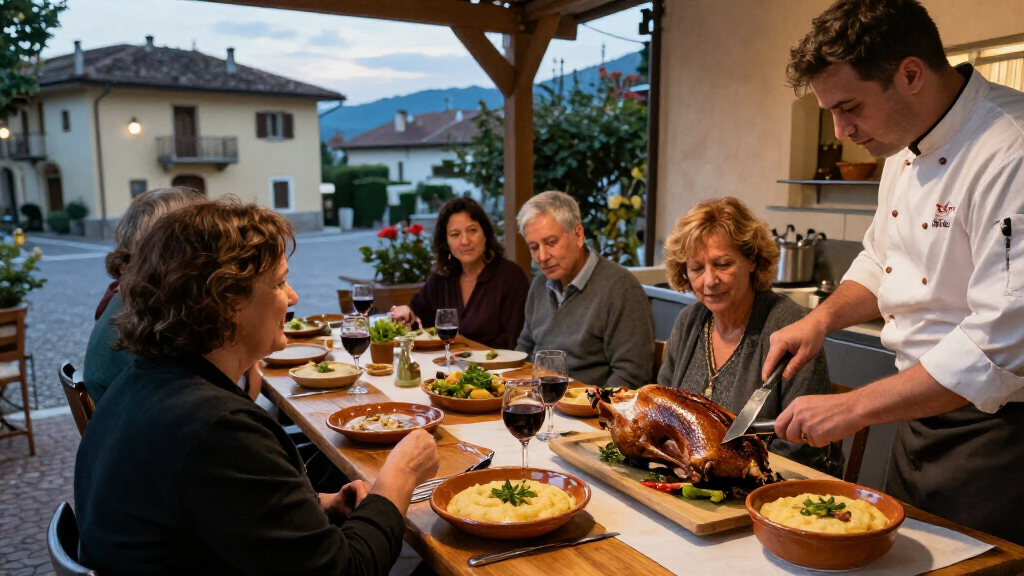
For example, if you are visiting a winery in a town advertising a goose dinner, ask whether the meal is a fixed menu, whether it includes wine, and whether you need to reserve seats together. If the event focuses on chestnuts instead, that can be just as rooted in the local season. A good question for the organizer is, “Which dishes are traditional here this week?” The answer can help you decide whether to book the full meal, attend a tasting only, or leave room to explore another local restaurant.
Goose takes time and care to cook at home, so check a reliable recipe and use a food thermometer for safety. Keep raw poultry separate from ready-to-eat foods, wash hands and surfaces after handling it, and refrigerate leftovers within two hours. The bird’s rich, crisp skin and slow-roasted aroma make a memorable centerpiece, but safe handling belongs in the recipe. Because a whole roast also asks for oven time and a generous number of diners, a smaller autumn meal may be the more practical way to echo the tradition at home.
How to Plan a San Martino Tasting Without Guessing
To plan a San Martino tasting, confirm the event with the winery or municipality, check whether you need to book, and arrange food and transport before you set out. Events are local and can change from year to year; a listing from a previous November may not reflect the current schedule. These checks matter because a tasting, a public celebration, and a ticketed dinner can be advertised under the same seasonal name while offering very different access and costs. Use this short checklist before you travel.
- Confirm the date and venue. Check the current year’s listing and verify the address, start time, and closing time directly with the organizer.
- Ask about reservations and cost. Find out whether tasting slots, set menus, or group seats require advance booking and what the fee covers.
- Check the food plan. Ask whether the menu features goose, chestnuts, cured meats, cheese, or another local dish, and flag allergies or dietary needs.
- Plan your return trip. Look up buses, taxis, designated drivers, or a nearby overnight stay before tasting wine.
- Ask what you will taste. A producer can tell you which new wines are available and how they suggest serving them.
For instance, a tasting may be open to the public during the afternoon while the evening goose dinner requires a reservation and a separate ticket. That distinction can save you from arriving with the wrong expectations, especially if you are traveling between small towns with limited evening transit. The tradeoff is straightforward: a pre-booked dinner gives you a planned seat and meal, while a public tasting may offer more flexibility but less certainty about food or capacity.
Keep the event’s contact details handy on the day. If weather, harvest work, or venue capacity changes the plan, a direct message or call can settle it faster than a general search result. Adults who choose to drink should do so responsibly and avoid driving after tasting. Leaving enough time for transport is part of the itinerary, not an afterthought, particularly when the event ends after local buses stop running.
How Novello, Goose, and Other Autumn Foods Fit Together
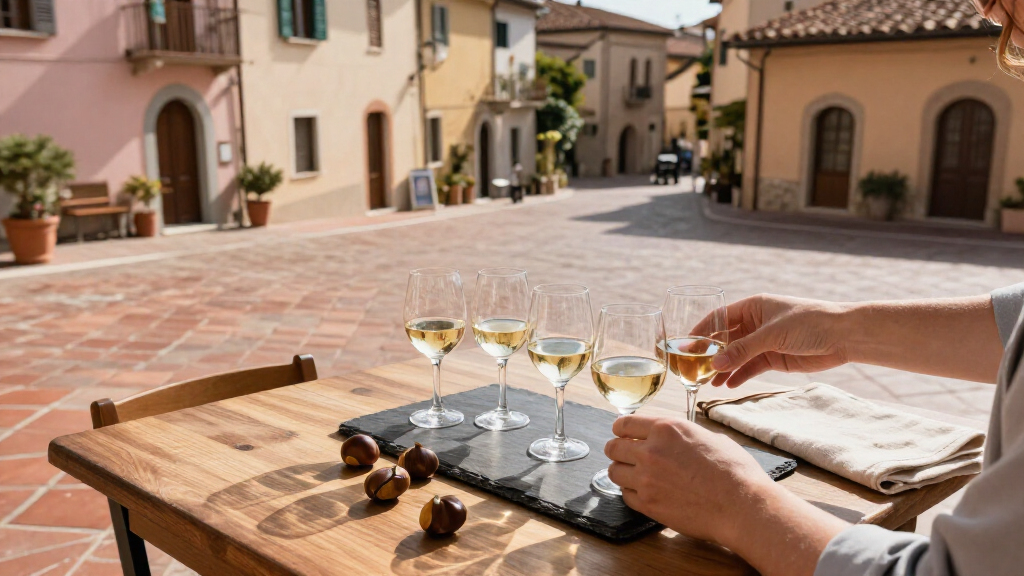
Novello pairs best with the meal in front of you, and local San Martino menus offer a better guide than a single national pairing rule. A light, fruity young wine can sit comfortably beside cured meats, cheeses, roasted chestnuts, or a rich goose dish, depending on the bottle and how the food is prepared. Ask the producer what they serve with their own wine. The balance matters: freshness can lift savory food, while a particularly delicate wine may disappear beside a strongly seasoned or very rich dish.
Think of the pairing as a conversation between the glass and the plate. If roast goose arrives with crisp skin and deep, savory flavor, a fresh young red can bring a bright note to the meal. If your table has roasted chestnuts and aged cheese, try a small pour of novello before ordering another glass; taste first, then decide whether the fruit complements the food or feels too light. A small taste is a low-cost way to learn what works for that specific bottle, and it avoids committing to a full pour based on a general pairing suggestion.
Here is a practical comparison to guide your questions, not a fixed recipe for every region:
| At the table | What to ask or try |
|---|---|
| Roast goose | Ask whether the house novello suits a rich roast, and taste it with a bite before choosing a full pour. |
| Chestnuts | Try them warm with a modest pour; their soft, sweet flavor can make a useful autumn snack. |
| Cured meats and cheeses | Ask which local varieties the winery serves and whether the tasting includes them. |
| Wine-only tasting | Ask for water and a small snack if available, and take time between pours. |
Allergens can vary across a menu, especially with cheese, sauces, or shared platters. Tell the host about food allergies before ordering and ask how the kitchen handles cross-contact. If a dinner includes wine, confirm the menu price and tasting portions so the experience stays comfortable for everyone at your table. Clear answers also help you judge whether the event suits your group’s needs before you commit to a reservation.
What to Bring Home From a San Martino Visit
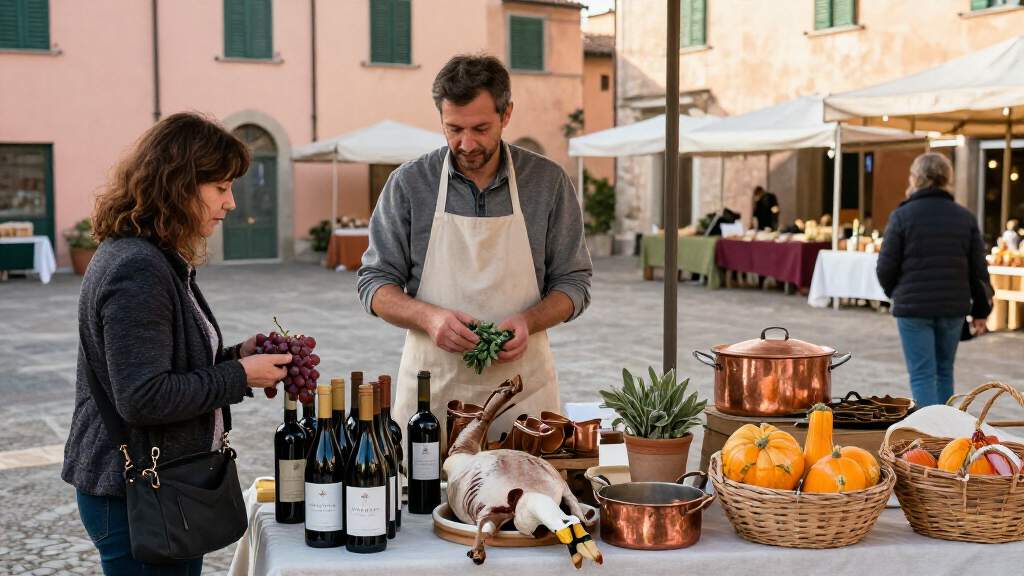
A San Martino visit can give you a taste of a place’s autumn, even if you do not find a formal festival. You might come home with a bottle of novello, a packet of local chestnuts, or a clearer sense of how one town celebrates the season. The best purchase is often the one you can connect to a producer and a place, not a souvenir chosen in a rush. That connection gives the item context and makes it easier to decide whether it is meant for immediate enjoyment, cooking, or longer storage.
When you choose a bottle, ask for the grape variety, production area, vintage, and the producer’s advice on when to drink it. Regional labels such as DOP (Protected Designation of Origin) and IGP (Protected Geographical Indication) have specific meanings when they appear on a product, but not every wine or food will carry either designation. Read the label and ask what it guarantees for that particular bottle or ingredient. A designation can help you understand a product’s geographic link and production rules, but it does not replace tasting or tell you whether you will enjoy its flavor.
For example, after a tasting in Veneto, you could write down the winery’s name and the food served beside the wine, then recreate the pairing at home with a local cheese from your own shop. Store the bottle according to the producer’s instructions and open it while it is still young. If you are flying, check your airline’s liquid and baggage rules before packing wine. Taking notes is a simple way to preserve the part of the experience that cannot travel in a bottle: the producer’s recommendation and the local pairing that gave it meaning.
For a simple meal, warm chestnuts, good bread, and a few slices of cured meat can carry the spirit of a tasting without pretending to reproduce a regional feast. Check product storage instructions, keep chilled foods cold on the way home, and refrigerate perishable items promptly. The point is to bring back one real detail of the visit: a flavor, a place name, or a question worth asking on your next trip. Choosing one or two well-matched items can be more useful than buying several things whose storage or timing you cannot manage.
Frequently Asked Questions
What is vino novello?
Vino novello is a young wine released soon after harvest, usually intended to be enjoyed fresh. Producers and current rules determine its exact timing, so check the bottle or winery information.
Is novello the same as Beaujolais Nouveau?
They are both early-release wines that can be part of seasonal celebrations, but novello is Italian and Beaujolais Nouveau is French. Their grapes, production traditions, and rules differ.
Can I buy or taste novello on November 11?
Some tastings take place around San Martino, but not every wine is released on November 11 and events vary by producer. Check the winery or organizer for the current date, availability, and booking requirements.
Why do some people eat goose on Saint Martin’s Day?
The custom is linked to a legend that Martin hid among geese and to the bird’s role in hearty autumn feasts. The story has different versions, and goose is not part of every local celebration.
Does novello wine age well?
Novello is generally made for early drinking rather than long cellaring. Follow the producer’s advice and enjoy the bottle while it is young.
Do San Martino tastings require reservations?
Some winery tastings and set-menu dinners require advance booking, while other events may welcome walk-ins. Confirm the venue, schedule, cost, food, and public access directly with the organizer.
Conclusion
Use November 11 as a doorway into local Italy, not a promise of one national celebration. Check the current event details, ask what the community pours and cooks, and let the place guide your glass and plate.
Then take home one vivid detail: the bright fruit of a young wine, the crackle of chestnut shells, or the scent of a roast drifting through a cold evening. That is San Martino at its best: a small taste of winter arriving.