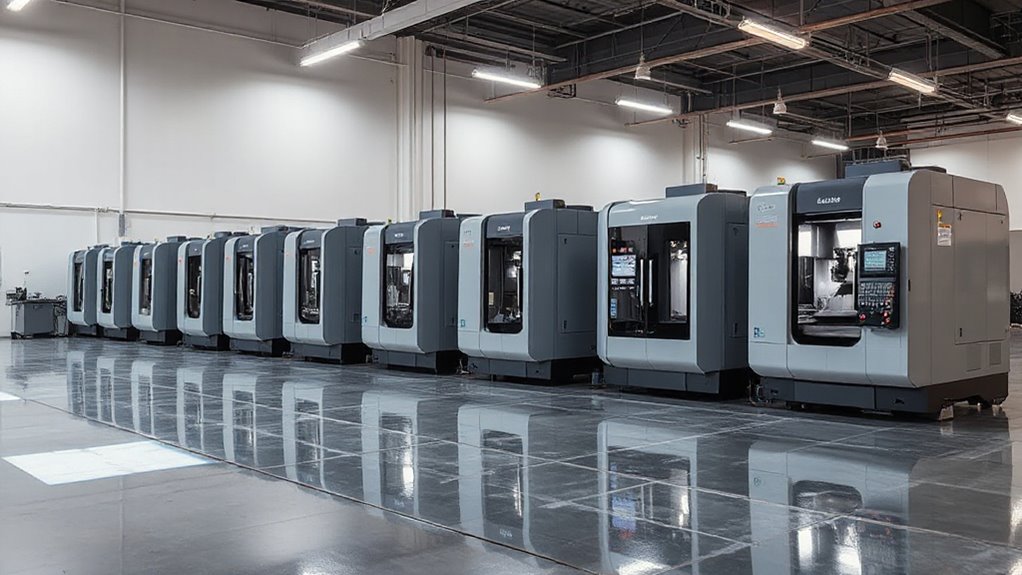

For a versatile CNC machine that balances work area and cutting power, I’d start with the SainSmart Genmitsu 4040-PRO MAX; the enclosed Carvera Air stands out for compact, multi-material work, while the AnoleX 4030-Evo Ultra 2 offers a larger router setup. These machines differ most in working area, enclosure, spindle power, and how much setup and maintenance they ask of you. A small desktop router can suit engraving and light-duty projects, while more demanding cuts call for a stiffer frame and a capable spindle. Enclosed designs can help contain chips, but they take more bench space and may limit access. Read on for how all 15 options compare and which buyer each one best fits.

Get kitchen staples and gadgets delivered free with Prime
- Fast, free delivery on millions of items
- Prime Video, Amazon Music and more included
- Member-only deals all year
Key Takeaways
- Work area and rigidity matter together: The 4040-PRO MAX and 4030-Evo models offer more room than 3018-class machines, but larger projects also benefit from a frame that can handle cutting forces.
- The Carvera Air models trade open access for containment and tooling convenience: Their enclosure and quick tool changer suit repeatable desktop work, while the open routers are easier to access and adapt.
- Some product names describe closely related configurations: The Genmitsu 4040-PRO MAX appears in two listings, and the Carvera Air appears in three; buyers should compare included kits and accessories before choosing.
- Motor and spindle details point to different workloads: Closed-loop stepper setups on the FoxAlien Masuter 3S and XE-Ultra 8080 address motion control, while router and spindle choices affect cutting capability and tooling.
- Small-format routers favor learning and light jobs: TTC3018 Pro versions can fit a modest workspace, but their smaller work area makes them a different proposition from the 4030 and 4040 machines.
| SainSmart Genmitsu 4040-PRO MAX CNC Router with 710W Trimmer |  | Best for Taller Stock | Router power: 710 W | Pass height: 100 mm | Guide structure: X- and Z-axis linear guides | VIEW ON AMAZON | See Our Full Breakdown |
| Carvera Air Desktop CNC Machine with 4th Axis, Compact Enclosed Mini CNC Router Mill, Quick Tool Changer, High Precision, Supports Metal and Wood |  | Best for 4th-Axis Detail Work | Work area diameter: 3.6 in | Work area length: 7.9 in | Spindle speed: 0–13,000 RPM | VIEW ON AMAZON | See Our Full Breakdown |
| FoxAlien Masuter Pro 3-Axis CNC Router |  | Best Upgradeable Work Area | Axes: 3 | Frame material: Aluminum | Work area: 400 × 400 × 60 mm (15.75 × 15.75 × 2.36 in) | VIEW ON AMAZON | See Our Full Breakdown |
| TTC3018 Pro Desktop CNC Router Machine |  | Best for Learning CNC Basics | Working area: 300 × 180 × 40 mm | Positioning accuracy: 0.1 mm | Spindle motor: 775 motor, 7,000–9,000 RPM | VIEW ON AMAZON | See Our Full Breakdown |
| AnoleX 4030-Evo Ultra 2 CNC Router Machine with 800W Trim Router |  | Best for Rigid, Connected Routing | Router power: 800 W | Router speed: 8,000–24,000 RPM, 6 settings | Axes and motion: X, Y, and Z with dual HGH-15 linear rails and 1204 ball screws | VIEW ON AMAZON | See Our Full Breakdown |
| MAKERA Carvera Air Desktop CNC Machine – Enclosed Mini Mill with CAM |  | Best Enclosed CNC for Multi-Step Desktop Projects | Configuration: Standard 3-axis | Work area: 11.8 x 7.9 x 5.1 in | Machine footprint: 19.7 x 17.7 x 17.7 in, fully enclosed | VIEW ON AMAZON | See Our Full Breakdown |
| TTC3018 Pro CNC Router Machine, Desktop 3-Axis Engraving and Milling Machine for Wood, Acrylic, MDF, Nylon |  | Best for Budget-Conscious DIY and Learning | Working area: 300 x 180 x 40 mm | Z-axis accuracy: 0.1 mm | Weight: 15 lb | VIEW ON AMAZON | See Our Full Breakdown |
| Carvera Air Desktop CNC Machine with 4th Axis & PCB Kit (MAKERA Enclosed Mini Mill) |  | Best for Rotary and PCB Desktop Work | Model: CA1 | Spindle speed: 0–13,000 RPM | Spindle runout: < 0.01 mm | VIEW ON AMAZON | See Our Full Breakdown |
| FoxAlien Masuter 3S CNC Router Machine with NEMA 23 Closed-Loop Stepper Motor and 400W Spindle |  | Best Expandable Mid-Size Router | Working area: 15.75 x 15.75 x 3.74 in | Spindle power: 400 W | Maximum rotational speed: 10,000 RPM | VIEW ON AMAZON | See Our Full Breakdown |
| FoxAlien XE-Ultra 8080 CNC Router Machine with NEMA 23 Closed-Loop Stepper Motors |  | Best for Large-Format Benchtop Work | Working area: 33 x 33 x 4.72 in | Pass height: 5.3 in | Ball screws: 16 mm XY, 12 mm Z | VIEW ON AMAZON | See Our Full Breakdown |
| CNC Router Machine 3030-Evo Max with 800W Trim Router |  | Best for Light-Duty Metal Cutting | Router power: 800 W | Router speed: 8,000–24,000 RPM; 6 settings | Collet: ER11, 1/8 in | VIEW ON AMAZON | See Our Full Breakdown |
| Twotrees TTC450 Pro All-Metal CNC Router Machine with NEMA 57 Stepper Motor |  | Best for Large Signage on a Starter Budget | Working area: 460 × 460 × 80 mm | Positioning accuracy: 0.0025 mm | Stepper motor: NEMA 57 | VIEW ON AMAZON | See Our Full Breakdown |
| Genmitsu CNC Router Machine 4040-PRO MAX with 710W Trimmer and Linear Rail |  | Best Value for Linear-Rail Routing | Work area: 410 × 405 × 77 mm | Router power: 710 W | Control: GRBL | VIEW ON AMAZON | See Our Full Breakdown |
| Genmitsu PROVerXL 4030S CNC Router Machine with 710W Spindle, Upgraded 3-Axis Desktop CNC Milling Machine for Wood, Metal, Acrylic, High Precision Linear Rails, 130mm Z-Height, Wireless App Control |  | Best for Tall Workpieces | Spindle power: 710 W | Maximum Z-height: 130 mm | Repeatability: ±0.05 mm | VIEW ON AMAZON | See Our Full Breakdown |
| FoxAlien Masuter Pro MAX Desktop CNC Router |  | Best for Oversized Desktop Projects | Spindle power: 500 W brushless | Work area: 600 × 600 mm (23.6 × 23.6 in) | Z-axis pass height: 100 mm (3.94 in) | VIEW ON AMAZON | See Our Full Breakdown |
More Details on Our Top Picks
SainSmart Genmitsu 4040-PRO MAX CNC Router with 710W Trimmer
The 100 mm pass height gives this Genmitsu a useful advantage when a project needs room for thicker stock or taller fixtures. Its 710W digital-display trimmer and X- and Z-axis linear guides suit wood routing and engraving where stable motion matters. Compared with the FoxAlien Masuter Pro, which offers a defined 400 × 400 mm work area and spindle upgrade options, this model’s listed specs emphasize vertical clearance and clamping flexibility instead. The reinforced MDF spoilboard with aluminum T-track helps secure varied workpieces, though buyers should account for MDF wear over time. The product data gives no dimensions or weight, so I can’t judge how easily it will fit a particular bench. Choose it for taller setups; skip it if footprint and portability are deciding factors.
Pros:- 100 mm pass height accommodates taller materials and fixtures
- X- and Z-axis linear guides support stable motion
- Reinforced MDF spoilboard helps resist sagging
- Integrated aluminum T-track allows flexible clamping
Cons:- Machine dimensions and weight are not provided
- MDF spoilboard may need replacement after sustained cutting
Best for: Woodworkers and makers who need extra clearance for taller stock and flexible T-track clamping.
Not ideal for: Buyers who need confirmed machine dimensions or weight before planning a compact workspace.
- Router power:710 W
- Pass height:100 mm
- Guide structure:X- and Z-axis linear guides
- Spoilboard:Reinforced MDF with integrated aluminum T-track
- Machine type:CNC router
- Trimmer:Digital-display trimmer
Our verdict“Pick this Genmitsu if vertical clearance and adaptable clamping matter more than a fully specified footprint.”
Carvera Air Desktop CNC Machine with 4th Axis, Compact Enclosed Mini CNC Router Mill, Quick Tool Changer, High Precision, Supports Metal and Wood
The Carvera Air is the specialist in this group for small, multi-sided parts: its fourth axis rotates a workpiece for machining around more than one face, while the quick tool changer reduces pauses between operations. Auto-probing and leveling can simplify setup when stock surfaces are uneven, and the listed spindle runout below 0.01 mm targets fine detail. Compared with the FoxAlien Masuter Pro, whose 400 × 400 mm bed favors broader flat work, the Carvera Air trades usable area for enclosed desktop milling and rotary capability. Its work area is only 3.6 inches in diameter by 7.9 inches long, so larger panels and parts won’t fit. It also asks more of the operator than a basic router: expect to learn setup and CAD/CAM workflows before complex cuts become routine.
Pros:- Fourth axis supports multi-sided and rotary machining
- Quick tool changer speeds up multi-tool jobs
- Auto-probing and leveling assist with accurate setup
- Wi-Fi and USB connectivity with several CAD/CAM software options
Cons:- Small work area restricts part size
- Setup and operation require technical familiarity
- Multiple software and machining features may be excessive for casual engraving
Best for: Makers machining small metal, wood, or plastic parts that benefit from rotary, multi-sided work and automatic setup aids.
Not ideal for: Woodworkers cutting large panels or beginners seeking a simple, spacious router bed.
- Work area diameter:3.6 in
- Work area length:7.9 in
- Spindle speed:0–13,000 RPM
- Spindle runout:<0.01 mm
- Connectivity:Wi-Fi, USB
- Supported materials:Metal, wood, plastics
- Supported software:Makera CAM, Fusion360, SolidWorks, VCarve Pro
Our verdict“Choose the Carvera Air for compact, detailed rotary work if its small work envelope matches your projects.”
FoxAlien Masuter Pro 3-Axis CNC Router
The Masuter Pro’s 400 × 400 mm work area makes it a more practical choice for broad signs and panels than the compact TTC3018 Pro, whose bed measures 300 × 180 mm. Its aluminum frame and linear-rail Z-axis provide a sturdier foundation, while pre-wired components and a dust-resistant controller with emergency stop and home buttons can make setup less involved than building from a parts kit. The included spindle clamps support 60W and 300W spindles, giving owners a clear route to a stronger cutting setup as projects grow. That flexibility has limits: the 69 mm clamp must be bought separately, and larger spindle or router upgrades are optional. The listed 60 mm Z travel also leaves less vertical room than the Genmitsu 4040-PRO MAX’s 100 mm pass height.
Pros:- 400 × 400 mm work area suits larger flat projects
- All-aluminum frame with linear-rail Z-axis
- Pre-wired components and step-by-step manual support assembly
- Dust-resistant controller includes emergency stop and home buttons
Cons:- 69 mm spindle clamp is sold separately
- Higher-capacity spindle and router upgrades are optional
- 60 mm work-area height is below the Genmitsu 4040-PRO MAX’s listed pass height
Best for: Makers who want a mid-size aluminum router for panels and expect to upgrade spindle capacity later.
Not ideal for: Buyers who need high vertical clearance or want a larger spindle included in the initial setup.
- Axes:3
- Frame material:Aluminum
- Work area:400 × 400 × 60 mm (15.75 × 15.75 × 2.36 in)
- Spindle compatibility:60W and 300W spindles
- Included spindle clamps:52 mm and 65 mm
- Maximum rotational speed:10,000 RPM
- Item weight:13 kg
- Dimensions:26 × 12.6 in (W × H)
Our verdict“The Masuter Pro suits buyers who want a solid mid-size bed and a staged path to spindle upgrades.”
TTC3018 Pro Desktop CNC Router Machine
The TTC3018 Pro is a compact learning machine whose 40-plus assembly components make the build itself part of the experience. Its 300 × 180 mm work area fits small engraving and milling exercises, and the all-metal Z-axis with backlash-eliminating lead screws is specified for 0.1 mm positioning accuracy. A 32-bit GRBL board and USB connection give learners a direct introduction to common CNC control workflows. Compared with the FoxAlien Masuter Pro, it has a much smaller bed and is less suited to sizeable signs or repeated production, but its 15 lb weight and bundled cutters, ER11 collet, and tools make it easier to place and start as a desk project. Assembly and USB-only control are real constraints, so it is a poor fit for buyers who want a ready-to-run or wireless machine.
Pros:- Compact 15 lb machine fits a desk or small work area
- All-metal Z-axis and lead screws specify 0.1 mm positioning accuracy
- Includes 10 cutters, an ER11 collet, and tools
- Assembly provides a hands-on introduction to CNC components
Cons:- 300 × 180 mm work area limits project size
- USB is the only listed connection method
- Assembly of more than 40 components may challenge first-time builders
Best for: Students, educators, and hobbyists who want a compact machine for learning CNC assembly and GRBL basics.
Not ideal for: Makers cutting larger workpieces or operators who need wireless control and minimal setup.
- Working area:300 × 180 × 40 mm
- Positioning accuracy:0.1 mm
- Spindle motor:775 motor, 7,000–9,000 RPM
- Collet:ER11 (0.5–7 mm)
- Control board:32-bit GRBL
- Connection:USB wired
- Weight:15 lb
- Dimensions:420 × 355 × 280 mm
Our verdict“Choose the TTC3018 Pro as a compact CNC learning project for small cuts and hands-on assembly.”
AnoleX 4030-Evo Ultra 2 CNC Router Machine with 800W Trim Router
The AnoleX stands out for its dual linear rails and ball screws on all three axes, paired with NEMA 23 motors and an 800W router. That motion system is aimed at more controlled cutting than the smaller, lighter TTC3018 Pro, while the six router speed settings cover a broad range of jobs. Wi-Fi control and GRBL compatibility let buyers choose among a PC, phone, or tablet and familiar software such as UGS, Fusion 360, and VCarve. Its listed repeatability is ±0.005 mm, with aluminum cutting and engraving accuracy up to ±0.02 mm. The tradeoffs are practical: the 38 kg frame is heavy to reposition, and speed changes are manual. Compared with the Genmitsu 4040-PRO MAX, it adds wireless control and an 800W router, but its published dimensions and weight call for a dedicated bench.
Pros:- Dual linear rails and ball screws on X, Y, and Z
- 800W trim router offers six speed settings from 8,000 to 24,000 RPM
- Wi-Fi control works with PC, smartphone, or tablet
- Includes limit switches, emergency stop, and Z probe
Cons:- 38 kg weight makes repositioning difficult
- Router speed must be adjusted manually
- Requires a substantial, stable workspace
Best for: Experienced makers who want a rigid, Wi-Fi-capable router for repeated cutting and aluminum engraving.
Not ideal for: Users who need a portable machine, automated speed adjustment, or an easy-to-move bench setup.
- Router power:800 W
- Router speed:8,000–24,000 RPM, 6 settings
- Axes and motion:X, Y, and Z with dual HGH-15 linear rails and 1204 ball screws
- Stepper motors:NEMA 23, 2.8 A, 1.2 N·m torque
- Repeatability:±0.005 mm
- Aluminum cutting/engraving accuracy:Up to ±0.02 mm
- Connectivity:Wi-Fi; PC, smartphone, or tablet control
- Weight:38 kg
- Dimensions:24.8 in W × 20.47 in H
Our verdict“Pick the AnoleX for a rigid, connected router if you have room for its heavy frame and can manage manual speed changes.”
MAKERA Carvera Air Desktop CNC Machine – Enclosed Mini Mill with CAM
The standard Carvera Air suits makers who want a contained, software-connected workspace for small milling, carving, and engraving jobs. Its 10-second automatic tool changer can shorten projects that need several cutters, while probing and surface leveling help set up repeatable work without relying on manual alignment alone. Compared with the TTC3018 Pro, it adds an enclosure, wireless control, and broader operating-system support, though the TTC3018 is a simpler, lighter fit for buyers comfortable with USB control and assembly. The Carvera Air’s 11.8-by-7.9-inch work area sets a firm size limit, and an enclosure can make oversized stock awkward to load. I’d choose it for contained, varied desktop work, not for large panels or parts.
Pros:- Enclosed footprint helps contain dust and reduces exposure around the cutting area.
- Automatic tool changes speed up jobs that use multiple cutters.
- Automatic probing and surface leveling simplify setup for repeatable work.
- Wi-Fi and USB connectivity plus support for several operating systems and CAD/CAM tools.
Cons:- The 11.8-by-7.9-inch work area limits the size of parts.
- Loading oversized workpieces into the enclosure can be difficult.
Best for: Makers and small workshops doing varied, small-format jobs who want an enclosure, automatic tool changes, and cross-platform software.
Not ideal for: Buyers milling large panels or oversized stock, since the compact enclosed work area restricts part size and access.
- Configuration:Standard 3-axis
- Work area:11.8 x 7.9 x 5.1 in
- Machine footprint:19.7 x 17.7 x 17.7 in, fully enclosed
- Spindle runout:< 0.0004 in
- Motor resolution:0.0002 in
- Tool change time:10 seconds
- Connectivity:Wi-Fi, USB
- Compatible materials:Wood, MDF, acrylic, carbon fiber, aluminum, brass
Our verdict“Choose the Carvera Air for small, multi-step jobs where enclosure and automated setup matter more than work area.”
TTC3018 Pro CNC Router Machine, Desktop 3-Axis Engraving and Milling Machine for Wood, Acrylic, MDF, Nylon
The TTC3018 Pro takes a straightforward route to desktop CNC work: a compact, all-metal frame, USB control, and a set of cutters give hands-on users a relatively simple starting point. Its 300-by-180-mm bed is smaller than the FoxAlien Masuter 3S, so it suits plaques, small components, and learning exercises better than broader woodworking jobs. The listed 0.1-mm Z-axis accuracy is aimed at detailed engraving, while the GRBL control board fits users willing to work through setup and compatible software. That also defines its tradeoff: it lacks wireless control and requires assembly and some technical comfort. I’d pick it over the enclosed Carvera Air when a basic, open machine and USB workflow are the priority, but skip it if automated setup or a larger bed matters.
Pros:- All-metal construction in a compact desktop format.
- 0.1-mm Z-axis accuracy is suited to detailed engraving tasks.
- Includes 10 cutters and an ER11 collet.
- GRBL and USB control suit users building a hands-on CNC workflow.
Cons:- USB is the only listed connection, with no wireless control.
- The 300-by-180-mm work area constrains part size.
- Assembly and technical setup are required.
Best for: DIY learners, educators, and small makers comfortable assembling a machine and using a wired GRBL workflow for small parts.
Not ideal for: Buyers who want a ready-to-run enclosed machine, wireless control, or room for larger workpieces.
- Working area:300 x 180 x 40 mm
- Z-axis accuracy:0.1 mm
- Weight:15 lb
- Machine size:420 x 355 x 280 mm
- Control board:GRBL, USB connection
- Spindle motor:775, 7,000–9,000 RPM
- Included cutters:10 cutters
- Collet:ER11, 0.5–7 mm
Our verdict“Choose the TTC3018 Pro to learn CNC on small projects with a compact wired machine and included cutters.”
Carvera Air Desktop CNC Machine with 4th Axis & PCB Kit (MAKERA Enclosed Mini Mill)
This Carvera Air bundle is the most specialized pick here: it combines an enclosed desktop mill with a 4th axis and a PCB fabrication pack. The rotary work area—3.6 inches in diameter by 7.9 inches long—opens up cylindrical projects that the standard Carvera Air cannot handle with its listed three-axis configuration. Both versions share the quick tool changer, probing and leveling, and Wi-Fi or USB control, but this bundle is better matched to users who will actually use rotary machining or PCB work. Its compact size still limits stock dimensions, and the supplied specs do not list the standard model’s exact rectangular work area. I’d pay attention to that distinction when planning parts: the added axis expands the kinds of shapes possible, not the machine’s overall scale.
Pros:- 4th-axis version supports rotary and 3D cylindrical machining.
- Includes a PCB Fabrication Pack.
- Automatic tool changing, probing, and leveling support multi-step, repeatable jobs.
- Wi-Fi and USB connectivity with CAD/CAM integrations and broad controller OS support.
Cons:- Desktop work envelope restricts the size of stock and finished parts.
- The added rotary and PCB capabilities may go unused for buyers focused on flat woodworking.
- The listed rotary work area does not describe the full rectangular work area.
Best for: Electronics makers and desktop machinists who need PCB fabrication support and want to machine cylindrical parts with a rotary axis.
Not ideal for: Woodworkers focused on large flat panels or buyers who have no use for rotary machining or PCB work.
- Model:CA1
- Spindle speed:0–13,000 RPM
- Spindle runout:< 0.01 mm
- 4th-axis rotary work area:3.6 in diameter x 7.9 in length (9.2 x 20 cm)
- Tool change time:10 seconds
- Connectivity:Wi-Fi, USB
- Software integration:Makera CAM, Fusion360, SolidWorks, VCarve Pro
- Included:4th-axis CNC machine, accessory kit, tool kit, material kit, PCB Fabrication Pack
Our verdict“Choose this Carvera Air bundle if rotary parts or PCB fabrication are central to your desktop CNC work.”
FoxAlien Masuter 3S CNC Router Machine with NEMA 23 Closed-Loop Stepper Motor and 400W Spindle
The FoxAlien Masuter 3S is a more open, expandable choice for buyers who need a larger bed than the desktop Carvera Air models provide. Its 15.75-inch-square work area and closed-loop NEMA 23 motors suit wood, plastic, and soft-metal jobs where maintaining position matters. The 400W spindle and stated 0.05-mm engraving precision target capable hobby and small-shop work, while optional extension and rotary kits let owners add capacity or cylindrical carving later. Those additions are separate, and the machine’s 26.5-kg weight makes it less convenient to move than the 15-pound TTC3018 Pro. Material limits matter too: the listed capability reaches soft metals such as aluminum, not steel or other hard metals. I’d favor it for a growing workshop that values expandability over enclosure.
Pros:- 15.75-by-15.75-inch working area accommodates larger pieces than the desktop Carvera Air.
- Closed-loop motors with 2.2 Nm torque help maintain motion accuracy.
- Supports optional rotary carving and an X-axis extension.
- Upgradeable spindle options give owners room to adapt the machine.
Cons:- Rotary module and extension kit are separate purchases.
- At 26.5 kg, it is less portable than compact desktop routers.
- The listed material capability is limited to soft metals rather than steel or hard metals.
Best for: Hobbyists and small-shop users cutting wood, plastics, or aluminum who want a larger bed and a path to rotary or extension upgrades.
Not ideal for: Buyers seeking a portable enclosed mill or planning to machine steel and other hard metals.
- Working area:15.75 x 15.75 x 3.74 in
- Spindle power:400 W
- Maximum rotational speed:10,000 RPM
- Stepper motors:NEMA 23-76 closed-loop, 2.2 Nm torque
- Maximum rapid speed:10,000 mm/min
- Engraving precision:0.05 mm
- Weight:26.5 kg
- Voltage:110 V
Our verdict“Choose the Masuter 3S for an expandable open router that can handle larger wood and soft-metal projects.”
FoxAlien XE-Ultra 8080 CNC Router Machine with NEMA 23 Closed-Loop Stepper Motors
For large stock and ambitious woodworking layouts, the FoxAlien XE-Ultra 8080 offers a 33-by-33-inch work area that dwarfs the Masuter 3S and the enclosed Carvera Air machines. Its ball screws, HG-15 linear rails, and heavy aluminum frame are designed to support a more rigid machine structure across that broad bed; closed-loop motors add step-loss protection. The scale comes with practical costs: at 40 kg, placement and moving require planning, and the package does not include a spindle. Buyers must choose a compatible router or spindle from the supported ecosystem. Its listed maximum speed is also lower than the Masuter 3S’s rapid speed, so this is a capacity-and-structure pick rather than a compact, quick-to-reposition desktop mill. I’d shortlist it for large panels and carbon-fiber or aluminum work within its stated capabilities.
Pros:- 33-by-33-inch work area accommodates stock too large for the Masuter 3S.
- Ball screws and HG-15 linear rails are specified across the axes.
- Closed-loop motors provide step-loss protection.
- Spindle ecosystem supports compatible routers, VFD spindles, and engraving modules.
Cons:- Spindle is sold separately, adding a required setup choice.
- The 40-kg machine is difficult to move and needs a suitable bench.
- 4th-axis support is not yet available; the control box has a reserved port.
Best for: Woodworkers and fabricators who need a large benchtop work area and are prepared to source a compatible spindle separately.
Not ideal for: Buyers with limited bench space, those needing a portable machine, or anyone expecting a spindle in the package.
- Working area:33 x 33 x 4.72 in
- Pass height:5.3 in
- Ball screws:16 mm XY, 12 mm Z
- Linear rails:HG-15 on all axes
- Stepper motors:NEMA 23 closed-loop, 2.6 Nm torque
- Maximum speed:5,000 mm/min
- Frame:46 x 80 mm heavy-duty aluminum
- Weight:40 kg
Our verdict“Choose the XE-Ultra 8080 for large-format benchtop work if you can accommodate its weight and select a spindle separately.”
CNC Router Machine 3030-Evo Max with 800W Trim Router
The 3030-Evo Max pairs an 800W trim router with dual linear guides on all three axes, giving it a stronger case for light aluminum or copper work than the Twotrees TTC450 Pro and its 80W spindle. That extra cutting power also suits wood, acrylic, and MDF, while the compact format is easier to fit into a small workshop than the FoxAlien Masuter Pro MAX. Wi-Fi control and GRBL compatibility offer flexible ways to run jobs, and the included limit switches, emergency stop, and Z probe add useful setup tools. The tradeoff is that this remains a light-duty machine, and changing router speed requires the manual dial. Buyers should also account for separately sold upgrades if they want ball screws, different motors, or a spindle change.
Pros:- 800W trim router supports light-duty work across wood, acrylic, MDF, aluminum, and copper.
- Dual linear guides on each axis provide a rigid all-metal motion system.
- Wi-Fi control works through the ESP3D Web UI with GRBL-compatible software.
- Includes limit switches, an emergency stop, and a Z probe.
Cons:- Specified for light-duty cutting, which limits its fit for demanding production work.
- Router speed changes require manual adjustment at the dial.
- Ball screws, motors, spindle, and table upgrades may require separate purchases.
Best for: Makers with limited bench space who want to cut wood and try light aluminum or copper projects.
Not ideal for: Shops planning heavy metal milling or automated speed changes, since the machine is described for light-duty work and router speed is set manually.
- Router power:800 W
- Router speed:8,000–24,000 RPM; 6 settings
- Collet:ER11, 1/8 in
- Repeatability accuracy:±0.01 mm
- Linear guides:Dual MGN-15 guides on X, Y, and Z axes
- Lead screws:T8
- Firmware and connectivity:GRBL 1.3a; Wi-Fi via ESP3D Web UI
- Compatible operating systems:Windows, Linux, macOS
Our verdict“Choose the 3030-Evo Max for compact, light-duty cutting that needs more router power than the Twotrees TTC450 Pro provides.”
Twotrees TTC450 Pro All-Metal CNC Router Machine with NEMA 57 Stepper Motor
The 460 × 460 mm work area gives the TTC450 Pro room for signage and furniture panels that exceed the 3030-Evo Max’s compact footprint. Its all-metal frame, NEMA 57 stepper, and 3.5-inch touchscreen make it a feature-rich entry into larger desktop CNC work, and the included tools and clamping plates help get initial projects underway. GRBL and broad software compatibility also suit makers who want to work across Windows, macOS, or Linux. The main compromise is its 80W brushed spindle: although the listing names aluminum and stainless steel, that power is a poor match for heavy metal cutting. Compared with the Genmitsu PROVerXL 4030S, it offers a larger listed work area but lacks the 710W spindle and 130mm Z-height. Windows 11 users may also need a CH341 driver workaround.
Pros:- 460 × 460 mm work area accommodates larger signs and panels.
- All-metal aluminum alloy and stainless steel frame with dual limit switches.
- GRBL works with Windows, macOS, Linux, and several listed design programs.
- Includes cutting tools, clamping plates, and test materials.
Cons:- The 80W brushed spindle limits heavy-duty metal cutting.
- Assembly is required before use.
- Windows 11 users may need a CH341 driver workaround.
Best for: Hobbyists making large wood signs or panel projects who value a broad work area and included starter accessories.
Not ideal for: Buyers focused on sustained metal cutting or straightforward Windows 11 setup, given the 80W spindle and reported driver workaround.
- Working area:460 × 460 × 80 mm
- Positioning accuracy:0.0025 mm
- Stepper motor:NEMA 57
- Spindle motor:775 brushed, 80 W
- Control system:GRBL open-source control
- Display:3.5-inch IPS capacitive touchscreen
- Weight:20.5 kg
- Expansion ports:4th-axis rotary, laser module, and 500W spindle speed control
Our verdict“Pick the TTC450 Pro for a generous sign-making area and starter accessories, provided its low-power spindle fits your materials.”
Genmitsu CNC Router Machine 4040-PRO MAX with 710W Trimmer and Linear Rail
The 4040-PRO MAX combines a 710W trimmer and linear rails in a mid-sized work area, making it a practical step up from smaller desktop engravers for wood, acrylic, and lighter cutting jobs. Compared with the Twotrees TTC450 Pro, its more powerful trimmer is the stronger fit when cutting performance matters more than an onboard touchscreen or a supplied accessory bundle. Its GRBL control and wireless support leave room for familiar workflows, while options such as a Y-axis extension and fourth-axis rotary can broaden the kinds of jobs it handles. The 410 × 405 mm work area still limits large panels, and the description flags setup as technically involved. Linear rails also need maintenance, so this pick suits owners willing to handle machine setup and upkeep rather than buyers seeking a ready-to-run appliance.
Pros:- 710W trimmer offers more cutting power than the TTC450 Pro’s 80W spindle.
- Linear-rail design is intended to improve motion stability and precision.
- Wireless control support adds flexibility to job operation.
- Y-axis extension and 4th-axis rotary options expand project possibilities.
Cons:- Setup may require technical knowledge.
- The 410 × 405 mm work area is limiting for larger projects.
- Linear rails require ongoing maintenance.
Best for: DIY makers comfortable with CNC setup who want a 710W trimmer and linear-rail motion for mid-sized projects.
Not ideal for: Beginners who want minimal assembly or shops needing to machine oversized panels without an extension.
- Work area:410 × 405 × 77 mm
- Router power:710 W
- Control:GRBL
- X-axis motion:Linear rails with lead screw
- Compatible accessories:Y-axis extension, 4th-axis rotary, dust shoe
- Wireless control:Supported
Our verdict“Choose this 4040-PRO MAX if you want linear rails and a 710W trimmer in a moderate footprint and can manage setup and upkeep.”
Genmitsu PROVerXL 4030S CNC Router Machine with 710W Spindle, Upgraded 3-Axis Desktop CNC Milling Machine for Wood, Metal, Acrylic, High Precision Linear Rails, 130mm Z-Height, Wireless App Control
A 130mm Z-height is the PROVerXL 4030S’s clearest advantage: it can accommodate taller stock than the 77mm-deep work area listed for the Genmitsu 4040-PRO MAX. The 710W spindle and linear guides put it in the same general power class as that model, while the pre-assembled structure reduces the initial build burden for buyers who do not want a complex setup. A 32-bit controller and listed operating speed add to its workshop-oriented spec sheet. The tradeoffs are practical: wireless app control requires a separately sold Wi-Fi module, and the listing’s ±0.05 mm repeatability figure is less precise than the 3030-Evo Max’s stated ±0.01 mm. Some setup remains, so it is not a fully plug-and-play choice despite the pre-assembly.
Pros:- 130mm Z-height accepts taller workpieces than the 4040-PRO MAX’s listed 77mm work height.
- 710W spindle supports a range of wood, metal, and acrylic work.
- Pre-assembled construction reduces setup compared with a fully assembled-from-parts machine.
- 32-bit controller and listed 2,000–5,000 mm/min operating speed.
Cons:- Wi-Fi module for app control is sold separately.
- Some setup is still required after delivery.
- Its stated ±0.05 mm repeatability is looser than the 3030-Evo Max’s ±0.01 mm figure.
Best for: Makers machining taller wood, acrylic, or metal stock who want a 710W spindle and less assembly than a full kit.
Not ideal for: Buyers who need wireless control included or prioritize the tightest stated repeatability over extra Z clearance.
- Spindle power:710 W
- Maximum Z-height:130 mm
- Repeatability:±0.05 mm
- Operation speed:2,000–5,000 mm/min
- Noise level:Under 65 dB
- Controller:32-bit MCU
- Connectivity:Wireless app control; Wi-Fi module sold separately
- Assembly:Pre-assembled; setup still required
Our verdict“Select the PROVerXL 4030S when extra Z clearance and reduced assembly matter more than included wireless control or tighter stated repeatability.”
FoxAlien Masuter Pro MAX Desktop CNC Router
The Masuter Pro MAX offers the largest stated work area in this batch at 600 × 600 mm, giving it room for oversized signs and broad panels that will not fit on the Genmitsu PROVerXL 4030S. A 500W brushless spindle is described for wood, acrylic, plastics, and soft metals, with a 100mm pass height for thicker stock. The reinforced X-axis and dedicated A-axis port make this a better fit for larger and rotary projects than a compact router like the 3030-Evo Max. Its limits are just as clear: the spindle listing does not claim hard-metal capability, and closed-loop stepper motors are upgrade compatible rather than stated as included. Buyers should treat the listed motion upgrades as a path for later expansion, not part of the standard configuration.
Pros:- 600 × 600 mm work area fits larger projects than the PROVerXL 4030S.
- 500W brushless spindle is specified for continuous work across several nonferrous and nonmetal materials.
- 100mm Z-axis pass height accommodates thicker stock.
- Dedicated A-axis port supports rotary engraving.
Cons:- Harder metal cutting is not listed among supported material uses.
- Closed-loop stepper motors are compatible upgrades, not stated as included.
- Its large work area requires more bench space than compact machines such as the 3030-Evo Max.
Best for: Makers cutting oversized signs, panels, or rotary-engraved pieces in wood, acrylic, plastic, and soft metals.
Not ideal for: Metalworking buyers focused on harder alloys or anyone who expects closed-loop motors to be included.
- Spindle power:500 W brushless
- Work area:600 × 600 mm (23.6 × 23.6 in)
- Z-axis pass height:100 mm (3.94 in)
- X-axis:Reinforced aluminum extrusion
- Control board:FoxAlien Dual-Motion Board
- Motor upgrade compatibility:Closed-loop stepper motors
- Rotary engraving:Dedicated A-axis port
- Compatible materials:Wood, acrylic, plastics, and soft metals
Our verdict“Choose the Masuter Pro MAX for broad desktop projects and rotary work in softer materials, but look elsewhere for hard-metal machining.”

How We Picked
I compared these 15 CNC machines by the factors that most affect whether a machine fits a real project: usable work area, frame and motion design, spindle or router configuration, material claims, enclosure, setup demands, and accessory package. Because the list includes open routers, enclosed desktop mills, and multiple configurations of similarly named models, I treated those as different buying propositions rather than assuming the names alone explain the differences. I also weighed whether a buyer is likely to benefit from a feature such as a fourth axis, linear rails, an included PCB kit, or a more powerful router.
The ranking prioritizes useful capability across common projects, then gives room to machines with clear advantages for a narrower buyer. A larger work envelope does not automatically outrank a compact machine: accessibility, noise and chip containment, tooling changes, and setup complexity can matter more for a home shop. Similar listings are separated by their stated kits and features, and buyers should verify the exact bundle and specifications before ordering. Each pick has a tradeoff, since no single machine here combines the largest work area, easiest setup, broadest material range, and smallest footprint.
Factors to Consider When Choosing Cnc Machines
I’d choose a CNC machine by working backward from the parts I expect to make, the materials I can machine safely, and the space I can dedicate to setup. A machine’s headline dimensions tell only part of the story; tooling, rigidity, dust control, and workflow shape what it can do day to day.
Match the Work Envelope to Real Parts
Measure the largest workpiece you expect to hold, then leave room for clamps, a spoilboard, and tool movement. The advertised cutting area may be smaller than the outside dimensions, and clamps can reduce the usable space further. A 3018-size machine can make sense for small engravings and learning jobs, but a larger bed is more forgiving when projects grow. Avoid buying far beyond your needs just to gain capacity: bigger machines take more bench space and may need more support underneath. Check Z clearance as well as X and Y travel, especially if you plan to use tall stock or fixtures.
Choose a Frame for Your Material and Cut
Frame stiffness affects cut quality, tool wear, and how readily a machine vibrates when the cutter meets resistance. Light engraving and shallow passes place different demands on a frame than clearing material from a thick hardwood panel. A more powerful router cannot compensate for flex in the gantry or loose motion components. Closed-loop motors can help manage missed steps, but they do not by themselves make a machine rigid or guarantee a clean cut. If you expect harder materials, focus on the full motion system, spindle mounting, and workholding rather than a single motor specification.
Treat Material Claims as a Starting Point
Product descriptions may list wood, plastics, or metal, but a machine’s ability to engrave a material does not mean it can mill that material quickly or deeply. Cutting results depend on rigidity, spindle speed, tool choice, feed rate, workholding, and the specific material. For metals, plan on conservative cuts and confirm which metals and operations the machine is intended to handle. Wood and plastic also produce chips or dust that call for suitable collection and cleanup. Before committing, check whether the manufacturer’s guidance covers your actual material and the tooling you intend to use.
Decide Whether an Enclosure Fits Your Shop
An enclosure can help contain chips and reduce the spread of debris, which is appealing in a shared or compact workspace. It also adds bulk and can make it less convenient to reach the workpiece, change tools, or fit unusual stock. Open routers are easier to inspect and often simpler to access, though they need a deliberate plan for dust collection and guarding. Account for ventilation and noise as well as the machine’s footprint; an enclosure does not remove the need to manage either. Pick the format that fits how and where you work, not just how tidy it looks in a product photo.
Check the Software and Tooling Workflow
A CNC machine is part of a workflow that includes design, CAM, post-processing, tool setup, and machine control. Confirm that the software supports your operating system and that you can export toolpaths in a format the controller accepts. A quick tool changer can reduce interruptions on jobs that use multiple cutters, while a fourth axis supports work that needs rotation; both add setup steps and learning. Included CAM or PCB accessories may be valuable if they match your projects, but a bundle is less useful if it leaves out the tools and clamps you need. Review what comes in the exact configuration and what must be sourced separately.
Budget for Setup, Maintenance, and Growth
Plan for a stable bench, clamps, cutters, a spoilboard, dust management, and time spent tramming and squaring the machine. Those needs apply across the category, though a larger or more feature-rich system may take more room and adjustment. Think about which limitations you are likely to outgrow: work area, Z clearance, spindle capability, or workflow speed. Paying for capacity you will use repeatedly can save the hassle of replacing a machine, but buying every optional feature up front can complicate a first setup. Favor a configuration that supports your next few projects while leaving a clear path to learn safe feeds, speeds, and workholding.
Frequently Asked Questions
Can a desktop CNC machine cut metal, or is it mainly for engraving?
That depends on the machine, the metal, and the cut. Some machines in this roundup are described as supporting metal, but that claim does not mean they can remove material at the same rate as they cut wood. Metal work typically calls for rigid workholding, suitable cutters, conservative passes, and careful chip management. Check the manufacturer’s guidance for the specific metal and operation you have in mind. If metal parts are your main work, favor a machine designed around that workload rather than choosing by size alone.
Should I choose an enclosed mill or an open CNC router?
An enclosed design can help contain chips and suit a shared workspace, while an open router offers easier access to the workpiece and machine. Enclosures add bulk and can restrict access to larger or unusual stock, so measure your parts and available bench area first. Open machines still need sensible dust control and guarding. If frequent tool changes and contained desktop projects are central to your workflow, an enclosure may be a useful fit. For larger panels or flexible access, an open router may be easier to work around.
Is a fourth axis useful for a first CNC machine?
A fourth axis is useful when you want to rotate a workpiece for features on multiple sides or cylindrical parts. It adds setup and software considerations, so it may slow down a beginner whose projects are mostly flat signs, panels, or simple engravings. Start by listing projects that actually need rotation, rather than treating the extra axis as a general upgrade. If those jobs are a regular part of your plans, an included fourth axis can save a separate purchase and integration effort. Otherwise, a simpler three-axis machine may be easier to learn.
What should I verify when several listings use the same model name?
Compare the exact included accessories and configuration, not just the model name. In this lineup, several listings repeat the Carvera Air or Genmitsu 4040-PRO MAX name while calling out different kits or features. Check whether the listing includes the same spindle or router, clamps, software, PCB kit, fourth-axis hardware, and controller. Confirm the working dimensions and the manufacturer’s current specifications as well. This helps avoid choosing a bundle that omits a tool or accessory you expected from a neighboring listing.
What extra equipment should I plan for beyond the CNC machine?
Most buyers should plan for cutters, workholding, a spoilboard, a stable bench, and a way to manage chips and dust. Depending on the machine and material, you may also need collets, measurement tools, and protective equipment. Software setup and calibration take time, even when a machine includes CAM or wireless control. Check which accessories are included in your exact bundle before buying duplicates. A realistic setup plan can prevent a capable machine from sitting unused while you source basic tooling.
Conclusion
For an all-around starting point, I’d choose the SainSmart Genmitsu 4040-PRO MAX for its blend of work area and router capability. The best value direction is a TTC3018 Pro if your projects are small and you want a compact three-axis setup; accept its tighter work envelope. For a premium, contained desktop workflow, the Carvera Air is the standout, particularly when its enclosure, tool changer, or fourth-axis options match your work. Beginners should favor a straightforward open machine sized for their first projects and allow room to learn setup and workholding. For larger router jobs, compare the AnoleX 4030-Evo Ultra 2, FoxAlien XE-Ultra 8080, and other 4030 or 4040 options against your actual stock dimensions and desired motion features. Choose the machine whose work area, format, and workflow solve the projects you plan to make most often.
Halloween Picks
halloween
As an affiliate, we earn on qualifying purchases.