TL;DR

Get kitchen staples and gadgets delivered free with Prime
- Fast, free delivery on millions of items
- Prime Video, Amazon Music and more included
- Member-only deals all year
In Italian extra virgin olive oil, fruttato describes fresh olive fruit aromas, amaro is bitterness on the tongue, and piccante is a peppery sensation in the throat. All three can be positive, clean traits; intensity alone does not determine quality. Taste the oil plain, note its freshness and balance, then pair its character with your food.
A spoonful of good olive oil can smell like crushed tomato leaves and leave a clean peppery tickle in your throat. Those sensations have names in Italian: fruttato, amaro, and piccante. They describe the oil’s character, and none automatically signals a flaw.
Once you know the core sensory terms, a label becomes more useful than a simple “mild” or “strong” claim. You can taste an oil before buying a full bottle, choose one that suits a bowl of Tuscan beans or delicate grilled fish, and spot the difference between lively pepperiness and a stale, musty defect.
This guide gives you a practical home tasting routine, explains what can shape an oil’s flavor, and shows how to store and pair it. You don’t need a professional glass or a trained palate. A small cup, a few quiet minutes, and a slice of plain apple for resetting your palate will get you started.
Fruttato describes olive fruit aromas, amaro is bitterness on the tongue, and piccante is a peppery throat sensation.
Taste an oil plain before trying it with bread or food; smell first, then notice bitterness and the finish.
Clean bitterness and pepperiness can be positive traits, but intensity alone does not rank quality.
Choose oil by freshness, character, and the dish; robust oils can suit beans and soups, while delicate styles may suit fish or subtle vegetables.
Store oil sealed in a cool, dark place, and use harvest information and best-before dates as different freshness clues.
Learn the three words that tell you what an oil tastes like
Olive oil vocabulary starts with three terms: fruttato means fruity olive aromas, amaro means bitterness on the tongue, and piccante means a peppery sensation in the throat. Together, they describe different parts of tasting: what you smell, what your tongue senses, and what you feel after swallowing. They can all appear in one clean, well-made oil.
Fruttato (fruity) does not mean fruit was added. A green style might suggest cut grass, tomato leaf, artichoke, or almond; a riper one may bring apple or softer fruit aromas. In Puglia, imagine opening a bottle beside warm bread: the first smell may be grassy and vivid, while the oil itself tastes like olives rather than flavored fruit.
Amaro (bitter) registers mainly on the tongue, from gentle to pronounced. Piccante (peppery or pungent) feels like a tickle or scratch in the throat and often arrives after you swallow. A robust oil poured over cooked cicerchie (grass peas) can leave both sensations behind, like a green spark at the back of your mouth.
These words are useful because they name separate clues rather than a single “strong” impression. If a label says fruttato, look for a description of the actual aromas; then taste for bitterness and throat catch yourself. The terms help readers searching for olive oil vocabulary turn vague impressions into details they can compare from bottle to bottle.

extra virgin olive oil tasting set
As an affiliate, we earn on qualifying purchases.
As an affiliate, we earn on qualifying purchases.
Taste an olive oil at home in five clear steps
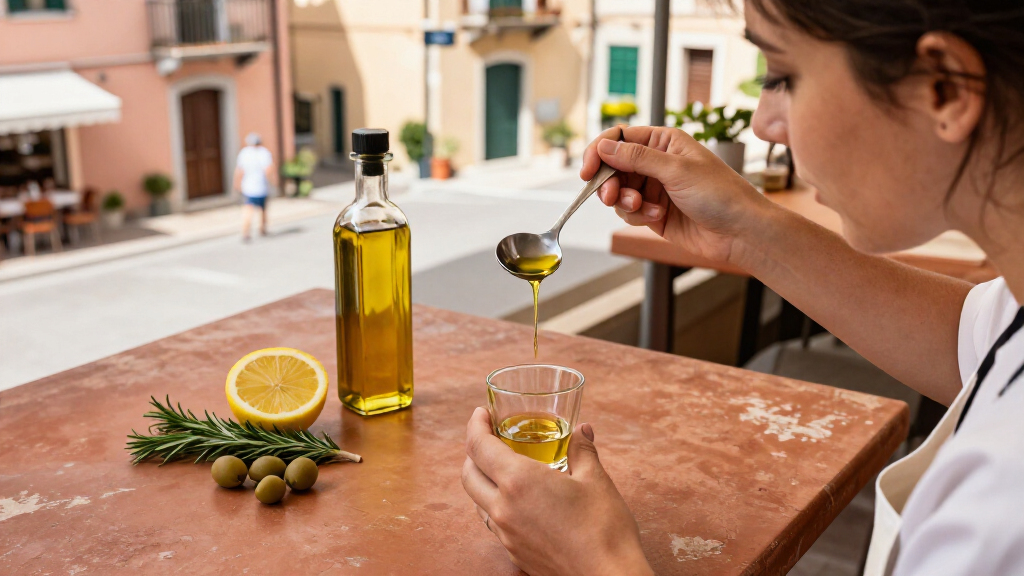
Olive oil vocabulary becomes easier to use when you taste in a consistent order: smell first, then assess the flavor, bitterness, and throat sensation. You only need a teaspoon or so in a small cup. Professional tastings may use covered blue glasses to hide color, since a vivid green hue can bias your judgment before you smell a thing.
- Pour a small sample. Use a clean cup or tasting glass; set bread aside for now.
- Warm and swirl it. Cover the opening with your hand and gently roll the cup for about half a minute.
- Smell twice. Notice whether the aroma suggests green grass and tomato leaf, or riper apple and fruit.
- Sip and draw in a little air. Let the oil spread across your mouth, then notice bitterness on your tongue.
- Swallow and wait. Look for a clean peppery tickle in your throat, then decide whether the sensations feel balanced and pleasant.
Try this with two oils side by side, perhaps a delicate one and a more robust bottle from your next trip to Umbria. Write three words for each: one aroma, one tongue sensation, and one finish. “Tomato leaf, gentle bitter, peppery” gives you a clearer comparison than “green and strong.”
Plain bread is handy after the first taste, but bread can mute subtle notes if you start with it. Water or a bite of plain apple can reset your palate between samples. If you’re tasting with friends, pour small amounts and keep the room free of cooking smells; garlic sizzling nearby can make every oil seem less aromatic.

Find out why bitterness and pepperiness can be good signs
Olive oil vocabulary treats clean bitterness and pepperiness as traits to assess, not defects to fear. They often accompany greener oils and are associated with phenolic compounds, which contribute to an oil’s sensory profile. Taste alone, though, cannot tell you how much of a compound an oil contains or establish a particular health benefit.
Harvest timing helps shape the style. An early-harvest oil may lean green, bitter, and peppery, while an oil made from riper fruit may seem softer and more rounded. These are tendencies, not promises: cultivar, growing conditions, and production choices also influence the result. A bottle from Liguria can taste quite different from a robust oil made in Sicily, even if both are excellent.
For recognized extra virgin standards, sensory assessment sits alongside chemical criteria. The oil must show fruitiness and have no sensory defects; exact rules depend on the applicable standard and jurisdiction. That doesn’t make maximum intensity a quality score. A delicate oil can be excellent, and a forceful one can be excellent, if each is fresh, clean, and suited to its use.
Suppose you taste a peppery oil over a simple plate of white beans. If its fruitiness is clear and the throat catch feels clean, the oil may bring welcome energy to the dish. If instead it smells stale or musty, the problem is not that it lacks pepperiness; the overall aroma may point to a defect. Think of intensity as a style choice, like choosing a bright green salad over a rich stew.

Tell a lively throat tickle from an oil that has gone stale
Piccante is a clean, peppery sensation that can prickle your throat after swallowing; rancid, musty, fermented, or winey-vinegary notes suggest possible defects. The distinction matters because people sometimes mistake a normal throat catch for harshness, or overlook stale smells because they expect olive oil to taste mild. Smell and taste the whole sample before deciding.
Try a small sip on its own in a quiet kitchen. A fresh, robust oil may smell green and leave a brief tickle, like the warmth of black pepper without the sharp sting of a chili. A fusty oil may smell damp or fermented; a rancid one can bring stale, waxy or old-nut impressions. Defects are not simply “extra bitterness,” and a cough by itself doesn’t prove either quality or a health effect.
Storage can change what you find in the cup. Keep the bottle tightly closed in a cool, dark place, away from the stove and sunny windows. Light, heat, and oxygen all work against freshness. If you use oil slowly, a smaller bottle may make more sense than a large container that sits open for months; check harvest information and best-before dates as useful clues, while remembering they measure different things.
Color is a poor shortcut for quality. Green and gold shades vary naturally, and a rich green can sway your expectations before you taste. That is why professional sensory assessment often uses colored glasses. At home, turn away from the bottle label, taste first, and jot down what you actually smell and feel.
Pair a delicate oil with fish and a robust one with beans
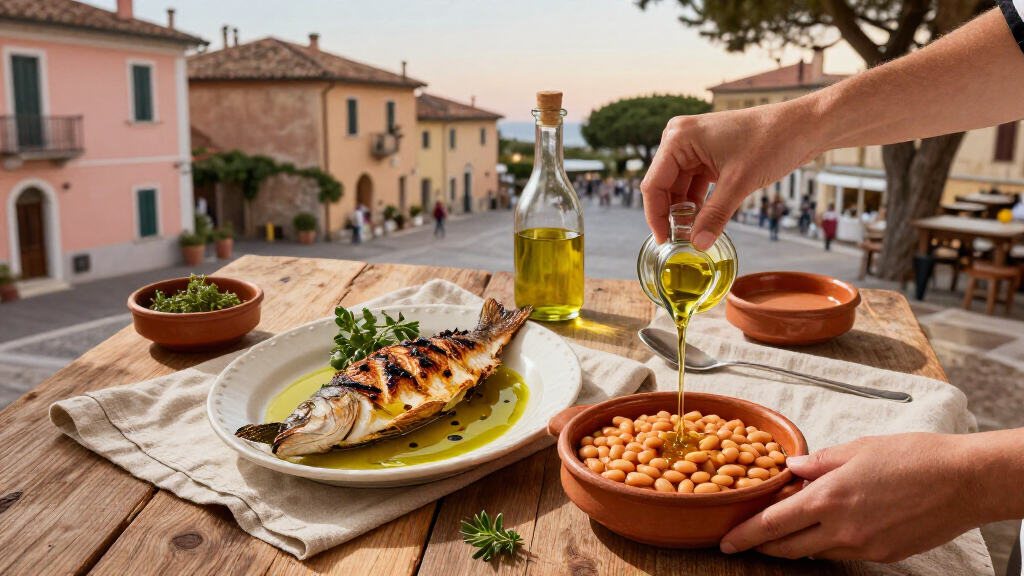
Olive oil vocabulary can guide pairings: a delicate, soft oil is often a good fit when you want subtle flavor, while a more bitter or peppery oil can hold its own beside hearty foods. These are starting points, not rules. Taste the oil with the dish and let the food’s strength decide whether the oil should whisper or speak up.
For a mild oil, try a Ligurian-style pairing with grilled fish or steamed vegetables, where a grassy aroma won’t overwhelm the plate. For a more robust oil, drizzle a spoonful over ribollita, Tuscany’s bread-thickened vegetable soup, or warm beans with rosemary. The peppery finish can cut through the soft, creamy texture like a bright green stripe across the bowl.
When you cook, remember that heat and time affect aroma. Extra virgin olive oil can be used in cooking, but its fresh grassy notes may fade in a long, hot simmer. You might cook vegetables with a suitable amount of oil, then add a small finishing drizzle just before serving to keep more of its character in the dish.
Use the same method for a tasting like a dinner at home: sample the oil plain, then try it on a bite of the actual food. A strong oil that seemed too assertive from the spoon may work beautifully on grilled eggplant. A delicate one may disappear under garlic, anchovies, and chili. The food is the final test; no label can make that choice for you.
Read a label for clues about freshness, style, and origin
Olive oil vocabulary is more useful when you pair tasting words with harvest and origin details. “Mild” and “strong” can hint at broad style, but they rarely explain the aromas you’ll actually notice. Look for a named region, cultivar, harvest date, or traceability information, then treat those details as clues to investigate rather than proof of a particular flavor.
Italian origin can be wonderfully specific. A bottle labeled with a protected designation such as Toscano IGP identifies a protected geographical indication, while Terra di Bari DOP is a protected designation of origin associated with Puglia. The label’s geographic protection tells you about origin rules; it doesn’t guarantee that you will prefer the oil’s intensity or that it is fresher than every other bottle.
Harvest timing and storage matter alongside the place name. A harvest date can help you compare oils from the same season, while a best-before date is not itself a harvest date. Choose a bottle size you can use while the oil is fresh, and check that it has been stored away from strong light and heat. If you’re visiting an olive-growing area in autumn, a mill or tasting room can let you compare fresh oils and hear local terms in context.
For example, ask whether an oil is made from early-harvest olives and what foods locals serve with it. Then taste before you buy. A brief oil tasting article can give you the words, but only your own cup can tell you whether the oil’s green aroma and peppery finish suit your table.
Frequently Asked Questions
Does bitter olive oil mean it has gone bad?
No, not by itself. Clean bitterness can be a positive trait, especially in greener oils. Stale, musty, rancid, or fermented notes are more concerning than bitterness alone.
Why does olive oil make my throat tickle or make me cough?
A peppery throat sensation is common in some robust oils and is called piccante. It is a tactile sensation often associated with phenolic compounds, but the tickle alone cannot prove a particular health benefit or quantify the oil’s composition.
Does fruttato mean someone added fruit to the oil?
No. Fruttato means fruity in aroma or flavor, describing qualities associated with olives. A green oil might suggest grass or tomato leaf, while a riper style could bring apple-like notes.
Is a stronger olive oil always better quality?
No. Intensity is a style preference, not a ranking. A delicate oil and a robust oil can both be excellent when fresh, free of sensory defects, and enjoyable with the food you serve.
How do I choose and store olive oil?
Choose by freshness, origin details, flavor, and the dish you plan to make. Keep the bottle tightly closed in a cool, dark place away from the stove and sunlight; a smaller bottle can help if you use oil slowly.
Conclusion
When you taste Italian olive oil, give each sensation its own name: fruttato for the olive’s fresh aroma, amaro for bitterness, and piccante for the throat’s peppery finish. Taste plain, look for clean and balanced character, then decide whether the oil belongs on your fish, beans, or soup.
Keep a small bottle near the table and a few tasting notes beside it. Soon, “strong” will become tomato leaf, soft bitterness, or a bright tickle after the last spoonful.

Fall Picks
fall essentials
As an affiliate, we earn on qualifying purchases.