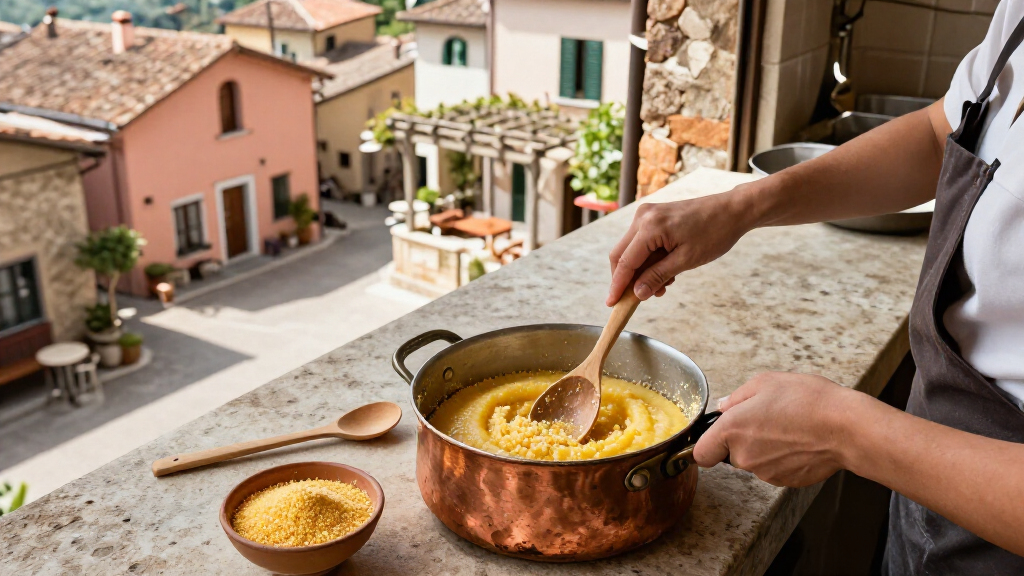

Polenta cornmeal varies most in grind, package size, and whether you want organic corn or a larger pantry supply. My best overall pick is Moretti Bramata Polenta, a traditional coarse-grind option for hearty, textured polenta. Bob’s Red Mill Organic Corn Grits/Polenta is a flexible everyday choice, while Roland Foods Fine Grain Yellow Polenta suits cooks who prefer a smoother result and need a bulk bag. The tradeoff is straightforward: finer meal cooks to a softer texture, while coarse meal offers more bite but can take longer to soften. Read on for the full breakdown of these nine options and how to choose by texture, quantity, and cooking habits.

Get kitchen staples and gadgets delivered free with Prime
- Fast, free delivery on millions of items
- Prime Video, Amazon Music and more included
- Member-only deals all year
Key Takeaways
- Moretti Bramata leads for cooks who want a traditional coarse texture, while its two smaller packs are less suited to heavy bulk use than Roland’s five-pound bags.
- Bob’s Red Mill’s 24-ounce options offer manageable quantities for regular home cooking; the four-pack makes more sense when you already know you use polenta often.
- Roland Foods’ fine, medium, and coarse grinds address distinct texture preferences, so choosing among them matters more than simply choosing the largest bag.
- The Bob’s Red Mill listings differ by pack format and product naming; check the exact listing and quantity before buying to avoid ordering a format that does not match your pantry needs.
- A five-pound bag can reduce how often you restock, but it only makes practical sense if you cook polenta regularly and can store the meal well after opening.
| Moretti Bramata Polenta, 2 Packs – 1.1 Pounds each |  | Best for Traditional Italian Style | Product type: Bramata polenta cornmeal | Pack count: 2 packs | Weight per pack: 1.1 pounds | VIEW LATEST PRICE | See Our Full Breakdown |
| Bob’s Red Mill Organic Corn Grits / Polenta, 24oz |  | Best for Beginners | Product type: Organic corn grits / polenta | Weight: 24 ounces | Corn type: Golden yellow corn | VIEW LATEST PRICE | See Our Full Breakdown |
| Bob’s Red Mill Organic Corn Grits/Polenta, 24oz (4 Pack) |  | Best Pantry Stock-Up | Product type: Organic corn grits / polenta | Pack count: 4 bags | Weight per bag: 24 ounces | VIEW LATEST PRICE | See Our Full Breakdown |
| Bob’s Red Mill Polenta Grits, Golden Corn Grit, 24 Ounce (Pack of 2) |  | Best for Polenta and Grits | Product type: Polenta grits | Corn type: Golden corn | Pack count: 2 bags | VIEW LATEST PRICE | See Our Full Breakdown |
| Roland Foods Coarse Grain Yellow Polenta, 5 Pound |  | Best for Quick-Cooking Coarse Polenta | Product type: Coarse-grain yellow polenta | Weight: 5 pounds | Origin: Northern Italy | VIEW LATEST PRICE | See Our Full Breakdown |
| Colavita Polenta, 1 Pound |  | Best for Beginners | Net weight: 1 lb (454 g) | Made in: Italy | Preparation time: 5 minutes | VIEW LATEST PRICE | See Our Full Breakdown |
| Bob’s Red Mill Organic Polenta Corn Grits, 24 Oz |  | Best for Recipe Versatility | Package weight: 24 oz | Organic certification: Organic by QAI | Preparation time: 5 minutes | VIEW LATEST PRICE | See Our Full Breakdown |
| Roland Foods Fine Grain Yellow Polenta, 5 Pound |  | Best for Quick-Cooking Bulk | Weight: 5 lb | Origin: Northern Italy | Ingredients: 100% stone-ground yellow cornmeal | VIEW LATEST PRICE | See Our Full Breakdown |
| Roland Foods Medium Grain Yellow Polenta, 5 Pound |  | Best for Everyday Bulk Cooking | Weight: 5 lb | Origin: Northern Italy | Ingredients: 100% stone-ground yellow cornmeal | VIEW LATEST PRICE | See Our Full Breakdown |
| polenta cornmeal | Product type |
|---|---|
| Moretti Bramata Polenta | Bramata polenta cornmeal |
| Bob’s Red Mill Organic Corn Gr | Organic corn grits / polenta |
| Bob’s Red Mill Organic Corn Gr | Organic corn grits / polenta |
| Bob’s Red Mill Polenta Grits | Polenta grits |
| Roland Foods Coarse Grain Yell | Coarse-grain yellow polenta |
| Colavita Polenta | — |
| Bob’s Red Mill Organic Polenta | — |
| Roland Foods Fine Grain Yellow | — |
| Roland Foods Medium Grain Yell | — |
More Details on Our Top Picks
Moretti Bramata Polenta, 2 Packs – 1.1 Pounds each
Moretti Bramata is the pick for cooks who want a traditional Italian polenta ingredient in manageable packs rather than a large pantry bag. The two 1.1-pound packs give you some flexibility: open one while keeping the other sealed for later. Compared with Roland Foods Coarse Grain Yellow Polenta, this product is presented as traditional Italian cornmeal but provides no grain-size or cooking-time details, so it is harder to predict the finished texture or plan a quick meal. Its appeal is the Italian-style identity and split packaging, not a documented convenience advantage. I would choose it when that traditional positioning matters more than precise preparation guidance; cooks who need clear instructions or a specified grind may prefer a better-documented option.
Pros:- Traditional Italian polenta positioning suits classic polenta dishes
- Two separate packs allow one to remain unopened while the other is in use
- 1.1-pound pack size is less bulky than Roland Foods’ 5-pound bag
Cons:- No grain size or texture is specified
- No cooking instructions or cooking time are provided
- Limited product details make it harder to compare preparation behavior
Best for: Cooks seeking Italian-style polenta in two smaller packs and comfortable choosing preparation methods without supplied instructions
Not ideal for: First-time polenta cooks who need a stated grind, cooking time, or package directions to plan the result
- Product type:Bramata polenta cornmeal
- Pack count:2 packs
- Weight per pack:1.1 pounds
- Total listed weight:2.2 pounds
- Style:Traditional Italian
- Grain size:Not specified
Our verdict“Choose Moretti Bramata for Italian-style polenta in split packs, but pick a more fully specified cornmeal if grind and cooking guidance matter to you.”
Bob’s Red Mill Organic Corn Grits / Polenta, 24oz
Bob’s Red Mill Organic Corn Grits / Polenta makes a practical starting point for cooks who want one bag for more than a single polenta recipe. The 24-ounce size is easier to store and use up than the four-pack version, while the listed organic yellow corn and quick-cooking positioning offer a straightforward route to porridge, baked polenta, or fried slices. Compared with Moretti Bramata, Bob’s provides more dietary and use information, though neither listing supplies a precise cooking time here. Its versatility is useful, but it remains a corn-based staple rather than a complete dish, so seasoning and other ingredients are up to the cook. I would favor this over the larger multipacks when you are still learning how often polenta fits your meals.
Pros:- Organic yellow corn is specified
- 24-ounce bag is a manageable amount for occasional cooking
- Can be used for porridge, baking, and fried polenta
- Listed as vegan and kosher
Cons:- No exact cooking time or grain size is supplied
- The cornmeal needs seasoning and additional ingredients to make a complete dish
- A single bag offers less pantry stock than the four-pack option
Best for: New polenta cooks who want an organic, single-bag option for trying porridge, baked polenta, and fried preparations
Not ideal for: Households that cook polenta frequently and want several bags on hand, or buyers avoiding corn-based foods
- Product type:Organic corn grits / polenta
- Weight:24 ounces
- Corn type:Golden yellow corn
- Organic:Yes
- Vegan:Yes
- Kosher:Yes
- Listed uses:Porridge, baked polenta, and fried polenta
Our verdict“Pick this single 24-ounce organic bag if you are learning how you like polenta and want flexibility without committing to a multipack.”
Bob’s Red Mill Organic Corn Grits/Polenta, 24oz (4 Pack)
Bob’s Red Mill Organic Corn Grits/Polenta 4 Pack suits households that already know they use polenta regularly. Four 24-ounce bags provide a larger supply than the single-bag Bob’s option, while keeping the cornmeal divided into separate packages instead of one large sack. The organic golden corn works across polenta, fries, and topping applications, so the quantity can serve several kinds of meals. The tradeoff is commitment: compared with Moretti Bramata’s two smaller packs, this is a much larger stock-up, and the description gives no specific grain size or cooking time. It is also a plain corn ingredient, so added seasoning is often needed. I would choose the four-pack for repeat cooking, not for a first experiment with polenta.
Pros:- Four separate 24-ounce bags provide a substantial supply
- Organic golden corn is specified
- Versatile for polenta, crispy fries, and meal toppings
- Separate bags can be opened as needed
Cons:- Large total quantity may sit unused in households that cook polenta infrequently
- No exact grain size or cooking time is provided
- Plain corn flavor may need seasoning, and it is unsuitable for people with corn allergies
Best for: Frequent polenta cooks who want multiple separate bags of organic cornmeal for meals and side dishes
Not ideal for: Occasional cooks, people with limited pantry space, or anyone avoiding corn
- Product type:Organic corn grits / polenta
- Pack count:4 bags
- Weight per bag:24 ounces
- Total listed weight:96 ounces
- Corn type:Golden yellow corn
- Organic:Yes
- Listed uses:Polenta, fries, and toppings
Our verdict“Choose the four-pack if polenta is a regular pantry staple; for occasional use, the single 24-ounce Bob’s Red Mill bag is a more practical fit.”
Bob’s Red Mill Polenta Grits, Golden Corn Grit, 24 Ounce (Pack of 2)
Bob’s Red Mill Polenta Grits is the most clearly dual-purpose choice here: its golden corn grits are described for creamy polenta as well as Southern-style grits. Two 24-ounce bags provide more supply than the single-bag Bob’s Red Mill Organic Corn Grits / Polenta, without reaching the four-bag commitment of that organic option. That middle quantity makes sense for a household that cooks cornmeal dishes regularly but does not need a large stock-up. The listing does not identify the product as organic or provide specific cooking instructions, so buyers seeking those details should compare it with the organic Bob’s option. I would pick this for flexible cornmeal cooking and a useful two-bag format, while recognizing that the product details leave preparation specifics to the cook.
Pros:- Specified for both polenta and Southern-style grits
- Two 24-ounce bags offer more supply than a single 24-ounce bag
- Golden corn flavor is identified
- Smaller commitment than the four-pack Bob’s Red Mill option
Cons:- Organic status is not specified
- No specific cooking directions or cooking time are supplied
- Grain size and resulting texture are not stated
Best for: Cooks who make both creamy polenta and Southern-style grits and want two standard-size bags
Not ideal for: Buyers who require an organic designation, detailed cooking directions, or a stated grain size
- Product type:Polenta grits
- Corn type:Golden corn
- Pack count:2 bags
- Weight per bag:24 ounces
- Total listed weight:48 ounces
- Listed uses:Creamy polenta and Southern-style grits
- Cooking instructions:Not specified
Our verdict“Choose this two-bag option if you cook both polenta and grits; select the organic Bob’s Red Mill alternatives if organic sourcing is a priority.”
Roland Foods Coarse Grain Yellow Polenta, 5 Pound
Roland Foods Coarse Grain Yellow Polenta stands apart through its specified coarse grind, Northern Italian origin, and stated 5–8 minute cooking time. That combination gives buyers more preparation guidance than Moretti Bramata, whose grain size and timing are not listed. The five-pound bag also suits cooks who make large batches or use polenta in soups and casseroles, but it is a much bigger commitment than either of Bob’s Red Mill’s 24-ounce bags. Its coarse texture is a real preference point: it may not suit anyone seeking a smoother result, and the description offers fewer grain choices than Roland’s fine- and medium-grain siblings in this roundup. I would choose it for quick, hearty dishes and skip it if storage space or a fine texture matters more.
Pros:- Coarse grain is clearly specified for buyers choosing by texture
- Stated cooking time of 5–8 minutes helps with meal planning
- Five-pound bag suits repeated use and larger recipes
- Made from 100% stone-ground yellow cornmeal and listed as gluten-free, vegan, vegetarian, and kosher
Cons:- Coarse texture may not work for cooks who prefer smooth polenta
- Five-pound quantity is a large commitment compared with Bob’s Red Mill 24-ounce bags
- A single coarse grind offers less texture choice than Roland’s fine- and medium-grain versions
Best for: Frequent cooks and batch makers who want coarse-grain polenta with a stated quick cooking time and a large bag
Not ideal for: Occasional polenta cooks, buyers with limited storage, or anyone who prefers a finer, smoother cornmeal texture
- Product type:Coarse-grain yellow polenta
- Weight:5 pounds
- Origin:Northern Italy
- Ingredients:100% stone-ground yellow cornmeal
- Cooking time:5–8 minutes
- Gluten-free:Yes
- Vegan and vegetarian:Yes
- Kosher:Yes
Our verdict“Pick Roland’s coarse polenta for quick-cooking, hearty dishes and regular use, but choose a smaller bag or finer grind if you cook occasionally or want a smoother texture.”
Colavita Polenta, 1 Pound
Colavita is the easiest small-batch starting point for cooks who want Italian-style polenta without committing to a bulk bag. Its stated five-minute preparation suits a quick side dish, while the one-pound package is easier to use up than Roland Foods’ five-pound options. Made in Italy, it offers a clear regional identity; Bob’s Red Mill Organic Polenta Corn Grits, by comparison, is the more flexible choice if you also want breakfast cereal or grits. The tradeoff is less room for experimenting across many meals, and the product data provides no cooking instructions. Its gluten-free and allergy-friendly positioning may suit households with dietary constraints, but buyers should check the package for details relevant to their specific needs.
Pros:- Stated five-minute preparation suits quick meals
- Made in Italy
- Gluten-free and described as allergy-friendly
- Smaller package is manageable for occasional cooking
Cons:- One-pound package may run out quickly for regular use
- No cooking instructions are provided in the supplied product details
- Less explicitly versatile across recipes than Bob’s Red Mill Organic Polenta Corn Grits
Best for: First-time polenta cooks who want a small, quick-cooking package with an Italian origin.
Not ideal for: Frequent polenta cooks or households cooking for a crowd, since one pound offers less volume than Roland Foods’ five-pound bags.
- Net weight:1 lb (454 g)
- Made in:Italy
- Preparation time:5 minutes
- Gluten-free:Yes
- Allergy-friendly:Described as allergy-friendly
- Suggested use:Polenta and baking
Our verdict“Choose Colavita for a quick, Italian-made introduction to polenta in a modest package, but look elsewhere for bulk value or detailed guidance.”
Bob’s Red Mill Organic Polenta Corn Grits, 24 Oz
Bob’s Red Mill is the most adaptable pick here if polenta is only one of several ways you plan to use corn grits. The product is described for Italian polenta, hot cereal, and dishes such as shrimp and grits, giving it broader day-to-day reach than Colavita Polenta, which is framed more narrowly around traditional polenta and baking. Its organic certification, vegan status, and Kosher Pareve designation also make its listed dietary fit unusually clear. Preparation is stated at five minutes, matching Colavita’s quick timing. The compromise is that the 24-ounce bag may not suit cooks who want bulk quantities like Roland Foods’ five-pound formats, and some recipes may need added seasoning or ingredients to build flavor.
Pros:- Can be prepared as polenta, hot cereal, or grits
- Organic by QAI
- Vegan, vegetarian, and Kosher Pareve
- Stated five-minute preparation
Cons:- 24-ounce bag may be limiting for frequent batch cooking
- Some recipes may need extra seasoning or ingredients
- Less clearly tied to an Italian origin than Colavita Polenta
Best for: Home cooks who want one organic corn-grit product for polenta, breakfast cereal, and grits recipes.
Not ideal for: Bulk users who cook polenta often, or cooks seeking a plain, ready-seasoned dish rather than a versatile base.
- Package weight:24 oz
- Organic certification:Organic by QAI
- Preparation time:5 minutes
- Vegan:Yes
- Vegetarian:Yes
- Kosher:Pareve
- Suggested uses:Hot cereal, Italian polenta, shrimp and grits
Our verdict“Pick Bob’s Red Mill when organic certification and use across several corn-grit dishes matter more than bulk quantity or a specifically Italian origin.”
Roland Foods Fine Grain Yellow Polenta, 5 Pound
This is the bulk choice for cooks who favor a fine texture and short cook time. Roland Foods lists a six-to-eight-minute preparation window, and its fine grain suits buyers who want polenta for soups, casseroles, or a side without choosing a coarser grind. Compared with Roland Foods Medium Grain Yellow Polenta, this version is the more texture-specific option; the medium grain may better suit people who prefer a less fine result. Both come in five-pound quantities and share Northern Italian origin and a short stated cooking window. That volume is useful for frequent cooking but can be cumbersome for occasional users. Fine cornmeal can also lump without attention, and its mild flavor may call for seasoning—unlike a prepared, seasoned dish, this is a versatile base.
Pros:- Five-pound quantity suits repeated cooking
- Fine grain offers a distinct texture option beside Roland Foods Medium Grain
- Stated six-to-eight-minute cooking time
- Gluten-free, vegan, vegetarian, and kosher
Cons:- Bulk package may be excessive for occasional use
- Requires stirring to help prevent lumps
- Mild flavor may need added seasoning
Best for: Frequent cooks, caterers, or large households who want a five-pound supply of fine-grain polenta for quick recipes.
Not ideal for: Occasional polenta cooks with limited pantry space, or anyone who prefers a more pronounced flavor without adding seasoning.
- Weight:5 lb
- Origin:Northern Italy
- Ingredients:100% stone-ground yellow cornmeal
- Grain:Fine
- Cooking time:6–8 minutes
- Dietary attributes:Gluten-free, vegan, vegetarian, kosher
- Suggested uses:Soups, casseroles, side dishes
Our verdict“Choose this fine-grain Roland Foods option for fast, frequent polenta cooking in bulk, but skip it if storage space or small portions are priorities.”
Roland Foods Medium Grain Yellow Polenta, 5 Pound
Roland Foods Medium Grain is the balanced bulk pick for cooks who want a middle-ground texture across sides, soups, and main dishes. Its stated five-to-eight-minute cook time is slightly broader than the fine-grain Roland Foods option’s six-to-eight-minute window, while the medium grind offers a different feel from that finer alternative. Both are five-pound bags of stone-ground yellow cornmeal from Northern Italy, so the decision comes down mainly to grain size and intended texture rather than origin or dietary fit. This bag is also gluten-free, vegan, vegetarian, and kosher. The tradeoff is the same substantial quantity that makes it useful for regular cooking: occasional users may find it too much to store. It may need steady stirring and added seasoning.
Pros:- Medium grain provides an alternative to Roland Foods Fine Grain
- Five-pound bag supports frequent cooking
- Stated five-to-eight-minute cooking time
- Gluten-free, vegan, vegetarian, and kosher
Cons:- Five-pound quantity may be difficult to use up for occasional cooking
- Requires stirring to help prevent lumps
- Mild flavor may need seasoning
Best for: Regular home cooks who want a versatile, medium-grain polenta supply for sides, soups, and main dishes.
Not ideal for: People who cook polenta infrequently, want a fine-grain texture, or need a ready-seasoned product.
- Weight:5 lb
- Origin:Northern Italy
- Ingredients:100% stone-ground yellow cornmeal
- Grain:Medium
- Cooking time:5–8 minutes
- Dietary attributes:Gluten-free, vegan, vegetarian, kosher
- Suggested uses:Soups, sides, main dishes
Our verdict“Choose the medium-grain bag for frequent, flexible cooking when you want bulk supply and a texture between fine and coarse options.”

How We Picked
I compared these products on the details that change how polenta works in a home kitchen: grind size, stated quantity, organic designation, pack format, and likely versatility. Coarse, medium, and fine meals can produce noticeably different textures, so I treated grind as a meaningful choice rather than a minor label detail. I also weighed whether a package suits occasional cooking or frequent use, since a bulk bag can be inconvenient if it sits open for months.
The ranking favors products with a clear role and a practical balance of texture, quantity, and flexibility. Moretti Bramata ranks first for its traditional coarse-grind focus; Bob’s Red Mill options follow for accessible home-kitchen quantities and organic choices. Roland Foods earns a place for buyers who want a specific grind in a large format, but its five-pound bags are less convenient for occasional cooks. Similar Bob’s Red Mill listings are kept distinct by their stated packaging, while the three Roland grinds are ranked by the needs each serves rather than treated as interchangeable.
| polenta cornmeal | Product type |
|---|---|
| Moretti Bramata Polenta | Bramata polenta cornmeal |
| Bob’s Red Mill Organic Corn Gr | Organic corn grits / polenta |
| Bob’s Red Mill Organic Corn Gr | Organic corn grits / polenta |
| Bob’s Red Mill Polenta Grits | Polenta grits |
| Roland Foods Coarse Grain Yell | Coarse-grain yellow polenta |
| Colavita Polenta | — |
| Bob’s Red Mill Organic Polenta | — |
| Roland Foods Fine Grain Yellow | — |
| Roland Foods Medium Grain Yell | — |
Factors to Consider When Choosing Polenta Cornmeal
Choosing polenta cornmeal is less about finding one universally correct bag and more about matching the meal’s grind and volume to how you cook. I’d settle the texture question first, then compare package size and sourcing. These broader checks can help prevent a pantry mismatch even when several products appear similar.
Choose Grind for the Texture You Actually Want
Grind affects the finished dish more than the word “polenta” on the label suggests. Fine meal tends toward a smoother consistency, while coarse meal keeps more grainy character and can feel heartier on the plate. Medium grind sits between those styles, which can be useful if you want some texture without a distinctly coarse result. A common mistake is buying the largest bag before deciding which texture suits your recipes. If you are unsure, start with a smaller quantity and use it in both soft polenta and a firmer preparation before committing to bulk. Match the grind to your preferred result, not just the cooking time printed in a recipe.
Treat Cooking Time as a Recipe Variable
Different grinds may need different amounts of time and liquid to soften, so a recipe’s timing is not always a fixed rule for every bag. Coarser cornmeal often needs more patience, while finer meal can reach a soft texture sooner but may need close attention to prevent lumps. Read the package directions and adjust gradually rather than adding all the liquid or heat at once. Stirring habits also matter: a whisk helps break up early clumps, while steady stirring near the end helps keep the mixture from sticking. If you plan to serve polenta firm, allow for cooling and setting rather than judging doneness only by how it looks in the pot. This flexibility can matter more than a small difference in bag size.
Buy Bulk Only When Your Cooking Pattern Supports It
A large bag is convenient when polenta is a recurring pantry staple, but it can become a poor fit for occasional meals. Five-pound formats call for a storage plan: seal the meal tightly after opening and keep it in a cool, dry place, following the package guidance. Smaller bags reduce the amount you need to protect and make it easier to switch grind styles. Multi-packs can offer a middle ground, but only if you have enough shelf space and will use the contents while they remain fresh. Before choosing bulk, estimate how often you cook polenta and whether you also use cornmeal in other dishes. The best quantity is the one you can store and use comfortably, not simply the largest option.
Read Organic and Product Naming Carefully
Organic labeling may influence your choice, but it does not tell you whether the grind is fine, medium, or coarse. Check the full product name and package details for both sourcing and texture information. Several Bob’s Red Mill entries in this roundup have closely related names, so the listed format and pack count deserve attention before ordering. Do not assume that similar names mean identical packaging or that a multi-pack contains a different style of meal. If sourcing is your priority, confirm that the exact listing carries the organic designation you want. If texture matters more, make grind the deciding factor and use organic status as a secondary filter.
Plan for More Than Soft Polenta
Polenta cornmeal can serve more than one purpose, but grind affects how smoothly it fits into other recipes. A versatile pantry choice should suit your usual dishes, whether you make a creamy side, chilled slices for grilling, or use cornmeal in baking. A coarse grind may give a dish more texture, while a fine grind can blend more readily into a smoother batter or porridge. If you only make one style of polenta, prioritize that result instead of paying for versatility you will not use. For mixed uses, a moderate quantity can help you test the meal across recipes before restocking. Consider the rest of your pantry and cooking routine when deciding whether a specialized grind or an everyday option makes more sense.
Frequently Asked Questions
Can I swap fine, medium, and coarse polenta cornmeal in the same recipe?
You can often substitute one grind for another, but the texture and cooking time may change. Fine meal usually produces a smoother result, while coarse meal tends to retain more bite and may need longer to soften. Start with the recipe’s liquid amount, then add more gradually if the meal remains firm or thickens too quickly. Check the package directions as a starting point, especially when switching to a noticeably different grind. For a recipe where texture is central, such as sliced polenta, it is safer to use the grind the recipe specifies.
Which package size makes sense if I cook polenta only occasionally?
A smaller package is usually easier to manage if polenta is an occasional dish. Single 24-ounce bags or smaller multi-pack portions take up less space than a five-pound bag and reduce the amount you need to store after opening. Choose a larger format only if you also use cornmeal regularly in other cooking. Once opened, keep the meal sealed and follow the package storage directions to protect its quality. If you are still deciding which grind you prefer, a smaller bag also limits the commitment.
Does organic polenta cornmeal cook or taste differently?
The organic designation describes how the corn is produced, not the grind or cooking method. Texture depends more directly on the meal’s grind, and cooking time can vary with particle size and the recipe. When comparing organic options, check whether the product is fine, medium, or coarse rather than expecting organic status to indicate a particular result. You may also want to confirm the exact package format, especially when similar product names appear in multiple listings. Choose organic when sourcing matters to you, then select the grind that suits your dishes.
Is coarse polenta cornmeal always better for traditional polenta?
Coarse meal is a strong choice if you want a more textured, hearty bowl, but it is not automatically the best fit for every cook. Fine and medium grinds can suit smoother or quicker preparations, depending on the recipe and the texture you enjoy. Coarse meal may take longer to cook and can require more attention to reach the softness you want. Consider whether you prefer distinct grain texture or a creamier finish before choosing. The traditional label alone should not outweigh your preferred result or cooking routine.
Should I choose a five-pound bag or a multi-pack of smaller bags?
Choose based on how often you cook polenta and how you prefer to store dry goods. A five-pound bag suits frequent use and can reduce the need to restock, but it asks for more storage space and careful resealing. A multi-pack of smaller bags is easier to portion and may be more practical if you want to keep unopened packages sealed until needed. Compare the stated quantity and number of packs closely, since similar listings can use different formats. If your usage is uncertain, smaller packages make it easier to change grinds or brands later.
Conclusion
For the best overall choice, I’d start with Moretti Bramata if you want traditional coarse polenta with a hearty texture. For value and everyday flexibility, Bob’s Red Mill’s 24-ounce options make more sense for home cooks who want a manageable package, while the four-pack suits people who already use polenta often. Beginners may prefer a smaller Bob’s Red Mill bag so they can learn their preferred texture without committing to bulk. For a premium-style pantry choice, select the Bob’s Red Mill organic option that best matches your sourcing preference and package needs. If you cook frequently and already know your texture preference, choose Roland Foods by grind: fine for smoother polenta, medium for a middle ground, or coarse for more bite; skip the five-pound formats if you cook only occasionally.
Halloween Picks
halloween
As an affiliate, we earn on qualifying purchases.