
TL;DR

Get kitchen staples and gadgets delivered free with Prime
- Fast, free delivery on millions of items
- Prime Video, Amazon Music and more included
- Member-only deals all year
New oil is freshly made olive oil from the current harvest, and its character begins with the olive variety and harvest stage before milling and storage shape what reaches your bottle. Ask for the harvest date, taste for the oil’s own balance of fruitiness, bitterness, and pepperiness, and store it away from light, heat, and air; freshness alone does not guarantee quality.
The first sip at an Italian olive mill can catch you by surprise: a green, grassy aroma, a faint bitterness, then a peppery tickle in your throat. That lively oil has traveled a short but carefully managed route from olive grove through the frantoio, the Italian word for an olive mill, and into a tasting cup.
Following that route makes a mill visit more rewarding. You can see why harvest timing, fruit handling, and storage all leave their mark, and learn what to ask before you bring a bottle home. The phrase new oil usually refers to extra virgin olive oil made from the current harvest, but newness alone does not tell you whether an oil is well made or how long it will keep.
Think of the trip like following a dish from its ingredients back to the farm: each step explains something you taste at the table. This guide follows olives through a working mill, helps you read the clues on a bottle, and shows you how to enjoy fresh oil while its aromas are still bright.
Ask for the harvest date; “new oil” alone does not tell you when the olives were picked.
Earlier-picked olives often yield less oil and can taste greener, more bitter, and more peppery, though variety and milling affect the result.
Cold extraction generally refers to temperatures below 27°C in relevant markets, but it does not guarantee superior oil.
Cloudiness signals suspended particles, not freshness or quality, and unfiltered oil may keep less well.
Store olive oil sealed in a cool, dark place, away from the stove, heat, and direct sunlight.
Harvest to bottle · A mill-side field guide
New Oil Countdown: Following the Frantoio from Press to Bottle
New oil carries the character of the current harvest. Follow olives through the frantoio to see how variety, picking time, milling, and storage shape the flavor in your glass.
01 / The mill route
Follow the olives from tree to bottle
New oil moves through a sequence of handling choices. Each step can affect aroma, taste, and keeping quality.
Harvest
Ripeness shapes flavor and oil yield; variety and season matter too.
Sort & wash
Remove leaves and debris, then wash fruit before processing.
Crush
Mechanical crushers turn olives into paste in many modern mills.
Malaxation
Slow mixing helps tiny oil droplets combine; time and temperature count.
Separate
Centrifuges separate oil from water and solids; filtering is a choice.
Store & bottle
Limit oxygen, heat, and light in tanks and protective packaging.
02 / Taste & timing
Choose a flavor, not an “earlier is better” rule
Harvest timing is a trade-off. These are tendencies, not guarantees: cultivar, weather, and milling choices shape the final oil.
Earlier picked
Green & vivid
Often yields less oil and may taste greener, more bitter, and more peppery. Try it with white beans or bitter greens.
Riper fruit
Round & soft
Often gives more oil and tends toward softer, fruitier flavors. It can suit bread or a gentle finishing drizzle.
In the tasting cup
Notice the balance
Look for fruitiness, bitterness, and pepperiness. Grassy or herbaceous aromas can be lively; sensations vary by oil.
03 / Read the clues
Freshness, grade, and cloudiness are different things
A harvest date helps you judge age. Extra virgin status depends on chemical and sensory requirements, and olive oil does not improve with age like wine.
Cloudy is a look, not a verdict
Unfiltered oil can retain suspended particles and look cloudy. That appearance does not prove freshness or quality; remaining moisture and particles may make it less stable in storage.
Protect what the mill made
Keep the bottle sealed in a cool, dark place, away from the stove, heat, and direct sunlight. Close it promptly after pouring.
04 / Ask the producer
Five mill-visit questions for a bottle with a story
Specific answers connect the bottle to its crop and production process—more useful than a broad seasonal claim.
What is the harvest date?
A clear date tells you more about age than “new oil” alone.
Which cultivar is it?
Varieties and blends can differ in aroma and intensity.
How soon was it milled?
Prompt milling helps limit damage from delay, bruising, and heat.
Was the oil filtered?
Filtering removes particles; unfiltered oil may be less stable.
How is it protected?
Ask about sealed tanks and protection from heat and light.
Follow olives through the mill to understand what reaches your bottle
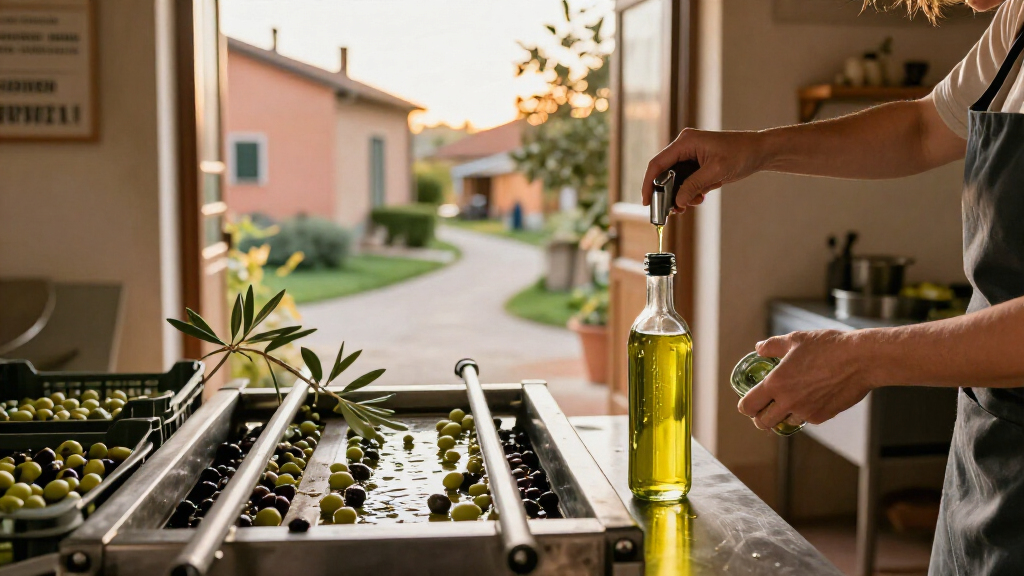
New oil moves from harvested fruit through sorting, crushing, mixing, separation, and storage before a producer bottles it. Each step can influence aroma, taste, and keeping quality, so the phrase from press to bottle describes more than one dramatic moment at a machine. On a visit, watch how quickly the olives arrive and how the mill keeps the fruit and oil protected.
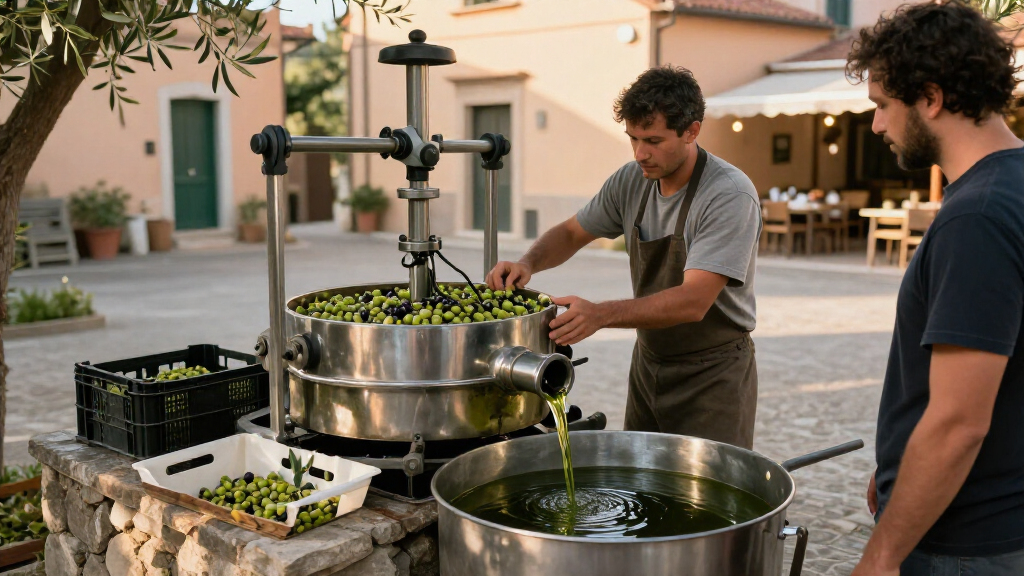
At the start, workers remove leaves and twigs, then wash the olives and crush them into paste. A modern mill may use mechanical crushers rather than the traditional stone equipment suggested by the word “pressed.” During malaxation, slow mixing helps tiny drops of oil combine; the producer balances time and temperature to support extraction while protecting desired aromas.
Centrifuges then separate oil from water and solids. A producer may filter the oil to remove suspended particles, or bottle it unfiltered and cloudy. That cloudiness can look rustic in a glass bottle, but it does not prove the oil is fresher or better, and remaining moisture and particles may shorten its keeping quality.
Picture a late afternoon visit to a mill in Tuscany: the crushed paste smells grassy, the machinery hums, and a guide points out sealed stainless steel tanks. That quiet tank room matters as much as the crush. Producers limit exposure to oxygen, heat, and light before bottling, because an exciting tasting-room pour can lose its character if it sits unprotected.
Use the visit to ask about the producer’s timing and handling. How soon after picking do olives reach the mill? Is the oil filtered? Where does it wait before bottling? Those answers help you connect what you see to the oil in your glass, rather than judging a bottle by its label or its cloudy appearance alone.
fresh harvest extra virgin olive oil Italian early harvest
As an affiliate, we earn on qualifying purchases.
As an affiliate, we earn on qualifying purchases.
Choose harvest timing by flavor, not by a simple early-is-better rule
New oil can taste greener and more bitter or peppery when producers pick earlier, while riper olives often give more oil and tend toward softer, fruitier flavors. These are useful tendencies, not promises. Olive variety, local weather, and the producer’s milling choices all shape the result, so an early harvest does not automatically make the best bottle for every palate or purpose.
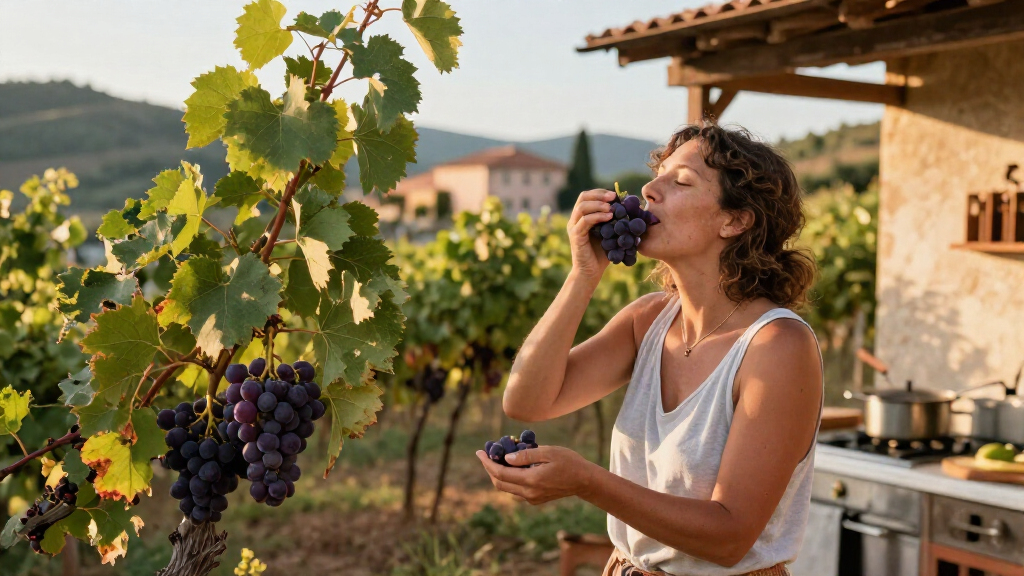
Harvest timing is a trade-off between flavor and yield. If you’re walking through a grove in Umbria, you may see fruit at different stages on neighboring trees; the producer may choose when to pick based on the variety and the oil style they want. Earlier-picked fruit generally yields less oil, but it may bring a punchy green note that stands up beautifully to white beans or bitter greens.
A ripe-fruit style can feel rounder on a slice of bread and may suit a diner who finds assertive pepperiness surprising. Neither preference tells you whether an oil meets extra virgin quality standards. Newness is an age clue; grade depends on the relevant chemical and sensory requirements. The oil doesn’t improve with age like wine.
Climate adds another layer to this decision. Heat, drought, irregular rainfall, and changing pest patterns can affect flowering, fruit development, harvest dates, and yields. The effects differ from one region and season to another, so avoid assuming that every Italian harvest follows the same calendar or that a region’s oil will taste identical year after year.
When you taste at the mill, ask which cultivar you’re trying and when the olives were picked. For a Tuscan oil, you might compare an early-harvest pour with one made from riper fruit, then notice how each feels on the same piece of unsalted bread. That side-by-side tasting makes the yield-and-flavor trade-off tangible and gives you a better basis for choosing a bottle to cook with or finish a soup.
Use these five mill-visit questions to find a bottle with a story
New oil is easiest to understand when you ask about its harvest date, olives, milling, filtering, and storage. These questions give you more useful information than a broad seasonal claim because they connect the bottle to a specific crop and production process. A producer who can tell you where the fruit came from and how it was handled gives you practical clues for comparing oils.
- What is the harvest date? A clear date helps you judge age more directly than “new oil” alone.
- Which cultivar or cultivars went into the oil? Varieties and blends can differ in aroma and intensity.
- How soon after picking were the olives milled? Prompt milling helps limit damage from delay, bruising, and heat.
- Was the oil filtered? Filtering removes suspended particles; an unfiltered style may be less stable in storage.
- How do you protect oil before and after bottling? Ask about sealed tanks, dark glass, and protection from heat and light.
Try these questions at a family-run mill during a visit to Liguria, for instance, before choosing a bottle for a meal back at your rental. If the producer gives you a harvest date and explains the blend, you can compare that bottle with another from the same area on more than its label design or a “just pressed” story.
Look for traceability details such as harvest date, cultivar, producer, and origin. A DOP designation—Denominazione di Origine Protetta, or Protected Designation of Origin—identifies a protected place-linked designation for a product; IGP—Indicazione Geografica Protetta, or Protected Geographical Indication—signals a protected geographical link. The specifications and scope vary by product. If you see a DOP or IGP mark on oil, ask which area and production rules it refers to rather than treating a designation as a flavor guarantee.
A useful angle is to follow the olives through a mill and then ask how the oil travels from production to the shop or tasting room. Even a beautifully handled oil depends on sensible bottling and storage afterward. Your questions turn a souvenir stop into a small lesson in local agriculture—and help you bring home a bottle whose details you can actually explain.

Read a fresh oil’s bitterness and pepperiness without guessing
New oil may smell grassy, herbaceous, or reminiscent of tomato leaf, artichoke, or green almond, while a bitter taste or peppery throat sensation can be normal features of extra virgin olive oil. Those sensations vary with variety, harvest maturity, and production choices. They can help you describe the oil, but pepperiness alone is not proof of quality.
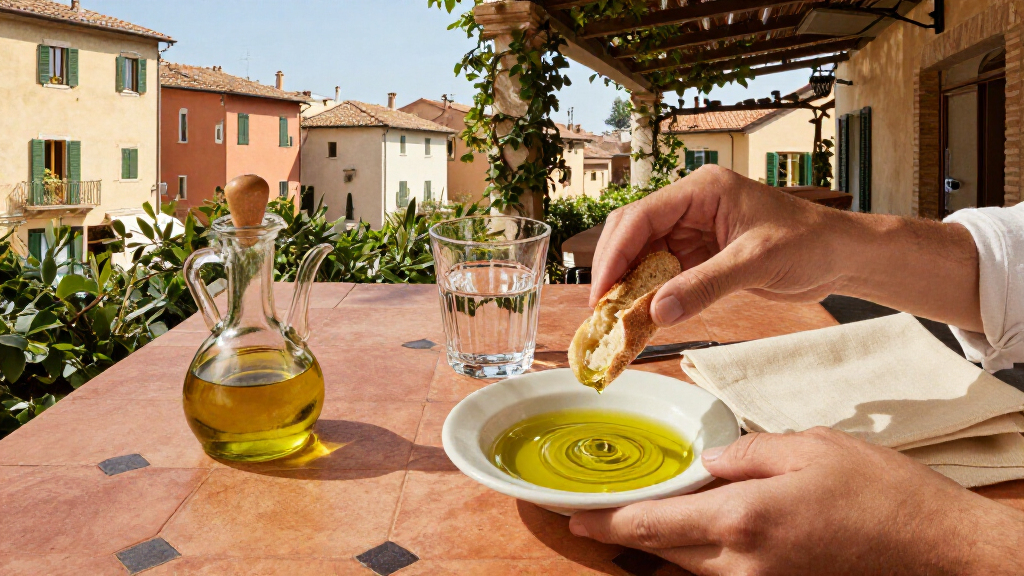
At a mill tasting, pour a little oil onto a small piece of bread or into a tasting cup and give it a moment. Notice the aroma first, then how the taste changes. One oil may start like cut grass and finish with a warm catch in your throat; another may taste softer, with ripe fruit and less bite. Onomatopoeic “tickle” is a fair description for that peppery finish.
Bitterness and pepperiness can be linked to naturally occurring phenolic compounds, but they are not a universal scorecard. A strong finish is not automatically superior to a gentle one, and a personal preference for soft oil does not mean you have chosen badly. If you’re buying a bottle to pour over white beans or vegetable soup, choose a flavor that complements the dish and that you want to taste.
Compare the mill’s oil on foods you might actually eat. A peppery pour over Tuscan ribollita can cut through the soup’s soft, bread-thickened texture; on its own, the same oil might seem intense to someone used to mild supermarket oil. A ripe, fruitier oil might be more comfortable for dipping bread at lunch. The dish changes how the oil lands.
Don’t confuse a lively flavor with defects such as rancid or otherwise faulty tastes. A short tasting does not replace formal quality assessment, which relies on appropriate chemical and sensory criteria. If you are unsure, ask the miller to describe the oil’s expected profile and to show the harvest date. That gives you a clearer frame for deciding what you like.
Keep the new-oil countdown going after you leave the mill
New oil keeps its lively aroma longer when you limit its contact with oxygen, light, and heat. Once you bring a bottle home, store it sealed in a cool, dark cupboard away from the stove and direct sunlight. A harvest date helps you judge how recently the olives were picked, but the oil’s initial quality, packaging, and storage all affect how well it holds its character.
Think of oil as a fresh ingredient rather than a bottle to display on a sunny counter. Dark glass or other protective packaging can limit light exposure, while a cap closed promptly after use reduces air contact. If you buy a large container at the mill, consider how often you cook with it and whether you can keep it closed between uses. Small daily habits matter once the oil is in your kitchen.
Cloudy, unfiltered oil is not automatically fresher or healthier. Suspended particles and moisture can make an oil look appealingly rustic, but they may reduce its stability in storage. If you buy it, enjoy it while its aromas are lively and follow the producer’s storage advice; appearance alone cannot tell you how long it will stay at its best.
Use the oil in ways that let its character show. Try a small pour over grilled vegetables, beans, or soup, or taste it with plain bread before using it in a dish. Fresh oil can also go into a pan; heating changes its aroma, but does not make it automatically unsuitable for cooking. Choose based on the dish and the flavor you want, rather than saving every drop for a special occasion that never arrives.
At a market near an olive-growing area, you might find two bottles from different harvest dates. Check the date, origin, and packaging, then buy a size you’ll use while the aroma still pleases you. There is no single freshness deadline for every oil; follow its best-before date as a guide, keep it closed and cool, and avoid storing it beside a hot oven or in direct sun.

Spot what a harvest date and a cold-extraction label can really tell you
New oil labels are most useful when they give you specific production details, especially a harvest date. “Cold extraction” generally describes an extraction condition below 27°C in relevant markets; it does not, by itself, guarantee better flavor or quality. Read the claim alongside the harvest date, origin, and producer information.
Why pay attention to a number like 27°C? It gives you a concrete clue about one part of the milling process, where time and temperature can influence aroma and extraction. But the olives still need careful handling before they reach the mill, and the finished oil still needs protection afterward. A label that highlights a single production condition cannot tell the whole story.
“Cold pressed” can also give an incomplete picture of modern production. Many mills use centrifuges to separate oil from water and solids rather than relying on traditional presses. If a guide at a mill explains that the oil is mechanically extracted and then separated in a centrifuge, you’re seeing how a familiar label phrase and current equipment can coexist in a more complicated process.
Traceability gives you a better basis for a bottle choice than a seasonal slogan. When you can see the producer, origin, variety, and harvest date, you can ask specific questions and compare answers. A dated bottle from a producer who explains the milling and storage may tell you more than a dramatic “first press” claim with little information about the fruit.
Prices and availability can shift with harvest conditions, local supply, inventories, demand, and distribution. Heat, drought, irregular rainfall, or pests may affect a region’s crop, but those pressures do not translate into one guaranteed price or yield everywhere. For travel planning, check current local reporting if you need this season’s outlook; for buying, focus on the details the producer can confirm about the oil in front of you.
Frequently Asked Questions
What does frantoio mean?
Frantoio means olive mill in Italian. The word can also refer to Frantoio, a well-known olive cultivar, so the context matters; a sign outside a working mill uses it in the first sense.
When can I buy new Italian olive oil?
New oil follows the local harvest, and harvest timing varies by region, weather, and variety. Ask the producer for the harvest date instead of relying on a general seasonal label, especially if you’re comparing bottles during a trip.
Is cloudy, unfiltered olive oil fresher or healthier?
Not necessarily. Cloudiness usually comes from suspended particles and moisture, and it does not prove freshness or quality. Those remnants may reduce how well the oil keeps, so store an unfiltered bottle carefully and follow the producer’s advice.
Why does fresh olive oil taste bitter or peppery?
Bitterness and pepperiness can be normal traits of extra virgin olive oil, especially in some green, early-harvest oils. The intensity varies by variety and production choices; a strong peppery finish alone does not prove higher quality.
Does cold-pressed mean the oil is better?
No label phrase on its own guarantees better oil. “Cold extraction” generally describes extraction below 27°C in relevant markets, while fruit quality, handling, milling, and storage also shape the result. Many modern mills use centrifuges rather than traditional presses.
How should I store a bottle of new oil?
Keep it sealed in a cool, dark place, away from the stove and direct sunlight. Close the cap promptly after pouring and use the best-before date as a guide; how long the oil stays lively depends on its initial quality, packaging, and storage.
Conclusion
At the mill, the first taste may be only a small pour over bread, but it carries the whole journey: the grove, the harvest date, the choices at the crusher, and the care taken before bottling. Ask how the olives were handled, taste for the flavors you enjoy, and choose a bottle whose harvest and origin you can trace.
Then take it home, close it after every pour, and keep it out of the sun. The next time you drizzle green, peppery oil over a bowl of beans, you’ll taste more than freshness—you’ll remember where the oil’s character began.
Halloween Picks
halloween
As an affiliate, we earn on qualifying purchases.