TL;DR
The Florentine reports that a Florence school is making the city beyond its campus a planned part of student learning, with visits to landmarks, museums, markets and artisan workshops. Head of School Sharyn Baddeley describes the approach as a priority this school year; the report does not name the school or provide outcome data.
A school in Florence is making the city outside its gates part of its teaching, using landmarks, museums, public spaces and artisan workshops as places for students to learn. Head of School Sharyn Baddeley described the approach as a priority this school year in a report published by The Florentine on November 24, saying it is intended to connect classroom subjects with what students can observe firsthand.

Get kitchen staples and gadgets delivered free with Prime
- Fast, free delivery on millions of items
- Prime Video, Amazon Music and more included
- Member-only deals all year
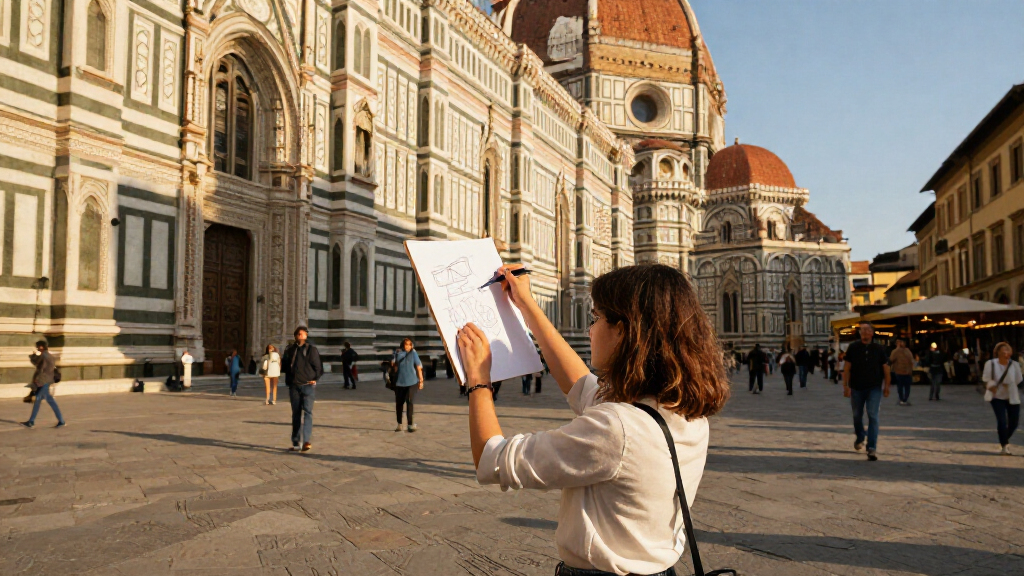
The report describes lessons that draw on Florence’s historical and cultural sites. A visit to the Duomo, for example, can prompt students to consider how Brunelleschi’s dome was built, while the Museo Galileo gives students a chance to see scientific instruments associated with Galileo. In art, Baddeley says viewing a work such as a Botticelli in person can direct attention to its scale, brushwork and condition in ways a screen may not.
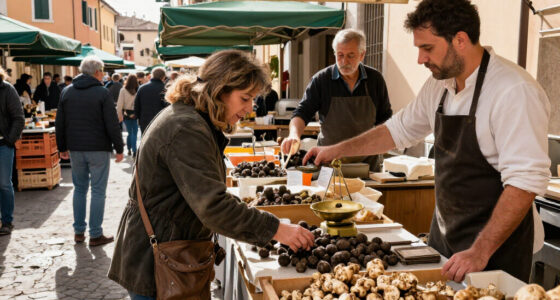
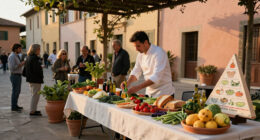
The approach also extends beyond major attractions. Baddeley points to partnerships with local artisans, including leather workers and bookbinders in Santo Spirito, as well as lessons that use markets for estimation and negotiation or city parks for biology. The report says staff are coordinating these activities through a shared calendar of local learning opportunities and by exchanging ideas about which locations suit particular lessons.
Baddeley’s account includes an example of Grade 5 students sketching the Palazzo Vecchio in Piazza della Signoria. She presents the exercise as an instance of students observing, revising and trying again. The article offers these examples as descriptions of the school’s approach, but does not provide enrollment figures, a formal curriculum document or measured evidence of its effects on learning.
How City Sites Shape Lessons
Using nearby places as teaching resources can give students direct encounters with ideas that might otherwise be introduced through a book, diagram or screen. A building’s structure, an instrument’s design or the details of a painting can provide concrete material for questions in history, science and art. The report’s examples also show how routine public spaces may support practical work in subjects such as mathematics and biology.
The model may matter to families considering how a school uses its location, and to educators looking for ways to connect lessons with local communities. Baddeley says the work does not depend only on major excursions: workshops, markets and parks can also serve as learning sites. The source, however, presents the case through the head of school’s account; it does not establish whether the approach improves academic results or how widely it is used across the school.
Products Worth Considering

Dyson Car+Boat Cordless Handheld Vacuum

Philips Hue Amarant Outdoor Smart Light Bar, Black

Roborock Q7 L5 Robot Vacuum and Mop Combo, 8,000 Pa Suction
As an affiliate, we earn on qualifying purchases.
A Local Learning Plan
The Florentine’s report, published on November 24, 2026, is written by Baddeley, identified as the school’s head. She says using Florence to encourage curiosity is one of the school’s priorities this school year. The report frames the work as a planned practice rather than a single field trip, citing staff coordination and a calendar of local learning links.
Florence’s historic buildings, museums and craft traditions provide the setting for the approach described. Baddeley’s argument is that the city should be treated as a working community as well as a destination associated with art and history. The article does not identify the school by name, specify how often students take lessons off campus, or describe permissions, transport or arrangements with partner businesses.
““Florence was never built to be a museum, though visitors often treat it that way.””
— Sharyn Baddeley, Head of School, in The Florentine
Evidence and School Details
The report does not name the school, set out the full program or say how many students and teachers take part. It also provides no assessment data comparing this approach with classroom-only instruction, so its educational effects cannot be judged from the article alone. Details about the frequency of visits, costs, access arrangements and the terms of partnerships with artisans are not given.
The examples and judgments in the report come mainly from Baddeley’s perspective as head of school. The publication does not include comments from students’ families, teachers, local workshop owners or independent education researchers. It is therefore unclear whether the activities described are representative of every grade or subject.
How the Program Develops
Baddeley says the city-based approach is a priority for the current school year, with staff using a shared calendar and exchanging ideas about lesson locations. The report does not announce a future launch date, new partnership or public evaluation. The next indicators to watch are whether the school releases further program details, describes how participation is organized, or reports on what students learn through the activities.
Key Questions
What is the school doing in Florence?
According to Head of School Sharyn Baddeley, teachers are using city sites—including historic landmarks, museums, markets, parks and artisan workshops—as learning settings connected to classroom subjects.
Which subjects are linked to places around the city?
The report gives examples involving history, science, art, mathematics and biology. These include studying Brunelleschi’s dome, viewing instruments at the Museo Galileo, observing art in person, estimating at markets and using parks for biology.
Is the program a new initiative?
Baddeley says using Florence to encourage curiosity is one of the school’s priorities this school year. The article does not provide a start date or explain how long similar activities have been taking place.
Has the school shown that the approach improves learning?
The report gives examples and Baddeley’s perspective, but includes no test results or formal evaluation. Its effect on academic outcomes is not established by the information published.
Source: theflorentine.net