
TL;DR
A last-minute Italian food gift can feel personal when you choose one excellent pantry item or build a small set around the recipient’s habits, such as pasta night, aperitivo, or coffee. Check labels, allergies, storage needs, and provenance, then add a handwritten serving idea so the recipient knows what to do with it.
Choose one excellent item around the recipient’s routine, then add only useful companions.
Use pasta night, aperitivo, breakfast, or dessert as a simple theme for a compact gift.
Read DOP and IGP labels as geographic and production information, and check the full product name.
Check allergens, expiration dates, storage instructions, and whether the recipient drinks alcohol.
Wrap glass in a reusable tea towel and include one handwritten serving suggestion.
Thoughtful gifts, even at the last minute
Choose one excellent pantry item around how someone likes to eat, then add useful companions and a handwritten serving idea.
Start with their routine
A compact set with a clear purpose feels more personal than unrelated items.
Pasta and sauce
Pair bronze-cut pasta with tomato sauce or pesto and a short cooking suggestion.
A savory snack
Bring olives, taralli or grissini, and a nonalcoholic drink if you’re unsure about alcohol.
A coffee break
Pair Italian chocolate, amaretti, or cantucci with coffee or tea.
Make the regional story accurate
Labels can explain provenance and production, but they do not guarantee a particular taste.
Check origin details and the product’s designation where relevant.
DOP has a stronger connection to its designated area; IGP requires at least one production, processing, or preparation stage there.
If products are not genuinely from a region, call the set “inspired by” it.
Check before you buy
A useful gift suits the recipient’s needs and is easy to enjoy.
- Check allergens and dietary restrictions.
- Read expiration dates and storage instructions.
- Look for clear origin information.
- Ask whether the recipient drinks alcohol.
- Wrap glass in a reusable tea towel.
- Add a handwritten serving suggestion.

Get kitchen staples and gadgets delivered free with Prime
- Fast, free delivery on millions of items
- Prime Video, Amazon Music and more included
- Member-only deals all year
Choose one standout Italian pantry item, then build around it
A last-minute Italian food gift feels generous when you choose one excellent item the recipient will actually use, then add one or two things that help them enjoy it. Start with their habits: if they cook pasta every Sunday, choose a distinctive pasta; if they snack while they cook, look for olives or crisp breadsticks. A small selection with a clear purpose beats a large assortment of unrelated jars. For instance, bronze-cut pasta has a rougher surface from being shaped through bronze dies, which can help sauce cling. Pair it with a jar of good tomato sauce and a handwritten suggestion to finish with olive oil and grated cheese. The pasta is the centerpiece; the sauce makes it easy to use on a busy night. If your recipient avoids gluten, choose a clearly labeled alternative rather than assuming a specialty pasta suits them. A useful angle is to shop for a moment, not a category. Build “Tuesday dinner” with pasta and sauce, or “slow Sunday breakfast” with Italian coffee and biscotti. You can assemble either set from familiar, readily available products. Add a serving note that gives the recipient a first step, such as “Toast the bread, pour the oil, and taste it before adding salt.” That small instruction makes the gift feel chosen rather than grabbed.Products Worth Considering

Levoit Core 300S-P Smart Wi-Fi Air Purifier

TCL 55-Inch R7D Series QLED 4K UHD HDR Roku Smart TV (55R7D, 2026)

Shark HydroVac MessMaster Cordless Wet Dry Vacuum and Mop Combo, AW261
As an affiliate, we earn on qualifying purchases.
Build a gift around pasta night, aperitivo, or something sweet
The easiest Italian food gifts to assemble are small themed sets: pasta night for a cook, aperitivo for a snacker, and a sweet finish for someone who loves coffee or dessert. Choose the theme that matches what the recipient already enjoys, then keep the set compact enough to carry and store.| Gift theme | Easy-to-find pairing | Personal touch |
|---|---|---|
| Pasta night | Bronze-cut pasta and tomato sauce or pesto | Add a short cooking suggestion |
| Aperitivo hour | Olives, taralli or grissini, and a nonalcoholic drink | Suggest serving before dinner |
| Something sweet | Italian chocolate, amaretti, or cantucci with coffee or tea | Pair it with a note about an afternoon break |
| Olive-oil tasting | Extra-virgin olive oil and crackers or breadsticks | Suggest tasting the oil with plain bread first |
Read Italian labels so your gift has a story you can trust
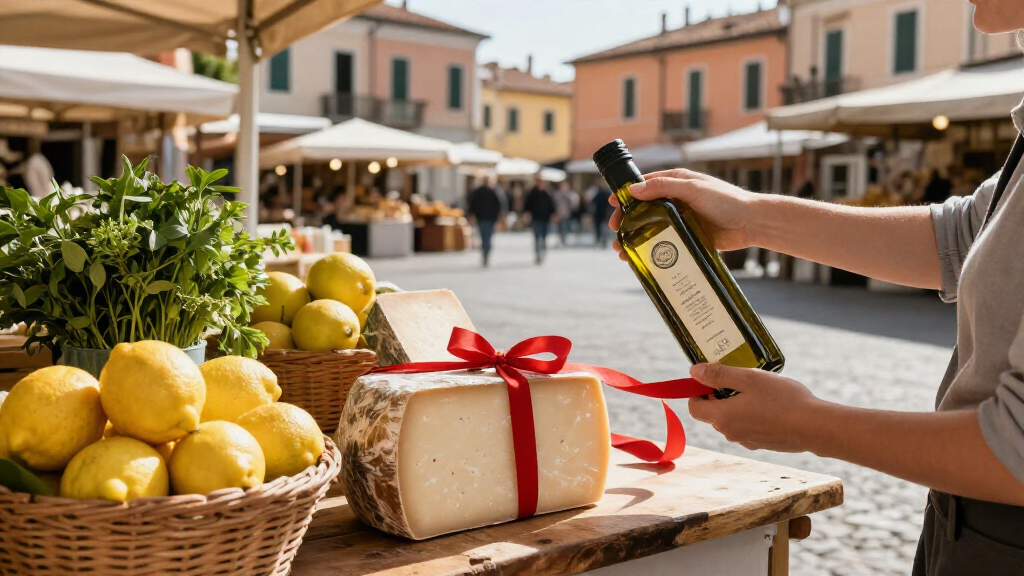
A label can tell you where a food comes from and how it was made, but a designation is a guide to provenance, not a guarantee that every recipient will prefer the taste. Look for clear origin details and recognized European Union geographic indications where relevant. DOP means “Protected Designation of Origin” and calls for a strong connection between a product and its designated area; IGP means “Protected Geographical Indication” and requires at least one production, processing, or preparation stage there. That distinction is useful when you spot balsamic vinegar. Traditional balsamic vinegar from Modena or Reggio Emilia is a specific, aged product with its own designation and price range; everyday balsamic vinegar is a different style. Read the full name and label before you buy. A small bottle of traditional balsamic might delight a keen cook, while a versatile everyday bottle could better suit someone who wants to dress salads through the week. “Extra-virgin olive oil” identifies a category defined by production and chemical standards. Those words alone don’t tell you the region, harvest date, or flavor. Check the producer and origin information, and choose a bottle that fits the recipient’s use: a greener, peppery oil for dipping bread, or a milder one for everyday cooking. A 250-milliliter bottle can make a practical gift without taking over a small kitchen.Make regional flavor personal without inventing a story
A regional food gift feels personal when you connect real products to a place and explain the connection plainly. If a specialty shop carries Ligurian pesto and pasta genuinely made in Liguria, you can build a set around the region’s bright basil, garlic, and olive-oil flavors. For a friend who prefers sweets, Sicilian pistachios or citrus confections can point toward the island’s vivid ingredients and pastry traditions. The detail matters: if the products aren’t actually from the region, call the set “inspired by Liguria” or “with Sicilian flavors.” For example, a grocery-store pesto paired with pasta might still make a lovely gift, but it doesn’t become a Ligurian regional sampler just because you add a postcard of Genoa. Accuracy lets you share the place without stretching the claim. You can make the regional link useful with one simple note. Try: “Ligurian pesto is lovely with pasta; loosen it with a spoonful of pasta water before tossing.” That advice turns the jar into dinner. If the set includes nuts, dairy, or gluten, flag those ingredients on the note or make sure they’re easy to see on the packaging. Regional identity makes a gift memorable; practical guidance helps the recipient enjoy it.Use a quick shopping plan to avoid rushed-looking packaging
You can make a considered Italian food gift in under an hour by choosing the recipient’s eating moment first, buying a compact set, and adding one clear serving idea. A quick plan gives each item a reason to be there, even when you’re shopping on the way to a gathering.- Pick the moment. Choose pasta night, aperitivo, breakfast, or dessert based on what the person already enjoys. If you’re unsure, a sweet and coffee pairing is easy to share.
- Choose one centerpiece. Select olive oil, bronze-cut pasta, a regional specialty, or Italian chocolate. Check the label for origin, ingredients, and storage guidance.
- Add one or two useful companions. Match the centerpiece with sauce, crackers, breadsticks, coffee, or tea. Avoid adding products that need an ingredient or tool you haven’t included.
- Wrap for the trip. Put glass bottles upright and cushion them with a reusable tea towel. Keep oils away from heat and direct light.
- Write a serving suggestion. One sentence is enough: “Try this oil with toasted bread,” or “Save these cantucci for your next coffee.”