
TL;DR
Mozzarella in carrozza is a southern Italian fried mozzarella sandwich, strongly associated with Naples and Campania: bread carries mozzarella, then gets coated in egg and fried until crisp. Use slightly stale bread and well-drained fior di latte, seal the edges, and fry in hot oil so the crust browns while the cheese softens. Serve it right away, while the center is warm and stretchy.
The best mozzarella in carrozza makes a small, satisfying noise when you bite through its golden shell. Then comes the soft cheese: warm, stretchy, and tucked between two slices of bread that have been coated in egg and fried. It’s a simple snack with a little kitchen drama, especially if the first sandwich you make springs a leak.

Get kitchen staples and gadgets delivered free with Prime
- Fast, free delivery on millions of items
- Prime Video, Amazon Music and more included
- Member-only deals all year
The name means “mozzarella in a carriage,” a playful way to describe bread carrying its cheese filling. The dish is closely associated with Naples and Campania, though you’ll find versions across southern Italy. It belongs to cucina povera (“humble cooking”), where everyday ingredients become something generous instead of going to waste.
This guide shows you how to choose the bread and mozzarella, keep the filling inside, and fry the sandwich so the outside turns crisp before the cheese escapes. You’ll also see where regional variations fit, when to try buffalo mozzarella, and how to serve this rich little snack. Think of the seal like the clasp on a lunchbox: small, but doing important work.
Slightly stale, sturdy bread is less likely to absorb too much moisture or fall apart.
Fior di latte is a reliable choice; drain and pat dry fresh buffalo mozzarella before using it.
Leave a border around the filling and coat the edges so the cheese stays inside.
Keep the oil hot and fry in batches to avoid a greasy crust.
Serve immediately with salad, vegetables, lemon, or tomato sauce; refrigerate leftovers promptly.
Mozzarella in Carrozza Naples’ crisp, cheesy sandwich
Bread carries mozzarella through an egg coating into hot oil, creating a golden crust and a warm, stretchy center. This cucina povera favorite makes everyday ingredients feel generous.
A sandwich with a purpose
Its name means “mozzarella in a carriage,” a playful nod to bread enclosing the cheese.
Rooted in Campania
Strongly associated with Naples and Campania, with versions across southern Italy.
Everyday ingredients
Bread, cheese, eggs, and oil turn simple pantry staples into a filling snack.
Eat it right away
The crisp shell and stretchy cheese are at their best just after frying.
Choose bread and cheese that hold up
Less moisture means a sturdier sandwich and fewer chances for the filling to escape.
- Choose sturdy, slightly stale slices.
- They absorb less moisture and are less likely to fall apart.
- Fior di latte is a reliable, generally less wet choice.
- Drain and pat fresh buffalo mozzarella dry before using.
Build a secure seal
Leave a border around the cheese, press the edges together, and coat them thoroughly in egg.
Slice the mozzarella evenly and remove surface moisture.
Keep cheese inside a clear bread border and press the edges firmly.
Dip in egg, then fry in hot oil until deeply golden; turn as needed.
Drain briefly and serve while the center is warm and stretchy.
Make the crust your way
Coatings and fillings vary by household and region.
| Choice | What it adds |
|---|---|
| Flour before egg | Can help the coating cling and seal the edges. |
| Breadcrumbs | A thicker, crunchier crust; not required in every version. |
| Anchovy | A familiar savory addition in some versions. |
| Oven or air fryer | A different crust and texture from deep frying. |
What mozzarella in carrozza is—and why Naples claims it
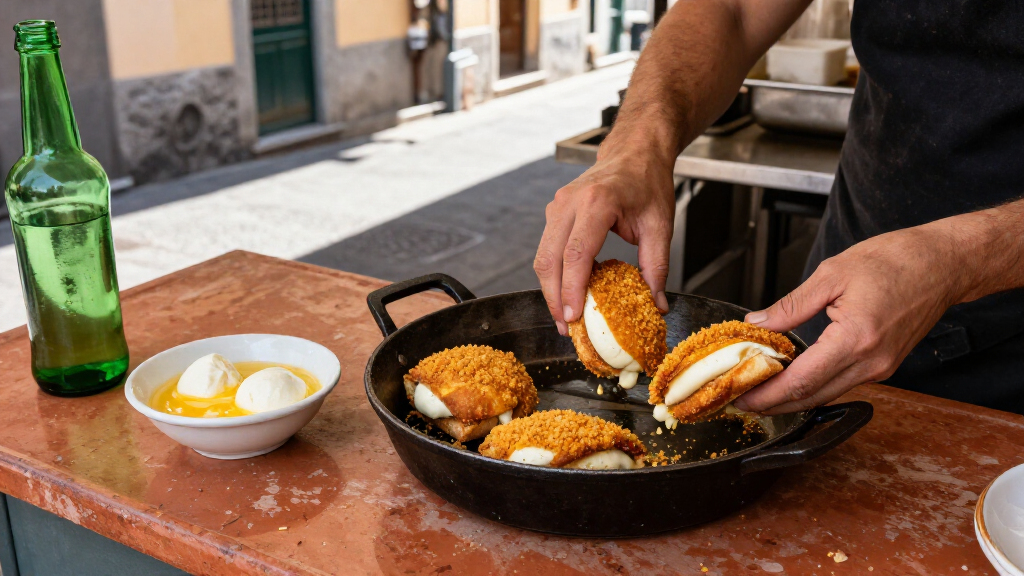
Mozzarella in carrozza is a fried mozzarella sandwich: slices of bread carry cheese in the middle, then the sandwich is coated in egg and fried until crisp. It is strongly associated with Naples and the Campania region, though similar versions appear elsewhere in southern Italy. The name means “mozzarella in a carriage,” but stories about the dish’s exact origin vary.
Its everyday ingredients tell you a lot about its character. Bread, cheese, eggs, and oil turn into a hot snack that feels more substantial than its short ingredient list suggests. In the spirit of cucina povera, slightly stale bread gets a second life instead of being thrown away. The result is not just grilled cheese in a different outfit: egg gives the bread a browned, savory shell, closer to a crisp fried toast sandwich.
You might meet it at home as a quick lunch, or in a bar as an appetizer cut into smaller pieces for sharing. Imagine a small plate arriving before dinner: crisp corners, a pale-gold center where the bread meets the cheese, and a thread of mozzarella stretching as you pull a piece apart. The bread “carries” the filling, but it also keeps the molten center handy for every bite.
That combination makes the dish useful when you want to cook something simple that still feels tied to place. In Naples, food traditions don’t always need a long list of rare ingredients. Sometimes they ask you to make the best of what’s in the bread basket, then eat while the cheese is still warm.

Products Worth Considering

Dyson Cyclone V10 Origin Cordless Vacuum

Google Nest Learning Thermostat (4th Gen, 2024) with Nest Temperature Sensor, Obsidian

Dyson V15 Detect Cordless Vacuum
As an affiliate, we earn on qualifying purchases.
Choose bread and mozzarella that won’t turn soggy
Mozzarella in carrozza holds together best when you pair sturdy bread with well-drained cheese. Slightly stale bread is especially handy because it absorbs less moisture and is less likely to collapse when you dip the sandwich in egg. For the cheese, fior di latte—cow’s-milk mozzarella—is a reliable choice because it is generally less wet than fresh buffalo mozzarella.
Fresh bread can work, but its soft crumb can drink up egg and moisture quickly. If the slices bend or tear as you pick them up, use bread with a little more structure. Cut the mozzarella in even slices so it warms at a similar pace. A thick lump in the middle may stay cool while the thin edges turn soft and begin to leak.
Buffalo mozzarella is not off limits; it simply needs more attention. Drain it well and pat it dry with a clean paper towel before assembling. For example, if you bought fresh buffalo mozzarella for dinner, slice only what you need and give it several minutes on a towel while you prepare the bread. A dry surface makes it easier for the coating to cling and the sandwich to seal.
Keep in mind that mozzarella is a dairy allergen, while egg is another common allergen in this recipe. If you’re serving guests, say so plainly before you pass the plate. Choose bread that suits their needs, too, since many loaves contain wheat and other ingredients. The texture starts with your choices at the cutting board: firm bread, evenly sliced cheese, and no puddle of whey.
Seal the sandwich before the cheese finds a way out
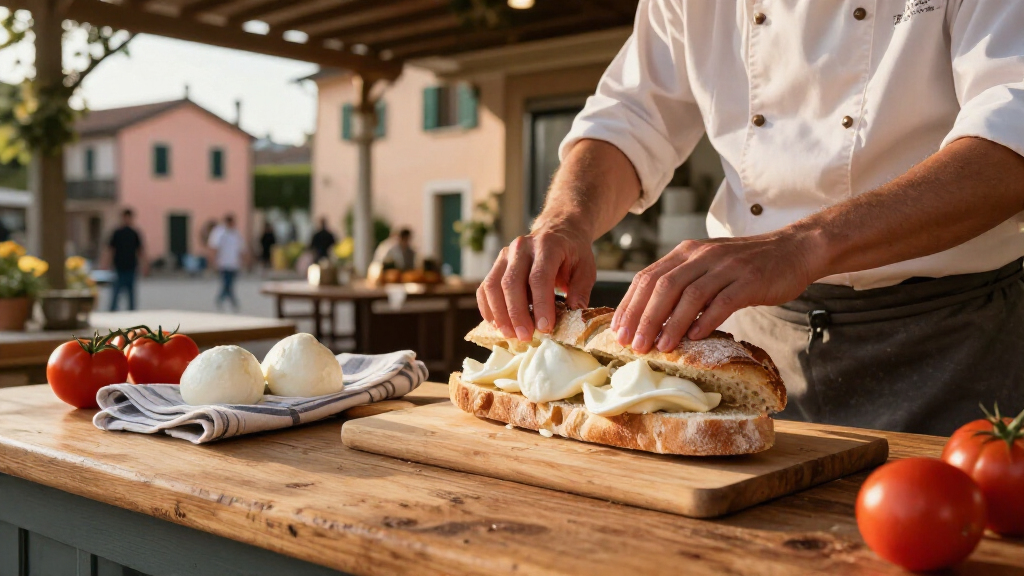
A tight edge and a clear bread border help keep the mozzarella inside the sandwich as it fries. Set the cheese between slices and leave a narrow margin around the crust instead of letting it reach the edge. Press the bread together firmly, especially at the corners. If the filling crowds the border, one small opening can let hot cheese escape into the oil.
Many versions dip the sandwich in flour before egg. That light coating can help the egg adhere and make a snugger seal, but recipes differ: some use egg alone, while others add breadcrumbs for a thicker crunch. Breadcrumbs are a choice, not a requirement. If you want a lighter, less bulky crust for a first attempt, try a flour-and-egg coating and see how your bread handles it.
For a practical sequence, set out everything before you begin. Dip each sandwich thoroughly in beaten egg, paying attention to the edges, then let the excess drip off briefly. A few seconds on a plate gives the coating a moment to cling; it shouldn’t sit so long that the bread becomes sodden. If the bread starts to feel floppy in your hands, you may be using too much egg or letting it soak too long.
- Slice and drain: cut even mozzarella slices and pat away surface moisture.
- Assemble: place cheese between bread slices, leaving a border, then press the edges together.
- Coat: dip in flour if you like, then coat both sides and edges with beaten egg.
- Fry: lower the sandwich carefully into hot oil and cook until deeply golden, turning as needed.
- Drain and serve: rest it briefly on a rack or paper towel, then eat while the cheese is warm.
This sequence is useful when you’re cooking a few sandwiches for friends: finish sealing and coating them before frying, so you’re not trying to press corners together over a hot pan. Clean hands and a clear work surface also make the job less slippery. The exact coating and order can vary by household; the purpose stays the same: keep the bread intact and give the cheese time to soften.
Fry for a crisp crust and a soft, stretchy middle
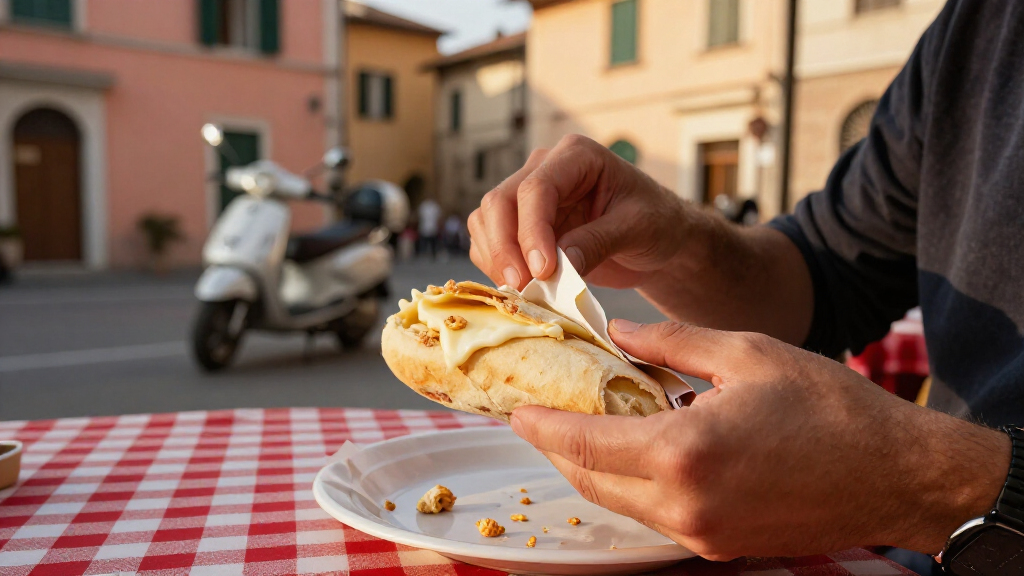
Mozzarella in carrozza needs hot oil to brown its coating without turning the bread greasy. If the oil is too cool, the bread absorbs more of it before the surface crisps; if it is too hot, the outside can darken before the cheese has warmed. You want a steady, active sizzle and a crust that turns deeply golden. A thermometer can help you judge the oil, though the technique still depends on your pan and the size of each sandwich.
Lower the sandwich into the oil carefully, keeping your fingers clear of splashes, and fry until the underside is golden before turning it. Don’t crowd the pan: adding too many cold sandwiches at once can cool the oil and slow the browning. If you’re making dinner for four, cook in batches and let the oil return to heat between them. The first piece can wait a moment on a rack while the next batch cooks, but the dish tastes best fresh.
Drain the fried sandwich briefly on a rack or paper towel. A rack lets air move around the crust, while a paper towel quickly catches excess oil; either works for a short rest. Don’t leave it sitting for long or steam will soften the crisp coating. Cut through the center only when you’re ready to serve, so the warm cheese stays inside until the first bite.
Watch for the clues: a patchy, pale crust suggests the oil wasn’t hot enough or the pan was crowded; a dark exterior with firm cheese suggests too much heat. A small test piece can teach you how your burner behaves before you fry the whole batch. If oil spits, lower the heat and step back; water on the mozzarella or a wet utensil can increase splattering. Keep children away from the pan and move fried food with tongs or a slotted utensil.
Try regional twists without losing the dish’s character
There is no single coating or filling that defines every mozzarella in carrozza. One cook may dip the bread in flour and egg; another may add milk or breadcrumbs, or press the edges more firmly. These differences are part of a home-style dish with many versions. What stays recognizable is the combination of bread, mozzarella, an egg coating, and frying.
Anchovies are a familiar savory addition in some versions. Their salty, briny edge cuts through the mellow cheese, so a small piece between the slices can change the whole bite. Ham or herbs also appear in contemporary variations. If you add a filling, keep it thin: extra layers make it harder to seal the bread and leave room for the mozzarella to soften.
You can also choose a different cooking method. Oven-baked or air-fried versions may suit a kitchen where you’d rather avoid a pan of oil, but their crust and texture differ from the classic fried sandwich. A light coating of oil can help them brown. Think of the difference like toast from a skillet versus toast from a toaster: both are crisp, but the surface and richness aren’t identical.
Use the version that fits the occasion. For an aperitivo at home, cut the sandwich into smaller bites and serve it as an antipasto (“before the meal”). For a quick solo lunch, keep it whole and pair it with simple vegetables. If you want to learn the classic feel first, make a plain cheese version before adding anchovy or ham. That gives you a baseline for how the bread, coating, and oil work together.
Serve it hot, with something bright on the side
Mozzarella in carrozza tastes best soon after frying, when the crust is crisp and the cheese still stretches. Its richness pairs well with something fresh or lightly acidic: a simple salad, lightly dressed vegetables, lemon, or a bright tomato sauce. The contrast matters. Cool, crunchy greens beside hot, soft cheese make each bite feel less heavy.
For a small gathering, cut the sandwiches into triangles or smaller squares just before serving. Put them on a warm plate and pass the sauce on the side, so the crisp coating doesn’t get soggy. If you’re planning a Naples-inspired snack spread, serve a modest portion alongside olives or seasonal vegetables rather than stacking the plate with several fried foods. A few hot pieces disappear quickly; a crowded platter can lose its crunch before guests reach it.
As with any perishable food, don’t leave mozzarella and egg sandwiches at room temperature for extended periods. Refrigerate leftovers promptly in a covered container and reheat until piping hot; the crust will soften compared with the fresh-fried version. For food safety, keep the refrigerator at 40°F (4°C) or below, and discard perishable food left out for more than 2 hours—or 1 hour if the temperature is above 90°F (32°C).
If you’re assembling sandwiches a little ahead, keep them chilled and fry them close to serving time. Long waits can soften the bread as it takes on moisture. For example, you can slice and drain the mozzarella while guests arrive, then coat and fry the sandwiches once you’re ready to eat. Keep the experience simple: hot sandwich, bright side, and a plate that doesn’t ask the crust to wait around.
Frequently Asked Questions
What does “mozzarella in carrozza” mean?
It means “mozzarella in a carriage.” The name evokes bread carrying cheese in the middle of a hot fried sandwich.
Is mozzarella in carrozza from Naples?
The dish is strongly associated with Naples and Campania, though versions are made across southern Italy and beyond. Its exact origin stories vary, so it’s safest to think of it as a longstanding regional staple with many home variations.
Which mozzarella works best?
Fior di latte, a cow’s-milk mozzarella, is a dependable option because it is generally less wet than fresh buffalo mozzarella. Buffalo mozzarella can work too, but drain and pat it dry before assembling so moisture doesn’t soften the bread or open the seal.
Do I need flour or breadcrumbs?
No. Coatings vary: some cooks use egg alone, while flour can help the egg cling and breadcrumbs make a thicker crunch. Try flour and egg for a snug coating, then adjust to suit the bread and texture you like.
Why did the cheese leak out?
Wet mozzarella, too much filling, an open edge, or a coating that hasn’t set can all let cheese escape. Pat the mozzarella dry, leave a border, press the bread firmly, and coat the edges before frying.
Can I prepare mozzarella in carrozza ahead?
You can assemble the sandwiches a short time ahead and keep them refrigerated, but the bread may soften if it sits too long. For the crispest result, coat and fry close to serving time, then eat while the cheese is warm.
Can I bake or air-fry it?
Yes, though the crust and texture differ from the classic fried version. A light coating of oil can help the outside brown; serve it promptly for the best texture.
Is mozzarella in carrozza the same as grilled cheese?
No. Grilled cheese is cooked directly in a pan, while mozzarella in carrozza is coated in egg and fried, creating a crisp, browned shell. The fillings may sound similar, but the method gives you a different crust and bite.
Conclusion
For mozzarella in carrozza that stays crisp and keeps its cheese inside, start with bread that can hold its shape, dry the mozzarella well, and press the edges together before coating. Fry in steady hot oil, then serve while the center is still warm and stretchy. That small bit of care turns bread and cheese into a snack with a real Neapolitan sense of comfort.
Make a plain version first, then try a little anchovy or a different coating once you know how your pan behaves. Set it beside something fresh, cut it while the crust still crackles, and let the warm cheese do the talking.