
TL;DR

Get kitchen staples and gadgets delivered free with Prime
- Fast, free delivery on millions of items
- Prime Video, Amazon Music and more included
- Member-only deals all year
Mortar-made pesto alla Genovese has a fragrant, slightly textured finish because pounding crushes basil and combines its oils with garlic, pine nuts, cheese, and olive oil without fast blades. A food processor is faster and can still make excellent pesto; fresh ingredients, gentle handling, and tossing the sauce with pasta off the heat matter most.
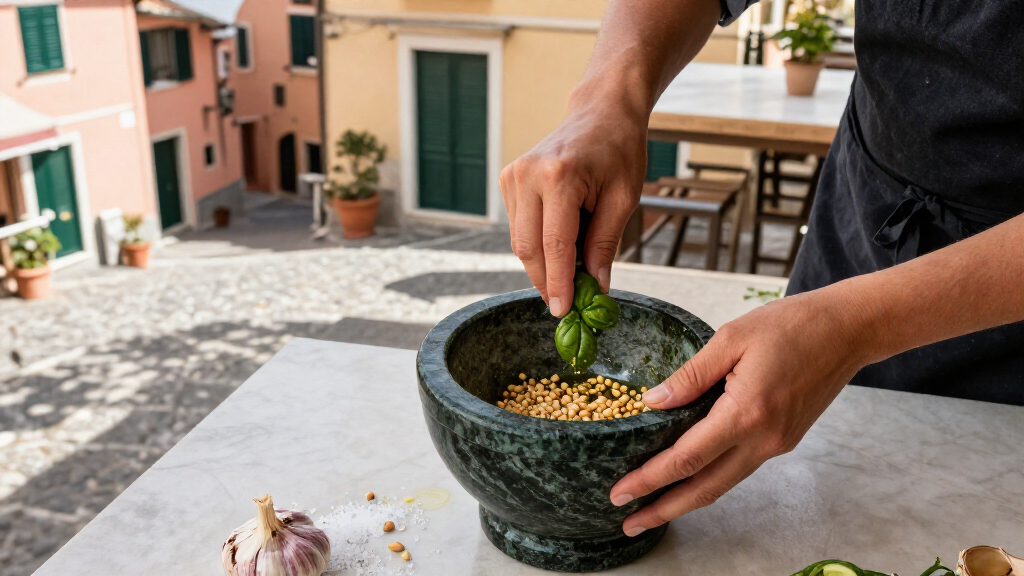
The first thing you notice is not the color. It is the smell: sweet basil, garlic, and olive oil rising from the mortar while the pestle makes a soft, steady scrape. That fragrant green paste is pesto alla Genovese, Liguria’s classic basil sauce, and making it by hand changes more than the pace of dinner.
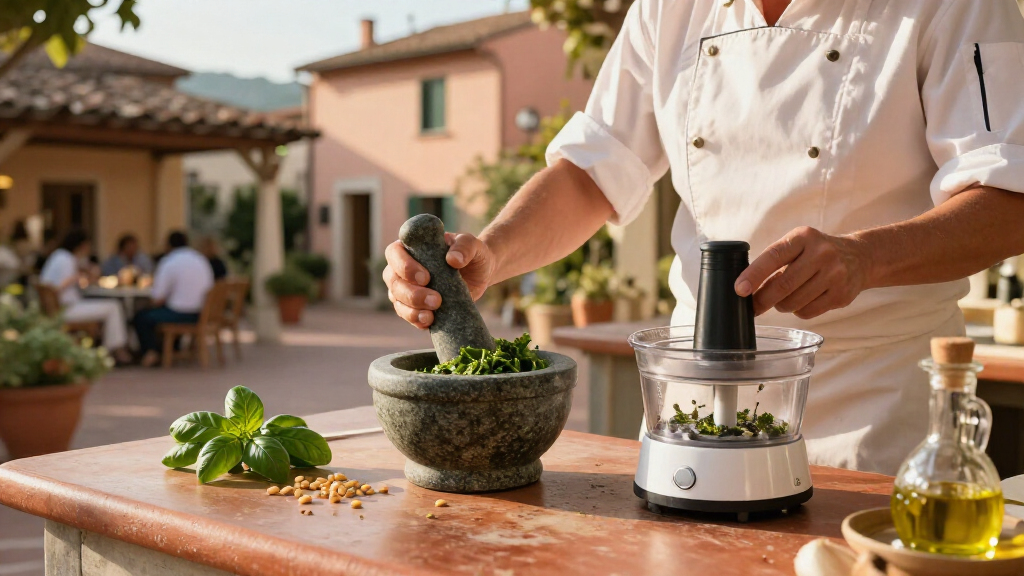
The method is a useful lesson in how texture shapes flavor. A marble mortar and wooden pestle let you crush the leaves gradually, while a food processor chops quickly and may warm a small batch. Neither method guarantees a perfect sauce, and the processor is a perfectly sensible tool. But if you want a pesto with a little texture and a just-crushed basil aroma, the mortar gives you control that a button cannot.
Here, you’ll get the traditional ingredient lineup, a practical step-by-step method, an honest comparison with machines, and ways to troubleshoot, serve, and store your pesto safely. You can make a small bowl for trofie tonight, even if your Ligurian kitchen is several thousand miles away.
The name pesto comes from the Ligurian verb pestâ, meaning “to pound” or “to crush.”
A mortar gives you more control over texture and pace; it does not make a food processor wrong.
Add ingredients gradually: crush garlic with salt, work in pine nuts and basil, then finish with cheese and olive oil.
Toss pesto with hot pasta off the heat, using a little pasta water to help it cling.
Refrigerate pesto promptly, use it within a few days, and freeze small portions if you need to keep it longer.
What makes pesto alla Genovese taste like Liguria?
Pesto alla Genovese is Liguria’s basil sauce, traditionally made by crushing basil with garlic, pine nuts, hard cheese, salt, and extra-virgin olive oil. Its identity comes from a short ingredient list and a fresh, herb-forward flavor, not from a long simmer. The name comes from the Ligurian verb pestâ, meaning “to pound” or “to crush.”
That word tells you something practical: the original technique is not a bit of kitchen theater added after the recipe was invented. Crushing is part of the dish’s logic. In Genoa and across Liguria, tender, aromatic basil gives the sauce its green perfume, while pine nuts soften the garlic’s bite and cheese adds saltiness and savoriness.
A classic cheese pairing combines Parmigiano Reggiano with Pecorino Fiore Sardo, a sheep’s-milk cheese from Sardinia. Recipes differ in proportions, so you can adjust the balance to your taste rather than treating one ratio as law. If your pesto tastes flat, a little more cheese or salt may help; if the basil seems buried, ease back on the garlic and oil.
The ingredients also explain why the sauce tastes different from a cooked herb sauce. Basil stays uncooked, so the bowl should smell leafy and sweet, not roasted or stewed. Use it on trofie or trenette, Ligurian pasta shapes often paired with pesto, potatoes, and green beans; that combination turns a spoonful of sauce into a full, satisfying meal.
Products Worth Considering

LEVOIT Vital 200S-P Smart Air Purifier for Large Rooms

Bose Smart Soundbar 700 with Alexa, Black

eufy Security SoloCam E42 4-Camera Kit with HomeBase 3, 4K Solar Security Cameras
As an affiliate, we earn on qualifying purchases.
Why the mortar gives basil a different texture and aroma
Pesto alla Genovese by mortar has a more controlled, slightly textured finish because the pestle crushes and smears the leaves against a rough bowl. The action releases fragrant oils and folds the ingredients together gradually. That is different from a processor’s fast blades, which cut ingredients into a more uniform mixture.
Think of the mortar as a small, sturdy mill rather than a bowl that happens to be heavy. You can feel when the basil begins to collapse and stop while tiny leaf flecks remain. With a processor, a few extra seconds can take you from a coarse paste to a smooth green sauce before you have time to look up.
That difference can matter when you dress pasta. A softly textured pesto can cling to ridges and twists, while a very smooth batch may coat noodles more evenly but feel less rustic. It is not a contest with a single winner: good basil, cool ingredients, and careful seasoning matter more than owning the traditional tool.
The comparison is sensory, not a claim that one method has been proven to win every taste test. A machine can still make excellent pesto. The mortar’s advantage is control over pace and texture, especially when you’re making a small batch and want to preserve a fresh, leafy aroma.
| Method | What it does | Best fit |
|---|---|---|
| Mortar and pestle | Crushes gradually; leaves a soft, textured paste | A small batch when aroma and hands-on control matter |
| Food processor | Chops quickly; makes a more uniform sauce | A weeknight meal or a larger batch |
| Blender | Can puree very smoothly and may need extra liquid to move ingredients | A pourable sauce, if you monitor texture and heat |
If you’ve only used a processor, try the mortar once with a handful of fresh basil. The difference is easiest to notice straight from the bowl, before cheese, pasta water, or a hot pan can blur the aroma.
How to make mortar pesto without bruising away its fragrance
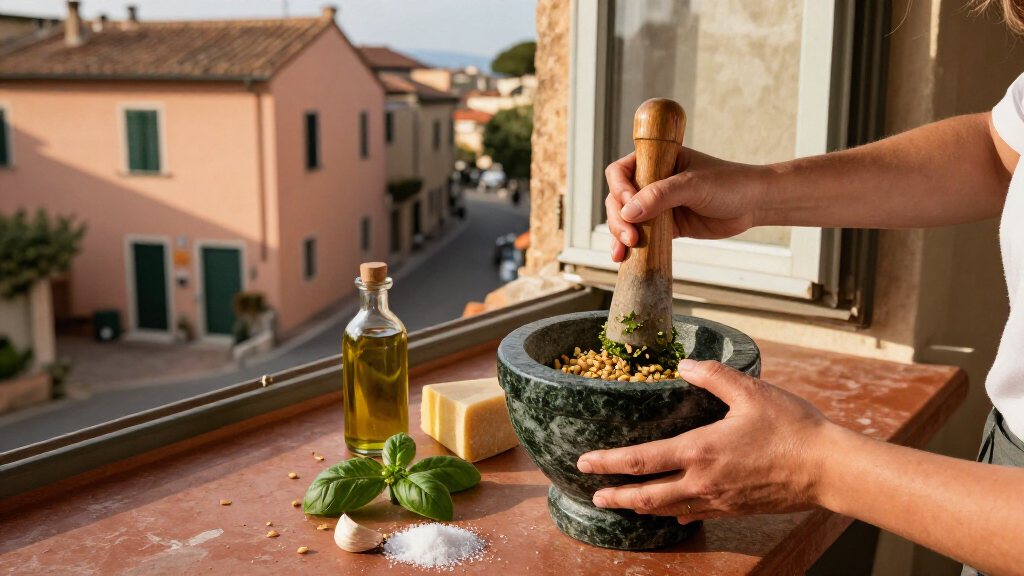
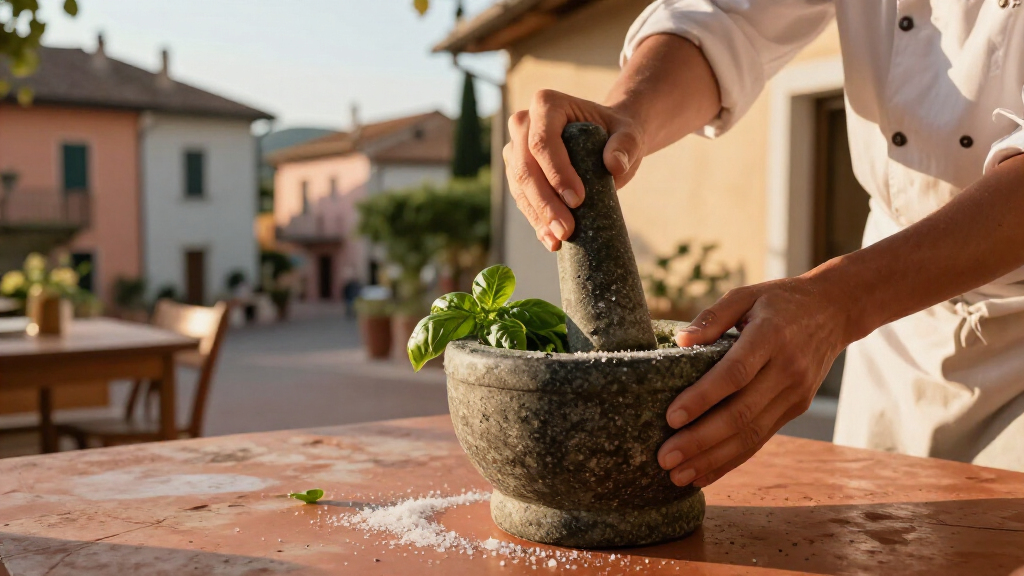
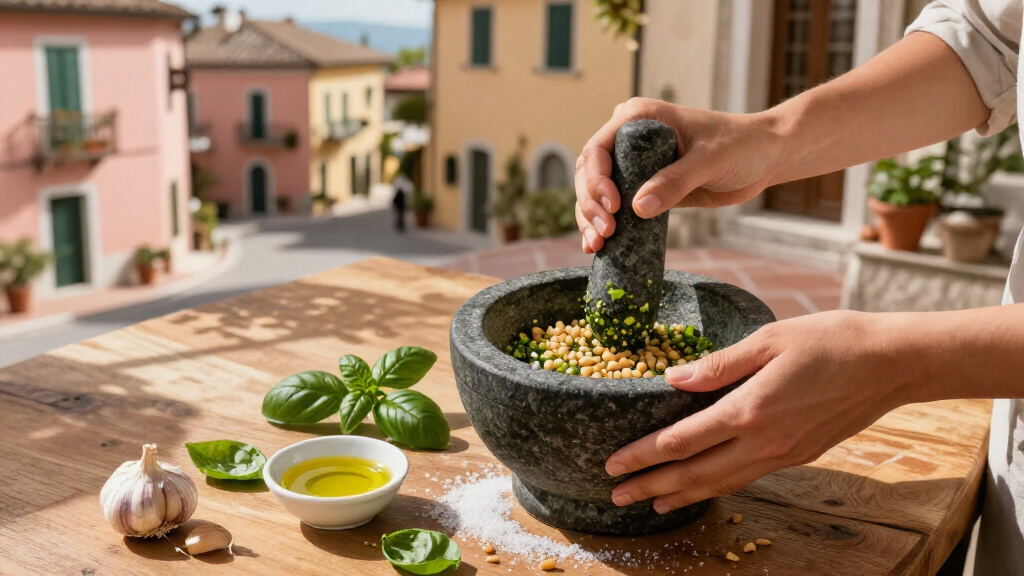
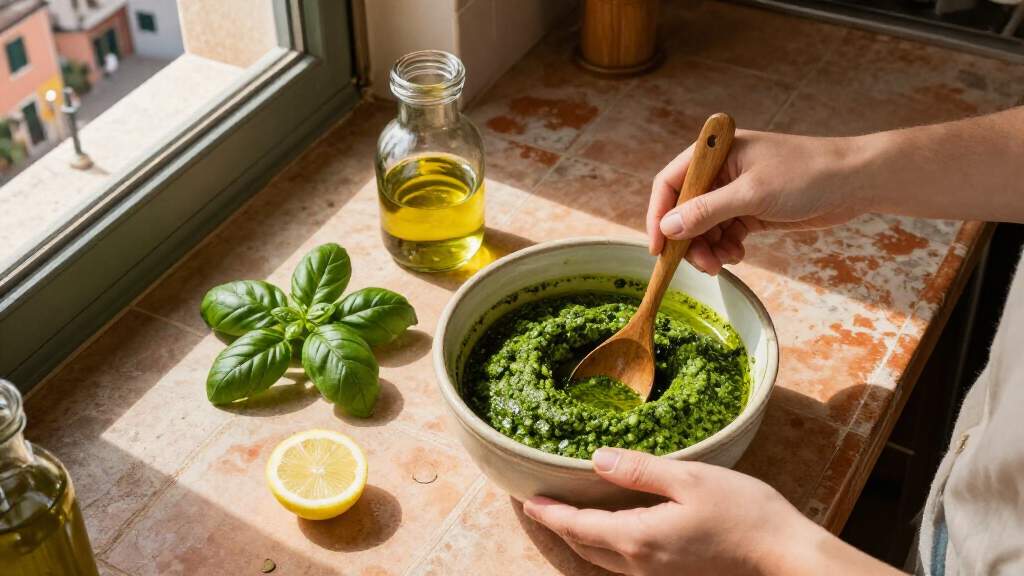
Pesto alla Genovese by mortar works best when you add ingredients gradually and stop once they form a cohesive, softly textured paste. You do not need to pound hard or hurry. A steady hand gives you more control over the basil than a long, forceful grind.
- Prepare the basil. Pick through fresh, tender leaves and discard damaged or wet ones. Rinse if needed, then dry them thoroughly; water can thin the pesto and makes it harder to control the texture.
- Crush garlic with salt. Put a small pinch of salt and a modest amount of peeled garlic in the mortar. Work them into a paste. Starting with salt helps create friction against the bowl.
- Add pine nuts. Pound them with the garlic until the mixture looks creamy but still has a little texture.
- Work in basil a handful at a time. Use a gentle circular motion, pressing the leaves against the sides. Add more only as the earlier leaves collapse.
- Stir in the cheese and olive oil. Add grated hard cheese, then pour in extra-virgin olive oil a little at a time. Taste before adding more salt.
Recipes vary on the exact order of cheese and oil, so use this as a reliable sequence, not a rule you must defend. What matters is avoiding an overcrowded mortar. If the leaves fly up the sides or the pestle barely moves, pause and divide the ingredients into two batches.
For a practical first try, make enough for two or three servings rather than filling a large bowl. A small batch lets you notice when the basil turns glossy and releases its scent. If you are cooking trofie, reserve a cup of pasta water before draining; a spoonful or two can loosen the finished pesto without adding more oil.
When a food processor is the better tool
A food processor is the better tool when you need pesto quickly, want to prepare a larger amount, or simply do not own a mortar. The mortar method still wins on hands-on control, but convenience is a real cooking need. A Tuesday dinner for hungry people does not have to become a test of traditional character.
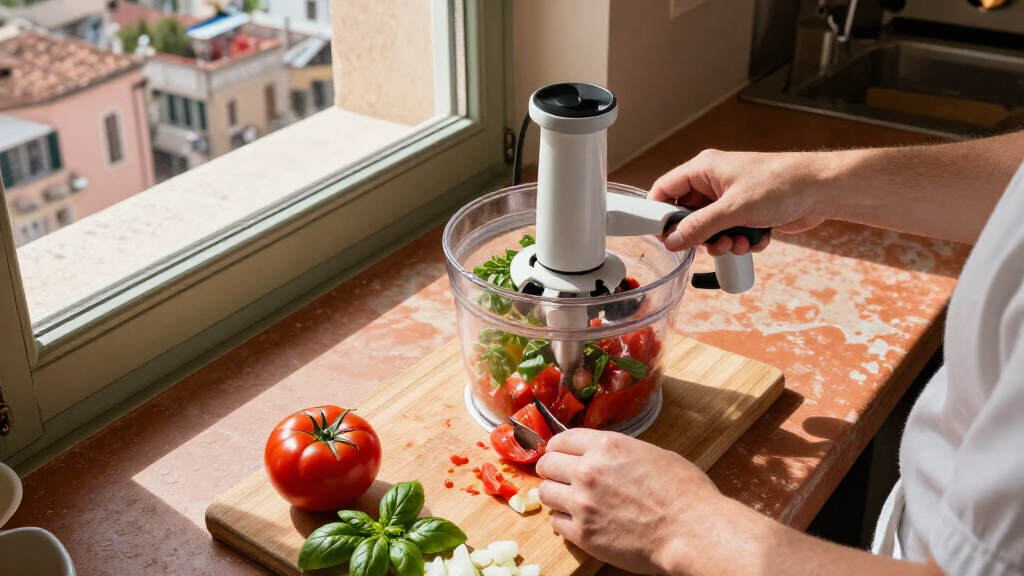
Use short pulses rather than running the machine continuously. Add the basil in stages, scrape down the bowl, and stop when the sauce has the texture you want. A processor’s blades can warm a small mixture if you let them run, and heat may dull the fresh impression of the herbs. Cold ingredients and brief pulses help keep the batch lively.
A processor also makes it easy to adjust a recipe for six servings or to make a batch for freezing. If you want some of the mortar’s texture, pulse the nuts and garlic first, then add basil and pulse just enough to break it down. Stir in cheese and olive oil by hand afterward.
There’s a useful middle ground: process the ingredients quickly, then taste and finish the sauce in a bowl with a spoon. You can correct the salt, add a little more oil, or leave the leaves less finely chopped next time. The method still wins when the goal is a distinct texture, but the best method for dinner is the one that helps you serve a good meal with care.
How to choose ingredients and make thoughtful substitutions
Fresh, tender basil matters more than an elaborate tool because it supplies the sauce’s signature scent. Look for leaves that are vivid green, perky, and free of dark spots. Ligurian pesto is associated with small-leaved aromatic basil, but when you’re cooking elsewhere, choose the freshest basil you can find and handle it gently.
Olive oil deserves the same attention. A peppery or bitter extra-virgin oil can overpower delicate basil, especially in a sauce that gets no cooking to soften its edge. Add the oil gradually and taste as you go; if your oil tastes bold on a piece of bread, it will taste bold in the mortar too.
Pine nuts are traditional, but they can be expensive or unsuitable for someone with an allergy. Walnuts, almonds, cashews, or seeds can work, though each changes the sauce. Cashews bring a mild, creamy finish; walnuts taste earthier. Check the package and avoid cross-contact if you’re cooking for anyone with a nut or seed allergy.
You can also omit dairy or use a suitable dairy-free alternative, but taste before adding extra salt. Cheese contributes both salt and savory depth, so leaving it out changes the balance. Pesto can still dress pasta or grilled vegetables; it simply becomes a different version rather than the classic combination.
- For a milder sauce: start with less garlic, then add more if needed.
- For a coarser paste: stop pounding or pulsing while you can still see small pieces.
- For a thinner sauce: use pasta-cooking water at the table, not a heavy pour of oil.
These choices are useful when you shop outside Liguria or cook for different tastes. Keep the basil and gentle handling at the center, and adapt the rest with a clear idea of what each change does.

How to serve pesto without cooking away its fresh taste
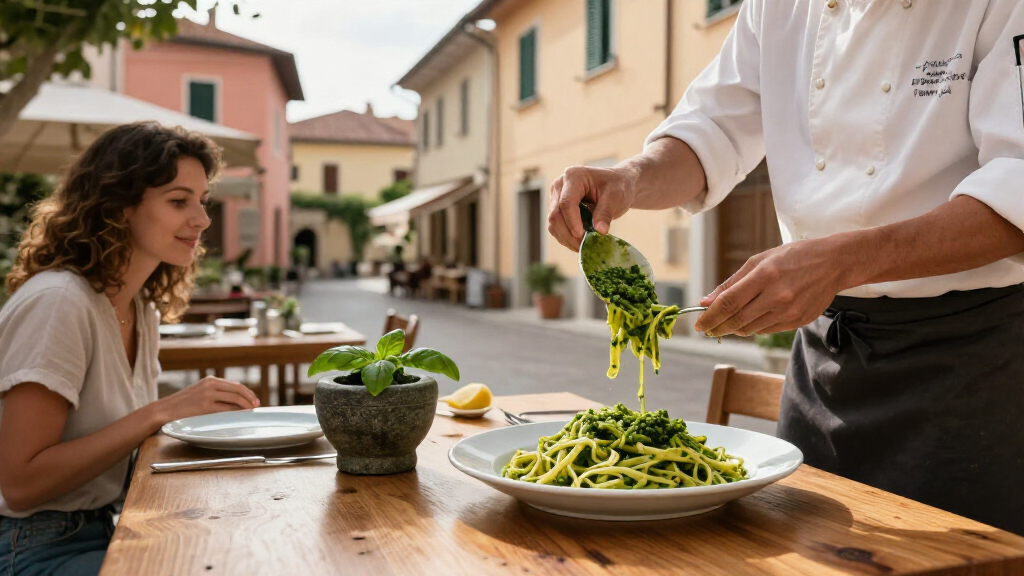
Do not cook pesto in a hot pan. Toss it with hot, drained pasta off the heat instead. Direct heat can dull the sauce’s fresh basil aroma and make the cheese feel heavy, while a splash of starchy pasta water helps the pesto spread over the noodles.
In Liguria, pesto is famously served with trofie or trenette, often with potatoes and green beans. If you are cooking trenette at home, add diced potatoes and trimmed green beans to the pasta pot according to how quickly each piece cooks. Drain when everything is tender, reserve pasta water, and mix the pesto into the warm pasta away from the burner.
Start with a small amount of pasta water, toss, and add more until the sauce looks glossy rather than oily. The water helps the pesto cling to the pasta, like a light green ribbon wrapping around each twist. Too much water can thin the flavor, so add it by the spoonful.
Pesto also works beyond pasta. Spread it thinly on toasted bread, spoon it over boiled potatoes, stir a little into vegetable soup after serving, or brush it onto grilled vegetables once they leave the heat. For example, a spoonful over warm green beans turns a simple side into a meal that recalls the Ligurian pairing without requiring a full pasta dish.
Serve it fresh and keep the bowl away from prolonged heat. The goal is not to protect pesto from every warm surface; it is to avoid simmering it. Warm pasta is enough to release the aroma without flattening it.
How to keep pesto green, store it safely, and fix common problems
Fresh pesto darkens when basil oxidizes after bruising and exposure to air. Work promptly, avoid overheating the mixture, and transfer leftovers to a clean, covered container. A thin layer of olive oil over the surface can reduce direct air contact, though it does not make pesto shelf-stable.
Refrigerate homemade pesto promptly and use it within a few days. Do not leave it at room temperature for a long stretch while you eat or clean up. If you make a larger batch, freeze small portions in a covered freezer-safe container or tray, then transfer frozen portions to a labeled freezer bag; small portions are easy to thaw for one meal.
Common problems usually have simple causes. If the pesto tastes bitter, the olive oil or nuts may be dominating, or the basil may have been worked too aggressively. If it tastes harsh, reduce the garlic next time. If it feels thick, loosen it with pasta water when serving rather than pouring in oil until the sauce turns greasy.
Food safety matters as much as color. Keep utensils and containers clean, refrigerate leftovers promptly, and discard pesto if it develops an off smell, visible mold, or an unexpected change in texture. For a dinner with guests, label containers that contain tree nuts, dairy, or both, and prevent cross-contact with other food.
If your pesto is already dark but has been handled and stored safely, color alone does not tell you everything about its condition. Check its smell, appearance, storage history, and the time it has spent refrigerated. Next time, use dry leaves, make a modest batch, and cover the surface before chilling.
What to remember when you choose mortar or machine
The mortar is worth choosing when texture and aroma are the point; the processor is worth choosing when time and batch size matter more. That is the practical answer, without turning a cooking tradition into a tool test. A rough paste made by hand can be lovely, but a well-seasoned processor batch is still pesto you can be proud to serve.
Think of the method as a dial, not a gate. At one end, a mortar gives you a slow, tactile process and more control over how much the basil breaks down. At the other, a machine gives you speed and consistency. You can move between them: pulse briefly, then finish by hand, or make a small mortar batch when basil is at its best.
Imagine two dinners. On Saturday, you have fresh basil, time to pound it, and a bowl of trofie waiting; the mortar makes the preparation part of the meal. On Wednesday, you come home late and need sauce for pasta in twenty minutes; a processor gets you there without sacrificing good ingredients or good judgment.
There is no need to claim that mortar-made pesto always wins a blind tasting. The honest case is more useful: it lets you control the pace, leaves a less uniform texture, and can keep the aroma vivid when you work gently. Choose fresh basil, taste your oil, and stop when the sauce looks and smells right. That care is the method’s lasting lesson.
Frequently Asked Questions
Is mortar-made pesto really better than food-processor pesto?
Mortar-made pesto can have a more textured finish and a fresh, just-crushed basil aroma because you control how far the leaves break down. A food processor is faster and can still make excellent pesto, especially when you use short pulses. Choose the mortar for the hands-on process and texture, not because a machine makes the sauce inauthentic.
What is the traditional order for making pesto in a mortar?
A useful sequence is to crush salt and garlic first, then work in pine nuts and basil a handful at a time. Add grated cheese and olive oil near the end, tasting as you go. Recipes differ, so focus on gradual mixing and a texture you enjoy rather than treating one order as the only acceptable version.
Why does homemade pesto turn dark?
Basil darkens through oxidation when crushed leaves meet air, and excess heat can dull its color and fragrance. Dry the leaves well, work promptly, and store leftovers in a clean covered container with a thin layer of oil over the surface. Refrigerate promptly; the oil does not make pesto shelf-stable.
Can I make pesto without pine nuts or cheese?
Yes. Walnuts, almonds, cashews, or seeds can replace pine nuts, though each changes the taste and texture; check for allergies and prevent cross-contact. You can omit cheese or use a suitable dairy-free alternative, then taste before adding salt because cheese normally contributes saltiness and savory depth.
How should I add pesto to pasta?
Drain the pasta, reserve some cooking water, and toss with pesto off the heat. Add pasta water a spoonful at a time until the sauce looks glossy and clings to the noodles. Avoid simmering pesto in a pan, which can flatten the fresh basil flavor.
How long does homemade pesto last, and can I freeze it?
Refrigerate pesto promptly in a covered container and use it within a few days. For longer storage, freeze small portions in a covered freezer-safe container or tray so you can thaw only what you need. Discard pesto that develops an off smell, visible mold, or an unexpected texture change.
Conclusion
Make pesto with a mortar when you want to feel the basil change beneath the pestle: leaves soften, oils rise, and the paste gathers into a fragrant green sauce. Use a processor when dinner needs to happen faster. In both cases, fresh basil, a balanced olive oil, gentle handling, and no direct cooking will do more for your pesto than rigid rules.
Next time you bring home a bunch of basil, make one small bowl by hand and serve it with trofie, potatoes, and green beans. Let the scrape of the pestle be the first course.