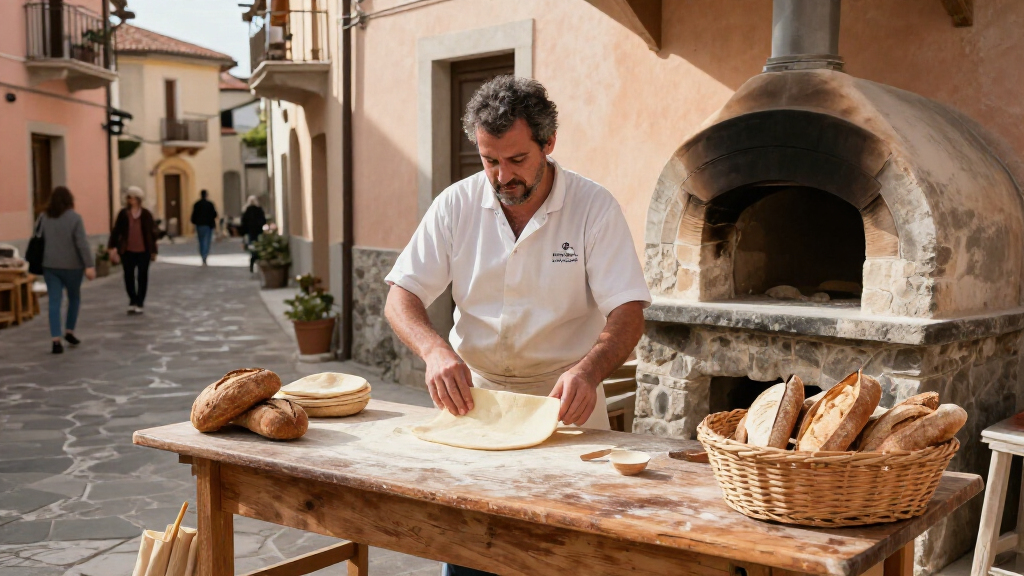
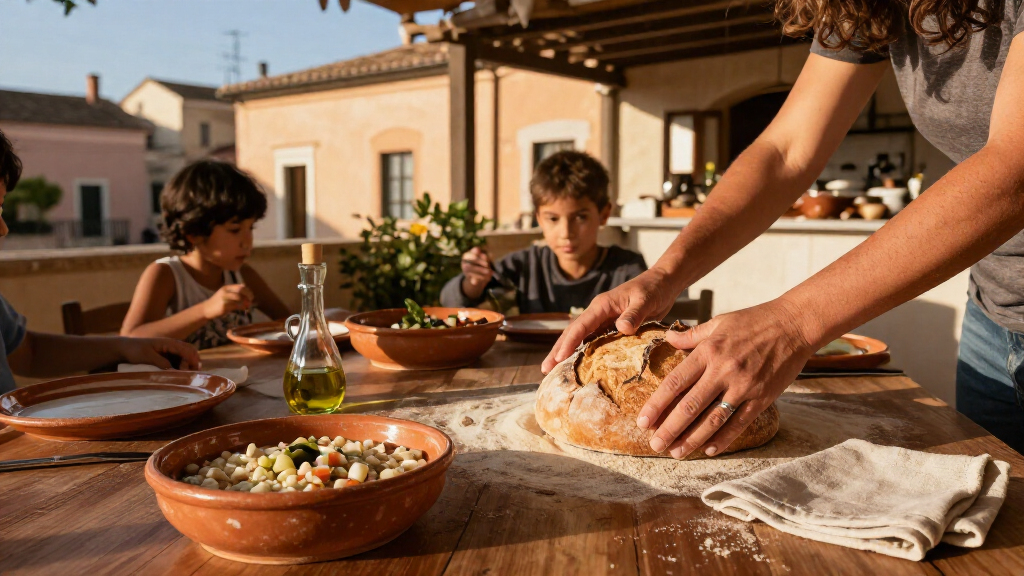
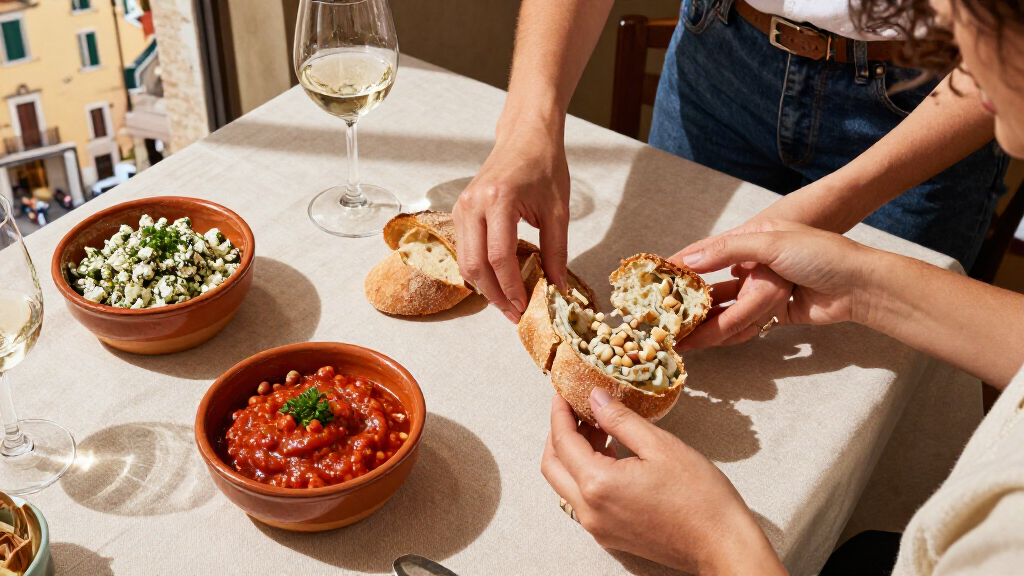
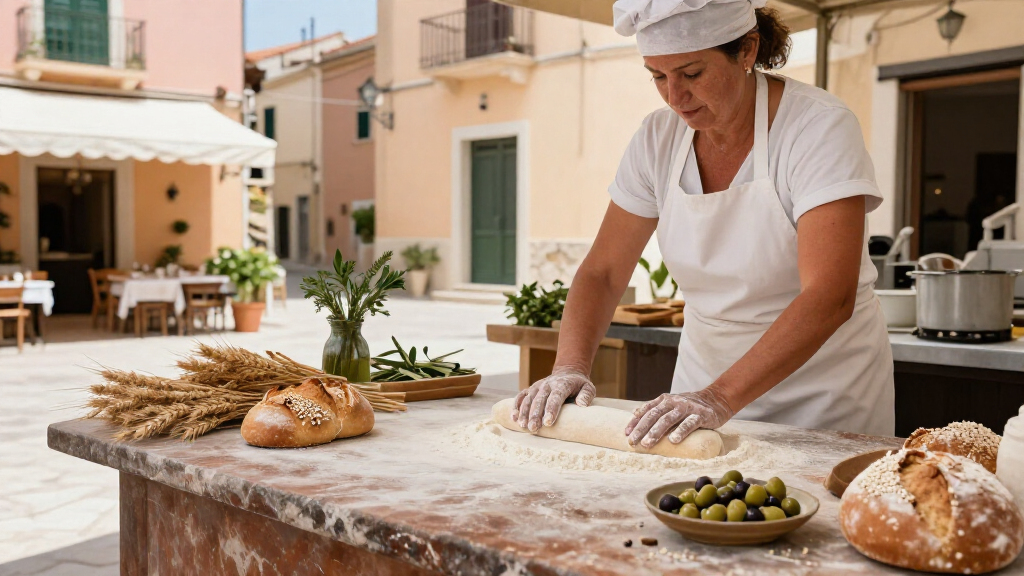
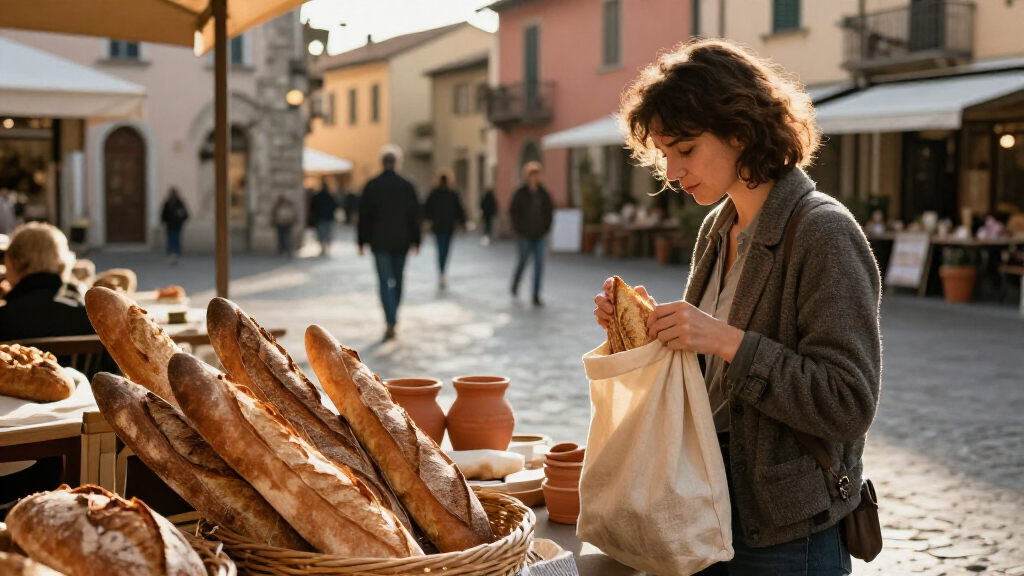
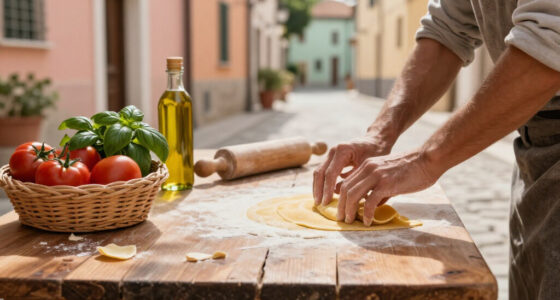
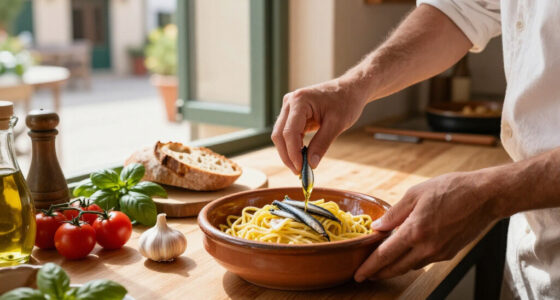
Pane carasau is a thin, crisp Sardinian bread traditionally made by splitting a loaf into two sheets and baking them again until dry. Its portability makes sense beside the crusty pane di Altamura of Puglia, salt-free pane toscano, Ferrara’s twisted coppia ferrarese, Milanese michetta, and Piedmontese grissini: each bread reflects local ingredients and the foods it accompanies.
A sheet of pane carasau can rustle like paper when you lift it from the table. In Sardinia, this broad, brittle bread is known as carta da musica (“sheet music”), a nickname that catches both its thinness and its delicate sound.
Its appeal goes beyond novelty. Traditionally made in Sardinia’s inland and pastoral areas, carasau offered a light, portable bread that could keep when stored dry, then be eaten crisp or softened for a meal. It gives you a practical starting point for understanding why Italy has no single national bread.
Here, you’ll learn how carasau is made and served, then compare it with breads from Puglia, Tuscany, Emilia-Romagna, Lombardy, Piedmont, and Sicily. You’ll also get simple storage and serving advice for bringing these regional traditions to your own table.
At a glance
Pane Carasau and Italy’s Great Regional Breads
Key insight
Traditional pane carasau is split into two thin layers during preparation and baked again, a process that makes the sheets crisp and shelf-stable when kept dry.
Key takeaways
1
Pane carasau is a Sardinian crispbread made by splitting dough into thin sheets and baking them again.
2
The nickname carta da musica means “sheet music” and refers to the bread’s thin, rustling sheets.
3
Pane frattau softens carasau with water or broth, then layers it with tomato sauce and pecorino; it often includes a poached egg.
4
Pane di Altamura is a Puglian durum-wheat bread with PDO status, while pane toscano is traditionally made without salt.
5
Store carasau dry and airtight; traditional carasau contains wheat and is not gluten-free.
Step by step
1
How to turn pane carasau into a meal, not just a snack
Pane carasau works as a snack when crisp and as a flexible base when you soften it with water or broth.
Why pane carasau became Sardinia’s crisp, portable bread
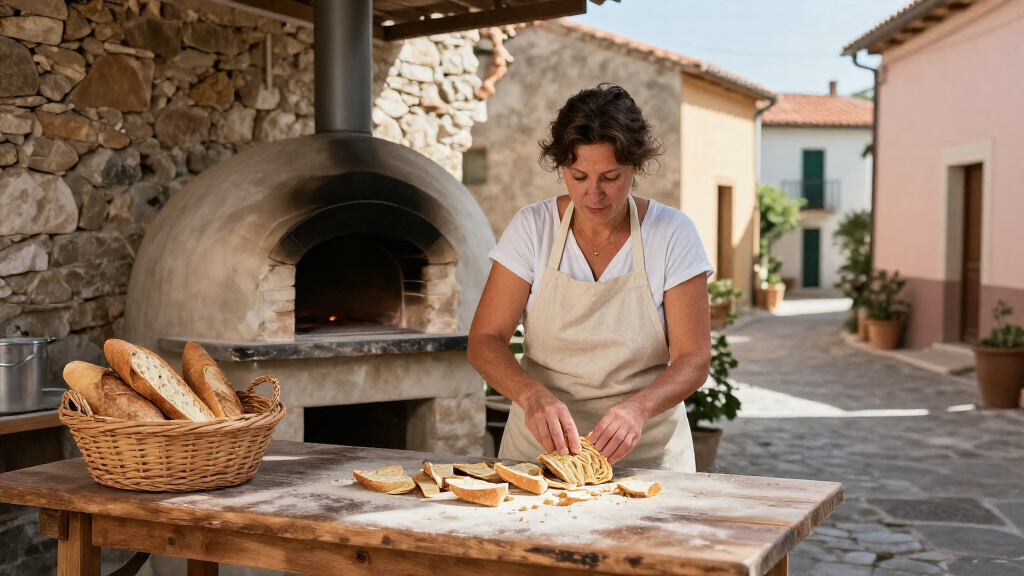
Pane carasau is a thin, crisp Sardinian flatbread made by baking a dough of flour, water, yeast, and salt, splitting it into two sheets, and baking the sheets again until dry. That second bake creates broad, brittle rounds that are easy to carry and can stay crisp when protected from moisture.
The bread is especially associated with Sardinia’s inland and pastoral communities. A loaf that could travel dry in a bag made more practical sense for people spending long stretches away from home than a soft loaf that might stale or crush easily. You can eat carasau straight from the package, or soften a sheet briefly with water or broth when you want it to bend rather than crack.
Its nickname, carta da musica (“sheet music”), describes what happens when you handle a fresh sheet: it is so thin that it can rustle softly like paper. The name of the bread is generally connected to the Sardinian verb carasare, associated with its final baking or toasting. Those names point to the defining feature: a second bake that turns bread into a crisp, storable staple.
Flours and methods can differ among producers, so no single formula represents every loaf. Traditional recipes commonly use durum wheat, though blends and equipment vary. Pane carasau is not the same as pane guttiau: guttiau is carasau dressed with olive oil and usually salt, then toasted again for a richer, savory finish.
Serving idea: Set out plain carasau with Sardinian pecorino and cured meat, or brush a piece with olive oil, add a pinch of salt, and toast it briefly. The plain sheet stays light and dry; the seasoned version turns crisp and fragrant.
Products Worth Considering
LEVOIT Vital 200S-P Smart Air Purifier for Large Rooms
Bose Lifestyle Ultra Soundbar and Ultra Subwoofer Bundle
Philips Hue Festavia 65-Foot Smart LED String Lights, 250 Color-Changing Mini LEDs
As an affiliate, we earn on qualifying purchases.
How to turn pane carasau into a meal, not just a snack
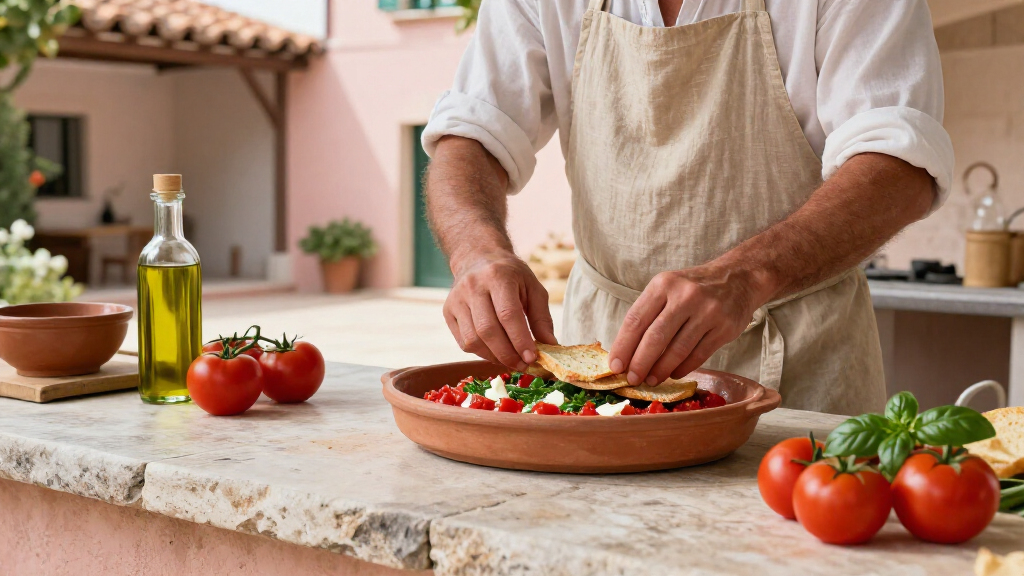
Pane carasau works as a snack when crisp and as a flexible base when you soften it with water or broth. The best-known layered dish, pane frattau, pairs rehydrated sheets with tomato sauce and pecorino, often finished with a poached egg. The bread absorbs sauce without disappearing, giving each bite a tender center and crisp edges.
To make a simple home version, warm tomato sauce while you soften the bread. Dip each sheet briefly in water or broth; it should bend, not turn to mush. Layer the bread with sauce and grated pecorino, then top with a poached egg if you like. This is a useful way to turn a few pantry staples into supper without treating the bread as a mere garnish.
Keep it dry until you’re ready to eat, especially if you want a crisp snack.
Soften it briefly with water or broth for layering; start with less liquid than you think you need.
Add a moist topping, such as tomato sauce, and a salty cheese such as pecorino.
Serve promptly if you want a contrast between soft bread and crisp edges.
For an aperitivo, serve crisp sheets beside cheese, olives, and cured meats. Basic carasau recipes are usually plant-based, but ingredients can vary in packaged versions, so check the label if you avoid animal products. Traditional carasau contains wheat and is not gluten-free; wheat is also a major allergen that people with wheat allergy or celiac disease must avoid.
For leftovers, seal the bread in an airtight container in a dry cupboard. Moisture steals its crunch quickly. If a sheet has gone a little soft, warm it briefly in a moderate oven and watch closely: thin bread can scorch before you’ve finished setting the table.
How Puglia and Tuscany make bread fit the meal
Italian regional breads differ not only by shape but by the job they do at the table. Pane di Altamura from Puglia is a substantial durum-wheat loaf with a firm crust; pane toscano is traditionally made without salt, a quality often connected to the region’s flavorful, salty accompaniments. Side by side, they show how flour, crust, and seasoning can suit different meals.
Pane di Altamura is protected by a European PDO designation, or Protected Designation of Origin, which ties the name to defined production requirements and its place of origin. Its sturdy crust and substantial crumb make it a natural partner for soups or a plate of vegetables dressed with olive oil. If you’re visiting Puglia, look for the loaf in its home region; at home, a thick slice can anchor lunch without needing an elaborate topping.
In Tuscany, pane toscano is known for being made without salt. That can taste unexpectedly plain if you nibble a slice by itself. Put it beside salty cured meat, a well-seasoned soup, or a savory topping, and the bread’s mild flavor becomes a useful counterpoint instead of a flaw.
Bread
Region
What you’ll notice
Try it with
Pane di Altamura
Puglia
Durum wheat, thick crust, substantial loaf; PDO
Soup or olive-oil-dressed vegetables
Pane toscano
Tuscany
Traditionally salt-free and mild
Salty cured meat or savory soup
Pane carasau
Sardinia
Thin, crisp sheets; traditionally baked twice
Cheese, tomato sauce, or a crisp snack
This comparison is more useful than asking which bread tastes “most Italian.” If your meal is a brothy soup, choose a sturdy slice; if you want something that can travel dry or soften into layers, reach for carasau. Local food customs help explain the bread, and your menu helps you choose it.
What Ferrara, Milan, and Piedmont put on the bread table
Pane carasau is not Italy’s only bread shaped around daily use: Ferrara’s twisted loaf, Milan’s airy roll, and Piedmont’s breadsticks each offer a different texture and way to eat. The comparison is striking at a table: a broad crisp sheet, a sculptural loaf with curled ends, a light roll, and a slender breadstick each ask for a different bite.
From Emilia-Romagna, coppia ferrarese is a distinctive twisted bread associated with Ferrara and protected under the EU’s PGI scheme, or Protected Geographical Indication. Its curled, sculptural shape makes it easy to recognize in a bakery case. Break off a piece alongside a bowl of soup or a spread; the twisting gives you plenty of crust to nibble.
Milan’s michetta is a light, hollow-centered roll. Unlike a dense country loaf, its appeal lies in a delicate shell and airy interior. It works well for a simple sandwich, especially when you want the filling to remain the star rather than compete with a heavy crumb.
Grissini, the crisp breadsticks associated with Piedmont, are made for a different rhythm: pick one up, crunch it, and reach for another. They are now familiar well beyond their home region, but they still make a useful contrast with soft rolls and big loaves. At a gathering, set them beside cheese or cured meat as an easy-to-grab option.
Coppia ferrarese: choose it when you want a recognizable, crust-forward loaf to share.
Michetta: choose it for a light sandwich that won’t feel weighed down.
Grissini: choose them for an easy crisp accompaniment to an aperitivo.
These breads show why a broad list of regional breads matters: shape is practical, not just decorative. A crisp stick, hollow roll, or twisted loaf handles serving and eating in its own way.
What Sicilian breads tell you about island ingredients
Pane carasau and Sicilian breads both show how an island’s baking can reflect local ingredients, but they do it differently. Carasau is known for its thin, dry sheets and portability; Sicilian breads are often made with durum wheat and may be topped with sesame. Compare the two and you’ll find different ways to put grain and texture at the center of a loaf.
Durum wheat appears in bread traditions across southern Italy, including Sardinia, Puglia, and Sicily. Its presence does not make these breads interchangeable: the shape, baking method, and intended use still matter. A sesame-topped Sicilian loaf offers a nutty finish and a chewy bite; a carasau sheet is light, crisp, and easy to break into pieces.
In a bakery, a sesame-covered crust gives you a quick clue about the bread’s surface and flavor, but it doesn’t tell the whole story. Ask what flour the baker uses and how the bread is usually served. If you’re cooking at home, try the sesame loaf with a simple meal where its toasted aroma can stand out, rather than burying it under a pile of strong toppings.
Italy’s bread map is far larger than any short guide can hold. Local ingredients, climate, oven traditions, trade, and food customs all help shape the result. The most useful way to explore is to taste with a question in mind: is this bread made to keep, to soak up sauce, to carry a filling, or to crunch alongside a drink?
Try this on a trip: Buy one bread from a local bakery, then ask what people in the area usually eat with it. That answer often tells you as much about regional cooking as the loaf itself.
How to choose, store, and serve regional breads at home
Choose a regional bread by matching its texture and keeping qualities to your meal, then store it in the way that protects that texture. For a picnic, dry carasau is easy to carry; for soup, a substantial loaf such as pane di Altamura is a better fit; for a light sandwich, a michetta makes sense. Your bread choice can solve a practical problem before you decide what to put on it.
At the bakery, ask where the bread comes from, which flour it uses, and what locals pair it with. Those three questions help distinguish a genuinely regional loaf from a general style name, and they give you a useful serving idea. If a protected designation matters to you, check the product’s labeling and the current official register; a familiar regional reputation does not automatically mean a bread has PDO or PGI status.
Store carasau differently from a soft loaf. Keep the sheets in a dry, airtight container and away from steam from a kettle or stovetop. If you buy a soft bread, follow the bakery’s advice and eat it while its crust and crumb are at their best; freezing may suit some loaves better than leaving them exposed until they dry out.
For a crisp snack: serve carasau plain or as pane guttiau with oil and salt.
For soup: choose a substantial slice that can stand up to liquid.
For a sandwich: pick a light roll such as michetta.
For a bread basket: mix shapes and textures instead of serving several similar loaves.
If you’re comparing packaged breads, read the ingredient and allergen labels. Traditional carasau contains wheat and is not gluten-free, while producer recipes can vary. If a sheet has lost its crunch, a short spell in a warm oven can help, but stay nearby because it can burn quickly.
Frequently Asked Questions
Why is pane carasau called carta da musica?
Carta da musica means “sheet music.” The nickname refers to the bread’s broad, thin sheets, which can rustle softly when you handle them.
Is pane carasau the same as pane guttiau?
No. Pane guttiau is a seasoned variation of carasau, commonly brushed or drizzled with olive oil, sprinkled with salt, and toasted again. Plain carasau stays dry and crisp without that added seasoning.
How do you soften pane carasau for pane frattau?
Dip the sheets briefly in water or broth until they bend, rather than leaving them to soak. Layer the softened bread with tomato sauce and pecorino; pane frattau is often finished with a poached egg.
Is traditional pane carasau gluten-free?
No. Traditional pane carasau contains wheat and is not gluten-free. If you need to avoid gluten because of celiac disease or another medical reason, do not rely on a product unless its label clearly verifies that it meets your needs.
How should you store pane carasau?
Keep it in a dry, airtight container away from steam and other moisture, which quickly takes away its crispness. If it softens, warm it briefly in a warm oven and watch it closely so the thin bread does not burn.
What makes pane di Altamura different from pane toscano?
Pane di Altamura from Puglia is a substantial durum-wheat loaf with a sturdy crust and a PDO designation. Pane toscano is traditionally made without salt, so it pairs naturally with salty foods such as cured meats and savory soups.
Conclusion
When you choose Italian bread, start with the job you need it to do. Pane carasau travels dry and crisp, then softens into pane frattau; pane di Altamura holds up beside soup, while a michetta makes a lighter sandwich.
Keep carasau sealed away from moisture, and let its delicate sheets remind you that bread can be both everyday food and a record of place. One crisp piece on the table can carry a little Sardinia with it.
New Italian Restaurant And Wine Bar Coming Soon To Gahanna’s Creekside
A new Italian restaurant and wine bar is set to open soon in Gahanna’s Creekside district, offering authentic cuisine and local wines. Details on opening date and offerings inside.