
TL;DR

Get kitchen staples and gadgets delivered free — and shop member deals
- Fast, free delivery on millions of items
- Access to Prime Big Deal Days deals on October 6–7
- Prime Video, Amazon Music and more included
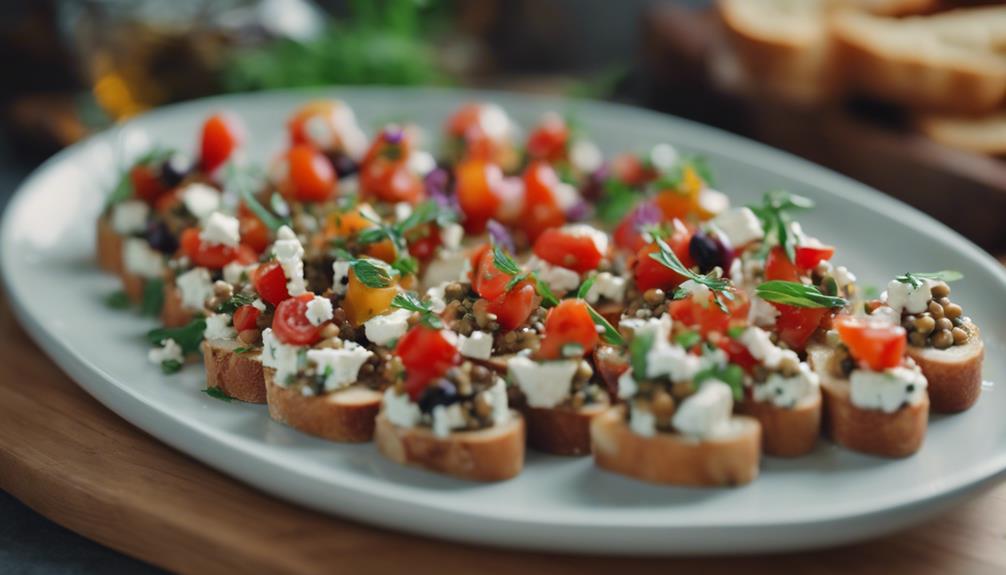
Autumn bruschette are toasted rustic bread topped with sautéed mushrooms or roasted squash and finished with olio nuovo — Italy’s freshly pressed, peppery new olive oil available only from November through December. This guide covers the Tuscan tradition behind new oil, how to choose bread, mushrooms, and squash, and a step-by-step method with finishing options for vegetarian and vegan tables.
Every November, something happens in Tuscany that has nothing to do with truffles or wine festivals. The olive presses start running, and within days, restaurants and home kitchens are pouring olio nuovo — new oil, cloudy, electric green, and so peppery it catches in the back of your throat — over everything from plain toasted bread to ribollita.
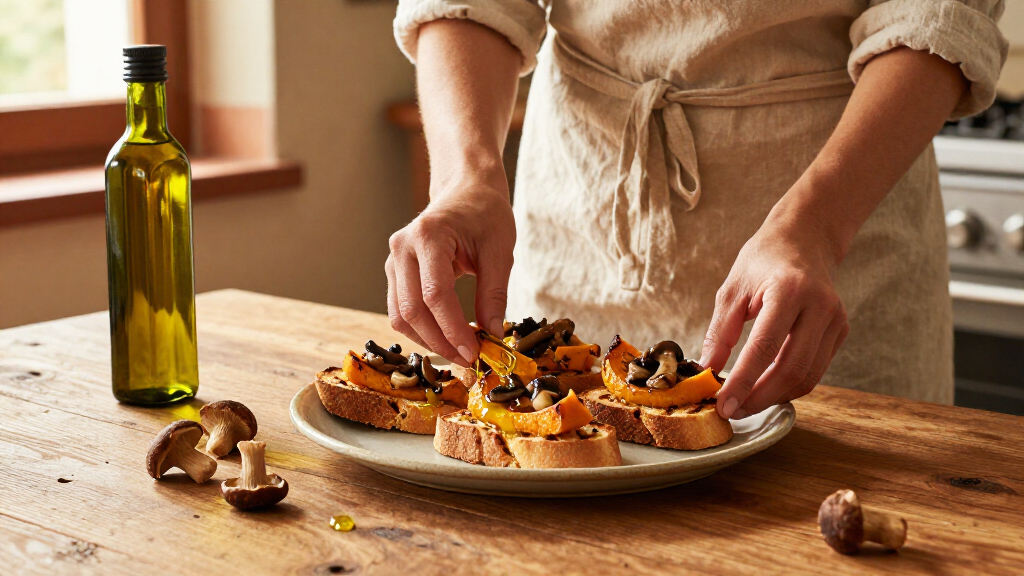
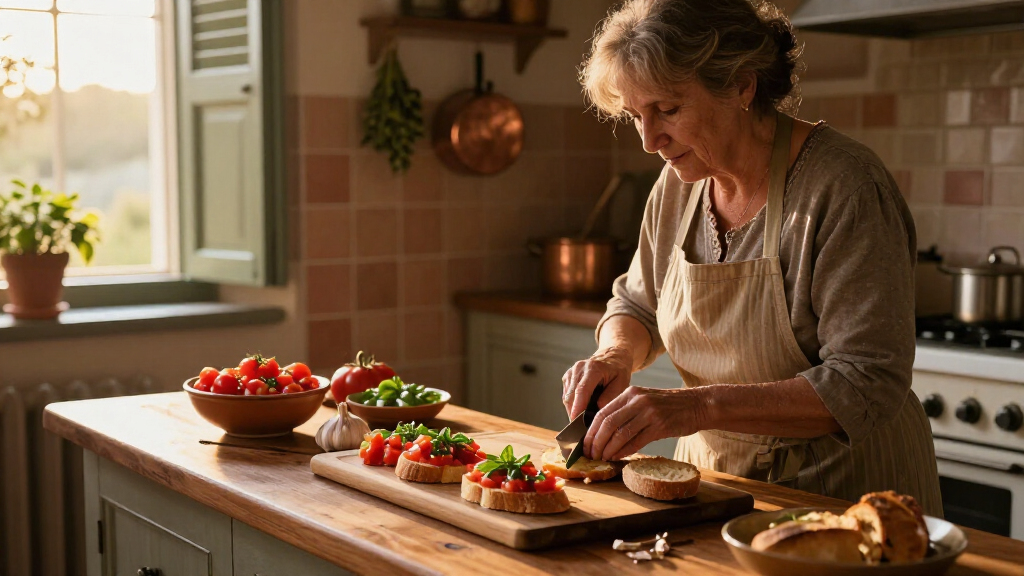
The best way I know to understand that moment is a plate of autumn bruschette. Thick slices of grilled bread, a heap of garlicky mushrooms or caramelized squash on top, and a final drizzle of raw oil that never sees a pan. Three ingredients, maybe four. It is the whole Italian autumn on one toast.
In this guide you’ll learn what olio nuovo actually is, how to build the two classic autumn versions — mushroom and squash — and how to finish them like someone who has eaten them at a tavola in the Chianti hills rather than guessed at a recipe.
Olio nuovo is only available from roughly mid-November through December; use it raw as a finishing oil, never for cooking, and substitute a harvest-dated finis…
Cut rustic bread about 1 inch thick, char it on a grill or grill pan, rub once with cut garlic, and salt while hot — sandwich bread and thin slices fail.
Blend cremini with a small amount of rehydrated dried porcini and their strained soaking liquid to get porcini depth at a third of the cost.
Roast squash at 425°F for 25–35 minutes until the edges are dark brown; pale, under-roasted squash is the single most common failure in squash bruschette.
Both toppings keep 3–5 days refrigerated (cooled fully first), but toast the bread and pour the oil only at serving time.
What “New Oil” Actually Means (And Why It Never Touches a Pan)
New oil — olio nuovo in Italian — is olive oil pressed within days of the November harvest, bottled unfiltered, and consumed within weeks. It is cloudy, vividly green, and aggressively peppery; a good one makes you cough a little, which Italians consider proof of high polyphenols and freshness. That peppery bite fades within two to three months, and understanding why explains the whole tradition: those polyphenols and volatile aromatic compounds are fragile. From the moment of pressing they oxidize steadily, so olio nuovo isn’t a marketing term but a countdown. The window for true new oil — roughly mid-November through December — exists because that’s when the aromatics are at their peak, not because of any regulation.
In Tuscany and Umbria, the arrival of new oil is a genuine event. Frantoiani — millers — open their frantoi (pressing facilities) for tastings, and families drive home with unlabeled bottles sloshing in the trunk. My first taste was at a mill outside Montepulciano: a plastic cup, a shard of bread, and an oil so grassy it smelled like cut fields after rain. What struck me most was that nobody treated it as precious. The unfiltered cloudiness most supermarkets filter out? That’s where much of the flavor lives — the suspended particles carry the fruitiest aromas, at the cost of a shorter shelf life. Italians accept the trade without hesitation: flavor now, because flavor doesn’t keep.
The rule that matters for your bruschette: you never cook with olio nuovo. This isn’t stubbornness; it’s chemistry. Heat volatilizes exactly the delicate aromatics you paid a premium for, and its low smoke point relative to its price makes it economically senseless as a cooking fat. Think of it as a condiment in the same family as truffle oil or aged balsamic — a finishing move. You sauté the mushrooms in ordinary extra-virgin, then finish the toast with the new oil, raw, at the table. The contrast between the cooked, savory base and the sharp raw drizzle is the entire architecture of the dish.
Can’t find it? I should be upfront with you — real olio nuovo is hard to get outside Italy outside its two-month window, and much of what’s exported arrives after its aromatic peak anyway. Substitute the best finishing-quality extra-virgin you can buy, ideally a Toscano IGP or a single-estate Umbrian oil with a harvest date on the bottle. The harvest date matters more than the price tag because supermarket olive oil can legally sit in warehouses for over a year; an inexpensive oil pressed three months ago will outperform an expensive one pressed two years ago, every time.

Top picks for "autumn bruschette mushroom"
As an affiliate, we earn on qualifying purchases.
Choose Bread Like an Italian: The Base Makes or Breaks Bruschette
Bruschette start with bread, and the word itself tells you how: bruscare means “to char” in Roman dialect. This matters because bruschetta is not, as it’s often treated abroad, an open-faced sandwich — it’s a charred-bread dish. The bread must be a rustic, open-crumbed loaf — dense enough to hold toppings, stale enough that toasting revives rather than sogs it. The staleness is counterintuitive but essential: fresh bread is full of moisture, and moisture is the enemy. A day-old loaf has already lost surface water, so high heat transforms it into something crisp and structural rather than merely warm and soft. In Tuscany that means pane toscano, the region’s famously saltless loaf — saltless not by preference but by medieval tax history on salt, which Tuscans then turned into an identity. Elsewhere in Italy, a country-style loaf with salt works, and honestly, most people prefer it; the saltless loaf exists to let strongly flavored toppings and oil dominate completely, which is a tradeoff worth understanding before you commit.
What to look for: a loaf at least a day old, cut into slices about 1 inch (2.5 cm) thick. The thickness is functional, not aesthetic — the charred exterior needs enough bread beneath it to stay tender and absorb the raw oil without disintegrating. Sandwich bread, baguettes, and anything enriched with fat or sugar will collapse or burn, because fat and sugar brown faster than water evaporates. The char matters too — those blackened grill marks aren’t decoration. Bitter, smoky carbon is the flavor bridge between bread and raw oil: the bitterness of the char primes your palate, which is precisely why sweet, pale toast makes new oil taste harsh rather than balanced.
A comparison of your three cooking options, and the tradeoff each one accepts:
| Method | Result | Best for |
|---|---|---|
| Charcoal grill | Smoky, striped, authentic | Weekend cooking, dry weather |
| Cast-iron grill pan | Good char, less smoke flavor | Year-round indoor use |
| Oven broiler | Even toast, no stripes | Large batches for a crowd |
The grill wins on flavor because smoke compounds land on the bread as it chars; the broiler wins on volume because you can toast twelve slices at once and nobody waits. What you lose with the broiler is the bitterness that balances the oil — if you go that route, accept a slightly softer, more even result and consider a beat longer under the heat at the edges.
After toasting, rub each slice once with a cut clove of garlic — one pass, not scrubbing. The reason for restraint is that raw garlic oil is fierce and will hijack the mushrooms; one pass on hot bread gives you its perfume without its aggression, because the residual heat barely cooks the garlic’s surface. Then a pinch of fine salt while the bread is still hot, so it dissolves into the surface rather than sitting loose on top.

Build the Mushroom Toast That Tastes Like a Tuscan Forest Floor
Mushroom bruschette work best with a blend: one cultivated mushroom for body, one wild or dried element for depth. This is because cultivated and wild mushrooms deliver different things entirely — cremini bring texture, moisture, and a mild savory base, while dried porcini bring concentrated glutamates, the compounds that read as “umami” or “forest” on the palate. Neither alone makes a great topping; together they do. In Italy, October and November mean porcini (Boletus edulis) at market stalls in Tuscany, Umbria, and Emilia-Romagna, sliced so thickly you can see the pores — thick because porcini’s value is its dense, almost steak-like flesh, which thin slicing would waste. Fresh porcini are expensive and, outside Italy, inconsistent — often dried out or moldy by the time they travel. A blend of cremini and rehydrated dried porcini gets you 90% of the flavor for a third of the price, and unlike fresh wild mushrooms, dried ones are shelf-stable and grit-screened at the packing stage.
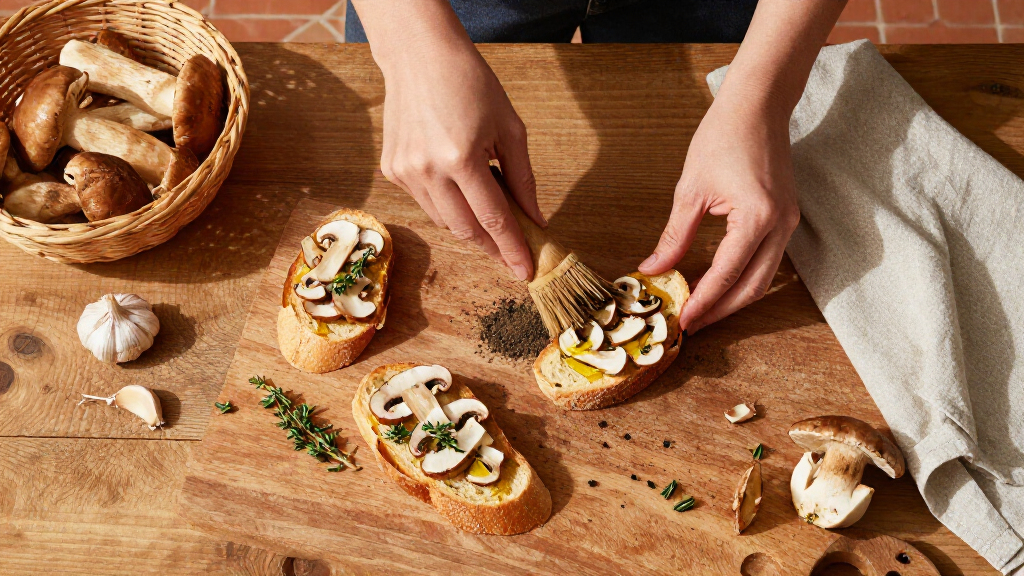
For four toasts: 10 oz (300 g) cremini, torn or thickly sliced; a small handful of dried porcini soaked in 1 cup warm water for 20 minutes; 2 tablespoons extra-virgin olive oil (your everyday bottle), 2 cloves of garlic, a sprig of thyme, salt, and black pepper. Tearing rather than slicing the cremini isn’t preciousness — torn edges are rough and catch more browning than clean-cut ones.
- Squeeze the rehydrated porcini dry, chop them, and reserve the soaking liquid. Strain it through a paper towel — it often carries grit, and one grain between your teeth will undo the whole plate. That liquid is also the secret weapon: it’s essentially a mushroom stock you made for free.
- Heat the oil in a wide pan over high heat. Add the fresh mushrooms in one layer and leave them alone for 3 minutes. Crowding steams them; space browns them. The mechanism matters: mushrooms are roughly 90% water, and in a crowded pan that water has nowhere to go, so the mushrooms boil in their own liquid and turn slippery. In a single layer, the water evaporates fast enough for the pan to stay hot and the Maillard browning to happen — which is where all the meaty flavor comes from.
- Add garlic, dried porcini, and thyme. Cook 2 minutes, then add about 1/3 cup of the soaking liquid and let it bubble away, glazing the mushrooms. The garlic goes in now, not earlier, because it would burn during the dry sear in step two. The added liquid deglazes the browned bits off the pan and re-concentrates them onto the mushrooms — you’re essentially making a three-minute pan sauce.
- Season with salt and pepper, spoon over the garlic-rubbed toasts, and finish with new oil poured on raw, from a height. Pouring from a height isn’t theater: it distributes the oil in a thin, even film instead of a pool, so every bite gets pepperiness rather than the first bite getting it all.
The smell at step three — damp forest, garlic, thyme — is what an autumn kitchen in Tuscany smells like. Keep the mushrooms slightly saucy; the bread should drink a little, because that interchange between topping and toast is what makes bruschetta a composed dish rather than bread with stuff on it.
One food-safety note: never eat wild mushrooms you’ve foraged yourself unless an expert has identified them — some deadly species closely resemble edible ones, and cooking does not neutralize their toxins. Dried and cultivated mushrooms from a shop carry none of that risk.
Roast the Squash Until It Becomes Almost Candy
Squash bruschette live or die on caramelization, and it’s worth understanding why. Squash is mostly water and sugar; roasting does two things at once — heat drives off the water, concentrating the sugars, while those sugars brown and partially caramelize at the edges. Roasted long enough, squash turns jammy and sweet enough to stand up to peppery new oil, and that sweetness isn’t optional — it’s structural. The pepperiness of new oil on a plate reads as aggressive next to something neutral but balanced next to something sweet, which is exactly the logic Italians use when they pair it with squash, chestnuts, or even chocolate. Undercooked, pale squash tastes like nothing and slides off the bread in sad, watery cubes because its water never left.
The best varieties differ in what they trade. Delicata gives up some sweetness for convenience: its thin skin is fully edible, so there’s no peeling, and its half-moon slices sit neatly on toast. Butternut gives up convenience — you must peel and cube it — for a sweeter, denser, more caramel-prone flesh, and it’s the most reliable supermarket option. Marina di Chioggia, the gnarled, turquoise-skinned pumpkin from the Veneto with a PGI-protected reputation, is the traditional choice: its flesh is unusually dry, which means it concentrates rather than steams in the oven, producing the most intense flavor of the three — but it’s hard to find outside Italy and hard to peel anywhere. For a weeknight version, delicata is the practical winner: slice it into half-moons, roast skin-on, and lay the pieces straight onto the bread.
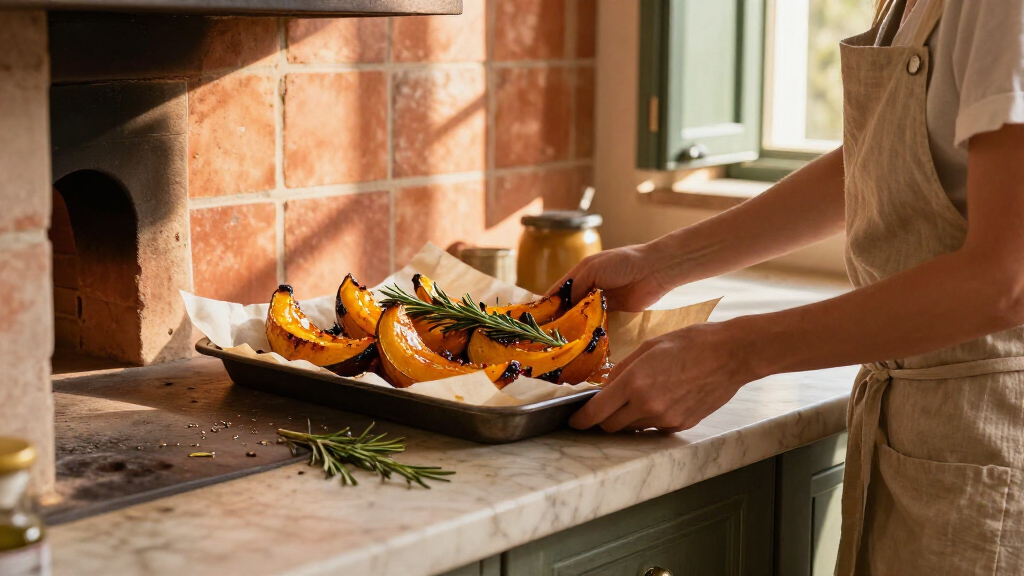
Method: heat the oven to 425°F (220°C). Toss 1 lb (450 g) of squash cubes or half-moons with 2 tablespoons olive oil and salt, spread on a sheet pan without crowding, and roast 25 to 35 minutes, flipping once, until the edges are dark brown. The temperature is a deliberate choice: high enough to brown faster than the squash steams, low enough that the sugars darken rather than blacken to bitterness. And note the margin built into that timing — squash is safely cooked and tender at around 15 minutes; the extra ten to twenty is purely about flavor, converting water-heavy vegetable into something concentrated. Don’t rush it, and don’t panic at dark brown edges: that’s the target, not a mistake.
While it roasts, crisp 6 to 8 sage leaves in a splash of oil for about 20 seconds — they should darken but stay green, not black. The timing is tight because sage crosses from crisp to bitter in seconds, and burnt sage tastes like medicine rather than the resinous, autumnal note you want. Sage and squash is one of Italy’s most settled flavor marriages precisely because it solves this dish’s structural problem: soft topping on soft bread needs contrast, and the crisped leaf contributes texture that nothing else on the plate provides.
Assemble warm: ricotta or whipped salted ricotta on the toast if you want creaminess, squash on top, sage leaves, black pepper, and the new oil last. The ricotta isn’t traditional so much as practical — it adds a cooling, milky layer that, again, buffers the oil’s bite — but it’s optional, and the purist version is squash, sage, and oil alone.
How to Finish and Serve Bruschette Like a Frantoiana Dinner
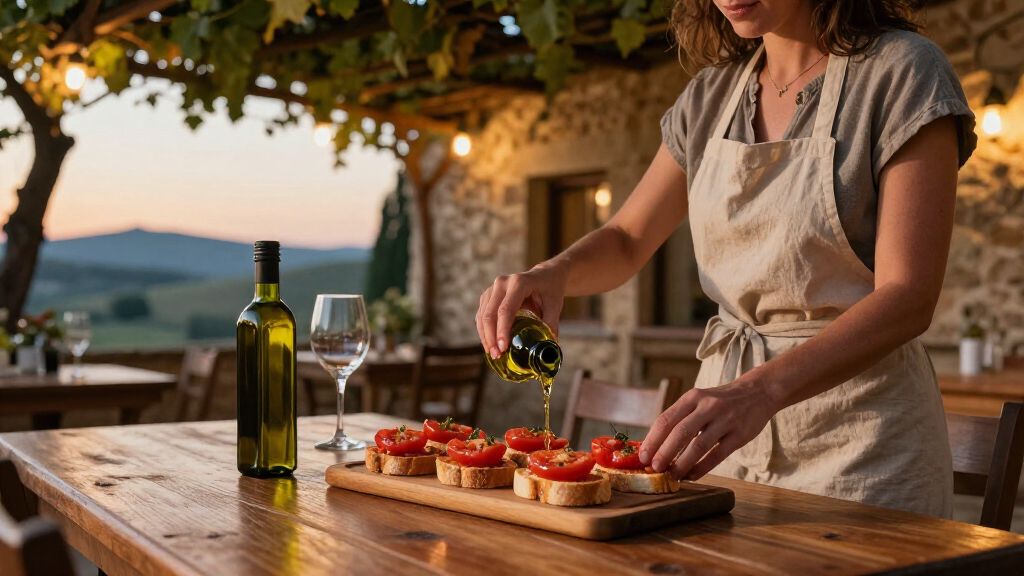
In olive-mill country, new-oil bruschette appear at the end of the press day as panunta or simply bruschetta col olio nuovo — and they follow a fixed logic that’s worth decoding rather than copying blindly. The toast is warm, the topping is warm or room temperature, and the oil goes on at the table, in front of everyone, generously. The reason is partly practical — the oil’s aromatics are at their loudest for the first minutes after pouring — and partly social. Watching someone pour is part of the dish; the theater communicates that the oil is the point, the most expensive thing on the plate, treated with ceremony. When you serve it this way at home you’re not performing Italian-ness, you’re replicating the conditions under which the dish actually tastes best: warmth beneath, sharpness on top, and the contrast still resolving when it’s eaten.
Your finishing options, and what each is actually doing for the plate:
- Pecorino Toscano DOP, shaved: salty-sharp, and its salt amplifies the mushrooms’ umami — best with the mushroom version. Choose Toscano over Romano deliberately: Romano is saltier and harder-edged and will bully the new oil.
- Fresh ricotta, whipped with salt: milky coolness that buffers the oil’s pepper — made for squash. It’s a bridge for guests who find raw new oil too aggressive, so consider it when you’re serving newcomers.
- Just oil and salt: the purist’s choice, and honestly the best way to taste a new oil for the first time. If you’ve bought a special bottle, serve at least a few toasts naked so its character isn’t masked — the plain version is your control group.
Serve bruschette within 15 minutes of assembling — the bread holds up, but only just. The clock is real: the topping releases steam that softens the char, and by twenty minutes the crisp base you built is gone. They pair with a young Chianti, and the pairing logic is deliberate — young Sangiovese’s bright acidity and firm tannins stand up to the oil’s pepper and refresh the palate between bites. Alcohol-free, use sparkling water with a squeeze of lemon, which does a similar palate-cleansing job via carbonation and acid. If you pour wine, keep it moderate; these are appetizers, and in Italy they precede a meal rather than replace one — the tradeoff of serving them as dinner is that you lose the pacing that keeps rich oil from becoming heavy.
For dietary needs, the adaptations change the dish rather than diminish it. The squash version is naturally vegan if you skip the ricotta (use a white-bean purée instead — it replicates the creaminess through starch and body rather than dairy fat). For gluten-free guests, toast a sturdy GF rustic loaf the same way — the method, garlic rub and all, transfers intact, though expect a slightly softer crumb, since gluten is part of what lets bread hold up under a moist topping.
Make-Ahead Shortcuts That Don’t Ruin the Toast
You can do almost everything in advance except the two steps that define the dish: toasting the bread and pouring the oil. This isn’t an arbitrary line — those are the only two steps whose whole value is time-sensitive. Mushrooms, cooked and glazed, keep 3 days refrigerated in a sealed container and reheat in two minutes in a hot pan; in fact, they improve overnight, because the resting time lets the porcini liquid soak into the flesh. Roasted squash keeps 4 to 5 days refrigerated and is excellent at room temperature, so it needs no reheating at all — its sugars stay concentrated and its texture holds, which is why squash is the smarter choice if you’re fully prepping ahead.
Cool both fully before refrigerating, and understand why it’s non-negotiable: large containers of warm food linger too long in the danger zone between 40°F and 140°F (4°C to 60°C), where bacteria multiply fastest. A hot container also creates condensation inside the lid, which rains back onto the food and turns your glazed mushrooms watery. Shallow containers, spread out, cool fastest and protect both safety and texture.
For a party of eight, your timeline looks like this: squash roasted the day before, mushrooms made that morning, bread sliced and garlic ready by late afternoon, toasts grilled as guests arrive. The sequencing is intentional — you do every forgiving task in advance and reserve only the unforgiving ones for the moment of serving, which means your effort is spent on people rather than on the stove. You spend the actual party pouring oil, which is exactly where you should be.
The one thing I’d talk you out of is assembling bruschette hours ahead, and it’s worth being clear about the failure mode: the topping weeps, the char softens as it absorbs that moisture, and by hour two you have damp bread with good intentions. There is no fix once it’s happened — the crispness can’t be restored, only prevented. Bruschette are a fifteen-minute dish wearing a five-minute disguise, and the five-minute version is what makes the fifteen-minute result possible. That constraint is the whole point of them: a dish designed to be finished in front of the people eating it.
Frequently Asked Questions
What is olio nuovo and can I substitute regular olive oil?
Olio nuovo is Italy’s first-pressed olive oil of the season, unfiltered, cloudy, and sharply peppery, available only from about mid-November through December. You can substitute any high-quality extra-virgin olive oil — choose one with a harvest date on the bottle and use it raw as a finishing oil, since heat destroys the aromatics that make it worth the price.
Which squash works best for bruschette, and do I need to peel it?
Delicata is the easiest choice because its thin skin is fully edible — slice it into half-moons and roast skin-on. Butternut needs peeling but roasts sweeter and denser. Marina di Chioggia from the Veneto, with its dry sweet flesh, is the traditional Italian option if you can find it.
Can I use regular button mushrooms instead of porcini?
Yes. Cremini (brown button mushrooms) give better flavor than white buttons, and adding a small handful of rehydrated dried porcini with a splash of their strained soaking liquid gives you most of the wild-mushroom depth at a fraction of the cost of fresh porcini.
Are these bruschette served warm or at room temperature?
Serve them within about 15 minutes of assembling. The bread should still be warm from toasting; the toppings can be warm or at room temperature — roasted squash works especially well at room temperature. The finishing oil is always poured raw at the table, never warmed.
Can I make autumn bruschette vegan or gluten-free?
Both are easy. The squash version is vegan if you skip the ricotta or replace it with whipped white-bean purée; skip the pecorino on the mushroom version or use a vegan alternative. For gluten-free, toast a sturdy gluten-free rustic loaf exactly the same way — grill marks, garlic rub, and salt all transfer.
Conclusion
If you remember one rule, make it this: the oil goes on last and raw. Everything else — the mushrooms, the squash, even the bread — can bend around what you find. The uncooked drizzle of peppery new oil is what turns toast into bruschetta and November into a season worth tasting.
So this autumn, buy the best extra-virgin you can find with a recent harvest date, char some thick bread, and pour from a height in front of the people you’re feeding. It’s the closest thing to standing in a Tuscan frantoio in November that your kitchen can manage.
Fall Picks
fall essentials
As an affiliate, we earn on qualifying purchases.