TL;DR
Turkey alla Milanese is a home-cooking variation on Milan’s traditional veal cutlet: thin turkey gets coated in flour, egg, and breadcrumbs, then shallow-fried until golden. Keep the pieces an even thickness, cook them without crowding the pan, and check that the thickest part reaches 165°F (74°C). Serve lemon and sides separately so everyone can shape a plate they enjoy.
A golden cutlet can bring a whole table together, even when the diners do not agree on the meat. In Milan, the familiar reference is cotoletta alla Milanese, a breaded cutlet traditionally made with veal; at home, turkey gives you a leaner poultry option with the same satisfying crunch.

Get kitchen staples and gadgets delivered free with Prime
- Fast, free delivery on millions of items
- Prime Video, Amazon Music and more included
- Member-only deals all year
Turkey alla Milanese is a practical variation, not the canonical Milanese dish. You’ll learn how to get its coating crisp, cook the meat safely, and set out lemon and sides in a way that lets each person build a plate that suits them.
The idea fits a busy weeknight as well as a Sunday lunch. Think of a platter of hot cutlets, a bowl of peppery greens, and lemon wedges that release a bright citrus smell when squeezed. A few choices at the table can make one simple meal work for a mixed group.
Turkey alla Milanese adapts the Milanese breading method; traditional cotoletta alla Milanese is generally made with veal.
Slice or gently pound turkey to an even thickness so it cooks quickly and more uniformly.
Use the flour, egg, and breadcrumb sequence, press the crumbs on, and rest the coated cutlets briefly before frying.
Cook in uncrowded batches and check the thickest part of each cutlet for 165°F (74°C).
Serve lemon and sides separately, and use clean equipment to prepare any gluten-free or egg-free portion.
Turkey alla Milanese A cutlet compromise
A crisp turkey cutlet brings the Milanese breading method to a mixed table, with sides served separately so everyone can build a plate they enjoy.
A familiar method, a different meat
The classic Milanese reference is cotoletta alla Milanese, traditionally made with veal; turkey alla Milanese is a home-cooking variation.
- Veal cutlet, often bone-in
- Coated and cooked in butter
- Lean poultry, sliced or gently pounded evenly
- Flour, egg, and breadcrumbs for a crisp coating
Build a coating that holds
Dry turkey helps the flour cling; pressing on the crumbs and resting briefly helps the layers stay put.
Coat the dry, seasoned turkey evenly.
Dip in beaten egg to help the crumbs adhere.
Press crumbs over every side, then rest briefly.
Cook for an even, crisp result
Thin turkey cooks quickly, so keep batches uncrowded and check doneness early.
Keep thickness even
Slice or gently pound to about ¼ inch (6 millimeters) so the coating and center cook at a similar pace.
Leave room to fry
Cook in uncrowded batches to help the crust turn crisp rather than greasy.
Check the thickest part
Cook turkey to 165°F (74°C); thin cutlets can overcook quickly.
Let everyone shape their plate
Keep toppings and sides separate so the cutlet stays crisp and diners can choose what suits them.
What Makes Turkey alla Milanese a Good Cutlet Compromise?
Turkey alla Milanese is a breaded turkey cutlet cooked in a pan until its coating turns crisp and golden. It borrows the flour, egg, and breadcrumb method associated with Milanese cutlets, while replacing the traditional veal with turkey. The result is a familiar, practical main dish for a table where some diners prefer poultry.
That distinction matters if you care about Italian food traditions. Cotoletta alla Milanese belongs to Milan and is generally made with veal, often on the bone and cooked in butter; turkey alla Milanese is a home-cooking adaptation of that idea [1]. The change in meat also changes the cooking experience: turkey is leaner and usually cooks faster, so an even thickness and close attention to doneness matter more than relying on the traditional cutlet’s size or timing. You get a recognizable Milanese reference without claiming that a turkey cutlet is the traditional version.
Why does it work for a mixed table? The thin, crumbed cutlet feels like comfort food, but the meal can stay flexible. Put lemon, salad, potatoes, and any sauces in separate bowls. At a family lunch, one person might squeeze lemon over the crust, another might skip it, and a third might take extra greens. Keeping these additions separate also protects the crust from moisture and lets the cutlet remain the shared centerpiece while guests adjust the rest of the plate.
The compromise has limits. The usual coating contains gluten and egg, and shallow-frying may not suit every diner. A poultry choice does not automatically make the dish suitable for all diets. If you are planning for guests with dietary needs, ask what they can eat and prepare any separate coating with care to avoid cross-contact. Separate preparation takes extra dishes and attention, but that effort is what makes a genuinely usable option rather than a nominal alternative.
Products Worth Considering

Google Nest Thermostat (Fog)

Roborock RockNeo Q110H Wire-Free Robot Lawn Mower

Dyson Ball Animal 3 Upright Corded Vacuum
As an affiliate, we earn on qualifying purchases.
How Thin Should You Cut the Turkey for a Tender Center?
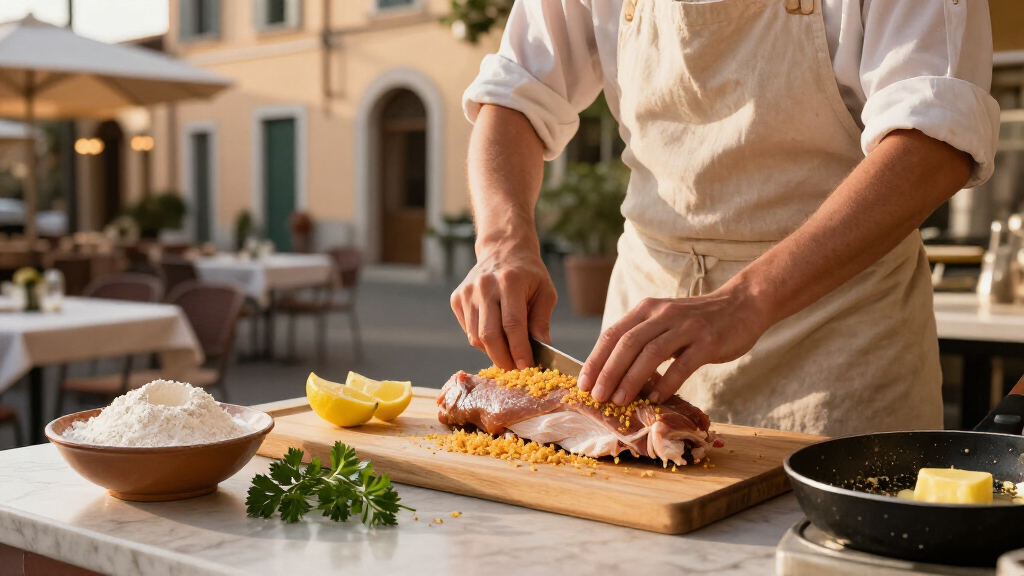
Turkey alla Milanese cooks best when each piece is an even thickness, thin enough to brown quickly without drying out. Slice the breast evenly or gently pound thicker areas between sheets of parchment. As a useful kitchen target, aim for about ¼ inch (6 millimeters); the exact shape matters less than keeping each cutlet consistent. Consistency matters because the breading browns at the same pace across the pan, giving you a better chance of finishing the coating and center together.
Turkey breast has little fat, so thick and uneven pieces can create a frustrating split: the coating browns while the center still needs time, or the outside dries before the middle cooks. If your cutlets vary, divide them into similar sizes or cook thicker pieces in a separate batch. A meat mallet works, but the flat bottom of a heavy pan can do the job too. Separating sizes may take an extra round of frying, but it avoids holding thin pieces in the pan while thicker ones catch up.
Keep the pounding gentle. You want a cutlet that lies flat, not a ragged sheet with tears at the edges. For a weeknight dinner, place one slice between two pieces of parchment and tap from the middle outward. Pat the meat dry before seasoning; a damp surface makes it harder for the flour to cling, which can leave gaps in the coating. Those gaps are more than cosmetic: they expose the lean meat directly to the pan and can make the finished cutlet less evenly crisp.
If you prefer dark meat, boneless turkey thighs can work after you trim them and pound them to an even thickness. Their texture is richer and their shape less regular than breast, so check each piece carefully as it cooks. Even thickness gives you a better shot at a juicy center and a crust that finishes at the same time.
How Do You Build a Coating That Stays Crisp?
To keep turkey alla Milanese crisp, dry the meat, coat it in flour, dip it in beaten egg, and press breadcrumbs over every side. The flour gives the egg something to grip, while the egg helps the crumbs adhere. Rest the coated cutlets briefly before frying so the layers settle against the meat. Each layer has a job: skipping flour can make the egg slide on a damp surface, while loose crumbs are more likely to fall away when the cutlet is turned.
Set up three shallow dishes in order: seasoned flour, beaten egg, and fine breadcrumbs. Use one hand for the dry steps and the other for egg if you want to avoid a thick, sticky coating on your fingers. Press the crumbs onto the cutlet rather than dropping them loosely over the surface; pay attention to the edges, where bare spots can turn pale. A thin, even coating also cooks more predictably than thick clumps, which can brown before the meat is ready.
For a family meal, lay the breaded cutlets on a tray while you finish coating the rest. A short rest of about 10 minutes helps the crumb layer hold together when it hits the pan. If you need to wait longer, cover the tray and refrigerate it; keep raw turkey chilled and clean any surfaces that touched it. The rest is brief, so it fits into prep time, but it gives the coating a chance to settle instead of relying on a heavy layer of crumbs to keep it attached.
Classic breadcrumbs contain wheat, and the coating also uses egg. Fine gluten-free crumbs or crushed crackers can work for a separate portion, but check the package for allergens and seasonings. Give that portion its own clean dishes and utensils. The alternative may brown or feel different from wheat crumbs, so cook it as its own small batch and watch its color. A little planning lets you cook for different needs without asking one batch of coating to do everything.
Which Cooking Method Gives You the Crust You Want?
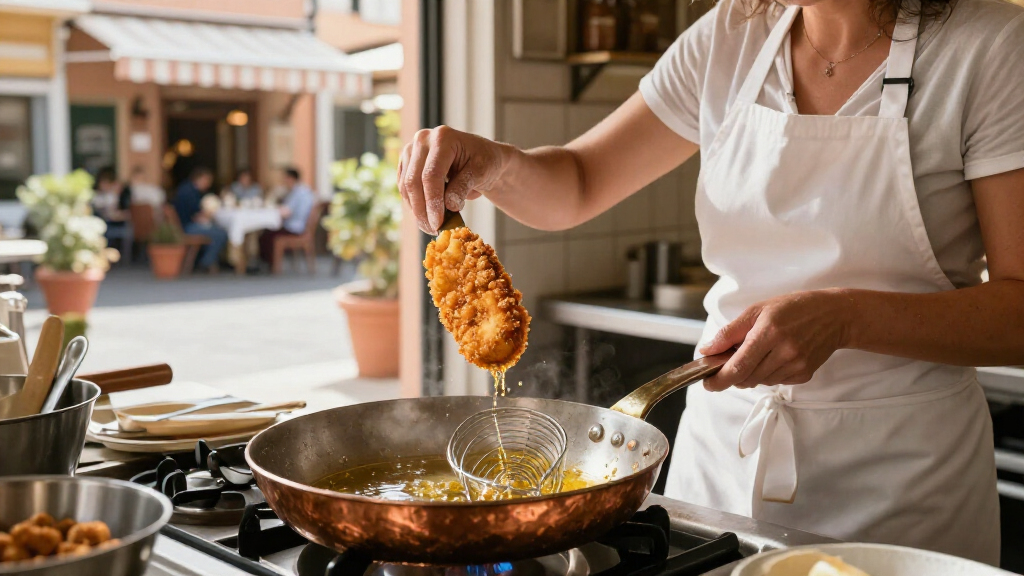
Shallow-frying gives turkey alla Milanese its characteristic crisp, browned coating, while baking and air-frying offer different textures with less oil in the pan. There is no exact swap: a pan-fried cutlet develops a rich, direct contact crust, while hot circulating air tends to produce a drier, lighter shell. Choose based on the texture you want and the time you have. The tradeoff is practical as well as sensory: shallow-frying asks you to manage batches and hot fat, while baking or air-frying can handle more cutlets with less active attention but may not give every surface the same deep browning.
| Method | What you get | Best for |
|---|---|---|
| Shallow-fry | Deep golden crust and tender center | A classic cutlet supper |
| Oven-bake | More even, lighter browning | Cooking several cutlets at once |
| Air-fry | Dry, crisp edges with little added oil | A small batch and quick cleanup |
For shallow-frying, pour in enough oil, clarified butter, or a suitable combination to cover the pan’s base in a shallow layer. Heat it over medium to medium-high, then cook in batches. If you add too many cutlets, the fat cools and the coating can soak up oil instead of sizzling. Give each piece room to brown and turn it when the underside is deep gold. The batch limit may mean cooking in rounds, but the steady heat helps the coating crisp rather than absorb fat.
If you bake or air-fry, lightly oil the crumbs and follow your appliance’s directions, checking the thickest part for 165°F (74°C) [2]. In a pan, a thin cutlet can reach that point quickly, so begin checking early. Temperature is the safety check; color alone cannot tell you whether the center is done. Transfer cooked meat to a rack or briefly to paper towels, then serve while the crust still crackles.
How Can You Keep the Meal Flexible Without Losing Its Milanese Feel?
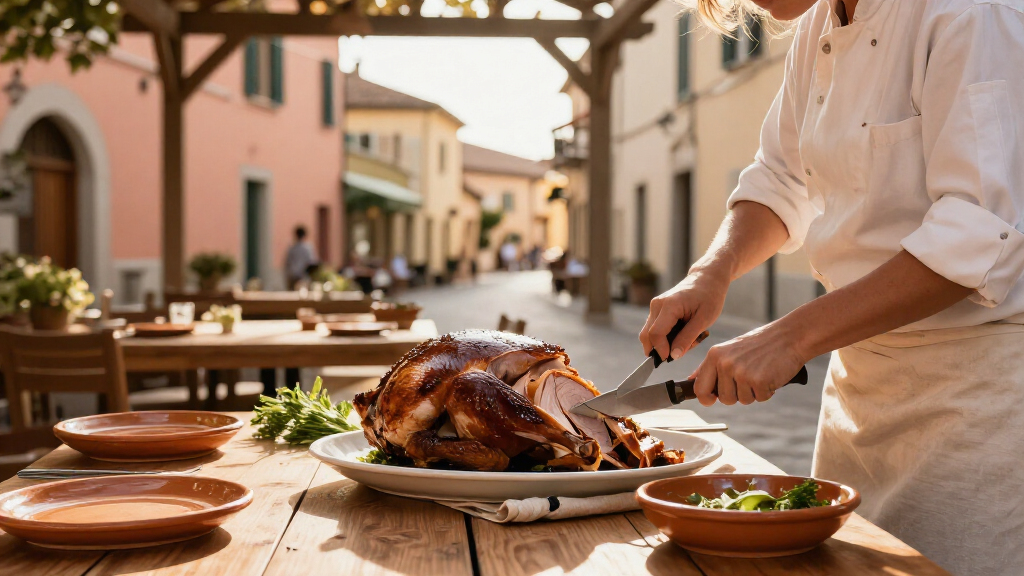
Turkey alla Milanese stays practical for a mixed table when you keep the sides and finishing touches separate. Lemon is a classic, bright counterpoint to the savory crumbs, and a green salad adds a cool, peppery bite. Potatoes or warm vegetables make the meal heartier without changing the cutlet itself. Serving these additions on the side matters because wet or acidic toppings can soften the crust; diners can still add them, but only when they are ready to eat.
Imagine a late-autumn lunch after a walk through Lombardy: the cutlets come to the table hot, while a bowl of dressed greens and a dish of roasted potatoes wait alongside them. One guest reaches for lemon, another takes extra potatoes, and someone who wants a lighter plate chooses salad. The shared dish feels generous because people can make small choices, and each choice changes the balance of the plate without requiring a separate main course.
- Lemon wedges: Offer them on the side so guests can add as much brightness as they like.
- Green salad: Dress it lightly and serve it apart from the hot cutlets so the crumbs stay dry.
- Vegetables or potatoes: Roast them while you bread the turkey, then bring them out warm.
- Sauces: Keep any sauce in a separate bowl rather than spooning it over the whole platter.
For guests avoiding gluten or egg, make a separate portion with a suitable crumb and binder, then keep it apart from the standard batch. Use clean utensils and a different plate for serving. That care matters as much as the recipe: even a well-chosen alternative can pick up crumbs or egg from a shared tray. A separate small batch takes more attention, so ask about needs early enough to organize the ingredients and cooking space before the main coating is underway.
What Should You Do Before, During, and After Cooking?
You can make turkey alla Milanese more reliably by organizing the work before the first cutlet reaches the pan. Prepare the coating dishes, choose a serving rack, and set out your sides before heating the cooking fat. This keeps raw turkey, hot pans, and dinner plates from competing for the same small patch of counter. Good setup also makes it easier to notice when the oil is too hot or a cutlet needs another moment, instead of searching for a thermometer or tray mid-cook.
- Even out the turkey. Slice or gently pound the pieces, then pat them dry and season both sides.
- Set up the coating. Arrange flour, beaten egg, and breadcrumbs in order, with a clean tray nearby.
- Coat and rest. Press crumbs onto each piece and let the cutlets sit for about 10 minutes, or cover and refrigerate them if dinner is later.
- Fry in batches. Leave space between cutlets and adjust the heat if the crumbs darken too quickly.
- Check for safety. Measure the thickest part with a food thermometer; turkey needs to reach 165°F (74°C) [2].
Cook in smaller batches if you are serving a crowd. Keep finished cutlets warm in a low oven while you fry the rest, but avoid stacking them, which traps steam against the crust. For example, if six people are eating, start with the sides and bread two or three cutlets at a time, then bring the platter out as soon as the final batch is ready. A low oven buys time, but holding the cutlets too long can dry the lean meat, so coordinate the sides to keep the waiting period short.
Refrigerate leftovers promptly in a covered container. When you reheat them, use an oven or air fryer to restore some crispness and heat the center until hot throughout. A microwave warms the meat, but it softens the crumb. The coating is at its best just after frying, so cook close to serving time whenever you can. If convenience matters more than a crackling crust, the microwave is still useful; the texture tradeoff is the price of speed.
Frequently Asked Questions
Is turkey alla Milanese a traditional Milanese dish?
Turkey alla Milanese is a variation on the Milanese breading-and-frying approach. The traditional cotoletta alla Milanese is generally associated with veal, so describe the turkey version as an adaptation when you serve it.
Can I use turkey thighs instead of breast?
Yes. Use boneless thighs, trim any uneven edges, and pound them gently so they cook at a similar rate. Their shape and texture differ from breast, so check each cutlet for doneness rather than relying on the clock alone.
How do I stop the breadcrumbs from falling off?
Pat the turkey dry, coat it in flour before dipping it in egg, and press the breadcrumbs onto the surface. A brief rest on a tray before frying helps the coating settle. Handle the cutlets gently when you turn them.
Can I prepare turkey alla Milanese ahead?
You can bread the cutlets shortly before cooking, cover them, and refrigerate them. Fry them near serving time for the crispest crust. Keep raw turkey chilled and clean any trays or utensils that touched it before using them for cooked food.
Can I bake or air-fry turkey alla Milanese?
Yes. Lightly oil the coating and follow your oven or air fryer’s directions, checking the thickest part for 165°F (74°C). The crumbs can brown and crisp, but the texture will differ from the richer crust made by shallow-frying.
What can I serve with turkey alla Milanese?
Lemon and a fresh green salad keep the plate bright and simple; roasted potatoes or vegetables make it more filling. Serve these separately so guests can choose their own combination and the cutlet’s coating stays crisp.
Conclusion
Remember the simple balance: an even, thin cutlet, a firmly pressed coating, room in the pan, and a thermometer check at 165°F (74°C). Those steps give you a crisp turkey cutlet that nods to Milan while making sense for a home kitchen.
Set out lemon, greens, and potatoes in their own bowls, then let the table make the meal its own. When the crust crackles and the lemon hits the hot crumbs, a practical weeknight supper can feel like a small taste of Lombardy.