TL;DR
Brasato is beef slowly braised with wine and aromatics until a suitable, well-marbled cut turns fork-tender. For a Veneto-inspired November supper, use Amarone della Valpolicella if you want its concentrated dark-fruit flavor, or choose another dry, full-bodied red; plan several hours, keep the braise below a boil, and serve it with polenta, potatoes, or bread.
A good Sunday braise asks you to slow down before the first bite. Beef in Amarone spends hours in a quiet pot, turning a firm roast and a bottle of red into tender slices with a dark, fragrant sauce. By the time November light fades, the kitchen smells of wine, herbs, and browned meat.

Get kitchen staples and gadgets delivered free with Prime
- Fast, free delivery on millions of items
- Prime Video, Amazon Music and more included
- Member-only deals all year
This is brasato, Italian for braised meat, with a particular pull toward Valpolicella in Veneto, the wine country near Verona. You’ll learn how to choose the beef and wine, what a gentle braise looks like, how to plan the cooking, and which sides catch every last streak of sauce. Think of this as a practical guide to a meal that rewards a slow Sunday.
Choose chuck, brisket, or another braising cut with marbling and connective tissue; lean steak is a poor fit for several hours of cooking.
Amarone is dry, concentrated red wine from Valpolicella, but another full-bodied dry red can braise the beef well.
Brown the roast, then maintain a gentle simmer; a hard boil can tighten the meat and make the sauce harsh.
Judge doneness by tenderness, not a universal time; roast shape and size change how long the braise takes.
Cool leftovers in shallow containers, refrigerate at 40°F (4°C) or below, and reheat thoroughly.
Sunday Brasato Beef in Amarone for November
A Veneto-inspired supper turns a sturdy roast and dry red wine into fork-tender beef with a rich, savory sauce. Give it time, and keep the pot at a gentle simmer.
Choose the right ingredients
The cut and cooking wine shape the result, but Amarone is not required.
Pick a braising cut
Chuck, brisket, or another well-marbled roast softens during slow cooking. Lean steak can dry out.
Choose a dry red
Amarone brings concentrated dark-fruit flavor. Another full-bodied dry red works, with a different result.
A patient, gentle braise
Tenderness, not a fixed clock, tells you when the beef is ready.
Season and brown on all sides, working in batches if needed.
Soften onion, carrot, and celery; add garlic and herbs.
Add wine and stock, cover, and cook at a low simmer until a fork meets little resistance.
Rest the beef before slicing across the grain; skim and gently reduce the sauce if needed.
Plan the meal around the sauce
Set aside several hours for browning, braising, resting, and finishing.
- Amarone or another dry, full-bodied red
- Keep the covered pot below a boil
- Judge doneness by fork tenderness
- Polenta, mashed potatoes, or crusty bread
- Seasonal vegetables for contrast
- Amarone to pour, if you prefer to save it for serving
What Makes Brasato Tender Enough for a Sunday Feast?
Brasato is beef slowly cooked with wine and aromatics until the meat turns fork-tender. The method suits cuts with connective tissue and marbling, because gentle heat and time soften their firm texture while the cooking liquid gathers flavor. For a November meal, that slow transformation is the point: you begin with a sturdy roast and end with slices that yield under a fork.
Choose chuck, brisket, or another roast labeled for braising. A lean steak may look elegant at the butcher counter, but it can dry out during the long cook. If you’re planning dinner for six, ask the butcher for a braising roast sized for your group and tell them you want to slice it after cooking. The shape matters: a compact piece cooks more evenly than a thin, uneven one.
Brasato describes a cooking method and a family of dishes, so you’ll find regional variations in the wine, herbs, and accompaniments. The version suggested by beef in Amarone points you toward Veneto and the vineyards around Verona. It makes a fitting Italian Sunday meal: the pot can do its quiet work while you set the table, stir polenta, and open the wine you plan to pour.
Think of the braise as a warm blanket for a tough cut, not a shortcut for any cut of beef. Keep the heat low enough that the surface barely trembles. If the liquid boils hard, the meat may turn tight and the sauce can taste harsh. A patient simmer builds tenderness the way a long November afternoon builds appetite.
Products Worth Considering

Google Nest Smart Thermostat, Charcoal

Bose SoundLink Max Portable Bluetooth Speaker, IP67 Waterproof, Black

Roborock Q7 M5+ Robot Vacuum and Mop with Self-Emptying Dock
As an affiliate, we earn on qualifying purchases.
Why Amarone Gives the Sauce a Dark, Fruity Backbone
Beef in Amarone pairs a rich braising cut with a dry red wine whose concentrated fruit gives the sauce depth. Amarone della Valpolicella comes from Veneto, where winemakers make it with partially dried grapes. That concentration can leave aromas of dark fruit and a plush feel, even though the wine itself is dry. In the pot, those qualities meet browned beef, onion, and herbs.
For the sauce, think of Amarone as a bass note rather than a sweet glaze. It adds richness, but the browned meat and aromatics keep the finished dish savory. If your sauce tastes heavy, a little acidity from a splash of wine vinegar or a squeeze of lemon at the table can sharpen the edges; add it sparingly and taste as you go.
You don’t need to spend on a special bottle just to cook. Choose a sound, dry red you’d be happy to drink, with enough body to stand beside beef. A full-bodied Valpolicella, another dry Veneto red, or a similar structured red can work when Amarone isn’t available or you’d rather save it for the table. The sauce will taste different, but the braise can still be satisfying.
Consider the tradeoff before opening a prized bottle: you’ll cook the wine for hours, concentrating its flavors, and the recipe does not need a rare vintage to succeed. If you do use Amarone, pour a glass for the meal and use a sensible bottle for the pot. A November supper should feel generous, not like a test of your wine cellar.
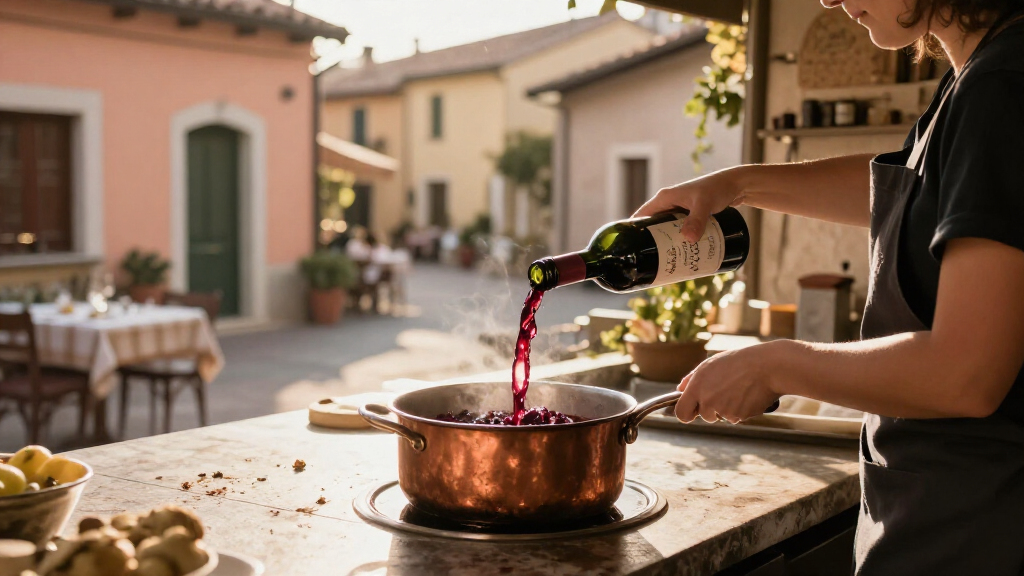
How to Cook Beef in Amarone Without Toughening It
Beef in Amarone turns tender when you brown it well, add wine and aromatics, then keep the covered pot at a low simmer until a fork slips into the meat. Exact cooking time depends on the cut, its size, and your pot, so use tenderness as the finish line. Set aside several hours from start to serve; browning, braising, resting, and sauce finishing all take time.
- Season and brown: Pat the beef dry, season it, and brown it on all sides in a heavy pot with a little oil. Work in batches if needed; crowded meat steams instead of browning.
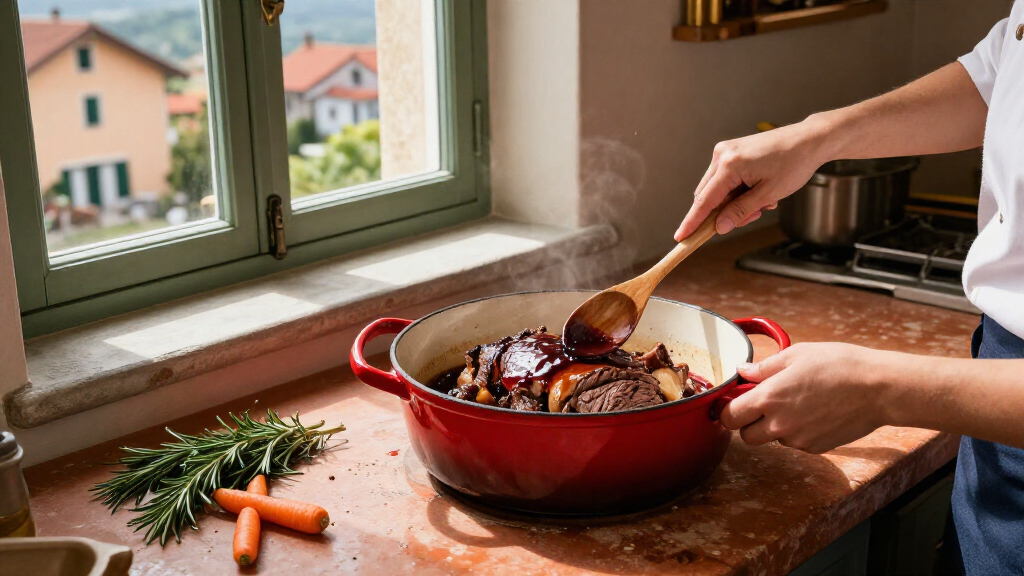
- Build the base: Set the beef aside. Soften chopped onion, carrot, and celery in the same pot, scraping up browned bits. Add garlic and herbs such as rosemary or bay.
- Add wine and braising liquid: Pour in enough Amarone or dry red wine and stock to create a braising environment around the roast. The meat need not be completely submerged. Return it to the pot.
- Braise gently: Cover and cook on the stovetop over very low heat or in a low oven. Check now and then for a barely active simmer, turning the meat if the liquid doesn’t reach its top.
- Check, rest, and finish: When a fork meets little resistance, lift out the beef and let it rest before slicing across the grain. Skim excess fat from the sauce and simmer it gently to thicken if needed.
Use a food thermometer for temperature guidance that fits your cut and recipe, and follow a tested recipe’s time and temperature instructions. Don’t use a fixed clock time as proof that the roast is ready. For example, two roasts of the same weight can finish at different times if one is thick and compact and the other is flat. Your best kitchen signal is meat that yields easily to a fork.
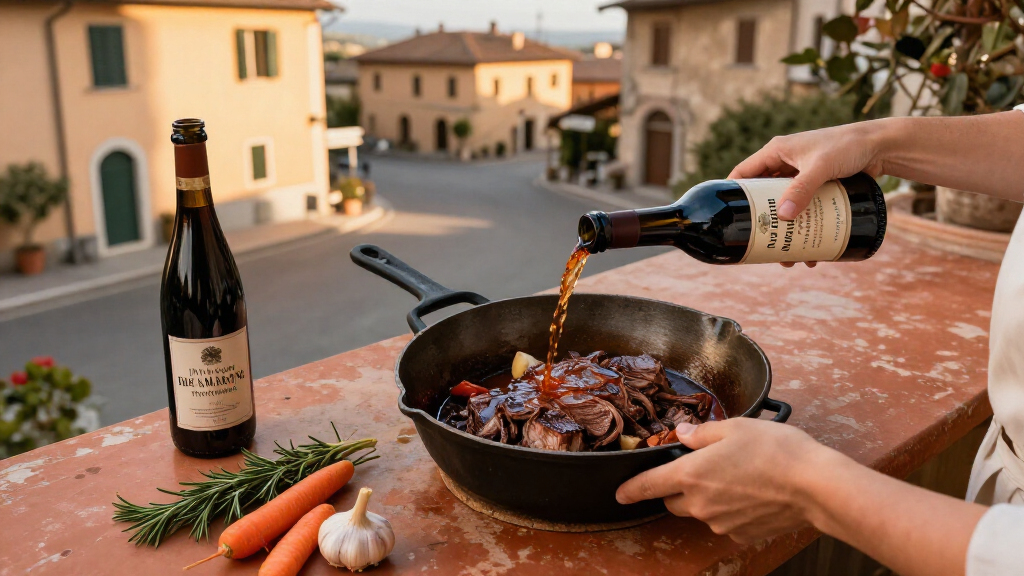
How to Pick a Wine That Works in the Pot
Choose a dry red wine with enough body to complement beef, and buy a bottle you’d enjoy drinking. That rule keeps the braising liquid balanced and gives you room to cook with confidence. Amarone’s concentrated fruit suits the dish, but its price and intensity make it a choice, not a requirement.
If you’re cooking for a small Sunday table and already have Amarone, use it if that’s the flavor you want. If you’re serving a crowd, or you’d rather keep the Amarone for the glasses beside the plate, choose a full-bodied dry red in its place. Avoid wines that taste sugary or heavily flavored; the sauce concentrates as it cooks, so sweetness can become more noticeable.
Here’s a useful comparison when you’re standing in a wine shop: Amarone gives you a richer, more concentrated sauce; a dry Valpolicella or another robust red gives you a lighter, less costly version. Neither choice fixes a rushed braise. The cut, browning, and gentle heat have more influence on tenderness than the label on the bottle.
For a simple example, you could pour Amarone at dinner and braise with a dry red you already like. That lets the meal keep its Veneto character without using a special bottle for several hours of cooking. If you can’t find a suitable red, it’s better to shop for one than to improvise with a sweet or unsuitable wine; the pot will carry its taste into every slice.
What to Serve With Brasato When November Calls for Comfort
Serve brasato with a soft, simple side that can catch its sauce, such as polenta, mashed potatoes, or crusty bread. The beef and Amarone sauce already bring deep flavor, so the plate benefits from something mild and steady. Polenta is a particularly natural choice in northern Italy, where cornmeal porridge has a place at the table beside rich stews and braises.
For a Veneto-inspired Sunday supper, make polenta while the beef rests. If you use quick-cooking cornmeal, follow its package instructions; traditional styles need more time and stirring. Spoon the polenta into shallow bowls, add a few slices of beef, and ladle sauce over the top. The soft yellow base turns each drop of dark sauce into part of the meal.
Mashed potatoes make an easy alternative if that’s what your family loves. Add something green or slightly bitter to balance the richness: sautéed greens, roasted Brussels sprouts, or a crisp salad with a sharp vinaigrette. Imagine the contrast between a tender forkful of beef and a bite of bright, crunchy salad. That small change keeps the meal from feeling heavy.
Crusty bread is the least complicated option and often the most popular at the table. Set a warm loaf within reach so nobody has to leave sauce behind. You can also serve roasted carrots or a tray of seasonal vegetables, which give the plate color and offer a sweet, earthy counterpoint to the wine-dark gravy.
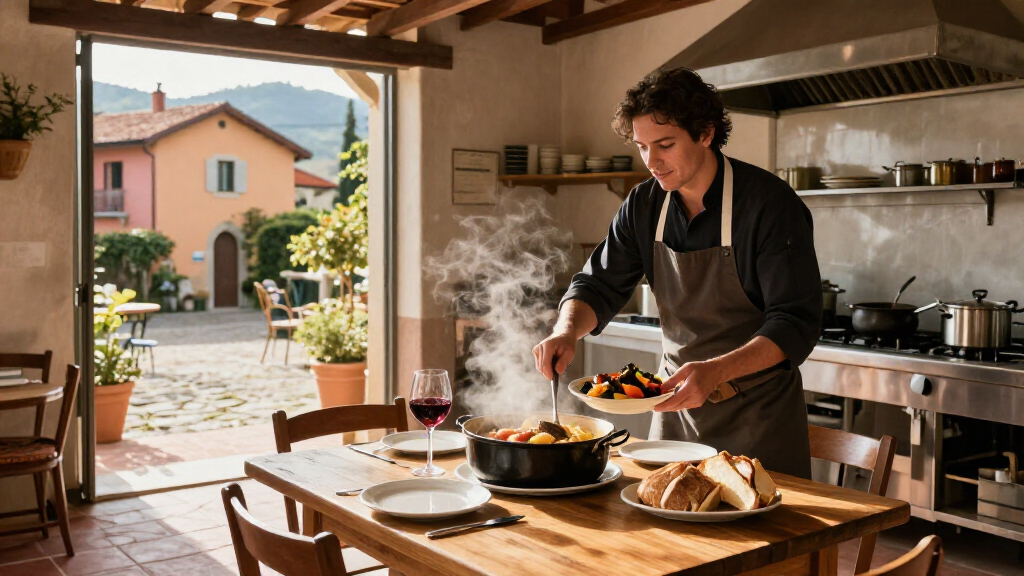
How to Make a Sunday Braise Ahead and Reheat It Safely
You can prepare brasato ahead, chill the beef with its sauce, and reheat it thoroughly before serving. Making it a day early frees up Sunday for polenta, vegetables, and guests, while a rest in the refrigerator can make the sauce easier to manage. Treat cooling and refrigeration as part of the recipe, not an afterthought.
After cooking, transfer the meat and sauce into shallow containers so they cool more quickly, then refrigerate promptly. Keep your refrigerator at 40°F (4°C) or below, and don’t leave cooked beef at room temperature for more than two hours. If the room is above 90°F (32°C), refrigerate it within one hour. These basics matter when a long lunch turns into a lingering afternoon.
For Sunday service, reheat the beef and sauce until steaming hot throughout; a food thermometer can help you check the center of the meat. Warm slices gently in the sauce so they stay moist. If you’re reheating a large quantity, bring the sauce to a steady simmer and check that the center of the beef has heated through, rather than relying on a warm pot exterior.
Freeze leftovers in airtight portions with enough sauce to coat the meat. Thaw them in the refrigerator, then reheat thoroughly. A practical example: freeze two-person portions after the meal, and you’ve made a future weeknight dinner that only needs polenta or bread. Discard food that has been left out too long or whose storage history you can’t trust.
Frequently Asked Questions
What does brasato mean?
Brasato means braised meat in Italian: meat cooked gently for a long time with liquid and aromatics. In this dish, beef cooks with red wine until it becomes tender and the liquid forms a savory sauce.
Can I make beef in Amarone with another wine?
Yes. A dry, full-bodied red wine can stand in for Amarone, though the sauce will have a different character. Choose a wine you enjoy drinking and avoid sweet styles, which can taste overly concentrated as the sauce reduces.
Is Amarone sweet?
Amarone is a dry red wine, though its concentrated fruit can seem plush or ripe. In a savory braise, browned beef, herbs, and aromatics balance that fruit rather than turning the dish into a sweet stew.
Which beef cut should I use for brasato?
Use a braising cut such as chuck, brisket, or another roast with enough connective tissue and marbling for slow cooking. Ask your butcher for a piece suited to braising and slicing after cooking; a lean steak is likely to dry out over several hours.
How long does brasato take to cook?
Plan several hours for browning, braising, resting, and finishing the sauce. The exact braising time changes with the roast’s size, shape, and your cooking method, so use fork tenderness as the endpoint and follow a tested recipe for its time and temperature guidance.
Can I make brasato the day before?
Yes. Cool the beef and sauce in shallow containers and refrigerate them promptly at 40°F (4°C) or below. Reheat thoroughly before serving, warming slices gently in the sauce so they stay moist.
What should I serve with beef in Amarone?
Polenta, mashed potatoes, and crusty bread all work well because they soak up the sauce. Add a seasonal green vegetable or a crisp salad to balance the rich beef; a sharp vinaigrette is a useful contrast.
Conclusion
For your November finale, choose a braising roast, a dry red you like, and a Sunday with enough hours for the pot to work slowly. Keep the heat gentle, wait for fork-tender beef, and serve the sauce with polenta, potatoes, or bread.
Then let the dark, wine-scented gravy find its way across the table. That’s the kind of meal that makes a cold evening feel welcome.