Risotto al tartufo bianco is a Northern Italian rice dish finished with raw shavings of fresh white truffle, usually Tuber magnatum Pico. Cook Carnaroli, Arborio, or Vialone Nano slowly in mild warm stock until creamy but still slightly firm, then finish with butter and Parmigiano and shave the truffle over the rice just before serving.
The first thing you notice may be the smell: earthy, garlicky, and so delicate that a hot pan can steal it. Risotto al tartufo bianco (white truffle risotto) is a Northern Italian rice dish that lets fresh white truffle lead, with creamy rice as its quiet, warm backdrop.
This is a seasonal dish, closely associated with Alba and Piedmont, where autumn markets and white truffles draw cooks and visitors alike. The truffle is usually Tuber magnatum Pico, harvested in Italy mainly in autumn and early winter, often from October through December. Exact dates and quality shift with weather and local rules, so a trip in November might offer a different market from one in a dry year.
You can bring the same restraint into your own kitchen. Choose a rice that holds its shape, cook it patiently in mild stock, and wait until the very end to shave the truffle. This guide explains how the rice, heat, season, and shopping choices work together, so you can serve a dish that feels celebratory without burying its most precious ingredient.
At a glance
Risotto al Tartufo Bianco: A Guide to White Truffle Rice
Key insight
Fresh white truffle is usually shaved over finished risotto because its delicate, volatile aroma can fade with heat; adding it at the table keeps that aroma vivid for the first bites.
Key takeaways
1
Use Carnaroli for firm grains and a creamy sauce; Arborio and Vialone Nano also work.
2
Add warm, mild stock gradually and stop cooking when the grains stay distinct with a slight bite.
3
Finish with butter and Parmigiano, then shave fresh white truffle over the rice off the heat.
4
Buy close to serving, ask the seller about harvest and storage, and use fresh truffle promptly.
5
Check stock and cheese labels for dietary needs; rice alone does not guarantee a gluten-free kitchen.
Step by step
1
Cook a Quiet, Creamy Base in Five Steps
Build the risotto with warm stock added gradually , stirring until the rice turns creamy but the grains remain distinct and slightly firm a…
Risotto al Tartufo Bianco: Rice Worthy of the White Diamond
A seasonal classic · Northern Italy
Risotto al Tartufo Bianco: Rice Worthy of the White Diamond
Creamy rice makes a quiet stage for fresh white truffle. The secret is restraint: cook the grains patiently, finish gently, and shave the truffle over the dish at the very last moment.
Main seasonOct–DecAutumn into early winter
Signature truffleT. magnatumWhite truffle, prized in Piedmont
Finishing moveOff heatButter, Parmigiano, then truffle
01 / Why restraint matters
A little luxury, built around aroma
Risotto al tartufo bianco is a Northern Italian rice dish whose appeal comes from contrast: soft, creamy rice meets the truffle’s intense, delicate fragrance.
White truffle usually refers to Tuber magnatum Pico, an underground fungus strongly associated with Piedmont and the Alba area. It also grows elsewhere in Italy. Trained dogs help hunters locate it beneath the soil.
The harvest is short and seasonal. Autumn and early winter—often roughly October through December—bring truffles to market, but weather and local rules affect timing, quality, and supply from year to year.
Key insight
Shave it over the finished risotto. The aroma is the star, and cooking can diminish its delicate volatile notes. Serve promptly, while the first fragrant waves are still vivid.
01 · Aroma
Earthy and fleeting
Garlicky, earthy fragrance is easiest to enjoy when fresh shavings meet the warm rice at the table.
02 · Season
Timing shapes the market
Harvest conditions change each year. Confirm current dates and quality with a reputable regional seller.
03 · Restraint
Keep the stage quiet
Mild stock, careful salt, butter, and Parmigiano let the truffle’s aroma come through clearly.
02 / Choose your rice
Creamy sauce. Grains with a little backbone.
Risotto rice releases starch into the cooking liquid while holding a pleasantly firm center. Use package timing as a guide, then let tasting decide when to stop.
Rice
What to expect
Useful cue
Carnaroli
Firm grains with a creamy, starchy sauce.
A forgiving choice for a first white truffle risotto.
Arborio
Creamy texture; grains may soften sooner.
Begin tasting before the package’s suggested finish.
Vialone Nano
A delicate risotto with a smaller grain.
Use a gentle hand and keep the stock warm.
03 / The cooking sequence
Build a quiet, creamy base in five steps
Warm stock and gradual cooking give starch time to thicken the liquid into a silky sauce. Stop when the grains are tender outside and slightly firm at the center.
1
Warm the stock
Keep mild vegetable or light meat stock steaming in a separate saucepan.
2
Toast the rice
Stir dry grains in a little butter or oil until hot and translucent at the edges.
3
Add gradually
Stir in a ladle of warm stock; add more as the pan begins to look nearly dry.
4
Taste for texture
Check early. Stop at tender grains with a faintly firm center, never crunchy.
5
Finish off heat
Stir in butter and finely grated Parmigiano; loosen with a splash of stock if needed.
04 / Balance the flavor
Make room for the truffle
The base should taste complete on its own, but no single seasoning should dominate. A light hand preserves a clear path for the truffle’s quieter notes.
Heat on the truffle
Cooking white truffle into the risotto can dull its delicate aroma. Add the shavings raw, after the pan leaves the heat.
Protect aromaCook gently
Aroma at the table
Freshly shaved truffle over warm rice gives the fragrance its clearest moment. Serve as soon as it is dressed.
Quiet baseTruffle leads
Mild warm stock→Patiently cooked rice→Butter + Parmigiano→Fresh truffle, last
05 / Buy and handle with care
Freshness is part of the recipe
White truffle is highly perishable, difficult to cultivate reliably, and subject to changing harvests and demand. Prices vary substantially; avoid treating any single price as typical.
Use promptlyBuy close to serving
Ask the seller about harvest, quality, and recommended storage.
Refrigerate in a sealed container with clean absorbent wrapping; change the wrapping regularly.
Follow the seller’s handling advice and shave the truffle just before serving.
Check ingredient labels: truffle oils may use added aroma compounds and are not equivalent to fresh Tuber magnatum.
06 / Before it reaches the table
Small choices, one clear finish
Season with a light hand
Salt the stock lightly, then taste again after adding Parmigiano, which already brings salt and savory depth. Dry white wine is optional; keep it modest so its acidity does not compete.
Strong garlic, heavy herbs, or pungent broth can crowd the truffle. A crisp salad or simple roasted vegetables can add contrast alongside the risotto.
Dietary check
Rice alone does not guarantee a gluten-free kitchen. Check stock and cheese labels for gluten or other additives. Parmesan-style cheeses may use animal rennet; confirm suitability for vegetarian diners.
What Makes White Truffle Risotto Worth the Restraint
Risotto al tartufo bianco is a simple Northern Italian rice dish finished with fresh white truffle shaved over the top. Its pleasure comes from contrast: soft, creamy rice gives the truffle’s intense aroma a gentle place to land. The truffle stays raw because heat can dull the fragrance that makes it special.
White truffle usually means Tuber magnatum Pico, a scarce underground fungus associated with Piedmont and especially the Alba area, though it grows elsewhere in Italy too. Trained dogs help hunters find it beneath the soil. A short autumn and early winter harvest, often around October through December, and changing weather shape what reaches the market; dates and quality vary from year to year.
Think of the rice as a small stage: if the scenery is too loud, you stop seeing the lead. Garlic, assertive herbs, or heavily flavored stock can crowd the truffle. Butter and Parmigiano add a rounded, savory base, but a light hand matters. If you plan an Alba visit, an autumn market can show you the season’s changing sizes and aromas; at home, a single freshly shaved plate can bring that same sense of timing to your table.
Let the truffle lead. Cook the rice carefully, season the base with restraint, and add the fresh shavings at the last moment.
Choose a short or medium-grain risotto rice that releases starch into the cooking liquid while keeping its center pleasantly firm. Carnaroli is a popular choice because it tends to hold its shape during gradual cooking; Arborio and Vialone Nano also make satisfying risotto. The rice should carry the truffle aroma, not collapse into a soft paste.
For a first attempt, Carnaroli gives you a little more room to stir and taste without losing definition. You’ll see the difference as the grains swell: starch thickens the liquid around them, while the center stays distinct. Arborio can turn creamy too, though it may soften more quickly, so check it early. Vialone Nano is another fine choice, especially when you prefer a more delicate grain.
Buy rice labeled for risotto, and follow the package guidance as a starting point rather than a timer carved in stone. A pot of stock may take more or less rice depending on its age, heat, and the pan you use. For a Saturday dinner, cook one small test spoonful before adding the finishing butter; if the center is chalky, keep adding warm stock a little at a time. The rice should be tender with a slight bite, not crunchy.
Rice
What you can expect
Useful cue
Carnaroli
Firm grains with a creamy, starchy sauce
A forgiving choice for a first white truffle risotto
Arborio
Creamy texture, with grains that can soften sooner
Begin tasting before the package’s suggested finish
Vialone Nano
A delicate risotto with a smaller grain
Use a gentle hand and keep the stock warm
Cook a Quiet, Creamy Base in Five Steps
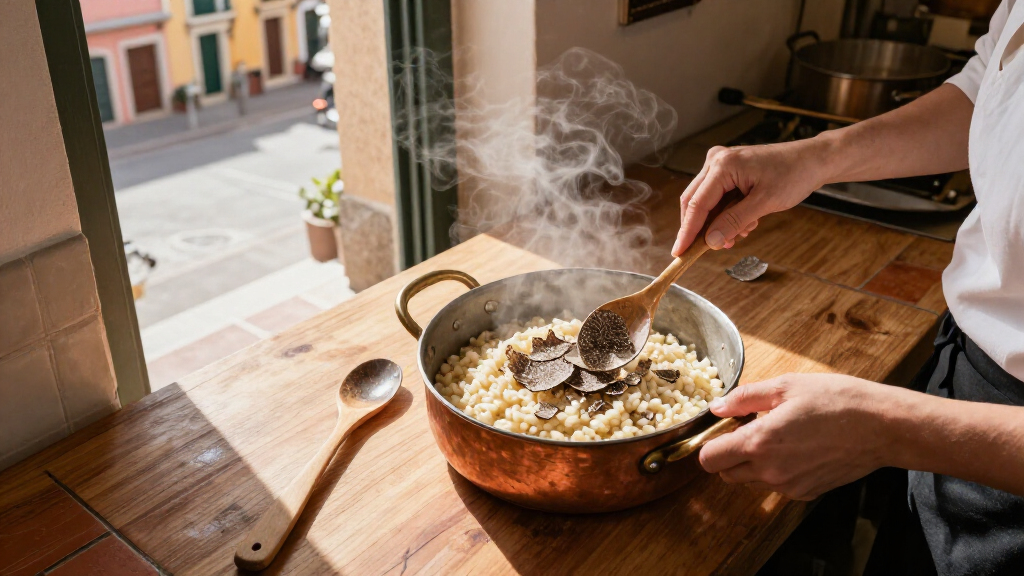
Build the risotto with warm stock added gradually, stirring until the rice turns creamy but the grains remain distinct and slightly firm at the center. A mild vegetable stock keeps the dish vegetarian, while a light meat stock can add a gentle savory note. Either way, the stock should support the truffle rather than announce itself.
Warm the stock. Keep it steaming in a separate saucepan so it does not cool the rice each time you add some.
Toast the rice. Stir the dry grains in a little butter or oil until they feel hot and look slightly translucent at the edges.
Add liquid gradually. Pour in a ladle of warm stock and stir as the rice absorbs it; add more when the pan begins to look nearly dry.
Taste for texture. Start checking before the package’s timing ends. Stop when the grain is tender outside with a faintly firm center.
Finish off the heat. Stir in butter and finely grated Parmigiano, then loosen with a splash of stock if the rice sits too stiffly.
Picture a weeknight kitchen, not a restaurant line: your stock simmers quietly, and you stir every minute or so while setting the table. That steady attention helps starch thicken the liquid into a silky sauce. Some cooks add a small splash of dry white wine after toasting; it is optional. Keep it modest, or skip it, so its acidity does not compete with the truffle.
Use clean hands and utensils, and keep perishable stock refrigerated until you heat it. If you serve guests with dietary needs, check packaged stock and cheese labels for gluten or other additives. Parmesan-style cheeses can involve animal rennet, so confirm the label if a vegetarian diner needs cheese made with suitable rennet.
Keep the Seasoning Mild So Truffle Can Shine
A mild stock, careful salt, and a restrained finish give white truffle room to show its aroma. The rice should taste complete on its own, but no single seasoning should dominate. Butter and Parmigiano bring richness and savory depth; strong garlic, heavy herbs, or a pungent broth can blur the truffle’s quieter notes.
That does not mean the dish needs to taste plain. Salt the stock lightly, then adjust after the cheese goes in, since Parmigiano already tastes salty. A small amount of dry white wine can add a clean edge, but pouring in a generous glass can leave the rice smelling more of wine than truffle. On a cool evening, try a spoonful before adding the final cheese; you can judge whether the base needs more salt or already feels full.
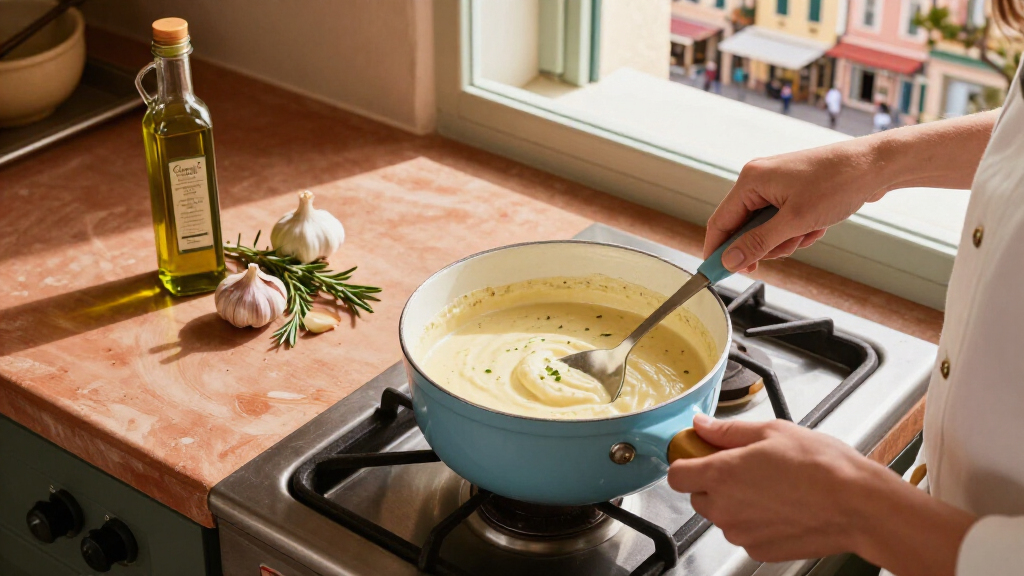
Would you add roasted mushrooms, garlic, and sage to a dish whose star is a scarce, aromatic truffle? You could, but each addition asks for attention. For the classic, keep the base spare. A nearby bowl of simple roasted vegetables or a crisp salad can bring contrast to the meal without turning the risotto into a contest of flavors. The truffle’s scent should rise as you lift the fork, not disappear behind a busy ingredient list.
Choose: a light vegetable stock or mild meat stock.
Use sparingly: dry white wine, black pepper, and extra cheese.
Skip: assertive garlic, strong herbs, or stock with a heavy roasted flavor.
Shave Fresh Truffle at the Table, Not in the Pot
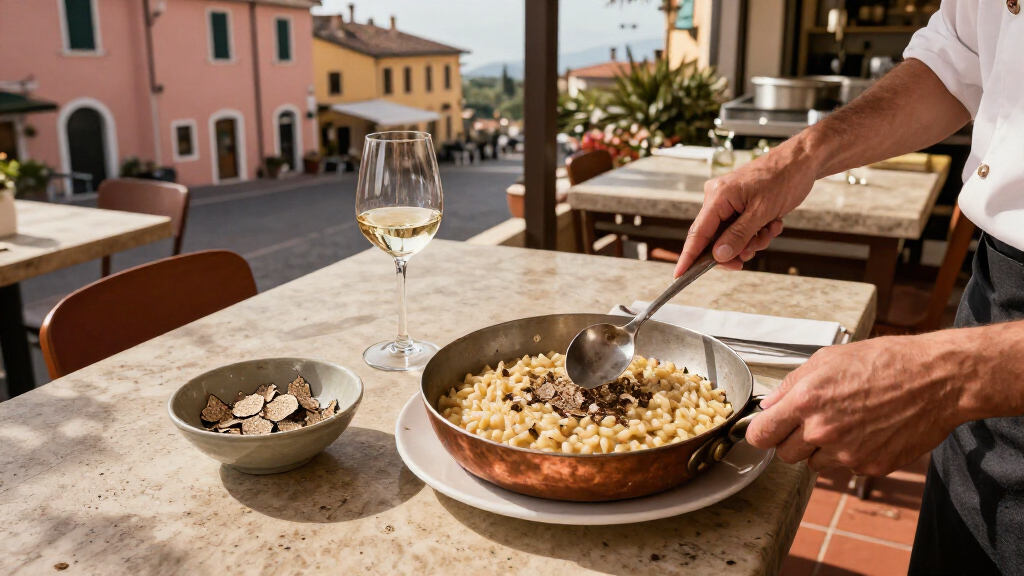
Shave fresh white truffle over the finished risotto, just before eating, so its delicate aroma meets the heat of the rice without simmering away. The rice should be off the burner and creamy when you serve it. Thin shavings spread the scent across the plate, and a table-side shave makes a modest amount feel present in every bite.
Use a truffle slicer or a small, sharp knife and shave directly over each warm portion. There is no universal amount: the right quantity depends on the truffle’s strength, size, number of servings, and budget. Start with a light layer, taste, and add a few more curls if the aroma asks for them. At a family dinner, you might shave the truffle at the table so guests can see the pale slices land on the rice and decide how much they want.
Do not stir fresh truffle into a simmering pan or cook it with the rice. Heat can weaken its volatile aroma, and the dish’s best moment is brief: warm, steamy rice under fresh shavings, then the first bite. Serve immediately. Keep leftovers promptly refrigerated in a covered container; risotto is best eaten fresh, and reheating softens the grains and fades the aroma further. Warm leftovers gently and add any remaining truffle only after heating.
Shop and Store White Truffle Without Guessing at the Price
Buy the freshest truffle you can source from a reputable seller, ask when it was harvested, and follow that seller’s handling advice. White truffles perish quickly, and their price changes with harvest conditions, quality, size, and demand. One quoted price cannot represent every season or market, so check current local listings rather than planning around a fixed figure.
In Alba during autumn, you may see truffles at market while restaurants build short seasonal menus around them. Ask the seller what the truffle should smell like, when it came in, and how soon to use it. A strong, clean aroma and intact condition matter more than choosing the largest specimen. If you are buying for a dinner party, buy close to the meal and keep the menu flexible; a thin harvest can change availability or price quickly.
At home, keep the truffle refrigerated, dry, and protected from excess moisture. A common approach is to wrap it in clean absorbent material and place it in a sealed container, changing the wrapping regularly. Ask your seller how often to change it and how long your specific truffle should keep, since condition and packaging affect shelf life. Use it promptly instead of treating the refrigerator as long-term storage.
Truffle oil offers a different, more affordable flavor, but many products rely on added aroma compounds and do not reproduce fresh Tuber magnatum. Check the ingredient label, especially if a product’s name or picture suggests fresh truffle. It can season a weeknight dish in its own right; describe it honestly as a truffle-flavored product, not as equal to fresh white truffle.
Adapt the Dish for Vegetarian, Gluten-Free, and Seasonal Tables
White truffle risotto can fit vegetarian and gluten-free meals when you choose suitable stock, cheese, and packaged ingredients. Rice is naturally gluten-free, but cross-contact and additives can enter through prepared stock or other products. A vegetable stock gives you a vegetarian base; check the cheese label for rennet if that matters to your guests.
For example, if you are hosting a friend who avoids gluten, use plain rice and stock labeled gluten-free, then keep serving spoons away from bread. For a vegetarian guest, choose vegetable stock and a cheese made with suitable rennet or use a vegetarian hard cheese with a similar savory character. These small label checks do not change the basic technique, but they can make the meal more welcoming.
Seasonality affects the meal plan too. Fresh white truffle is mainly an autumn and early winter ingredient in Italy, so it may not be available or at its best all year. When fresh truffle is out of season or beyond your budget, you can make a good risotto with butter and cheese, or use a truffle product for its own flavor. The result is still dinner, but it is a different dish; keep the distinction clear when describing what you serve.
Serve modest portions as a first course, followed by a seasonal vegetable or simple roast. That lets the rich texture feel generous without overwhelming the table. If you are serving wine, keep the conversation focused on the food and offer nonalcoholic choices too; any alcoholic drink is for adults of legal drinking age and should be enjoyed responsibly.
Frequently Asked Questions
Can I cook white truffle into the risotto?
Shave it over the finished risotto instead. Simmering can diminish its delicate aroma. Take the pan off the heat, portion the rice, then shave the truffle just before serving.
Which rice works best for white truffle risotto?
Carnaroli is a popular choice because it can stay firm while releasing starch. Arborio and Vialone Nano also work; taste as you cook because each rice softens at a different pace.
Do I need wine in the risotto?
No, wine is optional. A modest splash of dry white wine is common, but too much can compete with the truffle. You can leave it out and cook with mild stock instead.
Is truffle oil the same as fresh white truffle?
No, truffle oil is not equivalent to fresh white truffle. Products vary, and many use added aroma compounds. Check the ingredient label and treat the oil as its own seasoning.
How should I store fresh white truffle?
Keep it refrigerated, dry, and use it promptly. Clean absorbent wrapping inside a sealed container is a common method; change the wrapping regularly and follow your seller’s advice for the specific truffle.
Can I reheat leftover risotto al tartufo bianco?
Yes, but expect softer rice and less aroma. Reheat gently, and add any remaining truffle only after warming. Refrigerate leftovers promptly in a covered container.
Can I make the dish vegetarian and gluten-free?
Yes, with suitable ingredients and careful handling. Use vegetable stock, check cheese rennet for vegetarian needs, and choose stock labeled gluten-free. Rice is naturally gluten-free, but packaged ingredients and cross-contact still matter.
Conclusion
Make the rice carefully, keep the base quiet, and shave the fresh white truffle at the table. That simple order protects the aroma and gives every spoonful a creamy, warm foundation. When the season or budget puts fresh truffle out of reach, make the risotto anyway and call flavored products what they are.
Then serve it while the steam still curls above the bowl. The best part lasts only a few bites: pale shavings, glossy rice, and an autumn scent that seems to disappear as soon as you name it.