
TL;DR

Get kitchen staples and gadgets delivered free with Prime
- Fast, free delivery on millions of items
- Prime Video, Amazon Music and more included
- Member-only deals all year
Peperonata is a classic Italian preparation of sweet peppers slowly cooked with onions, tomatoes, and olive oil until silky and naturally sweet. It is a method rather than one fixed recipe, varies by region and household, and typically takes 35 minutes to an hour of gentle cooking. It tastes best after resting, keeps 3-4 days refrigerated, and works as a side, pasta sauce, bruschetta topping, or antipasto.
Order “pepperoni pizza” in Italy and you’ll get a pie topped with sweet peppers, not sausage. The word comes from peperone, the Italian term for bell pepper — and that mix-up tells you everything about how central peppers are to the Italian kitchen.
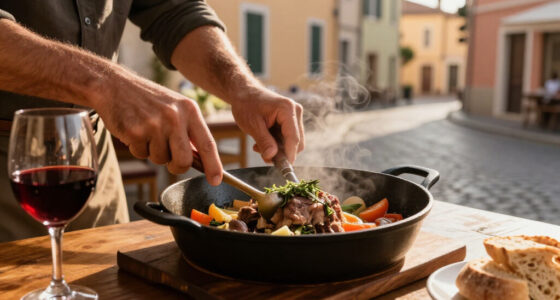
Peperonata is that kitchen at its best: a classic Italian preparation of sweet peppers slowly cooked with onions, tomatoes, and olive oil until the whole pan turns glossy, fragrant, and naturally sweet. It is a dish that tastes like August in Italy, when market stalls sag under crates of ripe red and yellow peppers and the smell of slow-cooking vegetables drifts from open kitchen windows.
In this guide, you’ll learn what peperonata is, which peppers and techniques make it succeed, how to peel (or not peel) the peppers, the mistakes that ruin it, and a dozen ways to serve it. You’ll also see how northern and southern Italian versions differ, and why this humble cucina povera (peasant cooking) dish has become a favorite of modern vegetable-centered cooks.
Peperonata is a method, not a fixed recipe: sweet peppers slowly cooked with onions, tomatoes, and olive oil, with garlic, herbs, capers, olives, or potatoes a…
Cook gently for 35-60 minutes over moderate-low heat; the finished texture should be velvety strips in a glossy sauce, not soup and not crisp.
Let it rest before serving — an hour minimum, overnight ideally. Like caponata, peperonata tastes richer after time in the refrigerator.
Peeling the peppers is optional: unpeeled for rustic everyday cooking, peeled (charred, steamed, skinned — never rinsed) for a silkier dish.
Store promptly in an airtight container; it keeps 3-4 days refrigerated and freezes well for sauces, soups, and braises.
Peperonata: The Sweet Pepper Stew That Tastes Like August in Italy
Sweet peppers, onions, tomatoes, and olive oil, slowly cooked until the whole pan turns glossy, fragrant, and naturally sweet. Peperonata is a method rather than a fixed recipe — a peasant-cooking tradition where patient heat transforms cheap September peppers into something richer than any ingredient list suggests.
A Stew Built on Sweet Peppers, Not a Fixed Recipe
Peperonata is a classic Italian preparation of sweet peppers slowly cooked with onions, tomatoes, olive oil, and aromatics until silky, intensely fragrant, and naturally sweet. That’s the whole definition — and the reason no two Italian households make it the same way. What unites every version is the technique: low, slow cooking that collapses the peppers into a glossy mass.
Five Ingredients
Red and yellow bell peppers, onion, ripe tomatoes, extra-virgin olive oil, and salt. Everything beyond this is regional or family improvisation.
Cucina Povera
Italy’s resourceful tradition of turning inexpensive ingredients into something greater than the sum of its parts. Peppers are cheap in September; patient cooking is free.
Sweetness Is Developed
Raw peppers are crunchy and faintly grassy. Apply 45 minutes of gentle heat and their own sugars concentrate and caramelize slightly — sweetness isn’t added, it’s built.
Peperonata vs. Ratatouille vs. Pisto vs. Caponata
If you remember one distinction, remember this: peperonata is a pepper dish with tomato support, not a mixed-vegetable stew. Ratatouille wants each vegetable to keep its identity; peperonata wants the peppers to collapse into a jammy, glossy mass. The eggplant is not invited.
| Dish | Origin | Key Vegetables | Signature Note |
|---|---|---|---|
| Peperonata | Italy (nationwide) | Red/yellow peppers, onion, tomato | Pure pepper sweetness; silky, focused |
| Ratatouille | Provence, France | Eggplant, zucchini, peppers, tomato | Broad vegetable medley, herbes de Provence |
| Pisto | La Mancha, Spain | Peppers, tomato, zucchini, onion | Often topped with a fried egg |
| Caponata | Sicily, Italy | Eggplant, celery, olives, capers | Agrodolce — sweet-and-sour finish |
Five Moves to a Reliable Peperonata
Good peperonata comes down to five moves: soften onions slowly, cook peppers gently, add tomatoes in moderation, reduce to a glossy sauce, and let the dish rest.
Soften the Onions
One large onion, sliced, in ~4 tbsp olive oil over moderate-low heat until translucent — never browned.
8–10 minAdd Peppers & Salt
4–5 peppers in strips. Cover briefly so they release moisture, then uncover. A 28 cm skillet suits 4 peppers.
Covered, then openTomatoes in Moderation
Fresh, passata, or canned — tomatoes support the peppers. Too much turns the dish into soup.
Gentle simmerReduce to Gloss
Cook uncovered until tender and the liquid reduces to a glossy sauce. Velvety strips — not soup, not crisp.
Until silkyRest Before Serving
Finish with herbs and an optional splash of vinegar. An hour minimum; overnight ideally.
1 hr – overnight“A peperonata eaten straight from the stove tastes like peppers; the same pan tasted the next day tastes like a composed dish.”
Why rest matters — fat carries aroma, acid brightens, salt needs hours to draw both deeperPeeling Is Optional — Choose Your Texture
Both approaches are correct. Unpeeled peppers give a rustic everyday dish that holds its shape; peeled peppers (charred, steamed, skinned — never rinsed) give a silkier result that some find easier to digest.
One Dish, Two Italian Accents
Peperonata belongs to no single region — it is made throughout Italy, and the split within the country is as real as the split between countries. Both are correct; that’s the point.
Gentle & Rich
- May start with butter instead of (or alongside) olive oil
- Potatoes sometimes join the pan
- A Piedmontese grandmother might finish with a dusting of Parmesan
- Softer, rounder flavor profile
Bold & Sharp
- Garlic, oregano, and herbs up front
- Capers and olives frequently appear
- Occasionally a sharper sweet-and-sour edge borrowed from caponata
- A splash of vinegar to finish
Where the Time Goes — and What Ruins It
Browning the Onions
More than a hint of gold leaves a bitter undertone no amount of basil can hide. Lower the heat immediately.
Too Much Tomato
Tomatoes support the peppers — excess liquid turns the dish into soup. Some families omit them entirely.
Rushing the Heat
High heat scorches before sweetness develops. The sugars must concentrate slowly against the pan.
Serving It Straight Away
Straight from the stove it tastes like peppers. Rested overnight, it tastes like a composed dish.
What Is Peperonata? A Stew Built on Sweet Peppers, Not a Fixed Recipe
Peperonata is a classic Italian preparation of sweet peppers slowly cooked with onions, tomatoes, olive oil, and aromatics until silky, intensely fragrant, and naturally sweet. That’s the whole definition — and also the reason no two Italian households make it exactly the same way. It is a method, not a recipe etched in stone.
The base is simple: red and yellow bell peppers, onion, ripe tomatoes, extra-virgin olive oil, and salt. From there, families diverge. Garlic, basil, oregano, parsley, black pepper, vinegar, capers, olives, even potatoes appear in regional and household versions. Some cooks peel their peppers first; others slice them raw and let the pan do the work. Some omit tomatoes entirely. A Piedmontese grandmother might start her peperonata with butter and finish it with a dusting of Parmesan; a Calabrian cook might hit the same pan with garlic, oregano, and a splash of vinegar. Both are correct — and this is the point worth understanding: peperonata is defined by a technique (low, slow cooking that collapses the peppers into a glossy mass), not by an ingredient list. Once you grasp that, you can improvise freely because you know what the dish is actually trying to achieve.
What unites every version is the philosophy behind it. Peperonata is cucina povera — Italy’s resourceful tradition of turning inexpensive ingredients into something greater than the sum of their parts. Peppers are cheap in September. Patient cooking is free. The result is a dish that tastes richer than anything on the ingredient list suggests. Think of it as a kind of culinary alchemy: raw bell peppers are crunchy, faintly grassy, and a little bland; apply 45 minutes of gentle heat and they transform into something jammy, sweet, and deeply aromatic. The tradeoff is time — you cannot rush this dish, because the sweetness isn’t added, it’s developed as the peppers’ own sugars concentrate and caramelize slightly against the pan.
Like its cousins caponata and ratatouille, peperonata improves with rest. Make it in the morning, serve it in the evening. The reason is chemistry as much as tradition: fat carries aroma, acid brightens it, and salt needs hours to draw both deeper into the vegetable fibers. A peperonata eaten straight from the stove tastes like peppers; the same pan tasted the next day tastes like a composed dish. This is also why peperonata became a weeknight workhorse in Italian homes — it’s one of the rare dishes where the leftover version is better than the fresh one, so cooking a double batch is not extra work, it’s a head start.
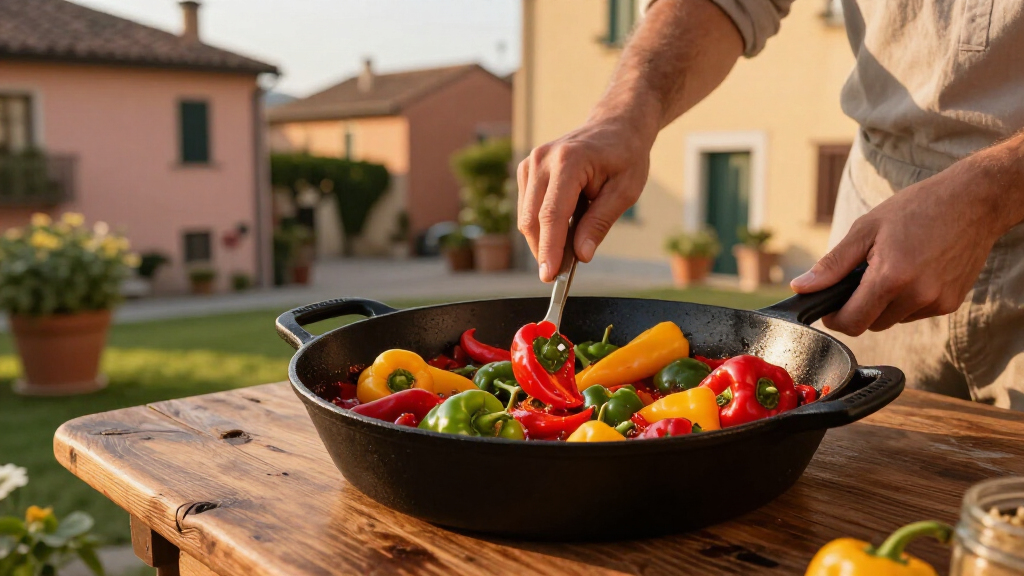
Peperonata is a method, not a recipe: sweet peppers, slow heat, and time do the work that no ingredient list can capture.
As an affiliate, we earn on qualifying purchases.
Peperonata vs. Ratatouille vs. Pisto: What Actually Makes Them Different
Peperonata differs from ratatouille and pisto mainly in its focus: peperonata centers on sweet peppers, onions, and often tomatoes, while ratatouille includes a broader mix of vegetables — especially eggplant and zucchini — and Spanish pisto sits somewhere between the two. If you remember one distinction, remember this: peperonata is a pepper dish with tomato support, not a mixed-vegetable stew.
| Dish | Origin | Key Vegetables | Signature Note |
|---|---|---|---|
| Peperonata | Italy (nationwide) | Red/yellow peppers, onion, tomato | Pure pepper sweetness; silky, focused |
| Ratatouille | Provence, France | Eggplant, zucchini, peppers, tomato | Broad vegetable medley, herbes de Provence |
| Pisto | La Mancha, Spain | Peppers, tomato, zucchini, onion | Often topped with a fried egg |
| Caponata | Sicily, Italy | Eggplant, celery, olives, capers | Agrodolce — sweet-and-sour finish |
People confuse these dishes constantly, and fair enough — they’re all slow-cooked late-summer vegetable stews. But the difference matters when you cook. Ratatouille wants a variety of vegetables cut and cooked so each keeps its identity. Peperonata wants peppers to collapse into a glossy, almost jammy mass. The eggplant is not invited.
There’s also a regional split within Italy itself. Northern versions lean gentle and sometimes include butter or potatoes. Southern versions — especially in Puglia and Calabria — bring garlic, herbs, capers, olives, and occasionally a sharper sweet-and-sour edge borrowed from caponata’s playbook.
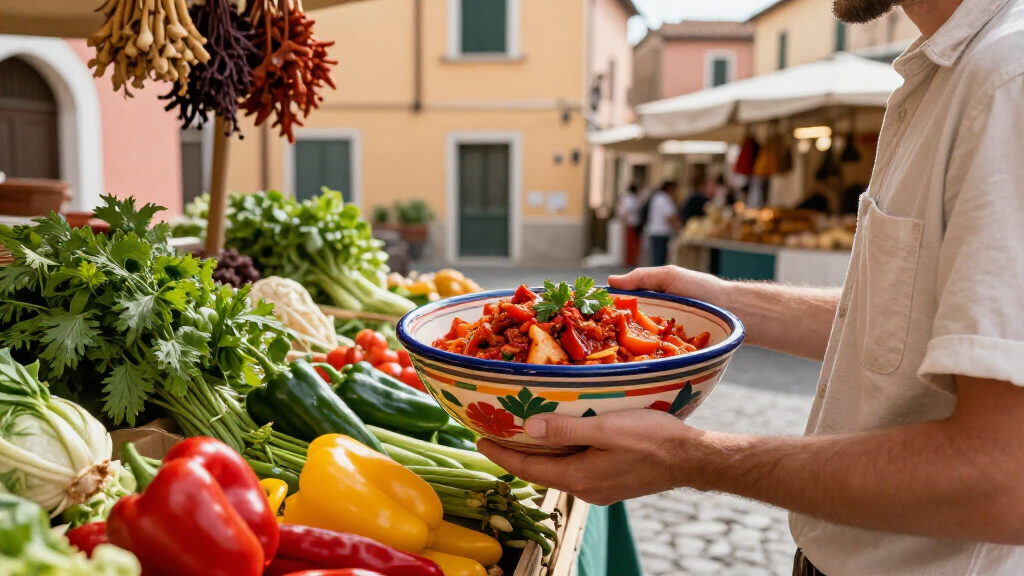
How to Make Peperonata: A Reliable Step-by-Step Method
Good peperonata comes down to five moves: soften onions slowly, cook peppers gently, add tomatoes in moderation, reduce to a glossy sauce, and let the dish rest. Total cooking time commonly runs 35 minutes to an hour, depending on how you cut the vegetables and how soft you want the final texture.
- Soften the onions. Slice one large onion and cook it gently in a generous glug of extra-virgin olive oil — roughly 4 tablespoons — over moderate-low heat until translucent but not browned. This takes 8-10 minutes and builds the sweetness the whole dish rests on. If the onions brown, the finished peperonata will carry a bitter undertone no amount of basil can hide — so if you see more than a hint of gold, lower the heat.
- Add the peppers and salt. Slice 4-5 large red and yellow peppers into strips, add them with a good pinch of salt, cover the pan briefly so they release their moisture, then uncover. A practical example: for 4 large peppers, a 28 cm (11-inch) skillet is about right; a smaller pan means longer cooking and more steaming than softening.
- Cook until they begin to collapse. Uncovered, moderate heat, stirring now and then. You’re watching for the strips to go from crisp and upright to soft and slumping — usually 15-20 minutes. A useful visual: when a pepper strip can be cut with just the edge of a wooden spoon, you’re there. If it still resists, it still has water to give up.
- Add tomatoes, sparingly. Two ripe chopped tomatoes or a small ladle of passata (strained tomato purée) is enough. The tomatoes should support the peppers, not turn the pan into soup. Think of it this way: if you can see distinct pepper strips in a light glossy coating, you’ve got it right; if the peppers are swimming in red liquid, you’ve crossed into sugo territory.
- Finish and rest. Add torn basil or oregano, and if you like, a small splash of wine vinegar to lift everything. Then — and this is the step everyone skips — let it sit. An hour minimum. Overnight is better.
Why the rest matters: salt, acid, and the peppers’ own sugars need time to integrate. A peperonata tasted at minute 50 and the same pan tasted the next day are two different dishes. The overnight version wins. A concrete scenario: make it Sunday evening, refrigerate it, and serve it Monday tossed with short pasta — you’ll get restaurant depth from a dish that took twenty minutes of actual attention.
One safety note: cool the peperonata within two hours of cooking, then refrigerate it in a clean, airtight container. Properly stored, it keeps 3-4 days in the refrigerator.
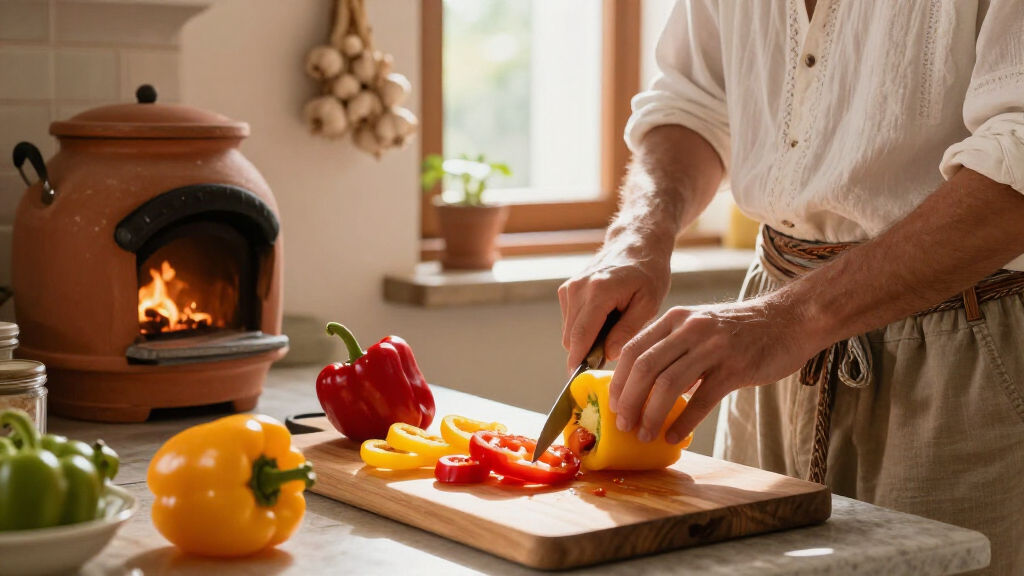
Should You Peel the Peppers? What Each Choice Gives You
Peeling the peppers for peperonata is optional: unpeeled peppers give you a rustic dish with less work and better shape retention, while peeled peppers give you a silkier, more refined texture that some people also find easier to digest. Neither choice is wrong — it depends entirely on the eating experience you want.
| Unpeeled Peppers | Peeled Peppers | |
|---|---|---|
| Texture | Rustic, strips hold shape | Silky, almost melting |
| Effort | Minimal | Roasting/charring required |
| Flavor | Fresher, greener edge | Deeper, sometimes smoky |
| Digestion | Skins can bother some people | Generally easier |
If you do peel, the technique is straightforward. Char the peppers over a flame, under a broiler, or in a hot oven until the skins blister black. Drop them into a bowl and cover it so they steam in their own heat for 10 minutes — the skins will slip off almost on their own.
One warning worth remembering: don’t rinse the peeled peppers under running water. It feels instinctive, but water washes away the flavorful juices that collected during charring, and those juices are pure pepper flavor. Slide the skins off with your fingers instead and let the juices fall back into the bowl.
My practical advice for a first attempt: skip the peeling. A rustic peperonata with unpeeled raw-sliced peppers is the everyday version most Italians actually make on a weeknight. Save the peeling project for a dinner party where you want that silky, restaurant-grade texture.
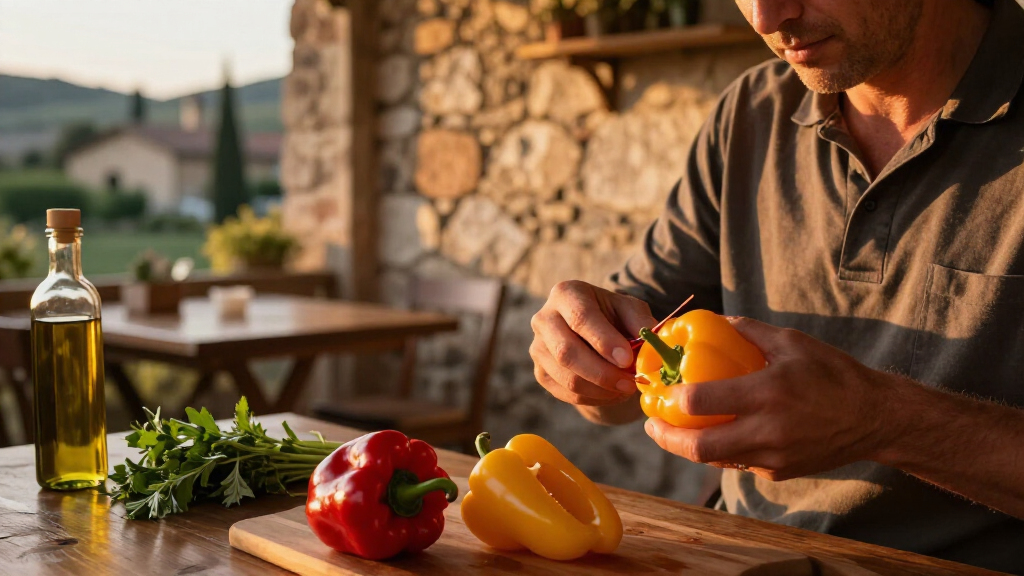
7 Mistakes That Ruin Peperonata (and How to Fix Each One)
Most peperonata failures trace back to seven recurring mistakes, all fixable: cooking too hot, drowning the peppers in tomato, using underripe peppers, crowding the pan, stopping too early, adding sugar reflexively, and serving immediately without resting. Recognize these and you’ve solved 90% of the problems before they happen.
- High heat. Burnt onions and scorched garlic turn the whole pan bitter before the peppers even soften. Moderate-low heat, always. The stew that tastes like August in Italy is a stew that tastes like sweet peppers slowly cooked with patience — not char.
- Too much tomato. Peperonata is not tomato sauce with peppers in it. If the tomatoes dominate, you’ve made sugo. Hold back and taste as you go.
- Underripe peppers. Pale, lightweight peppers with thin walls have no sweetness to give. Choose heavy, firm, deeply colored peppers — the season matters more than the recipe.
- Crowding the pan. Piled-high peppers steam in their own liquid instead of cooking down into that glossy sauce. Use a wide pan, or cook in two batches.
- Stopping early. Firm, slippery pepper strips mean you’re not done. Keep going until they’re supple and collapsed.
- Automatic sugar. Slowly cooked onions and ripe peppers develop plenty of natural sweetness. Add sugar only if your tomatoes are unusually acidic — a pinch, never enough to taste sugary.
- No rest. Serving straight from the flame wastes your work. Even 30-60 minutes of cooling integrates the flavors.
Two troubleshooting notes: if your peperonata turns out watery, the vegetables were crowded, covered too long, or over-tomatoed — simmer uncovered until the liquid evaporates. If it tastes bitter, suspect green peppers, scorched garlic, burned onions, or overheated olive oil. Mostly red and yellow peppers produce a sweeter result.
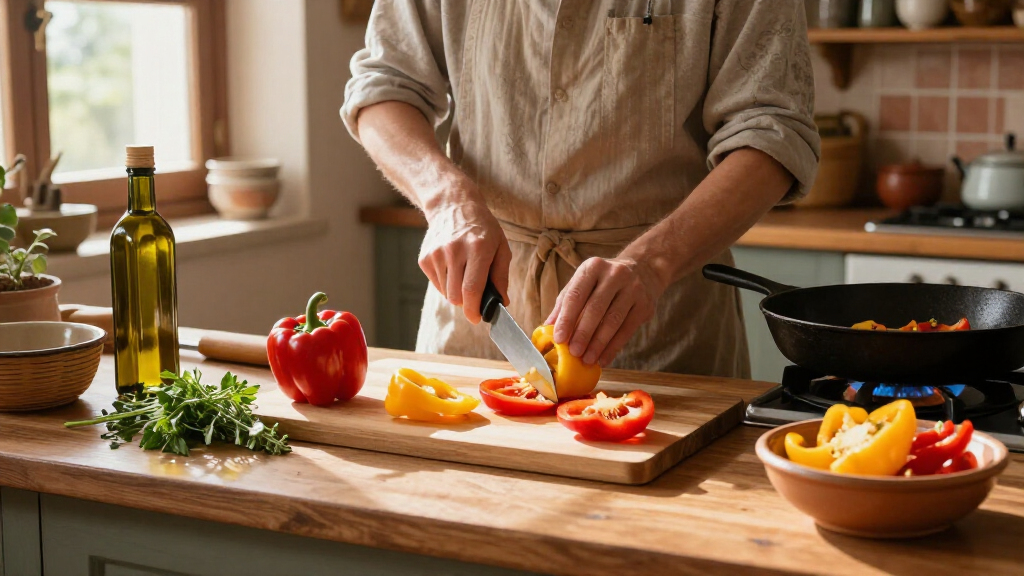
12 Ways to Serve Peperonata, From Bruschetta to Burrata
Peperonata works as an antipasto, side dish, pasta sauce, bruschetta topping, or sandwich filling — which is exactly why Italian home cooks make a big batch and eat it all week. Serve it warm, at room temperature, or cold; most people find room temperature is when its sweetness and aroma show best.
- On grilled bread or crostini, rubbed with garlic
- On sourdough toast with ricotta, burrata, or goat cheese
- Tossed with pasta and a splash of reserved pasta water
- As a sauce for gnocchi
- Beside grilled sausages, chicken, pork, or fish
- With creamy polenta
- With rice, couscous, or farro
- Folded into an omelet or alongside fried eggs
- With mozzarella, burrata, ricotta, pecorino, or Parmesan
- In panini and sandwiches
- As part of an antipasto spread with olives and cured meats
- Purée leftovers into a dip, soup base, or quick pasta sauce
Modern cooks have pushed further: peperonata in grain bowls, savory tarts, focaccia, and alongside grilled seafood or plant-based proteins. Roasting the peppers first adds smokiness; adding white beans or chickpeas turns it into a substantial vegetarian main. These are contemporary riffs, not replacements — the traditional slow-cooked preparation is still the heart of the dish.
Before serving refrigerated peperonata, bring it back toward room temperature and finish it with a thread of good olive oil and fresh herbs. The olive oil you finish with matters as much as the oil you cook in.
The basic recipe is naturally vegan and gluten-free, which makes it a rare dish that works for nearly every dinner guest. It also freezes well, though the peppers soften further after thawing — save frozen batches for sauces, soups, and braises rather than antipasto platters.
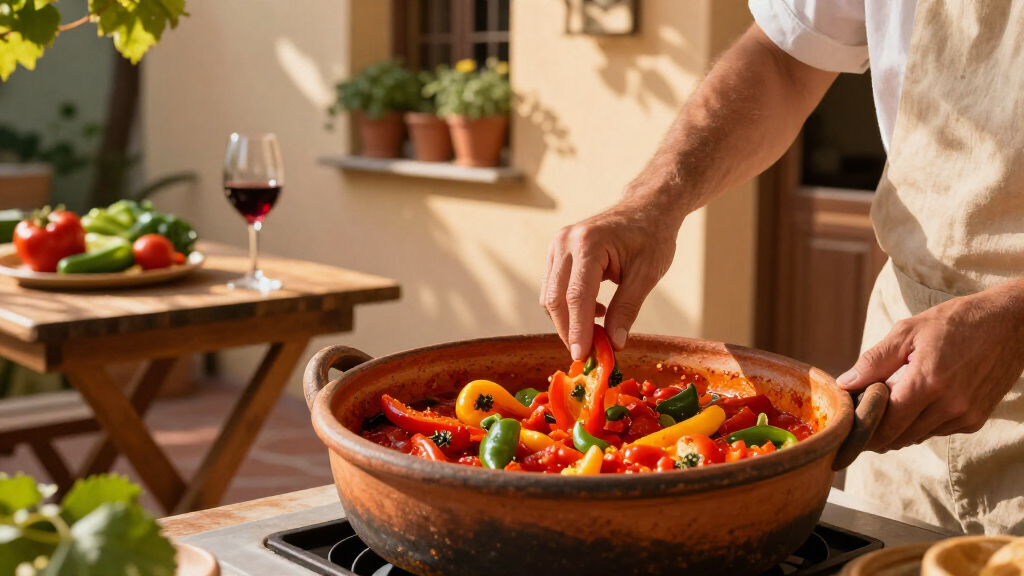
When to Make It: Why Late Summer Changes Everything
The best time to make peperonata is late summer through early autumn, when peppers and tomatoes are ripe, abundant, and at peak sweetness — this seasonality is why the dish can genuinely seem to taste like August in Italy. A pepper picked in February and shipped across a continent simply cannot deliver the same sugar content or aroma.
If you’re planning a trip around Italian food culture, this is worth building into your itinerary. In August and September, peperonata appears on trattoria menus from Piemonte — where the pepper-growing town of Carmagnola holds a famous annual pepper festival — down to Sicily, where sweet-and-sour vegetable preparations are a way of life. The Palermo markets in late summer smell of charred peppers and frying onions before you’ve found a single restaurant.
You don’t need a plane ticket, though. What you need is a farmers’ market in August and a Saturday afternoon. Choose peppers that feel heavy for their size, with taut, glossy skin and thick walls — the weight is the sugar. Smell the stem end; a ripe pepper smells faintly green and sweet. Bland produce produces a bland stew, and no technique can rescue it.
This is the quiet lesson of peperonata and of Italian seasonal cooking generally: the calendar is an ingredient. Cook the dish in late summer and it tastes one way. Cook the same recipe in January with pale, flown-in peppers and you’ll wonder what all the fuss was about.
Frequently Asked Questions
Is peperonata spicy?
No. Traditional peperonata is made with sweet bell peppers and is not hot. Chili is optional and not part of the classic preparation. The heat confusion comes from the American word “pepperoni,” which refers to sausage — in Italy, peperoni simply means peppers.
Is peperonata served hot or cold?
All of the above work: hot, warm, at room temperature, or chilled. Many people prefer it at room temperature, when its sweetness and aroma are most noticeable. If serving from the refrigerator, let it come toward room temperature and finish with good olive oil.
Why is my peperonata watery?
Usually because the vegetables were crowded, the pan was covered too long, or too much tomato was added. Simmer uncovered until the excess liquid evaporates into a glossy sauce. Use a wide pan next time and keep tomatoes modest — they support the peppers rather than dominate them.
What’s the difference between peperonata and ratatouille?
Peperonata centers on sweet peppers, onions, and often tomatoes. Ratatouille typically includes a broader assortment of vegetables, especially eggplant and zucchini. Peperonata is more focused; think of it as a pepper dish with tomato support rather than a mixed-vegetable stew.
Can peperonata be made ahead and frozen?
Yes — it’s an excellent make-ahead dish and often tastes better the next day. Refrigerate within two hours of cooking in an airtight container; it keeps 3-4 days. It freezes well too, though the peppers soften after thawing, so frozen batches are best used in sauces, soups, and braised dishes.
Do traditional peperonata recipes contain tomatoes?
Many versions do, but not all — there is no single definitive recipe followed throughout Italy. Some family versions use fresh, canned, or strained tomatoes, and others omit them entirely for a more pepper-forward result. If you use tomatoes, keep the quantity modest so the peppers stay the star.
Conclusion
If you take one thing from this guide, let it be this: buy the best peppers you can find in late summer, cook them slowly, keep the tomatoes modest, and give the finished dish time to rest. Everything else — peeling, vinegar, capers, herbs — is negotiable. That’s the freedom of cooking a method rather than a recipe.
Next August, when the market is heavy with red and yellow peppers, make a double batch on a Sunday afternoon. Eat some warm with bread and burrata, toss some with pasta on Tuesday, and purée the rest into a sauce you’d never guess came from a humble pan of stewed vegetables. Somewhere between the first bite and the last jar from the freezer, you’ll understand why Italians treat sweet peppers as a season worth preserving.
Halloween Picks
halloween
As an affiliate, we earn on qualifying purchases.